
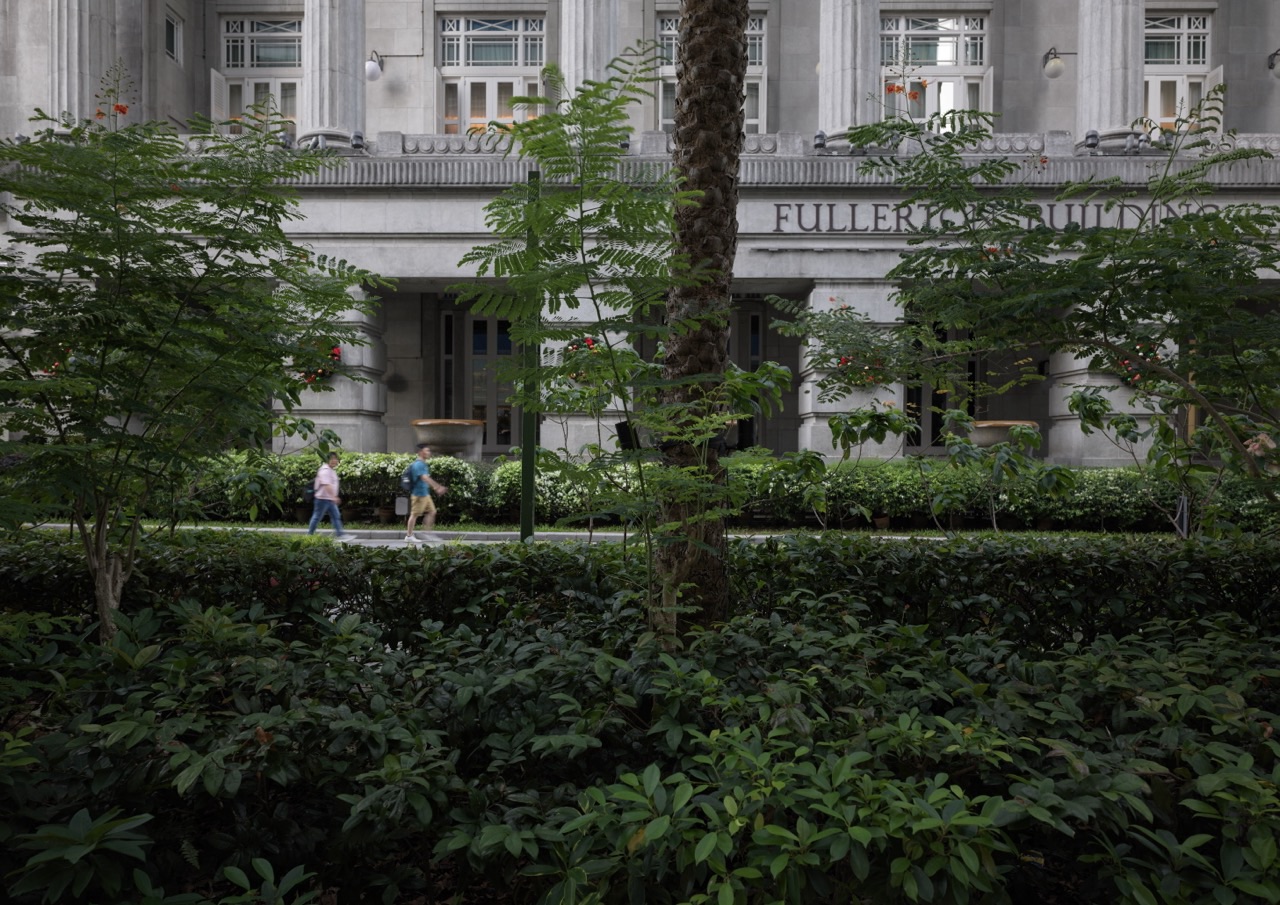
Things to do in Singapore | Fullerton Road. Walk the mouth of the Singapore River beside the former Fullerton Building, cross Cavenagh and Anderson bridges, trace the former General Post Office and Fort Fullerton site, connect to Collyer Quay and Boat Quay, and use this short road to understand how defence, mail, shipping, government and finance accumulated around one of Singapore’s most strategic pieces of waterfront.
Fullerton Road sits where several systems meet.
River.
Harbour.
Postal network.
Government.
Finance.
Bridges.
The road itself is short.
The infrastructure around it helped connect Singapore to the world.
- Walk around the former Fullerton Building.
- Cross or view Cavenagh Bridge and Anderson Bridge.
- Reconstruct the former Fort Fullerton site.
- Learn how the General Post Office moved mail through the building.
- Walk toward Collyer Quay and the old waterfront.
- Continue to Boat Quay and the Singapore River.
- Use the area to understand why communication infrastructure clustered beside shipping.
Read: Things to do in Singapore | Battery Road
Read: Things to do in Singapore | Collyer Quay
Read: Things to do in Singapore | Boat Quay
Start With the Big Idea: Fullerton Road Is a Communication Gateway
The former Fullerton Building was completed in 1928 and housed the General Post Office, Singapore Chamber of Commerce, Marine Office and other government departments.
Its river-mouth location was deliberate.
Mail, shipping information, customs activity and commercial correspondence all benefited from being close to the port.
Official heritage reference: Roots.gov.sg | Former Fullerton Building
Visit the Former Fullerton Building
The building’s massive Doric colonnade and prominent waterfront position made it one of the city’s most imposing public structures.
It was designed not only to function efficiently but also to communicate administrative authority and confidence.
A post office was infrastructure.
The building made infrastructure monumental.
Use the General Post Office to Understand Information Networks
Before email and instant messaging, letters were part of the commercial operating system.
- contracts moved by post;
- orders moved by post;
- family news moved by post;
- government instructions moved by post;
- shipping information moved through linked offices.
Postal reliability therefore affected both private life and trade.
The General Post Office was a communications hub in the same way data centres and digital networks are today.
Learn About the Underground Mail Tunnel
Roots.gov.sg records that the General Post Office had an underground tunnel connecting it to the pier so mail could bypass crowded Collyer Quay.
That small engineering detail reveals a much larger principle.
Critical flows work better when they are separated from congestion.
The tunnel was a dedicated logistics route for information.
Reconstruct Fort Fullerton
Before the present Fullerton Building, the site was occupied by Fort Fullerton.
The fort guarded the mouth of the Singapore River and commercial settlement.
It was demolished in the nineteenth century as the city’s needs changed.
The same strategic parcel shifted from defence to postal and administrative infrastructure.
Function changed because the city’s priorities changed.
Learn the Singapore Stone Story
Roots.gov.sg records that expansion of Fort Fullerton in the 1840s led to the destruction of the historic Singapore Stone at the river mouth.
Fragments survived, but the event is an important reminder.
Development can destroy evidence that later generations wish had been preserved.
Heritage protection often arrives only after earlier losses teach the value of restraint.
Cross Cavenagh Bridge
Cavenagh Bridge was completed in 1868 and remains one of Singapore’s most recognisable historic river crossings.
Walking across it links the Fullerton side to the Civic District and demonstrates how bridges expanded the effective commercial area of the river.
A crossing converts two separate banks into one connected urban system.
Look at Anderson Bridge
Anderson Bridge, completed in 1910, added another major crossing at the river mouth.
Its scale reflects increasing traffic and the growing importance of the city centre.
Compare the two bridges side by side.
The difference in technology and capacity helps reveal urban growth through infrastructure.
Use the Bridges to Teach Redundancy
One bridge can become a bottleneck.
Multiple crossings create resilience.
People can reroute.
Traffic can be distributed.
A city network becomes more robust when important nodes have alternatives.
The Singapore River bridges are therefore both engineering objects and network lessons.
Walk Toward Collyer Quay
Collyer Quay adds the reclaimed-waterfront story.
The original business district pushed seaward through reclamation in the nineteenth century, creating more commercial frontage beside the old harbour.
Continue nearby: Things to do in Singapore | Collyer Quay
Walk Toward Boat Quay
Boat Quay adds the cargo-and-merchant economy immediately upstream.
Fullerton’s postal and administrative functions made sense because trade activity sat next door.
Information infrastructure followed commercial infrastructure.
Continue nearby: Things to do in Singapore | Boat Quay
Use Fullerton Road to Teach Infrastructure Succession
The same strategic site carried several different systems over time.
- river-mouth defence;
- postal and government administration;
- commercial and political gathering;
- hotel and heritage reuse.
The land stayed important because its location stayed important.
The technology and institutions changed.
A Simple Fullerton Road Half-Day Plan
- Morning: arrive at Raffles Place MRT.
- Walk toward the former Fullerton Building.
- Bridge stop: cross Cavenagh Bridge and compare Anderson Bridge.
- History stop: reconstruct Fort Fullerton and the Singapore Stone story.
- Waterfront stop: continue along Collyer Quay.
- Finish at Boat Quay, Marina Bay or the Civic District.
Fullerton Road Through the eduKate Ecosystem
Things to do in Singapore | Battery Road
Things to do in Singapore | Collyer Quay
Things to do in Singapore | Boat Quay
Things to do in Singapore | Civic District
Frequently Asked Questions
What is Fullerton Road known for?
The former Fullerton Building, Singapore River mouth, historic bridges and connection between the CBD and Civic District.
What was inside the Fullerton Building?
The General Post Office, Marine Office, Chamber of Commerce and several other government departments.
What stood there before?
Fort Fullerton occupied the site before the later postal and administrative buildings.
What is the main learning idea?
Communication infrastructure. Fullerton Road shows why defence, mail, shipping and government clustered at one strategic river-mouth gateway.
Official References and Heritage Sources
Roots.gov.sg | Former Fullerton Building
Roots.gov.sg | Civic District Heritage Trail
Things to do in Singapore | Fullerton Road
Fullerton Road is a short road carrying the memory of very large systems.
Fort.
Post office.
River.
Bridges.
Harbour.
Government.
Finance.
The road matters because all of them needed the same strategic location.