
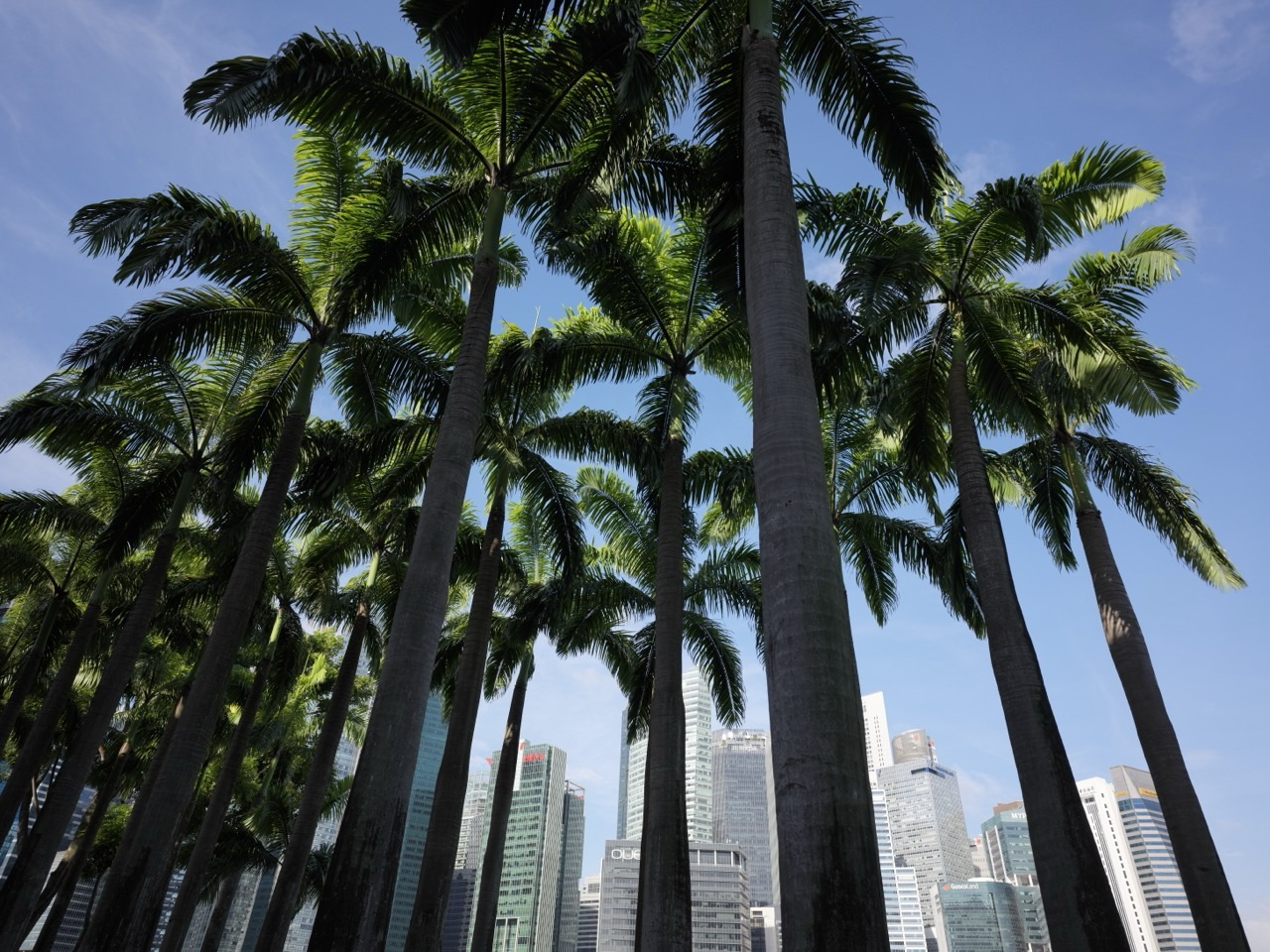
Things to do in Singapore | Robinson Road. Walk one of the CBD’s classic commercial streets, compare old office blocks with new mixed-use towers, visit Lau Pa Sat nearby, trace the road across reclaimed land and use the corridor to understand how Singapore’s nineteenth-century shoreline became a twentieth- and twenty-first-century business district.
Robinson Road is a street built on a geographical idea:
create more land near the existing commercial centre, then use that land intensively.
The road grew out of reclamation.
Banks and offices followed.
Later generations rebuilt the same parcels at greater height and with more complex uses.
- Walk from Raffles Place toward Tanjong Pagar.
- Eat at Lau Pa Sat nearby.
- Compare older office buildings with newer mixed-use towers.
- Look inland toward Telok Ayer to understand the old shoreline.
- Walk seaward toward Raffles Quay and Marina Bay.
- Use the street to study how office districts change when buildings reach redevelopment age.
- Return after office hours to see the difference between workday and evening activity.
Read: Things to do in Singapore | Raffles Place
Read: Things to do in Singapore | Shenton Way
Read: Things to do in Singapore | Telok Ayer
Start With the Big Idea: Robinson Road Exists Because Singapore Moved the Coastline
Robinson Road developed across reclaimed land created in front of the old Telok Ayer waterfront.
That land allowed Singapore’s commercial district to expand beyond the crowded historic core.
The road therefore records one of the city’s most important growth strategies:
when central land became scarce, the city created more.
Walk Inland Toward Telok Ayer
The best way to understand Robinson Road is to step off it.
Walk inland toward Telok Ayer and the city suddenly becomes lower, older and more religious.
Temples, mosques and shophouses mark the former shoreline.
The financial corridor occupies land that was once sea.
A few minutes of walking compress decades of reclamation history.
Continue nearby: Things to do in Singapore | Telok Ayer
Eat at Lau Pa Sat
The Former Telok Ayer Market, now Lau Pa Sat, is one of the most important surviving landmarks inside the modern CBD.
Its octagonal cast-iron structure creates an immediate visual contrast with the towers around it.
The building’s continued use as a food centre is part of its strength.
It remains useful rather than becoming an isolated monument.
Official heritage reference: Roots.gov.sg | Former Telok Ayer Market
Use Lau Pa Sat to Reconstruct the Shoreline
The market originally belonged to the Telok Ayer waterfront world.
Today it sits inland because reclamation moved the sea farther away.
Robinson Road is part of the land created by that movement.
One building can therefore act as a fixed marker while the surrounding geography changes.
Compare Office Generations
Robinson Road contains towers from several development cycles.
Older office blocks often reflect a more single-use CBD model.
Newer redevelopments increasingly add food, hotels, residences, greenery and public space.
The shift mirrors URA’s wider goal of turning the CBD into a more mixed and active district.
Use Redevelopment to Understand Building Lifecycles
Skyscrapers are not permanent.
They age.
Mechanical systems become obsolete.
Floorplates stop matching market demand.
Land values rise.
Eventually redevelopment can become more attractive than refurbishment.
Robinson Road is useful because multiple generations of that cycle are visible within one walk.
Walk Toward Shenton Way
Southward, Robinson Road merges into the Shenton Way business corridor.
Shenton Way carries the strongest current mixed-use transformation story, including major projects such as The Skywaters.
Together the two roads show the CBD shifting from office-only logic toward a broader downtown neighbourhood.
Continue nearby: Things to do in Singapore | Shenton Way
Walk Toward Raffles Place
Northward, Robinson Road connects to Singapore’s symbolic financial centre.
Raffles Place provides the historic banking-and-commerce anchor while Robinson Road extends the office district south.
The two areas work as one financial system rather than separate destinations.
Continue nearby: Things to do in Singapore | Raffles Place
Use the Street to Teach Reclamation Economics
Reclamation is expensive.
It becomes especially valuable when new land sits beside an already successful commercial core.
- existing jobs create demand;
- roads and rail can extend into the new land;
- banks and offices cluster together;
- the entire district gains from proximity.
Robinson Road demonstrates why location matters as much as land creation itself.
A Simple Robinson Road Half-Day Plan
- Morning: begin at Raffles Place MRT.
- Walk south along Robinson Road.
- Heritage stop: eat or pause at Lau Pa Sat.
- Geography stop: walk inland to Telok Ayer.
- Architecture stop: compare old and new office towers.
- Finish at Shenton Way or Tanjong Pagar.
Robinson Road Through the eduKate Ecosystem
Things to do in Singapore | Raffles Place
Things to do in Singapore | Shenton Way
Things to do in Singapore | Telok Ayer
Things to do in Singapore | Cecil Street
Frequently Asked Questions
What is Robinson Road known for?
It is one of Singapore’s classic CBD office corridors, running through reclaimed commercial land between Raffles Place and Tanjong Pagar.
Why is Lau Pa Sat important here?
It preserves the former Telok Ayer Market and provides a fixed historic landmark for understanding how reclamation moved the shoreline outward.
Is Robinson Road good for children?
Yes for older children studying skyscrapers, reclamation and the CBD, especially when combined with Telok Ayer and Lau Pa Sat.
What is the main learning idea?
Renewal. Robinson Road shows how reclaimed commercial land can be redeveloped repeatedly as office technology, land values and city-centre needs change.
Official Heritage Source
Roots.gov.sg | Former Telok Ayer Market
Things to do in Singapore | Robinson Road
Robinson Road is a coastline that became an office street.
Then the office street began becoming a mixed-use neighbourhood.
The road matters because Singapore keeps reusing the same valuable geography at higher levels of complexity.