
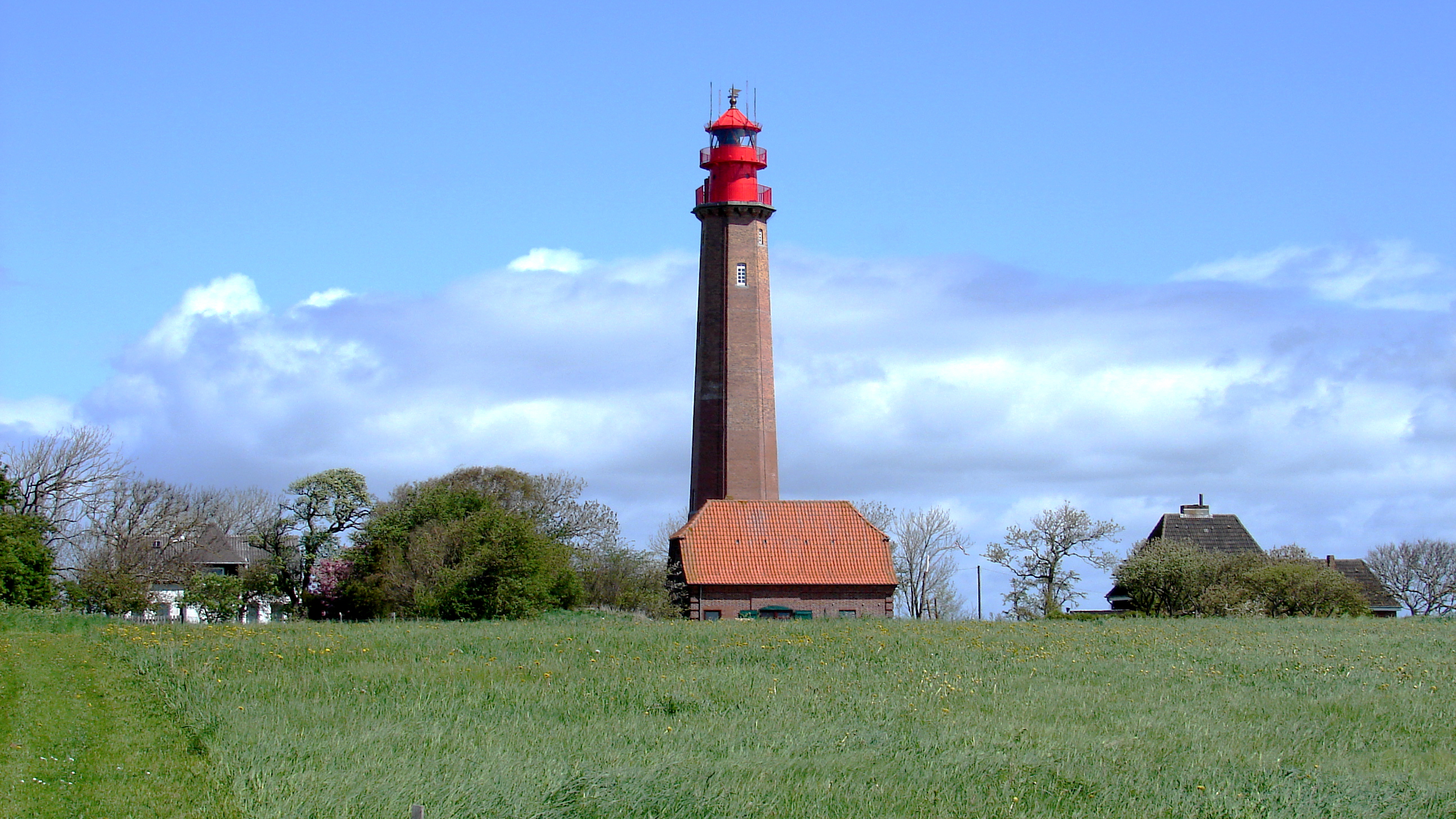
Fehmarn is a German Baltic island that rewards visitors who enjoy variety. One day can move from a lively town square to a sheltered southern marina; another from a historic lighthouse to a bird reserve; a third from a working international ferry port to a quiet stony beach. Its small harbours and the great Fehmarnsund Bridge are reminders that this island is both a holiday destination and a place with real transport, ecological and community systems.
For a first visit, plan three to four days if you want to explore the ten places below without rushing. Group Burg, Burgtiefe and Burgstaaken, then give the southwestern coast and Wallnau their own time. Grüner Brink and Puttgarden make a northern day, while Katharinenhof offers an eastern shore unlike the main resort beaches. A sensible route gives you more than a long list of names: it tells the island’s story through its different landscapes.
Travel information reviewed 21 October 2026. Coastal weather, wildlife restrictions, bridge works, seasonal lighthouse access, museum opening and ferry arrangements change. This guide explains what is worth seeing and what must be checked; it does not invent a guaranteed ticket, operating hour or open tower on your exact visit date.
Quick answer: First-timers should consider Burg Old Town, Burgtiefe South Beach, Flügge lighthouse and Wallnau bird reserve. If you love coastal ecology, add Grüner Brink and Katharinenhof; for transport and history, choose Puttgarden, Fehmarnsund Bridge and Glambek.


At a glance: the ten Fehmarn places and how to combine them
| Place | Area | Suggested time |
|---|---|---|
| 1. Burg Old Town and the Island’s Historic Centre | Burg auf Fehmarn, the island’s main town | Several leisurely hours for streets, shops and local history |
| 2. Burgtiefe South Beach, Marina and the Utkieker Tower | Southern Fehmarn near the Burger Binnensee | Half day for the beach, marina and viewing platform |
| 3. Flügge Lighthouse and the Southwestern Coastal Walk | Near Flügge and the Krummsteert area in the southwest | A few hours including the walk from permitted parking |
| 4. NABU Wallnau Waterbird Reserve | West coast of Fehmarn | Half-day for birdwatching and interpretation |
| 5. Grüner Brink Nature Reserve and North-Coast Lagoons | Northern Fehmarn around Gammendorf | Two to four hours for a signed nature and sea walk |
| 6. Puttgarden Ferry Port and the Fehmarnbelt | Northern tip facing Denmark | An hour or two as a maritime stop, longer with a booked crossing |
| 7. Fehmarnsund Bridge and its Coastal Viewpoints | Southwest connection between Fehmarn and mainland Schleswig-Holstein | A short viewpoint visit or a longer signed walking route |
| 8. Glambek Castle Ruins and the Burgtiefe Heritage Landscape | Near Burgtiefe in southern Fehmarn | One or two hours, paired with the south beach |
| 9. Orth and Lemkenhafen Harbour Villages | Southwestern Fehmarn, sheltered bays and dykes | A relaxed half day with lunch or cycling |
| 10. Katharinenhof Natural Beach and Eastern Cliff Coast | Eastern Fehmarn around Katharinenhof | A half day for a nature-focused coastal walk |
These are ten different experiences, not a league table. A nature reserve should not be judged by the number of photographs it produces; a heritage bridge may be most interesting when you understand its function; and a small harbour may be a better family afternoon than a long ticketed excursion. Plan by location, weather and interests instead of trying to drive the numerical order.
1. Burg Old Town and the Island’s Historic Centre
Where: Burg auf Fehmarn, the island’s main town. Allow: Several leisurely hours for streets, shops and local history.
Burg is the right place to start Fehmarn for travellers who want to understand the island as more than an arrangement of beaches. Cobbled streets, older buildings, St. Nikolai’s church, cafés, shops and a market square create the rhythm of an actual town. It gives the journey a sense of place before you head out to exposed lighthouses and conservation areas. Burg is also a useful practical base for supplies and travel questions, and many visitors will return here for an evening meal.
The story behind the place
The streets show how Fehmarn has been a settled, trading island as well as a summer destination. Shops and domestic buildings have different purposes from grand resort villas elsewhere in the Baltic; this is a centre where practical services and community life developed over time. The official tourism office describes the old town as a charming area of lanes and half-timbered architecture, but that does not mean every building is a preserved medieval monument. Some have been altered or adapted for contemporary use. This is a valuable distinction: a historic town is not an open-air museum where every interior may be visited.
What to experience on a visit
Begin in the public square, then choose a relaxed loop through lanes rather than racing from one building to the next. Notice the types of materials, doorways and street widths. If the church is open to visitors, behave as a guest at a religious site and respect any services. Stop at the tourist information centre if you need current maps for cycling or buses; its staff can be more useful than a tourist page with an old summer timetable. Burg’s cafés make it an easy choice for families that need a calm meal between outdoor activities.
How to decide if it fits your day
If arriving by public transport, check where the stop is located and how far it lies from your accommodation. Cobbles can be uncomfortable for small wheels or visitors with mobility issues, so plan an appropriate path. Some shops and restaurants close or reduce hours outside the high season; a long list of cafés online should not be confused with all of them operating every day. Burg works naturally with a later visit to Burgtiefe, Glambek and Burgstaaken, keeping the first day geographically comfortable.
Access, safety and respect
Public streets can still carry local vehicles and bicycles. Follow pedestrian guidance, avoid entering residents’ yards and ask permission before photographing people working in small shops. In the church, don’t interrupt worship or assume flash photography is permitted. The town is a home for residents as well as an attraction.
Try this learning question: Ask what makes an island centre viable in winter, when fewer tourists are present. Count different services on a walk—food, medical access, transport, retail, local government, gathering places—and explain how they differ from facilities built almost entirely for the beach season.
Back to all ten places · Next attraction
2. Burgtiefe South Beach, Marina and the Utkieker Tower
Where: Southern Fehmarn near the Burger Binnensee. Allow: Half day for the beach, marina and viewing platform.
Burgtiefe is where Fehmarn feels like a relaxed family seaside destination. South Beach, known as Südstrand, sits beside a marina, promenades and holiday buildings. It offers easier access to cafés and recreational services than more remote natural shores. The real highlight for curious visitors, however, can be the Utkieker viewing tower: a place to see how the beach, harbour, lagoon and surrounding settlement fit together in one landscape.
The story behind the place
The south coast has been shaped both by sea and by tourism infrastructure. The marina provides protected mooring and related services while the beach attracts swimmers and walkers. The tower, opened in 2021, was designed as an accessible viewing point with a lift option as well as stairs, according to Fehmarn’s tourism service. From above, you can see the larger geographical system: the Burger Binnensee as sheltered water, the marina as constructed infrastructure, and the open Baltic beyond. What appears from ground level as a collection of unrelated holiday facilities becomes intelligible from this perspective.
What to experience on a visit
Visit the promenade and pause to watch boats from designated public areas. When the tower is available, use its viewing platform to point out the difference between the calm inner water and the exposed shore. You may be able to see the Fehmarnsund Bridge in the distance in suitable visibility, but the weather and sightline determine the view. Children can draw a small map with water, streets, the marina and the beach rather than merely taking another selfie. The activity encourages them to notice how a visitor destination is planned.
How to decide if it fits your day
This is a good stop when one person wants a beach session and another prefers a short accessible viewpoint experience. Although the tower is promoted as accessible, verify lift availability and any temporary maintenance before relying on it. A sandy beach is not automatically wheelchair friendly, so check designated access routes and equipment. Lifesaving and bathing safety arrangements are seasonal, and water safety must be judged from the local conditions on the day.
Access, safety and respect
Do not climb on marina railings or enter operational berths to photograph boats. Supervise children on piers and near water edges; even a sheltered harbour can have slippery surfaces and moving equipment. Keep beach waste away from gulls and other wildlife, and respect any signed swimming zones. During storms, a sheltered café is often a better plan than an exposed tower or water activity.
Try this learning question: Draw three zones from the tower—open sea, harbour or lagoon, and town—and ask what each zone does for residents and visitors. How do protection from waves, transport needs and recreational use influence the shape of the waterfront?
Back to all ten places · Next attraction
3. Flügge Lighthouse and the Southwestern Coastal Walk
Where: Near Flügge and the Krummsteert area in the southwest. Allow: A few hours including the walk from permitted parking.
Flügge Lighthouse is one of the island’s most satisfying landmarks because it gives a physical reason to travel to the quieter southwestern coast. The tall lighthouse is a functioning symbol of navigation history, set among fields, coastal paths and broad Baltic views. Its setting feels notably different from the busiest family beach strip, and the walk towards it forms part of the experience rather than simply a delay before the attraction.
The story behind the place
According to the official tourist organisation, the newer Flügge lighthouse was built in 1914–15 near an earlier nineteenth-century structure. The 37-metre lighthouse is promoted as the island’s highest, with 162 steps when visitor climbing is available. That creates a useful contrast between its practical original role—helping maritime navigation—and its modern status as a landscape viewpoint. The building is not a generic tower; its position and visibility mattered in an era when identifying the coast from the sea was essential to safe travel.
What to experience on a visit
Start at the designated parking near Hof Flügge and follow the established route towards the lighthouse, noticing views of the bay and fields along the way. The official visitor information says the tower is normally open on selected days between spring and the end of October, but actual dates and access can change, so check before setting off. If you climb, pause at the top to compare coastal shapes, sheltered waters and the direction of the Fehmarnsund. If you stay on the ground, there is still an enjoyable landscape walk and a chance to understand why the lighthouse is where it is.
How to decide if it fits your day
Private cars are not generally allowed to drive to the lighthouse itself, and the official tourism service identifies permitted parking around 1.5 kilometres away. Plan the walk, return time and any mobility limitations. The tower’s stairs will not be suitable for everybody; there is no need to climb to make the visit worthwhile. If wind is strong or there is maintenance, approach it as a coastal walk with an exterior heritage stop rather than insisting on summit access.
Access, safety and respect
The surrounding land includes sensitive coastal habitat and nature reserves. Follow the signed route, keep clear of bird areas, and do not approach the shore through private fields. Coastal winds can be stronger than expected, and exposed tower platforms may close during adverse conditions. If photographing the lighthouse, stay on safe paths and never cross a restricted area to obtain an unobstructed angle.
Try this learning question: Stand at a legal viewpoint and imagine looking at the coast from an approaching ship. What would make a lighthouse recognisable by day and useful by night? Compare the role of a lighthouse to navigation satellites while remembering that different systems have different failure modes.
Back to all ten places · Next attraction
4. NABU Wallnau Waterbird Reserve
Where: West coast of Fehmarn. Allow: Half-day for birdwatching and interpretation.
Wallnau is one of Fehmarn’s strongest reasons to visit outside the obvious beach circuit. A mosaic of ponds, reedbeds, meadows and coastal habitats provides conditions for resident and migrating birds, and the reserve offers managed observation points. Even visitors with little birding experience can find it rewarding: learning to slow down and wait is often the most memorable part of a first wetland visit.
The story behind the place
The reserve covers roughly three hundred hectares and developed through a landscape that has also been influenced by earlier human management. That is important. A productive wetland is not always simply a piece of nature untouched for centuries; water levels, grazing, habitats and paths can all be actively managed for conservation. The NABU reserve uses hides and viewing facilities to let visitors watch birds without forcing the birds to tolerate close human approach. This approach teaches an ethical form of wildlife tourism rather than treating every bird as a guaranteed sighting.
What to experience on a visit
Begin with the orientation or information boards when they are available, then move slowly between designated hides and observation points. Take binoculars if you have them, but a patient eye and an interest in behaviour can be more valuable than expensive equipment. Notice how birds use different water depths and vegetation zones for feeding or resting. You may spot migration activity in spring or autumn, yet the species present and numbers vary enormously by date. A quiet visit with a few observations is still worthwhile.
How to decide if it fits your day
Fehmarn Tourism describes hides, a viewing tower and a sensory trail, but access to individual facilities and guided programmes may vary with the season. Check official NABU information before departure and choose a route suitable for the group. Visitors who need step-free access should verify each hide and path; some wildlife facilities can have narrow entries or uneven surfaces. Wallnau combines logically with Flügge, Orth and the western coastal cycle routes rather than a distant Puttgarden trip.
Access, safety and respect
Wildlife welfare comes before photography. Stay inside permitted areas, keep voices low, avoid playing bird calls at animals and do not pursue a bird that moves away. Follow the reserve’s rules about dogs and seasonal restricted sections. Drones can disturb wildlife and should not be flown without explicit permission. The best sightings often come precisely because visitors remain unobtrusive.
Try this learning question: Prepare a simple observation sheet: habitat, bird action, number seen and uncertainty. Explain why a single visit cannot measure a population trend. Birdwatching becomes a gateway to understanding field science, where repeated observations and methods matter more than the thrill of one unusual photograph.
Back to all ten places · Next attraction
5. Grüner Brink Nature Reserve and North-Coast Lagoons
Where: Northern Fehmarn around Gammendorf. Allow: Two to four hours for a signed nature and sea walk.
Grüner Brink provides a different nature experience from Wallnau. Its shoreline, coastal lagoons and open northern sky show how a narrow strip of land can support significant bird habitat. The landscape can look simple in a photograph, but it tells an unusually clear story about how shoreline processes and human engineering interact over time. For visitors who want a quieter view of the Fehmarnbelt, it is a strong choice.
The story behind the place
The official local tourism organisation explains that this coastal formation developed after nineteenth-century dyke construction, with subsequent changes in currents creating sheltered waters and lagoons. The reserve, around 134 hectares, supports a variety of breeding, resting and wintering birds. It is a useful corrective to the idea that a nature reserve must have existed in precisely its present form long before humans arrived. What is protected today can arise from a complex history of coastal engineering and natural processes, with conservation management adapting to the landscape that developed.
What to experience on a visit
Take one of the designated northern walks or a signed cycling route, pausing at safe viewpoints for waterbirds and the Fehmarnbelt shipping area. On clear days, vessels crossing towards Denmark can form part of the distant seascape. Look for transitions between beach, inner lagoon, reedbed and grassy areas. If with children, draw a map showing the dyke and water bodies and ask how wave action or currents could have altered the shape. A visit is better when you notice patterns than when you insist on counting species.
How to decide if it fits your day
Grüner Brink can be paired with Puttgarden on a northern day, but do not push into protected sections merely because a smartphone map shows a shortcut. Carry layers, water and appropriate footwear; exposed dykes and beaches can feel cold even in sunshine. Check walking and cycling access rules, particularly around sensitive bird habitat. The reserve is not one giant designated swimming beach, and wildlife protection takes precedence in particular zones.
Access, safety and respect
Keep a respectful distance from nesting or resting birds and remain on legal trails. An apparently dry lagoon edge may have soft or fragile ground. No photograph justifies stepping through protected vegetation. Respect any restrictions on dogs and water sports, and keep groups small or quiet near observation points.
Try this learning question: Explain how a dyke can affect currents and the development of lagoons. How does an engineering project alter habitat, and why might managers later protect wildlife that established itself in the changed environment?
Back to all ten places · Next attraction
6. Puttgarden Ferry Port and the Fehmarnbelt
Where: Northern tip facing Denmark. Allow: An hour or two as a maritime stop, longer with a booked crossing.
Puttgarden is the place to understand Fehmarn as a transport node between countries rather than simply an island resort. Large ferries operate across the Fehmarnbelt towards Rødby in Denmark, and the scale of harbour infrastructure is different from a fishing village or yacht marina. Even a short authorised stop reveals how vehicles, passengers, freight and shipping schedules connect larger regions.
The story behind the place
Fehmarn has an important role in the ‘Bird Flight Line’ transport corridor between northern Germany and Scandinavia, a name also associated with migration routes. The ferry connection is part of a long period of cross-border travel, while work related to the Fehmarnbelt fixed-link project changes the broader infrastructure context. That future connection must not be described as a finished operating tunnel unless official authorities confirm it. As of an October 2026 travel guide, the safe planning instruction is to use the ferry operator’s current schedule and official project updates rather than outdated construction predictions.
What to experience on a visit
From the areas explicitly open to visitors, observe the way arriving and departing ferries enter the harbour and how vehicles are guided through separate channels. Notice the distinction between the ship’s deck, the terminal and the port-side roads. If crossing to Denmark, allow for check-in requirements, documents, vehicle rules and a realistic return journey. The ferry itself can be a travel experience, but do not assume an ordinary beach tourist has access to cargo, ramp or restricted terminal spaces.
How to decide if it fits your day
Puttgarden is most naturally combined with a north-coast drive or the Grüne Brink area. If you are not taking the ferry, verify where visitors can safely watch port activity without interfering with traffic. Construction or terminal changes may affect approach roads, and navigation apps can be less reliable than official directions at major transport works. Always check the actual route before setting out.
Access, safety and respect
Stay away from vehicle queue lanes, security barriers, moving machinery and the working waterfront. Do not walk into freight zones for a better image of a vessel. Transport systems require predictable human behaviour, so even a brief photo stop must respect signs and staff instructions. If travelling with children, treat the port as a busy industrial environment rather than a public playground.
Try this learning question: Follow one hypothetical package from a shop in Germany to a customer in Denmark. Which parts of the journey depend on roads, port staff, ferries, timetables and customs or border procedures? How would a new fixed link change some of these parts without eliminating all transport considerations?
Back to all ten places · Next attraction
7. Fehmarnsund Bridge and its Coastal Viewpoints
Where: Southwest connection between Fehmarn and mainland Schleswig-Holstein. Allow: A short viewpoint visit or a longer signed walking route.
The Fehmarnsund Bridge is Fehmarn’s most recognisable engineering landmark. Its sweeping arch makes the crossing visually dramatic, but what matters most is its role in connecting island and mainland life. A bridge can transform travel, supplies and visitor numbers; seeing it up close helps make that transformation concrete. It also offers a striking contrast to the historic lighthouse and the contemporary ferry port farther north.
The story behind the place
Fehmarn Tourism records that the bridge opened in 1963 and replaced the former ferry service across the sound. Its prominent arch also belongs to the history of German engineering and regional transport. However, a historic bridge is not frozen in time: maintenance, traffic management and future connection projects can affect how it is used. It is more accurate to treat the bridge as an active piece of infrastructure that also has heritage value. Travellers should not assume that every former rail component is used in exactly the same way today.
What to experience on a visit
Select an officially signed viewpoint or walking route. The island tourism service describes a walk from Gold via Strukkamphuk towards the bridge, which offers coastline and engineering views without needing to stop in traffic. Look at the span from a distance and consider why a high arch is useful over water. A traveller who wants to appreciate its shape may see more from the shoreline than while driving across, especially when the road is busy.
How to decide if it fits your day
Check current route guidance, construction notices and weather conditions. Do not pull over on bridge approaches or climb onto structural elements for photographs. The signed hiking route involves distance and some uneven terrain; it is not automatically suitable for every stroller or wheelchair user. Combining the bridge with the small Strukkamphuk lighthouse and a south-coast cycling loop may be more logical than making a separate island-wide excursion.
Access, safety and respect
The bridge carries transport traffic. The best photo is one taken from a safe designated place, not the road shoulder or a restricted maintenance access. Stay behind railings, supervise children and respect any closure signs. If using a bicycle, assess wind and route conditions and follow current road and path rules. A strong crosswind over a water crossing can matter far more than a distant sunny weather photograph suggests.
Try this learning question: Ask what differences a permanent bridge makes to an island household compared with a ferry connection: school journeys, deliveries, emergencies, holidays and maintenance. Then ask why building a bridge does not eliminate dependence on shipping for all types of trade.
Back to all ten places · Next attraction
8. Glambek Castle Ruins and the Burgtiefe Heritage Landscape
Where: Near Burgtiefe in southern Fehmarn. Allow: One or two hours, paired with the south beach.
Glambek is a small but important heritage stop because it shows a different chapter of Fehmarn history from lighthouses and resort development. Its brick ruins have a connection to medieval power, Denmark and later change. A visitor who enjoys asking why buildings were placed where they were will find much to think about here even though it is not a giant reconstructed fortress with furnished halls.
The story behind the place
The official tourism service traces Glambek’s origins to the thirteenth century under the Danish king Valdemar II, and describes its later history of political conflict. Remains were revealed again after a severe nineteenth-century storm surge. That sequence demonstrates how heritage can survive, disappear beneath changing land and become visible again. It also reminds us that a ruin is not necessarily in the condition it had at the moment it was last occupied. Archaeological interpretation and conservation shape what present-day visitors can understand.
What to experience on a visit
Approach from designated visitor paths and read the site’s interpretation. Observe the relationship between the remaining brickwork, surrounding land and the nearby coastal settlement. Children can compare its defensive story with modern Burgtiefe, where the principal concerns of visitors are beach access, boats and holiday facilities. This juxtaposition offers an accessible lesson in how one place can serve radically different purposes in different centuries.
How to decide if it fits your day
Parts of the heritage landscape have undergone conservation work, and viewing arrangements should be checked before travel. A historic ruin cannot promise unrestricted interior access simply because it appears on a destination map. Pair the visit with Südstrand, the marina and the Utkieker tower rather than planning a special long journey based solely on a brief exterior view. Give priority to safe approaches and current site signage.
Access, safety and respect
Do not climb surviving masonry or enter fenced archaeological areas. Even a small brick ruin can be fragile and hazardous. After wet weather, avoid slippery informal paths. Photographs should not encourage other visitors to leave managed routes. Respect the work of preservation that makes the remains legible for future generations.
Try this learning question: Create three columns: original building, period of loss or change, and modern conservation. Which information is directly visible and which has to come from historians or archaeological evidence? Why is a ‘ruin’ never simply a snapshot of one historical year?
Back to all ten places · Next attraction
9. Orth and Lemkenhafen Harbour Villages
Where: Southwestern Fehmarn, sheltered bays and dykes. Allow: A relaxed half day with lunch or cycling.
Orth and Lemkenhafen show Fehmarn’s smaller maritime scale. They are useful alternatives to Puttgarden’s busy ferry terminal or Burgtiefe’s resort marina. Small harbours, sheltered waters, village cafés and dyke-side routes create a slower day where you can pay attention to how boats, local services and the landscape relate. For travellers who enjoy cycling, this area is a natural part of several official island routes.
The story behind the place
Fehmarn’s maritime economy has never been one single activity. Fishing, local transport, recreation and tourism have all used the island’s waters in different ways. Small harbours often depend on protection from waves and convenient access to nearby communities, rather than on the massive infrastructure of an international ferry port. The wind and sea also influence the shape of working life, from boat storage to harbour maintenance. A walk around Orth or Lemkenhafen can reveal these features more clearly than a large attraction where visitors are focused on a ticketed experience.
What to experience on a visit
Choose one harbour for a slow lunch and a walk, then use a suitable signed dyke route if you want more activity. The official Fehmarn cycling guides connect these areas with Wallnau, Flügge and the southern bridge, but the longer loops may exceed a family’s comfortable distance. Rather than insisting on an entire published ride, select a section and know how you will return. Notice the scale of vessels and the types of businesses around the waterfront.
How to decide if it fits your day
Local cafés and services have their own operating days and seasons. Bring supplies if travelling outside the main holiday period, and inspect local transport connections before assuming an easy bus return. Cyclists should use recognised paths and consider headwinds; the same distance may feel very different in opposite directions. A slow harbour afternoon works well when the previous day has involved a long birdwatching excursion.
Access, safety and respect
Operational docks may be slippery, and mooring lines or private boats are not play equipment. Keep children supervised, follow public-access boundaries and avoid blocking people moving equipment. If you photograph a working boat, do so from appropriate public space and respect the crew’s privacy and work.
Try this learning question: Compare a ferry terminal, yacht harbour and small fishing port. Why do they require different quays, facilities and traffic systems? What must each have in common to remain safe and useful?
Back to all ten places · Next attraction
10. Katharinenhof Natural Beach and Eastern Cliff Coast
Where: Eastern Fehmarn around Katharinenhof. Allow: A half day for a nature-focused coastal walk.
Katharinenhof offers a coastal landscape unlike the gentle sandy southern holiday beach. This is a natural stony shore near low eroding cliffs, with a quieter atmosphere and a strong geological story. It is a good place to finish a top-ten guide because it brings attention back to the physical processes that shaped Fehmarn. You do not need an elaborate attraction here; a careful walk and a willingness to notice small details can be enough.
The story behind the place
The official local audio guide explains that glaciers transported a variety of stones to Fehmarn during the Ice Age, helping account for the mixture visible on the shore. Flint and other interesting stones can be observed, while rain, wave action and storms continue to change the cliff face. This is not a static outdoor collection. The coast is a dynamic boundary between land and sea. An appealing rock that looks permanent on a fine day may be near an edge changed by a recent storm.
What to experience on a visit
Walk along signed access routes, observing the variety of stones from safe positions. Consider how rounded stones differ from sharp fragments and what that might tell you about transport and weathering. The shoreline can be appealing for families who enjoy geology, but the aim should be looking and learning rather than stripping a habitat of material. Behind the beach, observe the cliff profile from a suitable distance and avoid approaching freshly fallen sections.
How to decide if it fits your day
The natural beach is not the same environment as the main bathing facilities at Südstrand. There may be fewer amenities, more uneven terrain and no universal supervision. Take water, footwear suited to stones and a windproof layer. Check whether seasonal or local rules restrict collecting stones or visiting certain sections. Rain and storm erosion can create unstable edges; a site that looks calm in an old picture may have changed.
Access, safety and respect
Stay well back from cliff toes and overhangs where material could fall, and do not climb into erosion scars. The coast can have slippery stones and wave wash. Children should remain closely supervised, and visitors should follow habitat and coastal protection rules. Never let a hobbyist desire for an unusual stone outweigh a protected site’s conservation needs.
Try this learning question: Sketch two stones with different textures and discuss how glaciers, water and weather might have moved or changed them. Then ask what additional evidence a geologist would need to identify their original source. It is a simple way of separating observation from a plausible but untested explanation.
Back to all ten places · Build your route
A realistic three-day Fehmarn itinerary
Fehmarn is compact compared with some northern islands, but it is still large enough for a rushed itinerary to waste a surprising amount of time. The simplest way to improve a visit is to allocate one focus to each day: historic town and resort coast, western conservation and lighthouses, then northern transport or eastern natural scenery. It is entirely reasonable to spend more time at a favourite site and leave the least important stop out.
Day one — Burg, Burgtiefe and Burgstaaken
Begin with a relaxed loop through Burg Old Town, using the tourist information centre for current maps and details. Travel south to Burgtiefe for the marina and a visit to the Utkieker viewing tower if accessible. See the Glambek ruins where viewing is permitted, then use Burgstaaken as a harbour-and-meal stop. The strongest feature of this day is contrast: historic streets, beach leisure, a marina, a medieval ruin and a working fishery harbour all within a manageable area.
Day two — Flügge, Wallnau, Orth and Lemkenhafen
Choose a suitable southwestern coastal route and walk from permitted parking to Flügge lighthouse. When the tower is open, climbing is optional and involves a substantial staircase; its surrounding coast is worthwhile without the climb. Continue to Wallnau, where patient bird observation deserves much more time than a quick photograph. End with a relaxed visit to one of the small harbour villages at Orth or Lemkenhafen. This day is especially good for nature-oriented adults and children who enjoy looking closely at wildlife and different boats.
Day three — North-coast wetlands, ferries and the eastern beach
Visit Grüner Brink early if wildlife observation interests you, then take in the public viewpoint area around Puttgarden to understand the Denmark connection. If you would rather avoid the north-coast roads, spend a quieter half day at Katharinenhof on the eastern side. The two options have very different styles. A family may gain more from one good coastal walk than from attempting to squeeze port infrastructure, cliff paths and every north-coast lagoon into one day.
A fourth day for cyclists, bad weather and deeper exploration
Fehmarn Tourism publishes cycling routes including a roughly 37-kilometre western reserve circuit and a longer southern bridge route. These are excellent planning resources for prepared riders but are not promises that every segment will suit young children or a beginner on a windy day. Select a manageable subsection, consider e-bikes where appropriate and allow extra time for stopping at museums, villages or birds. A fourth day is also useful as a weather buffer: you can move an exposed coastal activity to a safer period instead of feeling compelled to continue in poor conditions.
Reaching Fehmarn, ferries and the fixed-link question
Fehmarn connects to the mainland of Schleswig-Holstein by the Fehmarnsund Bridge, an established road connection that should be approached with the same care as any major active transport route. Puttgarden in the north serves the ferry corridor towards Rødby in Denmark. Transport infrastructure and works associated with future fixed links can alter rail services, road approaches and local travel patterns; always confirm current operator and regional travel advice rather than depending on route descriptions copied from an older article.
The planned Fehmarnbelt tunnel is not an attraction you can assume is open merely because it appears on a map or in construction photographs. Construction schedules have changed over time and should be checked against official project updates. If your journey depends on the ferry, use Scandlines’ own booking and check-in information. If travelling only within Fehmarn, keep your route focused on local transport and the areas you actually wish to see rather than adding an international ferry crossing because it appears on a top-ten list.
Responsible birdwatching and the difference between protected habitats
Wallnau and Grüner Brink are excellent examples of how good wildlife access is created through careful limits. Visitors can see birds from hides, towers or designated paths while some areas remain protected. The purpose is not to bring people as close as physically possible to nesting, resting or feeding wildlife. On Fehmarn, the migration routes across the Baltic mean that spring and autumn can be especially interesting, but no specific bird should ever be guaranteed in a travel guide.
A responsible visit means using binoculars instead of approaching animals, staying on signed trails, following restrictions for dogs and drones, and taking care not to disturb vegetation or water edges. Even an apparently empty stretch can be important habitat. Birdwatching is much more rewarding when travellers learn to observe patiently and understand uncertainty: a single day of sightings cannot tell the whole story of a bird population or a habitat.
Fehmarn and family access: choosing the right day
For a family with a stroller, a resort promenade, a town walk and a lift-equipped viewing tower—when the lift is operational—may be easier than an uneven nature trail or rocky shore. For a teenager interested in geography, Katharinenhof and the Fehmarnsund Bridge can be excellent learning sites. For a keen birdwatcher, Wallnau deserves a long unhurried period. There is no single itinerary that optimises all of these interests equally, which is why flexibility matters more than the ranking of attractions.
Before setting out, think about four practical needs: the nearest toilet, food and drinking water, a realistic transport connection, and somewhere safe to take shelter if wind or rain increases. Families should also decide which activities involve stairs, exposed quays or potentially unstable rock. A beautiful viewpoint is less enjoyable when the visit has been built around a physical challenge that part of the group cannot safely complete.
Fehmarn FAQ: what visitors actually need to know
Where is Fehmarn?
Fehmarn is a German island in the Baltic Sea, belonging to Schleswig-Holstein. It connects to the German mainland by the Fehmarnsund Bridge and faces Denmark across the Fehmarnbelt.
How many days do I need?
Three days offer a varied introduction to towns, beaches, reserves and lighthouses. Four days allow a slower pace and flexibility around coastal weather or ferry-dependent activities.
Is Fehmarn suitable for young children?
Yes, particularly Burg, Südstrand, harbour walks and selected family-oriented attractions. The choice of beach and nature route should match the children’s ages and safety needs.
Which lighthouse can visitors climb?
Flügge is promoted as Fehmarn’s climbable visitor lighthouse, generally during its visitor season. It has many stairs; check the exact programme and any temporary restrictions.
Can I drive right up to Flügge lighthouse?
The official tourist site indicates that public vehicles use a parking area near Hof Flügge and visitors walk the remaining distance. Do not drive on restricted access roads.
Do I need binoculars at Wallnau?
They help, but visitors can also enjoy the reserve’s managed observation areas and interpretation. No particular species sighting is guaranteed.
Can I freely walk through Grüner Brink?
Only use permitted routes and respect current nature-conservation restrictions. Wildlife zones and lagoons are not general-purpose recreation land.
Can I cross from Puttgarden to Denmark?
Passenger ferries serve the Puttgarden–Rødby corridor, subject to schedules, reservations, check-in requirements and weather or operational changes.
Is the Fehmarnbelt tunnel operating in 2026?
Do not assume that it is. Refer to official construction-project information and travel operators for the current state and the route actually available.
What is Glambek Castle?
It is a medieval brick castle ruin on Fehmarn whose history reflects regional German-Danish power struggles and later changes in the coastal environment.
Can I walk on the Fehmarnsund Bridge?
Fehmarn Tourism publishes a walking route incorporating the bridge area. Check current rules and works; never improvise access from traffic or maintenance lanes.
What is different about Katharinenhof beach?
It is a more natural, stony coast near eroding cliffs, very different from the principal sandy resort beach. Suitable footwear and attention to cliff hazards are important.
Do I need a car on Fehmarn?
It can simplify reaching dispersed coastal areas, but cycling, buses and selected walks can also work when planned around current schedules and safe routes.
Can I swim on every Fehmarn beach?
No. Beach types, protected areas, seasonal facilities and water conditions differ. Follow official bathing and nature-protection advice.
What if the weather turns bad?
Use Burg town, an indoor museum or a sheltered café rather than pushing into an exposed lighthouse, reserve or rocky beach in unsafe conditions.
When should I visit for birds?
Migration seasons can be rewarding, but sightings depend on species, weather and timing. Check reserve information and approach the experience as observation rather than a promise.
Are the island’s photographs a good guide to current access?
Not by themselves. A photograph may predate erosion, construction, maintenance or changing visitor rules. Trust current signs and official venue guidance instead.
How Fehmarn can teach visitors to observe more carefully
An island holiday can support surprisingly rich learning without becoming formal schoolwork. A lighthouse shows the relationship between geography and navigation. A bird reserve illustrates how scientific observation depends on patience and a controlled method. A bridge and ferry terminal show how transport systems connect communities. A small harbour explains the difference between a working maritime economy and leisure boating. A natural stony beach provides evidence of geological transport and erosion, while Glambek invites questions about medieval history and archaeological interpretation.
Try a simple exercise at each stop: first describe exactly what you can see. Then propose an explanation, and finally seek a reliable source that could confirm or challenge it. For a child, this might mean asking why different stones appear on one beach; for an adult, it might mean checking whether an old lighthouse is genuinely open for climbing today. Separating evidence, interpretation and current conditions improves both learning and travel decisions.
Related travel articles across eduKate
Top 10 Places to Visit When Touring Germany · Top 10 Places to Visit When Touring Rügen Island · Top 10 Places to Visit When Touring Usedom · World Travel Hub · Secondary 1 Mathematics Tutor Clementi | Small Groups Tutorials.
Official travel, nature and image sources
Research checked 21 October 2026. Sources provide the factual basis and current starting points for booking decisions; operating hours, construction, ferry schedules and wildlife access conditions may change.
Fehmarn Tourism — Places of Interest and Lighthouses
Fehmarn Tourism — Historic Burg Old Town
Fehmarn Tourism — Flügge Lighthouse
Fehmarn Tourism — Flügge Coastal Walk
Fehmarn Tourism — Wallnau Waterbird Reserve
Fehmarn Tourism — Nature Reserves and Protected Habitats
Fehmarn Tourism — Grüner Brink
Fehmarn Tourism — Fehmarnsund Bridge
Fehmarn Tourism — Glambek Castle History
Fehmarn Tourism — Port Cycling Route
Fehmarn Tourism — Katharinenhof Geological Audio Guide
Fehmarn Tourism — South Coast and Bridge Cycle Route
Wikimedia Commons — Flügge Lighthouse Photograph
The most memorable way to see Fehmarn is to let the coast show its different jobs. The same water that provides a peaceful sunset also carries ferries and migrating birds. The same island that offers a holiday beach depends on services and communities throughout the year. Plan carefully, check current conditions, and leave time for the quiet details that help the island make sense.