
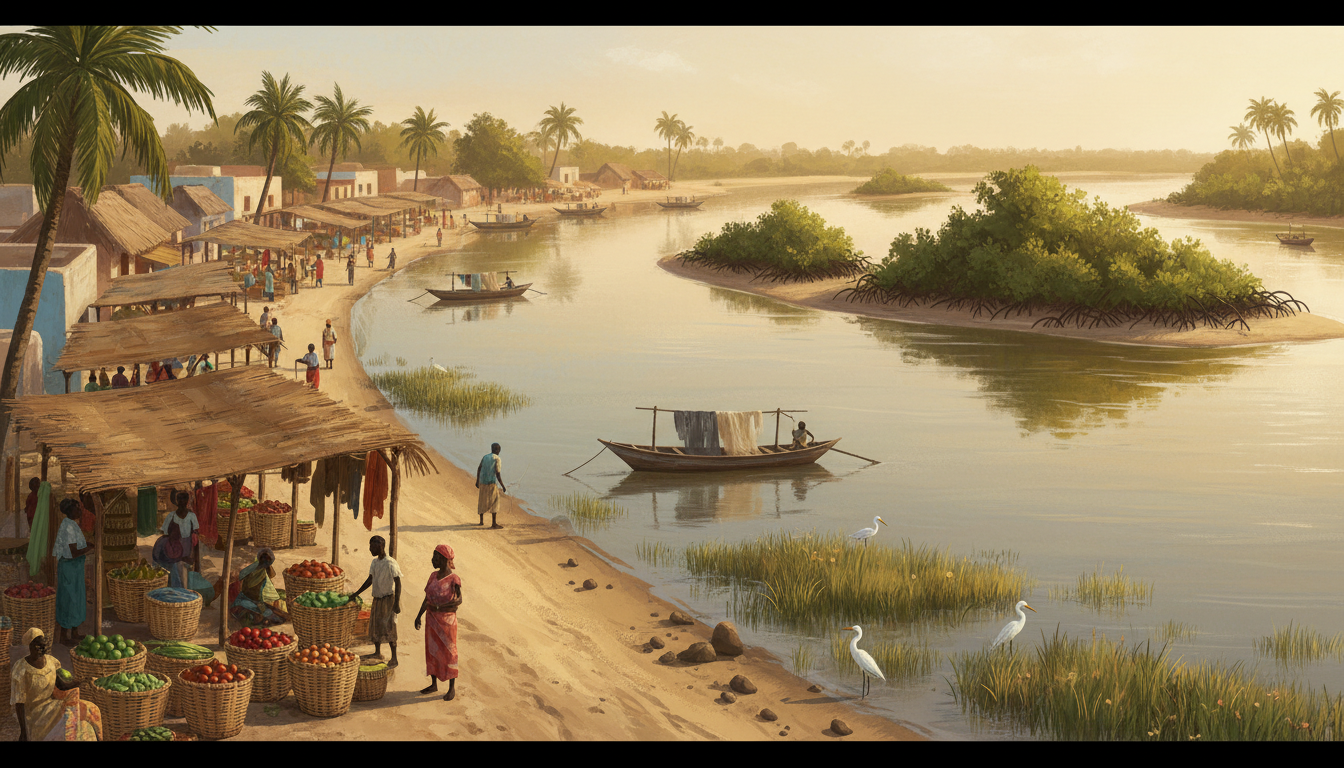
Did you know that The Gambia’s river helps explain its places as much as its Atlantic beaches do? The best places to visit in The Gambia connect coastal towns, forest reserves, working fishing communities and important historical sites. Following those contrasts makes a first visit more interesting than spending every day in the same holiday setting.
Our ten places are Banjul, Kachikally in Bakau, Abuko Nature Reserve, Bijilo Forest Park, Kotu, Tanji fishing village, Makasutu Cultural Forest, Albreda and Juffureh with Kunta Kinteh Island, Janjanbureh and the Wassu Stone Circles. This Gambia travel guide gives you a clear choice between coastal outings and a properly planned inland journey. The linked heritage sites in the eighth entry belong to one historical learning route.
Begin with a comfortable coastal base, choose a few nearby interests and give an upriver visit its own time. Confirm boat and road connections, use knowledgeable local guides and check current travel advice, weather and site access. A thoughtful Gambia itinerary makes room for birds, conversation and meals while treating difficult historical subjects with the attention they deserve.
EXPLORE THE GAMBIA
Find your reading route
Explore the capital and nearby cultural sites, compare coastal nature and daily life, then follow the river inland.
The Gambia at a glance
| Place | What it adds | Planning context |
|---|---|---|
| Banjul | A working capital that gives the country’s daily life a place in the journey. | City outing from a coastal base |
| Kachikally in Bakau | A sacred site and museum context for local cultural learning. | Follow custodians’ guidance |
| Abuko Nature Reserve | A forest reserve that rewards patient observation. | Approved paths and current opening checks |
| Bijilo Forest Park | A forest contrast close to the main coastal tourism area. | Nature visit; wildlife distance matters |
| Kotu | A coastal base where rest and selected outings can sit together. | Confirm the exact accommodation setting |
| Tanji fishing village | A working coastal community connected to the daily catch. | Guided visit; working spaces first |
| Makasutu Cultural Forest | A managed experience linking natural settings and cultural interpretation. | Book the specific visit through the provider |
| Albreda and Juffureh with Kunta Kinteh Island | A connected heritage route for understanding the Atlantic slave trade. | Sensitive history; boat and site access checks |
| Janjanbureh | An inland river destination with community-led heritage interpretation. | Give the upriver journey its own stay |
| Wassu Stone Circles | An important archaeological heritage site within the Senegambian ensemble. | Inland visit; use site interpretation |
Choose a place to explore
PLACE 1 OF 10
1. Banjul
A working capital that gives the country’s daily life a place in the journey.
Banjul is a valuable contrast to a beach stay because it is the capital’s ordinary life that gives the visit substance. Markets, streets and public buildings invite you to notice how people work and move through the city. Choose a few purposeful stops rather than expecting a hurried drive to explain everything.
A knowledgeable guide can help you understand the setting and choose a suitable walk. Agree on the route and duration before starting, and ask about current access to any cultural venue. A manageable outing leaves more room for questions than an overfilled list.
If you visit a market, remember that people are trading and shopping. Ask before photographing a stall, keep out of working routes and browse considerately. A question about a material, ingredient or craft can be a pleasant beginning to conversation when the person is willing.
Banjul suits travellers who want their holiday to include contemporary national life as well as scenery. After the visit, think about what the city helped you understand that the hotel setting could not. That small reflection can connect the capital to the rest of the journey.
PLACE 2 OF 10
2. Kachikally in Bakau
A sacred site and museum context for local cultural learning.
Kachikally deserves attention as a culturally significant place, not simply somewhere to take a crocodile photograph. The site’s own account emphasises its place in Bakau’s history and culture. Begin with the interpretation and ask what visitors should understand about the setting.
Follow the custodians’ instructions on access, conduct and photography. Sacred associations should be described through the people responsible for the place rather than turned into a universal statement about every Gambian community. A respectful question is useful; insisting on a performance or personal disclosure is not.
Keep a sensible distance from crocodiles and do not seek touching, posing or close contact. An animal appearing still does not make it safe to approach. The visit’s cultural and educational value does not require a physical encounter.
Allow time for the museum or explanation that is currently available, and confirm arrangements before arriving if that is your main interest. Kachikally suits travellers who want a meaningful introduction to a specific local place. Leaving with a clearer understanding is a better memory than leaving with only a dramatic image.
PLACE 3 OF 10
3. Abuko Nature Reserve
A forest reserve that rewards patient observation.
Abuko offers an outdoor visit with a different pace from the coast. The environment ministry identifies its gallery-forest habitat as a significant part of the reserve’s value. That gives you a useful starting question: what changes when water and vegetation create a more sheltered environment?
Choose a route through current reserve guidance and consider a local nature guide if you want help noticing birds and other signs of wildlife. Confirm which paths and facilities are available. An older reserve description may explain its importance without describing the visitor arrangements today.
Move quietly and let the walk include pauses. Looking at leaves, listening for calls or noticing a movement in the shade can be more rewarding than continuously searching for a large animal. You do not need to identify everything immediately to enjoy paying attention.
Carry water and suitable footwear, stay on approved routes and avoid feeding wildlife. Abuko suits travellers who appreciate a nature outing centred on curiosity. It is a good reminder that a small observed detail can be the most memorable moment of a day.
PLACE 4 OF 10
4. Bijilo Forest Park
A forest contrast close to the main coastal tourism area.
Bijilo is appealing when you want a nature experience without making a separate inland journey. A forest walk can interrupt the comfortable routine of a beach stay and give you another way to see the coastal environment. Go for the habitat and the opportunity to observe, rather than a promised animal encounter.
Check the current visitor entrance, access and route advice before setting off. Nearby does not mean every path is public or every activity is permitted. A short authorised outing can be enough, especially if you want to keep the day relaxed.
Do not feed monkeys or other wildlife, even if someone offers food for that purpose. Feeding can change behaviour and encourage animals to approach people. Keep belongings secure, give wildlife room and let observations happen at a respectful distance.
Bijilo suits travellers who want an accessible forest visit and are happy to slow down. Ask a guide about the relationship between vegetation, birds and other animals. Those connections make the walk more meaningful than simply counting how many creatures come close.
PLACE 5 OF 10
5. Kotu
A coastal base where rest and selected outings can sit together.
Kotu is useful to consider when you want the coast to provide a comfortable base rather than a daily change of hotel. Time beside the sea can be a real part of understanding the holiday setting. Let some of the visit remain simple: a walk, a meal and a familiar place to sit.
Check where the property actually is and what the booking includes. A broad area name does not establish the distance to the beach, transport or your planned outings. Ask about the arrangements that matter to your group, including mobility, meals and any specific support.
For swimming, follow current local advice about conditions and suitable areas. A flat-looking beach does not establish safe water at every moment. Keep children appropriately supervised and choose an activity according to ability and the conditions on the day.
Kotu suits travellers who enjoy having a consistent base while visiting other places selectively. If birdwatching interests you, ask a reputable local guide which nearby authorised outing is suitable. There is no need to replace every quiet hour with a tour; feeling settled can make the whole trip more enjoyable.
PLACE 6 OF 10
6. Tanji fishing village
A working coastal community connected to the daily catch.
Tanji can help you understand the coast as a place of work. Fishing and the activities around the catch connect water, transport, trade and food in a visible way. The attraction is real daily activity, so approach the visit with consideration for the people doing it.
Use a knowledgeable local guide or a suitable recognised arrangement. Ask when and where a visit is appropriate rather than assuming that any busy landing area welcomes unrestricted sightseeing. Stay out of the routes used to move boats, equipment and goods.
Photograph people only with permission, and avoid turning difficult or strenuous work into an anonymous spectacle. A guide may help explain how tasks fit together, but residents decide what they want to share. If conversation is welcome, ask about a specific process rather than demanding a general story of life.
Tanji suits travellers interested in how a coastal economy works. You can leave with a clearer sense of the journey from sea to market and meal. That is a substantial travel experience, even without a long stay or a large collection of photographs.
PLACE 7 OF 10
7. Makasutu Cultural Forest
A managed experience linking natural settings and cultural interpretation.
Makasutu offers a way to combine environmental observation with an interpreted visitor experience. The tourism association describes a cultural-forest setting with different habitats. Ask what the current visit includes so you can choose between a day outing, a stay or another available arrangement.
A cultural presentation is a particular interpretation, not a complete account of everyone’s life in The Gambia. Listen to the explanation and ask what is being represented. That distinction helps you enjoy the experience while keeping your understanding appropriately specific.
If a guided walk or boat activity is included, confirm its suitability for your group and follow the provider’s instructions. Ask about the route, equipment and return arrangements. The peaceful appearance of a forest or creek does not remove the need for an assessed activity.
Makasutu suits travellers who like an organised experience with time to listen and observe. Leave the day enough room for the setting rather than booking it between unrelated distant stops. A few good explanations can make the landscape and presentation stay with you longer.
PLACE 8 OF 10
8. Albreda and Juffureh with Kunta Kinteh Island
A connected heritage route for understanding the Atlantic slave trade.
This group of places calls for a different kind of attention. UNESCO recognises Kunta Kinteh Island and related sites for their significance in the history of encounters along the river and the Atlantic slave trade. Approach the route as historical learning, with room for difficult questions and reflection.
Use knowledgeable interpretation and read the relevant museum or heritage material carefully. Ask which claims are supported by documented evidence and which belong to later storytelling or cultural memory. Both can matter, but they should be identified accurately.
Confirm which mainland sites and any island visit are currently accessible, together with the boat arrangements and conditions. A heritage listing does not guarantee a particular landing or route on the day. A mainland explanation can remain valuable if an island visit is unavailable.
Treat the experience with dignity. Avoid playful posing at places associated with enslavement and suffering, and respect local photography guidance. This route suits visitors who want to understand the country’s place in a wider history and are prepared to give the subject more than a quick excursion.
PLACE 9 OF 10
9. Janjanbureh
An inland river destination with community-led heritage interpretation.
Janjanbureh gives the journey a different scale and pace from the main coastal tourism area. Its community-centred destination initiative emphasises heritage, local guides and responsible travel. That makes it a useful place to begin an inland visit through people who know and interpret the setting.
Plan the journey and accommodation as a complete arrangement. Ask how you will arrive, where you will stay and what activities are available on your dates. An inland destination should not become a rushed detour simply because it shares the same national map as the beach.
Choose an experience that connects the town’s history with present community life. Ask how the guide’s account relates to particular streets, buildings or places. If a cultural event interests you, verify its dates, visitor arrangements and photography expectations with those responsible for it.
Janjanbureh suits travellers who want to stay long enough for the river setting to become familiar. A considered guided visit and a quiet period of observation can be more valuable than several hurried stops. Give local people the opportunity to explain their own place.
PLACE 10 OF 10
10. Wassu Stone Circles
An important archaeological heritage site within the Senegambian ensemble.
Wassu is a compelling place to ask how archaeology helps us understand a past that is no longer directly visible. The stone circles belong to the UNESCO-recognised Stone Circles of Senegambia. Their arrangement invites careful attention, but it should be interpreted through the evidence rather than an invented mystery story.
Begin with the available site or museum explanation. Ask what excavations have established, what the stones’ setting tells researchers and what remains uncertain. A clear distinction between knowledge and speculation makes the visit more interesting, not less.
Follow the managed route and avoid climbing, moving or touching stones where that is prohibited. Keep the wider setting in view rather than concentrating on a single object for a photograph. Archaeological value often depends on relationships between features and their surroundings.
Wassu works well as a planned part of an inland heritage journey, with current transport and access confirmed. It suits travellers who enjoy patient historical learning. Leave with one or two well-understood ideas rather than trying to memorise every detail during a short stop.
How to plan a thoughtful The Gambia visit
Separate coastal outings from an inland stay
Use a coastal base for selected city, forest and community interests, then decide whether an upriver journey fits your time. Give inland transport, accommodation and interpretation their own plan. This makes both parts more enjoyable and prevents long travel days from absorbing the visit itself.
Choose guides for what you want to understand
A birdwatching outing, a market visit and a difficult heritage subject need different knowledge. Ask about the guide’s experience and agree on the route, service and fees. A useful guide helps you notice and interpret, rather than simply taking you quickly between photographs.
Confirm boats, routes and return arrangements
For river or island activities, establish the departure point, vessel, safety equipment and return option. Ask what happens if conditions change. Do not depend on an old itinerary to settle current landing access, and avoid a tight onward connection after a weather-sensitive outing.
Prepare for heat and seasonal conditions
Carry water, appropriate sun protection and footwear suited to the outing. Check current advice on weather, flooding and service disruption. Ask your accommodation how it handles power or communication interruptions if those would affect your group’s needs.
Keep animals and working communities comfortable
Do not feed wildlife or seek close contact with crocodiles. At markets and fishing areas, ask permission for photographs and stay clear of work. The quality of the experience comes from attention and understanding, not from persuading a person or animal to perform for you.
Approach historical suffering with care
At slave-trade heritage sites, allow time for interpretation and reflection. Distinguish documented history from later stories, respect local guidance and avoid treating the setting as entertainment. Check entry and health requirements for your own circumstances before making the overall travel arrangements.
Frequently asked questions
Can a beach holiday include cultural learning?
Yes. A few considered outings to the capital, a local cultural site or a working community can add depth without filling every day.
Should I feed monkeys at Bijilo?
No. Keep wildlife at a respectful distance and avoid feeding, which can encourage animals to approach visitors.
Is touching a crocodile necessary at Kachikally?
No. Keep your distance. The site’s cultural and museum context offers a worthwhile visit without physical contact.
Are the river heritage sites a quick coastal detour?
Plan the actual journey rather than assuming they are. Transport, boat access, site opening and interpretation need enough time to work together.
What makes Janjanbureh worth a separate stay?
It offers an inland river setting and community-led heritage learning. Staying gives you time to understand the place beyond a short stop.
How should I understand Wassu’s stone circles?
Begin with the archaeological interpretation and ask what is established and what remains uncertain. Avoid inventing explanations from appearance alone.
Sources and further reading
Destination information and travel advice checked on 13 October 2026, Singapore time. Heritage accounts explain a place’s significance; they do not confirm current opening, transport or activity access. Recheck official guidance and the relevant operator before making arrangements.
- Government of The Gambia: tourist information
- Tourism and Travel Association of The Gambia: visitor places
- Environment ministry: protected-area background
- Kachikally: the site’s own cultural information
- Destination Janjanbureh: community-led visits
- UNESCO: Kunta Kinteh Island and related sites
- UNESCO: Stone Circles of Senegambia
- UK FCDO: The Gambia travel advice