
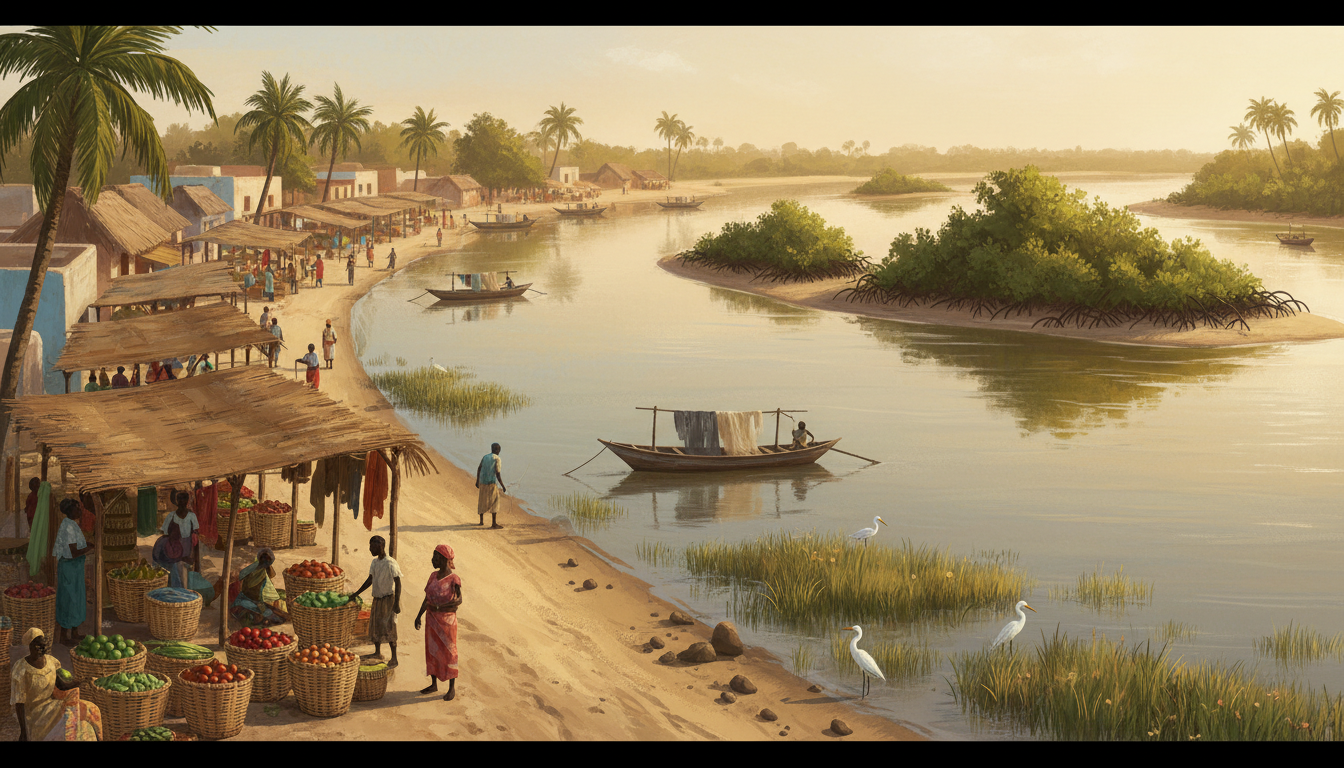
The best things to do when visiting and touring The Gambia begin with its remarkable river geography. The country stretches inland from the Atlantic Ocean alongside the Gambia River, and its cultural history, birds, beaches and trading communities reflect that relationship. Visitors can discover Banjul’s museums and markets, Bakau’s culturally important Kachikally Crocodile Pool, the forests of Abuko and Bijilo, traditional fishing communities and the UNESCO-listed Kunta Kinteh Island and Stone Circles of Senegambia. Those places deserve distinct days and genuine respect rather than a hurried beach-holiday checklist.
This Gambia travel guide explains ten meaningful experiences, including a first-time coastal itinerary, responsible birdwatching, Gambia River history, upriver cultural learning, African crafts and practical entry and safety information. Whether you are searching for things to do in Banjul, Abuko Nature Reserve, Kunta Kinteh Island, Makasutu Forest, Wassu Stone Circles or Janjanbureh, start with the actual route. A picturesque riverbank on a map does not guarantee a safe ferry, and a site associated with the transatlantic slave trade deserves serious interpretation rather than a cheerful souvenir photograph.
Travel advice checked 9 October 2026: UK FCDO guidance describes visa-free entry stamps of 28 days for British citizens, a US$20 airport security fee on arrival and departure, and yellow-fever requirements for arrivals from certain countries. It warns about crowded and potentially unsafe Banjul–Barra ferries, theft, flooding during June–October and periodic power shortages. Confirm your own nationality’s entry requirements and current conditions before travel.
eduKateSG · A WORLD WORTH UNDERSTANDING
Gambia: follow the river with care
The Gambia at a glance
The Gambia is a narrow West African country surrounding the lower and middle Gambia River and bordered by Senegal on land. Banjul lies at the river mouth, with Bakau, Serrekunda, Kololi and Kotu among the connected western coastal and urban areas. Mangrove waterways, villages, farms, bird habitats and Atlantic beaches form a landscape strongly influenced by river transport and seasonal rainfall.
UNESCO recognises two Gambian World Heritage properties: Kunta Kinteh Island and Related Sites, associated with histories of African-European encounters, forced enslavement and the slave trade, and the Stone Circles of Senegambia, a transboundary property shared with Senegal. Neither can be understood responsibly as a casual trophy stop between beaches.
A short first visit can concentrate on Banjul-area history, cultural encounters, an approved coastal nature reserve and good food. A journey to Juffureh, Wassu or Janjanbureh needs a more substantial road or boat plan. The fact that a destination appears on an official tourism list does not confirm an operating ferry or suitable guide on your date.
Safety, river crossing and cultural respect
The FCDO warns about petty theft in markets, on beaches and at busy tourist locations. Travellers may encounter persistent offers of unofficial guiding; decline unwanted help politely and choose established local professionals. The Gambia is a Muslim-majority country, so dress and behaviour should respect religious spaces and local customs, especially during Ramadan. Ask people before taking their photographs.
Of particular importance is the Banjul–Barra ferry. British government guidance describes overcrowding, poor maintenance and inadequate lifesaving equipment, and mentions the Senegambia Bridge as a potential alternative road connection. Wooden pirogues also carry safety concerns on longer journeys. Never accept an overloaded vessel merely to preserve an itinerary; check the full route with a reputable operator.
Rain between June and October can cause flooding and make rural roads impassable. Nighttime driving is hazardous because lighting and road conditions may be poor; some areas also experience power cuts. Carry appropriate health and immigration documentation and seek qualified travel-medicine advice about malaria and yellow-fever vaccination rules for your route.
1. Get to know Banjul through its museum and river-mouth setting
Start with the capital and its geography. Banjul occupies an important location close to the river’s Atlantic mouth, and that position shaped trade, administration and links with inland communities. A historic walk or cultural institution makes much more sense when you understand how the river connects this small capital to the wider region.
The Gambian government identifies the National Museum and cultural attractions among visitor possibilities. A museum collection can explain local people, material culture and history beyond a single colonial narrative. Check that it is genuinely open before travelling; an old web listing is not an admission schedule. Try a well-hosted market or food visit to understand ordinary life as well as formal monuments.
Choose modest transfers and safe public areas. Working ports, ferry facilities and traffic are not sightseeing spaces where every camera angle is appropriate. Ask guides about heritage and contemporary work, and obtain consent before photographing traders or residents.
Make it meaningful: Pair a verified cultural venue with a local food or craft experience.
Check before going: Confirm opening hours, safe urban transport, ferry needs, local conditions and photography permission.
2. Approach Kachikally Crocodile Pool as living cultural heritage
Kachikally in Bakau is well known among visitors, and it combines a crocodile habitat with community cultural meanings. It should not be reduced to a photo opportunity involving a dangerous animal. A reputable local interpreter can explain who cares for the place and why it has held significance across generations.
Observe the animals calmly. Crocodiles remain potentially dangerous, regardless of photographs that suggest close handling, and nothing obliges a visitor to touch one. Respect rules around any sacred or private areas, and treat local explanations with the same care as you would the natural-history information.
Bakau can fit a west-coast day, but venue opening, road delays and animal welfare need planning. A visit is more memorable when you learn about its people, history and protections rather than trying to imitate the most dramatic image online.
Make it meaningful: Use an approved keeper or guide to learn about the habitat and the site’s community history.
Check before going: Check visitor access, animal safety, permissions and whether photography is welcomed.
3. Find birds and quiet forest detail at Abuko Nature Reserve
Abuko is among The Gambia’s established protected nature areas and a notable birdwatching destination. The official tourism pages highlight its wildlife and greenery. Walk with patient attention: a bird call, an insect or a changing layer of vegetation can reveal more ecological information than a search for a single charismatic animal.
Choose a naturalist who knows how to observe without interfering. Some wildlife remains hidden in thick vegetation and the forest’s value does not disappear when no monkey or unusual bird can be seen. Understand how water, plants and seasonal rain support different organisms and what conservationists seek to protect.
Reserve access through the appropriate manager and stay on approved paths. Heat, mosquitoes, slippery trails and uncertain opening conditions matter. A good family outing is a safe, thoughtful forest experience rather than an attempt to photograph every species listed on a brochure.
Make it meaningful: Take a guided nature walk focused on habitat and patient bird observation.
Check before going: Confirm current opening, trail status, suitable clothing, wildlife safety and the actual guide arrangements.
4. Explore Bijilo and Kotu without feeding wild monkeys
Bijilo Forest Park near the western coastal tourism area provides a different encounter with nature from Abuko. Forest paths and wildlife make it attractive for a short outing, while nearby Kotu’s wetland and birding areas explain how even urban-edge habitats can support impressive birdlife. The value of these places comes from ecological relationships, not an invitation to approach animals.
Monkeys seen near paths are still wild. Feeding them changes behaviour and can lead to aggression, poor health and conflict with people. A responsible naturalist observes quietly, follows marked trails and explains species and habitat without encouraging a selfie encounter. In wet areas, binoculars are often more useful than a long camera lens.
Bijilo and Kotu can form part of a coastal base itinerary, but park access, guide policies and actual paths differ. Rain, heat and crowds change conditions. Choose one manageable outing rather than insisting on both a forest walk and a long wetland expedition before lunch.
Make it meaningful: Choose an approved forest or birding walk and learn why wildlife should remain wild.
Check before going: Verify entrance rules, trail condition, animal-distance guidelines and the guide’s competence.
5. Understand Tanji through fishing and coastal birdlife
Tanji is associated with a busy fishing community and protected coastal habitat. Watching fishing boats, fish processing and trade from an appropriate public setting can help explain how the Atlantic supports livelihoods. The work is often visually striking, but the people involved are not performers and should not be photographed or interrupted without permission.
The Tanji bird reserve and surrounding shore can offer another natural-history chapter when conditions permit. Ask how the coast changes with the tide and what kinds of birds use beaches or nearby vegetation. A good nature guide helps visitors appreciate an ecosystem without trampling nesting or feeding areas.
Separate a legitimate village and market experience from any sensitive conservation access. Fish markets have working hazards and routines, while ocean swell can make exposed areas unsafe. An unhurried, locally hosted morning can reveal more than rushing from one picturesque scene to another.
Make it meaningful: Explore one responsibly hosted fishing-community or birdwatching activity and support local livelihoods.
Check before going: Check tides, market activity, park access, safe routes and consent for photography.
6. Discover Makasutu’s forest and community stories
Makasutu is known for a forest and mangrove landscape south of the main coastal tourism corridor. Visitor accounts describe opportunities to learn about woodland ecology, waterways and cultural traditions, but individual operators and programmes change over time. The responsible first step is to verify what is actually running and who manages the activities.
A hosted woodland walk or boat outing can reveal the relationship between plants, birds, local livelihoods and changing water conditions. Ask a guide what makes the forest special and why some areas need to remain undisturbed. Human cultural experiences should be offered with explicit invitation and a fair relationship with the people sharing them.
Do not assume every photo of a forest lodge or river boat represents a current public service. A good tour provider should explain transport, safety equipment, weather contingency and any community permissions rather than only advertising scenic stops.
Make it meaningful: Choose an actively operating, community-respectful nature experience with a clear safety plan.
Check before going: Verify operator, watercraft condition, access rights, actual programme and return transport.
7. Study Kunta Kinteh Island and the history of forced enslavement
Kunta Kinteh Island and Related Sites form one of The Gambia’s two UNESCO World Heritage properties. Located in and along the Gambia River, the property records centuries of European-African encounters and the historical systems of commerce, coercion, enslavement and abolition. It deserves seriousness and accurate interpretation, not a cheerful ‘hidden gem’ tone.
UNESCO identifies several associated places, including sites at Albreda, Juffureh and the river mouth. The island’s fort remains are vulnerable, and their meaning lies in the suffering and resistance connected with the transatlantic slave trade. A local heritage guide who can explain context and community memory is worth more than a quick photograph of crumbling walls.
Getting there may involve a boat and a substantial ground journey. The FCDO explicitly warns that some Gambian river ferries and pirogues are poorly equipped and overloaded. Do not make a dangerous crossing simply to add a historic site to the itinerary; verify legal and safe arrangements or study the UNESCO records instead.
Make it meaningful: Use respectful heritage interpretation, with appropriate recognition of enslaved people and descendants.
Check before going: Check the route, vessel safety, site conservation access and professional interpretation.
8. Discover the Stone Circles of Senegambia at Wassu
The Stone Circles of Senegambia is a UNESCO World Heritage property shared by The Gambia and Senegal. Its inscribed group includes archaeological stone-circle sites associated with complex funerary and cultural histories. Wassu is a familiar Gambian destination for learning about these monuments, but it is a different journey from the coastal settlements and cannot be treated as a short beach afternoon.
Begin with evidence rather than speculation. What do the arrangements of stones indicate? How do archaeologists establish a site’s age and use? Why do protection, excavation and local oral histories matter? The monuments are fascinating precisely because research brings together material traces, interpretation and remaining uncertainties.
Travel upriver requires proper road planning and, where applicable, safe crossing arrangements. Follow protected-site paths and never stand on, move or scratch stones. Make time for the actual museum or guide service if confirmed, rather than arriving without knowing whether anyone is available to interpret the site.
Make it meaningful: Allow a full heritage chapter with an authorised local guide and careful archaeology interpretation.
Check before going: Verify road and ferry arrangements, UNESCO site access, conservation rules and seasonal weather.
9. Discover Janjanbureh’s upriver community heritage
Janjanbureh, historically also known as Georgetown, provides an inland chapter of Gambian life along the river. Community-led tourism initiatives promote heritage, local arts, food and experiences that reflect the people who live there now. This is a valuable alternative to a story told entirely through coastal resort photography or European colonial buildings.
Ask a local host how river transport, crafts, trade and seasonal life shape the town. The Janjanbureh festival and heritage projects are particularly interesting when interpreted by their own organisers, who decide which songs, food traditions and histories to share. An advertised annual event should not be treated as happening every week; travel must match an actual published programme.
Janjanbureh deserves travel time, lodging and an appropriate river or bridge strategy. The journey is not automatically completed by a quick boat ride from Banjul, and its services may differ across seasons. A respectful visitor supports local initiatives rather than arriving uninvited and expecting a performance.
Make it worthwhile: Choose a community-led cultural or heritage visit, with time for food and an authentic local conversation.
Check before going: Confirm the organiser, actual dates, access, safe road and river crossings, and permission to share images.
10. Learn from Kiang West and the wider river’s bird habitats
Kiang West National Park and the wider Gambia River landscape provide important habitats for birds and other wildlife. The official Gambian tourist information highlights the country as a birdwatching destination and names Kiang West among notable protected areas. River, savanna, woodland and wetland habitats support different species at different times of the year.
A guided nature outing is more rewarding when you learn to read the environment rather than chase a species list. A naturalist may explain how birds depend on water levels, insects, shrubs and seasonal changes. Bird calls, tracks and habitat conditions can be fascinating even when the largest or most colourful species remain out of sight.
Remote nature travel is sensitive to heat, rainfall, road surfaces and protected-area rules. Do not attempt off-road entry or assume a distant park has a staffed visitor service at every hour. Use an authorised guide and plan supplies, daylight, return transport and communications carefully.
Make it worthwhile: Spend time on an approved birdwatching or ecological interpretation route with a qualified local naturalist.
Check before going: Confirm protected-area management, current access, season, route safety and return logistics.
Choose a Gambia route that fits the days available
Four to six days: coast, city and nature
Stay within the Banjul, Bakau, Kololi or Kotu region, choosing one cultural day and one or two approved forest or birding activities at Abuko, Bijilo or Tanji. Leave time for the coast and food rather than a new destination every morning.
A heritage-focused Kunta Kinteh journey
Treat Kunta Kinteh Island, Albreda and related history as a full, seriously interpreted chapter. Use verified transport and weather conditions, not a rushed overnight plan. The absence of safe river transport is a reason to change plans.
A deliberate upriver archaeology route
Wassu’s stone circles and Janjanbureh’s community heritage work best with several days, a reputable driver and confirmed accommodation. Do not advertise them as a routine day tour from the Atlantic resorts without assessing actual road and river logistics.
A quieter wildlife and birdwatching programme
Choose coastal reserves or a properly planned Kiang West visit, depending on route safety and guide availability. Learn about habitat and conservation rather than promising every animal listed on an operator website.
Food and living communities as the central theme
Pair markets, hosted cooking or craft experiences with one accessible forest or waterfront walk. Listen to Gambian hosts and do not treat ordinary residents as attractions staged for a travel photograph.
Practical decisions for safe and respectful travel
Start with nationality-specific entry rules. The FCDO says British visitors generally receive a 28-day visa-free stamp; it also describes a US$20 airport security fee both on arrival and departure. Other passports may be treated differently. Check the relevant Gambian diplomatic or migration authority, especially for land crossings, onward travel and yellow-fever documentation.
River routes are a particular planning challenge. The Banjul–Barra ferry can be overcrowded and poorly equipped, and wooden pirogues are not recommended for long journeys under UK guidance. Choose competent operators with life jackets or a suitable road alternative, and never board an unsafe vessel to preserve an itinerary.
Rain from June to October can cause flooding, poor road access and power interruptions. Travel during daylight when possible, maintain a backup for communications and take normal precautions with valuables. At religious, cultural or community spaces, dress and photograph respectfully and pay local guides and makers fairly.
- Confirm entry conditions, airport fees and health documents for your passport.
- Use reputable guides and verify local cultural invitations.
- Do not board overloaded ferries or unsafe pirogues.
- Keep money and valuables secure around markets and coastal tourism areas.
- Allow heavy-rain and rural-road buffers during June–October.
- Use authorised wildlife and heritage access, with no feeding of wild animals.
- Treat Kunta Kinteh and the slave-trade history with appropriate seriousness.
- Never assume every river, forest or community space is open to visitors.
Twelve useful English–中文 travel words
These bilingual English–Chinese expressions help readers prepare, but they do not replace Gambian languages, local cultural etiquette, official transport information or a guide’s instructions.
| English | 中文 | Practical reminder |
|---|---|---|
| river | 河流 | The river shapes the country. |
| mangrove | 红树林 | Sensitive tidal habitat. |
| ferry | 渡轮 | Check crowding and equipment. |
| life jacket | 救生衣 | Essential on suitable boats. |
| birdwatching | 观鸟 | Observe quietly without feeding. |
| nature reserve | 自然保护区 | Stay on authorised paths. |
| stone circle | 石圈 | Protected archaeological evidence. |
| memorial | 纪念场所 | Approach difficult histories respectfully. |
| local crafts | 当地手工艺 | Credit makers and their labour. |
| fishing village | 渔村 | Ask consent before photography. |
| rainy-season flood | 雨季洪水 | Road access may change. |
| airport fee | 机场费用 | Check official charges and payments. |
A travel notebook that sees beyond the picture
Draw the Gambia River from its mouth towards the inland heritage sites. Mark Banjul, Kunta Kinteh, the Stone Circles and Janjanbureh, then draw a second layer showing travel time, weather and safe crossing questions. This reveals why a small country may require several distinct itinerary chapters, especially when a waterway rather than a motorway shapes movement.
After visiting a market, protected woodland or historic place, record what a local person chose to explain and who they are, with permission. A craftsman’s technique, a bird guide’s quiet observations or a heritage interpreter’s explanation of suffering and resistance may transform what you thought you knew. Respect and attribution are as important as your own enjoyment.
Frequently asked questions about The Gambia
What is worth visiting on a first Gambia holiday?
A Banjul-area cultural introduction, a well-managed nature reserve and a community-led coastal or forest experience make a coherent beginning.
How many Gambian UNESCO World Heritage properties are there?
Two: Kunta Kinteh Island and Related Sites and the Stone Circles of Senegambia, the latter shared with Senegal.
Is the Banjul–Barra ferry safe to assume for a tour?
No. The FCDO reports overcrowding, maintenance and lifesaving-equipment problems. Consider a verified alternative and never board an unsafe vessel.
Do British citizens need a Gambia tourist visa?
Current FCDO guidance says British visitors normally receive a 28-day visa-free entry stamp. Requirements for other passports may differ.
When is the rainy season?
The UK advice identifies June to October as a period when heavy rain may cause flooding and road disruption.
Can visitors touch crocodiles or feed monkeys?
Treat all animals as wild and potentially dangerous. Follow approved reserve instructions and do not feed or crowd them for a photograph.
Original references and onward reading
Government tourism, UNESCO and travel advisories support this article. They do not guarantee that a specific museum, route, ferry, guide or protected area is operating on a given day. Verify directly before booking.
- The Gambia government — official tourist information
- The Gambia government — places to visit
- The Gambia Tourism Board — visitor guide
- UNESCO — The Gambia World Heritage properties
- UNESCO — Kunta Kinteh Island and Related Sites
- UNESCO — Stone Circles of Senegambia
- Janjanbureh — community-led visitor and heritage project
- UK FCDO — The Gambia travel advice
- UK FCDO — The Gambia entry and airport fee
- UK FCDO — ferries, road weather and traveller safety
Continue alphabetically: Gabon ← Gambia → Georgia. Return to the World Country Directory, the World City Experiences Directory or the World Travel Hub.