
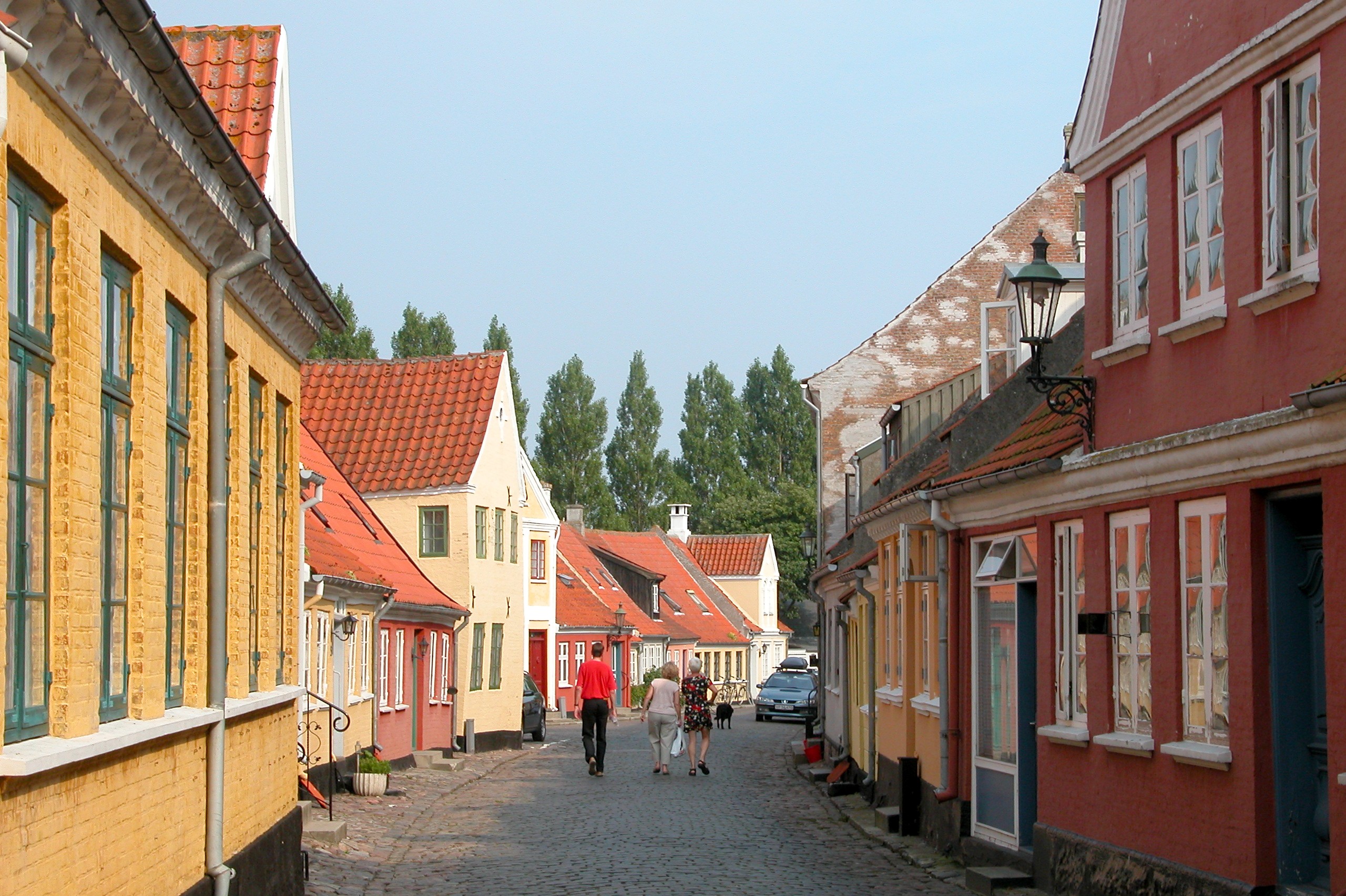
Ærø is a Danish island of cobbled maritime towns, pastel-coloured houses, tiny beach huts, working harbours, layered cliffs and green countryside. The top 10 things to do when visiting and touring Ærø are to wander Ærøskøbing’s old streets, discover Vesterstrand’s beach huts, visit Ærø Museum, experience Marstal’s seafaring heritage, explore Eriks Hale and its different shorelines, walk to Frederiksøen and the old lime kiln when safe, see the terraces of Voderup Klint, visit Skjoldnæs Lighthouse, observe birds and wetlands at Vitsø, and enjoy a suitable section of the island’s coastal paths.
Ærø is reached by ferries rather than by a bridge, and the arrival port matters. Ærøfærgerne operates year-round routes from Svendborg to Ærøskøbing and from Faaborg and Fynshav to Søby; a separate operator links Rudkøbing with Marstal. The route you choose changes the time available for sightseeing. For a first visit, use Ærøskøbing for a historic-town chapter, Marstal for shipbuilding and maritime learning, and western Ærø for the lighthouse, cliffs and nature. This guide explains what is genuinely open or weather-dependent and how to plan a comfortable island stay.
Start here: choose the right ferry and the right side of Ærø
Ærø lies among the islands and waterways south of Funen in Denmark. It combines several distinct settings: Ærøskøbing’s well-preserved town plan, Marstal’s shipbuilding history, the western landscapes near Søby, and the southern coast’s changing slopes and wetlands. Its maritime economy shaped buildings, labour, skills and connections between communities long before contemporary tourism.
The island’s famous beach huts are a useful example of how a photogenic sight can have a living history. They were built for local leisure and family traditions, not as a free public backdrop. Huts on Vesterstrand and Eriks Hale may be privately used or maintained, and some suffered serious damage in the October 2023 storm surge. VisitDenmark describes ongoing rebuilding at Marstal. Visitors should photograph them from public spaces without entering, touching or moving anything.
The harbour and ferry schedules make the island accessible, but also impose a planning discipline. A ticket to Søby is not the same as arriving beside Ærøskøbing’s cobbled streets; moving between towns takes additional time. Public buses and bicycles can be useful, but frequencies, weather and the condition of rural roads should be checked for the exact date.
Ærø’s appeal is not the demand to finish ten places in one afternoon. A good holiday includes the freedom to stay longer in a street that catches your imagination, read a museum display properly or spend a whole afternoon walking a safe stretch of coast. These slower decisions are what turn travel images into genuine understanding.
- Ærøskøbing: historic town, Vesterstrand and the island’s local museum are good companions.
- Marstal: pair the maritime museum, working harbour and a safe stretch of Eriks Hale.
- Western Ærø: choose Voderup Klint, Skjoldnæs Lighthouse and Vitsø as distinct nature and heritage experiences.
- Check whether the ferry arrives at Ærøskøbing, Søby or Marstal before booking lodging and onward transport.
- Keep water conditions, trail access and the least mobile traveller’s comfort in the daily plan.
Compare the ten activities on Ærø
| Experience | Area | Main reason to go | Practical check |
|---|---|---|---|
| 1. Explore the cobbled lanes of Ærøskøbing | Ærøskøbing; north-central coast | town | Stay on public streets and respect homes; check ferry or museum times separately. |
| 2. See the colourful beach huts at Vesterstrand | Near Ærøskøbing marina; Vesterstrand | coast | Respect private huts, dunes and posted bathing guidance. |
| 3. Learn island history inside Ærø Museum | Ærøskøbing; old bailiff’s house | heritage | Verify current opening and accessibility; respect exhibition photography rules. |
| 4. Discover Marstal’s seafaring history and shipbuilding | Marstal; eastern Ærø | maritime | Confirm museum hours; stay clear of working slipways and restricted docks. |
| 5. Walk carefully around Eriks Hale’s huts and two waters | Marstal; Eriks Hale | coast | Respect huts and repair works; follow safe public shoreline paths. |
| 6. Choose a safe Frederiksøen and old lime-kiln walk | Near Marstal; via Eriks Hale | history | Check water level and return access; never wade across uncertain conditions. |
| 7. Study Voderup Klint’s unusual terraced cliff | Southern Ærø; Voderup | geology | Use official access and stay clear of unstable edges and shore. |
| 8. Visit Skjoldnæs Lighthouse and see the western seaways | Western tip near Søby | heritage | Verify admission; mind the stairs and never stare directly into the lamp. |
| 9. Observe birds, wetlands and restoration at Vitsø | Western Ærø; near Søby | nature | Keep to designated tracks; protect birds and fragile meadow habitat. |
| 10. Walk a suitable segment of Ærø’s Coastal Path | Choose a marked section between Marstal and Vitsø | activity | Use current path guidance, adequate footwear and an achievable turnaround. |
Top 10 things to do on Ærø
1. Explore the cobbled lanes of Ærøskøbing
Ærøskøbing is often called a fairytale town, and its low houses, narrow cobbled lanes and historic market-town plan are certainly attractive. But it is also a real town, with homes, shops, schools and a busy ferry connection. It has received heritage recognition for long-term preservation, and that living continuity is more significant than its pastel colours alone.
Start with the old streets around the harbour and walk slowly. Notice the relationship between doors, windows, small courtyards and paving. A preserved town can still be occupied, adapted and maintained by today’s residents, and not every doorway or courtyard is open for visitors. Respect private boundaries and quiet lanes.
VisitDenmark highlights the town’s library, local shops, cafés and waterfront. A good first walk includes one ordinary business rather than only famous facades, because the local economy and preservation work must continue together. You might choose lunch, a bookshop or a short harbour pause.
If you enjoy writing, sketch a short explanation of what makes the town legible: the scale of buildings, materials, street widths and the relationship to the sea. This is much more descriptive than a list of house colours, and it makes a stronger record of a distinctive place.
Before you go: Stay on public streets and respect homes; check ferry or museum times separately. One question to explore: Why does a preserved town remain a working community rather than a museum? Take a short note that connects a real observation to a trustworthy explanation.
2. See the colourful beach huts at Vesterstrand
Vesterstrand is known for a line of more than seventy small, colourful beach huts. The huts are part of Ærø’s distinctive coastal heritage and have been maintained under rules that preserve their scale and appearance. Their orderly colours can make the shore seem like a carefully arranged exhibition, but they belong to an ongoing tradition of island recreation.
Visit from the public beach access and keep a respectful distance from private huts. If you want deeper background, the destination authority promotes local guided walks about their history; check dates and booking conditions. Photographs are best taken without leaning on buildings or including people in close-up without permission.
The beach itself may be good for walking or, under suitable conditions, swimming, but water safety is a separate judgement. Look at winds, bathing signs, water temperature and any lifeguard arrangement rather than assuming that an appealing image means the sea is safe. Vesterstrand is also suitable for a relaxed sunset stroll without entering the water.
Try comparing one hut with a larger harbour building. They are both structures at the water’s edge, yet one serves recreation and the other may support transport or work. Their materials and placement reveal these differences.
Before you go: Respect private huts, dunes and posted bathing guidance. One question to explore: How can a small beach hut become a lasting piece of community heritage? Take a short note that connects a real observation to a trustworthy explanation.
3. Learn island history inside Ærø Museum
Ærø Museum occupies a historic town building and offers a deeper explanation of the island’s people, politics and changing livelihoods. It is particularly helpful for visitors who want to understand why Ærø has such a distinctive local identity. The island’s relationship with the Duchy of Schleswig and Denmark is part of a wider history that a street walk alone may not explain.
The museum offers changing exhibitions and published admission times. Check its official visitor page rather than assuming the same programme operates in every season. Choose one artefact that relates to work and another that relates to social life. Ask what each item can show directly and which part of the narrative depends on documentary interpretation.
A museum visit can also complicate a simple nostalgic image of an island. Maritime trade, regional politics, family life, leisure, migration and contemporary tourism have not all changed at the same pace. The best exhibitions help readers connect those themes rather than freeze the island in an imagined past.
This is an excellent alternative when wind or rain makes a cliff walk undesirable. Pair it with lunch in Ærøskøbing rather than filling the same day with distant sights.
Before you go: Verify current opening and accessibility; respect exhibition photography rules. One question to explore: What can one household object tell us about political or social change? Take a short note that connects a real observation to a trustworthy explanation.
4. Discover Marstal’s seafaring history and shipbuilding
Marstal is the island’s largest town and has a strong seafaring and shipbuilding tradition. Its maritime museum, Marstal Søfartsmuseum, is one of the best places to understand that sailors, shipowners and navigators once formed the backbone of a major Danish trading community. The museum provides more than paintings of old vessels; it links material culture to work and education.
VisitDenmark describes exhibits on shipping and the town’s engine-making heritage, with connections to an active slipway and nearby maritime environment. Choose a few displays that illustrate navigation, hull design or how a ship was maintained. Read the labels rather than assuming every vessel represents the same period.
After the museum, walk an authorised section of harbour. The present marina, school of navigation and boat activities show that Marstal is still maritime. Compare a working slipway with a leisure harbour; both involve boats, but their purposes and safety rules differ.
Families can ask why a ship needs trained crew, maintenance and reliable instruments. This can become a practical discussion about knowledge transmission: maritime skills must be taught and tested if people are to travel safely across open water.
Before you go: Confirm museum hours; stay clear of working slipways and restricted docks. One question to explore: How did maritime training help an island town grow beyond its own shores? Take a short note that connects a real observation to a trustworthy explanation.
5. Walk carefully around Eriks Hale’s huts and two waters
Eriks Hale is a sandy spit close to Marstal, known for colourful beach huts and a meeting of different coastal environments. The official destination description distinguishes the sheltered ‘Little Sea’ on one side from the more exposed Baltic ‘Big Sea’ on the other. This contrast offers an unusually clear geography lesson within a short coastal walk.
Approach on a public route and observe changes in waves, sand and vegetation. A sheltered bay may feel calmer but is not automatically supervised swimming water, while the open sea may be colder and more exposed. Use actual weather conditions and posted guidance to decide whether bathing is appropriate.
The huts here are part of a lived-in heritage scene; several were severely damaged in a 2023 storm surge, and rebuilding has been ongoing. It would be inaccurate to promise that every old photograph reflects the current layout. Keep clear of work and do not enter a hut unless specifically invited.
A child can draw the spit and label the calmer side and exposed side. That simple task explains how the same strip of land can create two very different local conditions for people, birds and boats.
Before you go: Respect huts and repair works; follow safe public shoreline paths. One question to explore: Why might waves and water temperatures differ on opposite sides of a spit? Take a short note that connects a real observation to a trustworthy explanation.
6. Choose a safe Frederiksøen and old lime-kiln walk
Frederiksøen is connected to the main island by the Eriks Hale isthmus and contains remains of a historic lime kiln. VisitDenmark describes how the area had ship-related uses before part of it was rented for lime processing in the nineteenth century. This little journey shows how land and industry change together.
Use the official walking description and choose a suitable section based on tides, water level and weather. The landscape is dynamic: high water can make a route difficult or inappropriate. Do not assume an older map guarantees a dry crossing or that every stone structure is safe to enter.
Think about the practical reasons a coastal island might support ship repair or a lime kiln. Water access, transport of materials and demand from nearby towns influence industrial choices. Even a small, weathered structure can connect a place to a wider economic history.
If conditions are poor, stay at Eriks Hale and learn the story from shore. Reaching the kiln is optional; the purpose of the excursion is understanding the relationship between maritime work and an evolving coastline, not completing a potentially unsafe crossing.
Before you go: Check water level and return access; never wade across uncertain conditions. One question to explore: What could make a former ship-work site useful for a lime kiln? Take a short note that connects a real observation to a trustworthy explanation.
7. Study Voderup Klint’s unusual terraced cliff
Voderup Klint presents a dramatic stepped landscape rather than a single vertical wall. It is a well-known cliff in which large terraces reveal movement and change on the island’s southern coast. VisitDenmark describes a cliff approximately 33 metres high with several kilometres of distinctive step-shaped landforms.
Visit a managed viewpoint or official path and keep away from eroding margins. The stepped form is connected with the movement of saturated clay and coastal material, a process different from the sea simply cutting a hard vertical cliff. Read on-site interpretation if available and avoid assigning a precise age to every terrace without evidence.
This is a place where a landscape photograph needs context. A field above a slope, the drop toward the sea and the shapes below are connected. The terrace forms can look stable from afar even though natural processes continue to reshape the area.
Pair this outing with one short coastal route and a meal, not a rapid journey to both ends of Ærø. A careful viewpoint visit can be richly rewarding without forcing the whole group onto steep or wet tracks.
Before you go: Use official access and stay clear of unstable edges and shore. One question to explore: How can a cliff form several broad terraces instead of one steep face? Take a short note that connects a real observation to a trustworthy explanation.
8. Visit Skjoldnæs Lighthouse and see the western seaways
Skjoldnæs Lighthouse stands near Ærø’s western end and is a memorable landmark for learning how navigation and island geography work together. Built in the nineteenth century from carefully cut granite, it rises above the coast as a practical warning system for maritime traffic, not just as an ornamental tower.
Unlike some Danish lighthouses that are closed to visitors, official Ærø tourism information describes admission to Skjoldnæs Lighthouse for a modest fee, with a demanding stair climb. Still, access conditions and the safety of any after-dark visit should be confirmed before travel. A tower view is not compulsory for anyone uncomfortable with heights or stairs.
From an authorised viewpoint, observe water routes toward the South Funen Archipelago and the Baltic. Ask why a lighthouse light must be distinguishable from other coastal lights and why its characteristics matter to mariners. The surrounding landscape also reveals the relationship between open water and land routes.
If travelling with children, focus on the lighthouse’s purpose and basic structure, then enjoy a short outdoor stop. A clear explanation is more valuable than counting steps or measuring how high someone managed to climb.
Before you go: Verify admission; mind the stairs and never stare directly into the lamp. One question to explore: How does the position and characteristic of a lighthouse help navigation? Take a short note that connects a real observation to a trustworthy explanation.
9. Observe birds, wetlands and restoration at Vitsø
Vitsø is an important example of how landscape can change through both agricultural engineering and ecological restoration. VisitDenmark explains that the area was formerly drained for cultivation and that drainage was stopped in 2009, creating a nature area with a lake and wet meadows. Its value now includes habitat for breeding and migratory birds.
Choose an official marked path from an authorised entrance and take binoculars if you have them. A restoration landscape is not a promise of seeing a rare species; animals may be absent, feeding or resting at different times. Maintain distance and obey signs protecting nesting areas.
Ask which parts of the setting are shaped by human work. Dikes, waterways and fields can remain visible even where nature is returning. Conservation does not simply mean leaving an area alone; sometimes decisions about water management fundamentally change what habitats can develop.
Vitsø can be part of a short nature day near Søby. It is a useful alternative to another museum, particularly for families who want to connect local geography with questions about ecology and decision-making.
Before you go: Keep to designated tracks; protect birds and fragile meadow habitat. One question to explore: What changes when drained farmland becomes wetland again? Take a short note that connects a real observation to a trustworthy explanation.
10. Walk a suitable segment of Ærø’s Coastal Path
Ærø’s official Coastal Path runs for roughly thirty kilometres from Marstal toward Vitsø near Søby, passing fields, villages, coastline and important natural sites. It gives a way to experience the island’s scale on foot without turning the entire visit into a sequence of short car stops. The full route is not necessary to enjoy the path.
Choose a clearly marked segment that suits the least experienced walker and check where to turn around or connect with transport. A complete long-distance walk needs additional planning for weather, meals and accommodation. Different parts may have grass, gravel, slopes or muddy ground, so a distance number alone is not enough to assess suitability.
Along the way, observe how coastal travel differs from road travel. A footpath may follow the shore but leave it to avoid unstable or protected sections; this is sensible design rather than an inconvenience. Look for traces of agriculture and maritime history in the places the path connects.
This is a flexible tenth experience because it can be short or long. On a rainy day, you can use the time for a harbour museum instead. A successful outdoor day is one completed comfortably and respectfully, not a record of maximum distance.
Before you go: Use current path guidance, adequate footwear and an achievable turnaround. One question to explore: What do you notice at walking speed that a car journey hides? Take a short note that connects a real observation to a trustworthy explanation.
Two-, four- and seven-day Ærø itineraries
Two days: Ærøskøbing and Marstal
Spend your first day exploring Ærøskøbing and Vesterstrand, with a museum visit if open. Use the second for Marstal’s maritime museum and a suitable walk at Eriks Hale. This creates a strong historic-town and working-maritime contrast without requiring a race to the western tip.
Four days: add western landscape and learning
Give Ærøskøbing and Marstal their own days, then choose Voderup Klint for a safe coastal day and Skjoldnæs or Vitsø on another. Check ferry departure ports before selecting the order. You can replace a wetland walk with an indoor museum if the weather is poor.
Six or seven days: slow Ærø across the seasons
Add a segment of the coastal path, local craft or farm products, a second maritime walk and time in the town that you enjoyed most. A longer stay allows you to explore each region in suitable conditions and support businesses without arriving only at their closing time. Keep one flexible day before the ferry home.
These itineraries are deliberately flexible. A seasonal museum may be open on a day when the cliff trail is affected by rain, while a bright sunny afternoon may be better spent at a harbour or beach. Use the forecast and current opening hours to choose the sequence. A comfortable island holiday allows time for meals, short rests, conversations with local people and a return to a place worth seeing twice.
How to get to Ærø: ferries, routes and ports
Ærøfærgerne operates the principal ferry routes between Svendborg and Ærøskøbing, Faaborg and Søby, and Fynshav on Als and Søby. The official operator publishes the sailing calendars, fees and booking conditions. A separate operator, ÆrøXpressen, provides a route between Rudkøbing and Marstal according to the municipal ferry overview. The routes are not interchangeable: the arrival port determines where you begin the holiday.
A trip from Svendborg to Ærøskøbing commonly takes about seventy-five minutes according to the destination authority, whereas other routes differ. Avoid copying a fixed departure time from an old itinerary; the correct timetable depends on the date and possibly the weekday. Book your return at the same time as your outbound trip, especially when travelling with a vehicle. Car and bicycle capacity may be limited, and check-in deadlines matter.
For a car-free holiday, choose accommodation near a relevant port or a practical bus connection. Ærø’s landscape makes cycling attractive, but headwinds and the distance between towns can tire inexperienced riders. Verify bike rental and road conditions and avoid assuming that every route has a dedicated separated cycle track. The island’s public services and ordinary local roads support residents as well as visitors; a relaxed journey respects that shared space.
A one-day trip is possible with suitable ferry choices and a deliberately compact itinerary, but it should not include every famous attraction. A better day trip may be Ærøskøbing, the museum and nearby Vesterstrand, with the final return sailing clearly in view. An overnight or longer stay allows the maritime history of Marstal and western landscapes to become separate days.
Seasons, shore safety and protected nature
| Season | What may be appealing | What to check |
|---|---|---|
| Spring | Quiet town walks, fresh vegetation and longer daylight | Wind, museum programme and cool water |
| Summer | Beach huts, swimming options and more visitor services | Crowds, ferry tickets, sun protection and bathing conditions |
| Autumn | Calm heritage days and birdlife at wetlands | Shortening days, sea storms and reduced openings |
| Winter | A different rhythm in working harbour towns | Ferry changes, reduced museums, cold coast and darkness |
The sea around Ærø changes character across even short distances. The sheltered Little Sea near Marstal is different from open Baltic exposure, and the cliffs at Voderup have their own erosion hazards. Follow bathing and trail signs rather than general advice based on summer photographs. A beach that is suitable for a gentle walk may still be inappropriate for swimming on a particular day.
Protecting the small beach huts is also part of safe coastal tourism. The 2023 storm demonstrated that low shorelines can experience destructive surges. Respect repair areas, dunes, beach vegetation and private property. Near wetlands such as Vitsø, keep dogs according to signs and observe birds from permitted routes, especially during breeding and migration seasons.
The island’s maritime story: ships, skills and energy
Marstal’s history helps explain why a relatively small island could have such a significant maritime identity. Ship construction, navigation, trading links and technical expertise made it part of a wider world. A visit to the maritime museum and the working shipyard environment allows travellers to see the relationship between tools, knowledge and local employment. The history is not only a celebration of vessels; it is also a story of people whose work and risks sustained transport.
Current ferry technology offers a useful contemporary comparison. The route between Fynshav and Søby is associated with the electric ferry Ellen, which has attracted attention for battery-electric passenger and vehicle transport. Whether a particular sailing uses a particular vessel should be checked with the operator, and current technical specifications may change. The broader question is how an island maintains connections while managing energy, reliability and environmental impacts.
These topics can be combined into a practical learning exercise. Compare a sailing ship’s dependence on wind with a diesel or battery-electric ferry’s energy system. All require navigation, maintenance, crew training and planning around the sea. Avoid claiming one technology removes every challenge; improvements in one area can produce new demands in infrastructure and logistics.
Family learning: geography, English and mathematics
History in Ærøskøbing and Marstal
Pick one historic house or ship-related object and ask what problem it addressed. Compare what can be directly observed with what the museum or a documented source says. A preserved street and a maritime engine collection communicate different types of history. Children can draw one object and label its likely function before reading the interpretation.
Geology at Voderup Klint
Describe the terraces using correct words: slope, material, water, movement and erosion. Avoid making the cliff into a simple story about one sudden event without evidence. A small diagram can show how a layered coast is different from a vertical rock face. The safest point for the observation is an official viewpoint or permitted route.
Ecology at Vitsø
Observe the wetland from a designated path and ask why restoring water changed the habitat. Link drainage and farmland use with a later decision to create suitable conditions for wildlife. A child can name one bird behaviour and one plant adaptation without needing to approach an animal or make a full species inventory.
Mathematics in ferry and activity planning
Build a three-column schedule: ferry arrival, main activity and return connection. Add walking, meals and buffer time rather than using only the crossing duration. Compare two possible landing ports and calculate whether the intended first museum visit still fits. This is an exercise in assumptions and practical time constraints.
English and Chinese travel notes
Write one sentence about a heritage feature, one about a natural process and one about an everyday island service. Use nouns such as ferry terminal, shipyard, beach hut, wetland and terrace accurately. Replace vague travel praise with specific, useful explanations that help the next reader understand where to go and what to expect.
English–中文 Ærø travel vocabulary
| English | 中文 | Ærø example |
|---|---|---|
| island | 岛屿 | Ærø |
| cobblestone | 鹅卵石铺路 | Historic streets |
| ferry terminal | 渡轮码头 | Ærøskøbing and Søby |
| beach hut | 海滨小屋 | Vesterstrand |
| harbour | 港口 | Marstal |
| shipbuilding | 造船 | Marstal heritage |
| shipyard | 造船厂 | Working waterfront |
| navigation | 航海导航 | Maritime history |
| lighthouse | 灯塔 | Skjoldnæs |
| coastal spit | 海岸沙嘴 | Eriks Hale |
| cliff terrace | 海岸阶地 | Voderup Klint |
| erosion | 侵蚀 | Changing slope |
| wetland | 湿地 | Vitsø |
| migration | 迁徙 | Birdlife |
| footpath | 步道 | Coastal Path |
| conservation | 环境保护 | Nature and historic huts |
Each word becomes clearer when you can explain it in context. A ferry terminal is a transport connection, a shipyard is a place where vessels are built or repaired, and a wetland is a habitat with water shaping the soil and wildlife. A beach hut is part of coastal leisure heritage, not an invitation to enter. Precise vocabulary helps readers plan responsibly rather than simply admire scenery.
Frequently asked questions about visiting Ærø
What is Ærø best known for?
Ærø is especially known for Ærøskøbing’s preserved cobblestone streets, colourful beach huts, Marstal’s maritime traditions and attractive Baltic landscapes. Voderup Klint, Skjoldnæs Lighthouse and Vitsø offer very different outdoor experiences. A good first visit combines a historic town, a maritime museum and one coast or nature outing. The island’s charm is the combination, not a race to see ten landmarks.
How do you get to Ærø?
Use one of the scheduled ferry routes from Svendborg, Faaborg or Fynshav, or the separate Rudkøbing–Marstal connection where operating. The ferry operators and municipality publish current route and booking information. An arrival at Søby does not place you in Ærøskøbing or Marstal, so arrange onward transport. Check both directions before purchasing nonrefundable accommodation or other connections.
Can Ærø be visited on a day trip?
A focused day trip is possible if ferry timings support it. Ærøskøbing, Ærø Museum and Vesterstrand make one relatively compact choice. A visit to both the eastern shipbuilding centre and the western lighthouse usually needs more time, especially without a car. A few well-chosen activities can be more rewarding than a day spent continually moving between distant towns.
How many days should you spend on Ærø?
Two days allow a strong introduction to Ærøskøbing and Marstal. Four days provide time for western landscapes, the lighthouse and wetlands, while six or seven days support slow walking and more local culture. Ferry arrival and departure times should be built into the itinerary rather than treated as full sightseeing days. Add a weather alternative, particularly if you plan cliff walks.
Can you enter the Ærø beach huts?
The colourful beach huts are part of local coastal traditions and may be privately used. Visitors should enjoy their appearance from public areas and not enter, touch or alter a hut without explicit permission. Some Eriks Hale huts were damaged by the October 2023 storm and reconstruction has changed the scene. A current public route and a respectful photograph are the appropriate visitor experience.
What can you learn at Marstal Maritime Museum?
The museum explores the island’s shipping and shipbuilding history through vessels, artefacts, engines, models and interpretation. It also connects with a working maritime environment nearby. A useful visit selects a few themes, such as navigation or the practical life of crews, rather than trying to read every label. Check the programme and accessibility of historic spaces before arriving.
Is Voderup Klint suitable for families?
It can be rewarding from an official viewpoint or appropriately chosen route, but the terraces and slopes may be uneven or affected by water and erosion. The safest plan is based on the youngest or least mobile visitor’s ability. Do not approach unstable margins or attempt shortcuts merely to reach the water. A short, carefully explained observation can provide a meaningful geography experience.
Can you climb Skjoldnæs Lighthouse?
The official destination listing describes paid public access to Skjoldnæs Lighthouse, including a stair climb. Conditions and fees can change, and evening visits call for extra safety planning. Travellers uncomfortable with heights or stairs can enjoy the exterior and seascape instead. Always follow local visitor instructions and avoid looking into the lighthouse lamp.
What makes Vitsø different from an ordinary lake?
Vitsø is a restored wetland whose water regime was changed after decades of drainage for agriculture. The restoration created habitats for birds and wetland plants, illustrating how land-management decisions can alter ecology over time. Use official paths and give wildlife space. It is a valuable place to learn about wetlands even when birds are not conspicuous during a particular visit.
When is the best season for Ærø?
Summer generally brings more open visitor businesses, beach opportunities and longer daylight. Spring and autumn suit quieter town walks and nature observation, but ferry and museum schedules still matter. Winter can be appealing for an unhurried heritage visit with more limited services. Choose the season for the activities you want and verify the actual operating dates rather than relying on a general claim of year-round access.
Official sources, featured photo and connected guides
The listed official Danish destination, municipality and ferry sources were checked for the November 2026 edition. Tickets, admission, ferry assignments, trails and weather change. Confirm current operator information for your actual travel date.
- VisitDenmark: Ærøskøbing town
- VisitDenmark: Vesterstrand beach huts
- VisitDenmark: Ærø Museum
- VisitDenmark: Marstal maritime museum
- VisitDenmark: Eriks Hale beach huts and storm history
- VisitDenmark: Frederiksøen and old lime kiln
- VisitDenmark: Voderup Klint
- VisitDenmark: Skjoldnæs Lighthouse
- VisitDenmark: Vitsø nature restoration
- VisitDenmark: Coastal Path
- Ærøfærgerne official ferry booking
- Ærø municipality ferry route overview
Featured image: Søndergade, Ærøskøbing, photographed by Erik Christensen, shared under Creative Commons BY-SA 3.0, source image unmodified.

Continue with Top 10 Places to Visit When Touring Ærø, Top 10 Things to Do When Visiting and Touring Denmark, or the World Country Directory. The Langeland guide is another nearby regional chapter, but its travel times and ferry links require separate checks.
Ærø rewards visitors who notice the link between an old house, the maintenance of a vessel, a protected beach hut and a restored wetland. These are not disconnected postcards. Together they explain how people adapt to island geography over generations, while the sea continues to change the shoreline. Choose experiences with enough time to understand them and enjoy the journey safely.