
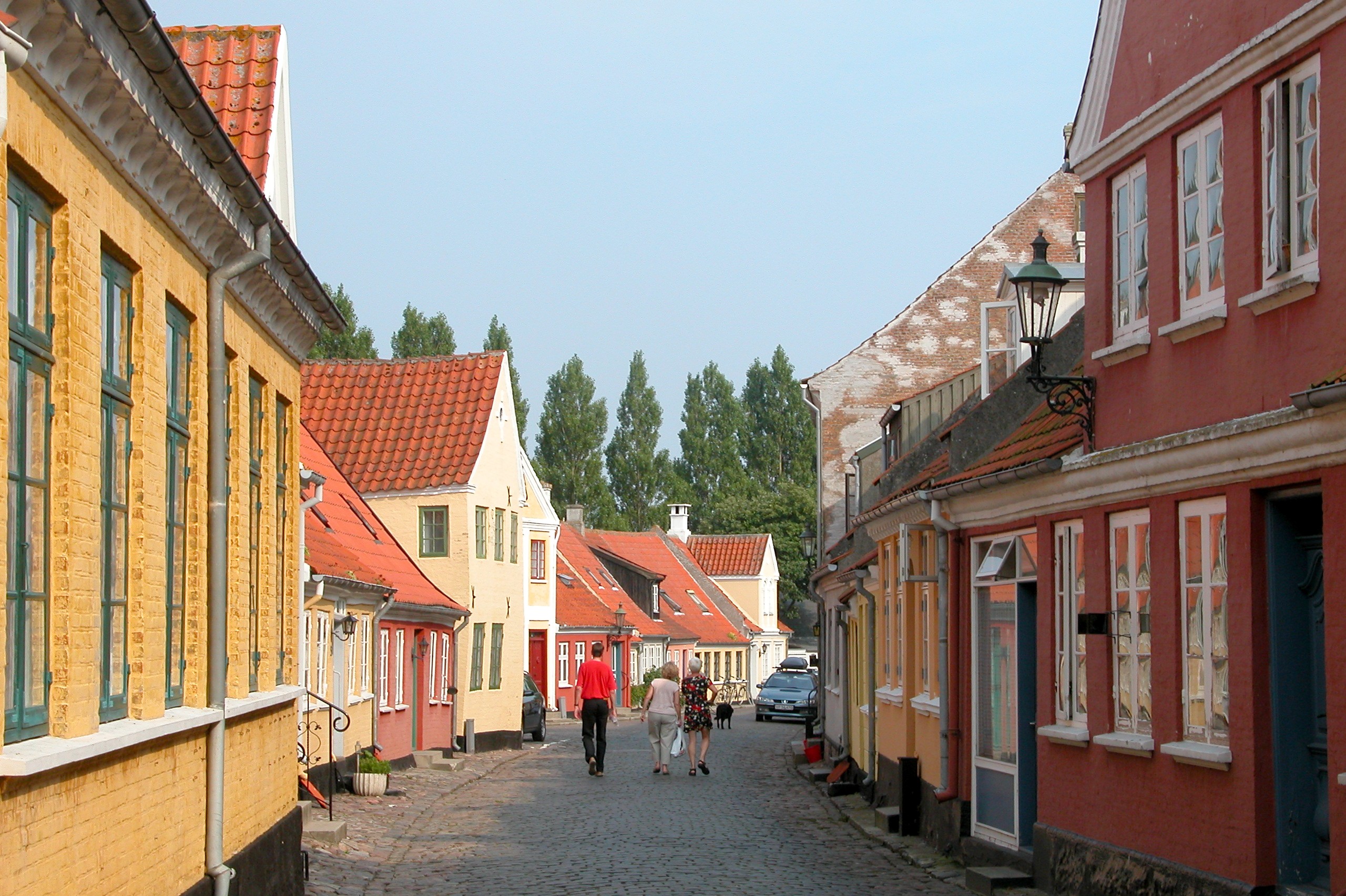
Where are the top 10 places to visit on Ærø? Begin with the historic streets of Ærøskøbing, the local museum and Vesterstrand’s colourful beach huts. Travel east to Marstal Maritime Museum and Eriks Hale, then discover Gråsten Nor, the unusual stepped cliffs at Voderup, the ducal manor of Søbygaard, restored Vitsø Lake and Skjoldnæs Lighthouse at the western tip. These ten stops connect seafaring, heritage, coastal science and the everyday life of a Danish Baltic island.
Ærø lies in the South Funen Archipelago in Denmark. Different ferry routes serve Ærøskøbing, Søby and Marstal; they do not all arrive at the same port. A first holiday of three to four days gives you time for the main towns and the central and western landscapes without exhausting long transfers. A shorter visit can be excellent when focused on the harbour town where you arrive. The island also has free local buses, which help travellers plan without a car when current timetables align.
October 2026 planning note: Ærøfærgerne operates Svendborg–Ærøskøbing, Faaborg–Søby and Fynshav–Søby routes. ÆrøXpressen separately connects Rudkøbing on Langeland with Marstal, so a ferry search should include the operator and exact port. Attraction opening is seasonal: Søbygaard’s 2026 autumn programme finished earlier in October, while individual museums may have specific late-month hours. The 2023 storm surge significantly damaged beach huts at Eriks Hale. Check updated operator, museum and path guidance for the actual journey rather than relying on the appearance of older photographs.


The ten Ærø places at a glance
- 1. Ærøskøbing’s Historic Streets and Harbour — Preserved Danish townscape, quiet lanes and an arrival harbour.
- 2. Ærø Museum: An Island’s Political and Everyday History — Regional history, preserved domestic culture and meaningful museum learning.
- 3. Vesterstrand and Ærøskøbing’s Colourful Beach Huts — Traditional beach culture, coastal relaxation and small historic structures.
- 4. Marstal Maritime Museum and the Harbour’s Living Shipbuilding — Seafaring, navigation, ship repair and the island’s maritime economy.
- 5. Eriks Hale: Marstal’s Beach Huts and Sandy Spit — Coastal geomorphology, family beaches and distinctive beach houses.
- 6. Gråsten Nor and Ærø’s Coastal Path — Wet meadows, former marine landscape and island walking.
- 7. Voderup Klint and the Terraced South Coast — Dramatic geology, scenic viewpoints and careful cliff walking.
- 8. Søbygaard: The Island’s Ducal Manor and Family Heritage Centre — Ducal history, restored manor grounds and seasonal hands-on activities.
- 9. Vitsø Lake and Restored Coastal Wetlands — Wetland restoration, migratory birds and gentle nature observation.
- 10. Skjoldnæs Lighthouse and the Western Tip of Ærø — Maritime navigation, broad archipelago views and an island endpoint.
This list moves roughly from Ærøskøbing to Marstal and then west towards Søby. It is not a route to attempt in one day. Choose a region and visit it well. A traveller who spends the morning reading maritime history and the afternoon on one beautiful beach may understand Ærø better than someone who drives to ten signs and photographs each for a minute.
Quick choices by interest
- First visit: Ærøskøbing old town, Vesterstrand and one harbour meal.
- Maritime history: Marstal Maritime Museum and the harbour’s working heritage.
- Families: Vesterstrand, Eriks Hale and Søbygaard when its programme is open.
- Geology: Voderup Klint’s terraced coast and a suitably chosen coastal-path section.
- Birdwatching: Restored Vitsø Lake and other permitted wetland viewpoints.
- Culture: Ærø Museum, Søbygaard and the traditional beach-hut story.
- Three days: Separate central, eastern and western excursions to minimise transfers.
1. Ærøskøbing’s Historic Streets and Harbour
Where: Central north coast of Ærø, Ærøskøbing. Best for: Preserved Danish townscape, quiet lanes and an arrival harbour.
Ærøskøbing is often described as a fairytale town, and its compact streets show why. Small painted houses, old cobbles, steep roofs and carefully maintained shopfronts create a townscape with a sense of continuity. That impression is grounded in preservation rather than mere decoration: the town received a Europa Nostra Award in 2002 for its heritage work. Many of its streets remain residential, with small businesses, a harbour and services used by islanders throughout the year. The appeal is to experience a living town with an unusually coherent historic environment, not to assume that it was built as a visitor attraction.
Start near the harbour and walk through public streets such as Søndergade and the old market-town centre. Notice differences in doorway proportions, window shapes and exterior colours, then look beyond the visual charm to shops, homes and the small-scale urban layout. A good walk includes time for a bakery or café if one is open, but local opening patterns can be seasonal. The harbour is also a practical ferry arrival from Svendborg, so confirm when your boat departs before heading out for a long island trip. The town is better enjoyed slowly than as a five-minute photo stop.
Old-town streets can be uneven, and cobblestones are not equally comfortable for every wheelchair, stroller or walker. A visually short route can take longer when there are steps, crowds or loading vehicles. Respect private entrances, do not lean on windowsills for photographs, and avoid walking into courtyards unless public access is clear. The town’s colourful houses are not film sets. Its preservation depends partly on residents continuing to live and work in them, a responsibility visitors can support by behaving considerately.
A useful learning question is what makes a historic town valuable beyond its age. Preserved building form, repair materials, street patterns and continued community use all play a role. Ask which features a visitor can observe reliably and which require research. The 2002 preservation award is a documented fact; an invented story about a particular cottage’s owner is not. This helps travellers recognise the difference between authentic heritage interpretation and the romantic narratives that often accompany beautiful destinations.
Route suggestion: Pair with Ærø Museum and Vesterstrand; all are within a convenient Ærøskøbing-focused half-day.
Return to the ten-place guide · Next location
2. Ærø Museum: An Island’s Political and Everyday History
Where: Ærøskøbing, in the old bailiff’s house. Best for: Regional history, preserved domestic culture and meaningful museum learning.
Ærø Museum adds context to the pretty streets around it. The museum occupies an old bailiff’s house dating to the eighteenth century and presents stories of how people lived on the island through periods of political, economic and social change. Ærø’s history is not simply a miniature version of mainland Denmark’s. The island’s ties to the Schleswig duchies and later changes in sovereignty make it an interesting place to discuss borders and local identity, while displays about everyday work keep the story connected to ordinary households.
Choose time for the museum rather than treating it as an indoor shelter between two cafés. A carefully presented object can show how an island household worked, while maps and documents explain why the same small territory could belong to different political systems over time. The tourist board publishes scheduled museum opening dates, including some autumn days, but the time displayed for one week should not be treated as a permanent promise. Check its current calendar, exhibits, tickets and accessibility arrangements before visiting.
The museum works well with a town walk because it deepens what you have just observed outside. Look for a question prompted by a street or building, then see whether the exhibits provide evidence. If travelling with children, let each person choose one object that says something about daily life rather than trying to absorb every label. Respect no-touch displays and ask staff before using flash or filming. In older buildings, rooms and thresholds may not meet modern step-free standards, so investigate mobility needs in advance.
One of the most useful lessons here concerns historical change. Political maps can change quickly while houses, farms and family practices continue across generations. A museum can help us see both sides. Distinguish a surviving historical object from a reconstruction or a curator’s interpretation. That habit is transferable: whether reading about wars, the history of a harbour or a family tradition, reliable understanding depends on evidence and context, not merely a confident story.
Route suggestion: Visit during the same half-day as Ærøskøbing’s old town. Keep museum time realistic and check the current calendar.
Return to the ten-place guide · Next location
3. Vesterstrand and Ærøskøbing’s Colourful Beach Huts
Where: Western edge of Ærøskøbing, beyond the marina. Best for: Traditional beach culture, coastal relaxation and small historic structures.
At Vesterstrand, the beach huts create one of Ærø’s most recognisable coastal scenes. Rows of small painted wooden buildings stand close to a sandy beach where island families have gathered for generations. VisitÆrø identifies more than seventy huts along this shoreline, and their distinctive rules help protect the historic atmosphere. They are not ordinary holiday apartments: the huts have longstanding restrictions on construction and facilities. That is part of what makes their modest proportions and bright colours so appealing. They tell a story about seaside recreation rather than grand architecture.
The beach is close to the town’s marina, making it a natural follow-up after an Ærøskøbing walk. In suitable weather, visitors can relax by the shore, admire the huts from the public path or consider swimming according to current guidance. The water is often relatively shallow near sections of the beach, but that does not guarantee safety, warm temperatures or lifeguard coverage. The beach remains worth visiting in cooler months for its atmosphere and views across the water. The huts are privately controlled, so respect doors, windows and any signs.
Do not sit on private hut steps or pose against doors without permission. The fact that a cabin is small and picturesque does not make it communal property. Sand, coastal grasses and dunes also need protection from repeated shortcuts. Pack water and suitable clothing, and do not assume every beach facility is open outside the summer holiday period. Families may enjoy a relaxed hour here far more than a fourth museum visit. If your group needs step-free access, verify how the path and sand can be managed before travelling.
The beach raises a good historical question: why would people invest in a tiny hut with so few facilities? The answer may involve family ritual, proximity to water and a shared idea of a summer day. Modern visitors can also compare the modest buildings with larger resort accommodation nearby. Preservation is not always about castles and ancient monuments; sometimes it protects the scale and character of ordinary leisure spaces. A short guided tour, when booked, can explain more of this history without disturbing owners.
Route suggestion: Combine with the old town, museum or a marina meal; do not treat Vesterstrand as a far-flung separate excursion.
Return to the ten-place guide · Next location
4. Marstal Maritime Museum and the Harbour’s Living Shipbuilding
Where: Eastern Ærø, Marstal town. Best for: Seafaring, navigation, ship repair and the island’s maritime economy.
Marstal is Ærø’s great maritime town, and its museum is among the strongest reasons to travel across the island. Marstal once held a major position in Danish shipping, and its continued navigation education and harbour businesses give the town a living connection to the sea. The Maritime Museum presents ships, voyages, people and technical knowledge through objects and exhibits. It is rewarding because the museum does not treat sailors as anonymous figures. Family histories and local memories can reveal how commercial shipping changed homes, employment and community identity across generations.
Begin with the museum, then walk to Eriksens Plads and the publicly accessible harbour viewing area. Official tourism material describes active shipyard operations and a collection of Marstal engines in the associated heritage environment. A working shipyard is not an unrestricted playground: observe from marked public locations and never obstruct workers, moving equipment or vessels. This combination makes the trip more compelling than a museum-only visit because you can compare historic technology with contemporary maintenance and maritime training. Check museum hours, guided tours and engine exhibition access separately.
Marstal works as a full half-day rather than a rushed stop before the opposite coast. Some exhibits may be suitable for children, especially those interested in boats and engines, while others invite more careful reading. If a family member has mobility needs, contact the museum about older buildings, exhibition levels and seating. Harbour walks can also be windy and involve uneven paving. Choose a meal in town and leave time for the public streets rather than aiming to finish every attraction by midday.
An excellent learning question is why a small island produced so many sailors and maritime specialists. Geography helps, but training, markets, investment and community traditions also matter. A model ship might teach hull form; an engine explains mechanical change; a family letter reveals the consequences of being away at sea. The museum demonstrates that technology and human life cannot be separated. It also reminds travellers that the harbour’s modern work deserves the same respect as its historical artifacts.
Route suggestion: Pair with Eriks Hale and a Marstal town walk, rather than adding a long return drive to Skjoldnæs Lighthouse.
Return to the ten-place guide · Next location
5. Eriks Hale: Marstal’s Beach Huts and Sandy Spit
Where: Marstal, just outside the harbour. Best for: Coastal geomorphology, family beaches and distinctive beach houses.
Eriks Hale is a sandy spit beside Marstal, with small colourful beach huts that echo those at Ærøskøbing yet belong to a different coastal setting. A spit is land built by sediments moved and deposited along a shoreline, and this one creates an appealing mix of beach, shallow coastal waters and views back towards the maritime town. The huts have a special place in local memories, with seasonal gatherings and traditions attached to them. Their story includes vulnerability: a severe storm surge in October 2023 destroyed many huts, and rebuilding has continued in subsequent years.
The storm history is worth explaining accurately because older photos may show a row of huts that no longer looks identical today. Do not promise a precise number of reconstructed buildings without a dated official update. Walk through permitted public areas, admire the surviving or restored huts from a respectful distance, and enjoy the view of the sea. If swimming, check local advice and actual water conditions rather than assuming that a calm summer photograph proves safety in autumn. A short beach walk is still rewarding in cooler weather when swimming is not appropriate.
The beach and nearby harbour are close enough to combine on foot for many visitors, but consult a map and consider the surfaces before taking a stroller or wheelchair. Respect private huts and any restoration works. Following a storm, shorelines can be altered and parts of a route may be fenced or fragile. Avoid clambering over dunes, construction material or coastal defences for a dramatic picture. The best approach is to appreciate the place as it exists on the day, not force it to match an older promotional image.
Eriks Hale illustrates the relationship between human tradition and coastal risk. Families may treasure a hut for generations, yet a major storm can change the physical environment quickly. Discuss how communities rebuild, whether a structure should be repaired in the same way and what changing climate hazards mean for shore planning. This is not a gloomy lesson: it makes a relaxed beach visit more meaningful by showing the care and choices behind its familiar scenery.
Route suggestion: Combine with Marstal Maritime Museum and harbour; allow a beach break rather than driving across Ærø immediately.
Return to the ten-place guide · Next location
6. Gråsten Nor and Ærø’s Coastal Path
Where: Eastern-central Ærø, west of Marstal. Best for: Wet meadows, former marine landscape and island walking.
Gråsten Nor offers a nature-focused chapter between Marstal and the island’s central towns. The landscape was shaped by its history as a marine inlet and by later drainage, farming and ecological change. Today’s open meadows and paths can provide a restful contrast to Marstal’s ship engines and cobblestone streets. The official Coastal Path crosses this broader region as part of a marked route extending around thirty kilometres from Marstal towards Vitsø. That length describes a full multi-hour excursion, not an easy afternoon stroll suitable for every family.
Choose a short stage or an authorised access point rather than assuming you must walk the entire trail. The official path guidance passes through changing coastal areas, countryside and villages. Check the exact route markers, weather and livestock or private-land boundaries. Some sections may be damp or uneven, particularly after rainfall. Carry water and an appropriate map, and avoid using a digital shortcut that crosses farmland or sensitive habitat. A well-chosen one-hour nature walk is often more enjoyable than a route that ends with a tired family needing an unplanned lift.
Nature here is subtle. The richness may lie in the pattern of wet ground, birds, grasses and the changing view across the countryside rather than a single dramatic cliff. Binoculars can improve birdwatching, but treat sightings as uncertain. Do not step into nesting or feeding areas or approach wildlife for photographs. Visitors should check whether dogs are allowed and under what control conditions. The fact that a wetland contains a public path does not mean all adjacent land is open for unrestricted entry.
Gråsten Nor teaches how people change land use. An inlet may be drained to create agricultural ground, while later decisions may focus more strongly on habitat and conservation. Ask what the costs and benefits of each choice might be, who makes it and how it affects birds, farms and residents. This turns an apparently quiet landscape into a conversation about the way communities manage resources over time. Connect the visit to Vitsø, where restoration has produced a particularly visible change in wetland conditions.
Route suggestion: Choose a shorter coastal-path stage between Marstal and central Ærø; combine with a nearby village rather than attempting all thirty kilometres.
Return to the ten-place guide · Next location
7. Voderup Klint and the Terraced South Coast
Where: South coast of Ærø, near Voderup. Best for: Dramatic geology, scenic viewpoints and careful cliff walking.
Voderup Klint is one of Ærø’s most distinctive natural formations. The cliff reaches roughly thirty-three metres and includes broad, step-like terraces descending toward the Baltic. These are not human-built garden terraces: their shape is connected with geological processes and landsliding in the coastal sediments. Standing above them, you get a powerful sense of how the island’s land mass meets the open sea. The destination is rightly treated as a national landscape attraction, but the best way to appreciate it is from a stable, authorised viewpoint rather than walking wherever the rock looks photogenic.
Choose the marked route and read local safety signs before heading downhill. Rain and coastal erosion can alter the conditions around steep slopes, and a path that appears comfortable in one season may be slippery or unstable in another. Keep children away from unprotected edges, avoid loose material and do not climb below a hazardous overhang. There is no need to reach the lowest beach section to understand the terraces. A safe upper viewpoint can give an excellent picture of the landscape and may be more appropriate for visitors with limited mobility.
This is a strong location for comparing geological and human timescales. A town street may change over centuries through repairs and planning; a coastline changes through water, gravity and sediment movement. Ask why a slope might break into large steps rather than form a smooth face, then consult geological interpretation instead of guessing a precise date by looking. The area is part of a broader landscape valued for its scientific and scenic qualities. That means keeping to permitted routes protects both visitors and the ground being studied.
Set aside a meaningful portion of a day for Voderup Klint if the weather is good. It combines well with countryside stops or a section of Ærø’s long walking routes, but not with an overloaded east-west circuit. Bring water, stable footwear and a layer for the exposed coast. An older adult may prefer a scenic stop with minimal walking, while a prepared walker may choose a longer designated trail. Both can gain an excellent understanding of this unusual part of the island.
Route suggestion: Put Voderup on a central or southern nature day; treat the terraces as a protected evolving coast, not a climbing challenge.
Return to the ten-place guide · Next location
8. Søbygaard: The Island’s Ducal Manor and Family Heritage Centre
Where: Near Søby, northwestern Ærø. Best for: Ducal history, restored manor grounds and seasonal hands-on activities.
Søbygaard is Ærø’s notable ducal manor, associated with Duke Hans the Younger and the island’s past within the Schleswig duchies. The complex includes historic buildings, a moat, landscaped grounds and exhibition spaces that help explain how power and landownership shaped rural life. The existing site was restored and adapted for public use after a period of decline, making preservation part of its story. Unlike a modern theme park, it is most meaningful when visitors connect the buildings to local agricultural organisation, administration and the lives of workers who supported the estate.
The visitor programme may include exhibitions, guided tours, music and hands-on family activities such as crafts or seasonal workshops. In October 2026, the official autumn programme ran through the mid-month school holiday period, which illustrates why an October date alone is not proof of opening. Confirm what is available on your actual day, including whether guided interpretation is included. If travelling with children, allow time for an appropriate activity without promising archery or craft sessions on every date. The surrounding nature and exterior history can still be rewarding when the staffed programme is not running, subject to current access.
Søbygaard’s grounds include uneven historic surfaces and nearby rural paths. Ask about step-free routes and tour accessibility if mobility matters, rather than inferring that the whole site is suitable from photos. Respect any part used privately or for maintenance. The visitor centre is near Vitsø, so the two make a natural geographical pairing. A summer or autumn day can balance heritage with a short wetland walk, while cold weather might make a museum-focused plan more practical.
A good learning question is what a manor tells us about society. Who owned land, who grew food, and who had to maintain the buildings? Restoration adds another layer: why should a community invest in conserving a structure after it stops serving its original purpose? The answer may involve memory, education and local identity as well as the visitor economy. Compare Søbygaard’s historic estate with Marstal’s shipbuilding heritage, two different kinds of work that shaped the same island.
Route suggestion: Pair with Vitsø and Søby rather than treating the manor as an isolated attraction across the island.
Return to the ten-place guide · Next location
9. Vitsø Lake and Restored Coastal Wetlands
Where: Northwestern Ærø, near Søbygaard and Søby. Best for: Wetland restoration, migratory birds and gentle nature observation.
Vitsø is an especially instructive nature area because its present wetland landscape was intentionally restored. The site was historically connected to the sea, later drained for agriculture, and then transformed when drainage ceased in 2009. Official destination information describes a substantial wetland and lake complex surrounded by meadows, with artificial bird islands created to protect nesting habitat. This is a valuable reminder that natural conservation often involves decisions and work, not simply leaving every place in a permanent untouched condition. The modern area supports birdwatching and walking in a landscape that continues to develop.
The marked walk around Vitsø is approximately five kilometres, with possible links to Søbygaard and the island’s long-distance paths. Choose all or part of it according to the group’s energy, weather and mobility. Some ground can be damp, and a low-lying wetland may be windy and exposed. Use authorised paths and viewing points, do not cross towards nesting islets, and take binoculars if you enjoy birds. The absence of a dramatic close-up wildlife encounter should not be judged as a failure; wild animals will move according to their own needs.
Children can compare two maps or photographs from before and after restoration and ask what changed when water was allowed to return. Did vegetation become different? Would some birds benefit from new shallow water while others preferred the drained fields? How might local people balance ecological goals with nearby farming and visitor access? The answers require evidence, but the physical landscape offers a compelling starting point. A good interpretation centre or guide can add depth without needing to walk beyond legal public areas.
Vitsø works well with Søbygaard, and the pair creates an unusually rich half-day: one place tells about an older estate and rural political system, the other about modern choices in land and habitat management. If you intend to walk the longer Archipelago Trail or Ø-CAMINO, investigate its individual sections and ferry logistics rather than assuming thirty or sixty-four kilometres belong in a day trip. A modest wetland walk can already be a complete and rewarding experience.
Route suggestion: Choose Vitsø as the nature half of a Søbygaard day, with optional short routes rather than an obligatory full loop.
Return to the ten-place guide · Next location
10. Skjoldnæs Lighthouse and the Western Tip of Ærø
Where: Far northwest, beyond Søby. Best for: Maritime navigation, broad archipelago views and an island endpoint.
Skjoldnæs Lighthouse stands near the western end of Ærø with open sea views and a sense of arrival at an island’s edge. Its tower is a maritime marker, but it also offers a way to understand the geography of the South Funen Archipelago and the Baltic approaches. The surrounding land includes a golf course and a landscape of fields and coast. Visitors come for the lighthouse, the view and the opportunity to compare this quieter tip with the busier harbours of Ærøskøbing and Marstal.
The tourism board promotes tower visits and has advertised special viewing opportunities during the darker part of the year, including October 2026. Those announcements make Skjoldnæs attractive for travellers outside summer, but the existence of a seasonal event does not establish that the tower can be climbed at every hour. Check actual access, charges and weather before travelling. A lighthouse staircase can be steep and narrow; anyone who dislikes heights or has mobility limitations can still enjoy a permitted exterior viewpoint. Do not enter operational areas or look directly at bright navigation equipment.
A coastal tip may be especially windy, and the road journey back to the ferry should be considered before planning a sunset visit. Use designated parking, follow signs around the golf course and keep off areas where people are playing. If you are carrying a camera, take photographs without standing close to cliff edges or obstructing other visitors. In winter or autumn, reduced daylight and damp steps change the safety calculation. A leisurely exterior view is a sensible choice whenever the climb seems unsuitable.
The lighthouse creates a useful final comparison. Marstal’s harbour shows the daily work of shipping; the museum explains maritime history; Skjoldnæs illustrates how safe navigation depends on fixed coastal signals. Ask which views sailors need, how visibility changes in fog, and why different towns and headlands require different kinds of infrastructure. The strongest memory may be the geography spread out below you rather than the number of stairs climbed. End the day with enough time to reach Søby or another ferry port without rushing.
Route suggestion: Combine with Søby, Søbygaard or Vitsø on a western-island day. Check current tower access and onward ferry timing.
Two-day, three-day and four-day itineraries
Two days: one town and one contrasting coastline
If arriving in Ærøskøbing, use the first day for the historic streets, the island museum if open and Vesterstrand’s beach huts. On day two, choose Marstal and Eriks Hale for a maritime-focused visit, or travel west to Voderup Klint and a manageable wetland walk if nature matters more to you. If arriving at Søby instead, reverse the priorities and explore Søbygaard, Vitsø and Skjoldnæs before making a longer trip to the main towns. The key is to align the itinerary with the ferry port, rather than treating every arrival as geographically equivalent.
A good weekend does not need to include the full island. Ærø’s charm lies in the combination of slow town life, harbours and highly varied scenery. Choose one museum, one scenic area and time for unplanned meals. The 2023 storm surge at Eriks Hale illustrates why travellers should accept changes from old guidebook images and enjoy the coastal setting in its current state.
Three days: historical town, maritime east and nature-rich west
Day one is Ærøskøbing and the nearby beach. Day two explores Marstal: the maritime museum, public shipyard-viewing environment at Eriksens Plads, town streets and Eriks Hale. On day three, travel west through the island’s rural landscape to Voderup Klint, Søbygaard and Vitsø, selecting a realistic number of activities. If Skjoldnæs Lighthouse is a priority, you may prefer to spend more time in the west and leave one museum for a future visit. A three-day plan should still contain time for weather and rest.
Four days and longer: take a marked walk or cycle stage
An additional day lets you explore a portion of the Archipelago Trail, the thirty-kilometre Coastal Path or a longer stage of Ø-CAMINO without trying to complete a multi-day route in one session. Choose a section suited to your abilities, plan food and water, and identify public transport for returning to your base. Walking and cycling reveal the small villages and transitions between habitats that travellers miss when focusing only on towns and museums. An overnight stay also reduces pressure to rush back to a ferry after a scenic sunset.
How to reach Ærø: four ferry approaches and free buses
Ærøfærgerne serves three principal routes: Svendborg–Ærøskøbing, Faaborg–Søby and Fynshav–Søby. The crossings normally take about 55–75 minutes depending on route, and the operator carries passengers, bicycles and vehicles under booking rules. ÆrøXpressen is a separate operator for Rudkøbing–Marstal, connecting from Langeland. This fourth route is easy to miss if a traveller consults only Ærøfærgerne’s website. Booking and check-in arrangements should be verified with the specific ferry provider for each leg, particularly if bringing a car or making a day trip.
The location of the arrival harbour shapes the itinerary. Ærøskøbing is excellent for historic-town and beach activities; Søby gives access to the western manor and lighthouse; Marstal places the maritime museum and Eriks Hale close together. Do not book an onward trip assuming that the return ferry will depart from whichever town you happen to finish in. Look at the final sailing as well as the first. Ferry schedules may vary by season and during maintenance, and an old printed timetable is not proof of today’s operation.
Ærø’s free bus network makes parts of the island accessible without a private vehicle, but the exact service pattern matters for museums, rural walking routes and late-evening returns. Cycling is rewarding for travellers who enjoy quiet roads and rolling terrain, yet some sections require hills and can feel hard in strong wind. Use official cycling guidance and choose a route matched to your fitness. For people with limited mobility, investigate individual venues and transport access beforehand rather than assuming that a free bus reaches every nature viewpoint.
Coastal safety, seasonal openings and private heritage
Ærø’s coasts are beautiful precisely because they are varied. Vesterstrand is a sandy recreational beach, Eriks Hale a changing spit, Voderup Klint an active geological slope, and Vitsø a restored wetland. They need different visitor behaviour. Beach huts are privately controlled, cliffs demand distance from unstable edges, and nesting birds need quiet habitats. Follow local signs and check conditions. A place can be freely visible while an interior, garden, hut or restricted path remains unavailable to the public.
Autumn travel provides quiet streets and atmospheric light, but there may be shorter museum seasons or fewer organised family activities. Søbygaard runs a seasonal programme and the official autumn 2026 public activities ended by mid-October; a late-October itinerary should not promise that the manor is open daily. The maritime and local museums publish their own calendars. Always distinguish year-round landscapes from staffed attractions that require tickets. A rain plan using an open museum and a short harbour walk can be more satisfying than a forced cliff hike in strong wind.
For families, choose one substantial stop in the morning and an easy coastal or town activity afterwards. Children may enjoy the beach huts and ship displays, but respect areas with moving cranes and ship repair work. Wear suitable shoes on cobbles, rough country paths and damp slopes. Anyone who needs step-free access should ask each venue about door thresholds, floors and viewpoint routes rather than relying on a general ‘family-friendly’ label. Accessibility information is most useful when it describes an actual path, not a destination’s appearance.
What Ærø teaches about how islands work
Ærø brings different subjects together. An old town shows how communities preserve heritage while continuing to live in historic buildings. Marstal explains how an island became important to international shipping, and Eriks Hale demonstrates the vulnerability of coastal leisure spaces to storms. Voderup illustrates land movement and geology, while Vitsø reveals the consequences of changing land use and restoring water. Søbygaard adds political history and agricultural administration. These are interconnected examples of people responding to their environment over time.
A useful educational method is to observe, suggest an explanation and verify it. At Voderup, observe the terraces and consult geological interpretation. At the beach huts, observe the small wooden buildings and check the actual rules before claiming what can be built. At a harbour, notice different vessels and ask what they carry. At a museum, distinguish surviving originals from modern reconstructions. The goal is neither to memorise trivia nor to turn a holiday into a classroom. It is to acquire a more accurate habit of seeing the world.
English–Chinese vocabulary for Ærø travel
- island — 岛屿 — dǎoyǔ
- historic street — 历史街道 — lìshǐ jiēdào
- harbour — 港口 — gǎngkǒu
- maritime museum — 海事博物馆 — hǎishì bówùguǎn
- shipyard — 造船厂 — zàochuánchǎng
- beach hut — 海滩小屋 — hǎitān xiǎowū
- coastal cliff — 海岸悬崖 — hǎi’àn xuányá
- lighthouse — 灯塔 — dēngtǎ
- wetland restoration — 湿地修复 — shīdì xiūfù
- bird habitat — 鸟类栖息地 — niǎolèi qīxīdì
- manor — 庄园 — zhuāngyuán
- ferry — 渡轮 — dùlún
- conservation — 保护 — bǎohù
Connect the vocabulary to a place: ‘shipyard’ beside Marstal’s harbour, ‘restoration’ around Vitsø and ‘historic street’ in Ærøskøbing. A child can remember a few words naturally through an actual visit, while an adult can use the same terms to ask more precise questions. Understanding is more valuable than repeating an isolated list.
Frequently asked questions about touring Ærø
Where is Ærø?
Ærø is an island in Denmark’s South Funen Archipelago, south of Funen. Its principal towns include Ærøskøbing, Marstal and Søby, with ferries arriving at different ports depending on the mainland route.
How many days should I spend on Ærø?
Three days is a good introduction to the historic town, maritime east and western landscape. Two days work if you focus on selected areas. Four days or more allow walking or cycling stages and greater flexibility with weather.
Which ferry goes from Svendborg?
Ærøfærgerne operates the Svendborg–Ærøskøbing route. Its scheduled crossing is usually about 75 minutes, but departure times and any maintenance changes must be checked directly.
Which ferries reach Søby?
Ærøfærgerne operates Faaborg–Søby and Fynshav–Søby services. Their frequency and sailing times vary, and both use Søby rather than Ærøskøbing as the island port.
Can I sail from Langeland to Ærø?
Yes. ÆrøXpressen operates Rudkøbing–Marstal, separately from the three Ærøfærgerne routes. Check the current schedule and vehicle booking requirements with that operator.
What is Ærøskøbing best known for?
Its preserved historic streets, colourful houses and well-maintained small-town setting are major attractions. It received a Europa Nostra heritage award in 2002, and Vesterstrand with its beach huts is close to the town and harbour.
Why is Marstal worth visiting?
Marstal has a rich merchant-shipping and seafaring history, a substantial maritime museum, continuing navigation education and an active harbour and shipyard environment. Eriks Hale’s sandy coast and beach huts are nearby.
Are the Eriks Hale beach huts the same as before 2023?
A severe storm surge in October 2023 destroyed many of the huts, followed by rebuilding efforts. Old photographs can misrepresent the current arrangement. Visit the coast respectfully and follow any contemporary restoration or access restrictions.
Can I walk down Voderup Klint?
Some marked routes offer access to the distinctive terraced landscape, but the coastline is affected by ground movement and changing conditions. Follow current local paths and warnings, keep back from unstable edges and avoid attempting a steep descent without suitable footwear and ability.
Is Søbygaard open throughout October?
No assumption of daily year-round opening is appropriate. Søbygaard has a seasonal programme, and its 2026 autumn holiday activities ran in mid-October. Check its current calendar for the date you are considering.
Is Vitsø good for birdwatching?
Yes. The wetland was restored after drainage ended in 2009 and has bird habitats and marked walking routes. Binoculars and quiet observation are preferable to approaching nesting or feeding birds, and sightings are never guaranteed.
Is Ærø easy to explore without a car?
Free local buses help connect towns and some attractions, while cycling and walking are popular. However, rural trailheads and ferry timing still require planning, and accessibility varies between historic buildings and outdoor landscapes.
Official Ærø sources and connected eduKate guides
Official visitor and ferry information reviewed in October 2026. These links are starting points for planning, but the current ferry timetable, museum calendar and any trail or beach restrictions must be checked on the date of travel. Do not treat the times from an earlier seasonal programme as permanent operating hours.
- VisitÆrø — Ærøskøbing old town and heritage
- VisitÆrø — Ærø Museum
- VisitÆrø — Vesterstrand beach huts
- VisitÆrø — Marstal Maritime Museum
- VisitÆrø — Eriks Hale beach huts and 2023 storm damage
- VisitÆrø — coastal path and Gråsten Nor
- VisitÆrø — Voderup Klint
- VisitÆrø — Søbygaard historic manor
- VisitÆrø — Vitsø restoration and wetland
- VisitÆrø — Skjoldnæs Lighthouse and late-year visitor programme
- Ærøfærgerne — ferries from Svendborg, Faaborg and Fynshav
- Ærø Municipality — ferry services including ÆrøXpressen
- VisitÆrø — Ø-CAMINO walking route
- eduKate — Top 10 Places to Visit When Touring Samsø
- eduKate — Top 10 Places to Visit When Touring Læsø
- eduKate — Top 10 Places to Visit When Touring Denmark
- eduKate — World Travel & Luxury Hub
Main photograph: Søndergade, Ærøskøbing, 29 July 2005, by Erik Christensen, Wikimedia Commons original, Creative Commons BY-SA 3.0; no creative modifications. It does not show current venue opening or seasonal conditions.
Ærø deserves time because its places tell different parts of one story. The old town preserves architectural heritage, Marstal remembers the work of sailors, the beach huts show cherished local routines, and Voderup and Vitsø reveal that land and water continue to change. Plan ferries by their actual ports, give the museums room to explain themselves and choose coastal paths that suit the day. The best top-ten guide is one that makes a real trip easier, not one that asks you to race through all ten.