
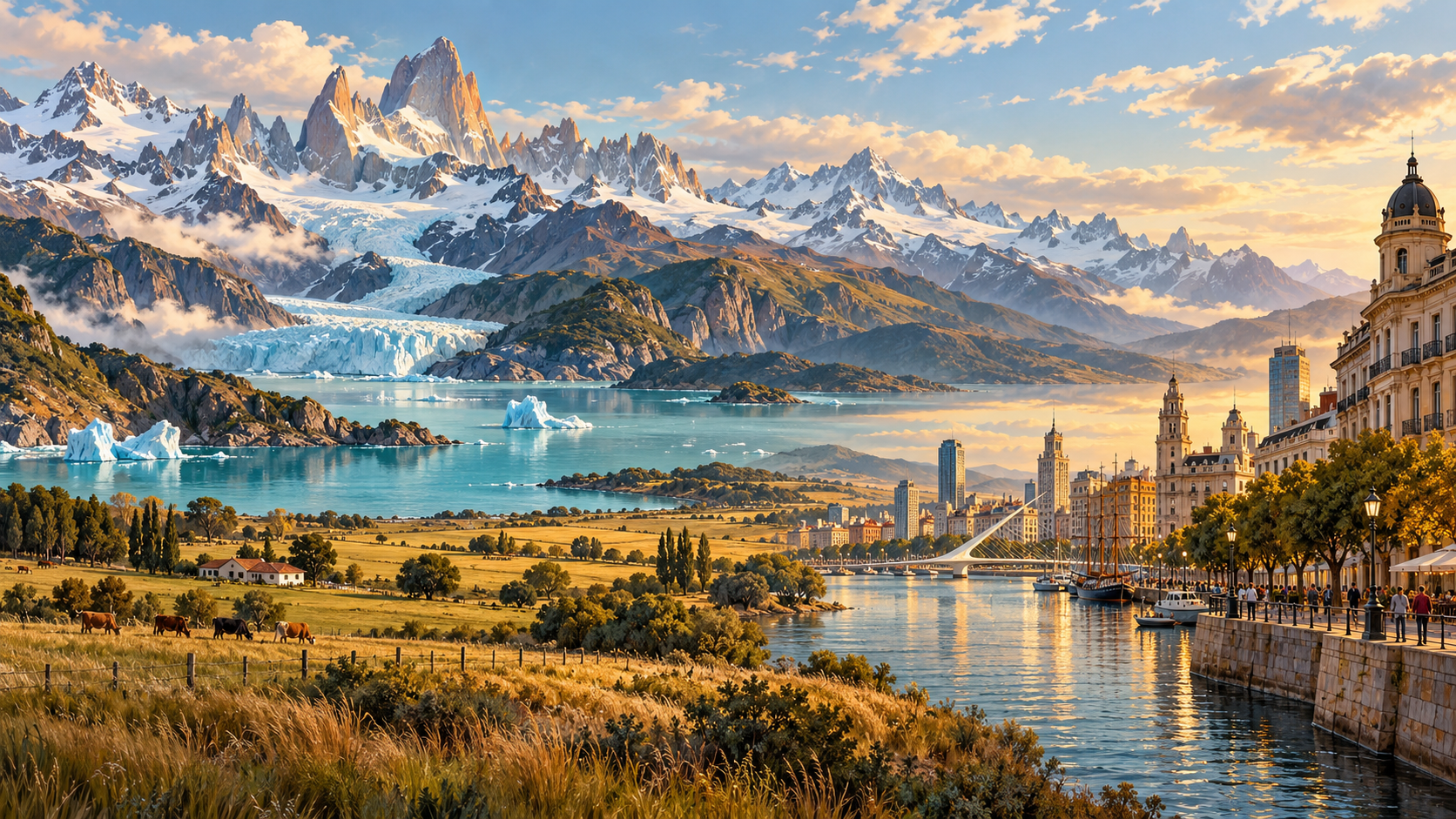
Top 10 Things to Do When Visiting and Touring Argentina brings together Buenos Aires, tango, Iguazú Falls, Mendoza, the northwest, Patagonia’s glaciers and mountains, Bariloche, Ushuaia and the wildlife landscapes around Península Valdés. This Argentina travel guide helps you understand the differences between those experiences before building a route. Argentina offers extraordinary variety, but its distances mean that a satisfying holiday usually begins with a few deliberate choices.
Planning an Argentina itinerary for a first visit? Start with Buenos Aires and choose one or two regional priorities that match your dates, interests and available travel time. Our guide to the best things to do in Argentina includes sightseeing, food, nature, route ideas, family considerations and English–中文 vocabulary. Use it to decide what deserves your time, then confirm current flights, park access, activity arrangements, entry requirements and travel advice before booking.
A country this varied does not need to be conquered in one journey. You can go for waterfalls and return for mountains, or spend a week enjoying a city and its food without apologising to a glacier. The right itinerary is the one you have time to inhabit.
eduKateSG · A WORLD WORTH UNDERSTANDING
Find your way through Argentina
Choose the part you need now, or follow the whole journey at your own pace.
Buenos Aires is a city experience. Iguazú belongs to the northeast. Mendoza provides a wine-and-Andes focus. Salta and Jujuy belong to the northwest. Bariloche, El Calafate, El Chaltén, Ushuaia and the Atlantic wildlife coast are different southern decisions, not one compact stop called Patagonia.
The official national destination overview identifies these major regions. Begin with a map and your actual flight options, then choose. The temptation to add one more place is strongest before you have counted the airport transfers.
| Experience | The central appeal | Give extra thought to |
|---|---|---|
| Buenos Aires neighbourhoods | City life, architecture and culture | Choosing areas and transport sensibly |
| Tango | Music, dance and social tradition | A show, a lesson or a milonga |
| Iguazú Falls | Waterfalls within a forest setting | Park circuits, heat and current access |
| Mendoza | Vineyards, food and mountain views | Reservations and transport |
| Salta and Jujuy | Northwestern landscapes and towns | Distance, altitude and a suitable route |
| Perito Moreno Glacier | Ice seen from an accessible viewing system | Park arrangements and activity limits |
| El Chaltén | Walking and mountain landscapes | Weather, trail demands and buffers |
| Bariloche and the lakes | Lakeside scenery and outdoor choice | Season and the exact activity |
| Ushuaia | A southern city, coast and national park | Weather and realistic combinations |
| Península Valdés | Marine wildlife in a protected landscape | Species-specific season and observation rules |
中文提示: 阿根廷的“巴塔哥尼亚”不是一个小景点。冰川、山区、湖区与海岸可能相距很远。先看交通衔接,再决定看多少地方;把时间留给真正想体验的事。
Buenos Aires deserves more than a night between flights. Choose a small number of neighbourhoods and give each a purpose: a historical walk, a museum, a bookshop, a park or a meal. The official traditional Buenos Aires guide identifies familiar cultural landmarks, but a satisfying day comes from choosing among them.
Begin with one district rather than a citywide dash. A walk through San Telmo, an art-focused visit or a Palermo afternoon can each provide a coherent experience when you leave time to sit and observe. Ask accommodation staff or a knowledgeable guide about the current route and how to move between areas safely.
Choose one substantial interior. A guided cultural visit can explain something a building’s façade cannot: how a performance space works, why a collection was assembled or how a city tells its own history. Reconfirm opening and booking arrangements rather than turning up because a famous name appears in every guide.
A café interval is part of the experience. Watch the street, read a few pages or discuss what you have just seen. Not every hour needs an attraction. Familiarity with one corner of a city can be more memorable than distant recognition of ten buildings.
Make it work: keep travel between districts explicit, use current security guidance and avoid displaying valuables casually. Schedule the more demanding outing when you have energy rather than straight after a long-haul arrival.
Useful words: neighbourhood — 街区; cultural landmark — 文化地标; guided visit — 导览参观.
Tango can be a performance to watch, a skill to begin learning or a social tradition to observe. The official tango introduction provides a cultural starting point. Decide which kind of encounter you want before comparing bookings labelled “tango night”.
A stage show offers a produced evening of music and dance. Ask what the ticket includes, whether dinner is optional or included, where you will sit and how you return afterwards. A beginner lesson offers something different: a chance to experience the coordination, listening and courtesy behind the movement.
A milonga is a social dance gathering rather than simply another tourist performance. If visiting one, seek clear guidance about its etiquette and whether observing is welcome. Do not step onto the floor or photograph dancers as if everyone present had agreed to appear in your travel story.
You do not need to dance to appreciate the music. Listen to how rhythm and phrasing shape the movement, and ask a teacher or guide about what you are hearing. A short explanation can make an evening far more absorbing than a list of famous names.
Make it work: choose one format, confirm the current venue and arrangements, and leave the next morning reasonably flexible if the evening runs late. Adults travelling with children should ask about the atmosphere and timing before booking.
Try this: describe the dance using verbs rather than superlatives. Pause, turn, lead, follow and listen tell you more about the experience than declaring it unforgettable before it has begun.
Iguazú National Park is a UNESCO World Heritage property. UNESCO’s account places the falls within a wider natural environment. Choose the visit for that whole setting rather than treating the park as a single viewing point reached by a quick walk.
Check which circuits and viewpoints are open for your dates through current park information. High water, maintenance or weather may affect access. A photograph taken from a famous platform is not proof that the same platform is available during your stay.
Plan for heat, humidity, walking and spray, with rest periods suited to the group. Secure the things you need to keep dry without packing so much that you spend the day managing bags. If a mobility requirement matters, ask about the exact path and transport within the park, not simply whether the park is “accessible”.
Observe the forest between the larger views. Ask a guide about a plant, a bird or a sound you can identify with confidence. The water is spectacular; the setting keeps the experience from becoming only a sequence of similar photographs.
Make it work: give the Argentine side its own time. If adding the Brazilian side, confirm the separate border and entry requirements for your passport, transport and available days. A second-country visit should be an intentional addition.
Did you know? The border journey, park entry and current circuit status are three separate checks. A successful answer to one does not settle the other two.
Mendoza offers a wine-region journey with the Andes as a wider geographical setting. The official wine-region guide identifies the vineyard areas to consider. Select a small number of producers or food experiences that genuinely interest you, rather than a maximum number of tastings. A relaxed visit can teach you more because you have time to ask how the wine was made and what gives it character.
Before booking, ask which vineyard area the outing uses, how long the travel legs take, which appointments are confirmed and what is included. Two attractive venues can be inconveniently far apart. Let a knowledgeable planner group the day sensibly, then assess whether the pace suits you.
Arrange transport that does not depend on a tasting participant driving. Non-drinkers should also have a pleasant day: a vineyard setting, a good lunch and a production explanation can be interesting independently of alcohol. Ask how children or companions who do not drink are accommodated.
If adding a mountain excursion, treat it as a separate undertaking with current weather, access and altitude considerations. A winery afternoon and a substantial Andes journey should not be compressed together because both carry the same destination label.
Make it work: book fewer appointments and leave time for lunch. Ask for information about ingredients, dietary requirements and the style of experience. A vineyard lunch can become the main event rather than a gap between glasses.
Useful words: vineyard — 葡萄园; reservation — 预订; designated transport — 已安排的交通. For readers, the useful souvenir is knowing why you liked something and being able to explain it without repeating the tasting note word for word.
SECTION 6 OF 19
5. Explore Salta and Jujuy through a carefully chosen northwestern route
Argentina’s northwest offers a distinctive combination of towns, valleys, mountain scenery and living culture. Salta can provide an urban base; Jujuy adds different landscape and heritage possibilities. Do not treat the region as a single scenic loop that can be completed comfortably by everyone at the same speed.
Choose your main interest before the route. You may favour town life and food, a valley journey, or a supported visit to higher landscapes. Ask what altitude the route reaches, how quickly it rises, how long each day lasts and what can be adjusted. Seek qualified health advice if altitude is a concern for your circumstances.
The national destination overview distinguishes the northwestern destinations from the other major tourism regions. Use that distinction to resist adding them as a casual detour from a southern itinerary.
At a village, market or cultural site, keep the people in view. Ask before taking portraits, respect private and sacred spaces, and buy through clear conversations about makers and materials. A spectacular landscape does not turn its residents into decorative elements.
Make it work: choose fewer road days, appropriate overnight stops and a guide who explains both geography and contemporary life. Long drives should have a clear reason beyond “there is another famous photograph there”.
Try this: compare a town and its surrounding landscape through one practical question: how do people move, grow food or obtain water here? You will begin to see a place rather than only its colour palette.
SECTION 7 OF 19
6. See Perito Moreno Glacier without assuming every ice activity is suitable
Perito Moreno Glacier is a major attraction within Los Glaciares National Park. UNESCO’s park record explains the significance of the larger ice-and-mountain environment. El Calafate is a useful base for planning a glacier-focused visit, with the exact transfer and park arrangements checked for your dates.
Begin by distinguishing viewing from more specialised activities. Walking the authorised viewing system, taking an appropriately operated boat excursion and joining a guided ice activity involve different demands and rules. You do not need to do all of them to have a complete glacier experience.
From the viewing areas, notice shape, colour and sound. Allow time to watch without expecting a dramatic event on command. Ice movement and breakage are natural processes, not a performance scheduled for the moment your camera is ready.
If considering an ice excursion, read the operator’s current age, fitness, equipment and health requirements carefully. Ask questions before paying. A companion who chooses the viewing paths instead is still experiencing the glacier, and the group can meet afterwards with different things to discuss.
Make it work: confirm park entry, the transfer, the available viewing route and weather-appropriate clothing. Keep a margin in the day for slower walking and a seated break. The national park authority’s current information should take precedence over an old travel account.
Useful words: glacier — 冰川; viewing walkway — 观景步道; guided ice activity — 有导游带领的冰面活动.
The national park activity guide describes routes around El Chaltén. El Chaltén is a mountain-walking destination, but that does not mean every visitor needs the longest or most demanding route. Begin with the experience you want: a manageable viewpoint walk, a substantial day hike or several walking days with recovery time. Choose the route after considering ability and conditions.
Ask about distance, ascent, exposure, surfaces, the latest conditions and realistic time at your pace. A trail name alone tells you very little. Read the route information and establish a turning-back point before departure rather than deciding when tiredness has already made the choice difficult.
Weather should remain part of the decision throughout the day. A promised view is not a reason to continue into conditions beyond your preparation. Appropriate layers, food, water, navigation and a clear communication plan belong to the walk you actually undertake.
Give the stay a buffer. Several nights can provide more flexibility than a single fixed hiking day, but the appropriate length follows your goals and confirmed travel connections. An easier walk or a rest day can still contribute to a good mountain visit.
Make it work: seek current park and local guidance, choose authorised routes and consider qualified guiding when needed. Keep the least experienced member’s comfort visible in the plan. A group succeeds by returning well, not by having everyone reach the same photograph.
Try this: write down a route’s demands in plain language before booking. If the description remains vague, you need more information rather than more enthusiasm.
SECTION 9 OF 19
8. Use Bariloche and the lake district for the outdoor pace you enjoy
Bariloche offers a lake-and-mountain setting with a range of seasonal activities. The official lake-region introduction provides a wider geographical starting point. Choose it for the kind of stay you want: scenic outings, suitable walks, a winter-sport visit when operations and conditions support it, or a slower lakeside holiday. A destination with many options still requires a specific plan.
Select accommodation by the actual days you intend to have. A beautiful room far from meals or transport may add daily driving you had not expected. Ask about the entrance, the nearby walking environment and how excursions begin and end.
For a scenic circuit, decide which stops deserve time rather than rushing through every viewpoint. One short walk, a lake view and lunch can produce a coherent day. The repeated act of getting in and out of a vehicle should not become the day’s main activity.
Water activities and mountain outings need their own current checks. A calm lake in a photograph does not establish the conditions for a boat or paddle excursion. Winter activities require operating information, appropriate equipment and instruction where needed.
Make it work: match the dates to your main activity, confirm services and keep a weather-flexible alternative. Bariloche should offer a different rhythm from a demanding trekking base if that is why you chose it.
Useful words: lake district — 湖区; scenic circuit — 风景环线; activity season — 活动季节. Choose the view you want to spend time beside, rather than the longest catalogue of views you could pass in a day.
Ushuaia offers a southern setting where city life, maritime geography and Tierra del Fuego National Park provide different experiences. The official Tierra del Fuego introduction establishes the region’s attractions. Choose the combination that fits the weather and the time available.
A city walk or museum visit can help explain the place before you head into the landscape. Ask what a collection says about local history and whose perspective it represents. The phrase “end of the world” is evocative marketing; it should not replace the real lives and histories of a region.
For a Beagle Channel excursion, confirm the vessel, route, boarding point, weather policy and what sightings or landings are actually included. Wildlife and conditions are not guaranteed. Tell the operator about access needs before treating a boat outing as effortless.
A national-park day should also be chosen deliberately. Ask which routes are suitable, what current entry arrangements apply and whether the proposal is a scenic visit or a substantial walk. Those are different uses of the same destination.
Make it work: give the region enough time to adjust the outdoor plan, and avoid packing every excursion into a brief stay between flights. An Antarctic voyage, if considered separately, requires its own extensive planning; it is not an incidental extra to an Ushuaia city visit.
Try this: describe one feature of the landscape without using the word “remote”. Concrete observation is a better souvenir than repeating the label that brought you there.
Península Valdés is a UNESCO World Heritage property associated with marine wildlife. UNESCO’s account explains its conservation importance, while the official visitor introduction helps locate it within a journey based around the Chubut coast.
Choose dates around the species and experience that interest you, then verify current local information. Whales, penguins and other wildlife do not follow one universal visitor season, and an advertised season does not promise a sighting on a particular outing.
Ask the operator what observation rules apply and how the route protects animals. Patience, distance and an informed explanation should matter more than getting the closest photograph. A responsible guide will not guarantee an encounter that depends on wild behaviour.
Plan the road day as well as the wildlife moment. Distances between viewing locations can be substantial, and a full circuit may be tiring. Choose the sites that fit your interest rather than asking to visit every marked point because it appears on the same map.
Make it work: confirm the base, transport, seasonal possibilities and current operations. Keep binoculars or an appropriate camera available without letting equipment distract you from what is happening. The pleasure is watching a living landscape, not collecting proof of every species.
Useful words: wildlife season — 野生动物观察季节; observation distance — 观察距离; protected habitat — 受保护的栖息地.
Buenos Aires and Iguazú for a city-and-waterfall introduction
This creates two distinct experiences without trying to sample every region. Allow proper time in the city and a park-focused stay around Iguazú, with actual flights and transfers confirmed. If adding another region, calculate how much of the enjoyable time will become airport time first.
Buenos Aires with Mendoza or the northwest
Choose Mendoza for a food-and-vineyard focus, or Salta and Jujuy for a regional landscape-and-town journey. They are alternatives to consider, not a requirement to connect both. A single well-chosen extension can reveal plenty about Argentina’s variety.
A focused Patagonian journey
Choose the southern places that fit your main purpose. Glacier viewing and walking may lead towards El Calafate and El Chaltén. A lake-based visit may favour Bariloche. A maritime and national-park chapter may favour Ushuaia. Wildlife interests may lead to the Atlantic coast. Do not assume a shared regional name makes them neighbouring stops.
These are editorial groupings. The actual flights, roads, dates and weather determine what is workable. Preserve a buffer before an important international departure, and reconfirm which Buenos Aires airport each flight uses.
Leave space for a bakery, a neighbourhood lunch and a substantial meal you are looking forward to. Empanadas invite a useful conversation about filling and regional style; a parrilla visit can help you understand a particular approach to cooking. Ask what is in the dish rather than assuming a national name guarantees one preparation.
Visitors who do not eat meat or drink alcohol can still enjoy an Argentina food journey. Choose kitchens and experiences that can meet the actual requirements, and explain them clearly in advance. The meal should work for the people at the table, not for a stereotype of what a visitor ought to order.
A market or producer visit becomes more meaningful when you ask about one ingredient. Where does it come from? When is it used? How does the preparation differ here? Keep the conversation modest enough to leave time for eating.
中文提示: 地方菜不只是菜名。问清食材、做法与分量,也问自己真正想吃什么。会描述一道菜,往往比记住一串餐厅名字更有用。
Argentina’s regions do not share one ideal visitor season. Match the trip to its central activity, then check the surrounding choices. A mountain walking holiday, a winter-sport visit, a waterfall journey and a marine-wildlife visit each have different timing requirements.
Use current park, operator and local information for the precise dates. Seasonal descriptions can orient you, but they cannot establish trail conditions, circuit openings, snow quality or animal presence. Build an alternative day that you would actually enjoy.
The less flexible an experience is, the earlier it should shape the itinerary. If one wildlife season or guided activity is the reason for travelling, organise the rest around its realistic availability rather than hoping it fits after the flights are purchased.
Confirm the whole transport chain
Count accommodation-to-airport time, check-in, baggage, the flight, arrival transport and the next check-in. Compare airport codes carefully. A short flight can still occupy most of a useful day, so assess a proposed extra region honestly.
Read current advice and official entry requirements
Consult current Argentina travel advice, your own foreign ministry and the relevant destination authorities. Check any separate border requirements if including neighbouring countries. Singapore-based readers can begin with MFA travel and visa information.
Reconfirm park and activity bookings
The national park authority is an important source for current park arrangements. Check which ticket, entrance or reservation your activity needs. A tour payment does not automatically establish that all access is included.
Keep payment assumptions current
Ask which currency a quotation uses, which payment methods are accepted and what cancellation terms apply. Prices and financial arrangements can change. Use authorised channels, keep receipts and avoid constructing a travel budget around an old exchange-rate anecdote.
Ask specific access and health questions
For mobility needs, check the complete path, boarding arrangement and available facilities. For altitude or demanding outdoor activity, seek advice appropriate to your circumstances and read operator requirements. A place being popular does not establish personal suitability.
These terms support English reading and practical questions. They are not Spanish translations. Keep local place names and addresses separately, and obtain any Spanish phrases needed for a particular requirement.
| English | 中文 | A useful sentence |
|---|---|---|
| domestic connection | 国内交通衔接 | How much time do we need for the domestic connection? |
| airport transfer | 机场接送 | Is the airport transfer included? |
| neighbourhood walk | 街区步行 | We would enjoy a guided neighbourhood walk. |
| tango lesson | 探戈课 | Is this tango lesson suitable for beginners? |
| park circuit | 公园游览路线 | Which park circuits are open today? |
| vineyard appointment | 葡萄园预约 | Is the vineyard appointment confirmed? |
| altitude | 海拔高度 | What altitude does the route reach? |
| glacier walkway | 冰川观景步道 | Is the glacier walkway suitable for our group? |
| turning-back point | 折返点 | Let us agree a turning-back point before the hike. |
| wildlife season | 野生动物观察季节 | Which wildlife season matches our dates? |
| weather buffer | 天气缓冲时间 | We would like a weather buffer in the itinerary. |
| dietary requirement | 饮食要求 | Can the kitchen meet this dietary requirement? |
Choose words connected to tomorrow’s day. A travel note becomes clearer when it includes a place, an action and a detail: “We watched the glacier from the walkway and noticed…” is a stronger beginning than “It was amazing.”
What is a sensible first Argentina trip?
Buenos Aires plus one or two well-chosen regions is a useful starting point. Choose the extensions by season, interests and confirmed connections. There is no single itinerary that gives every visitor the best version of a country this varied.
Should I include all of Patagonia?
Patagonia is a vast region with different destinations and experiences. Select a focused combination. Bariloche, the glacier and trekking bases, Ushuaia and the Atlantic wildlife coast are not interchangeable day trips from one accommodation.
Is Iguazú worth visiting if I am also seeing a glacier?
They provide very different natural settings, so both may suit a longer route. The question is whether the extra connection leaves enough time to enjoy each one. Do not add a destination only to increase the number of spectacular photographs.
Do I need to hike to enjoy the south?
No. Viewing routes, appropriately operated scenic outings, suitable short walks and city or cultural visits can provide a rewarding experience. Read the exact access information and choose activities around the group’s needs.
Can I combine wine experiences with children?
Some providers can offer a pleasant family visit, while others have a more adult-focused format. Ask about the actual arrangements, meal options and what children will do. A tasting alone should not be mistaken for a whole-family experience.
How should I choose a wildlife visit?
Begin with the species and behaviour you hope to observe, then check dates and authorised operators. Maintain realistic expectations and choose a provider that respects observation rules. Wild animals cannot be booked to appear.
Return to the World Country Directory, revisit Antigua and Barbuda, or continue alphabetically to Armenia.
For a separate premium-city angle, read Crazy Rich Buenos Aires. For language practice, use the World Travel Vocabulary City Directory. Follow the branch that answers the question you now have.
Destination identification draws on Visit Argentina, the linked Buenos Aires, tango, national destination, Tierra del Fuego and Península Valdés pages, and UNESCO’s records for Iguazú, Los Glaciares and Península Valdés. Current park and practical information must be confirmed separately. The route choices and observation prompts are editorial suggestions, not published schedules or guarantees.
Let the map help you choose, then let the place hold your attention. A country does not become better known simply because you move across it faster. Give yourself enough time to return with a few clear stories and a reason to visit again.