
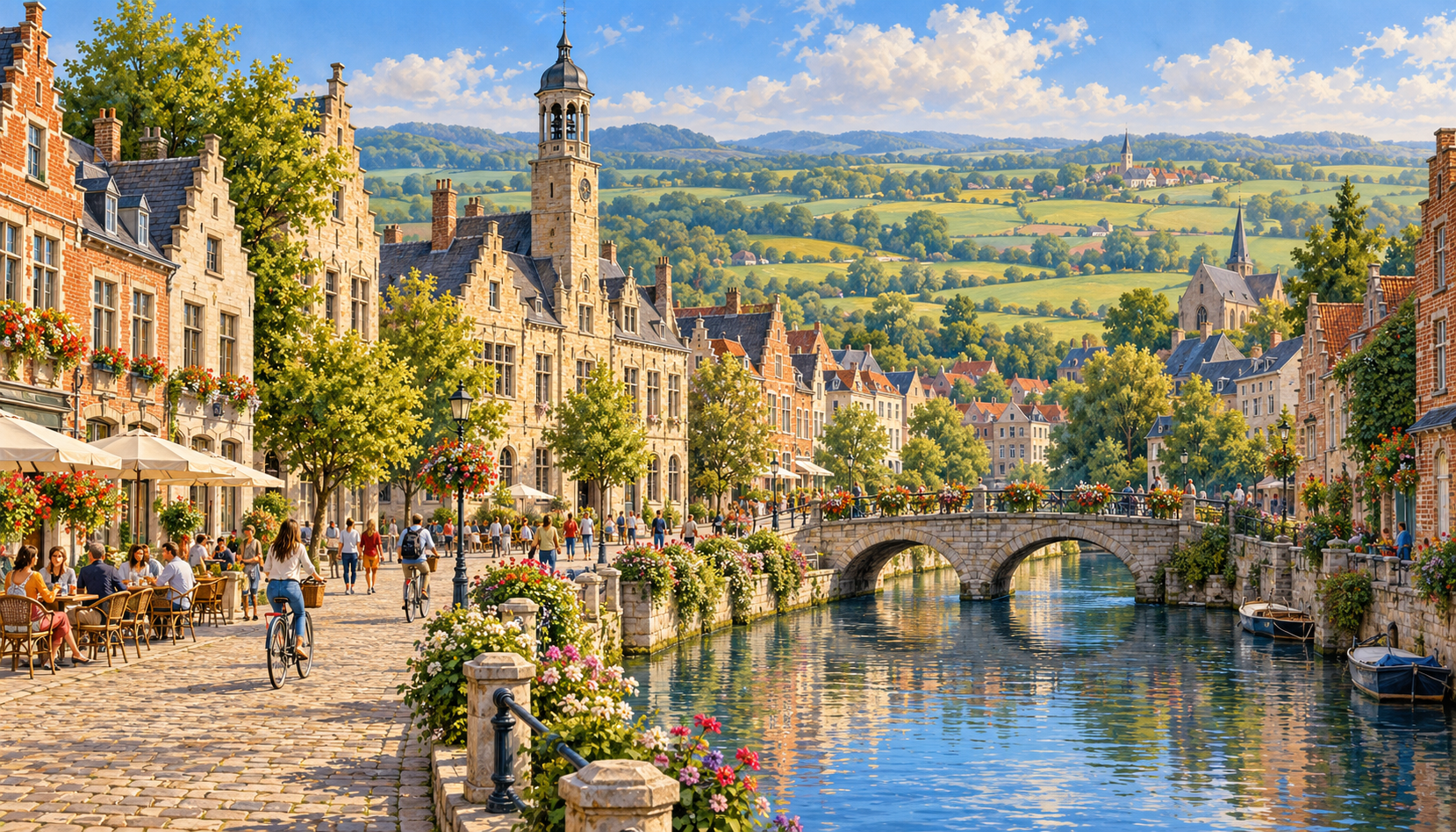
Belgium rewards the traveller who looks beyond a quick photograph of a pretty square. The best things to do when visiting and touring Belgium include Brussels, Bruges, Ghent, Antwerp, First World War remembrance, the Meuse valley, the Ardennes, coastal culture and thoughtfully chosen food experiences. A good Belgium travel itinerary gives these places room to reveal their different personalities.
For a first Belgium holiday, a family trip or a cultural journey through Europe, start with two or three places that genuinely interest you. Belgium sightseeing becomes much more enjoyable when a museum, a neighbourhood walk and an unhurried lunch belong to the same day. This guide helps you choose ten experiences without turning your visit into a race between railway platforms.
There is also more than one regional story to hear. Brussels, Flanders and Wallonia offer different languages, landscapes and cultural settings. Let those differences enrich the journey: a Flemish canal city and a Walloon river town need not compete for the title of the “real” Belgium.
eduKateSG · A WORLD WORTH UNDERSTANDING
Find your way through Belgium
Choose the part you need now, or follow the whole journey at your own pace.
Think in clusters. Brussels supports an urban introduction; selected Flemish cities suit a second cluster; Wallonia deserves its own time rather than being squeezed into the remaining evening.
| Experience | Choose it for | Planning decision |
|---|---|---|
| Brussels historic centre | Civic architecture and street life | Choose a compact walking circuit |
| Brussels comics and art | Visual storytelling | Check the current exhibition |
| Bruges | Canals and trading history | Allow time away from the busiest streets |
| Ghent | Heritage within a living city | Pair a historic walk with a contemporary stop |
| Antwerp | Art, design and port connections | Choose a specific museum or neighbourhood |
| Ypres remembrance | First World War understanding | Arrange informed interpretation |
| Ardennes walking | Forest and landscape | Match the route to conditions and ability |
| Namur or Dinant | Meuse valley scenery | Pick one town for a relaxed day |
| Ostend and the coast | Sea air and coastal culture | Check weather and museum options |
| Chocolate and local food | Craft and everyday pleasure | Ask about ingredients and production |
These are ten choices, not ten compulsory stops. A shorter visit with three memorable experiences is a better journey than a longer list remembered mainly through departure boards.
Brussels gives a first visit a satisfying starting point. Walk into the Grand-Place, stop before taking photographs and notice how the surrounding buildings create a shared public room. The interest lies in the whole square as well as its individual façades.
Take an informed walking tour or use a reliable visitor introduction to understand civic life, commerce and reconstruction. Ask why different buildings face the square and what their ornament says about the people or institutions they represented. A date becomes easier to remember when it explains something you can actually see.
Continue through a manageable part of the centre, perhaps including the Royal Saint-Hubert Galleries. Leave time for a seated break. A covered arcade, a narrow street and an open square offer three different ways of experiencing the city, even within a short walk.
Make the route fit your group. Uneven surfaces, crowds and standing time matter as much as distance. Rather than adding every famous Brussels landmark, choose one interior visit or neighbourhood extension and enjoy the transition from monumental setting to ordinary urban life.
A comics visit gives Brussels another voice. At the Comics Art Museum, choose a current exhibition or a focused part of the collection and look at how artists tell stories through a sequence of images. You do not need to recognise every character to enjoy that process.
Notice what happens between panels. An artist may show an event, omit the next moment and invite the reader to supply the connection. That makes a comics museum a rewarding stop for children, adults and anyone interested in writing or design.
The city’s comic strip trail provides an outdoor alternative or extension. Use the official route to select a small cluster of murals rather than assuming that every illustration is nearby. Look at how the picture interacts with the street around it, while respecting residents and entrances.
Keep this experience distinct from the historic-centre walk. Give visual storytelling its own question: how do colour, framing and sequence change a reader’s attention? Check museum opening arrangements, exhibition language and any booking requirement before deciding whether the indoor visit or a short mural route suits the day.
Bruges is easy to admire and more rewarding to explore slowly. Begin with a canal-side walk and a brief introduction to the city’s trading past. Then follow one historical theme through a museum, a guided visit or a quieter street rather than simply collecting scenic corners.
Water helps organise the view, but it also invites a practical question: how did people and goods move? Use the explanation to connect the attractive setting with work, exchange and the city’s changing fortunes. This turns a postcard scene into a place with a history.
An authorised boat trip can offer another perspective when operating conditions and boarding arrangements suit your group. It is an option, not the only way to appreciate the canals. Ask about access, seating, weather policies and the actual length of the outing before booking.
Allow time to step away from the most crowded circuit. Have lunch without immediately checking the next train, and notice how the city’s atmosphere changes between busy commercial streets and residential edges. If you are staying overnight, compare central convenience with the practical journey from your accommodation to the station.
Ghent offers a useful change of pace because its heritage sits within a visibly active city. Start with a historic-centre walk, then pair it with a contemporary cultural stop, a café or a neighbourhood chosen through the official visitor information.
Give the walk a simple focus. You might look at the relationship between waterside spaces and buildings, or compare the scale of an important public building with nearby streets. That helps you notice more than a succession of towers.
If a major artwork or exhibition is central to your visit, confirm the exact venue, current access and ticket arrangements. A city may contain the work you hope to see without guaranteeing that it is available on your chosen day. Build the day around one verified priority, then leave the rest flexible.
Ghent works particularly well when you allow a second impression after lunch. Return to a place that caught your attention or choose a short, clearly mapped extension. The aim is to feel how people use the city now, alongside learning what survives from earlier periods.
Antwerp can be approached through art, fashion, architecture or its wider connections with trade. Choose the thread that interests you most and use it to organise the day. Trying to cover every one of those subjects in a single visit usually leaves little time for any of them.
For an art-focused day, select a museum whose current displays fit your interests. For design, look for an exhibition or a guided neighbourhood introduction that explains materials, makers and local institutions. Check official venue information rather than relying on an old list of attractions.
Give the city itself some attention between indoor stops. Look at how a shopping street differs from a civic square, and how an older building is used today. Architecture is more interesting when you connect the surface with a purpose.
Antwerp also invites a broader conversation about a port city’s reach. A visitor can learn about trade through interpretation without entering an industrial site. If you want a dedicated port experience, confirm that the actual tour is authorised and appropriate, including transport and access arrangements, instead of treating working infrastructure as an informal sightseeing area.
A visit to Ypres and the surrounding First World War remembrance landscape needs a different rhythm. Choose informed museum interpretation or a reputable guide who can connect particular places with the people and events they commemorate.
Begin with a manageable historical introduction, such as the In Flanders Fields Museum, subject to current opening arrangements. One carefully understood account of a soldier, civilian or family can make the wider history more comprehensible than a long sequence of unexplained dates.
If your visit includes a cemetery or memorial, allow quiet time. Follow site instructions, keep photography respectful and explain to younger travellers why this is a place of remembrance. The outing should create space for reflection as well as factual learning.
Do not attach a battlefield circuit casually to the end of a distant city day. Confirm the locations, transport and return plan, and select the number of stops your group can absorb. Where a ceremony is important to you, check its current official arrangements before travel. Remembrance gains meaning through attention; it does not improve merely because the itinerary contains more names.
The Ardennes give a Belgium journey space for forest, slopes and quieter observation. Choose a marked route through current regional visitor information, and match its length, terrain and access to the people walking it.
A short walk can be enough. Ask what you want from the outing: a wooded trail, a river view, a village connection or a longer day outside. A route chosen for those aims is more satisfying than a demanding distance selected because it sounds impressive.
Check conditions shortly before setting out. Rain, mud, reduced daylight and any local access restrictions can change a route’s suitability. Have a clear start, finish and return arrangement, and carry the clothing and supplies appropriate to the actual forecast.
Give the landscape time to become specific. Notice changes in ground cover, light and the sound of water, rather than treating the forest as a green background. If you prefer an easier day, ask the regional visitor office for a genuinely suitable shorter alternative, including surfaces and steps. “Easy” on a promotional page may not describe what your group needs.
Wallonia deserves a place in a country-wide guide, and a Meuse valley town provides a rewarding starting point. Choose Namur or Dinant for a focused day rather than assuming that both must fit between two rail connections.
In Namur, organise a river-and-city introduction using the local tourism office’s current routes. If the citadel is part of your plan, establish how you will reach the area and which visit you are booking. A panoramic destination can involve more walking or climbing than its photograph suggests.
Dinant offers a different river setting. Look at the relationship between the town, water and surrounding relief, and use local interpretation to understand its heritage. Choose one paid attraction if it genuinely adds to that story, then leave space for a meal and a waterside pause.
Keep the return journey practical. Check the current connection to your base and the last suitable departure before committing to an evening activity. A river town is most enjoyable when there is time to look around without spending the afternoon calculating whether the next stop will make you miss the train.
A coastal day changes the textures of a Belgium trip. Ostend can combine a seafront walk with art, architecture or a museum chosen from the current visitor programme. The coast offers more than a beach break.
Make the weather part of the plan. On a fine day, choose a manageable promenade section and a comfortable place to pause. In poor conditions, an indoor cultural stop may be the day’s main experience rather than a reluctant substitute.
Look at how a seaside town accommodates both visitors and ordinary life. The transition between sea-facing spaces and streets behind them can be as interesting as the view itself. If your route includes another coastal settlement, confirm the transport and leave enough time for that stop to have a purpose.
Treat swimming separately from sightseeing. Check current beach guidance, supervision and conditions before any water activity, and stay within permitted areas. A pleasant view does not establish water safety. For many groups, a walk, a cultural visit and a meal make a complete coastal experience without needing to enter the sea.
Chocolate, waffles and a carefully chosen local meal can become a delightful part of the journey. Start with a small tasting or a maker-led explanation rather than buying the largest assortment before you know what you enjoy.
Ask a useful question: what changes between two chocolates, or what makes this particular preparation distinctive? Production, ingredients and texture give the experience more substance than a label declaring something “authentic”. A knowledgeable person can help you notice differences that are easy to miss.
Make dietary requirements clear before ordering. Allergens, fillings and sauces matter, and a shop’s reputation does not tell you whether a particular item suits your needs. If a food tour includes alcohol, confirm the non-drinking arrangement and any age restrictions in advance.
Keep the meal relaxed. Choose a neighbourhood or venue that fits the day’s route and your budget, then allow time to enjoy it. Food works best here as a conversation with a place and its makers. It need not become another competitive checklist of everything a visitor is supposedly obliged to eat.
A three-day urban introduction
Use Brussels as a base. Give one day to its historic centre, one to comics or another chosen museum, and one to either Ghent or Bruges. This is an editorial suggestion, not a transport timetable: check the connections and your accommodation location before committing.
A week with two regional chapters
Start with Brussels, then choose a Flemish city base or a Walloon extension. A combination such as Brussels, Ghent and a focused Namur day can offer variety without moving hotels every night. If Ypres remembrance is a priority, give it a dedicated day and revise another outing rather than continually adding stops.
A slower journey with landscape
Allow a separate Ardennes stay or a coastal chapter. Local walking conditions and the exact connection to your accommodation will shape the experience more than the country’s compact size. Check the practical route instead of assuming that a short distance on a map creates an easy journey.
Check connections and venue access
Use current official railway information for dates, connections, fares and any engineering changes. Reserve a specific attraction when its official website advises it, and check closures before building a whole day around one museum.
Ask concrete accessibility questions about historic surfaces, steps, lifts and the distance from the station. A town accessible by train does not automatically make every part of the visit suitable for every traveller.
Prepare for regional differences
Place names may appear differently across languages. Keep the destination name and accommodation address available, and follow the signage and current transport information for the place you are visiting. Courtesy and a clear question are more useful than assuming that one language works in every setting.
Plan the complete cost
Include transport, accommodation, meals, admissions and booked activities. Compare a pass with the visits you will actually make. A pass can offer convenience without saving money for a traveller who wants just one museum.
Check official entry requirements for your nationality and journey, and read current Belgium travel advice. Recheck before departure because operational information can change after this guide is published.
| English | 中文 | A useful question |
|---|---|---|
| Civic square | 市政广场 | What role did this square play? |
| Arcade | 拱廊 | Where does this covered walkway lead? |
| Comic panel | 漫画分格 | How does the next panel change the story? |
| Canal | 运河 | How did this waterway support trade? |
| Memorial | 纪念碑 | Whom does this place commemorate? |
| Walking surface | 步行路面 | Is the route uneven or stepped? |
| Connection | 转乘 | Which connection should we check? |
| Exhibition | 展览 | What is currently on display? |
| Ingredient | 原料 | Can you confirm the ingredients? |
| Return journey | 回程 | What is our suitable return departure? |
Use these prompts to make questions more precise. The Chinese gloss supports the English phrase; it does not replace checking the actual language or terminology used locally.
Choose one comparison you can support with observation. Compare a Brussels square with a Ghent waterside space, or an indoor comics sequence with a mural seen from the street. Describe what changes in scale, movement and attention.
Then add a verified explanation. Keep what you saw separate from what a guide or museum established. That distinction makes a travel account clearer and prevents a confident impression from becoming an unsupported historical claim.
Continue with eduKate’s How Belgium Got So Rich for economic context, or Crazy Rich Brussels for a separate luxury perspective. For practical language and narrower city routes, use the World Travel Vocabulary City Directory and World City Experiences Directory.
Can I see all ten experiences in one week?
You could create a demanding route, but it would leave limited time for reflection and everyday enjoyment. Choose a regional cluster and your strongest interests; keep the rest for a longer or later visit.
Is Brussels the best base for every outing?
It can support several city trips, but the actual connection and location of your accommodation matter. A separate base may suit the Ardennes, remembrance visits or a longer coastal stay better.
Is this only a guide to Flanders?
No. It includes Brussels, Flemish cities and Walloon landscape and river-town experiences. Give each regional chapter enough time to feel distinct.
What if the weather changes?
Move an outdoor day where practical, or use a verified museum option. Keep bookings and cancellation conditions in mind, and do not force a walking or coastal plan simply because it appeared first on the itinerary.
Sources checked on 8 October 2026 include Visit Flanders destinations, its inspiring itineraries, Visit Brussels’ Comic Art Museum introduction and comic strip trail, In Flanders Fields Museum, Visit Namur, Visit Wallonia’s regional introduction and FCDO Belgium guidance. Route suggestions and observation prompts are editorial choices; verify actual services and venue arrangements before travel.
Continue to Belize, revisit Belarus, or return to the World Country Experiences Directory.