
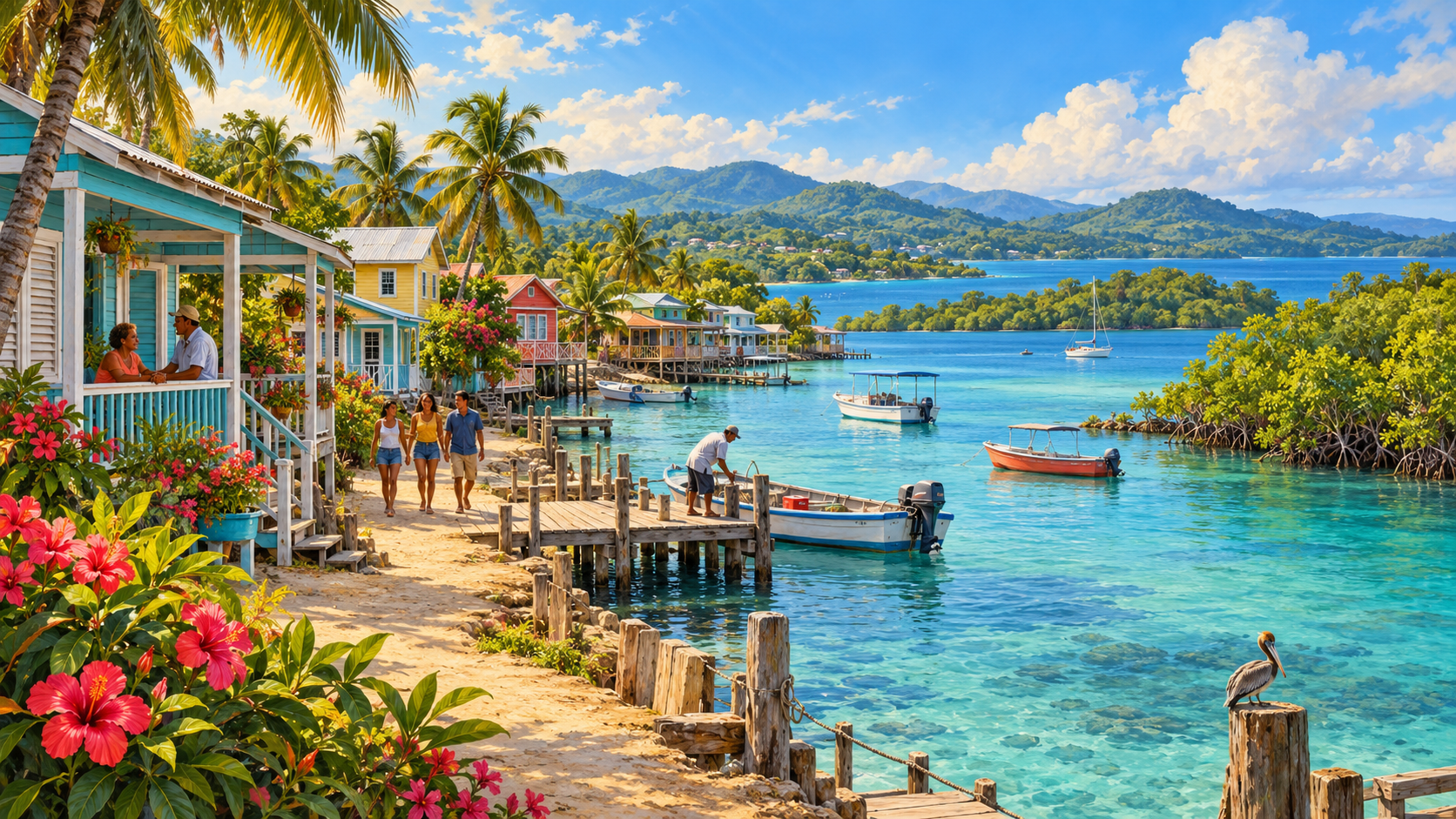
Belize brings a remarkable range of experiences into one country: reef landscapes, island settlements, Maya heritage, forests and living coastal cultures. The best things to do when visiting and touring Belize include a suitable guided reef outing, the Great Blue Hole, Caye Caulker, San Pedro, ancient Maya sites, carefully chosen caves, forest walks, Garifuna culture and cacao experiences. A good Belize travel itinerary gives those discoveries time rather than treating the country as one long excursion.
For a first Belize holiday, a family journey or a Caribbean-and-jungle trip, choose the balance you want between coast and mainland. Belize sightseeing can mean a quiet island afternoon, an interpreted archaeological visit or a hosted conversation about food and music. This guide introduces ten options and helps you decide which actually suit your interests, ability and available days.
Water conditions, road journeys and the requirements of a particular activity matter. A famous dive site is not automatically a beginner dive, a cave visit is not automatically a gentle walk, and a wildlife sanctuary cannot promise an animal sighting. Make the exact experience clear before paying for it.
eduKateSG · A WORLD WORTH UNDERSTANDING
Find your way through Belize
Choose the part you need now, or follow the whole journey at your own pace.
Use a few suitable bases. An island chapter and a Cayo chapter can provide a varied first visit; southern cultural experiences deserve additional time rather than being attached casually to the last transfer day.
| Experience | Choose it for | Planning decision |
|---|---|---|
| A guided reef outing | Marine observation | Match the activity to swimming ability |
| Great Blue Hole | Reef geography and aerial perspective | Separate viewing from specialist diving |
| Caye Caulker | Island rhythm and community life | Leave an afternoon unstructured |
| San Pedro on Ambergris Caye | A coastal settlement and local food | Plan beyond a boat departure point |
| Xunantunich | Maya architecture and interpretation | Use a suitable guided visit |
| Caracol | A dedicated archaeological day | Confirm current access and transfer conditions |
| A suitable cave experience | Geology and heritage | Check the exact physical requirements |
| Cockscomb forest | Habitat and careful observation | Choose a marked or guided route |
| Garifuna culture | Living music, language and food | Book a host-led programme |
| Cacao and chocolate | Growers, processing and community knowledge | Choose a transparent local provider |
The reef and mainland tell different stories. Give each chapter enough time for an experience and a pause, rather than spending every morning leaving somewhere you only reached the previous evening.
The Belize Barrier Reef Reserve System provides a powerful introduction to marine habitats. Choose a reputable, authorised operator for an outing appropriate to your experience, with a clear explanation of the actual location, supervision and equipment.
Hol Chan is one recognised marine destination to investigate through official visitor information. The name alone does not establish what your booking includes. Ask whether the outing involves snorkelling, diving or boat-based observation, how people enter the water and what happens if conditions change.
Describe swimming confidence honestly. A guide needs accurate information to recommend an appropriate experience; enthusiasm is not a substitute for ability. If entering the water is unsuitable, ask about a genuinely available viewing alternative or choose a different coastal activity.
Let observation be the pleasure. Look at how marine life uses a habitat without touching, feeding or chasing it. Follow the operator’s conservation instructions and stay within authorised areas. A successful reef day is one in which your group understands and respects the place, even if the photographs are less dramatic than a promotional image.
The Great Blue Hole is a celebrated feature associated with Lighthouse Reef Atoll. Its familiar aerial appearance invites a question about scale: what looks like a neat shape in a photograph is part of a much larger marine setting.
Decide whether your interest is in viewing the formation, learning about reef geography or undertaking a specialist dive. These are different experiences with different requirements. An aerial excursion, where available, offers a particular perspective but involves its own booking, weather and operator checks.
Do not assume a Blue Hole diving trip suits a newly qualified or occasional diver. Ask an appropriately qualified provider about the precise dive profile, required certification, recent experience, equipment and contingency arrangements. Accept a recommendation for a more suitable site if that is the better decision.
For many visitors, interpretation and a carefully chosen viewing option will be enough. You can appreciate an important landscape without entering its most demanding environment. Compare the total journey and cost with your other priorities, and confirm what a cancelled excursion would mean for the rest of your itinerary.
Caye Caulker can be enjoyed as an island settlement rather than only as a launch point for excursions. Walk a manageable route, choose a local meal and leave time to watch the movement between homes, businesses and the shore.
Pay attention to ordinary details: how goods arrive, where people gather and how the island accommodates visitors alongside daily life. These observations make a quiet afternoon feel specific. They also remind you that a holiday setting is someone else’s community.
Keep the visit considerate. Ask permission before photographing people, do not block working access or private entrances, and use established services. If your plan includes a water activity, confirm current conditions and supervision separately from the land-based visit.
Check the current transfer schedule, luggage arrangements and the route between your arrival point and accommodation. If you are making a day trip, know your suitable return departure before becoming absorbed in lunch. If staying overnight, a free afternoon after arrival can be a welcome counterweight to a busy mainland chapter.
San Pedro on Ambergris Caye gives an island chapter a different focus. Choose a short settlement walk, a cultural introduction or a meal recommended through a reliable local host, rather than seeing the town only between check-in and a reef departure.
Look at the relationship between tourism and everyday services. Ask how a neighbourhood functions and where a visitor can engage respectfully with local businesses. A thoughtful conversation often adds more to the journey than another photograph taken without context.
Accommodation location matters here. Confirm how you will reach the places you intend to visit, including any evening meal and return journey. A listing’s broad destination name does not explain the actual distance or transport needed from your room.
Keep island movement and water safety distinct. Coastal accommodation does not guarantee that its adjacent water is suitable for swimming, and proximity to an operator does not establish the quality of its activity. Choose reputable arrangements, protect valuables and follow current local advice. San Pedro can provide an enjoyable day of food and community observation without making every hour a marine adventure.
Xunantunich offers a mainland experience centred on Maya architecture and archaeological interpretation. Choose a guided visit that explains what is known, what has been reconstructed and where uncertainty remains.
Begin by understanding the layout. Ask how particular spaces and structures related to one another, then notice the way scale changes as you move through the site. A large building makes more sense when it is connected to the people and activities of the surrounding settlement.
Stay within authorised areas and follow the current rules about access to structures. Do not assume that climbing is permitted simply because an older photograph shows someone above ground level. Archaeological sites balance visitor access with conservation, and arrangements can change.
Plan the outing around heat, surfaces, steps and travel from your base. Ask about the current crossing or access arrangements and the walking involved in the booked visit. Bring the questions you most want answered, and leave enough time afterwards to reflect instead of immediately beginning another long transfer.
Caracol invites a deeper mainland chapter. Treat it as a planned excursion with a reputable provider who can confirm current road conditions, access and the full return arrangement, rather than assuming it is an easy addition to any Cayo afternoon.
A good introduction explains the settlement as a connected place. Ask how its structures, surrounding landscape and archaeological evidence contribute to the understanding of Maya society. Let the guide distinguish an established finding from a plausible interpretation.
Confirm the actual demands of the day before booking. The journey, time outdoors and walking may be as significant as the archaeological visit itself. Ask where breaks occur, what is included, what you need to carry and how conditions could alter the plan.
If the excursion does not suit your time or mobility, choose a more appropriate archaeological experience. There is no need to turn interest in heritage into a test of endurance. A focused visit to one site, followed by thoughtful reading, can be more useful than reaching a second location while too tired to absorb its story.
Belize’s caves offer encounters with geology and, at some sites, important cultural heritage. Start with the actual activity description. A guided cave walk, a tubing excursion and a demanding archaeological cave visit are not interchangeable bookings.
Actun Tunichil Muknal is one well-known option to investigate with an authorised provider. Ask about water exposure, footing, physical demands, age or height restrictions and the current rules for equipment and photography. Do not rely on a generic photograph to decide whether the experience suits your group.
Where a site contains archaeological or human remains, follow all instructions and treat the setting with particular respect. It is a heritage environment, not a stage for a dramatic pose. A responsible guide should explain both its significance and the behaviour expected from visitors.
Weather can affect cave access and water conditions. Confirm the provider’s decision process, alternative arrangements and cancellation terms before the day. If a cave visit is unsuitable, an interpreted archaeological site or a forest activity can still give your mainland chapter depth without forcing everyone into the same physical challenge.
Cockscomb Basin Wildlife Sanctuary offers a forest experience where attention to habitat can be rewarding in itself. Choose a route suitable for current conditions, your group’s ability and the advice of the responsible visitor service or guide.
The association with jaguar conservation is a reason to learn about protected habitat, not a promise of a sighting. Wild animals determine their own movements. A guide who helps you understand signs, vegetation and ecological relationships can offer a valuable outing even when no large mammal appears.
Walk quietly, remain within authorised areas and follow instructions about wildlife and water. Do not feed animals or leave the route to pursue a possible photograph. Ask about the specific trail’s surfaces, elevation changes and any current closure before setting out.
Give the forest enough time to become more than a green backdrop. Notice layers of vegetation, changing light and sounds that differ from the coast. A simple notebook entry comparing the reef and forest can make both experiences more memorable, while avoiding claims about an animal you did not actually identify.
A host-led cultural visit in a place such as Dangriga can bring music, food, language and history into conversation. Choose a programme run by people who explain their own traditions and make clear how visitors participate.
Drumming can be an engaging entry point, especially when a teacher explains the rhythm and its context. Listen before trying to imitate, and ask how the music belongs within a wider cultural life. The experience should recognise living people rather than reduce a community to a performance for tourists.
Photography and recording require permission. Ask before capturing a lesson, meal or conversation, and respect a refusal without treating it as a disappointment. Paying fairly for a structured programme recognises the host’s time and expertise.
Allow room for a question beyond the activity itself. You might ask how language is shared between generations, or how a particular dish is prepared today. Confirm the programme, meeting point and return transport in advance. A cultural encounter becomes richer when everyone knows what has been invited and what remains private.
A cacao or chocolate experience can connect a familiar pleasure with agriculture, processing and community knowledge. Look for a transparent, locally led programme, including a Maya-led experience where the hosts offer one, and establish what your visit actually includes.
Follow the sequence from plant to finished product. Ask how a producer handles harvesting and processing, then notice the differences between the stages you are shown. A tasting becomes more meaningful when you understand the work behind it.
Keep broad historical claims in proportion. Cacao has a significant regional history, but one contemporary visit cannot stand for every Maya community or every period. Let your host describe their own practice and use reliable records for wider claims.
Confirm allergies, ingredients, access and booking arrangements. If purchasing chocolate or another product, ask who made it and how it was produced. Choose something you enjoy and can carry appropriately. The most valuable souvenir may be the clear explanation of a process you had previously encountered only as a wrapped bar on a shop shelf.
A focused week
Combine one island base with a Cayo base, subject to current transfer arrangements. Choose a suitable reef day, an unstructured island afternoon and one or two mainland priorities. Keep a flexible period for weather or rest instead of filling every spare hour.
A longer cultural journey
Add a southern chapter for a forest visit, a hosted Garifuna programme and cacao learning. Give those experiences their own days and confirm the real distances between accommodation and meeting points. They are not automatically convenient side trips from an island stay.
A journey with limited water activities
Build around community life, archaeological interpretation, food and appropriate land-based nature. Consider a verified viewing alternative where available, but do not make the Great Blue Hole or a water-heavy cave visit compulsory. Belize offers substantial experiences beyond swimming and diving.
Check safety and exact locations
Read current Belize travel advice, including safety guidance. The guidance checked for publication highlights serious gang violence especially in Belize City’s Southside, south of Haulover Creek. Use reputable transfers and local advice; do not treat a transfer through a city as an invitation to wander everywhere.
Make weather part of the itinerary
Recheck marine, cave and road conditions with qualified providers. Ask how a cancellation is handled and whether an alternative really fits your group. Arrange suitable insurance for the activities you actually intend to undertake and check official entry requirements for your nationality.
Compare complete bookings
Establish whether a quote includes transfers, guide, equipment, admissions and meals. Confirm the operator’s authorisation and what supervision means in practice. Accessibility information should cover the whole activity, including boarding, walking and getting back to your accommodation.
Keep cultural participation respectful
Use invited, host-led experiences. Seek permission for images, pay agreed fees and avoid treating homes or ceremonies as open attractions. At archaeological sites, remain within current visitor rules even when an old travel account describes greater access.
| English | 中文 | A useful question |
|---|---|---|
| Marine reserve | 海洋保护区 | Which authorised area will we visit? |
| Supervision | 监督照看 | How is the water activity supervised? |
| Dive certification | 潜水资格证书 | What qualification does this dive require? |
| Transfer | 接驳 | What is included in the transfer? |
| Archaeological evidence | 考古证据 | What supports this interpretation? |
| Cave conditions | 洞穴状况 | What are today’s access conditions? |
| Habitat | 栖息地 | What does this habitat support? |
| Hosted programme | 主持接待的活动 | Who leads the experience? |
| Recording permission | 录音录像许可 | May I record this lesson? |
| Processing | 加工 | What happens at this stage? |
Practise asking the complete question. Precise language helps you identify whether an activity is suitable before committing to it.
Choose one process to explain clearly: how a reef outing is organised, how a guide interprets a structure or how cacao becomes chocolate. Use a short sequence and identify the source of the information.
For a family conversation, ask each person to describe one moment that changed an assumption. Perhaps the forest was rewarding without a large animal sighting, or a cultural lesson involved more listening than performance. Use those answers to choose the pace of your next journey.
Continue with the World Travel Vocabulary City Directory and World City Experiences Directory for further language and place-based reading.
Is the Great Blue Hole a beginner diving activity?
Do not assume so. Discuss the exact dive with a qualified provider and meet its certification and experience requirements. Viewing and interpretation are separate options where suitable services are available.
Can a family choose a cave tour from its name alone?
No. Confirm the actual physical requirements, restrictions and current conditions. Different cave activities can involve very different demands.
Will I see a jaguar at Cockscomb?
There is no guaranteed sighting. Choose the visit for habitat, conservation learning and careful forest observation.
Should I use one base for the whole country?
One base may suit a focused chapter. A country-wide journey often benefits from separate island, inland and southern stays, depending on current connections and the experiences chosen.
Sources checked on 8 October 2026 include Belize Tourism Board’s Great Blue Hole introduction, Hol Chan introduction, Caracol introduction, ATM cave introduction, greatest-hits itinerary, southern Belize itinerary and Dangriga introduction, UNESCO’s Belize Barrier Reef Reserve System record and FCDO safety guidance. Recheck current operator, access and official information before travel.
Continue to Benin, revisit Belgium, or return to the World Country Experiences Directory.