
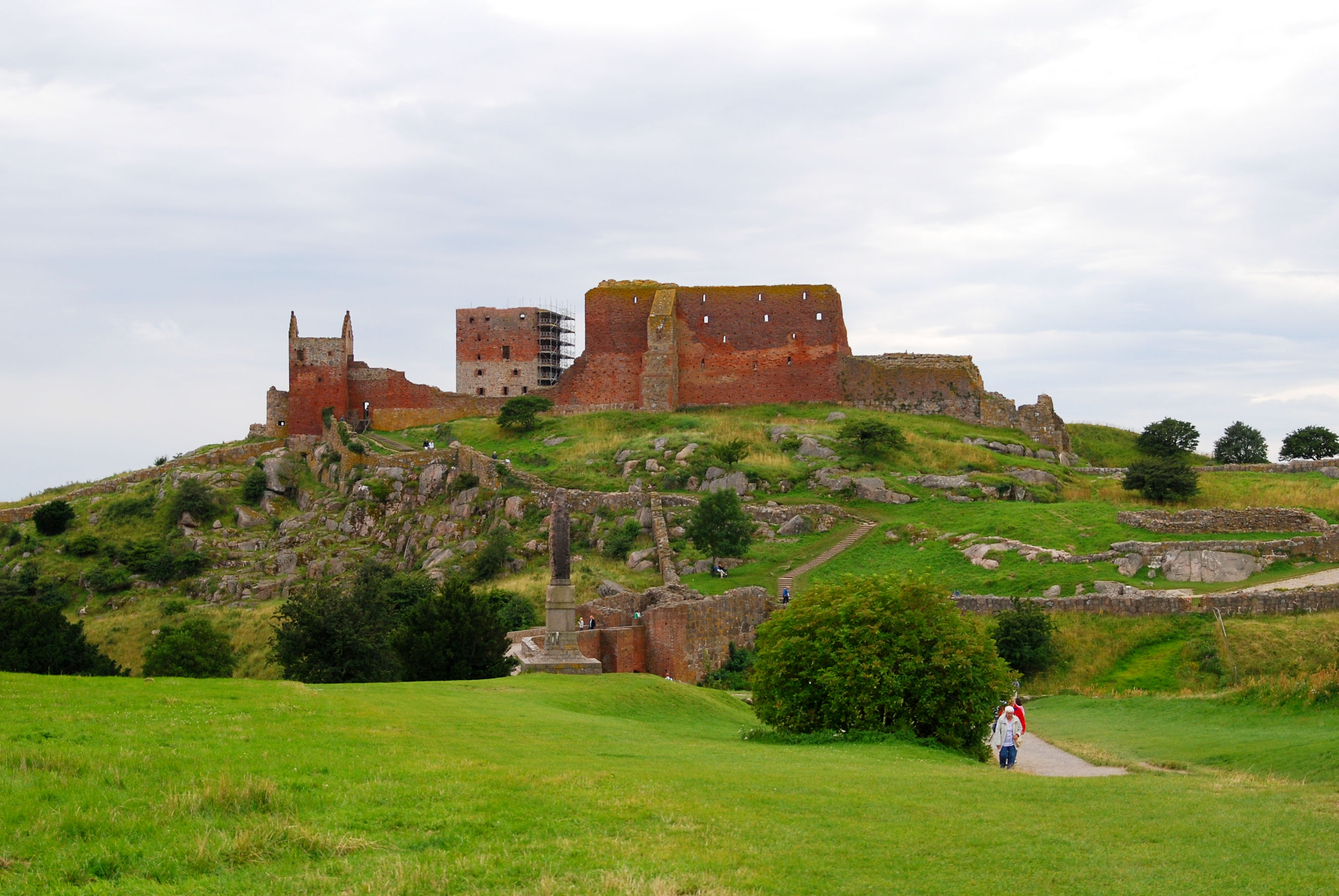
Bornholm looks like a single small dot in the Baltic Sea, but it changes character as you travel around it. The north has dramatic granite cliffs and the great ruins of Hammershus; the south opens into the fine sand of Dueodde; the east is a chain of old harbours, smokehouses and craft towns. The best things to do when visiting and touring Bornholm are to explore Hammershus, understand the medieval round churches, stroll Gudhjem and Svaneke, enjoy Dueodde, walk through Almindingen, discover the northern coast, taste smoked herring, cycle a suitable route, visit the island’s cultural collections and consider a properly planned boat trip to Christiansø.
For a first Bornholm holiday, stay long enough to experience more than one coastline. Rønne is a practical arrival town; Gudhjem and Svaneke offer an eastern harbour rhythm; Allinge and Sandvig position you for the north; and the southern beaches invite slow afternoons. A three-to-five-day itinerary works best when each day has a geographical focus. Even in fine weather, check ferry schedules, opening times, beach conditions and the accessibility of historic buildings before setting out.
Start here: what makes a Bornholm trip work
Bornholm is Danish territory east of the rest of Denmark, with Sweden’s southern coast an important part of many journeys to it. That geography matters. A quick glance at a map might suggest that Danish islands are interchangeable, yet Bornholm’s geology, trading routes, defences and settlements have developed their own recognizable character. It combines granite headlands, fertile countryside, forest, sandy shore and towns shaped by the sea.
- First decide your base: Rønne for ferries, Gudhjem or Svaneke for east-coast town life, or Allinge and Sandvig for the north.
- Then choose one main landscape per day: cliffs, forest, eastern harbours or south-coast sand.
- Book only the activities that require an exact departure or entrance; leave a little flexibility for wind and rain.
- Move through the ten experiences below as a menu, not a list that must be completed.
This guide is not a promise that every stop is open all year, nor a list that asks you to cross the island repeatedly. Think of it as ten possible conversations with a place: how people defended it, worshipped, fished, built boats and homes, worked with stone, cooked, farmed and moved between harbours. The useful travel decision is to choose several of those stories that belong comfortably together.
The distinction between scenery and access is especially important. A castle ruin is a protected heritage site, a church is a functioning religious building, a smokehouse is a business, a rocky beach is a natural environment and an offshore island depends on a boat. All five require different manners, clothing and expectations. A good itinerary begins by recognizing those differences.
Compare ten rewarding Bornholm experiences
| Experience | Best area | Main interest | Check before visiting |
|---|---|---|---|
| 1. Walk the Hammershus castle landscape | North-west; near Allinge | history | Check exhibitions and path status; slippery stone and coastal winds call for steady footwear. |
| 2. Understand Østerlars and the round churches | Inland near Gudhjem; other churches across the island | history | Confirm visiting conditions; do not enter during a service unless invited appropriately. |
| 3. Explore Gudhjem’s harbour and smokehouse tradition | East coast; Gudhjem | food | Check restaurant opening days and food allergies; respect active working quays. |
| 4. Enjoy Svaneke’s small-town craft and waterfront | East coast; Svaneke | town | Avoid obstructing driveways or photographing workers without consent. |
| 5. Give Dueodde Beach a proper southern-island afternoon | South coast; Dueodde | coast | Observe posted bathing guidance and changing wind; never assume supervised swimming. |
| 6. Walk in Almindingen and learn the island’s inland geography | Central Bornholm; Almindingen | nature | Follow marked paths, especially after rain; leave wildlife and old stonework alone. |
| 7. Read the granite cliffs around Hammerknuden and Hammerhavn | Northern tip; Hammerknuden and Hammerhavn | nature | Rock surfaces can be slippery; keep clear of cliff edges, surf and restricted areas. |
| 8. Cycle one manageable section of Bornholm | Island routes; choose a single section | activity | Use current official cycle guidance; road traffic and wind require care. |
| 9. See Rønne’s island gateway and cultural collections | West coast; Rønne | town | Respect port barriers and do not enter active terminal or loading areas without authorisation. |
| 10. Consider a weather-dependent Christiansø and Ertholmene trip | Offshore; ferry from Bornholm subject to operation | coast | Never rely on an unconfirmed return crossing; follow local conservation rules. |
The top 10 things to do in Bornholm
1. Walk the Hammershus castle landscape
Hammershus stands above Bornholm’s north-western coast as an enormous medieval castle ruin. Its broken walls and location explain why a high, defensible headland mattered to rulers who had to watch trade and approaches from the Baltic. Look from the visitor centre before approaching the stones: a wide view makes the relationship between fortress, sea and cliff immediately clearer.
Begin with the modern visitor exhibition and then follow permitted paths at your own pace. The site is exposed, and stone steps and uneven surfaces are part of the experience. Allow time to stop and draw the plan rather than turning the ruin into a hurried photograph. This is a good first lesson in reading buildings as decisions about geography.
Look for the way sightlines change as you move. A wall that seems grand from below may look like a boundary when seen from above. Ask which directions the fortress could watch, and which everyday tasks became difficult in so elevated a position. Medieval power required supplies, labour, transport and communication, not just thick stone.
Historic places become more meaningful when you ask what the walls were meant to accomplish, who used the space and who paid the cost of building or maintaining it. A ruin cannot answer everything on its own. Read museum labels, compare maps and distinguish documented history from a colourful legend. Children can be invited to make one evidence-based observation rather than memorising a long succession of rulers. The goal is to understand a human decision in its setting.
Before you go: Check exhibitions and path status; slippery stone and coastal winds call for steady footwear. One useful question: If you could place one watchtower, where would it go and why? Take a short note in your own words; answering carefully is better than collecting another unlabelled image.
2. Understand Østerlars and the round churches
Bornholm’s white round churches are unlike ordinary parish churches many travellers know. Østerlars is the largest and one of the most instructive, with thick masonry and a circular plan historically connected both to worship and defence. The relationship between architecture, faith and insecurity is easier to grasp when you actually circle the exterior slowly.
Treat the church as a working religious place rather than a museum prop. If it is welcoming visitors, look for the central supports, circulation and the way light reaches the interior. If a service or closure is taking place, enjoy the setting quietly from outside and adjust the plan. More than one round church exists, but seeing them all is optional.
Compare the height, roof and windows with the castle you saw elsewhere on the island. Both use stone, yet their social purposes differ. Defensive elements do not erase the church’s primary spiritual importance. Let the building be evidence of layered use over time, not a simple medieval stereotype.
Historic places become more meaningful when you ask what the walls were meant to accomplish, who used the space and who paid the cost of building or maintaining it. A ruin cannot answer everything on its own. Read museum labels, compare maps and distinguish documented history from a colourful legend. Children can be invited to make one evidence-based observation rather than memorising a long succession of rulers. The goal is to understand a human decision in its setting.
Before you go: Confirm visiting conditions; do not enter during a service unless invited appropriately. One useful question: Why might a circular plan influence the movement and feeling of a space? Take a short note in your own words; answering carefully is better than collecting another unlabelled image.
3. Explore Gudhjem’s harbour and smokehouse tradition
Gudhjem seems to spill down a slope into a little harbour. This physical form creates narrow passages, sea views and intimate gathering places. Traditional smokehouses connect the town’s appeal to working fisheries rather than simply attractive buildings. A plate of smoked herring tells a story about preserving fish before refrigeration became commonplace.
Walk downhill slowly and build in time for a real meal. Try a local smokehouse where service is available, ask what is prepared on site and distinguish historic practice from today’s menu. The famous open-faced ‘Sol over Gudhjem’ combines smoked herring, rye bread and egg, although recipes and offerings vary by establishment.
Notice how the street uses the slope: houses, lanes and harbour space all respond to terrain. Then consider how the fishing economy, visitors and residents share those same narrow streets. A meal is a useful way to connect a food word with the hands, fuel, weather and transport behind it.
Food is a route into history and working life. Ask where ingredients came from, how they were preserved, whether the recipe belongs to a particular occasion and who prepares it today. A local specialty need not be exotic to teach something. In a family travel notebook, write down its ingredients and the practical reason the dish developed. Where you can, support the people making and serving it and communicate dietary restrictions clearly.
Before you go: Check restaurant opening days and food allergies; respect active working quays. One useful question: What changes when a food is understood as a preservation technique? Take a short note in your own words; answering carefully is better than collecting another unlabelled image.
4. Enjoy Svaneke’s small-town craft and waterfront
Svaneke rewards visitors who slow down. It has narrow streets, local shops, a harbour and a strong reputation for small-scale making. You may encounter ceramics, glass, sweets, food products and design, but the real attraction is seeing how an island supports people who still produce things rather than just display them.
Choose a few streets and one maker you genuinely want to learn about. A purchase is not compulsory. If a workshop welcomes visitors, ask a simple question about materials or techniques; if it does not, respect the boundary. Pair your visit with a short harbour walk and a drink or snack instead of endlessly browsing.
Compare the town’s working scale with Gudhjem. Both are maritime settlements, but their street patterns, businesses and individual scenes differ. Take one photograph that explains the place, not ten photographs of shop signs. A useful image might show a maker’s tool, a change of texture or the link between a small street and the harbour.
A town is most interesting when you remember that people live and work there. Walk beyond the single famous photograph, look at the relationship between streets and the waterfront, and observe how deliveries, housing and tourism share space. When you photograph a shop or home, consider whether the angle respects privacy. Small towns often reveal the most when you sit in one place long enough to notice the working rhythm between visitors and residents.
Before you go: Avoid obstructing driveways or photographing workers without consent. One useful question: What could a locally made object tell you about materials, skills and demand? Take a short note in your own words; answering carefully is better than collecting another unlabelled image.
5. Give Dueodde Beach a proper southern-island afternoon
Dueodde’s pale fine sand feels very different from the granite landscapes of northern Bornholm. Pine-backed dunes and a wide seascape can make the coast look effortless, yet dunes are sensitive environments and the water is still governed by weather, currents and temperature. The pleasant goal is not to prove how far you swam but to enjoy the landscape responsibly.
Use established routes across the dunes and keep beach equipment light. Families can make this a restful day with shade, water and a safe play plan. Walking the tideline and comparing sand texture can be as memorable as swimming. Check which areas have facilities or lifeguards at your time of visit rather than relying on an old beach blog.
Look for a contrast between protected dune plants and open sand. Wind moves loose grains, while roots help hold others in place. This small observation is an introduction to coastal geomorphology, and it explains why stepping off marked paths matters. The beach is beautiful precisely because its processes have not been turned into a paved attraction.
A coastline changes from hour to hour even when the map stays the same. Look at wave direction, shelter, paths, rock or sand and whether the place is a bathing beach, a working shore or a conservation zone. These distinctions keep a visit pleasant and help prevent casual damage. Adults can turn the experience into a lesson in scale and weather: where would you seek shelter, how far is the next safe access point and why is one section more exposed than another?
Before you go: Observe posted bathing guidance and changing wind; never assume supervised swimming. One useful question: Why do dunes need protection even when sand seems plentiful? Take a short note in your own words; answering carefully is better than collecting another unlabelled image.
6. Walk in Almindingen and learn the island’s inland geography
Bornholm is not only a coastline. Almindingen’s woodland, valleys and traces of earlier fortifications give the island a leafy centre. The shift from sea breeze to sheltered forest offers a chance to notice how soil, rock, moisture and human land use create different habitats across a comparatively small area.
Choose a marked walk suited to your mobility and daylight rather than combining every named rock, lake and ruin into a single trek. Ekkodalen and the old stronghold at Gamleborg are possible interpretive subjects, but route conditions and protection rules should decide what you do on the day. Start with a map that shows terrain as well as distance.
In the forest, listen before speaking. Identify differences in ground cover, tree shapes and how sunlight enters openings. A simple observation is more useful than guessing the age of every tree. The woodland is not empty land between attractions; it is an ecosystem and a record of changing ownership, settlement and forest management.
At a natural place, the photograph is only the beginning. Pay attention to the material beneath your feet, the direction of the wind, whether plants grow in exposed or sheltered spaces and how water moves through the scene. These are ordinary observations that lead to careful geological and ecological questions. Protected areas are not playgrounds without rules. Stay on established routes, avoid gathering specimens and allow a quiet landscape to remain quiet.
Before you go: Follow marked paths, especially after rain; leave wildlife and old stonework alone. One useful question: How does moving inland change your picture of Bornholm? Take a short note in your own words; answering carefully is better than collecting another unlabelled image.
7. Read the granite cliffs around Hammerknuden and Hammerhavn
The northern coast shows the side of Bornholm that makes it geologically unusual within Denmark. Granite, rocky headlands, small harbours and steep paths make a sharp contrast with Dueodde. At Hammerhavn, the relationship between sheltered water and exposed rock is immediately legible, and a simple coast walk can be very satisfying.
Begin at a designated parking or transit point, then choose a short, clearly marked circuit if conditions are good. Boats or extra activities should be chosen only from authorised operators and with suitable weather. There is no need to climb onto uncertain rock faces or approach cliff edges for a dramatic image.
Try drawing the coastline in three lines: headland, harbour, sea. Then add the human feature that makes the location usable. Why would a harbour sit here rather than on the most exposed point? That question connects scenery, wave shelter and the everyday decisions of fishermen and boat operators.
At a natural place, the photograph is only the beginning. Pay attention to the material beneath your feet, the direction of the wind, whether plants grow in exposed or sheltered spaces and how water moves through the scene. These are ordinary observations that lead to careful geological and ecological questions. Protected areas are not playgrounds without rules. Stay on established routes, avoid gathering specimens and allow a quiet landscape to remain quiet.
Before you go: Rock surfaces can be slippery; keep clear of cliff edges, surf and restricted areas. One useful question: What does a harbour reveal about shelter from the wind? Take a short note in your own words; answering carefully is better than collecting another unlabelled image.
8. Cycle one manageable section of Bornholm
Cycling is a wonderful way to feel the island’s changing scale, but a map that looks small can conceal hills, headwinds and tired legs. The Gudhjem–Svaneke children’s route promoted by Destination Bornholm is one example of a deliberately planned journey that links farms, a church and coastal towns. Its published route information includes gradients and surfaces, which matter more than the appealing label alone.
Select a distance that fits the least confident rider. Check bike condition, helmets, lights, junctions, current closures and a way to shorten the day if the weather changes. A family can choose a smaller segment and still come away with a convincing experience of travelling between villages without a car.
The pleasure is noticing the transitions. A church appears beyond a field; the road descends toward the water; a small shop marks a village centre. Record three such changes and you have a better story of the route than any average-speed statistic. A cycle is a form of travel, not a competitive workout.
An enjoyable active outing is the one that fits the group rather than the most ambitious version advertised online. Check the real route, gradient, terrain, weather, return options and ability of the least experienced participant. Leave time for observations, photographs and food. Make safety decisions before fatigue sets in. A shorter journey completed comfortably can create more curiosity than a long route where everyone spends the afternoon worrying about the finish.
Before you go: Use current official cycle guidance; road traffic and wind require care. One useful question: Which three changes in land use were clearest from the bicycle? Take a short note in your own words; answering carefully is better than collecting another unlabelled image.
9. See Rønne’s island gateway and cultural collections
Rønne is where many ferry passengers first step ashore, yet it deserves more attention than a quick transfer. Its streets, harbour and local museums can explain how Bornholm connects with Denmark, Sweden and the wider Baltic. Watching ordinary travel and trade is part of discovering an island, not an interruption of the holiday.
Make time for a gentle walk through older streets and an exhibition that matches your interests, checking its current opening. A modest cultural visit can help you understand a castle or round church later because objects, dates and maps give those monuments context. A busy harbour also asks you to separate visitor spaces from working docks.
Notice the movement of people and goods: ferries, roads, bicycles and pedestrian routes. Ask how the island’s residents receive supplies and travel to the mainland. Island life is not simply picturesque self-sufficiency. It is a network of services, energy, food, education and transport that must function through every season.
A town is most interesting when you remember that people live and work there. Walk beyond the single famous photograph, look at the relationship between streets and the waterfront, and observe how deliveries, housing and tourism share space. When you photograph a shop or home, consider whether the angle respects privacy. Small towns often reveal the most when you sit in one place long enough to notice the working rhythm between visitors and residents.
Before you go: Respect port barriers and do not enter active terminal or loading areas without authorisation. One useful question: How does an island’s main port differ from a small fishing harbour? Take a short note in your own words; answering carefully is better than collecting another unlabelled image.
10. Consider a weather-dependent Christiansø and Ertholmene trip
The Ertholmene islets, including Christiansø, add a fascinating offshore chapter to Bornholm’s story. Their fortifications and small community recall a world of Baltic maritime control. They are not simply another beach stop: the crossing, harbour conditions, residents and protected environments make the experience quite different from driving to a village.
Treat this as an optional extra rather than an obligation. Confirm the current ferry operator, departure point, season, return time and cancellations. A trip can take much of a day even when the time on the boat looks modest. If services do not align, read about the islands or enjoy another Bornholm experience instead.
Once ashore, notice the difference between an inhabited place and a heritage display. Small islands have limited resources and intimate residential areas. Move quietly, stay on permitted routes and look at how fortifications, water access and buildings fit together. The island is not responsible for completing a traveler’s schedule.
A coastline changes from hour to hour even when the map stays the same. Look at wave direction, shelter, paths, rock or sand and whether the place is a bathing beach, a working shore or a conservation zone. These distinctions keep a visit pleasant and help prevent casual damage. Adults can turn the experience into a lesson in scale and weather: where would you seek shelter, how far is the next safe access point and why is one section more exposed than another?
Before you go: Never rely on an unconfirmed return crossing; follow local conservation rules. One useful question: Which needs become harder to meet when a community is surrounded by sea? Take a short note in your own words; answering carefully is better than collecting another unlabelled image.
How to plan two, four or seven days
Two days: north and east
Spend the first day with Hammershus and the north coast, then choose Gudhjem, Østerlars and Svaneke on the second. Add a short beach or harbour walk, rather than squeezing in the entire southern island. This is the simplest framework if your ferry timetable limits the time available.
Four days: a balanced first visit
Give the north one day, the eastern harbours and crafts another, the round churches and forest a third, and Dueodde or another suitable southern coastline a fourth. Keep one small unscheduled window each day; in an island holiday, that flexibility often makes weather changes manageable.
Six or seven days: slow island learning
Add another forest or cycling day, explore Rønne’s historic centre and collections, and reserve a possible Christiansø outing for a favorable forecast and confirmed boat service. Stay in one or two bases rather than relocating every night. Choose depth, not a race to ten checkmarks.
A good itinerary is measured by whether you can enjoy the places chosen, not by the number of names crossed off a map. Budget more time for conversations, short walks, restroom stops, meals and a changed ferry or weather forecast. Try to make each day geographically coherent. The island’s small size does not erase the time it takes to park, change buses, secure bicycles or settle children. A simple plan also leaves room for the unexpectedly good part of a holiday: a viewpoint you did not know about, a spontaneous local exhibition or a second hour at a place you love.
Travel and transport: reaching Bornholm without surprises
The easiest recurring mainland connection for many visitors runs from Ystad in Sweden to Rønne with BORNHOLMSLINJEN. There are also routes involving Køge and, on applicable dates, Sassnitz; never assume each route operates on the day you need. Travellers without a car can connect by train or bus toward Ystad and use local buses or rented bicycles on Bornholm. The ferry company publishes current boarding procedures, fares and timetables, so check the exact sailing before booking onward transport.
At the planning stage, separate four kinds of time: the mainland journey to the departure port, the check-in window before boarding, the actual crossing and the journey after arrival. This matters especially when a trip crosses a national border in Sweden on the way to a Danish island. Check identity documents and your own passport or visa rules. Prices and departure counts on promotional pages are not guarantees for your date. Write down the return sailing before deciding how much sightseeing is possible on the final day.
Within Bornholm, match transport to the day rather than insisting on one mode. A car offers flexibility for separated sights, but parking and local traffic still need care. Cycling is excellent for a planned short or medium route, not automatically convenient for every family. A bus can make a relaxed town day possible when its timetable suits your route. Confirm service changes, weekends and off-season frequency before promising yourself a complicated chain of connections.
Seasons, conditions and what to pack
Bornholm can be sunny and breezy on the same day. Spring brings quiet roads and changeable conditions; summer brings longer opening hours, warmer beaches and more people; autumn offers a calmer harbour atmosphere with shorter days; winter changes what is practical outdoors and how often some visitor businesses open. Pack a windproof layer even when the forecast looks friendly, and do not treat the Baltic Sea as safe simply because the sand looks inviting.
| When | A realistic advantage | A reason to check again |
|---|---|---|
| Spring | Quieter roads, fresh green views, comfortable walking when dressed well | Cool sea, wind and seasonal visitor hours |
| Summer | Longer daylight, busy harbours, more opportunities for beach and cycling days | Crowding, accommodation demand and the need for sun and water planning |
| Autumn | Calmer town walks and beautiful changing landscapes | Early dusk, changing boats and some shorter seasonal openings |
| Winter | A distinctive quieter island with time for town and museum chapters | Strong weather, reduced services and exposed outdoor locations |
Pack for the activities rather than the advertising photograph: secure shoes for stones, a breathable layer for walking, a windproof outer layer, water, sunscreen when appropriate and a small bag for litter. A paper or offline map is useful when reception is uncertain, as is a screenshot of confirmed ferry details. For children, bring a dry spare layer after beach time. Check notices at the attraction itself on the day; even reliable websites cannot prevent a sudden weather-related change.
Heritage, local food and respectful island travel
You will often notice how small-scale activity gives the island its identity: smoked fish, pottery, glass, farm produce, local exhibitions and busy fishing harbours. Buy directly from producers when possible, ask whether a workshop welcomes visitors, and let people work rather than treating them as a performance. Historic churches also require quiet voices, appropriate clothing and attention to services or closure notices.
The simplest respectful habit is to identify what kind of space you are entering. In a church, people may be worshipping or mourning. In a workshop, tools and materials may be expensive or hazardous. In a museum, historic objects may be protected by no-flash policies. At a harbour, cranes, ropes and vehicles can make an apparently open quay an industrial workspace. Ask before entering, before touching and before taking a close photograph of a person. Those small permissions make a more comfortable encounter for everyone.
Consider the economic impact of your choices as well. A locally run exhibition, small shop or carefully chosen meal can contribute to the community that maintains the experience. Spread visits across the day when you can, avoid blocking narrow lanes and treat residential streets as homes first. Responsible tourism is not about refusing to enjoy a place; it is about enjoying it while noticing who else depends on it.
A simple field notebook for families and curious travellers
With children or first-time travellers, split a day into one substantial visit, one movement break and one simple food stop. Hammershus can anchor a history day; Dueodde can make a coastal day gentle; and a short section of a family cycling route can give the journey a sense of adventure without making it an endurance test. Where mobility, pushchairs or steep paths matter, use official venue guidance rather than assumptions from photographs.
Geography
Mark one rocky headland, one forest and one sandy beach on the same map. Write how travel, weather and land use might differ among them. This works better than a long list of unconnected facts.
History
At Hammershus or a round church, record one physical feature and one question about its purpose. Use an exhibition or official guide to decide what is established and what remains uncertain.
Language
Collect six useful place words such as harbour, fortification, ferry, dune, smokehouse and trail. Define them in English, translate carefully and use each in a sentence about something you really saw.
Mathematics
Compare travel times without confusing distance with duration. If a boat, road trip or bike ride requires extra waiting, record that separately. A realistic plan adds transfer and rest time.
Ethics
Observe one rule that protects heritage, wildlife or local residents. Explain what could happen if everyone ignored it, and name a way visitors can help the place remain worth visiting.
When you return home, ask each traveller for one precise observation, one new word and one question still unanswered. The best travel memory may be a stone arch compared with the shore below it, the sound of a smokehouse harbour or the discovery that the island has more than one kind of coast. A photograph with a useful caption can preserve that learning. It does not need exaggerated claims or invented stories to make the place feel important.
English–中文 vocabulary for a Bornholm trip
| English | 中文 | Use it for |
|---|---|---|
| island | 岛屿 | Bornholm as a separate land mass |
| harbour | 港口 | Rønne, Gudhjem and Svaneke |
| castle ruin | 城堡遗址 | Hammershus |
| round church | 圆形教堂 | Østerlars |
| dune | 沙丘 | Dueodde |
| forest | 森林 | Almindingen |
| coastline | 海岸线 | The granite north and sandy south |
| ferry | 渡轮 | Ystad–Rønne and other relevant routes |
| craft | 手工艺 | Workshops and makers |
| smoked fish | 熏鱼 | Traditional island food |
| trail | 步道 | Marked outdoor routes |
| heritage | 文化遗产 | Historic places and continuing practices |
Frequently asked questions about Bornholm
What is Bornholm best known for?
Bornholm is especially known for its contrasting coastlines, Hammershus castle ruin, distinctive medieval round churches, Gudhjem and Svaneke harbours, fine sandy beaches around Dueodde and a tradition of smoked fish and craftsmanship. Each makes sense as part of a different half-day or day-long visit. The best introduction combines a historical stop, a harbour town and one landscape rather than staying only in a beach resort.
How many days do you need on Bornholm?
Three to five days allow a balanced first visit, although two carefully planned days can cover a north-and-east route. A longer stay gives cycling, museum visits and uncertain-weather activities room to breathe. Arrival and departure days should be planned around the actual ferry rather than treated as full sightseeing days. Families often benefit from one significant stop per day and a more relaxed second activity.
Can you visit Bornholm without a car?
Yes, a car is not a prerequisite for every Bornholm holiday. Rønne is a useful transport hub, and selected towns can be reached through local services, walking or rented bicycles. However, bus frequencies, weekends, distances, hills and weather all influence whether a proposed sequence is practical. Decide your base and the places you want most before committing to a car-free itinerary; check the actual service timetable for each day.
How do you reach Bornholm from Copenhagen?
A common route is to travel toward Ystad in Sweden and take the ferry to Rønne. Some journeys involve the combined bus or train service promoted by the ferry operator, while other ferry routes operate according to their own schedules. Passport, border and check-in requirements depend on the traveller and route. Check the ferry company’s current schedule and connections before buying any nonrefundable onward tickets.
Is Hammershus suitable for a family visit?
Many families enjoy the Hammershus visitor centre and the open-air history around the castle, but individual paths, stairs and exposed areas vary in difficulty. The visitor centre provides accessible interpretation, while the full ruin walk is not equivalent to a flat museum visit. Choose how far to go based on the least mobile member of the party, bring secure footwear and supervise children near drops and uneven stone.
Can you enter the round churches?
Some round churches admit visitors during published hours when no religious service is taking place. Conditions and any admission fees differ by church and date. The buildings remain active sacred places, so treat a scheduled service and any sign requesting privacy as a priority. Even when a visit is exterior-only, the circular plan and relationship to surrounding landscape offer much to observe.
Is Dueodde a good swimming beach?
Dueodde is widely known for sand and a lovely coast, but beach appearance alone does not establish safe swimming on a particular day. Wind, temperature, current, surf, lifeguard arrangements and an individual’s ability must all be assessed locally. A beach visit can still be excellent as a walk, picnic or sand-and-dune observation activity without entering the water. Follow posted guidance and protect dune vegetation.
When is the best season for Bornholm?
Summer is popular for beaches, extended daylight and seasonal businesses, but brings greater demand. Spring and early autumn can reward walkers and visitors who value a slower pace, although wind, rain and shorter operating hours may change plans. Winter can be atmospheric for those prepared for reduced services and limited light. There is no universal best month; match the season to the activities you actually want.
Should Christiansø be a must-do day trip?
No. Christiansø and the Ertholmene can be rewarding for maritime history and a distinctive small-island setting, but the trip depends on current crossings and the weather. It is best treated as an optional, properly booked chapter in a longer stay. Visitors should protect the community’s privacy, follow conservation signs and confirm the return service rather than relying on an attractive photograph or last year’s timetable.
What is the simplest itinerary mistake to avoid?
Avoid grouping stops solely because they all appear on a top-ten list. Hammershus, Dueodde, Gudhjem, inland forest and offshore islets belong to different travel decisions. Put nearby experiences together, allow road and transfer time and keep a weather alternative. A four-day schedule with one real focus each day is usually more satisfying than a one-day drive that barely lets you leave the car.
Official sources and connected travel guides
Use the following primary destination and operator resources for venue context and up-to-date planning. Historic descriptions tend to change slowly; opening hours, sailing times, costs, weather and access may change quickly. Recheck the exact venue or operator immediately before travel. References were reviewed for this guide in October 2026.
- VisitDenmark’s Bornholm attractions
- Hammershus Visitor Centre
- Østerlars Round Church
- Bornholmslinjen ferry schedules
- Children’s cycle route Gudhjem–Svaneke
- Bornholm smokehouses
Continue through Top 10 Things to Do When Visiting and Touring Denmark or browse the World Country Directory. For a broader starting point, use the World Travel & Luxury Hub and choose the destination guide that matches your actual route.
Bornholm is at its loveliest when you keep its differences in view: the fortress above the waves, the purposeful shape of a round church, the smell of a smokehouse, the gentleness of southern sand and the fact that a short ferry journey links the island to a larger world. Choose the stories you want time to understand and let the rest wait for another visit.