
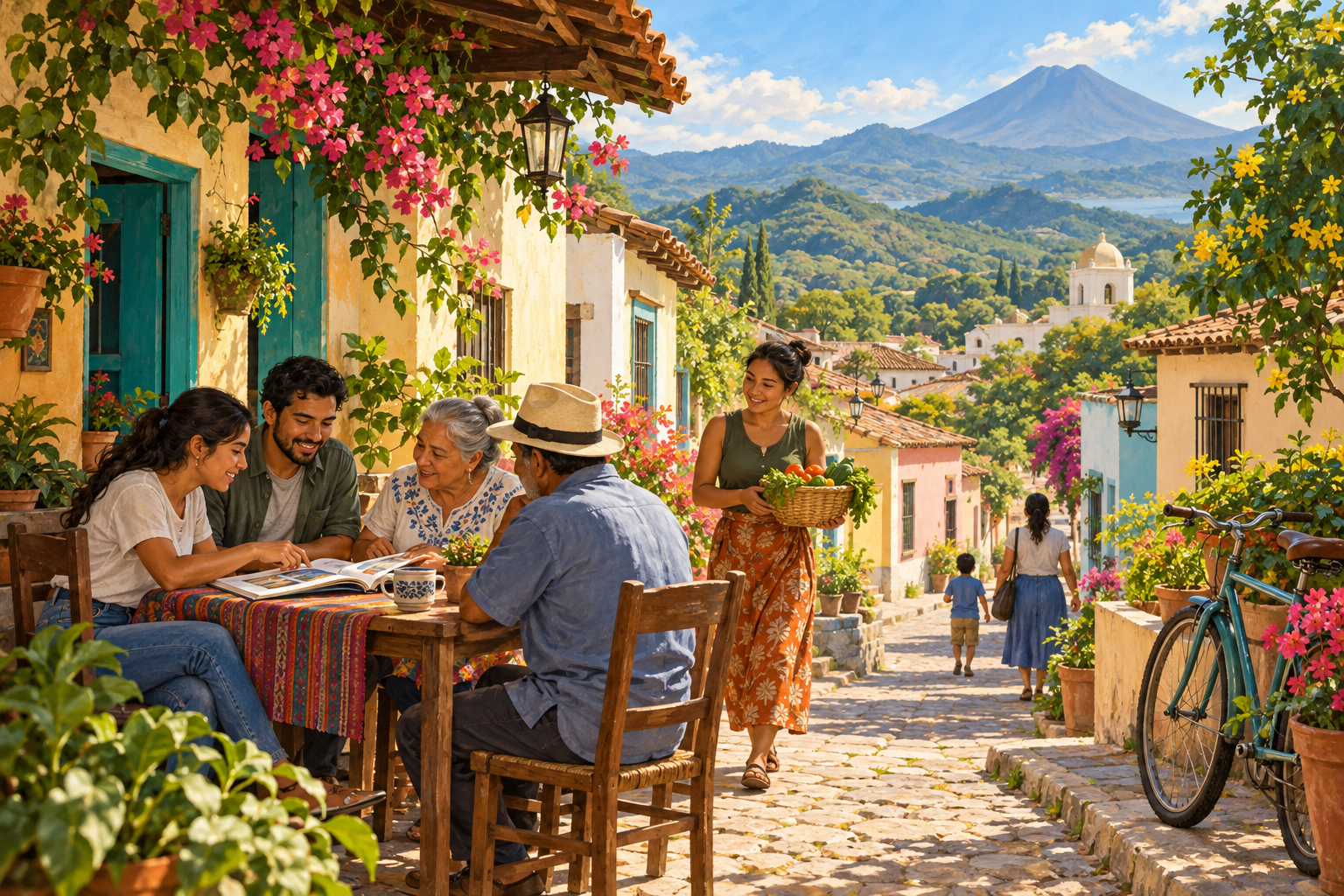
El Salvador makes a delightful case for travelling with curiosity rather than a huge checklist. The best things to do when visiting and touring El Salvador include exploring San Salvador’s renewed historic centre, learning from the UNESCO-listed village of Joya de Cerén, climbing a volcano with proper guidance, admiring Lake Coatepeque and taking time for the artisan towns of the Ruta de las Flores. Along the Pacific coast, surf culture, reef ecology and a plate of freshly made pupusas offer entirely different ways to understand this small, varied Central American country.
This El Salvador travel guide brings together ten memorable experiences, useful first-time itinerary ideas, archaeological heritage, volcano-safety advice, food, coffee landscapes and practical entry information. Whether you are searching for San Salvador things to do, Santa Ana volcano hiking, Surf City El Tunco, Lake Coatepeque, Suchitoto or a Ruta de las Flores road trip, the most rewarding approach is to choose a regional route and spend time with local people. The country’s public-security situation has changed significantly, but the continuing state of exception and natural hazards still deserve a place in every sensible travel plan.
Travel information reviewed 9 October 2026: The UK FCDO guidance current in October 2026 reports a substantial reduction in crime while noting that the state of exception introduced in 2022 remains in force, with extensive detention powers and limited safeguards. Violent and petty crime remains possible. Volcanoes, heavy rain, landslides, Pacific currents and earthquake risk require independent attention. Passport and CA-4 immigration rules depend on nationality and complete itinerary. Official entry, security and access arrangements can change; check again for your dates.
eduKateSG · A WORLD WORTH UNDERSTANDING
Choose your El Salvador journey with curiosity
Volcanic landscapes, living craft traditions, archaeology and Pacific energy make best sense as connected regional chapters.
El Salvador at a glance
El Salvador sits on Central America’s Pacific side between Guatemala and Honduras. Its size can make a first-time traveller optimistic about seeing everything in a few days, but mountain roads, active volcanoes and seasonally heavy rain affect what actually fits. San Salvador provides an urban gateway; Santa Ana and the western coffee highlands make a second chapter; the coast and Suchitoto offer their own rhythms.
The archaeological sites reveal histories that predate modern national boundaries. Joya de Cerén is El Salvador’s sole UNESCO World Heritage property on the inscribed list as of October 2026. It shows daily life in a pre-Hispanic farming community buried by volcanic ash. Tazumal, associated with the wider Chalchuapa archaeological area, provides a different perspective on pre-Columbian architecture and long-term settlement.
Travel should be about more than famous names. A cook folding pupusa dough, a guide explaining volcanic geology and an artisan showing the work behind a market object can teach you something the best viewpoint cannot. Give the trip enough room for those conversations.
- Practical first route: Base around San Salvador and the west, selecting archaeology, a volcano or a coffee-town visit.
- Heritage distinction: Joya de Cerén is UNESCO World Heritage; other archaeological attractions need their own current opening checks.
- Nature planning: Santa Ana/Ilamatepec is an active volcano; never treat an old hiking description as a current safety clearance.
- Security reality: Crime has fallen substantially, but a state of exception continues and consular safeguards may be limited.
Safety and respectful travel
Security and natural hazards are separate decisions. The UK FCDO notes major improvements in El Salvador’s security situation and significant reductions in homicide, but its October 2026 guidance also describes a state of exception under which detention powers are extensive and ordinary legal safeguards weakened. Visitors should avoid political demonstrations, carry appropriate identification and follow current local instructions; an improving safety picture is not permission to take unnecessary risks.
Rainfall can affect roads and trails through flooding or landslides, especially in mountainous terrain. The FCDO identifies monitored active volcanoes and recommends guided daylight hiking, current volcanological notices and local advice. Even a route commonly recommended online may close after geological activity or bad weather. The sea has powerful currents and surf breaks designed for experienced athletes may be unsuitable for casual swimmers.
Entry is passport-specific. The British passport guidance lists six months of validity on arrival and discusses the CA-4 regional agreement, under which time in participating countries can be shared rather than automatically resetting at the next border. Rules for other passports differ. Check Salvadoran migration authorities, any yellow-fever certificate conditions and onward travel rather than relying on a general visa-free headline.
1. Walk San Salvador’s historic centre and hear the contemporary city
Start in the capital, where the historic centre around major squares and civic buildings reveals a city in the process of presenting itself anew. The Metropolitan Cathedral, National Palace area and public spaces give visitors a way to ask how political events, religion, commerce and family routines have shaped San Salvador. An old monument and a contemporary café may tell different parts of the same history.
Take a walking route led by someone who knows which streets, buildings and public spaces are currently accessible. Pay attention to the ways people use the centre today rather than photographing it as an empty historic set. A good guide should distinguish restoration from original architecture and show how the area connects with the rest of the city.
Plan for traffic, midday heat and changing public-event arrangements. A city introduction is more rewarding when you choose one museum or cultural space and then stop for food than when you attempt ten unrelated places before lunch. Follow location-specific safety advice even in busy, renovated districts.
Enjoy it thoughtfully: Give the centre a thoughtful heritage walk, one confirmed cultural venue and time for a locally recommended meal.
Check before going: Verify permitted buildings, current event restrictions, transport, identification and security guidance.
2. Read Joya de Cerén as the archaeology of ordinary life
Joya de Cerén is exceptional because it preserves traces of a farming community rather than only the monumental buildings of elite society. UNESCO explains that an eruption buried this pre-Hispanic village in the seventh century, preserving evidence of households, food preparation and agricultural life. The comparison to Pompeii is useful as a starting point, not a claim that the cultures were identical.
Ask the kind of questions that a conventional pyramid tour may overlook. What did a family store? How were crops managed? Where did work happen? The archaeological record lets researchers build a surprisingly human account of a village and reminds travellers that history is made by farmers and artisans as well as rulers.
Respect the protective structures and paths. Excavations are not playgrounds, and a well-preserved archaeological feature can still be fragile. Allow enough time to read the interpretation, then compare what you learned with a different regional site later in the journey.
Enjoy it thoughtfully: Use a guided or well-interpreted museum visit to understand food, domestic work and volcanic preservation.
Check before going: Confirm official admission, conservation access and current archaeological-site opening arrangements.
3. Explore Tazumal and the wider history of Chalchuapa
El Tazumal near Santa Ana introduces a different archaeological scale from Joya de Cerén. The structures belong to the wider Chalchuapa archaeological landscape, which records long phases of ceremonial, political and urban activity. Rather than treating every mound as interchangeable, ask what distinguishes construction periods, cultural influences and the evidence used for interpretation.
A museum or professional guide can make the stonework meaningful. Notice the relationship between architecture and the surrounding settlement, and consider how an archaeologist distinguishes an original surface from a later restoration. An image online rarely reveals the complexities of excavation and conservation.
Tazumal pairs naturally with a western El Salvador route, but its timetable still matters. Plan a visit around current admission hours, leave time to read labels and avoid climbing protected structures. Add a Santa Ana town stop or locally hosted meal only if the transfer makes sense.
Enjoy it thoughtfully: Focus on one detailed archaeological interpretation rather than collecting photographs of every structure.
Check before going: Confirm park opening, tickets, weather, restricted areas and the route between Santa Ana and Chalchuapa.
4. Climb Santa Ana Volcano only when the mountain allows it
Santa Ana, also called Ilamatepec, is El Salvador’s highest volcano and a major attraction in the Los Volcanes landscape. Under suitable conditions, a managed ascent can reveal a dramatic crater and surrounding highlands. But the mountain is active, and a photograph of a brilliantly coloured crater lake is not proof that the trail is currently open.
Learn why the volcano’s shape, gases and crater water matter to geologists. A knowledgeable guide can explain which observations are safe and which areas must remain restricted. The surrounding vegetation changes with elevation, so the walk is also a chance to think about how weather and soils affect habitats.
A summit day requires good footwear, sufficient drinking water, a realistic fitness assessment and a daylight return. Government volcano alerts, park notices and current weather determine whether hiking is appropriate. Families or less experienced walkers can choose a safer viewpoint instead of feeling obliged to reach the top.
Enjoy it thoughtfully: Arrange an authorised guided daytime route and give volcanic science as much attention as the summit.
Check before going: Verify park admission, volcano monitoring, trail opening, guide requirements, weather and emergency return.
5. Give Lake Coatepeque a slow afternoon
Lake Coatepeque occupies a volcanic caldera, where steep forested slopes frame a large expanse of water. Its changing colours make it one of the country’s most appealing landscapes, but the setting is even more interesting when you ask how a volcanic basin formed and filled with water. A view across the lake connects geology with climate and settlement.
Choose a reputable lakeside stop or organised outing rather than trying to access every inviting shoreline. Restaurants, boat facilities and public viewpoints vary, and the water is not uniformly safe for all activities. A conversation with a local guide can reveal how the lake supports tourism and communities around its rim.
Pairing Coatepeque with Santa Ana or Cerro Verde can work in a western-region itinerary, but do not force every volcano and archaeological park into the same afternoon. The lake is especially rewarding when it gets a little unhurried time.
Enjoy it thoughtfully: Choose one managed viewpoint or carefully assessed boat outing and enjoy the volcano-and-water geography.
Check before going: Confirm shore access, current water conditions, boat equipment, road time and private-property boundaries.
6. Follow the Ruta de las Flores through crafts and coffee
The Ruta de las Flores links western highland towns associated with crafts, coffee landscapes, food and colourful street life. Places such as Juayúa, Apaneca, Ataco and Nahuizalco have different histories and local economies. The pleasure of the route is not its name but its sense of changing communities along a mountain corridor.
Visit one or two towns properly rather than stepping out of a car for identical souvenir photographs. Ask a craftsperson about material and labour, and choose a coffee farm only when it genuinely hosts visitors. Coffee production is a working industry shaped by harvest seasons, weather and market conditions.
Weekend food activity and market schedules may differ from weekdays. Mountain rain can slow the road, and not every café or workshop is open on demand. A locally arranged guide can give cultural context while helping you avoid intrusive photography in residential or religious spaces.
Enjoy it thoughtfully: Choose two complementary towns, a hosted coffee or craft experience and a comfortable shared meal.
Check before going: Verify each town’s market days, farm booking, mountain weather and realistic transfer times.
7. Spend a thoughtful day in Suchitoto and its lake landscape
Suchitoto is known for its historic streets, arts and relationship to Lake Suchitlán. Its slower atmosphere makes a welcome contrast to a capital-city day or a demanding volcano hike. Walk through the town’s public spaces and look at how traditional buildings, community projects and everyday commerce interact.
The lake invites a geography lesson. Waterways change land use, bird habitats and transport, while their appearance shifts with rainfall and water levels. An organised birdwatching or shoreline interpretation experience may offer a meaningful addition, but a lake is not automatically suitable for unsupervised boating or swimming.
Suchitoto deserves time to eat, listen and browse an authorised craft venue. Rather than treating a community as a perfectly preserved colonial postcard, ask about present-day art, restoration and the people who keep the town active.
Enjoy it thoughtfully: Combine a local-led town walk with a reputable cultural workshop or safe lake-view activity.
Check before going: Confirm venue hours, boat conditions, wildlife rules, transport and local travel advice.
8. Experience Surf City with the ocean’s limits in mind
El Salvador’s Pacific coast has earned attention through surfing, particularly around El Tunco, El Sunzal, La Bocana and neighbouring coastal locations. Official Surf City information records international competitions and describes an active surf culture. The appeal is not only a sporting spectacle; it is a way to understand wave behaviour, local businesses and the communities that live beside the sea.
For beginners, watching experienced surfers before a lesson is an excellent education. Ask an instructor about swell, tide, rip currents and which break is appropriate for your ability. A location suitable for a competition may be entirely wrong for a first-time swimmer or a child who wants to play in shallow water.
Give yourself a coastal day that includes local food and an easy sunset as well as any lesson. Keep personal belongings secure and follow local guidance for returning after dark. No view is worth entering heavy surf without proper supervision.
Enjoy it thoughtfully: Book a reputable surf school for an ability-appropriate lesson, or enjoy the coast without going into difficult water.
Check before going: Check swell, tide, beach hazards, instructor credentials, lifeguard cover and safe ground transport.
9. Look beneath the surface at Los Cóbanos
Los Cóbanos is associated with marine ecosystems and coastal scenery distinct from the better-known high-energy surf beaches. Rocky and reef habitats support creatures that a casual visitor may not notice from the shore. A responsible marine outing begins with an interest in how those habitats work, not simply with a list of snorkelling photographs.
Ask a local guide about the protected environment and any appropriate opportunities for coastal observation. Currents, visibility and reef conditions determine whether going into the water is sensible; sensitive marine life should never be touched or collected for souvenirs. Habitat protection is a community and institutional task, not an optional extra.
The coast is also a place of working livelihoods. Fishing, tourism and conservation can interact in complicated ways. Support operators who explain the rules and whose activities leave the marine environment in good condition for the people and animals that depend on it.
Enjoy it thoughtfully: Choose an approved, conservation-minded coastal activity and learn about reef or rocky-shore ecology.
Check before going: Confirm marine permissions, tides, sea state, appropriate equipment and a credible operator.
10. Let pupusas and a coffee conversation complete the journey
Pupusas offer one of the warmest introductions to Salvadoran food. The filled corn-based flatbreads often appear with curtido and sauce, but household and regional variations deserve respect. The most interesting question may be how the dough feels in an experienced cook’s hands rather than which restaurant wins an online ranking.
A carefully hosted cooking class, neighbourhood meal or food-focused market visit can connect ingredients with memory and everyday life. Ask who prepared the dish and where the ingredients came from. Food has an economy behind it, from farms to markets to family businesses, and tasting becomes more meaningful when you understand that work.
Coffee provides a parallel learning opportunity in the highlands. Instead of cramming in another sightseeing stop, sit with a grower or barista who welcomes questions. You may leave knowing less about a country’s ‘top ten’ and more about how a place actually functions. That is a very good trade.
Enjoy it thoughtfully: Choose a responsibly hosted pupusa experience or coffee conversation with credit to the cook or producer.
Check before going: Check dietary needs, food hygiene, legitimate workshop access and permission before photographing people.
Regional routes for a rewarding visit
Five days: San Salvador and a western heritage journey
Start with San Salvador, choose Joya de Cerén and Tazumal on appropriately timed days, then spend a relaxed day around Coatepeque or the western coffee towns. Keep a nature option for the day when volcano alerts and weather permit. Do not assume you can manage all sites in one day.
Six to eight days: volcanic highlands and the Ruta de las Flores
Give a managed Santa Ana hike one whole day, then allow two days for Lake Coatepeque, coffee landscapes and towns such as Juayúa and Ataco. Include a weather buffer and local food. This route rewards a slower focus on geology, craft and farming.
Four to six days: San Salvador, Suchitoto and community culture
Keep the trip centred on history, food and arts, with one day to explore Suchitoto thoughtfully. Add a relatively simple scenic outing only when it fits. This can be an appealing shape for travellers who value learning more than strenuous hiking.
A Pacific coast journey built around skill level
Base near an appropriately assessed beach, enjoy surfing instruction or a responsible marine visit and dedicate time to coastal food and communities. Avoid moving daily from one surf spot to another just because a map shows several famous names.
Important planning decisions
Do not interpret the reduction in violent crime as the end of every risk. The ongoing state of exception changes detention and due-process arrangements, and tourists should avoid demonstrations, remain aware of personal security and keep updated contact information. In mountains, current weather and volcanic notices may matter more than crime statistics on the particular day.
Review passport and visa arrangements for your own nationality. British guidance notes a six-month passport validity requirement and separate rules for the CA-4 countries; check the shared-stay clock if your holiday includes Guatemala, Honduras or Nicaragua. Salvadoran migration authorities publish their own official entry questions and country-specific visa information.
Rainy-season roads, storm surges and managed archaeological sites all require flexible planning. Use authorised guides where necessary, buy tickets through credible venues and allow time for safety decisions. A trip made memorable by good judgment is better than a story about having ignored warning signs.
- Confirm nationality-specific passport validity, CA-4 travel implications and immigration rules.
- Read the latest state-of-exception and security advice before choosing neighbourhoods or transport.
- Check volcano monitoring and official trail opening before any Santa Ana hike.
- Travel mountain routes with weather margins and avoid unmarked remote trails.
- Respect protected archaeology; do not climb or remove material from ancient structures.
- Choose qualified surf instructors and appropriate sea conditions.
- Ask permission to photograph traders, artisans and residents.
- Leave time for a meal or coffee conversation rather than maximising transfers.
Twelve useful English–中文 travel words
A bilingual reading glossary for English–Chinese travellers. These translations do not replace Spanish, a local guide, official rules or community permission.
| English | 中文 | Useful reminder |
|---|---|---|
| historic centre | 历史中心 | Learn who uses the urban space today. |
| archaeological site | 考古遗址 | Do not touch protected remains. |
| volcano | 火山 | Check current alerts. |
| crater lake | 火山口湖 | A geological landscape, not a guaranteed swim. |
| tour guide | 当地导游 | Useful or necessary for difficult walks. |
| rainfall warning | 强降雨警告 | Change mountain plans when needed. |
| coffee farm | 咖啡农场 | Ask about growers and labour. |
| craft market | 手工艺市场 | Credit the maker. |
| surf break | 冲浪浪点 | Skill levels and currents differ. |
| marine reserve | 海洋保护区 | Follow habitat rules. |
| pupusa | 普普萨玉米饼 | A beloved Salvadoran filled flatbread. |
| entry requirements | 入境要求 | Check nationality and CA-4 rules. |
A travel notebook that sees more
Keep two columns in your notebook: what you saw and what made it possible. The colour of Coatepeque Lake points to volcanic history; the remains at Joya de Cerén preserve ordinary people’s work; a cup of coffee depends on a producer’s seasons and labour. The second column often provides the story you will actually remember.
Also record decisions you changed after new information. A cancelled volcano ascent or a skipped rough-sea swim is not a missed opportunity if it kept you safe and left room for a good conversation. Travel is a practice in observation and judgment, not in completing a photograph list.
Frequently asked questions
How many days do I need for El Salvador?
Five to eight days allows a satisfying regional mix of San Salvador, western archaeology, coffee towns and one nature day. More time is helpful if the Pacific coast is a separate focus.
Is El Salvador safe to visit in 2026?
The UK FCDO recognises major crime reductions but also notes continuing violent and petty crime risks and an ongoing state of exception with broad detention powers. Check current location-specific advice.
Is Joya de Cerén UNESCO World Heritage?
Yes. It is El Salvador’s one currently inscribed UNESCO World Heritage site, recognised for its exceptional preservation of a pre-Hispanic farming community.
Can I hike Santa Ana Volcano without checking conditions?
No. It is an active volcano, and official monitoring, daylight guiding, fitness and weather all matter. Do not rely on an old photograph or review.
What should I eat in El Salvador?
Pupusas are a wonderful introduction. Enjoy them alongside local food and coffee traditions and ask about the people who produce the ingredients and dishes.
Official references and onward journey
Official tourism, UNESCO, immigration and government safety sources are linked below. Attractions may be closed or restricted on particular dates. Verify the latest conditions rather than treating this 2026 account as a standing operational promise.
- El Salvador Travel — official tourism portal
- Surf City — Salvadoran government surfing information
- UNESCO — Joya de Cerén Archaeological Site
- UNESCO — El Salvador World Heritage inventory
- El Salvador — official immigration questions
- UK FCDO — El Salvador security and state of exception
- UK FCDO — entry and CA-4 arrangements
- UK FCDO — El Salvador overview
Follow the alphabetical world journey: Egypt ← El Salvador → Equatorial Guinea. Return to the World Country Directory, the City Experiences Directory or the World Travel Hub.