
Did you know? The Galápagos Islands are not simply a wildlife photography destination. They are an Ecuadorian archipelago where unique species, volcanic landforms and the everyday life of island communities are connected. The top 10 things to do when visiting and touring the Galápagos Islands include the Charles Darwin Research Station, giant tortoises in the Santa Cruz highlands, Tortuga Bay, lava tunnels, San Cristóbal, Sierra Negra, Isabela’s marine habitats, Bartolomé, seabird islands and Floreana.
For a first Galápagos itinerary, choose a realistic base on Santa Cruz or San Cristóbal, then add Isabela or selected licensed boat excursions only when the schedule and sea conditions fit. The best experiences depend on respecting protected-area rules. Visitors are guests in extraordinary natural habitats; a quiet observation from the proper distance is more valuable than any forced close-up photograph.
Before booking, check the official Galápagos park-entry fee schedule. In 2026 the general rate for foreign visitors older than twelve is US$200, with other rates for children and eligible categories. The Transit Control Card (TCT), currently US$20, is a separate requirement processed around mainland departure. Biosecurity inspections apply, and the park requires visitors to keep at least two metres from wildlife.
Choose an island base before booking wildlife trips
A Galápagos holiday is easier to enjoy when the transport makes sense. Santa Cruz has Puerto Ayora and several well-known managed nature sites; San Cristóbal provides another working town and coastline; Isabela requires its own island transfer. Remote sites such as Bartolomé, Española and Genovesa are reached on authorised guided itineraries rather than by ordinary sightseeing buses. Think in terms of one coherent archipelago journey, not a race to collect every famous animal.
Compare the ten experiences
| Experience | Island or area | Time | Check first |
|---|---|---|---|
| 1. Begin in Puerto Ayora and learn from the Charles Darwin Research Station | Santa Cruz | One or two hours plus a town session | Visitor access, research programmes and tour schedules |
| 2. Observe giant tortoises in Santa Cruz’s highlands | Santa Cruz highlands | Half day | Private reserve access, muddy paths and animal distance |
| 3. Choose a safe Tortuga Bay beach and coastal walk | Santa Cruz / Tortuga Bay | Half day | Ocean currents, walking access and swim-zone signs |
| 4. Study volcanic ground at Los Gemelos and managed lava tunnels | Santa Cruz uplands | Half day | Walking surfaces, private property and cave rules |
| 5. Learn San Cristóbal’s conservation story and observe sea lions ethically | San Cristóbal | One or two days | Park routes, sea lion space and marine conditions |
| 6. Experience Isabela’s Sierra Negra volcanic landscape with a suitable guide | Isabela | Full day or specialist outing | Active geology, guide requirements and trail conditions |
| 7. Discover Isabela’s marine habitats through an authorised excursion | Isabela / Las Tintoreras area | Half day | Boat, wildlife approach and snorkelling standards |
| 8. See Bartolomé’s volcanic viewpoint on a legitimate day boat | Bartolomé, boat-access visitor site | A full guided excursion | Boat licences, island quotas and stair access |
| 9. Observe seabird nesting behaviour on Española or Genovesa | Remote islands via regulated vessels | A specialist boat-based day or cruise | Breeding seasons, landing rules and distance |
| 10. Discover Floreana’s communities and conservation history | Floreana, conditional guided visit or research | A specialist overnight or guided learning session | Limited transport, settlement access and protection |
Top 10 things to do in the Galápagos Islands
1. Begin in Puerto Ayora and learn from the Charles Darwin Research Station
Puerto Ayora is one of the principal settlements in the Galápagos Islands, and it is a strong place to begin learning about conservation before deciding what to do on the water. The town’s public spaces, small businesses and research institutions remind visitors that the archipelago is both an inhabited province of Ecuador and one of the world’s most important protected island ecosystems. An appropriately arranged visit to the Charles Darwin Research Station’s interpretation programmes can help explain the decades of study and conservation work devoted to the islands’ unique wildlife.
Verify visitor routes and official opening times rather than assuming every scientific laboratory welcomes unannounced tours. Research staff and conservation facilities have working purposes, and not every animal-husbandry space is a public attraction. A qualified local educator can explain giant tortoise life cycles, invasive-species threats and how human settlements coexist with national-park protection. Ask questions about the evidence, not just the most photogenic animal.
What makes it meaningful: Spend a relaxed afternoon in town learning how food, supplies and waste are managed on islands far from the Ecuadorian mainland. The same logistical challenges that interest travellers also influence environmental conservation.
2. Observe giant tortoises in Santa Cruz’s highlands
The highlands of Santa Cruz offer opportunities to observe Galápagos giant tortoises moving, feeding or resting in green terrain. Their slow pace can tempt visitors to approach them too closely, but the wonder of the encounter lies in seeing an animal behave naturally. A locally managed tortoise reserve or authorised guide may also explain how vegetation, rain and elevation affect tortoise movements and why the species depend on connected habitats.
Choose a legitimate visitor ranch or approved route and keep a minimum distance of two metres from wildlife, including with your camera, as specified in the Galápagos National Park’s visitor rules. Do not touch, feed, block or pose beside a tortoise. Stay on marked paths and watch out for muddy ground. Tortoises are wild animals, not props, and close-up photographs do not justify interrupting their movement.
What makes it meaningful: Compare the landscapes used by young and adult tortoises and ask what food or water might be available in different seasons. This makes the encounter a real lesson in ecology.
3. Choose a safe Tortuga Bay beach and coastal walk
Tortuga Bay is one of Santa Cruz’s famous coastal sites, combining long stretches of sand with protected marine habitat. For a visitor, the most interesting part of the setting is the relationship between dunes, mangrove-like vegetation, ocean surf and sheltered-water zones. A careful coastal walk can reveal how nature reserves limit access to protect wildlife and sensitive habitats.
Check the correct park entrance and managed trail route. The walk from Puerto Ayora can be hot and exposed, so take water and sun protection. Some beach sections have dangerous waves and strong currents, while other locations may be managed for calmer swimming under specified conditions. Follow park staff and warning signs; never assume the entire bay is safe for children to enter. Do not approach marine iguanas, birds or nesting animals, and carry away every item of litter.
What makes it meaningful: An unhurried coastal walk and appropriate beach rest are enough for a wonderful morning. Do not try to visit multiple distant islands immediately afterward.
4. Study volcanic ground at Los Gemelos and managed lava tunnels
The twin sinkholes known as Los Gemelos and the island’s volcanic lava tunnels offer another way to understand the Galápagos beyond its celebrated animals. Volcanic eruptions, cooled lava and later changes in rock produced striking terrain that can be studied with appropriately qualified interpretation. Such features also remind us how the island’s geology influences soil, forest conditions and settlement.
Choose managed public viewpoints or licensed local operators for any lava-tunnel activity. Some tunnels lie on private land and have separate admission arrangements. Uneven rock, darkness, wet floors and confined spaces make them unsuitable for certain visitors. Do not cross a barrier, crawl into a closed chamber or remove mineral specimens. A safer museum or geological exhibit is a good alternative for anyone who prefers not to enter a cave.
What makes it meaningful: Ask how lava moves through a channel and what happens to the hollow space after molten rock drains. The geology is fascinating even without a long underground adventure.
5. Learn San Cristóbal’s conservation story and observe sea lions ethically
San Cristóbal’s Puerto Baquerizo Moreno offers another inhabited-island perspective, with interpretation facilities, waterfront spaces and important marine habitats. A managed visitor centre or suitable coastal walk can introduce how protected areas, fishing and everyday community life interact. Sea lions may be seen around parts of the coast, and observing their normal behaviour from a respectful distance is one of the most memorable experiences on the islands.
Sea lions can move unexpectedly, and mothers with pups require particular space. Maintain the park’s minimum wildlife distance, do not touch or feed an animal and never block its access between water and shore. A qualified guide can explain behaviours without provoking them for photographs. Swimming or snorkelling near animals should occur only through an authorised, appropriate route with competent safety arrangements, and no sighting should be guaranteed.
What makes it meaningful: Use this island to ask how conservation rules help both nature and a working coastal town. A guided cultural or food discussion gives additional depth to the wildlife encounter.
6. Experience Isabela’s Sierra Negra volcanic landscape with a suitable guide
Isabela is the largest Galápagos island, formed by multiple volcanoes. The Sierra Negra region offers a striking landscape of volcanic ridges and old lava flows, inviting travellers to learn how islands can grow and reshape themselves over time. An appropriate managed hike or natural-history programme can connect geology with plant communities and the island’s rural settlements.
Access to protected volcanic visitor sites may require authorised naturalist guides, designated routes and park permission. Weather and conditions can change rapidly, while heat, loose rock or ash and steep edges create real hazards. A volcano is not a casual public playground. Confirm the actual trail that is open, the guide’s qualifications and the physical effort expected, and never enter a restricted crater or lava zone for a closer image.
What makes it meaningful: If a hike is not suitable, visit an available interpretation programme or safe public viewpoint. The objective is to understand the volcanic story, not to complete a strenuous route at any cost.
7. Discover Isabela’s marine habitats through an authorised excursion
Near Isabela, managed marine excursions may introduce lava formations, birds, marine iguanas, sea lions and animals such as reef sharks. The Tintoreras area is often highlighted because different species can be observed within a relatively compact marine landscape. Each encounter offers an opportunity to understand how water, volcanic rock, food and shelter support life. Seeing the different animals is not guaranteed, nor is reaching every part of the coast.
Use a licensed operator serving the actual approved visitor route. Follow guide instructions about safe water entry, life jackets and where boats may land. Marine iguanas need freedom to move; reef sharks must not be baited, chased or crowded. Never step on coral or remove shells and rocks. Water conditions and operator access may change with sea state or protected-area management.
What makes it meaningful: Compare what you learn at a land tortoise site with the ecology of a marine shoreline. The islands’ diversity becomes clearer when you see how different species solve different challenges.
8. See Bartolomé’s volcanic viewpoint on a legitimate day boat
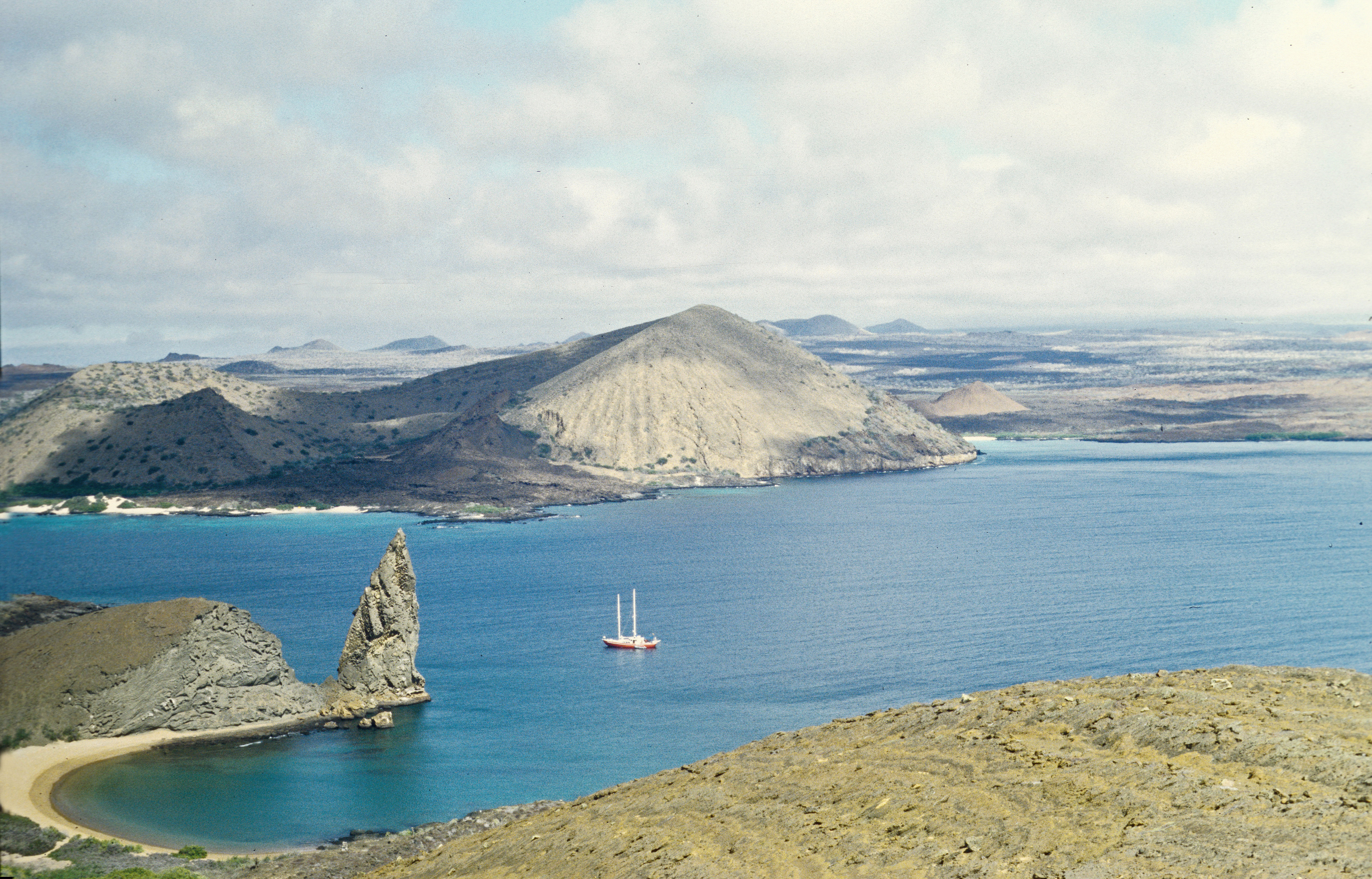
Bartolomé is one of the most photographed Galápagos islands, known for stark volcanic terrain and a viewpoint associated with Pinnacle Rock and nearby bays. It also illustrates why a famous sight should be approached as part of a protected natural system: lava flows, pioneer vegetation and seabird or marine habitats can all be explained in a single, carefully managed outing.
An authorised vessel and park naturalist are required for managed trips. Routes, boats and passenger numbers are controlled, and the viewpoint approach involves many steps in strong sun. Check availability, weather, mobility requirements and all park rules before paying. A snorkelling segment may be optional and is not suitable for everyone, especially in rough sea. Do not pressure a crew to land when the park or sea conditions prohibit it.
What makes it meaningful: Take time to notice how vegetation develops on young lava and how protected marine and terrestrial environments depend on each other. A great photo is only one part of the experience.
9. Observe seabird nesting behaviour on Española or Genovesa
Española and Genovesa are associated with remarkable seabird communities, and a responsibly conducted excursion can explain breeding, nesting, feeding and the risks birds face in the marine environment. Species and breeding activity differ by island and season. A patient naturalist’s interpretation may reveal far more than a large collection of bird photographs.
These islands are not casual ferry day trips from every hotel. Visits depend on authorised vessel itineraries, naturalist guides, allowed landing sites and current sea and wildlife conditions. Protect nests and keep at least the required distance from birds, even when they seem accustomed to people. Stay on the designated trail and avoid flash, loud noise or attempts to make an animal fly for a photo. Some sites may be inaccessible when weather or conservation rules require.
What makes it meaningful: Ask how much of a seabird’s life happens at sea rather than on the island where people see its nest. That question connects island geography to ocean ecology.
10. Discover Floreana’s communities and conservation history
Floreana carries fascinating stories of scientific expeditions, human settlement, community development and ongoing conservation challenges. Visitors interested in the Galápagos as a lived place will find that such stories are essential to understanding the archipelago. The islands are not a laboratory detached from people; residents must manage food, transport, services and the pressures created by tourism.
Arrange any visit through an authorised operator and confirm whether settlement and protected-area access are open for the dates in question. Do not assume a daily public ferry or unrestricted trails because a guidebook features the island. Some conservation zones are managed for restoration and should not be approached without permission. Respect private homes, do not bring seeds or other prohibited materials, and follow biosecurity procedures strictly.
What makes it meaningful: A thoughtful alternative is an on-island conservation museum or a credited resident account that connects ecology with community life. The best final insight is that protecting unique animals depends on everyday cooperation among people.
Three Galápagos itineraries that respect the islands
Five or six days: Santa Cruz and an optional managed boat outing
Begin with Puerto Ayora and the Charles Darwin research interpretation, a separate highland tortoise day and one appropriate coastal experience such as Tortuga Bay. Use another day for lava geology or a licensed visitor-site excursion. Protect time for transport to the correct departure airport and remember that weather can delay boats.
Eight to ten days: Santa Cruz and San Cristóbal
Enjoy the cultural and conservation subjects around Santa Cruz, then travel on a legitimate inter-island service to San Cristóbal. Observe sea lions and learn at the interpretation centre, with a managed naturalist excursion if it suits your group. A slower two-island trip allows more time to observe animal behaviour without crowding or chasing wildlife.
Twelve to fourteen days: include Isabela or a regulated small-ship itinerary
An extended visit may include Santa Cruz, San Cristóbal and Isabela with careful transfer planning, or a licensed expedition vessel reaching remote permitted visitor sites. Cruise itineraries differ, and not every advertised programme includes Bartolomé or a particular nesting island. Choose operators who prioritise naturalist expertise, biosecurity and appropriate guest numbers.
Essential entry, conservation and safety checks
- Galápagos entry fee: Most foreign tourists older than twelve pay US$200 in the official 2026 schedule. Rates differ for children, qualifying regional visitors and Ecuadorian residents.
- TCT: Obtain the separate US$20 Transit Control Card through the official system before departing Ecuador’s mainland, retaining it as required.
- Biosecurity: Inspect luggage and obey the restrictions on fruit, seeds, animals, plants and other biological materials.
- Wildlife distance: Keep at least two metres from animals, including camera equipment; never feed or touch them.
- Routes: Use licensed naturalist guides and authorised boats for visitor sites requiring them; not every site permits self-guided access.
- Physical safety: Volcanic ground, rocky shores, strong currents and remote boat routes present real hazards.
- Island transfers: Confirm authorised ferry or air services, check weather and leave a buffer before international departures.
- Conservation: Stay on marked paths, take nothing from beaches or reefs, and respect capacity limits and closed habitats.
- Documentation: Galápagos is Ecuadorian territory, so Ecuador’s nationality-specific entry requirements also apply.
- Local communities: Support legitimate local businesses and respect private residences and community access arrangements.
Common mistakes and better alternatives
- Confusing the US$20 TCT with the National Park fee. Better: budget and arrange the two separately.
- Approaching a tortoise, sea lion or bird for a close image. Better: keep at least the required two-metre distance.
- Booking an unlicensed animal encounter or boat. Better: choose qualified regulated naturalists.
- Removing a shell, seed or lava rock as a souvenir. Better: leave natural materials where they belong.
- Trying to visit six islands in five days. Better: choose one or two bases with one appropriate excursion.
Frequently asked questions
Are the Galápagos Islands an independent country?
No. They are a province and special-regime archipelago of Ecuador, with separate protected-area and migration rules in addition to Ecuadorian entry requirements.
How much is the Galápagos National Park entry fee in 2026?
The official government schedule lists US$200 for international visitors older than twelve and US$100 for younger foreign visitors, with exemptions and lower categories for eligible regional nationals and Ecuadorian residents. Check your specific category.
What is the transit control card (TCT)?
The TCT is a separate Galápagos migration document normally processed before the flight from mainland Ecuador. The official fee is US$20, and the card must be retained for departure.
Do I need a guide to enter every Galápagos site?
No. Some public routes are self-guided under posted rules, while many national-park and boat destinations require authorised naturalist guides. Confirm the conditions of the exact location.
How close may I stand to a giant tortoise or sea lion?
The Galápagos National Park visitor rules require at least two metres from wildlife, including camera equipment. Do not touch, feed or provoke animals.
Are giant tortoise sightings guaranteed?
No. They are wild and may move according to food, season or habitat conditions. An ethical operator does not guarantee a photograph.
Can I visit all major islands in one week?
No. A week suits a focused stay on one or two inhabited islands. More remote sites need scheduled and regulated boats, and weather can alter itineraries.
How do I travel from Ecuador’s mainland?
Visitors normally fly from Quito or Guayaquil to Baltra or San Cristóbal after the required TCT and biosecurity procedures, then use permitted island transfers.
May I bring fruit or plants into Galápagos?
Biosecurity rules restrict or prohibit many foods, plants, seeds and other materials that could introduce invasive species. Check the official permitted/prohibited list and declare items as required.
Can I take shells or lava home?
No. Removing sand, shells, rocks or plants from protected sites violates conservation rules. Leave everything in its habitat.
Is swimming near sea lions automatically safe?
No. Waves, currents and animal behaviour vary. Only join suitable approved activities with qualified operators and never approach or touch marine animals.
What should a first-time visitor budget for?
Plan for Ecuador entry documents as applicable, flights, TCT, park entrance fee, licensed boat and guide activities, accommodation, local transport and appropriate insurance. Confirm each cost from its official provider.
Language, conservation and living communities
Spanish is widely used in the Galápagos. Learn hola and gracias, but also the language of nature interpretation: especie endémica means endemic species and conservación means conservation. Ask a guide what makes a species unique and how research informs decisions about invasive organisms. The most valuable wildlife story may be one about the people working to protect the habitats you enjoy.
中文提示:加拉帕戈斯群岛属于厄瓜多尔,2026年一般外国成年旅客的国家公园入场费为200美元,另外需办理20美元的过境控制卡。游客必须与野生动物保持至少两米距离,不得触摸、投喂或带走贝壳、岩石等自然物。
Official conservation and visitor sources
- UNESCO — Galápagos Islands World Heritage property
- Galápagos National Park — arrival, TCT and biosecurity steps
- Galápagos Government — official entry-fee schedule
- Galápagos Government — Transit Control Card questions
- Galápagos National Park — two-metre wildlife and visitor rules
- Galápagos Biosecurity Agency — restricted products
- Charles Darwin Foundation — research and conservation
- Ecuador government travel advice
Continue through the World Country Directory and its Ecuador country guide. The Galápagos are an additional regional destination, not a separate sovereign country. Always check official biosecurity, park routes and fees again before travelling.