
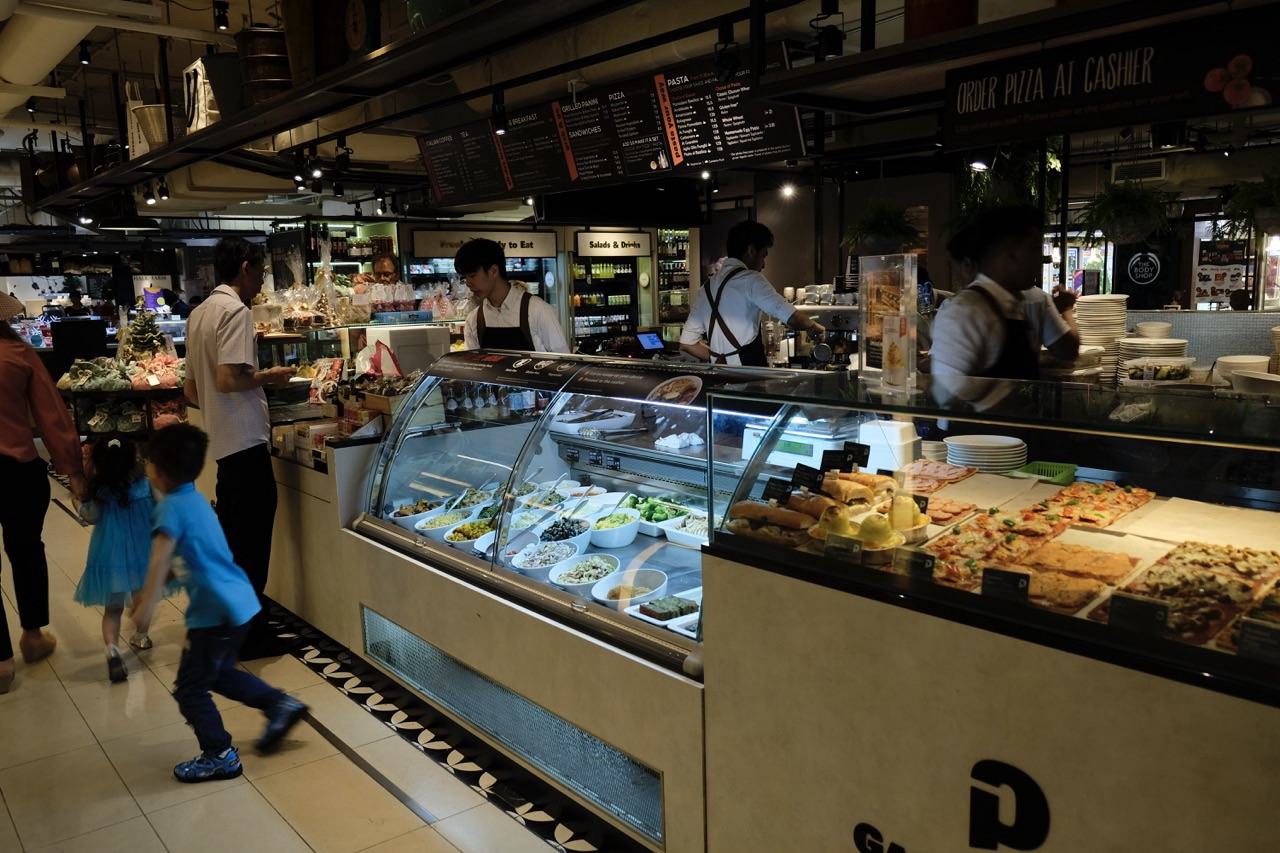
Did you know a shop can get many customers through the door and still make buying unnecessarily difficult? The signs may be confusing, the products hard to find or the promotional message directed at the wrong people. Business skills begin when a learner stops guessing and asks for evidence.
This guide builds one focused skill for PG1 families: making a thoughtful recommendation about a business’s marketing mix using customer information. It is grounded in the 2027 G1 Elements of Business Skills syllabus rather than being a collection of generic business buzzwords.
Posting Group 1 does not mean there is a ‘PG1 Business Skills examination’. The actual 2027 G1 Elements of Business Skills subject is K129. Confirm whether the student’s school offers and registers the correct subject.
Official SEAB information and 2028 education-pathway announcements reviewed on 25 October 2026. The business scenario below is fictional teaching material, not fieldwork or assessed coursework.
The 60-second answer
- 2027 SEC G1 Elements of Business Skills is K129, a syllabus focused on marketing and customer relations in retail, hospitality, travel and tourism contexts.
- Paper 1: 100 marks, 60%, 1 hour 30 minutes, four compulsory contextual questions from Units 1 to 3.
- Paper 2: a supervised Business Investigation worth 40% and 80 marks. The syllabus specifies 20 computer-laboratory hours within 10–14 weeks.
- For assessed coursework, the released task specifies one service industry, and the candidate investigates a distinct real business with a physical location in Singapore that customers can visit.
- The marketing mix means Product, Price, Place and Promotion. A justified recommendation also considers customers, service, competition and trends.
- The PG1 entry label by itself cannot guarantee any subsequent ITE, diploma, JC or university admission.
First, PG1 is a posting group—not a subject paper
In Singapore’s Full Subject-Based Banding arrangements, Posting Group 1 describes the entry grouping for secondary schooling. Individual subjects may be studied at G1, G2 or G3 where permitted by the student’s readiness, school offering and eligibility rules. For the 2027 Singapore-Cambridge Secondary Education Certificate, the listed examined subject here is G1 Elements of Business Skills, code K129.
SEAB explains that the SEC records the actual subjects and their levels, not a special PG1 certificate. Parents should read the child’s current school subject-combination information before choosing revision materials, comparing syllabuses or interpreting pathways.
Schools do not necessarily offer every subject nationally listed. The right first question is not ‘Can all PG1 students take this?’ but ‘Which subject level and combination does this school offer this student, and what options can be considered later?’
2027 SEC G1 Elements of Business Skills: what is officially assessed?
- The 2027 K129 syllabus identifies a 60% written paper and 40% coursework component. The written paper is 1 hour 30 minutes with 100 marks; coursework has 80 marks.
- Paper 1 has four compulsory contextual questions from Units 1–3 and may use short responses, matching, sequencing and structured application questions.
- Paper 2 requires an authentic Business Investigation of a business in the service industry specified by the exam task—travel and tourism, hospitality or retail. The selected business needs a customer-accessible physical location in Singapore.
- Students within a class choose different businesses in the selected industry. They investigate customers, the four Ps, service, competition and trends, and use findings to recommend improvements.
- The syllabus allocates 20 hours of computer-laboratory curriculum time over 10–14 weeks. Submission and research must be authentic and must follow the school and exam authority’s directions.
These are details from the published 2027 school-candidate syllabus. Check the direct SEAB syllabus and any subsequent examination instructions before submitting work. Historic N-Level or O-Level descriptions and generic tuition pages should never replace the examination-year document.
Why marketing mix and customer research matters beyond the classroom
Business literacy teaches how to interpret evidence, consider competing needs and make recommendations people can test. It also builds concise English, numeracy and responsible information handling; a catchy promotion alone is not proof of business understanding.
The point is not to memorise more terminology. A learner should be able to understand the purpose, make a small sensible decision, examine the evidence, communicate limitations and adapt when the problem changes.
Build the skill from first principles
- Define the question. ‘Make the shop better’ is too broad; ‘How could this shop help students find stationery quickly after school?’ can guide a concrete investigation.
- Identify the customer groups without stereotyping. Families, tourists, commuters and students may shop for different reasons; actual data matters more than guesses.
- Describe the four Ps: Product is what is offered; Price is what is charged; Place concerns access and distribution; Promotion explains how customers learn about the offer.
- Look at customer service separately. Staff knowledge, clarity of information, helpfulness and the process for resolving a problem can influence the experience even when the four Ps stay similar.
- Distinguish primary from secondary information. A directly conducted observation or appropriate survey is primary information; a business’s published website or another existing report is secondary information.
- Present quantities with transparent denominators. Twelve out of twenty-four respondents is 50%, not ‘most Singaporeans’. The sampling method limits any inference.
- Identify the actual decision: recommend an improvement because evidence suggests it addresses a customer’s observed problem.
- Compare alternatives. Moving a sign may be inexpensive; changing opening hours may add staffing costs. The better option depends on evidence, feasibility and the service goal.
- State limitations and review the choice. Good work reports what data cannot establish and what further feedback would test the recommendation.
- Protect participants. Any genuine survey, interview or photograph must comply with school permissions, privacy expectations and assessment rules; never invent customer responses.
Did you know? Twenty-four fictional customers can teach the limits of a survey
Imagine a fictional stationery shop close to a school. The learning question is simple: what might make shopping quicker for people arriving after class? This made-up shop and all responses below exist only to demonstrate reasoning.
In an imagined mini-survey, 24 customers give one priority each. Twelve choose faster checkout, eight choose clearer price labels and four choose longer opening hours.
Calculate the shares carefully. Faster checkout: 12 divided by 24 is 50%. Clearer labels: 8 divided by 24 is one-third, approximately 33.3%. Longer hours: 4 divided by 24 is approximately 16.7%. The three groups total 24, and the percentages are about 100%.
A poor conclusion is, ‘Every student wants faster checkout.’ The data do not say that. Half the fictional respondents selected checkout speed, and the sample may not represent all customers or all time periods.
A first recommendation might be a clearly marked quick-purchase queue after school. That affects the service experience and Place or process of access, but the learner should investigate constraints such as staffing, layout, safety and fairness before proposing a real operational change.
A second possibility is more legible pricing signage. This may be less demanding but directly addresses a different group. The learner should compare which suggestion better matches the business’s priorities and evidence.
A careful recommendation could say: ‘Under this small practice dataset, checkout delays appear worth investigating first. The shop should check actual queue lengths and test a feasible adjustment before making a permanent decision.’
The key skill is the chain from observation to interpretation to feasible action. In official coursework, the student must investigate a genuine, permitted business within the examination task’s specified industry—not fabricate a survey or choose a sector independently.
Change one assumption: can the learner still reason correctly?
Now compare two marketing messages: ‘Everything half price’ and ‘Selected notebooks 10% off on weekdays’. They communicate very different restrictions. A student should specify the product, price condition, time and audience rather than assume a promotion applies universally.
Suppose a fictional notebook costs $8 and receives a 10% discount. The saving is $0.80 and the discounted price is $7.20. That arithmetic is a numeracy exercise; a promotional decision also depends on costs and the business’s objectives.
A shopper may be drawn in by a discount but leave if the item is unavailable or staff cannot explain the price. Product, Price, Place, Promotion and customer service need to be considered together, not in isolated flashcard definitions.
A good recommendation has a testable outcome. After clearer labels are introduced, one could compare the number of pricing questions received across comparable periods, while accounting for other changes in foot traffic.
A single good day is not decisive evidence. Differences in customer numbers, school calendars, stock or staffing could change the outcome.
Essential vocabulary: words that change the answer
Parents can use these definitions as a small retrieval activity. Cover the explanations, ask for a fresh example in the child’s words and discuss how the term affects a decision.
- Marketing mix — four related choices: Product, Price, Place and Promotion.
- Target market — a specific group whose needs a business seeks to meet.
- Customer need — a problem to be solved, distinct from a casual preference or assumption.
- Primary research — original data gathered for a purpose through appropriate observation, interviews or surveys.
- Secondary research — information already produced by sources such as published reports or websites.
- Sampling — how respondents were selected, which affects whether findings can be generalised.
- Denominator — the full group behind a percentage, such as 24 surveyed people.
- Customer service — assistance and treatment that influence a customer’s experience.
- Competitor — another business whose offers customers may compare.
- Trend — a pattern that may influence business conditions but must be supported by evidence.
- Recommendation — a specific, feasible course of action justified by the investigation.
- Business Investigation — the K129 assessed process of gathering, analysing and using business evidence.
Five quick questions with model reasoning
Does 12 of 24 customers equal 12%?
No. It equals 50%. Always divide the relevant count by the complete sample before multiplying by 100.
Is a business’s website primary research conducted by the learner?
No. A published website is normally secondary information; a learner’s own approved observation or interview is primary information.
Can a student pick any sector for the 2027 EBS coursework?
No. The assessment task specifies one service industry and the student must follow the stated business-selection requirements.
Why is ‘improve service’ not enough as a recommendation?
It does not identify an action, supporting evidence, implementation constraints or how improvement would be checked.
Can a fictional survey be submitted as fieldwork?
No. In this guide it is explicitly a learning example. Assessed Business Investigation data must be authentic and gathered in accordance with the rules.
Common mistakes that cost understanding
- Memorising the four Ps but being unable to apply them to a real business situation.
- Treating a tiny convenience sample as representative of every customer.
- Quoting an average or percentage without naming the group measured.
- Inventing interviews, survey answers, screenshots or shop visits.
- Making the same generic recommendation for every retail or hospitality business.
- Mixing up a customer’s need with the business’s promotional preference.
- Ignoring customer service and competition when discussing the marketing mix.
- Confusing the four compulsory written questions with the separate Business Investigation coursework.
- Assuming that strong ideas alone create a qualifying post-secondary admissions profile.
Look for the first error in meaning, units, evidence or sequence. Repeated practice only becomes useful after the relevant misconception has been identified and addressed.
The repair–stabilise–transfer–extend learning ladder
- Repair: identify Product, Price, Place and Promotion in one fictional business.
- Stabilise: link one customer need to evidence from a small data table.
- Transfer: compare two alternative marketing improvements for a different service business.
- Extend: state the limits of the evidence, implementation constraints and a realistic way to test the recommendation.
A good tutor changes the context after the foundation is stable. Success on the original example may indicate familiarity; successful transfer is stronger evidence that the idea has been learned.
A seven-day micro-plan for parents and tutors
This is a flexible collection of short activities, not a requirement to add seven burdensome sessions. Adapt it to school homework, the student’s wellbeing and the official coursework boundaries.
- Day 1: identify the four Ps from a hypothetical service business description.
- Day 2: distinguish customer facts from assumptions in a paragraph.
- Day 3: calculate proportions from a clearly labelled sample.
- Day 4: match a real customer problem to one targeted business improvement.
- Day 5: compare two recommendations using evidence and practical limitations.
- Day 6: practise explaining why the sample cannot support a national claim.
- Day 7: make a short evidence-based recommendation in the learner’s own words.
Teaching the learner to think independently
- Start with what the child can already do independently. Ask for a short explanation before giving advice; confidence without a reason may conceal a foundational gap.
- Identify the first uncertain step instead of multiplying worksheets. If the learner misreads the brief, misunderstands a percentage or fails to document a test, repair that specific difficulty.
- Model one small decision transparently, explaining why the method fits the problem. Keep worked examples clearly separate from any assessed assignment.
- Fade the prompts. After one guided example, ask the student to solve a changed situation without seeing the model answer.
- Return to the skill after a delay. A learner who can recall the principle next week has a sturdier foundation than one who only recognises today’s demonstration.
- Protect student independence and integrity. No tutor or AI tool should produce authentic coursework on a learner’s behalf.
Useful diagnostic questions during a lesson
- What exactly is the business decision?
- Which of the four Ps would the recommendation actually change?
- What is the denominator in your percentage?
- Who was sampled, and who was not?
- How does the proposed action address an observed problem?
- What could make the recommendation fail in practice?
- What evidence could show that the proposed change helped?
Secondary 1 to Secondary 4 progression
- Secondary 1: strengthen functional English, percentages, respectful observation and everyday consumer awareness.
- Secondary 2: practise comparing customer needs, evidence and business options.
- Secondary 3: apply the school’s actual EBS curriculum, practise authentic research and understand assessment terms.
- Secondary 4: check K129 and the released school-candidate coursework task, complete authentic investigation and revise structured written answers.
Do not push upper-secondary assessment specifications mechanically into Secondary 1. The early years should build understanding and habits; later practice should align with the student’s actual syllabus and the examination-year rules.
How the education pathway works for ITE, Polytechnic, JC and University
The SEC begins in 2027 and the announced Post-Secondary Admissions Exercise (PSE) begins in 2028. PSE provides a way for eligible candidates to apply for destinations such as ITE, polytechnics, junior colleges and Millennia Institute. Permission to participate in an admissions exercise is not the same as eligibility for every course.
ITE: learning that turns into a recognised qualification
An eligible SEC graduate may apply for appropriate Higher Nitec study according to the course and intake criteria. This subject’s skills could inform their interests, but a G1 elective alone does not qualify the learner for a particular course. Admission is based on published requirements, grades and other stipulated conditions.
Polytechnic: direct routes and progression routes are different
A direct diploma application from SEC must meet the polytechnic course’s prescribed subject-level combinations, grades and prerequisites. Other learners may progress later from suitable Higher Nitec qualifications where the published requirements are met. Do not interpret ‘possible later’ as ‘automatically available now’.
Junior College and Millennia Institute: check the complete G3 academic profile
The announced 2028 JC L1R4 framework, and applicable MI conditions, evaluate a qualifying combination of subjects and results. A PG1 posting does not in itself decide a student’s final potential, but taking one G1 elective does not replace the academic subjects required for direct entry.
University: a future destination reached through further qualifications
University admission typically follows an appropriate recognised diploma or pre-university qualification and a programme’s specific selection criteria. The pathway is built stage by stage; no secondary elective, original posting group or single successful school project can promise admission.
A realistic family plan has two timelines: strengthen today’s actual subject and track tomorrow’s entry conditions for specific qualifications. Interest in a field is valuable; the formal admission decision rests on the full recognised results and applicable course requirements.
A parent-friendly checklist before choosing a subject or course
- Ask the school for the student’s confirmed subject-level allocation, not simply the original PG1 label.
- Open SEAB’s actual K129 syllabus for the correct examination year and verify the assessed components.
- Ask which school-based supports and subject-level options may be available under the applicable rules.
- Record the child’s current strengths and the first misconception worth repairing.
- Confirm authentic coursework boundaries, school supervision, research permissions and practical safety arrangements.
- When considering post-secondary courses, use the admissions criteria for the actual intake rather than older advice based on discontinued examination labels.
- Build the next small success through student-led explanation rather than an adult-supplied answer.
Frequently asked questions
Is PG1 Elements of Business Skills the same as G1 K129?
Not exactly. PG1 is a posting group. G1 Elements of Business Skills K129 is the named 2027 national syllabus.
What is the EBS written examination weighting?
The 2027 K129 written paper carries 60%, and the supervised Business Investigation coursework carries 40%.
Does the coursework allow invented customer data?
No. Real assessed work must follow the released task and be authentic. The fictional numerical dataset here is a learning demonstration only.
Are the four Ps all a student needs to know?
No. The syllabus also concerns customer relations, service contexts, business investigation, interpretation and reasoned evaluation.
Will studying G1 EBS guarantee a business diploma?
No. The diploma or an intermediate Higher Nitec pathway has its own published eligibility rules and course-specific requirements.
Official syllabus and related eduKateSG reading
SEAB — official 2027 SEC G1 syllabuses for school candidates
SEAB — 2027 G1 Elements of Business Skills syllabus K129 (official PDF)
SEAB — how the Singapore-Cambridge SEC records subjects and levels
MOE — Full Subject-Based Banding and the secondary school experience
MOE — Post-Secondary Admissions Exercise (PSE)
MOE — 2026 announcement on the 2028 Post-Secondary Admissions Exercise
What is PG1? Posting Groups, school levels and syllabus choices
PG1, PG2 and PG3 pathways after the SEC
What is PG1 Elements of Business Skills? Full subject overview
Related foundation subject guide
eduKateSG — how foundation-first, small-group secondary learning works
One useful question to ask tonight
Ask your child: ‘If one important condition changed in this marketing mix and customer research example, which decision would change—and what evidence would show that your new answer is better?’
Let the learner answer in their own words. A convincing explanation, a small independent improvement and a verified next step are more valuable than treating a posting label as a limit or a promise.