
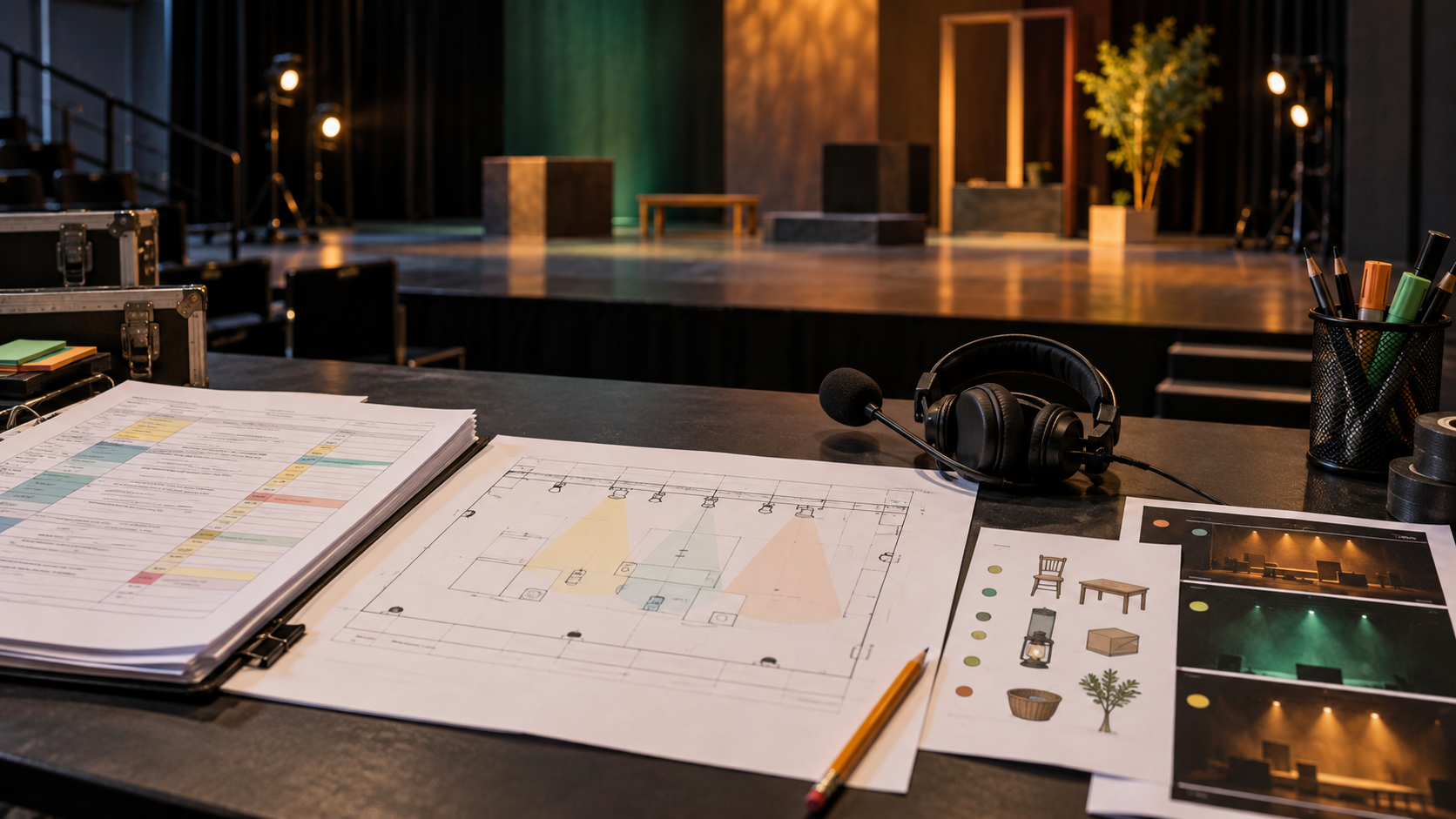
What is PG3 Drama? In Singapore, PG3 means Posting Group 3, the grouping used for secondary-school entry. G3 Drama is a separately examined upper-secondary subject, registered as K352 for the 2027 Singapore–Cambridge Secondary Education Certificate (SEC). The 2027 syllabus is marked revised. It includes a two-hour written paper worth 40% and supervised performance-based coursework worth 60%, rather than simply asking students to memorise and act out a play.
Did you know? The sentence “You came back” can express delight, disappointment or fear without changing any words. The actor’s timing, focus, distance, gesture and relationship to another character can change what the audience understands. Drama teaches students to make those choices intentionally, test them in rehearsal and explain why they serve the scene.
Parents may also ask how Drama connects to junior college (JC), polytechnic and eventually university. It can develop communication, interpretation, collaboration and performance skills, but a Drama grade does not guarantee admission to a performing-arts programme or any institution. Each later route has its own academic and additional selection requirements.
Independent eduKateSG reader guide, reviewed 24 October 2026 against SEAB’s 2027 G3 syllabus listing, the published revised Drama assessment and MOE’s 2028 post-secondary announcements. All demonstrations below are original fictional learning examples, not scripts or journal entries for an assessed candidate submission.
PG3 Drama: quick answers for families
| Question | Important answer |
|---|---|
| Is PG3 Drama a separate national paper? | No. PG3 is the secondary posting group; G3 Drama K352 is the examined subject. |
| What changed for 2027? | K352 is a revised SEC syllabus. Check the current examination-year paper and coursework requirements. |
| Paper 1? | Two-hour written examination; 80 marks; 40%. |
| Paper 2? | Performance-based coursework and Development Journal; 120 marks; 60%. |
| Individual scripted work? | A 3–5-minute live scripted performance under the published requirements. |
| Group devised work? | An original live piece developed by 2–5 candidates; no longer than 15 minutes. |
Choose your route: PG3 vs G3 · how Drama works · 2027 SEC papers · a stage example · JC/Poly/Uni · FAQ.
1. The difference between a posting group and an examined Drama subject
A learner enters secondary school in Posting Group 3 and takes part in the school’s Drama CCA. Does this mean the child will sit a national Drama examination? Not necessarily. Full Subject-Based Banding uses posting groups for entry and initial subject arrangements, while examined subjects have their own General levels and formal registrations. A school may run a lively Drama CCA without offering the national K352 syllabus.
The 2027 SEC G3 school-candidate subject list includes Drama K352, while the corresponding G1 and G2 catalogues do not list the same standalone Drama subject as separate national papers. That does not mean students learning at G1 or G2 levels have no access to acting or performance experiences; school programmes and examination registrations are simply different things.
The family should verify the actual subject offer, the syllabus code and whether the student is suited to both the written and coursework demands. For the wider context, read What is PG3 | MOE and SEAB Syllabus.
2. What does Drama teach beyond acting confidently?
Character intentions need interpretation
An actor may know every line and still give an unconvincing performance if the character’s choices are unclear. Drama asks what a character wants, what obstacle stands in the way and how their behaviour changes. Two plausible interpretations can exist, but each should be grounded in the script and dramatic circumstances.
Voice and silence create meaning
Volume alone does not communicate emotion. Pace, pause, emphasis, rhythm and the shape of a sentence may alter how the audience reads a relationship. Silence can be active when it gives a character time to decide or makes another person’s demand more uncomfortable.
Space and movement matter
Where performers stand changes relationships. A character who advances while another retreats may convey pressure or loss of control. The same exchange delivered across a wide distance can feel different from a close conversation. Blocking should serve meaning and safety rather than merely ensure everyone moves during the scene.
An ensemble requires shared decisions
Group-devised theatre asks students to collaborate on structure, character, action and transitions. The challenge is not just agreeing with friends. Strong ensembles listen, discuss reasons, test alternatives and make revisions while ensuring that each member can explain their authentic contribution.
Rehearsal is evidence-based improvement
A first performance is not supposed to be final. Actors and directors use feedback to examine whether an audience can follow the action and understand the intended relationships. A candidate should be able to explain why a particular moment was revised and what changed, without inventing rehearsal observations afterwards.
3. Read the actual 2027 Drama K352 assessment
| 2027 component | Published requirement | Weight or marks |
|---|---|---|
| Paper 1: Written | Two hours; unseen script work, pre-release extract and rehearsal analysis. | 80 marks; 40%. |
| Paper 2: Individual scripted performance | One live scripted extract lasting 3–5 minutes. | 45 coursework marks. |
| Paper 2: Group-devised performance | Original live performance by 2–5 candidates, no longer than 15 minutes. | 45 coursework marks. |
| Paper 2: Development Journal | Authentic individual and group process reflection. | 30 coursework marks. |
| Total Paper 2 | Supervised candidate-created performance and journal work. | 120 marks; 60%. |
Paper 2 coursework must be conceived for live performance. A recording used for moderation is not a replacement for an assessed live-theatre task unless the official procedure explicitly provides otherwise. The current K352 syllabus should be used rather than an old O-Level Drama workbook when paper or duration rules differ.
For the revised examination, see the detailed 2027 SEC Drama assessment parent guide.
4. Why the written paper matters as much as the stage
A student might be comfortable speaking before an audience but struggle to describe how staging, dialogue or performance choices create an effect. Paper 1 assesses the ability to interpret unfamiliar dramatic material and explain how a scene could be understood or rehearsed. The student needs precise writing as well as creative insight.
An unseen extract can reward close reading. A pre-release play extract gives candidates material to consider in advance, but the actual written task still requires a response to the examination question rather than a generic memorised essay. Rehearsal analysis asks students to think about purposeful choices and their dramatic consequences.
A good answer names the specific choice and connects it to an effect: “The actor keeps their voice quiet while retreating towards the exit, revealing reluctance and increasing the emotional distance between the characters.” Naming “body language” without explaining it would be much weaker.
5. An original stage example: one sentence, three interpretations
Fictional classroom dialogue: One character opens a door and says, “I thought you had gone.” The second responds, “I was waiting.” These lines are original teaching material, not an SEC pre-release extract or an assessed script.
| Possible interpretation | Performance choices to investigate | Potential audience effect |
|---|---|---|
| Relief | The first actor relaxes, moves closer and uses a softer tone. | The reunion may feel welcome and emotionally significant. |
| Suspicion | The first actor pauses and keeps their distance before speaking. | The audience may sense uncertainty about the other character’s motives. |
| Resentment | The first actor delivers the line sharply and turns away. | The return may feel like an unwanted confrontation. |
Did you know? All three readings use the same words. They are not automatically equally persuasive in a complete play, because earlier events and surrounding dialogue provide context. A good Drama student explains how the chosen interpretation fits that context and whether the staging makes the relationship understandable.
Try a low-risk exercise: speak one line with deliberate changes in timing and distance, then ask an observer what they understood. Record the observer’s real response. That practice can build interpretive skill, but it must not be misrepresented as data collected for a formal assessed journal.
6. Scripted performance and devised performance are different challenges
In a scripted performance, a candidate starts with a published dramatic text and makes considered interpretive choices within it. The source material provides dialogue and dramatic circumstances, while the performance demonstrates understanding and communication.
In group-devised performance, candidates create a live dramatic piece collaboratively under the national requirements. They must develop ideas, test structure and dramatic methods, and establish coherent group intentions. Devising is not simply improvising without a plan or copying an existing scene.
Both demand authenticity. A group member should be able to explain their own participation and decisions. A learner who relies on another person to write all the material or produce the journal has not shown the independent and collaborative skills the coursework is meant to assess.
7. The Development Journal: a real record of thinking
An authentic Drama journal is a trail of decisions, experiments and reflection. It may identify a staging problem, explain what alternatives were tried and record what actually happened in rehearsal. It should not become a fictional success narrative assembled at the last minute.
Suppose a group discovers that an important exchange cannot be heard because several characters speak at once. The journal might explain how they clarified the sequence or altered the staging and what the next rehearsal revealed. The learner’s personal account of the decision is more valuable than a dramatic claim that “the audience was amazed” without evidence.
In the 2027 revised syllabus, coursework declarations explicitly protect candidate independence and prohibit work created by another person or artificial intelligence from being submitted as the candidate’s own. Parents and tutors can teach reflection and ask questions, but they should not ghostwrite authentic coursework or arrange the national performance.
8. What about the script released before the exam?
The revised K352 written examination includes a pre-release play extract. This helps students think carefully about context, interpretation and rehearsal possibilities before the examination period. It is not a guarantee that a memorised answer will fit the actual task, and it is not the same as the child’s independently assessed solo scripted performance.
Students should read the official release arrangements and paper instructions through their schools. The meaningful skill is to use an extract accurately when answering a new question, rather than assume a published piece of dramatic material must have exactly one interpretation.
9. Drama from Secondary 1 curiosity to Secondary 4 independent performance
| Stage | What can develop | Useful checkpoint |
|---|---|---|
| Secondary 1 | Expressive reading, listening, safe movement and simple role work. | Can a child explain what a character is trying to achieve? |
| Secondary 2 | Ensemble trust, interpretation, stage choices and evaluation of short scenes. | Can the learner describe a change made after feedback? |
| Secondary 3 | Where offered, the more formal G3 Drama syllabus and script/performance reasoning. | Can a student sustain practice alongside their other subjects? |
| Secondary 4 | SEC written preparation and authentic supervised solo/group coursework. | Can the candidate justify interpretations and their personal contribution? |
Joining a CCA, school production or safe workshop can be valuable even if the formal national Drama subject is not available. A teenager who enjoys performance but chooses a different subject combination has not lost the possibility of later education in theatre or creative industries; future institutions have their own accepted routes.
10. JC and MI: Drama’s role in a wider SEC profile
MOE has announced that the first SEC examinations in 2027 will be followed by a common results release in January 2028. Students will apply through the new Post-Secondary Admissions Exercise (PSE). JC eligibility from 2028 uses the revised L1R4 five-subject aggregate, with a gross qualifying threshold of 16 and specified language, Humanities and Mathematics/Science conditions.
A Drama result is part of the student’s SEC record, but parents must consult the official subject classifications before assuming it can satisfy a particular aggregate group. Admission to a JC does not guarantee access to every H1/H2 combination or arts programme there. Any auditions or programme-specific criteria must be checked separately.
Drama may strengthen language, Literature and communication skills for a student continuing through a broader academic path. The useful question is where the learner can meet admission requirements and continue appropriate creative or scholarly interests, not whether one SEC elective automatically selects the next school.
11. Polytechnic: where performance becomes applied creative work
Potential diploma interests may include performance, theatre production, media, broadcast, film, events, creative arts, digital storytelling or communications, depending on courses actually offered. Some programmes might evaluate auditions, practical experience or portfolios alongside academic eligibility. Their formal course lists and minimum entry requirements determine what is available.
For 2028 polytechnic Year 1 entry, MOE has announced that the ELR2B2 cut-off adjusts to 22 and one eligible G2 subject may be used in the last best-subject slot. These reforms do not remove a diploma’s English, Mathematics or other minimum prerequisites and do not guarantee selection into a creative course.
A theatre-oriented student may also discover interests in lighting, stage management, audio, marketing, audience research, scripting or collaborative design. Such fields connect performing arts with technical and organisational work. Formal study involves additional skills beyond confident acting.
12. University and arts institutions: what truly determines access
Later degrees may cover theatre, performance, drama education, literature, media, communications, film, creative arts or social sciences. Their admission criteria can vary significantly. Some institutions may require auditions or portfolios; others use accepted A-Level results, relevant diplomas and particular academic subjects or interviews.
G3 Drama K352 is not a university entrance qualification by itself. It offers practical learning but no automatic place at an arts institution. Equally, a teenager who studied a different secondary subject may find later eligible paths into creative education, provided the relevant qualifications and selection criteria are satisfied.
Work backwards from a real course: which qualification is accepted, what audition or portfolio must be prepared, what abilities are assessed and which JC or diploma route realistically supports that goal? The answer should be updated closer to the child’s admission year.
13. What Drama teaches outside a stage career
Drama develops listening to others, reading subtext, managing a group process and communicating under pressure. It also illustrates that a plausible interpretation must be supported by context: the loudest performer is not always the clearest communicator. These habits can be useful in education, professional presentations, public communication and teamwork.
The subject’s value does not depend on the child becoming a professional actor. A learner who can explain how timing changed a conversation, or how one staging choice affected an audience’s understanding, is practising careful communication in a practical setting.
14. Common Drama mistakes and what repairs them
- Memorising every line while never clarifying the character’s intention.
- Treating a loud voice as a substitute for vocal variation and meaning.
- Adding movement because it looks dramatic, rather than because it advances the relationship.
- Assuming a filmed scene automatically replaces a required live assessed performance.
- Allowing one group member to make every artistic decision while others merely follow.
- Inventing rehearsal feedback or development notes after the performance is finished.
- Preparing for an older syllabus instead of the revised K352 examination.
- Allowing outside writers or AI systems to produce assessed scripts or reflections contrary to the national rules.
A useful repair begins with a small question: “What must the audience understand at this exact moment, and which visible or audible decision helps?” Rehearse two alternatives and compare the effect carefully rather than repeat the entire scene without diagnosis.
15. A four-week Drama readiness routine
| Week | Short learning activity | Evidence of progress |
|---|---|---|
| 1 — Read | Use a fictional two-person dialogue and identify each character’s objective. | The learner can support an interpretation with words or circumstances. |
| 2 — Explore | Try different pace, pause, distance and posture choices safely. | The student explains how choices change meaning. |
| 3 — Collaborate | Plan a brief original scene with shared roles and sensible boundaries. | Every member can describe their contribution. |
| 4 — Reflect | Compare two rehearsed versions and record an honest short reflection. | The learner names a real decision, observed effect and limitation. |
This routine is for general skill-building, not the national K352 coursework. Real assessed material must be authentic and supervised according to school and SEAB instructions. Appropriate rest, feedback and safe stage movement also belong in a responsible preparation plan.
16. Five questions before selecting G3 Drama
- Does the school actually offer 2027 G3 Drama K352, and how is the learner selected?
- Is the child ready for both written script analysis and supervised solo/group live performance?
- Can the student work collaboratively while preserving their own contributions and journal honesty?
- How will coursework rehearsals fit alongside English, Mathematics, Science, Humanities and CCAs?
- Which later JC, diploma or degree opportunities merit checking for actual academic, audition and portfolio requirements?
17. Did you know? Parents’ Drama questions answered
Is PG3 Drama an official exam stream?
No. PG3 is a posting group; the formal G3 Drama subject for the 2027 SEC is K352.
Is the 2027 Drama syllabus revised?
Yes. SEAB identifies K352 as revised, so candidates should use the correct examination-year paper and coursework rules.
Does Drama assess only acting?
No. Written interpretation contributes 40%, and supervised performance and journal work contribute 60%.
How long is the individual scripted performance?
The revised 2027 syllabus specifies a 3–5-minute solo scripted performance under its coursework requirements.
Must the group devise an original live piece?
Yes. The syllabus specifies group-devised performance with two to five candidates and a limit of 15 minutes.
Can a recording replace the required live performance?
The assessed work is conceived for live theatre; recordings used for moderation must not be assumed to replace the national task.
Can parents write the child’s Development Journal?
No. Assessed work must be the candidate’s own and follow the national authenticity declarations.
Does being in the school Drama CCA register a student for K352?
No. CCAs and national examination subjects are separate arrangements.
Will an SEC Drama grade guarantee JC or an arts diploma?
No. Academic, subject-group and any programme-specific selection conditions still apply.
What is one useful practice tonight?
Read two original lines aloud with contrasting intentions, then ask what the listener understood and why.
18. Official sources and related eduKate reading
- SEAB: revised 2027 G3 Drama K352
- MOE: JC L1R4 framework from 2028
- MOE: January 2028 results and PSE
- 2027 SEC Drama scripted solo, group devising and Development Journal
- Drama compared with Literature in English
- G3 Art, Music and Drama compared
- Drama with G2 English under Full SBB
- How parents can respond to Drama learning difficulties
- What is PG3 Literature in English?
- Why foundations and meaningful feedback support learning
Continue the PG3 subject-to-pathway series
PG3 Business · PG3 Higher Art · PG3 Higher Music · PG3 Literature in English
The most enduring Drama lesson is that meaning is made through considered choices—what someone says, how they say it, where they stand and how they listen. Understanding those choices can make a learner a more perceptive performer and a better communicator in whatever field comes next.