
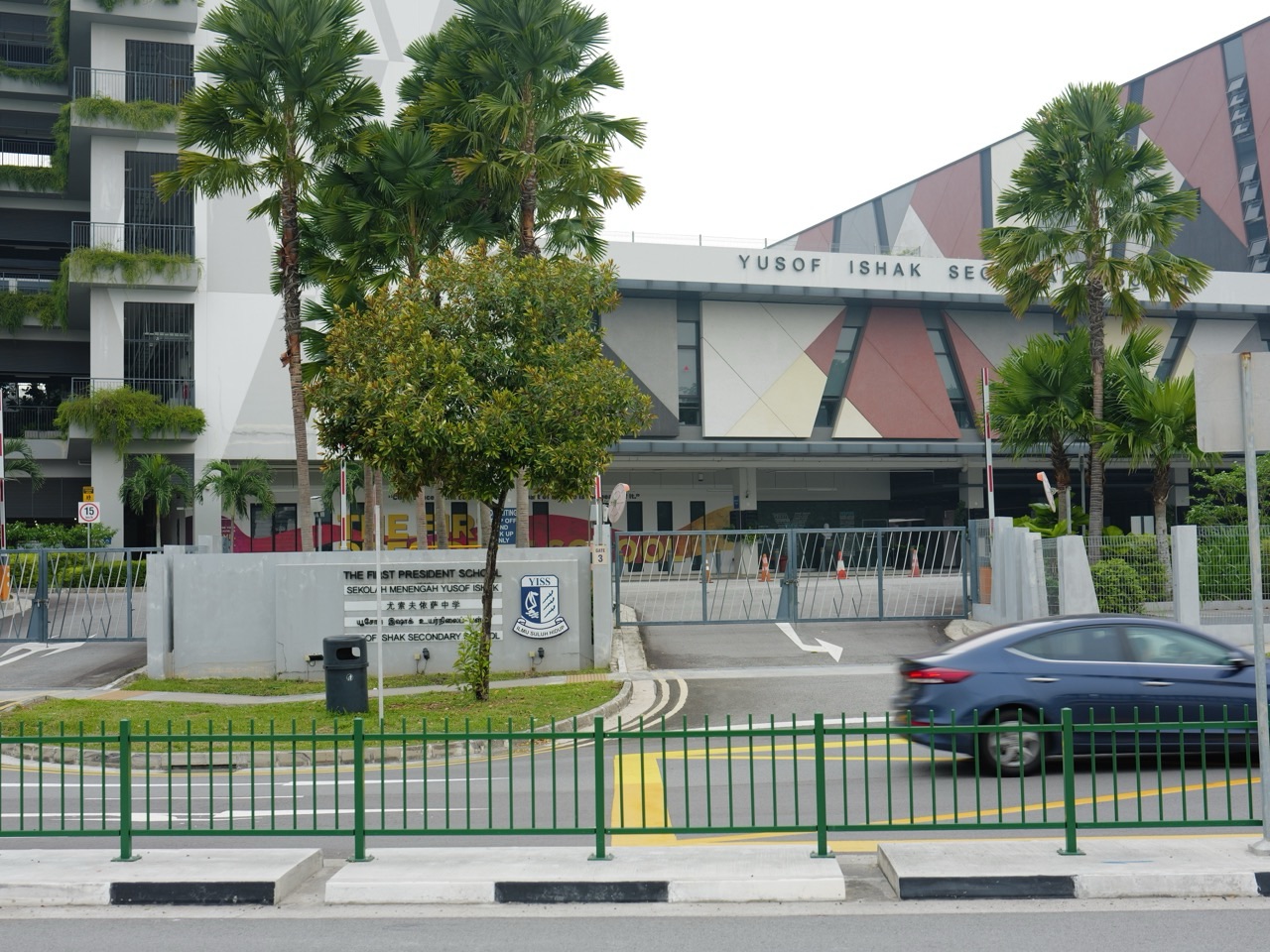
What is so awesome about Yusof Ishak Secondary School in 2026–2027? A compelling feature is how the school connects the future of cities with the future of young people. Its S4TEM@YI Applied Learning Programme explores sustainability, urban farming and STEM, while YI LEAD+ emphasises honourable leadership and contribution. Together, these programmes invite students to solve practical problems and ask whom the solution serves.
For parents searching for a Yusof Ishak Secondary School review, Yusof Ishak Secondary STEM, robotics, secondary schools in Punggol, S4TEM@YI, YI LEAD+ or Secondary 1 admissions, the immediate answer is that the school deserves closer examination if those interests match your child’s readiness and the family’s routine. The published experience includes school-wide learning as well as club activities and student-leadership opportunities whose access should be checked separately.
Did you know? Yusof Ishak Secondary School’s present campus is at 8 Sumang Walk. Its history reaches back to 1965, and the principal’s 2026 message describes the school as entering its fifth year at the Punggol campus. The setting is both historic and contemporary: the details that matter to a family are what happens in classrooms now, which opportunities are available and whether the journey works.
Why go Yusof Ishak Secondary School? · Is Yusof Ishak Secondary School a Good School? · Singapore Secondary School Directory. This is an independent parent-and-student guide, not a school endorsement or published school instruction.
What matters first?
- Understand the S4TEM@YI programme and its actual participation routes.
- Explore how urban sustainability can teach observation and evidence.
- See how YI LEAD+ connects values to responsible action.
- Check subject continuity, admissions and the Sumang Walk journey.
1. Start with a city problem, not a school slogan
Yusof Ishak Secondary School’s applied learning direction makes sense when understood as a question about how people live together in a city. Its S4TEM@YI programme explores STEM through sustainability and smart-city concerns. These are not merely fashionable labels. A city contains food systems, transport, buildings, water, energy and people with different needs. Each system invites practical observation and responsible judgement. Parents can ask whether the student likes finding out how everyday arrangements work, or would benefit from seeing Mathematics and Science used outside tests. A school with such opportunities is worth investigating when its way of working fits the child, not because technology automatically makes a school better.
2. S4TEM@YI combines several kinds of knowledge
The school’s official Applied Learning Programme is named STEM for the Strategic Development of a Sustainable and Smart City, or S4TEM@YI. It describes urban farming, coding, aeronautics and interdisciplinary work. A meaningful project may require scientific measurement, computational organisation and the ability to explain consequences for a neighbourhood. The challenge is not simply knowing many technical words. It is recognising which fields are relevant and how they connect. A student who can state what an observation proves, what it does not prove and what should happen next is learning something durable even if a particular machine is replaced next year.
3. The campus is in Punggol, with a longer history behind it
The current school contact page lists 8 Sumang Walk. Its 2026 principal’s welcome identifies this as the fifth year on the Sumang Walk campus, while its heritage stretches back to the school’s establishment in 1965 and its naming after Singapore’s first President. That history is relevant only if it helps the family understand the present learning environment. The school is not a museum of its own past. It serves contemporary students in a changing town. The practical next step is to check the actual school journey, everyday support and opportunities available to the incoming cohort rather than assume that an old achievement predicts a new student’s experience.
4. Urban farming turns sustainability into repeated work
A photograph of vegetables growing at school can look cheerful, but the educational value of urban farming depends on what pupils do over time. Growing a plant requires attention to water, light, nutrients, pests and the simple fact that living systems do not always behave on schedule. The school describes experiences with soil and hydroponic growing. That opens a family conversation about observations, patient care and the limits of a one-time experiment. What would convince a student that a change helped? What could make the same plant respond differently a week later? Sustainability becomes more credible when it is a series of decisions rather than a decorative poster.
5. Hydroponics provides a useful comparison
The school describes growing vegetables in different environments, including with and without soil. That is a useful starting point for scientific thinking, but a quick comparison is not automatically a controlled experiment. Plants can differ in variety, light, nutrient supply, starting condition and temperature. A child who sees one grow taller should ask what else changed before naming the cause. This independent eduKate example illustrates how to think, not an observed YISS class result. Parents can encourage the same habit at home by asking for units, dates and a reasoned explanation instead of a single impressive photograph.
6. STEMx work links subjects that textbooks separate
The official programme also describes interdisciplinary project work. That matters because many real questions arrive without a subject label. A community problem may begin with a science observation but demand mathematical analysis, a technical proposal and clear communication. The learner must decide what kind of question they are solving at each step. This is a useful contrast with examination practice, where the chapter heading often announces the method. Ask your child what knowledge they needed that was not obvious at first, and how they decided whom to consult. Learning to recognise a missing connection is a form of independence.
7. Climate questions should invite careful numbers
A student may hear that an intervention is ‘good for the environment’ without seeing a comparison. Imagine a rooftop planting proposal intended to reduce heat. Before claiming success, the student might measure a similar surface before and after, record time of day and consider changes in weather. The project would have limitations and might require expert guidance. That is fine. The important learning is that responsible environmental claims require evidence, context and uncertainty. A teenager can practise scientific honesty without resolving a major climate problem. Strong projects make the next sensible question clearer rather than promising immediate transformation.
8. Coding is a way of organising decisions
A programming exercise can become educationally empty if success means copying an instruction until the program runs. A stronger task begins with defining its input, intended outcome and failure cases. For a school-garden sensor, when does the reading count as low moisture? Does the program react differently when the device disconnects? What happens if the reading is implausible? These questions turn code into reasoning. Parents who do not program can still help by asking the child to describe the intended logic in ordinary sentences before opening a screen. Understanding should precede tool use, and debugging should lead back to the original model.
9. Aeronautics invites precision and restraint
The school includes aeronautics among its STEM exposures. The excitement of flight can motivate curiosity about forces, control, weather and engineering choices. But responsible interest should also include safety, permissions and clear boundaries around what learners are allowed to do. A family considering a STEM-rich school can ask which experiences belong to broad learning and which require membership in a particular club or selection group. It is reasonable for a child to begin by observing and asking questions. Being a good science student does not require an expensive personal drone or a record of competitions before Secondary 1.
10. STEM Club and Robotics Club are additional routes
Yusof Ishak’s published programme distinguishes broad school-wide opportunities from CCAs in STEM and robotics. The two should not be merged in a parent-facing promise. A student may experience core STEM ideas in school without holding a place in every CCA, while a strongly interested child may want deeper technical practice. Ask about membership arrangements, time commitments, prerequisites and opportunities to transfer growing interests into new activities. School fit is not defined by the most selective opportunity. It is defined by the relationship between the learner’s readiness and what the school can realistically help that learner practise next.
11. A real city requires empathy, not only invention
Suppose a teenager designs an app to tell neighbours which outdoor spaces are available. The student might assume everybody has a smartphone and wants constant notifications. A more careful design process would ask who uses the spaces, what information is genuinely needed, whether existing signboards already work and how older residents feel about another digital tool. This is a hypothetical exercise, not a documented YISS project. It illustrates why a sustainability or smart-city problem should involve human observation and ethical judgement. The best prototype may sometimes be a small, simple change rather than the most technically elaborate solution.
12. Data is useful only when the question is clear
A sensor can generate hundreds of readings, but the resulting spreadsheet does not supply its own meaning. A student needs to know what was measured, why, how often and under what conditions. If readings are gathered at uneven intervals, a graph can give a false impression of change. If two school-garden plots begin with different soil conditions, the comparison may be unreliable. These are ordinary scientific difficulties, not failures of intelligence. A learner who understands them is less likely to confuse a precise-looking number with a trustworthy result. Ask whether project debriefs include errors, constraints and alternative explanations.
13. Past competitions are historical evidence, not a ranking
Yusof Ishak publishes examples of STEM-related competitions and achievements from 2024 and earlier years. Those are legitimate parts of the school’s history, but parents should retain the dates and avoid inferring current opportunities or guaranteed results. A prize won by a particular team does not describe every pupil’s learning. A child may develop excellent scientific habits through a class project that never enters a competition. The useful question is what the school provides now: teaching, enrichment, guidance, CCA choices and support. Historical accomplishment can prompt an enquiry, but it should not replace the present-year school fit assessment.
14. YI LEAD+ connects the school to community contribution
The Learning for Life Programme is YI LEAD+, an initiative described around honourable leadership and contribution. This gives a different emphasis from the STEM programme. Technology asks how a solution might work; leadership asks how people are affected and whether a group can act responsibly. The official LLP describes training, reflection, service and experience for student leaders. Parents should notice that a school-wide aspiration does not mean every pupil occupies a formal leadership role. A useful enquiry is how all students practise responsibility and how those who take on additional roles are coached in decision-making, listening and follow-through.
15. Leadership is visible in the unglamorous tasks
A young person may volunteer to lead an event because the title sounds attractive. But the learning often occurs in the quieter work: agreeing on responsibilities, checking whether everyone understands, adapting when a plan changes and thanking people whose contributions are less visible. The school’s emphasis on gratitude, respect, integrity and teamwork makes those ordinary behaviours relevant. Parents can discuss one event from the school week and ask which action made others’ work easier. The question does not require a badge or an award. It invites the child to connect leadership with conduct rather than status.
16. The school’s GRIT values can be tested through behaviour
The published values are Gratitude, Respect, Integrity and Teamwork, or GRIT. Words become more useful when they describe decisions. Gratitude may mean acknowledging help rather than taking credit. Integrity may mean reporting an inconvenient measurement. Respect may involve letting a hesitant student finish a point. Teamwork means coordinating a task even when the group disagrees. None of these examples should be mistaken for compulsory YISS lesson scripts; they are eduKate illustrations of what those values might look like. A parent can ask the school how pupils practise and receive feedback on such values during actual school life.
17. Service needs to begin with a real human need
An attractive community project can unintentionally burden the people it intends to help. Imagine a student team planning to deliver large batches of items to residents who may have limited storage space. Before acting, the students would need to ask about recipients’ needs and consult appropriate adults or community partners. The learning is not only about generosity; it is about judgement and respect. YI LEAD+ provides a relevant school context for asking how young leaders understand whom they serve, how they evaluate a project and how they ensure that good intentions are translated into responsible action.
18. Global outlook should not become superficial travel
The school’s LLP identifies global awareness as part of leadership development. That can be cultivated through understanding perspectives, examining evidence and learning how people live under different conditions, not only through expensive travel. A teenager may investigate why a sustainability solution works in one city and not another. Climate, housing, governance and available resources can make a copied idea ineffective. Families should ask what experiences are open to the ordinary learner and how the school supports respectful curiosity about other communities. A meaningful global outlook is the ability to think beyond one’s assumptions, not a collection of photographs from distant places.
19. A better classroom disagreement has a method
Imagine two students debating whether the school should replace printed notices with digital ones. One claims that digital messages save paper; another worries that some pupils will miss important information. Rather than choosing a winner immediately, ask what evidence each argument needs and whether the team can test a combined solution. That is an original education example, not a reported school assignment. The method applies to leadership and STEM alike: define the disagreement, make assumptions visible, gather information and decide whether the conclusion needs revision. Learning to disagree productively is part of adolescence and an important family outcome.
20. The Sumang Walk setting deserves a real commute test
The school is currently at 8 Sumang Walk, with connections serving the Punggol area. A map is a useful beginning, but a family should test an actual school-day journey rather than assume that proximity to a transport node makes every trip easy. Compare the time needed before morning reporting, conditions after CCA, weather and the route taken by younger siblings if relevant. Leave room for meals, homework and rest. A strong technology or leadership programme becomes less rewarding if the child has no time to recover or practise foundational subjects. School choice needs to survive the ordinary week, not only the open house.
21. Teachers learning together is a school question worth asking
The school’s 2026 principal’s message refers to its Centre for Teaching and Learning Excellence partnership with the Academy of Singapore Teachers and NIE. That is interesting institutional context, but a partnership alone does not demonstrate that every classroom practice is better than elsewhere. The useful parent question is how the school helps teachers improve instruction and respond when a learner is struggling. Look for examples of feedback, clear explanations, careful differentiation and communication with families. Treat institutional labels as starting points for conversation rather than substitutes for evidence about your child’s experience.
22. Mathematics underpins reliable STEM judgement
A student might enjoy robotics but find a percentage-change calculation difficult. Another might know equations yet struggle to interpret a graph from a garden experiment. These do not necessarily mean that the learner lacks interest or capability. They may indicate an unstable link between number, representation and interpretation. Ask your child to explain the units on a graph, the purpose of a ratio or the assumption in an average. Such questions help identify what to revisit before practice becomes repetitive frustration. Mathematics turns a school project from a demonstration into a defensible argument about what changed and why.
23. English connects a prototype to other people
A technically good solution can fail because its instructions are confusing or its explanation does not fit the audience. The learner should be able to describe a problem, present evidence and distinguish a recommendation from a certainty. English comprehension and composition therefore support both S4TEM@YI and leadership. Students may need to read an unfamiliar source, compare viewpoints or write a request to an external partner. Parents can ask for a three-sentence explanation of a project: what was observed, what the team tried and what evidence would justify keeping the change. Simplicity is often a sign that the thinking has become clearer.
24. Science should be allowed to produce an unexpected result
If a garden experiment fails, the temptation is to treat the exercise as a disappointment and move on. A stronger learning culture asks why a result differed from expectation and what can be learned without changing the facts to fit the hoped-for outcome. A child may need to consider variables, measurement error or the possibility that the original idea was wrong. That is the heart of science. It matters outside laboratories too: adults make better decisions when they recognise limits and update beliefs. Ask how student projects are evaluated for reasoning and reflection rather than merely attractive final displays.
25. Full Subject-Based Banding makes needs more individual
A child can be eager to learn Science but require support in English, or strong in writing while still building confidence in algebra. Families should not describe that jagged profile with one word such as weak. Full Subject-Based Banding allows subject-level arrangements that demand careful understanding by intake and school. Ask the school how learners are supported, how classrooms operate and what happens when subject demands change. Education should preserve continuity through difficult transitions. Interest in STEM is not a substitute for foundational practice, and a temporary difficulty in one subject need not define the child’s potential elsewhere.
26. National examination changes are not school guarantees
The first Singapore-Cambridge Secondary Education Certificate examinations are scheduled in 2027, with the Post-Secondary Admissions Exercise beginning in 2028. Families comparing schools should look up the rules that apply to the specific cohort. A programme in robotics or leadership does not bypass course eligibility, minimum subject requirements or posting decisions. Historical school admission scores should be treated as reference data, not a future entitlement. The most useful long-term preparation involves sound subject knowledge, the ability to retrieve and apply it, and the confidence to recognise when help is needed. Those habits will remain relevant even when examinations or admission labels change.
27. DSA is a distinct route, not a blanket advantage
Yusof Ishak publishes Direct School Admission information for the 2026 exercise leading to Secondary 1 entry in 2027, covering specified talent areas. That exercise has its own published dates and selection rules. Families should not assume that the same timing or talent categories automatically apply to a later year. Likewise, interest in a school ALP does not mean automatic DSA admission. If a child hopes to apply, check the current official exercise information, the school’s actual requirements and the commitments associated with a successful offer. Choose the school on sustainable fit as well as any immediate application opportunity.
28. A parent checklist that starts with the child
Ask how the S4TEM@YI common learning experiences operate; how students gain access to STEM Club and Robotics Club; what the school expects from a Secondary 1 learner new to applied science; how leadership is developed beyond elected positions; what support exists for subject weaknesses or transitions; what the ordinary CCA and homework rhythm looks like; and how DSA or S1 posting should be understood for the child’s cohort. Then ask your child which experience is genuinely interesting and what effort it would require. These questions make an informed shortlist possible without treating school prestige as a substitute for learning.
29. The school-fit verdict belongs to an actual teenager
Yusof Ishak Secondary School has a distinctive case for families who value STEM connected to urban sustainability and a leadership direction centred on service. Its current Sumang Walk campus, long history and published initiatives give parents several grounded routes to investigate. But no school is a universal winner. One learner may flourish through hands-on projects, another may first need confidence in ordinary classroom routines, and a third may seek a different educational emphasis. Compare the school’s genuine opportunities with the child’s interests, readiness, support and travel. The strongest decision is calm, evidence-led and practical enough to sustain through Secondary school.
Official sources and continuing the school comparison
Official information checked 12 October 2026: S4TEM@YI Applied Learning Programme, YI LEAD+ Learning for Life Programme, the principal’s 2026 welcome and 2026 DSA-Sec information for the 2027 intake. The 2024 competitions mentioned are historical, not predictions. For national rules see MOE Secondary 1 posting and MOE 2026 SEC/PSE policy. Hypothetical worked examples are eduKate’s guidance, not school assignments.
Read the full Why Go profile and school-fit review, then compare other options in the Secondary School Directory. The next useful question is not whether every student wins an award, but what kind of learning will help this particular child grow.