
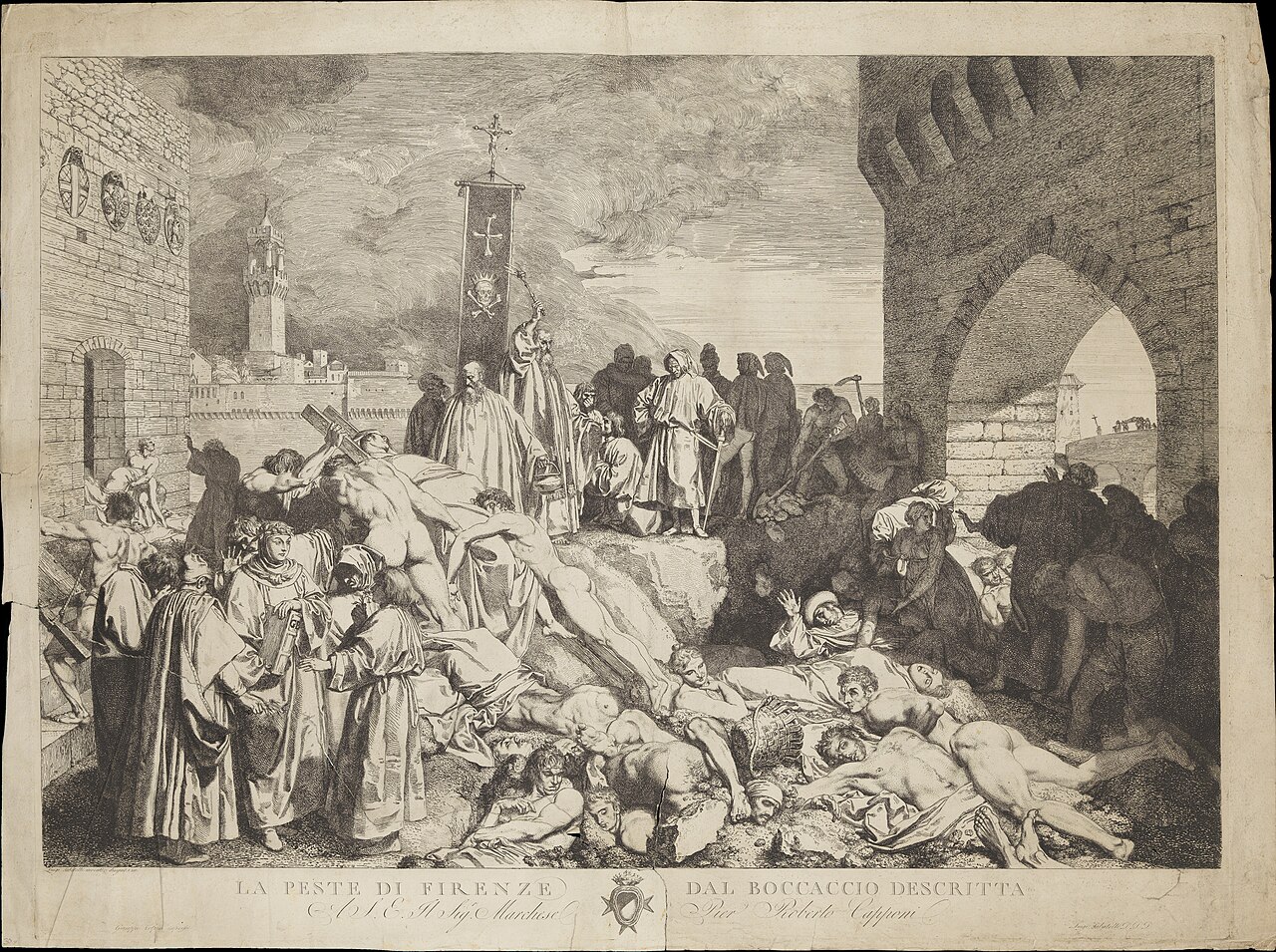
What will happen to civilisation if a major epidemic changes not just public health, but work, government and everyday life? The Black Death of the fourteenth century gives us a powerful historical case. It caused devastating loss of life and disrupted households, farming, cities and trade. Yet societies also changed, reorganised labour and developed new rules.
Did you know? In England, labour became so scarce after the Black Death that rulers tried to restrict wages and workers’ mobility. The resulting laws reveal an important principle: a disease shock can change bargaining power and social institutions long after the immediate outbreak. Not every region experienced the same consequences, and no economic gain can cancel the human tragedy.
This article explains the Black Death, the effects of pandemics on civilisation, labour shortages, institutional reactions, public trust and possible futures in clear cause-and-effect steps. The historical period is not a direct forecast of modern pandemics: medicine, public health, technology and social conditions have changed.
The Black Death and civilisation: one-minute answers
| Question | Quick answer |
|---|---|
| When was the Black Death? | A major pandemic reached many European regions in 1347–1353, with epidemic effects extending across and beyond that span and geography. |
| What caused it? | Plague caused by the bacterium Yersinia pestis; the historical routes and mechanisms of spread are studied using multiple kinds of evidence. |
| How serious was the human toll? | The mortality was catastrophic; estimates vary by population, place, source and method. |
| What happened to labour markets? | Severe losses changed labour supply, wages, mobility and relationships between workers and employers, unevenly by region. |
| Did civilisation disappear? | No. Institutions, communities and economies were transformed, and recurrent outbreaks continued to shape lives. |
| Does this predict a modern collapse? | No. It shows how health emergencies can interact with trust, services and economic rules. |
First, what was the Black Death?
The Black Death is the name commonly given to the devastating mid-fourteenth-century plague pandemic. Historians and scientists study its movement across Eurasia and its impact on Europe, the Middle East and other affected regions. It is often narrated through European records, but the pandemic was not confined to Europe.
Ancient DNA research has identified the plague bacterium Yersinia pestis in remains associated with historical outbreaks. A 2022 Nature study examined the medieval source of the Black Death in Central Eurasia. Genetic and historical research continues to refine the chronology of transmission rather than reducing the whole pandemic to a single ship or city.
Plague ecology is complex. Rodents, fleas and other routes may play roles depending on the situation, while pneumonic plague can be transmitted directly between people. Modern medical knowledge makes those distinctions important; past populations did not have the same scientific understanding or treatment options.
A pandemic is not only a medical event. If many people are ill or die, essential work cannot proceed normally. Communities must deal with loss, funeral practices, care, food production, transport and the legitimacy of decisions made under pressure.
The most important effect was human loss
The Black Death killed an extraordinary proportion of populations in many affected areas. Exact estimates are disputed because medieval records are incomplete and the scale differed greatly among places. Behind each estimate were people losing relatives, colleagues, teachers, neighbours and caregivers.
It can be tempting to start with the statement that surviving workers sometimes earned higher wages. That observation is economically important but should never be offered as a silver lining that somehow justifies or offsets mass death. Many survivors lost security, inheritance stability, support networks and years of ordinary life.
Societies facing such disruption need to do two things at once: protect people and keep essential services functioning. A decision that optimises short-term output while ignoring human welfare is not a complete measure of recovery.
Why fewer workers changed economic power
In a medieval farming economy, many landowners depended on tenants, labourers and servants for cultivation, harvest and maintenance. If far fewer workers remain available, employers may compete for the labour necessary to keep land and services productive.
The Journal of Economic Literature review by Jedwab, Johnson and Koyama explains that wages and per-capita income rose in some areas after the Black Death, but the gains were not sustained uniformly across Europe. Regional institutions, land arrangements and later population growth helped determine the longer-run outcomes.
Economics alone cannot explain all this. An employer’s legal power may restrict a worker’s ability to move or negotiate. A town may experience a shortage of craft specialists different from the shortages in nearby agricultural communities. Some people gained leverage while others faced coercive rules and insecurity.
The most surprising lesson is that a demographic shock can challenge the distribution of power in a society. What happens next depends partly on the laws and institutions that respond to changing labour conditions.
Did you know? England tried to regulate the new labour market
After severe population losses in 1348–1349, English authorities issued the Ordinance of Labourers in 1349 and the Statute of Labourers in 1351. These measures attempted to restrain wages and compel workers to accept work under defined conditions.
A 2025 University of Cambridge published research chapter examines the laws, later enforcement problems and repeated efforts to regulate labour. The author notes that changed working conditions and labour mobility met attempts by authorities to preserve employer control.
In ordinary language: the people making the rules wanted stability, but they often defined stability as keeping the previous bargaining arrangements. Workers had incentives to seek better compensation or conditions. Government responses were therefore not neutral engineering fixes; they reflected conflicts over who benefited from recovery.
This does not mean every wage law failed or that every worker gained. Comparative economic history research finds that post-plague labour legislation developed along diverse and sometimes surprising lines in different European states.
How a health shock becomes a civilisational shock
- 1. Disease burden: widespread illness and deaths reduce household capacity and available labour.
- 2. Service disruption: farming, transport, administration and care become harder to staff.
- 3. Scarcity and bargaining: workers, employers, landholders and authorities face new choices and unequal constraints.
- 4. Institutional decisions: laws, taxation, relief, restrictions and information can reduce harm or amplify distrust.
- 5. Human responses: people relocate, change work, form new arrangements or attempt to restore former practices.
- 6. Long-term effects: local political economies, family structures and cultural institutions may change over generations.
Each arrow must be tested rather than assumed. A healthy economy can suffer a catastrophic outbreak; a functioning government may preserve essential services. Conversely, illness compounded by violence, poverty or misinformation can be far more damaging than the health shock alone.
Were the effects the same everywhere?
No. The historical record is strongest in some places and thinner in others. Plague mortality, recovery, wages, land arrangements and institutions differed among regions. A pattern observed in English manorial records cannot simply be projected onto all of Eurasia.
Nor did the effects stop after one wave. Recurrent plague outbreaks continued in Europe and elsewhere, creating repeated pressure on households and governments. A model that imagines a single shock followed by effortless recovery misses the repeated uncertainty people endured.
The lesson is to look at place, population and time. What happened to grain labour in one region may not describe a city’s craft economy. What looks like recovery after ten years may hide the experiences of children who lost caregivers or communities whose institutions were damaged.
Trust, fear and the danger of blaming neighbours
Epidemics can create fear and anger. Historically, misinformation and scapegoating led to persecution and violence against minorities, including Jewish communities during the Black Death. Such attacks were not legitimate responses to disease. They added deliberate human harm to a health disaster.
A public-health crisis becomes harder to manage when people fear that authorities conceal information or when particular communities are blamed without evidence. Social trust does not mean accepting every claim from a leader. It means institutions provide information that can be checked, act fairly and correct mistakes.
Scientific explanation helps people understand risks without inventing an enemy. Ethical public decisions protect life, prevent discrimination and retain accountable processes even during emergencies.
What could happen to a future civilisation during a severe pandemic?
Scenario A: effective public-health coordination
Hypothetical. A dangerous infectious disease appears, but surveillance, laboratory testing, clear communication and accessible healthcare identify risks early. Essential services prepare staffing backups. Decisions are reviewed as evidence changes. Households still suffer, but protective measures and cooperation reduce the scale of secondary disruption.
Signals to watch include time to detect outbreaks, care access, staffing continuity, transparent evidence, public trust and the ability of vulnerable groups to obtain support.
Scenario B: an unequal recovery
Hypothetical. The worst wave subsides, but workers in precarious jobs, carers and communities with limited health access suffer disproportionate losses. Some industries recover faster, while educational and economic disruption persists for others. A headline about national economic output conceals very different household outcomes.
The key question becomes whether recovery programmes actually reach those who experienced the greatest loss.
Scenario C: compounding disruption and distrust
Hypothetical. Disease pressure arrives alongside a major transport shock or political crisis. Staff shortages interrupt maintenance and health services. Conflicting messages reduce cooperation. A medical emergency becomes a broader social problem through interactions that could have been partly managed.
This is a risk scenario, not evidence that pandemics must destroy modern civilisation.
What can be preserved when everything else changes?
The most valuable assets are not only hospital buildings or medical supplies. They include trained health workers, trustworthy records, mechanisms for protecting vulnerable people, reliable access to food and essential water, and institutions that can learn when their first response is imperfect.
A person in a neighbourhood clinic might notice an unusual cluster of illness. A laboratory can help identify the cause. A transport worker ensures supplies arrive. A teacher helps families understand disruption without stigmatising neighbours. Civilisation survives through many different kinds of work.
We should also preserve ordinary civic safeguards: understandable rules, rights of review, credible data and protection against discrimination. Emergency power can be necessary in defined situations, but an accountable society examines whether restrictions are effective, proportionate and fairly applied.
How to read dramatic claims about pandemics
- Is the claim based on credible public-health or historical evidence rather than a memorable comparison?
- Does it distinguish the Black Death from modern diseases with different transmission and treatment?
- Are mortality estimates accompanied by a clear place and time period?
- Does it identify which workers, families and communities bear the greatest harm?
- Does it explain the link from illness to secondary economic or political effects?
- Does it discuss what institutions can do to change the outcome?
- Does it avoid implying that mass death produces automatic social progress?
Frequently asked questions
Did the Black Death cause modern capitalism?
That is too simple. Historians study its effects on wages, labour mobility and institutions, but long-run economic development also depended on many later political, technological and geographic changes.
Did the Black Death end feudalism everywhere?
No. In some western European areas labour relationships changed substantially, but different regions developed different institutions and sometimes stronger labour coercion.
Was the Black Death the first pandemic?
No. Other major epidemics occurred earlier, though their pathogens, historical evidence and extent differ. The Black Death is particularly well studied because of surviving records and major demographic effects.
Would a new pandemic cause the same changes?
Not necessarily. Modern public health, science, medicine, labour law and global infrastructure create different opportunities and vulnerabilities.
What is the civilisation lesson?
Protect lives first, understand the unequal secondary effects and maintain fair, credible institutions able to preserve essential services and adjust as evidence improves.
Read the Civilisation futures series
- Do Civilisations Collapse or Transform?
- How Societies Rebuild After Empires Fall
- When Trade Networks Break: The Bronze Age Lesson
- When Food Production Falls: Mesopotamia and Soil Salinity
- Civilisation | The Beginner’s Guide
Sources and further reading
- The source of the Black Death in fourteenth-century central Eurasia, Nature (2022): pathogen and historical origins.
- The Economic Impact of the Black Death, Journal of Economic Literature (2022): evidence on mortality, wages and institutions.
- Centralisation of Labour Regulation in Response to the Black Death, University of Cambridge (published version, 2025).
- After the Black Death: Labour Legislation and Attitudes Towards Labour in Late-Medieval Western Europe, Economic History Review.
- Wellcome Collection — Boccaccio’s ‘The Plague of Florence in 1348’: an artistic historical representation, not a contemporary photograph.
Reviewed 24 October 2026. Featured artwork is a later etching by Luigi Sabatelli after a description by Boccaccio, sourced from Wellcome Collection via Wikimedia Commons (CC BY 4.0). It should not be mistaken for an eyewitness image. Future scenarios are conditional, not forecasts. This is historical education, not individual medical advice.