
Why study History when wars already appear to have clear dates, winners and losers? Because knowing who attacked, who suffered and when the fighting ended does not fully explain why events unfolded as they did. History teaches students to distinguish causes from responsibility, identify the different choices and constraints faced by soldiers and civilians, and read evidence without reducing whole populations to a single stereotype.
Singapore’s Second World War experience offers a serious example. The National Archives of Singapore documents the British surrender to the Imperial Japanese Army at the Ford Factory on 15 February 1942 and the subsequent Japanese Occupation. Its permanent exhibition examines Japanese military aggression, British defence and civilian experiences, including the violent Sook Ching operation. Explaining multiple contributing factors does not minimise the invading army’s actions or the suffering of victims. Historical complexity is not moral equivalence.
The educational value is the ability to analyse a conflict responsibly: reconstruct what participants knew, test explanations against sources, identify where propaganda differs from verifiable records and preserve the voices of ordinary people. Those skills are useful in History classrooms, in media literacy and whenever a modern argument tries to replace evidence with a simplistic story about entire groups.
In this article
- The immediate answer: explanation is not excuse
- Why the 1942 fall of Singapore is an evidence-rich case
- Sook Ching must be approached with factual and ethical clarity
- A classroom investigation: why did a defence fail?
- A four-week learning route for explaining conflict
- FAQ: Does explaining an invasion mean excusing it?
- Official sources and connected eduKateSG reading
The immediate answer: explanation is not excuse
A historian asks why a conflict happened and how it developed. That task can include the actions of aggressors, defensive choices, military capability, resources, institutions and civilian experiences.
Understanding the circumstances surrounding a harmful action does not make it acceptable. A responsible account can explain several causes while clearly identifying documented responsibility for aggression and atrocities.
This is why the title’s warning against simple villains must be understood correctly. It does not deny that individuals or military institutions committed wrongdoing. It rejects the mistaken idea that a complex conflict can be explained by attributing identical motives or guilt to every person of a nationality.
Students learn to name responsible actors precisely, assess sources carefully and separate moral judgement from causal explanation. Both clarity and humanity are required.
First separate the question of cause from the question of blame
“Why did an army invade?” and “Who was responsible for particular acts?” are connected but different historical questions.
The first may examine strategic objectives, resources, alliances and decisions. The second may require orders, witness testimony, military records and evidence about individual or institutional actions.
Students should avoid using a broad causal context as a defence for an atrocity. They should also avoid replacing investigation with a sentence saying that all events occurred because one leader was evil.
A strong answer identifies the documented act, explains the evidence for responsibility and then investigates the conditions that shaped the wider conflict. This approach is more rigorous than a single slogan and more respectful to those affected.
Why the 1942 fall of Singapore is an evidence-rich case
The National Archives of Singapore’s Fall of Singapore exhibition presents the events leading to British surrender through Japanese, British and civilian perspectives.
These are not three versions to be averaged as if all claims carry equal weight. Each perspective introduces different evidence and questions about the invasion, military preparation, defence and civilian vulnerability.
Students can investigate what military plans show, what official statements intended to communicate and how ordinary people experienced the crisis. The findings should be compared, not flattened.
Historical education is strongest when students can explain why several types of source are necessary for a full account while retaining clear conclusions about documented events and responsibilities.
The surrender date anchors a chronology but is not an explanation
The British surrendered unconditionally to Japanese forces at the Ford Factory on 15 February 1942. The date is established in the National Archives site history.
The fact is important but not sufficient. A student still needs to investigate the earlier campaign, military decisions, material constraints and the conditions in Singapore.
The chronological challenge is to avoid explaining the surrender entirely through what happened on the final afternoon. Earlier actions and developments must be considered in their own sequence.
This is a fundamental reason to study History: an event date identifies the point of outcome, while causal research explains the path that led there.
A factory can hold several histories without changing location
The Former Ford Factory on Upper Bukit Timah Road was associated with automobile assembly before the Japanese invasion, then wartime military uses and surrender negotiations. It later returned to other uses before becoming a protected heritage site.
The National Archives overview documents these stages and the site’s designation as a national monument in 2006.
A student who sees only the Surrender Room may overlook the building’s earlier industrial role and later preservation history. Those layers matter for understanding how an ordinary site can become a central place of national memory.
Historical inquiry separates original function, wartime events, later uses and retrospective interpretation. The building is material evidence, but its full story depends on dated records.
Military decisions must be studied within what commanders knew
Hindsight creates the illusion that outcomes were obvious from the beginning. Commanders, officials and civilians made decisions without knowing the final results.
A careful reconstruction asks what maps, reports, supplies and communications were available at particular moments. It should not simply assume that participants had the historian’s later overview of the campaign.
This does not remove responsibility for poor decisions. It makes criticism more precise. An evaluative claim is stronger when it identifies what information was actually available and which alternative actions were feasible.
The same reasoning applies outside military history. Reconstructing decisions in their contemporary context is essential in the history of emergencies, public policy and technology.
Understanding aggression does not require accepting propaganda
An invading power may issue public messages explaining or justifying its actions. Such messages can be valuable historical sources because they reveal claims and attempts at persuasion.
They do not become reliable accounts of the consequences merely because they were printed or officially distributed. Historians examine the content against independent records and the experiences of affected people.
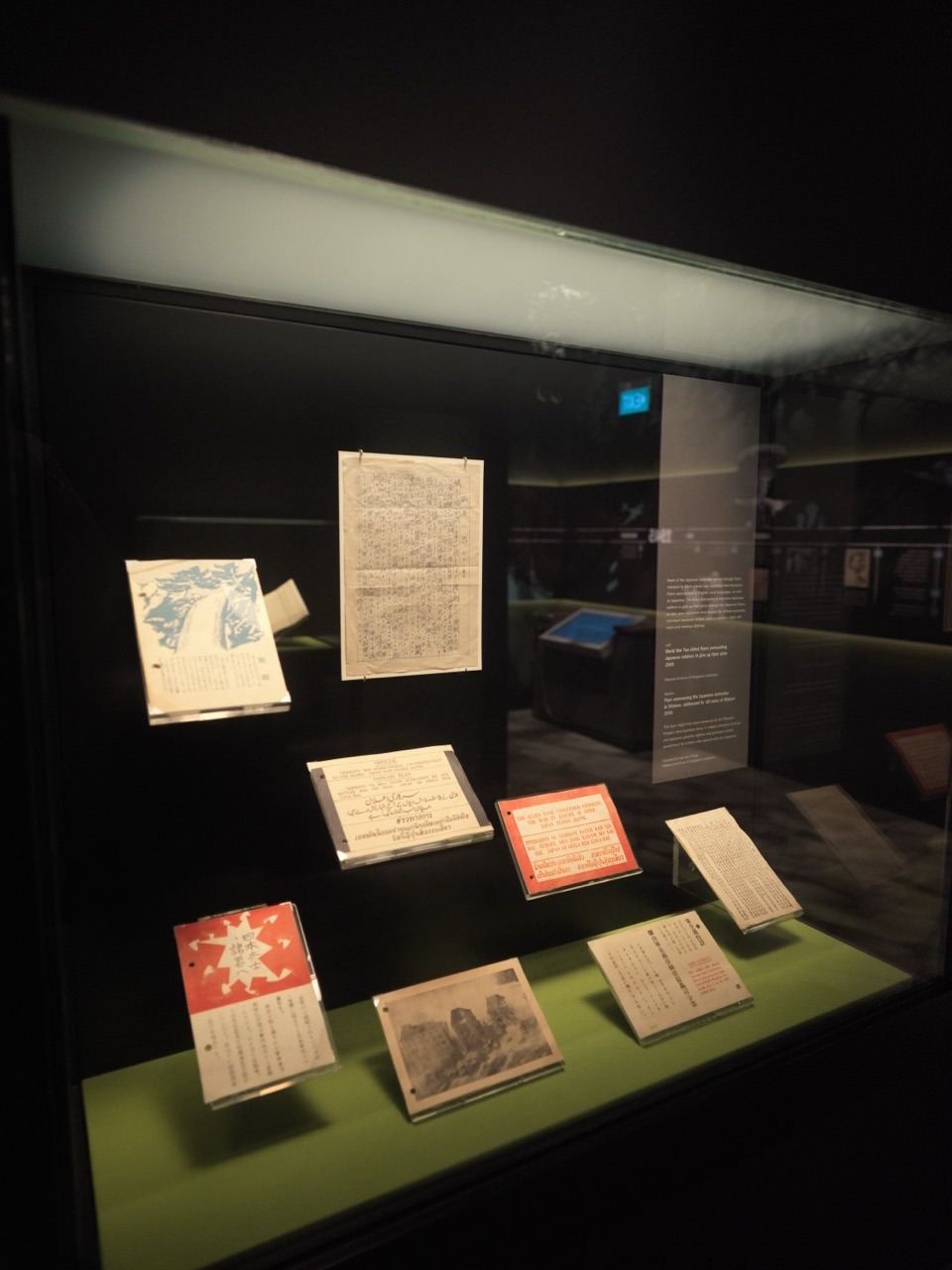
Singapore’s Former Ford Factory exhibition addresses Japanese occupation propaganda and the actual suffering endured by civilians.
The learning principle is to distinguish what a regime claimed from what verifiable evidence establishes. Explaining an ideological narrative is not endorsing it.
Why words such as liberation and occupation need source criticism
A state may describe its military actions using celebratory language, while the people under its control experience coercion, deprivation or violence. The historian should examine who used a particular term and why.
Students can identify an official slogan as evidence of intended persuasion while checking whether its promises corresponded to conditions on the ground.
This is more accurate than either repeating the slogan uncritically or treating it as unworthy of study. Understanding propaganda mechanisms can illuminate how authorities attempted to shape public perceptions.
A source’s emotional language is part of the evidence. The historical judgement must remain grounded in independently documented actions and consequences.
Civilians are not merely background figures in a battle
A military timeline may list troop movements, defensive positions and the surrender decision. Those records matter, but they do not show the whole conflict.
Civilians faced changing access to food, shelter, information, safety and family networks. Their experiences can be recovered through oral histories, personal documents and archival materials where available.
The National Archives exhibition uses different types of source to illuminate these experiences.
A student should not invent what unnamed families felt. Instead, they should accurately describe recorded testimony and distinguish individual experience from population-wide claims. That combination of evidence and empathy is one of History’s strongest educational contributions.
Sook Ching must be approached with factual and ethical clarity
The Sook Ching operation was a violent mass screening and killing campaign carried out under the Japanese Occupation. The National Archives records the mass screening of the Chinese community beginning shortly after the British surrender and highlights survivors’ oral accounts.
Students should identify the perpetrators and harms without euphemism, sensationalism or unsupported numerical claims. The history should not imply that the actions of an occupying military institution represent every person of Japanese nationality.
Some questions, including precise totals and individual experiences, require close attention to available evidence and scholarly interpretation. When sources differ, the disagreement should be explained rather than concealed.
Studying painful history responsibly means acknowledging victims, recording documented wrongdoing and rejecting collective stereotyping.
Survivor testimony deserves attention and careful handling
Oral histories may preserve details of fear, shortages, survival strategies and daily conditions absent from formal military accounts. They are crucial for understanding what conflict meant beyond the battlefield.
But memory is neither infallible nor disposable. A later interview should be situated in time, translated carefully if needed and compared with other records for specific factual claims.
The National Archives discussion of personal wartime records explains efforts to collect accounts and material connected to the Occupation.
Students should not challenge a survivor casually or turn testimony into classroom spectacle. Historical method requires respect, source context and honesty about what a particular account can establish.
Why one eyewitness cannot represent everyone in a war
An eyewitness may offer vivid and valuable testimony about what they saw or experienced. The witness cannot necessarily explain events elsewhere or the decisions of people they never encountered.
If two accounts differ, students should check location, timing, role and question asked before declaring one unreliable. Both might describe distinct aspects of a wider event.
A strong historical answer specifies whose experience is represented. It might say that one interviewee recalled shortages in a particular household rather than assert that all households experienced identical conditions.
This practice makes an essay more humane and more rigorous. It preserves individual voices without turning them into statistical evidence they were never meant to provide.
The danger of assuming every wartime photograph tells the same story
Photographs may show soldiers, damaged buildings, crowds or public ceremonies. They require verification of date, location, photographer and original purpose.
A staged image may accurately document a ceremony while offering little evidence about wider civilian attitudes. A photograph of a crowd cannot establish the beliefs of people outside the frame.
Students should first record direct visual observations, then identify inferences and unsupported claims. If a caption comes from a later source, its authorship and date matter too.
This exercise is particularly useful for media literacy because wartime images can be reused with misleading captions long after they were taken.
Maps explain movement but cannot capture all experiences
A military map may show routes, positions and strategic objectives. It can be valuable for reconstructing operational decisions.
Yet a map produced by one side may reflect limited information, assumptions or particular priorities. Its symbols and scale also constrain what can be inferred.
The Former Ford Factory collection highlights include maps and other records associated with wartime intelligence and preparations.
A student can use such material to ask what the mapmaker intended to identify and what information was available. The map should then be compared with other sources, not treated as a full picture of life on the ground.
A military failure is rarely explained by one dramatic decision
The surrender in Singapore can be examined through multiple factors including strategic assumptions, logistics, preparations, military operations and the condition of the defending forces.
A weak essay selects a single familiar cause and repeats it. A stronger one explains how factors interacted and considers evidence for their relative significance.
The National Archives exhibition presents the military and civilian contexts rather than reducing the history to one conference room.
Students should not make unsupported claims about exact military strength or supplies. Those require suitable contemporary records and research. The skill is to construct an argument in which each causal link can be examined.
Structural conditions and individual agency both matter
Historical explanations may consider institutions, available resources and strategic pressures as well as choices made by identifiable people.
An individual’s decision can be important without being the only cause. Likewise, broader constraints do not make every action inevitable.
Students can build a two-column chart: conditions outside a particular actor’s immediate control, and choices the actor could plausibly make. A third column records the evidence for each entry.
This framework helps explain how responsibility and causation interact. It avoids both the myth of a single all-powerful actor and the opposite claim that nobody had meaningful choices.
Why national stereotypes produce bad historical explanations
National, ethnic and religious categories include people with many different roles, experiences and beliefs. Wartime responsibility should be assigned to documented actors and institutions, not automatically to every member of a population.
A historically careful account identifies the Japanese military’s invasion and abuses without treating present-day Japanese individuals as responsible for actions they did not commit.
The same principle applies to British, local and other communities in the record. A government decision is not a complete description of everyone who lived under that government.
This is not an attempt to soften wrongdoing. It makes accountability more precise and prevents historical education from reproducing collective prejudice.
Conflict can make propaganda especially persuasive
During war, people face incomplete information and emotional pressure. Statements may seek to reassure, intimidate, recruit or control behaviour.
Students should examine who produced a message, which audience it targeted, what action it sought and which claims can be checked independently.
A strong source-based paragraph might explain that a poster demonstrates an official attempt to shape attitudes but does not prove that its message convinced everyone.
The educational payoff is the ability to analyse persuasive communication without automatically believing or rejecting every part of it. This skill transfers to contemporary online information, where slogans and images can travel farther than their original context.
Official military records and private diaries ask different questions
Military records may preserve orders, operational decisions and reports about resources. Private diaries may record how an individual experienced events.
Neither automatically outranks the other for all purposes. The order can establish that a decision was issued; the diary may illuminate one person’s response. Whether the order was followed widely would require additional evidence.
Students should stop using a generic phrase such as “primary source therefore reliable”. Reliability must be judged in relation to a specific historical proposition.
This habit produces stronger writing because sources are compared for their actual strengths and limitations, not ranked by genre alone.
Historical empathy does not mean imagining an unsupported story
Empathy in History involves reconstructing what a person could know, choose or fear within documented conditions. It does not mean writing fictional thoughts into the mouths of real wartime victims.
A learner can respectfully acknowledge suffering while recognising that not all experiences are recoverable from surviving evidence. If an interview or diary records an emotion, it should be cited accurately. If no source exists, the writer should avoid claiming to know it.
Teachers can use carefully selected, age-appropriate testimonies and encourage students to ask what each speaker’s account reveals.
The goal is a disciplined form of understanding, not emotional drama rewarded for its intensity.
An exhibition is a curated interpretation rather than the whole archive
Museums and heritage sites choose which items to display, how to organise them and which questions to foreground. Their choices can be informed by serious research while remaining selective.
The National Archives’ Former Ford Factory exhibition uses objects, recorded testimony and archival material to interpret the war and occupation. Students should distinguish a primary object from the modern label explaining it.
A productive visit asks: who created this original item; why was it preserved; what does the curatorial text claim; and which additional sources would test that interpretation?
History trains students to engage deeply with exhibitions without mistaking a display sequence for the entirety of what happened.
A place of surrender acquires a later history of remembrance
The Former Ford Factory has significance as a wartime site, an industrial building and a present-day heritage institution. These are different historical layers.
The site was designated a national monument in 2006, long after the surrender itself. That later designation reflects a decision about preservation and public memory.
Students can study why societies protect particular sites and how meanings are transmitted to new generations. The act of commemoration is itself a historical event with its own context.
Understanding this layered history helps distinguish the original military event, the surviving material location and the ways later institutions explain its importance.
What Total Defence Day illustrates about public memory
Singapore commemorates Total Defence Day on 15 February, the anniversary of the British surrender in 1942. The SG101 account connects the historical event with present-day messages about preparedness.
A student should distinguish the documented 1942 event from the modern purposes of commemoration. The anniversary is a contemporary public practice built around a historical reference point.
This does not diminish remembrance. It creates an opportunity to examine how societies use the past to articulate values and responsibilities.
A strong essay can explain what the date commemorates and then separately analyse how public institutions frame its meaning today.
Why learning from war must not mean predicting identical wars
Historical comparisons may illuminate factors such as communication, strategic assumptions, logistics and civilian protection. But different conflicts occur under different technologies, institutions and international conditions.
The past does not provide a universal checklist guaranteeing an outcome. A responsible analogy identifies which mechanisms appear comparable and which conditions differ.
Students should be especially cautious when contemporary disputes are described as exact repeats of a historical atrocity or military campaign. Such comparisons require rigorous evidence and thoughtful definitions.
History develops the judgement to learn from an episode without claiming that every later event must follow the same pattern.
Media literacy starts with the original wartime source
A striking quote from a general or an image of civilians may circulate online with a dramatic caption. Before using it, students should identify the earliest accessible, trustworthy source.
Check the original date, speaker, translation, context and whether the quotation was shortened. If the attribution cannot be verified, it should not be presented as an established historical statement.
Students can then compare the claim with institutional archives or scholarly work. Repeated social-media copies are not independent sources.
This evidence discipline is a practical benefit of History. It helps learners resist misinformation while avoiding the cynical assumption that no document can be trusted.
A useful timeline separates battlefield events from occupation experiences
The military campaign and the later Occupation belong to the same broader history, but they present different questions.
A student can create two connected timelines. The first records dated military developments and surrender. The second traces relevant occupation policies, documented civilian experiences and later consequences.
The timelines should not compress three and a half years into one undifferentiated description of suffering. The historical record contains changing conditions and diverse experiences, which should be investigated through suitable sources.
This structure helps learners move from memorising the surrender date to a more complete, careful understanding of conflict and its aftermath.
A classroom investigation: why did a defence fail?
Give students a small set of attributed, age-appropriate extracts: one military overview, one wartime map and one retrospective analysis. Ask a narrow question about a documented decision or constraint.
Students first identify the fact each source supports, then explain how it may contribute to an outcome. They must distinguish background conditions from immediate decisions.
A good response ranks evidence-based factors and acknowledges at least one unresolved point. It should not invent numerical details or treat one quotation as a complete explanation.
The exercise teaches multicausal reasoning while remaining sensitive to the seriousness of the history.
A second classroom investigation: a propaganda poster and a civilian account
Pair an authenticated wartime propaganda item with a properly credited, age-appropriate personal account describing lived conditions. Do not use fabricated quotations or graphic imagery.
Ask students which claims the poster sought to promote and what the personal account records. The sources may serve different purposes and may not directly answer every question about one another.
Students should write a judgement that separates intention, reception and documented experience. The existence of a poster establishes an attempt to communicate; it does not prove general public acceptance.
This is an effective way to practise source comparison and ethical reading without losing sight of documented harms.
How to work with sensitive historical material respectfully
Some wartime records concern death, coercion and suffering. Teachers should choose materials appropriate for learners’ age and the learning objective.
Students should avoid sharing graphic images unnecessarily, speculating about victims’ private lives or treating atrocities as entertainment. When discussing wrongdoing, they should be specific about perpetrators and careful with the claims they make.
Survivor records need accurate quotation, suitable context and attention to consent or usage restrictions. Historical inquiry is not an excuse for publicising private family details.
The educational objective is informed understanding, ethical research and accountability—not shock value.
A four-week learning route for explaining conflict
Week one builds a reliable chronology of the specific events being studied. Students identify key dates and distinguish the military campaign from later occupation conditions.
Week two evaluates sources. Learners compare an official record, a map and a personal testimony, explaining what each can and cannot establish.
Week three practises causation and responsibility. Students construct a supported explanation with several interacting factors and identify documented institutional actions without resorting to collective stereotypes.
Week four tests transfer. Give an unfamiliar, age-appropriate historical conflict case and ask for a measured paragraph with evidence, context, ethical clarity and a meaningful limitation.
Progress is shown when learners can explain both complexity and responsibility accurately rather than hiding behind generic labels.
Common mistakes in essays about conflict
The first mistake is listing causes without explaining how they contributed to an outcome. Repair it with explicit mechanisms and dated evidence. The second is treating strategic context as an excuse for documented wrongdoing. Keep explanation and moral accountability distinct.
The third is blaming everyone in a national or ethnic group for institutional actions. Name perpetrators precisely. The fourth is assuming propaganda describes actual civilian opinion. Compare independent sources.
The fifth is using survivor testimony as a representative survey. Respect the account while defining its scope. The sixth is importing later knowledge into earlier military decisions without checking what participants knew.
Every repair improves the accuracy, humanity and persuasiveness of historical writing.
Parents can support learning without turning war history into fear
A useful home conversation begins with one question about a dated document or museum exhibit. Ask what happened, what the source establishes and which explanation would need additional evidence.
For younger learners, select calm, age-appropriate materials that emphasise accurate context and respectful understanding. Do not make a child argue from the perspective of someone who committed an atrocity as a form of entertainment.
A family museum visit can focus on chronology, the purpose of exhibits and the difference between historical events and their commemoration.
The aim is to strengthen inquiry and empathy rather than create anxiety or make the child repeat an oversimplified national story.
FAQ: Does explaining an invasion mean excusing it?
No. Explaining why a military institution took an action is a historical task distinct from deciding whether the action was justified. A rigorous account may document multiple causes while clearly attributing responsibility for invasion, coercion and atrocities.
Historical complexity should strengthen accountability by specifying actions and evidence, not dilute it.
FAQ: Why are civilian perspectives important in military History?
Military records are essential for operations and decisions, but they do not fully describe everyday experiences under conflict or occupation.
Civilian testimony and personal records can illuminate those experiences. Each account must be situated and used within its evidentiary limits.
FAQ: Can two people remember the same wartime event differently?
Yes. Differences can arise from location, age, role, later recollection and the questions asked. Some disagreements concern different aspects of an event; others may need further verification.
A student should compare provenance and available corroboration rather than assume that all accounts are either identical or equally reliable.
FAQ: What can students learn from visiting Former Ford Factory?
They can study a verified surrender site, compare military and civilian sources, investigate how occupation records were preserved and examine how a later heritage institution interprets wartime events.
A strong visit report identifies one original object, one supported historical claim and one question that requires further research.
Official sources and connected eduKateSG reading
Start with the National Archives’ Former Ford Factory history, Fall of Singapore exhibition, Becoming Syonan section, Personal Records of War and Occupation and SG101 on the 1942 surrender and commemoration.
For wider historical method, use eduKateSG’s source-evaluation guide, ordinary lives and oral history and the SEC History syllabus guide.
The reason to study conflict in History is to understand how decisions, institutions and human experiences interacted, while naming documented responsibility clearly. Neither caricature nor moral ambiguity is a substitute for careful historical evidence.