
Small Group Tutorials
Here to help students catch up, keep up, and move ahead. Book a consultation here.
Project Type: Secondary English Tuition
-

The Core Aim of Bukit Timah English Tuition | SEC G3 English Continuous Writing: Narrative and Descriptive Essays
SEC G3 English Continuous Writing 2027: narrative, descriptive and reflective essay planning, 350–500 word writing, meaningful detail and exam practice in Bukit Timah.
-

The Core Aim of Bukit Timah English Tuition | SEC G3 English Paper 2 Comprehension Strategies
2027 SEC G3 English Paper 2 comprehension strategies: narrative, non-narrative, visual-text language effect and 80-word summary. Bukit Timah English tuition.
-

The Core Aim of Bukit Timah English Tuition | Secondary 1 English Transition from PSLE
Secondary 1 English tuition in Bukit Timah: transition from PSLE to Secondary reading, writing, comprehension, discussion and Full Subject-Based Banding learning.
-

The Core Aim of Bukit Timah English Tuition | SEC G3 Spoken Interaction and Oral Discussion
SEC G3 Spoken Interaction oral tuition in Bukit Timah: develop discussion answers, handle examiner follow-ups, disagree respectfully and adapt beyond memorised speeches.
-

The Core Aim of Bukit Timah English Tuition | SEC G3 Oral Planned Response and Video Stimulus
2027 SEC G3 English Oral Planned Response: use video stimulus, ten-minute preparation, up-to-two-minute speaking and clear examples in Bukit Timah English tuition.
-

The Core Aim of Bukit Timah English Tuition | SEC Listening Comprehension and Note-Taking
SEC G3 English Listening Paper 3: note-taking, twice-played Section A, once-played Section B, key details and accurate listening strategies for Bukit Timah tuition.
-
The Core Aim of Bukit Timah English Tuition | SEC G3 Situational Writing, Email and Reports
SEC G3 English situational writing: formal email, reports, speech, audience, purpose and visual-text interpretation in Bukit Timah 3-pax English tuition.
-
English Tuition For Thomson, Yio Chu Kang and Ang Mo Kio | Edmund Spenser and The English Mind
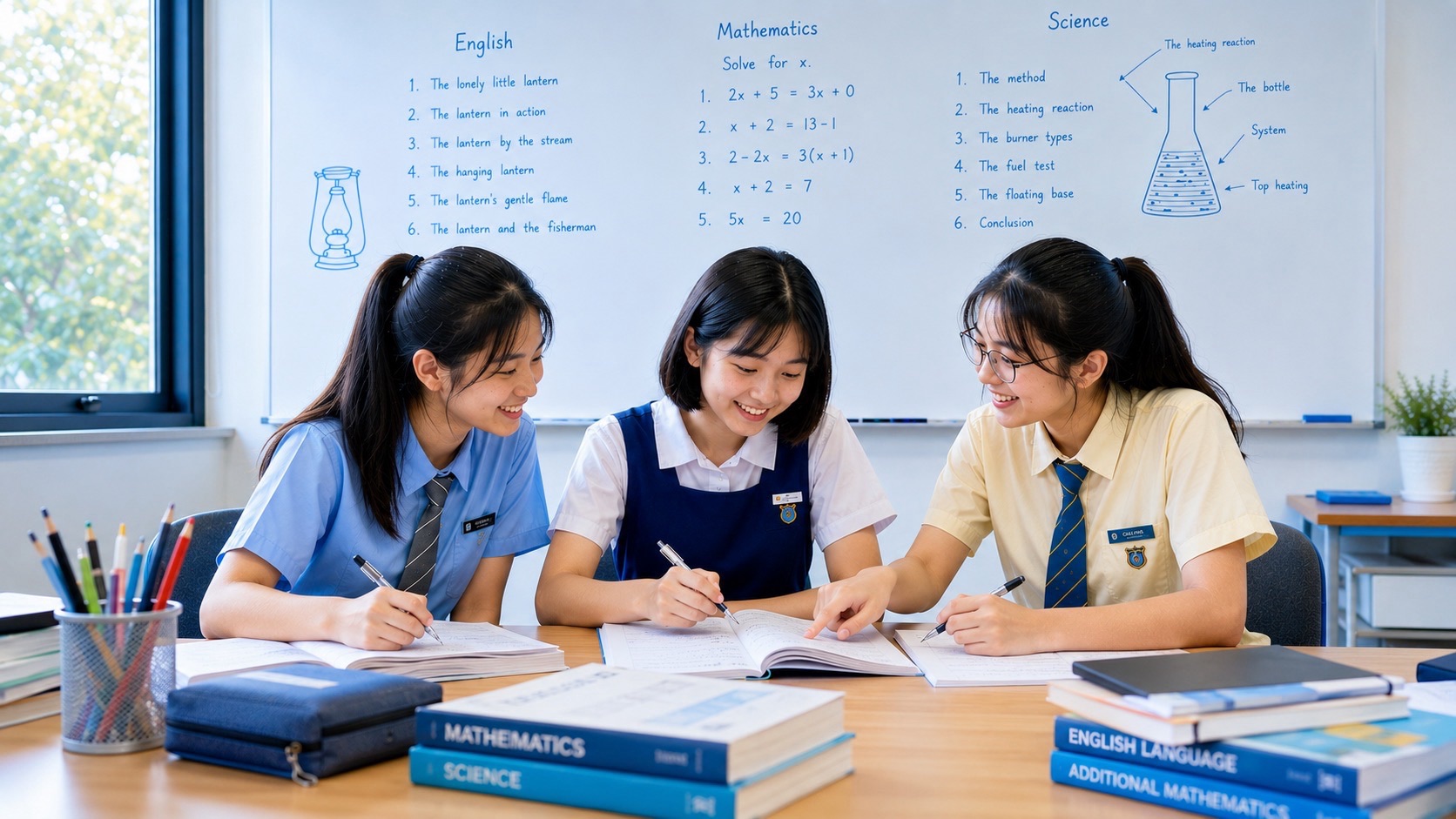
The Edmund Spenser Series outlines a ten-year progression in English education from Primary 1 to Secondary 4, emphasizing the development of students’ ability to represent, infer, and judge through language. The series highlights how foundational skills evolve into complex critical thinking and communication, facilitating students’ understanding and manipulation of the world around them.
-
Secondary English Tuition Clementi | The Story of Our Secondary Students Volume 2
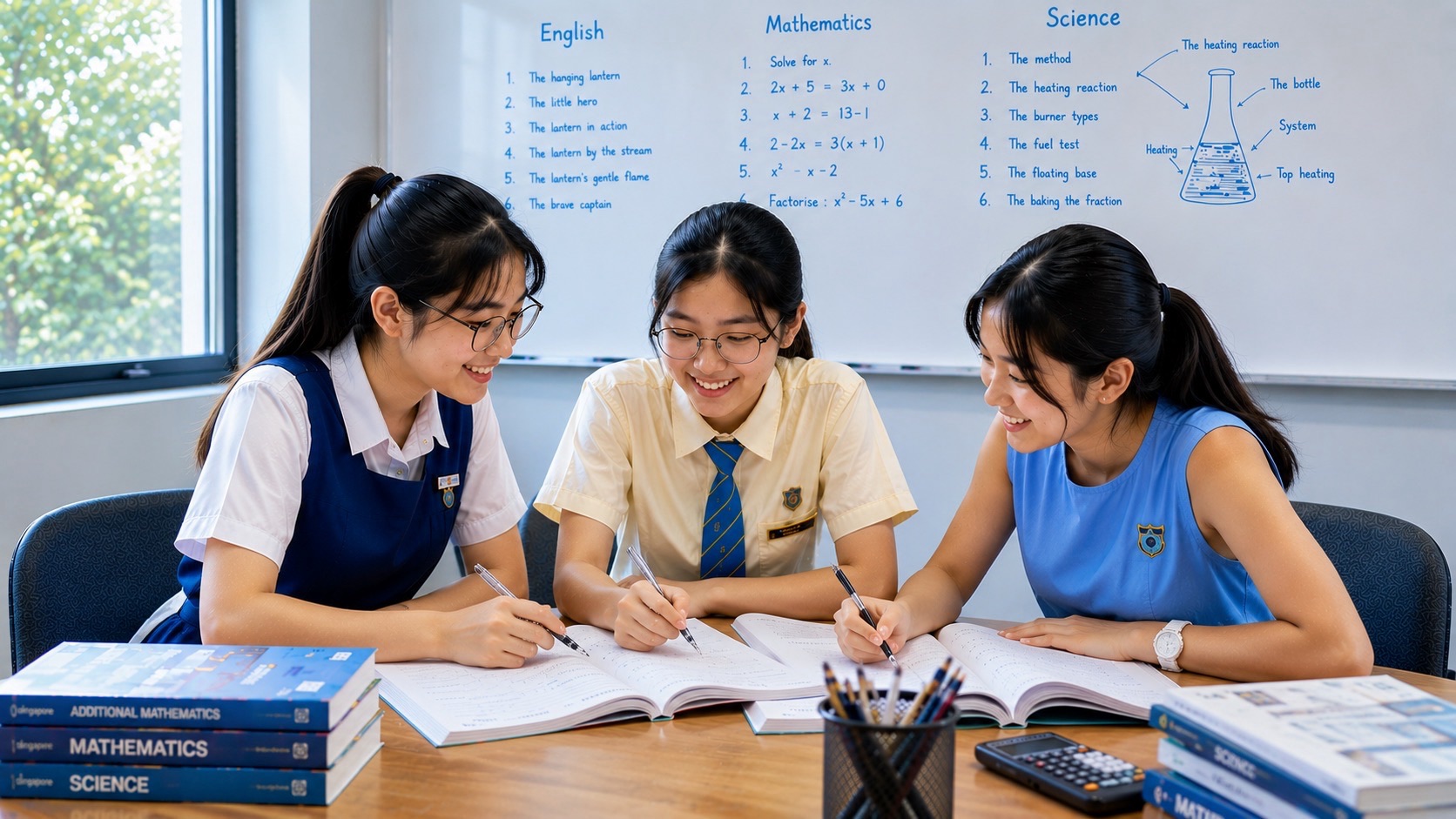
Secondary English education is a transformative four-year journey that enhances students’ language proficiency and critical thinking. Throughout this period, they grow more independent, nuanced in understanding differing perspectives, and responsible in communication. Effective tuition focuses on diagnosing individual needs, fostering interconnected skills, and preparing students for both exams and lifelong learning.
-
English Tuition Punggol Northshore | Small Groups of 3 Students
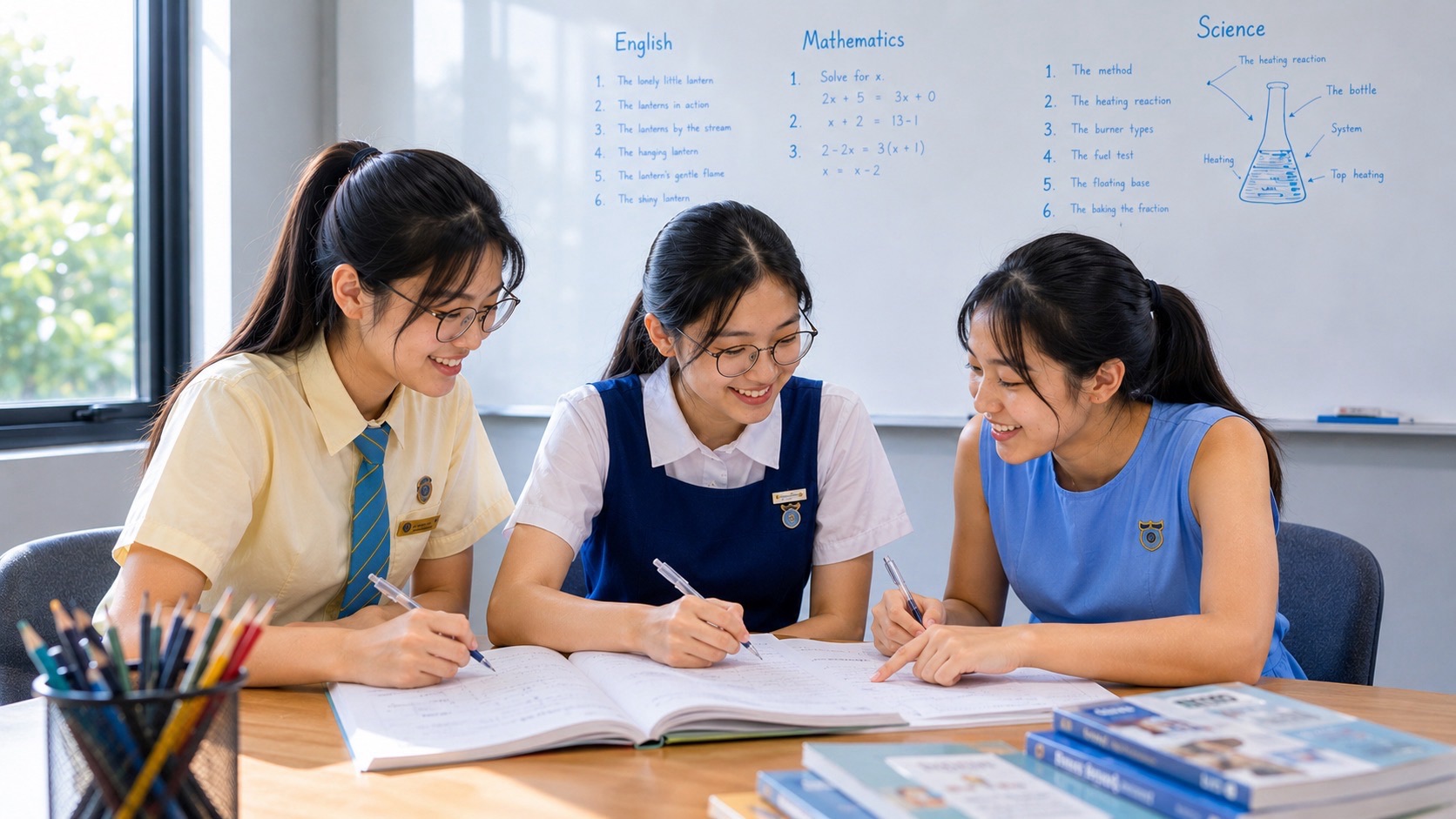
eduKateSG offers English tuition for students in Punggol Northshore, focusing on small classes of three to enhance individualized attention. The program provides foundational support across reading, comprehension, writing, and communication skills, addressing various academic challenges. This approach aims to improve English proficiency, enabling students to thrive in academics and everyday life effectively.
-

English Tuition Seletar
eduKateSG offers specialized English tuition for students in Seletar, focusing on a comprehensive, interconnected approach to language learning. Classes, limited to three students, provide targeted support in reading, writing, vocabulary, grammar, and oral communication. The aim is to foster academic confidence and independence, addressing specific weaknesses for effective learning.
-
Why Is My Child Scoring Low Marks in Secondary English?
The guide addresses low marks in secondary English, identifying various underlying issues such as reading comprehension, question misinterpretation, evidence selection, and expression. It emphasizes a diagnostic approach to pinpoint where a student struggles and suggests that improving specific weak links can lead to overall enhancement. Ultimately, low marks signal areas needing focused support.
Secondary English Tuition by eduKateSG is a Singapore tuition branch that explains Secondary English as a system of reading, vocabulary, grammar, comprehension, summary, situational writing, continuous writing, oral communication, listening, critical thinking, examination control and mature expression.
This project studies Secondary English not only as essays, comprehension passages, editing exercises or O-Level preparation, but as the full language system a teenager uses to understand texts, form opinions, explain ideas, argue clearly, speak confidently, write with control and respond intelligently to the world.
In primary school, English often begins with vocabulary, grammar, comprehension, composition and oral fluency.
In secondary school, English becomes sharper.
The texts become more complex.
The questions become less direct.
The writing demands more maturity.
The vocabulary must carry tone and precision.
The oral response must show perspective.
The student is no longer just answering.
The student is being asked to think.
Across the Secondary English Tuition articles, eduKateSG explores how students move from Secondary 1 to Secondary 4, from simple comprehension to inference, from sentence accuracy to argument control, from composition writing to purposeful communication, from oral answers to spoken perspective, and from school English to national examination readiness.
Secondary English is rarely just one problem.
It is a layered process involving reading stamina, vocabulary depth, grammar accuracy, sentence control, paragraph structure, inference, evaluation, language analysis, summary skills, visual text interpretation, editing, situational writing, continuous writing, oral planning, spoken interaction, listening accuracy, tone, register, audience awareness, purpose and examination timing.
A student may appear to struggle with comprehension, but the real gap may be weak inference.
A student may appear to struggle with summary, but the real gap may be poor idea selection.
A student may appear to write weak essays, but the real gap may be poor argument structure.
A student may appear careless in editing, but the real gap may be grammar blindness.
A student may speak too briefly in oral, but the real gap may be weak opinion development.
This means Secondary English tuition must begin with diagnosis.
Not every English mistake is the same mistake. Some students do not understand the passage. Some understand the passage but cannot explain the answer. Some can identify the answer but cannot phrase it precisely. Some have ideas but cannot organise them. Some write fluently but vaguely. Some use ambitious vocabulary wrongly. Some speak confidently but do not answer the question. Some know the content but lose marks because tone, purpose, audience or structure is wrong.
Good Secondary English tuition helps parents and students see the difference.
It should not simply add more essays.
It should make the language system clearer.
At eduKateSG, we help students catch up, keep up and move ahead by identifying where the real English gap is before more practice becomes more repetition. A student improves when weak foundations are rebuilt, when language is corrected properly, when thought is organised clearly, and when better communication habits are practised until they become natural.
This project also studies the secondary school transition.
Secondary 1 English is not simply Primary 7 English. The student enters a larger language environment. Texts become longer. Vocabulary becomes more abstract. Questions require more interpretation. Writing must show stronger organisation. Oral communication requires more personal response and clearer thinking.
Secondary 2 is where the student’s language habits begin to harden. Good habits become a foundation. Weak habits become expensive. If sentence control, reading habits, grammar awareness and paragraph structure are not repaired early, the upper secondary years become much heavier.
Secondary 3 is where English becomes more exam-shaped. Students must manage situational writing, continuous writing, editing, comprehension, summary, oral communication and listening with more discipline. The student must learn not only what to write, but why the writing fits the task.
Secondary 4 is where Secondary English becomes performance under pressure. The student must read accurately, infer carefully, write coherently, summarise tightly, speak with perspective, listen with attention and manage time across the full examination format.
This is where many marks leak.
Not because the student knows nothing.
But because the student cannot control enough parts of the language system at once.
Secondary English Tuition by eduKateSG also studies the comprehension problem.
Comprehension at secondary level is not just finding answers in a passage. It asks students to understand literal meaning, infer hidden meaning, evaluate language use, recognise tone, interpret purpose, select evidence and explain how words create effect.
This is where many students feel cheated.
They read the passage.
They understand the story.
But the marks do not come.
That is because examination comprehension rewards precision. It rewards the ability to say exactly what is meant, exactly what is implied, and exactly how the language works. A vague answer may feel correct to the student, but still fail to satisfy the question.
In Secondary English, almost right is often still not enough.
The same applies to summary.
Summary is not copying shorter.
Summary is selection, compression and control.
Students must identify main ideas, remove examples, avoid repetition, paraphrase accurately and preserve meaning under word limits. The weak student copies. The stronger student translates meaning. The best student compresses without damaging the logic.
This is why Secondary English tuition must train reading, thinking and expression together.
Writing is another system.
Situational writing is not just format. It is purpose, audience, context, tone, task fulfilment and information control. A student may know how to write an email, speech or report, but still lose marks because the response does not fully address the required purpose or audience.
Continuous writing is not just language. It is content, structure, development, voice, paragraph movement, clarity, grammar, vocabulary and control. A student may write many words and still say very little. Another student may have good ideas but weak organisation. Another may use beautiful phrases but fail to answer the topic.
Secondary English Tuition by eduKateSG treats writing as a thinking problem before it becomes a language decoration problem.
Good writing is not just pretty.
Good writing knows what it is doing.
It has direction.
It has control.
It has purpose.
It has reader awareness.
It has enough language accuracy to carry the idea without breaking.
This project also studies oral communication.
Modern Secondary English oral is not merely reading aloud or speaking loudly. It is the ability to watch, think, plan, respond, explain, extend and interact. A student must develop a point of view, organise ideas quickly, speak clearly, use appropriate vocabulary and remain engaged in discussion.
Some students are quiet because they lack confidence.
Some are quiet because they lack ideas.
Some have ideas but cannot organise them fast enough.
Some speak fluently but drift away from the question.
Some answer the first prompt but cannot sustain the discussion.
These are different problems.
They need different correction.
Secondary English Tuition by eduKateSG also studies the parent’s problem.
Parents often see marks, red ink, weak essays, short oral answers and vague comprehension responses first. But they may not see the hidden machinery underneath. A child may be losing marks because of weak vocabulary, poor grammar control, weak inference, poor paragraphing, careless question analysis, thin content, poor tone, weak summary compression, weak oral perspective or exam anxiety.
These problems may look similar from the outside.
They are not similar on the inside.
This is why eduKateSG treats Secondary English as a diagnosis problem before it becomes a practice problem.
More practice helps only when the correction is clear.
Doing more essays does not help if the student keeps writing without structure.
Doing more comprehension does not help if the student keeps answering without precision.
Doing more oral practice does not help if the student keeps speaking without development.
Doing more vocabulary lists does not help if the student cannot use the words naturally.
Secondary English is also a code-switching problem.
Students in Singapore move between home language, Singlish, school English, formal English, examination English, digital English and public communication. Each has its own rules, tone and efficiency. The problem is not that students have no language. The problem is that they must know which English to use, when to use it, and how to preserve meaning while changing register.
A strong Secondary English student knows how to shift.
They can speak naturally.
They can write formally.
They can argue clearly.
They can explain calmly.
They can respond to a task without sounding artificial.
They can use standard English without losing personality.
This matters even more in the AI age.
Students now live in a world where language is written, prompted, searched, summarised, generated, copied, questioned and verified through machines. This does not reduce the need for English. It raises the need for better English.
A student must learn how to read carefully, detect weak claims, verify information, maintain personal voice, organise prompts, judge tone, preserve meaning and communicate clearly in both human and machine-readable environments.
Secondary English Tuition by eduKateSG connects English learning to Singapore’s education environment, where students must move from lower-secondary foundation building into upper-secondary examination control, and from basic expression into mature communication.
Strong Secondary English matters because English is not trapped inside the English paper.
It affects Humanities.
It affects Science explanations.
It affects Mathematics word problems.
It affects interviews.
It affects presentations.
It affects future study.
It affects work.
It affects how clearly a student can think in public.
Secondary English Tuition by eduKateSG connects language learning to our wider EducationOS, LanguageOS, TuitionOS, ParentOS, NewsOS, CultureOS and CivilisationOS framework. English is not only an examination subject. It is one of the systems civilisation uses to transmit knowledge, argue ideas, read evidence, challenge falsehood, communicate across cultures and repair misunderstanding.
When a student gains control of English, the student gains more than marks.
The student gains a clearer way to think.
This does not mean every student will love English immediately.
Many students fear it first.
They fear long passages.
They fear essay topics.
They fear blank pages.
They fear oral questions.
They fear summary limits.
They fear vocabulary they do not understand.
They fear being marked down for answers that feel right.
The solution is not panic.
The solution is structure.
We rebuild vocabulary carefully.
We strengthen grammar through meaningful use.
We teach students how sentences carry thought.
We train them to read questions properly.
We show them how to infer, evaluate and explain.
We teach them how to select and compress ideas for summary.
We help them plan situational writing with purpose, audience and context.
We train continuous writing with content, structure and voice.
We practise oral communication so students learn to speak with clarity and perspective.
We correct repeated mistakes before they become permanent.
Secondary English tuition should repair confusion.
It should repair weak sentence control.
It should repair vague comprehension answers.
It should repair thin essay development.
It should repair poor summary selection.
It should repair weak oral confidence.
It should repair careless grammar.
It should repair the belief that English improvement is random.
English can be taught clearly. Vocabulary can be grown. Grammar can be strengthened. Comprehension can be trained. Summary can be structured. Writing can be planned. Oral confidence can be built. Listening can be sharpened. Examination habits can be improved.
Secondary English Tuition by eduKateSG is a long-form Singapore tuition knowledge branch for parents and students who want to understand how Secondary English works, why teenagers struggle, where marks leak, how language foundations are rebuilt, how O-Level preparation develops across the secondary years, and why mature expression matters before pressure takes over.
This branch is for families who want English tuition that sees the student properly.
Not just the marks.
Not just the weak essay.
Not just the comprehension mistake.
Not just the next worksheet.
But the real language system underneath.
Secondary English Tuition by eduKateSG explains English as a system of vocabulary, grammar, reading, comprehension, inference, summary, writing, oral communication, listening, register control, examination readiness, parent clarity, student confidence and long-term language repair.