
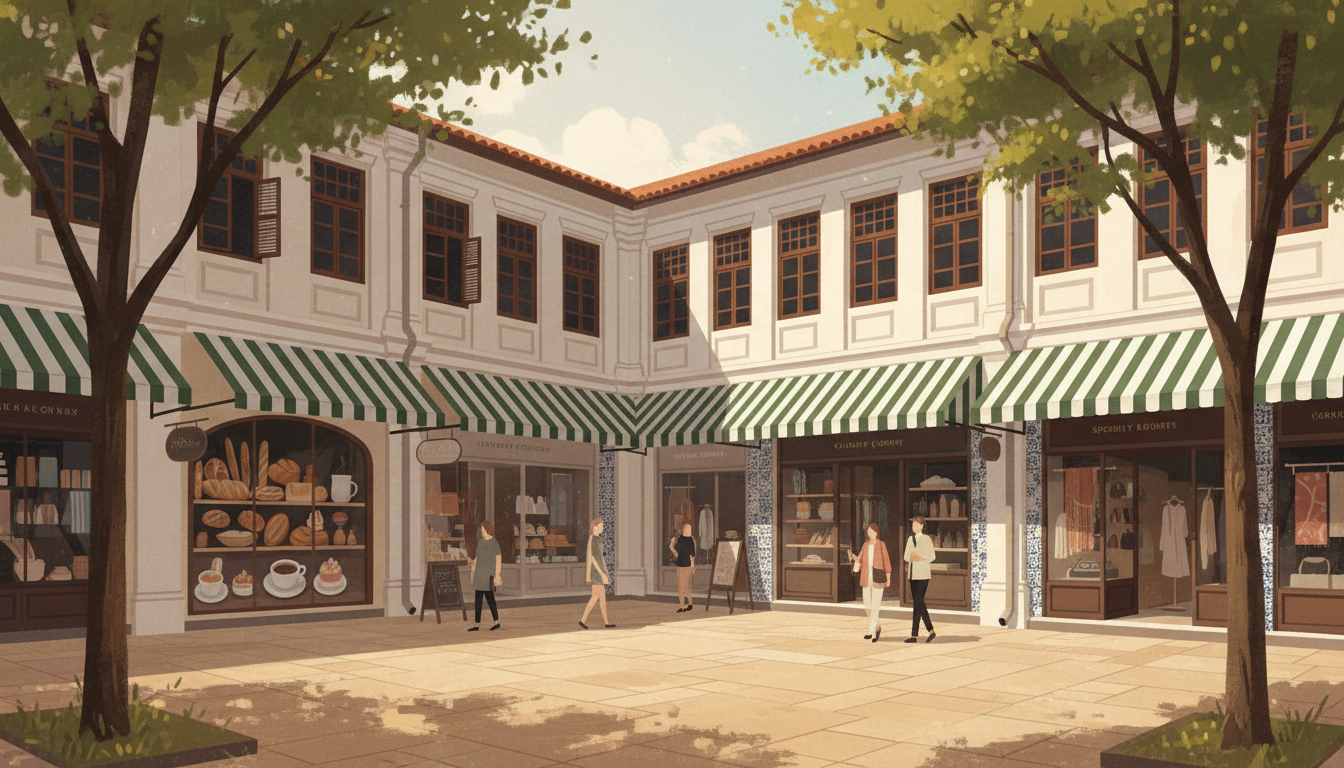
Did you know? A row of shops just outside Singapore Botanic Gardens dates back to 1928. That is Cluny Court, a conserved cluster of shophouses at 501 Bukit Timah Road. Today, it brings old architecture and everyday cafés, groceries and boutique businesses together in one place.
If you are preparing a Bukit Timah outing between October 2026 and the end of 2027, this is an excellent example of a place that is already operating. There is no need to wait for a future grand opening. What matters is seeing the historic details while understanding how shops, entrances and tenant hours can change.
Cluny Court at a glance
- Address: 501 Bukit Timah Road, Singapore 259760.
- Heritage: shophouses constructed in 1928 and conserved by the Urban Redevelopment Authority.
- Architecture: fluted columns, decorative bas-relief and patterned tiles associated with early twentieth-century shophouse design.
- Getting here: Botanic Gardens MRT on the Downtown Line and Circle Line, followed by a short walk along the public street.
- Current use: shops, cafés, bakeries, services and other tenant businesses.
- General retail hours: the operator lists 10am–7pm daily for retail, excluding eateries and restaurants, which keep their own schedules.
- Through 2027: no official source used here promises a new building opening or a complete closure; recheck the shop directory and current opening hours.
Why is Cluny Court architecturally special?
The National Heritage Board’s Bukit Timah Learning and Leisure Trail identifies Cluny Court as a conserved cluster of shophouses built in 1928. Look closely at the façades and you will notice that the decoration is not random: columns, mouldings and tiled details give the shopfront rhythm and identity.
Fluted columns have vertical grooves that catch shadow. Bas-relief means a shallow sculptural image that projects only slightly from its background. Decorative tiles add pattern and durable surface colour. These details make the building a useful outdoor lesson in texture, light and architectural history.
Architecture of this period borrowed ideas from different traditions and adapted them to an equatorial commercial street. The covered or shaded edges mattered to pedestrians in a hot and wet climate; the shopfronts had to be functional as well as visually appealing.
A building that sells bread or clothing today can therefore still teach something about how commercial streets were planned a century ago. That is the value of conserving a working shophouse row, rather than rebuilding it as a display with no everyday use.
A ten-minute façade walk
Start from the public pavement near the corner rather than standing in the middle of a busy entrance. Notice the building’s roofline and windows first, then move closer to observe the columns, cornices and patterned tiles where they are visible.
Ask yourself: which features appear repeated across the row, and which ones draw attention to a particular corner or shop? The rhythm of repeated openings helps give the group of shops a shared identity, even though individual tenants have their own signs and interiors.
Take photographs from lawful public locations without obstructing the businesses. Never enter service areas or private upper-floor spaces merely because the building is heritage-listed.
What shops and food can you find in late 2026?
The operator’s site advertises a variety of food, retail and lifestyle services. Its published directory includes Cold Storage, Da Paolo Gastronomia, Plain Vanilla Bakery, Tiong Bahru Bakery and several independent boutiques and services.
These are directory examples, not a guarantee that every listed tenant occupies the same unit during every month of 2027. Commercial spaces change: a shop may move, close for renovation or have a different holiday schedule. For a specific café or errand, check the current Cluny Court shop directory and the business’s own latest information.
The building also supports local families because everyday errands and leisure can sit close together. A parent may stop for groceries while another family member visits a bakery. The historic architecture remains part of a working neighbourhood rather than a separate ticketed museum.
Do all shops open from 10am to 7pm?
No. The Cluny Court operator lists 10am–7pm daily as its general retail operating window, explicitly excluding eateries and restaurants. A supermarket, bakery, Pilates studio or other service may have quite different hours.
When meeting someone for food, send the actual business name and unit rather than only ‘Cluny Court’. The operator’s contact page and directory are useful starting points, but a current restaurant notice takes priority over a general mall timetable.
How do you arrive from Botanic Gardens MRT?
Botanic Gardens MRT combines the Downtown and Circle Lines. From the station, follow the public signs towards Bukit Timah Road and Cluny Park Road. Cluny Court sits on the roadside near Serene Centre, while the Botanic Gardens’ Bukit Timah Entrance is another nearby destination.
Because the intersection carries traffic, follow the marked crossings instead of making a diagonal shortcut across the road. A route that feels short on a map can still involve waiting at lights or navigating a busy pavement.
Our Botanic Gardens MRT exits and family arrival guide helps distinguish the station from the different Gardens entrances. For a broader list of shops and visitor logistics, see our Cluny Court food, retail and parking guide.
Cluny Court versus Serene Centre: are they the same building?
No. Cluny Court’s conserved 1928 shophouse row is at 501 Bukit Timah Road. Serene Centre is a different shopping development close by at 10 Jalan Serene. Both can fit within a short neighbourhood outing, but they have different histories, tenants and entrances.
Our Serene Centre’s shops and cafés guide describes that separate address. Keeping the names distinct matters, especially when an older online review mentions a business that later moved during renovation.
Build a short heritage and nature itinerary
A pleasant outing can begin at Cluny Court, continue towards the Botanic Gardens’ public paths, and return for a meal or grocery stop. Singapore Botanic Gardens is itself a UNESCO World Heritage Site with free general admission; the National Orchid Garden requires a separate ticket.
For a school-age child, compare two kinds of conservation: the Cluny Court shophouses preserve an example of historical commercial architecture, while the Gardens protect living botanical collections and a landscape shaped by scientific research. They are not the same sort of heritage, but both explain how a city decides what to keep.
For those interested in higher education history, the conserved Former Raffles College buildings at NUS Bukit Timah Campus are another distinct heritage subject. Read our Former Raffles College and 2027 visitor guide for its academic access rules. Do not confuse a public shopping centre with a functioning university campus.
What’s happening from October 2026 through 2027?
October–December 2026: Cluny Court operates as a conserved shopping and service address. Current retail information and the shop directory are available from its operator.
2027: tenants, promotions, opening hours and events may evolve. Nothing in the National Heritage Board’s conservation history or the operator’s pages checked for this article establishes a confirmed whole-building demolition, reopening or new phase in 2027.
The responsible approach is to check a current business listing for commercial details and the National Heritage Board or URA records for changes to heritage status. A new tenant opening should not be described as a new construction date for the historic shophouses.
A simple activity for parents and tutors
- Point to a column and ask whether its grooves are purely decorative or also affect shadows.
- Identify a pattern in the tiles or façade and describe its repeated unit.
- Find an example of a modern tenant sign positioned within older architectural details.
- Ask how shade, shelter and walking comfort affect a shopping street in Singapore.
- Sketch a tiny route connecting the MRT, Cluny Court and a chosen Botanic Gardens entrance using legal crossings.
The exercise is not a test of architectural vocabulary. It helps children practise observing evidence and distinguishing what they can see from assumptions about how a place was used.
Frequently asked questions
Was Cluny Court built in 1928?
Yes. The National Heritage Board dates the shophouse cluster to 1928 and identifies it on the Bukit Timah Learning and Leisure Trail.
Do you need an admission ticket to see the shophouses?
No special heritage ticket is required to see the exterior from public pavements. Ordinary shops operate under their own business rules.
Is Cluny Court the same as Serene Centre?
No. They are neighbouring but separate developments, and directions should use the actual shop name and address.
Will Cluny Court reopen in 2027?
It is already an operating shopping address in 2026. No building-wide 2027 reopening is confirmed in the sources reviewed.
Are the operating hours the same for every tenant?
No. The operator’s 10am–7pm general retail schedule excludes eateries and restaurants; check the specific tenant.
Official sources and reading
Checked 25 October 2026. References: National Heritage Board: Cluny Court’s 1928 architecture; Cluny Court operator’s website; current published shop directory; operator’s retail hours and address; and NParks: Botanic Gardens entrances and hours.