
How a civilisation might end when harvests, food stores and trade fail begins with an ordinary question: can every household reliably obtain enough safe and nutritious food? A poor harvest alone does not prove that a civilisation has ended. Long-term trouble becomes more likely when lost production coincides with damaged stores, inaccessible markets, unequal distribution, weak records and delays in collective decisions. Even then, people may repair systems, move, trade, adapt crops or reshape institutions rather than disappear.
This guide explains how harvest failure, food insecurity and cascading disruption can affect an early settlement. It follows Riverlight, a fictional community used throughout eduKate’s civilisation-building lessons. Children first build a simple food system from soil, seed, work, storage and exchange. Parents and tutors then introduce controlled changes, inspect who is affected, calculate remaining supplies and propose a recovery that someone else can check. The emphasis is careful reasoning, not a dramatic prediction of collapse.
Part Three of How a Civilisation Might End takes children from the foundation settlement toward complex towns and eventually advanced civilisations. Its thirty chapters include clear explanations, historically sourced comparisons, a complete eight-round paper simulation, mathematical worked answers, fair-decision exercises, vocabulary, reading passages and a five-session teaching route. It builds on the earlier chapters about founding a community and losing safe water while exploring a distinct risk: what happens when food exists somewhere in a society but does not reliably reach the people who need it?
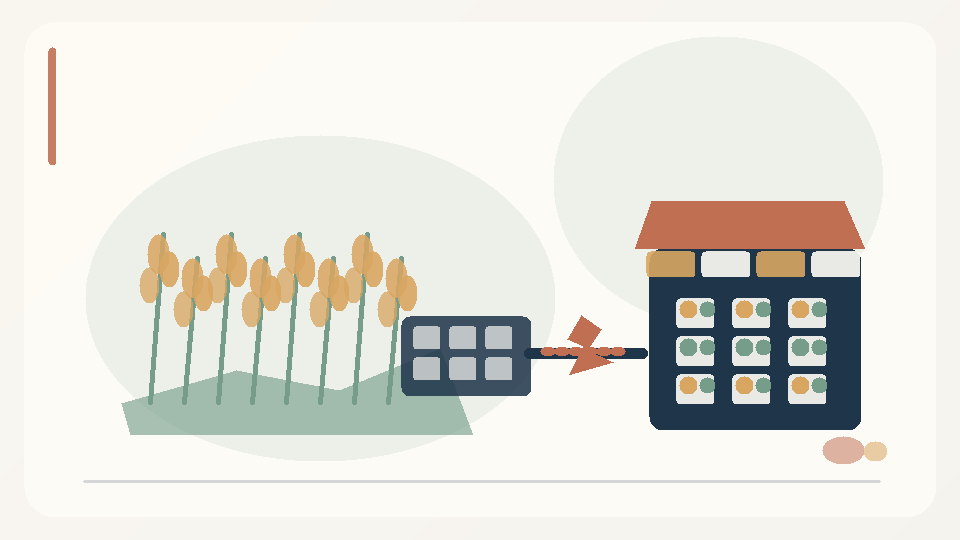
Illustration note: The featured image is an original conceptual editorial illustration of crops, containers, a disrupted distribution link and food shelves. It illustrates a learning theme; it is not documentary evidence or a reconstruction of an identified historical settlement.
Quick reading route: Chapters 1–6 establish the problem and the records needed. Chapters 7–18 follow the dependencies. Chapters 19–22 compare actual evidence and distinguish uncertainty. Chapters 23–25 provide a reproducible simulation. Chapters 26–30 supply teaching, assessment and a recovery handover. Each activity is a fictional paper model, not a nutrition plan or emergency rationing instruction.
Safety and evidence boundary: The fictional food units are counters, not calories, diets or actual food portions. Do not use the classroom model to decide what anyone should eat. It does not instruct children to taste spoiled food, manage food poisoning, handle pesticides or conduct emergency food distribution. Actual food safety and community relief require qualified professionals and the appropriate authorities.
Full chapter index
Open the 30-chapter index
- 1. What a failed harvest proves—and what it does not
- 2. Build Riverlight’s food system from soil to shared meals
- 3. The four dimensions of food security
- 4. Seasons, delayed consequences and the harvest clock
- 5. A failed crop, an unsafe store, or an access problem?
- 6. How to count a store without inventing supplies
- 7. Food for today and seed for tomorrow
- 8. Soil, water, climate and living ecosystems
- 9. Crop diversity and shocks that strike several crops
- 10. Stores, handling and the hidden losses after harvest
- 11. The people who maintain the whole food pathway
- 12. Trade, neighbours and the meaning of independence
- 13. Routes, transport and the last mile
- 14. Prices, exchanges and the problem of household access
- 15. Fair allocation, shared rules and public legitimacy
- 16. Rumours, records and decisions under uncertainty
- 17. Learning, literacy and knowledge across generations
- 18. Schools, workshops, care and the wider cascade
- 19. The Great Irish Famine: crop disease was not the whole story
- 20. Ancient Maya cities: drought, adaptation and living people
- 21. Singapore’s food resilience as a modern comparison
- 22. How historians distinguish evidence from an attractive story
- 23. The Riverlight granary simulation: rules and materials
- 24. The eight-round ledger, checked from beginning to end
- 25. Test the backups: a counterfactual with disrupted trade
- 26. Five sessions for parents and tutors
- 27. Vocabulary, reading, mathematics and explanatory writing
- 28. Questions and answers: assess understanding without fear
- 29. Write a recovery handover the next group can use
- 30. From settlement stresses to connected cities and advanced civilisations
Read the connected series: Part 1 — Building the Foundations Before They Fail · Part 2 — When a Settlement Loses Safe Water · Stage 1: Settlement and Surplus.
To use the long article, choose a chapter and its activity rather than requiring a child to read everything at once. Younger children can move paper counters and retell the story. Upper-primary learners can maintain ledgers and compare arguments. Secondary students can check assumptions, distinguish historical evidence from hypothetical models and write qualified explanations about institutions and change.
1. What a failed harvest proves—and what it does not
Did you know that historians do not discover the end of a civilisation by finding an empty granary? A storehouse may stand empty because a community moved supplies elsewhere, used its reserves during a difficult season, changed its trading network or abandoned that particular building. Archaeologists and historians look for converging evidence: settlement patterns, farming traces, written records where they exist, infrastructure, signs of conflict, population change and cultural continuity. One striking object can begin a question, but it rarely settles the explanation.
An ending is a claim about change across time
If Riverlight harvests fewer crops in one round, its food production has changed. If the store cannot meet the next promised allocation, its food service has failed for that period. If families leave to join relatives in another settlement, the settlement’s population has changed. If its buildings are never used again while people preserve language, techniques and memories elsewhere, the physical settlement may have ended without ending the people. Those four statements need different evidence. The phrase “civilisation collapsed” should never be allowed to replace all four.
Consider the difference between a trigger and a vulnerability. Heavy rain might damage a field. A single crop planted everywhere could make that damage more consequential. A poorly maintained store might remove a reserve that could have helped. A blocked road could then prevent exchange, while confused messages delay cooperation. The rain is not a complete explanation of the outcome. The interaction of weather, production, storage, routes and decisions is a much stronger starting point.
A model does not diagnose real civilisations
The Riverlight community is invented for learning. Its counters, harvest rounds and reserve quantities are not archaeological findings, scientific projections or real food requirements. It is useful because we can hold some conditions constant and change one at a time. We can learn how a service operates and which questions a researcher would ask. We cannot use a successful game to declare that a historical civilisation was resilient or that a modern society will necessarily survive a crisis.
This boundary matters particularly when discussing hunger. Famine and malnutrition involve real suffering, and children should not be asked to imitate that suffering or compete in a game that rewards the withholding of food. Our counters represent abstract household service commitments, not meals denied to imaginary children. When a ledger shows an unmet commitment, we mark it as an important service failure that deserves attention, not as a clever strategic victory.
What survives a difficult period?
Imagine Riverlight repairs its store, changes where it farms, records safer harvest procedures and establishes a new trading route. The community is not identical to the one before the shock. Yet its people may continue to speak the same language, share memories, teach their children and develop their institutions. Calling every transformation an ending erases that continuity. Historians sometimes distinguish institutional decline, settlement abandonment, cultural change and demographic movement. That vocabulary makes a difficult story more accurate.
A thoughtful child might ask whether a smaller community is necessarily a worse one. The answer cannot be assumed from size alone. A large city with impressive buildings may fail to deliver basic services to many residents, while a smaller settlement may provide reliable care and cooperation. Nor should we rank cultures by whether they use a particular technology. The quality of a system depends on what it demonstrably does and whom it serves.
Three questions before writing the word collapse
- What changed? Name the specific service, population pattern, institution or form of settlement.
- What continued? Look for evidence of people, traditions, skills, networks or replacement institutions.
- How do we know? Identify the sources, time period and alternative explanations before making a broad claim.
Turn these questions into a short reading activity. Give the learner the sentence, “A dry year meant Riverlight ended.” Ask them to revise it so it can be checked. A useful answer is: “In the fictional third round, Riverlight received fewer harvest units; the store ledger and household delivery record would show whether the shortfall affected service.” This answer is narrower but more informative. It creates a plan for investigation rather than a dramatic guess.
The same discipline should carry into actual history. An account of crop loss must ask how crops were shared, what food could be obtained elsewhere, who controlled access, which institutions responded, what records survive and whether the event lasted one season or several years. A harvest can be a vital part of a historical explanation. It is rarely sufficient by itself.
Draw four boxes labelled harvest, food service, settlement, people. Place the following events in the most relevant boxes: smaller harvest, missed distribution, families moving to a nearby town, families preserving language. Explain why the boxes connect but are not interchangeable.
2. Build Riverlight’s food system from soil to shared meals
Before introducing failure, let children build a working food pathway. Riverlight is an imaginary riverside settlement of twelve household cards. Its members cultivate several kinds of crops, maintain a shared storage building, receive occasional supplies through neighbours and record what each household is supposed to receive. The purpose is not to model every food tradition. The purpose is to see that an ordinary shared meal depends on more than one harvest.
The route from land to a household
Draw six labelled stations on a large sheet of paper: land and seed → growing work → harvest → checked store → distribution → household access. Add a second route, neighbouring communities → transport → checked store. Then draw arrows for water, weather information, tools, decisions and records. Children soon discover that every arrow represents a job someone must do. A field can produce crops while the store is locked; the store can be full while a bridge prevents a delivery.
Ask the learner to imagine one ordinary morning in which all parts are working. Workers know what to harvest and where to bring it. A named person checks that goods are recorded and suitable within the fictional rules. Deliveries are planned, and households know when to collect. The community also saves resources needed to plant a future crop. These ordinary arrangements do not attract the attention of dramatic histories, but they explain how a settlement can continue.
Add people to the drawing
A system diagram made only of boxes has an important weakness: boxes do not decide what to do when a count is wrong. Give students role cards for growers, store recorders, transporters, community representatives, households, health workers and learners. Each person should be able to state which information they need and whom they tell if something changes. Do not award status to one role because it seems more glamorous. The model shows that reliable work often depends on quiet care, communication and checking.
For example, the grower reports that expected yield is lower than usual. The store recorder must not silently turn the forecast into counted stock. The household representative needs to know what can actually be distributed. The transporter knows whether the path is open. An educator can help others understand the schedule, while a community representative ensures different groups are heard. No single role possesses the entire truth.
Build in a future obligation
A settlement cannot judge food planning solely by what is ready for distribution today. The following season may require seed, tools, repaired water channels and skilled labour. In this paper model, a separate twelve-counter seed reserve is marked as future planting material. It does not enter the model’s household delivery ledger. This distinction helps children recognise that using every apparently available resource today can create future difficulties, even when the current ledger appears comfortable.
We deliberately keep the seed counters abstract. Real seeds vary by crop, storage conditions, quality, planting method, season and local agronomy. The exercise is about respecting a future commitment and maintaining distinct records, not giving agricultural or nutritional instructions. Older students can compare the fictional rule with real examples of how planning decisions interact with weather, seed supply, land access and farming skills.
Where the source and the service diverge
A community can produce enough food in aggregate yet fail to provide reliable access. A family may lack money to buy food from a market; a route may be closed; stored produce may become unsafe; a rationing decision may exclude some households. This is why the FAO’s introductory food-security framework distinguishes availability, access, utilisation and stability. Our fictional drawing makes those concepts approachable before students see them in formal language.
To test the map, remove exactly one arrow. If the route from store to households is blocked, does the harvest suddenly cease to exist? No. The produce may remain at the store while a service fails. If the arrow from fields to store stops, the store may continue to supply households for some time from earlier reserves. The learner discovers why the timing and position of a disruption matters.
One-page everyday-life record
| Function | What students record | Question to ask |
|---|---|---|
| Growing | Expected and observed harvest separately | Who verified the arrival? |
| Storage | Usable units in a dated ledger | Which goods are actually in stock? |
| Transport | Routes open, closed or unverified | Can everyone reach the distribution point? |
| Distribution | Actual units delivered by household | Who did not receive the agreed allocation? |
| Future planting | Seed counters kept in another ledger | Who is responsible for the next season? |
The finished map is not a perfect civilisation. It is a useful first model. Children should be able to describe a normal cycle and say which information would be missing if a grower, recorder or household representative could not attend. Once they can explain ordinary success, they are ready to investigate a controlled failure. That sequence mirrors a good teaching method: understand the structure, then vary a condition, then check the effect.
Remove the transport arrow but keep every other station operating. Ask the child for one statement that remains true, one that becomes uncertain and one record they would inspect. Avoid the unqualified claim “no food exists.”
Chapter index · Previous · Next
3. The four dimensions of food security
The word food security can sound like it means simply having enough food in a warehouse. That is only one part of a larger picture. The Food and Agriculture Organization and World Food Programme describe four interrelated dimensions: availability, access, utilisation and stability. They help explain why high production figures or a full store cannot prove that every household is adequately supported.
Availability: does suitable food exist in the system?
Availability concerns production, stocks and food arriving from outside sources. In Riverlight, the store recorder notes the number of model food units grown or received and the number already present. For real communities, food availability depends on a wide variety of goods and processes, not interchangeable counters. The classroom simplification is useful for arithmetic but does not stand for a balanced diet. Ask children to distinguish a harvest prediction from a delivery they can verify.
A fertile-looking field does not settle the availability question. Crops may not yet be harvested; severe weather may change the outcome; part of the harvest may be set aside for the next planting; storage losses may occur. A transparent record keeps time labels: expected, harvested, inspected, usable and distributed. When these labels are blurred, a community can make promises based on food that is not yet available.
Access: can people actually obtain food?
Access includes physical, economic and social conditions. A family can live near a market but lack sufficient income to obtain goods. A route can be blocked. A distribution rule can disadvantage someone who cannot arrive at the nominated time. Riverlight’s paper tokens avoid simulating income insecurity directly for young children, but older learners can explore it through separate cards that indicate whether a fictional household can reach the distribution service. A full store paired with incomplete delivery is evidence of an access problem.
The teaching question is precise: does the same total quantity guarantee the same household experience? No. Keep one ledger for stock and another for completed household commitments. A record saying “twenty-four units were distributed” does not prove fairness if one household received four while another received nothing. To examine service, children need information about recipients and agreed arrangements.
Utilisation: is food safe and nutritionally appropriate?
Utilisation concerns whether people can safely prepare and benefit from food, including nutritional suitability, health and other conditions. The model does not ask children to judge actual safety or diets. A card labelled “awaiting qualified check” is simply removed from the fictional usable stock. This keeps uncertainty visible without teaching unsafe practices, medical diagnosis or household handling methods.
A strong learner can now explain why an appealing shelf photograph cannot establish real food security. There may be enough products displayed, but we do not know whether people can obtain appropriate food, whether it is safe for intended consumption or whether access can continue. A photograph is evidence of a scene, not proof of an entire population’s nutritional state.
Stability: will the other three remain dependable over time?
A one-day delivery can be successful while next month’s arrangements remain uncertain. A store might have enough today but face repeated interruptions. A market could be open while supply chains depend heavily on one vulnerable crossing. Stability asks whether availability, access and utilisation remain reliable over time and across shocks. It is a useful bridge from early settlement studies to advanced systems: resilience is not just an emergency reserve; it involves the capacity to adjust and maintain services.
In Riverlight, children observe eight rounds rather than one. They track inflow, recorded loss, household delivery and remaining stock, then test what happens when an outside supply is unavailable. The ledger makes stability discussable without asserting a real survival threshold. It also shows why an average arrival can hide a very weak round.
Four dimensions as a diagnostic
| Dimension | Riverlight question | Evidence needed |
|---|---|---|
| Availability | How many usable units are verified? | Stock and arrival records |
| Access | Did each household receive the agreed amount? | Household delivery log |
| Utilisation | Are the units marked usable under the fictional rules? | Status card, not visual guesswork |
| Stability | Can commitments continue through the next rounds? | Time-series ledger, maintenance and alternatives |
These categories are not four independent boxes in real life. A disease outbreak might affect labour, production and access together. Food prices can change even when total production has not collapsed. A broken route can undermine both access today and stability tomorrow. Students should draw lines between the dimensions and explain at least one two-step interaction.
The danger of turning dimensions into scores
Do not give a civilisation a single numerical rank from these four headings without a justified method and data. A child might receive a neat-looking score that hides uncertainty and different household circumstances. The better lesson is to name what the information supports and what still needs investigation. For example, “The store has enough usable counters for this round, but two household deliveries are unverified” is much more informative than “Riverlight is 75% secure.”
For a short assessment, present three fictional statements: “A large harvest arrived,” “all households received a suitable allocation,” and “the deliveries remained reliable across six rounds.” Ask which dimensions they best inform. Students should recognise that the first says something about availability, the second combines access and suitability under the model, and the third addresses stability. Each statement still needs supporting evidence.
Ask the learner to describe a situation in which food availability is high but access is poor. Then reverse it: access routes are open, but usable food has not arrived. Name the records that would distinguish these cases.
Chapter index · Previous · Next
4. Seasons, delayed consequences and the harvest clock
A civilisation must manage more than quantities; it must manage time. Planting decisions happen before the result is known. Harvests occur at particular periods. Stores carry supplies across the gap between them. Roads and rivers may be easier to use in some seasons than others. A community that plans only for the day’s visible harvest may struggle with commitments that arrive later.
A cycle can hide a delay
Draw a circular timeline with five labels: planting, tending, harvesting, storing and preparing the next cycle. Then draw a straight timeline underneath showing when households need food. The household timeline does not wait politely for a crop to mature. This difference is why stored food, trade, varied production schedules and reliable coordination matter. A successful community has to bridge the time between production events and recurring needs.
For a simple teaching model, imagine that harvest units arrive at the start of each round. In normal rounds Riverlight receives twenty-eight or twenty-six units while its model household delivery requirement is twenty-four. The difference can replenish a reserve after known losses are accounted for. Later rounds may bring ten or zero units. The store provides a buffer, but its value depends on timing and how much has already been used.
Forecast, plan, verify
A field team might predict twenty-eight units for the next round. The store must not treat that prediction as confirmed stock. A plan might state, “If twenty-eight arrive, the store should close higher by two units after a two-unit loss and a twenty-four-unit delivery.” When actual harvest is only ten, the closing result changes sharply. Children learn that a plan is conditional and that honest records must be updated when conditions change.
This is also a reading skill. Words such as estimated, anticipated, observed, confirmed and delivered should not be treated as synonyms. Parents can ask the child to underline each in a short paragraph and explain whether it refers to the future, an observation or a completed action. Students who can distinguish a plan from a result are less likely to accept overconfident claims in both history and everyday life.
The hidden significance of the last planting season
Imagine two settlements with the same present harvest. One has kept verified planting material and maintained farming knowledge; the other has no clear records of what remains usable for the next season. The immediate store numbers may match, yet their future options differ. We therefore give Riverlight a separate model seed ledger later in this guide. The seed counters are not edible food allocations and must not be silently borrowed to make today’s ledger look healthier.
Discuss why this is a question of responsibilities across generations. People making decisions now may not be present when their consequences become visible. A timetable, inventory and handover allow the next group to work with information rather than reconstruct every fact from memory. This pattern reappears throughout civilisation: irrigation schedules, road maintenance, school programmes and medical services all depend on preparation for future users.
Plan a seasonal contingency without pretending to predict weather
Ask a student to write two planning statements. The first: “If the harvest arrives at the expected level, distribute the planned amount and record the remaining stock.” The second: “If the harvest arrives below the forecast, recheck the usable store, notify the appropriate decision-makers and verify the backup arrangements.” Notice what is absent: the child does not decide actual nutritional rations or guarantee a harvest. The exercise is about conditional thinking and responsible coordination.
For older learners, add uncertainty bands. Suppose next-round production may be between ten and thirty counters, according to imaginary scenario cards. A plan that assumes thirty is fragile if only ten arrive. A robust plan considers the lower value and names what action becomes necessary when the reserve drops below a chosen classroom review threshold. The threshold is a signal for investigation, not a real-world safety standard.
A good time graph
On graph paper, draw a bar for verified arrivals in each of eight rounds. Beside it, draw a horizontal line at the twenty-four-unit household requirement. Mark storage losses separately instead of hiding them inside the harvest value. Which rounds have arrivals below obligations? Which rounds depend on the reserve or outside assistance? The graph invites comparison, but the exact closing stock still needs a running ledger.
A common misconception is that the total harvest for the year is the only number that matters. Imagine the same total spread in different ways: regular arrivals or a large harvest followed by several empty rounds. Where storage is limited, delayed or lost, the sequence can affect whether the next commitment is met. The lesson is not that uncertainty can be removed. It is that time must be visible in the planning record.
Give a child eight blank round cards. Place harvest events unevenly and the same household requirement on every card. Ask why a community needs records and reserves between harvests, and what questions a new operator would ask before taking over.
Chapter index · Previous · Next
5. A failed crop, an unsafe store, or an access problem?
When food delivery becomes unreliable, there is a temptation to blame the field. But failure can begin at different points: growing, harvesting, storage, transport, market access or household distribution. These mechanisms require different evidence and different responses. The lesson becomes more constructive when the child diagnoses a service chain rather than repeating that the village has “run out of food.”
A harvest failure has an observable boundary
If a crop does not produce the expected yield, the harvest outcome is lower than planned. That is not identical to a total food shortage. Earlier supplies may remain in storage. Other crops may be available. Neighbouring communities may continue trading. The effect also depends on how much of the missing crop people relied upon and whether alternative foods are suitable and accessible. The size of the shortfall matters, but so does the structure around it.
Create a fictional harvest report: expected thirty counters; observed twelve; independently counted twelve. Ask what can be concluded. Production is eighteen counters below forecast. Do not infer that eighteen households will go hungry or that the civilisation has ended. To know whether agreed model allocations can be delivered, we still need the opening usable reserve, permitted incoming supplies, losses and household requirements.
A storage failure changes usable stock
A store can have a physical quantity that is not usable. A damaged container, an unclear inspection record or a status card marked “not verified” can remove an amount from the classroom’s available ledger. In a real setting, determining food safety and appropriate handling are professional matters. Our paper model only uses counters moved from one labelled tray to another. Children should never be invited to inspect unknown spoiled products, taste questionable food or design improvised preservation methods.
Consider two model settlements, each reporting forty counters in a building. In the first, all forty are checked and available under the paper rules. In the second, twelve are marked unverified and removed from usable stock, leaving twenty-eight. Reporting that both have “forty food units” would hide the difference. This simple example teaches honesty in measurement and introduces the idea that not all recorded inventory is immediately serviceable.
An access failure can happen beside a full warehouse
Now give Riverlight fifty usable counters but close the only model road to a group of households. The store is not empty, yet delivery commitments may remain unmet. Ask students to describe the problem without contradicting themselves. “There was adequate aggregate stock, but the distribution service did not reach every household” is an accurate explanation. This distinction matters beyond food: clinics can have supplies while patients cannot reach them, and schools can have materials that learners cannot obtain.
A price or rights failure is different again
A market may contain food while some people cannot afford it or lack the right to obtain it. For older learners, this can be examined through fictional access tickets rather than a simulated starvation game. A child is not asked to decide who deserves a meal. Instead, the class tests whether a distribution rule is transparent, inclusive and responsive when circumstances change. The exercise makes economic and institutional access visible without trivialising real hardship.
Use a diagnostic table rather than a dramatic label
| Observed problem | Likely part of system to inspect | What it does not prove |
|---|---|---|
| Smaller harvest | Yield record, field conditions, crop pattern | Store is empty |
| Questionable stock status | Verification and usable-stock record | All goods are unusable |
| Blocked route | Transport, alternative access, delivery logs | No food exists nearby |
| Rising market price | Supply, demand, purchasing ability, rules | All households face identical conditions |
| Missed household delivery | Allocation and access records | The field produced nothing |
After the child chooses an inspection, ask what finding might change their opinion. A learner who says, “It must be a shortage, no matter what the store record shows,” has stopped testing a claim. A learner who can say, “If the store has usable stock and the access route is blocked, I would revise my explanation,” is practising evidence-based reasoning. That skill can transfer to science experiments, historical arguments and daily problem-solving.
A good explanation can contain more than one cause. Heavy rain may damage crops and block transport at the same time. A store can suffer recorded losses during a period of unusually high demand. Families may be affected unequally because of existing access barriers. Rather than requiring students to find one culprit, ask them to trace conditions and show where decisions can improve reliability.
Talk about people rather than just containers
A community is not successful merely because its central ledger balances. Service must be judged by the people who need it. A delivery delay might be a minor inconvenience for one household and a major disruption for another, particularly where care responsibilities or mobility constraints differ. The teacher should avoid assuming that a family’s difficulties are caused by laziness or ignorance. The point is to design systems that notice barriers and provide fair access.
Write three alternative explanations for the fictional report, “Riverlight’s market shelves were empty at noon.” For each, name one further observation that would help distinguish it from the others.
Chapter index · Previous · Next
6. How to count a store without inventing supplies
A civilisation that cannot trust its records has to spend energy rediscovering what it should already know. In Riverlight, the store ledger is deliberately simple: opening usable stock, verified arrivals, separately recorded losses, actual delivery and closing usable stock. Each line needs a date or round and someone willing to explain it. Mathematical precision is not the same as institutional wisdom, but it supports accountability and makes fair decisions possible.
The running balance
Closing usable stock = opening usable stock + verified arrivals − recorded losses − actual deliveries. This is an accounting identity under the model’s rules. It is not a statement about human nutrition. Every amount must refer to the same abstract food-token unit and the same round. The seed reserve is kept separately and never counted as deliverable meal stock. Any forecast arrivals belong in a planning column, not inside the actual usable balance.
Suppose the opening food store holds forty-five model units. Twenty-eight verified harvest units arrive. Two units are separately marked lost under the scenario card. The community delivers its full twenty-four-unit commitment. Closing stock is forty-five plus twenty-eight minus two minus twenty-four, which equals forty-seven. Reverse-check the result: the net change is two units, matching twenty-eight minus two minus twenty-four. A second student can reproduce the arithmetic without asking the writer what they meant.
The difference between loss and delivery
A teacher might ask, “If the store contains forty-seven at closing and households received twenty-four, how many units left the store?” Be careful. Twenty-six left the usable balance: twenty-four through delivery and two through recorded loss. The lost two are not deliveries. If the child merges them, the household record becomes false. This teaches a larger principle: distinguish an outcome from the process that produced it, even when both are subtractions on the same ledger.
To make the model visual, place counters in three containers labelled usable, transferred to households and loss card. The counters do not represent real spoiled food. Move them only according to the written scenario. If a count is challenged, pause and reconcile physical counters with the written ledger. Do not quietly invent arrivals to make a planned number work. That is a useful form of scientific integrity.
A planned amount can differ from the amount delivered
The model promises twenty-four counters to twelve household cards, two each. Suppose the store has only twenty in a given round and no further verified arrivals. The physical balance must not become negative four. The accurate record is zero closing stock if all twenty are delivered and a four-unit unmet model commitment, subject to how distribution is recorded. We do not use this arithmetic to set real rations. We use it to understand how inventory and service completion can tell different stories.
The challenge of a missing record
Now remove the loss column from a completed ledger. The numbers may no longer reconcile: opening stock plus arrivals minus deliveries exceeds the actual counted closing amount. Students might accuse the storekeeper, but that is not evidence of wrongdoing. A counting error, an undocumented transfer or a recorded loss could explain the discrepancy. The responsible first step is an audit that describes what is missing, identifies possible explanations and seeks confirmation. The model explicitly discourages blame without evidence.
Build a household-level record
| Record | Example | Why it matters |
|---|---|---|
| Opening usable store | 45 units | Verified starting position |
| Harvest received | 28 units | Counted, not forecast |
| Loss card | 2 units | Excluded from usable stock |
| Household delivery | 24 units | Actual completed service |
| Closing usable store | 47 units | Reconciled result |
| Future seed reserve | 12 separate counters | Not part of meal stock |
Ask a group of twelve children to maintain individual household cards; each card receives two counters under the scenario. The delivery recorder signs each card, and a separate group checks that twelve cards each show two. If the store recorded twenty-four distributed while one card is blank, the records disagree and require investigation. A correct aggregate total is not a substitute for a correct distribution record.
This lesson links Mathematics, English and citizenship. Students calculate totals, write what they observed, explain a discrepancy without accusations and agree on a transparent process for correction. The result is a small institutional practice: another person can audit the record and challenge it politely. Such habits matter in complex societies, from a village storehouse to a public-service organisation.
Review thresholds rather than secret alarms
A record can include a chosen review level: for example, the classroom group agrees to inspect its plan whenever the usable balance drops below twelve abstract counters. That number is a teaching convention, not a survival minimum. The threshold prompts questions: Is the next arrival verified? Is an alternative route documented? Are household commitments fully recorded? It does not grant a child authority to withhold actual food or to declare a real emergency.
Correct this false statement: “We opened with 45, expected 28, lost 2 and sent 24, so we definitely close with 47.” The correct statement must say whether the 28 units actually arrived. A forecast alone cannot be added to the verified ledger.
7. Food for today and seed for tomorrow
The most difficult resource decisions are not always the ones with the largest numbers. Sometimes a community has to protect a small quantity whose value lies in the future. Riverlight’s seed box offers a gentle introduction to this problem. Its twelve counters are labelled future planting material, not household food allocation. They are held in a separate tray because the class wants to practise keeping two different commitments visible.
Why separate records change decisions
Imagine that Riverlight has forty usable distribution units and twelve seed counters. Someone writes “total food: fifty-two” on the public board. That expression mixes categories whose purpose and usability differ. It might lead a reader to assume that the community has fifty-two units ready for household delivery, even though the teaching rules allow only forty. A clearer account states the two balances separately and explains why they cannot be added for the immediate service calculation.
This is a model of future responsibility, not a recommendation to manage actual seeds or emergency food. Seed crops, quality, storage conditions and planting requirements vary widely. The counters only create a logical boundary: using a reserved future input today may alter tomorrow’s productive capacity. Similar boundaries appear in a school when money budgeted for maintaining equipment is not the same as money available for a present outing.
A promise needs a custodian and a review
Ask children who is responsible for the seed tray. The answer should not be “the leader owns it.” Responsibility is a task that another person can check. Name a recorder, a checker and a method of handing the record to the next group. If the seed box is moved, the new location must be documented. If a counter is missing, the discrepancy must be investigated before the number is used for planning. These small practices help learners understand institutional continuity.
Now introduce a two-part decision: the settlement has adequate current stock but is unsure whether seed reserves remain intact. The correct immediate conclusion is limited. Household distribution may be able to continue this round, while future planting readiness needs verification. The learner should not declare a current food shortage simply because planting materials are uncertain, nor dismiss the future problem because today’s store is full.
The intergenerational question
A civilisation spans people who never meet. Grandparents teach skills, adults maintain systems and children inherit both the benefits and the unfinished work. Decisions that draw down a future reserve can shift costs onto people who were not part of the meeting. An excellent student can explain this without pretending the choice is always obvious. There may be genuine competing needs, and the fair approach is to make the trade-off visible, seek qualified advice in real situations and check the consequences.
In the classroom, use an imaginary future-round card. If the seed ledger remains at twelve, the next planting stage can proceed under the story rules. If six counters are moved away, the next group discovers a six-counter gap and asks how it affects the planned demonstration. The activity does not require children to play hungry families. It requires them to explain why an apparently helpful present action created a new task for future operators.
The value of an explicit exception
Sometimes writers imply that a rule must never be changed. Real communities may have to reconsider rules when circumstances change. The teaching goal is not blind obedience; it is accountable change. If a group proposes reassigning any reserved resource, it should name the reason, identify who is affected, obtain the appropriate authority and create a new forecast that no longer assumes the original reserve is available. Students can learn to revise plans honestly while discussing why some safety or rights boundaries cannot simply be voted away.
A record that can be handed over
| Ledger name | What belongs there | Common counting mistake |
|---|---|---|
| Usable household stock | Verified counters available under model rules | Adding projected harvest |
| Future planting material | Separate seed counters | Treating seeds as today’s distribution stock |
| Expected production | Scenario forecast for a later round | Reporting an estimate as verified arrival |
| Unmet commitment | Service amount not delivered | Writing a negative physical stock |
Ask the child to explain these four records without looking at the table. A good teach-back includes one example of an error and how it would be corrected. For older students, add the idea of opportunity cost: committing a resource to one use may reduce options for another. The term is helpful only when the student can describe the actual alternatives in ordinary language.
Activity: Given 40 current distribution units and 12 separately reserved seed counters, how many counters can the paper model immediately allocate to households? Answer: 40. Explain why adding all 52 gives a misleading answer to that particular question.
Chapter index · Previous · Next
8. Soil, water, climate and living ecosystems
A crop does not grow because the settlement has decided it needs food. It depends on physical and ecological conditions: suitable land, water, weather, nutrients, biological interactions, farming knowledge and time. These conditions link food security to the surrounding environment. A civilisation that loses productive land or cannot maintain an agricultural system may face prolonged difficulties even when its store has a comfortable-looking balance today.
Trace the dependencies instead of listing disasters
Put the word harvest in the centre of a sheet. Draw arrows from soil, water, climate, seed, tools, work and knowledge. Then ask students to distinguish a resource from a process. Water is a resource, but delivering the appropriate amount to a field is a managed process. Soil is an environment, but observing its condition and adjusting practices require knowledge. In a long-lived community, both natural conditions and human maintenance matter.
The diagram need not assume that agriculture is the only possible food system or that every culture must farm. Different communities use hunting, fishing, gathering, pastoralism, cultivation, exchange and combinations of these in different settings. Our Riverlight model centres a fictional farming settlement because it is a convenient learning case, not because it ranks food systems or defines civilisation by one technology.
Environmental change has more than one pathway
A dry period might reduce water available for crops. Heavy rain might damage a field or interrupt a harvest route. An altered river course might affect access to gardens. Soil degradation may accumulate more slowly than a single storm. In each example the hazard needs a mechanism: how exactly does the event affect production, access or storage? “The climate changed, so the civilisation ended” is a broad claim that skips the pathway and the role of human responses.
Children can use coloured cards to represent independent changes. A blue card says “water available for growing is reduced”; a brown card says “some planted area is unavailable”; a grey card says “road to the store is closed.” Move one card at a time. Ask which part of the food chain changes immediately and which later. The road card may affect delivery without changing the field’s biological output; the water card may alter future harvest but not reduce stock already verified in a protected store.
Ecological diversity and resilience
A field is part of a living landscape. Plants, soils, animals, water movements and land use interact. Some systems depend heavily on a narrow set of species or conditions; other arrangements distribute their dependencies differently. The lesson should avoid the simplistic claim that “more species always means safety.” The value of diversity depends on what varies, which disturbances are shared and how the system is managed.
For example, two imaginary crops may react differently to a fictional dry-season card, giving the settlement alternatives. But if both rely on the same damaged transport bridge, crop diversity does not solve delivery failure. This is a useful way to distinguish diversity of production from diversity of the entire service chain. Students may find that a second source is not an independent backup when it shares the same underlying route.
Do not turn ancient climate into a one-cause story
Archaeological accounts require careful evidence. Climate variability can contribute to changes in production, settlement organisation and political systems, but social decisions, trade, infrastructure, conflict, adaptation and unequal access may also matter. The USGS account of drought and water management in ancient Maya society emphasises long-term water-management practices and the complexity of adaptation. We will return to this historical example later with clearer distinctions between archaeological evidence and fictional exercises.
A thoughtful learner should ask whether people could change what they grew, where they lived or how they exchanged supplies. Those questions protect against environmental determinism: the idea that geography alone decides history. An environment creates constraints and opportunities, but communities act within them in ways that produce varied outcomes. The evidence may show successful adjustment in one place and prolonged disruption in another.
A soil-and-water reading exercise
Give three statements: “The field was close to a river”; “the harvest was smaller than expected”; “the river caused the harvest reduction.” The first two might be observations in a fictional record; the third is a causal claim requiring more investigation. Ask what additional evidence would help: rainfall measurements, observations of plant condition, records of labour, harvest comparisons and land-use changes. Children learn that plausible explanations still need tests.
For younger learners, keep the analogy close to home: a classroom plant depends on light, water, growing medium and care. But the child must not assume an ancient settlement operated like a potted plant. The analogy opens a question, not a conclusion. For older learners, ask how slow processes such as soil changes can interact with sudden events such as storms, and how a historical archive might reveal each.
Activity: Make two arrows into the harvest: one from a changing natural condition and one from a human process. Explain how either could affect the result and name an observation that would help distinguish them.
Chapter index · Previous · Next
9. Crop diversity and shocks that strike several crops
A community that produces only one crop can become highly dependent on the success of that crop. Adding another crop may create alternatives, but two crops can still share vulnerabilities. They may depend on the same rainfall pattern, the same soil, the same labour, the same tools or the same road. Effective resilience therefore requires students to ask not only how many sources exist but also how independently those sources work.
A pair of hypothetical crop cards
Give Riverlight two imaginary crops, Reedgrain and Hillbean. In a normal round Reedgrain supplies sixteen counters and Hillbean supplies twelve. Their total of twenty-eight exceeds the twenty-four-counter household service commitment before recorded losses. The numbers are made-up classroom quantities, not agricultural estimates. They provide a way to ask what happens if one source falls and whether the other can fill the gap.
Draw three scenario cards. A drought card reduces Reedgrain by ten and Hillbean by two. A local plant-health card reduces Reedgrain by twelve but leaves Hillbean unchanged under the fictional rules. A bridge closure blocks both crops from reaching the store, even though they have been harvested. The first two cards change production differently; the third affects access to storage. Students should not use the word “diversity” as an automatic answer to all three.
Compare independent and common-cause risks
An independent risk affects one pathway without necessarily damaging another. A common-cause risk harms several alternatives simultaneously. Two wells sharing one power source may fail together. Two crop fields sharing a floodplain may be damaged by the same event. Two delivery routes crossing the same bridge may look different on a diagram but have a hidden point of dependence. These comparisons allow older learners to reason about correlation without calculating statistical coefficients.
Ask students to identify the component that both sources share. Then invite a revised drawing: perhaps a second accessible route, different timing or a distinct storage location in the paper model. Do not assume every backup is affordable or harmless. A more complicated arrangement requires maintenance and people who know how to operate it. Reliability improves when additional parts solve real weaknesses rather than merely make the drawing more impressive.
One crop failure and an unchanged total
Suppose Reedgrain falls from sixteen to eight and Hillbean rises from twelve to twenty. Total production remains twenty-eight. Does that prove that every person’s nutritional needs are met? No. In real food systems different foods are not interchangeable; dietary suitability and cultural preferences matter. The fictional tokens intentionally hide those differences to teach inventory. A responsible discussion states the limitation instead of using a convenient sum to overclaim real food security.
A second scenario is equally instructive: the total stays twenty-eight, but one household cannot receive its allocation because the route is closed. Production diversity has not solved a distribution problem. Students can make an evidence chart with columns for production, storage, transport and household access. This reinforces the four food-security dimensions introduced earlier.
Risk spreading versus risk shifting
A group might propose new fields farther from the river. That may reduce one exposure but increase transport time, maintenance cost or pressure on another environment. A backup that shifts all risk onto a vulnerable household is not a satisfactory improvement. Encourage children to name trade-offs and identify who benefits and who carries a burden. The purpose is not to discover an effortless perfect design; it is to practice transparent comparison.
The same logic applies to modern imports. Many suppliers can reduce concentration, but shared shipping routes, economic conditions or regional climate events may affect several sources. The system has become more geographically diverse without necessarily eliminating common dependencies. Singapore’s current food-resilience framework explicitly combines diversification with partnerships, stockpiles and local production rather than claiming one method is enough. We will examine that real comparison later.
An evidence-based argument
Ask a child to complete the statement, “Crop diversity might help Riverlight when …, but it might not help when … .” An excellent answer identifies a distinct disturbance in the first clause and a common dependency in the second. Then require a proposed check: comparing how separate crops react or mapping shared routes. The child is moving from a slogan toward a causal explanation.
Parents can make this game tactile without real seeds or food. Use coloured counters in separate envelopes. Change one condition, reconcile the count and ask which household commitments are still met. It is not necessary to stage distress or reward withholding. The learner should experience responsibility for clarity and fairness, not competition over survival.
Activity: Reedgrain produces 8 tokens and Hillbean 20. What is the total? 28. What cannot that total tell you? It cannot prove nutritional adequacy, safe utilisation, household access or stability in the next round.
Chapter index · Previous · Next
10. Stores, handling and the hidden losses after harvest
A harvest is not the same as usable stock. Between a field and a household are checking, handling, recording, storage and distribution. Real post-harvest losses can arise through many mechanisms, and food safety requires proper professional practice. For our fictional settlement, children receive a loss card that simply moves a stated number of counters out of the usable balance. They do not perform food preservation, inspect unknown spoiled products or make real safety decisions.
Why losses need their own column
Suppose Riverlight begins with forty-five counters and harvests twenty-eight. Without losses, delivering twenty-four would leave forty-nine. If the scenario also records two lost counters, the correct closing balance is forty-seven. An educator who hides the two inside the harvest number may still produce the right result, but the group loses information about where the system is failing. A separate loss column makes maintenance problems visible and supports comparison across rounds.
An effective ledger distinguishes harvested, received, inspected, usable, lost and delivered. These labels prevent a single large figure from masquerading as several different achievements. A field report of thirty does not mean thirty reached the store. A store count of thirty does not mean thirty have been verified for use. A delivery plan for thirty does not mean thirty reached households. Each step has its own evidence.
The difference between physical stock and reliable service
A community could build an enormous storehouse yet struggle because the inspection record is unclear, transport is unreliable or no one knows which goods arrived first. Conversely, a modest store with transparent operations and varied supply routes may meet its commitments more consistently. The building’s appearance is therefore weak evidence of system quality. A photograph can suggest scale and design, but it cannot reveal whether every household receives appropriate food.
This is a powerful lesson in image literacy. Show the editorial illustration used for the article: fields, containers, a broken route and shelves. Ask which parts of the picture are representations rather than facts. The illustration does not prove that any named civilisation suffered a failure or show how to fix it. Children can identify visual metaphors and write a precise caption that starts with “Conceptual illustration of …”
A maintenance record is useful before anything breaks
In Riverlight, the store has a role card for its recorder and a second for a checker. The scheduled task is to verify the model counters against the ledger and report any discrepancy before the next distribution. A good record includes the round number, expected stock, observed count, unexplained difference, person who checked and action for follow-up. This is deliberately nontechnical: the lesson concerns accountability, not real-world food engineering.
If the observed store is three counters lower than the ledger, students may be tempted to accuse the recorder. Challenge that conclusion. Perhaps a delivery was recorded late, counters were moved to a different box or the opening count was mistaken. Without evidence, there is a discrepancy, not proof of dishonesty. The response is to preserve the record, verify transfers, speak respectfully and correct the documented balance when facts become clear.
A loss trend can be more important than one large event
Imagine the loss-card values across six rounds are two, two, four, four, two and two. The total is sixteen counters. A tutor can ask when the rise began and whether it coincides with another scenario card. The model does not establish a cause; it creates a reason to investigate. A one-round anomaly might reflect a temporary event, while repeated high loss might call for a system review. Both require proportionate responses.
For older students, graph losses separately from harvest arrivals. They may find that the absolute harvest remains fairly stable while closing stock declines because the recorded loss has increased. If they chart only total arrivals, they miss the weakness. This is a general data-literacy principle: choose measures that reveal the mechanism you are trying to understand.
Make the handover auditable
At the end of a lesson, invite a new student to take over the store without verbal explanation from the previous group. The new student should be able to discover which round just finished, which counters are usable in the fictional rules, what was delivered and which discrepancy remains open. If the new operator cannot do so, the document needs improvement. The test is not a measure of the person’s intelligence; it is a test of the quality of the handover.
Good records make problems repairable. They also prevent later students from believing a false story about how the settlement reached its current position. A graph that starts with an inaccurate opening balance can mislead every later decision. The work of keeping records is therefore not a minor administrative extra: it is one of the foundations that allow a complex community to coordinate across people and time.
Activity: Riverlight expects a closing stock of 47 but the physical paper count is 44. Write one observation, three possible explanations and the first safe classroom check. Do not write an accusation or secretly edit the ledger.
Chapter index · Previous · Next
11. The people who maintain the whole food pathway
A civilisation is often described through its rulers, walls and monuments. Yet food reaches people because growers, repair workers, recorders, transporters, carers and many others perform jobs that have to fit together. A weak food system may therefore reflect not only damaged crops but also missing skills, unclear responsibilities or a handover that never happened. This chapter asks children to notice the work that makes daily life reliable.
Six role cards and one shared promise
Give teams six cards: field observer, store recorder, route checker, household representative, message coordinator and next-season planner. The shared promise is simple: every fictional household receives two model units when the rules say there is enough verified usable stock. Each role must name the information they provide to the others. The field observer cannot guarantee distribution. The store recorder cannot certify a bridge. The route checker does not know whether the next harvest will arrive.
Now remove the field observer from one round. The remaining group may know the opening store but not the verified harvest arrival. What should it do? Record the arrival as unverified, seek the missing count and make only conclusions supported by present information. The lesson is not that one person is indispensable. It is that organisations need ways to transfer skill and responsibility when people are absent.
Knowledge should survive a change of worker
A powerful civilisation-building question is: can a different person operate the system tomorrow? If only one adult knows where every record is kept, the arrangement is fragile. If instructions are written clearly, checked and taught to new helpers, knowledge becomes a shared capability. Schools demonstrate this through lesson plans, timetables, assessment standards and classroom routines. The analogy should be used to examine the principle, not to impose modern institutions on ancient communities.
Ask a child to write a three-step handover with headings where we are, what to check, what happens next. Then exchange roles. If the next student does not know whether twenty-four counters have already been delivered, they may duplicate an allocation or omit it. A clear ledger and signed household cards prevent that error under the classroom rules.
Maintenance competes with urgent demands
A model settlement may be busy harvesting during the period scheduled for repairing a transport route. The team can see the value of both tasks, but people and time are limited. Ask students to draw a small timetable rather than magically completing everything at once. Which work can safely wait? Which task needs a responsible adult with relevant knowledge? Which records must be updated if a schedule changes? The exercise teaches prioritisation without claiming that one real emergency rule fits every situation.
For older students, introduce the idea of a bottleneck. Ten workers may be ready to carry supplies, but only one narrow crossing is open. Adding more workers does not increase throughput if the crossing cannot handle more movement. A second bottleneck may be record verification: goods cannot enter the usable store under the model until their status is confirmed. These examples help learners identify where adding resources will and will not improve performance.
Care work belongs on the diagram
Not everyone can travel to a central collection point. Families may include children, older people, ill members or people with mobility barriers. A system that records only total stock and transport capacity can miss unequal access. The household representative has the task of checking that each model allocation is completed and reporting barriers. The class must not assume that a missed delivery indicates irresponsibility by the household. Fairness requires attention to differences in circumstances.
When discussing actual societies, avoid claiming that unpaid care work is negligible because it does not appear in a store ledger. It supports the ability of people to learn, work and recover from disruption. Children can add an arrow from household care to school attendance or working capacity and see that food systems are part of wider social arrangements.
Practice a respectful error conversation
Two records disagree: the store log says twenty-four counters left, while household cards show only twenty-two received. Ask students to script a short conversation. One student asks, “Can we compare the time and destination of the last two counters?” Another responds, “I recorded the transfer but not the receiving card; let us check it.” The goal is a correction that improves trust rather than public blame.
A tutor can score the exchange by whether it contains an observable discrepancy, a useful question, a check, a correction and a communication to those affected. Do not reward confidence without evidence. In complicated systems, admitting uncertainty early is often more useful than protecting the appearance of flawless performance.
The ethical difference between responsibility and blame
Responsibility means a clear duty to act and an opportunity to be held accountable. Blame is an assertion that someone caused a failure. The two should not be conflated. A named role can have responsibility to report a missing count without having caused the discrepancy. This distinction is especially important for children learning about complex societies: they should be encouraged to report problems rather than fear punishment for noticing them.
Activity: Give the next student only the store ledger and the role schedule. Can that student work out what to check before the next round? If not, revise the handover until it is independently usable.
Chapter index · Previous · Next
12. Trade, neighbours and the meaning of independence
No settlement can be understood entirely within its own walls. People exchange resources, knowledge, skills and cultural practices across places. Trade can provide alternatives when a local harvest fails, but it can also introduce dependencies on distant events and shared routes. Children should learn to describe trade as a network with benefits, obligations and vulnerabilities rather than a magical solution or an automatic danger.
The one-road lesson
Add Reedgate, a neighbouring fictional community, to Riverlight’s map. Reedgate can provide ten verified abstract food counters during specified rounds under the classroom rules. But the two settlements share one bridge. If the bridge is open, supplies may arrive. If the bridge is closed, the model trade card is unavailable until a permitted alternative is verified. A planned transfer is not the same as goods that have reached the store.
Ask students to calculate the role of trade in the eight-round exercise. The agreed scenario includes ten units in round four and ten more in round five, a total of twenty. Those deliveries alter the closing reserve while keeping the twenty-four-unit household model commitment unchanged. Later, students will run a counterfactual without those arrivals. The comparison shows what the trade connection contributes within the rules, not what a real society would necessarily need.
Independence is not the same as isolation
A community that grows part of its own food can still depend on tools, planting material, knowledge, transport or outside assistance. Likewise, a community that trades extensively may have several alternatives and strong agreements that increase flexibility. “Self-sufficient” is often too broad unless the speaker names which goods, time horizon and service conditions they mean. Older learners can ask what a trade dependency actually looks like and how the community checks it.
This is a helpful bridge to modern Singapore. Singapore imports most of its food, and its Singapore Food Story 2 strategy combines import diversification, global partnerships, stockpiling and local production. This is not evidence that Singapore faces the same conditions as an ancient imaginary village. It is a concrete example of a modern system recognising that multiple options work together and that sources, connections and reserves must be deliberately maintained.
Two suppliers may still share one weakness
Suppose Reedgate and Hillcross can each send ten counters. At first glance Riverlight has two backups. Now reveal that both transporters use the same low bridge. A single crossing closure can block both. Students can draw a dependency tree showing suppliers at the top, transport routes in the middle and the shared crossing beneath. This introduces common-cause failure. Diversity of suppliers is valuable, but its effectiveness depends partly on whether their routes and risks are truly distinct.
Ask how children might improve the paper system. They could map an alternative path, maintain clearer inventories, plan earlier communications or set a model review threshold before the store becomes thin. Each option has limitations. A new road needs maintenance; extra stock needs checks; more suppliers require coordination. The strongest answer describes a specific weakness, a proposed response and an evidence-based way to verify whether it helps.
A trade relationship includes the neighbour
A one-sided map can imply that neighbouring communities exist merely to rescue Riverlight. Reverse the perspective: Reedgate also has households, work and future commitments. If it sends supplies, the transfer must be agreed and feasible without pretending its resources are limitless. Ask children to write a message that requests assistance respectfully and states the situation accurately. This is a citizenship lesson about reciprocity and cooperation, not a contest to extract the most goods.
For example: “Riverlight has verified reduced harvest arrivals in rounds four and five. Our store forecast shows a thinner reserve. Can Reedgate confirm whether ten model units could be transferred in each round, and which route is available? We will not record the supplies as received until delivery is verified.” The words can, confirm and until keep the plan honest.
What if trade prices change?
A market exchange can be physically possible but difficult for some households to afford. This adds economic access to the picture. Do not immediately infer that a merchant is malicious because prices rise; the cause may involve transport costs, supply, demand, policy or multiple factors. At the same time, do not treat the household consequences as unimportant. Students should distinguish the explanation of a price from the ethical question of whether everyone can obtain appropriate food.
At the next complexity level, connected towns may maintain networks across several regions. Such networks can make shocks easier to absorb, but they also spread disturbances when many places depend on a common route, financial mechanism or information service. This is why understanding a single bridge in Riverlight prepares children for a later lesson about advanced civilisations.
Evidence about trade is not a map alone
A line connecting two settlements on a diagram proves only that the modeller drew a line. It does not demonstrate that an actual exchange occurred. Historical trade claims may rely on material remains, written records, distribution patterns and specialist analysis, each with limitations. In the classroom, separate intended trade, agreed trade, dispatched trade and received trade. This language encourages careful reading of both historical texts and modern supply-chain news.
Activity: Two fictional suppliers can each send ten counters but use the same bridge. Explain why “two suppliers” does not automatically mean “two independent backups.” Draw the shared dependency and propose one extra piece of evidence to check.
13. Routes, transport and the last mile
A full field and a full store can still fail to serve a household when the route between them stops working. This is the last-mile problem: the final connection may be small in distance but essential to service. In an early settlement it may be a footpath, a river crossing or a gate. In a modern city it may be a road, a distribution hub or a building’s access arrangements. The underlying question is who can receive the resource, under what conditions and with what verification.
Make the geography precise
Draw Riverlight on a page with the store at the centre, six households near a broad path and six across a narrow crossing. The store contains enough abstract food units to meet the agreed twelve-card delivery schedule. Now close the narrow crossing. Have students use a coloured marker to show the six inaccessible households. Do not remove the food counters from the store: the scenario changed access, not stock. That visual difference makes the mechanism clear.
Next ask whether simply adding more grain to the store would solve the problem. It would not restore the route. A helpful proposal might involve checking a permitted alternative route in the paper map, communicating a revised distribution point or documenting assistance for the affected households. But each proposal needs a feasibility check. The child must not assume that a new path exists because they can draw it with a pencil.
Routes have capacity and schedules
In a more advanced version, introduce a hypothetical crossing that can carry twelve model counters per round. The household commitment is twenty-four counters. Even with abundant stock, one crossing cannot handle the whole planned transfer in a single round under that rule. If both groups need to use it, the team must notice the throughput limit. You can now distinguish stock volume from delivery capacity without invoking any real emergency instructions.
A timetable adds another dimension. A crossing may be open only during the first half of a model round, or an inspection might delay its use. Ask students to make a transfer schedule with three columns: route available, permitted capacity, completed transfers. A plan that says “deliver twenty-four” but schedules only twelve available movements is incomplete. The discrepancy is easier to repair when the assumption is explicit.
The common-cause trap
Give Riverlight two delivery routes. Each looks independent until the teacher reveals that both cross the same flood-prone area. This demonstrates that two paths on a diagram do not necessarily produce two independent backups. Students should trace each route back to the event that might interrupt it. A third path through another terrain may remove that particular shared dependency but introduce longer travel, maintenance or other constraints.
It is valuable to avoid a simplistic message that redundancy always makes things safer. Additional routes need staff, maintenance and clear operating rules. A seldom-used path may be difficult to inspect or unfamiliar to replacement workers. The design is improved only when the new route is usable, responsibly managed and actually tested. The classroom can represent those requirements with cards marked verified, unverified or unavailable.
A chain of delayed effects
Now follow one interruption across a whole day. A late delivery changes when households collect supplies. Some adults have to adjust work or care schedules. A school activity may start late because the educator also helps with recording. A repair team may not reach a damaged store because it relies on the same crossing. These changes do not prove that the settlement is collapsing, but they show how one shared dependency can create multiple costs.
Ask children to describe the chain using three kinds of arrows: direct interruption, resulting delay and longer-term concern. If a route is closed for a single hour, an effect may remain manageable. If it stays closed through multiple rounds, the accumulated impact may be larger. The student should name the duration rather than treating every route closure as permanent. This protects the explanation from exaggeration.
Who appears at the edge of a map?
Learners may place every household neatly beside the main path. A tutor can add one household on high ground and one beyond the river. Rather than imagining those families as careless, ask what access needs they have and how the community can communicate with them. A fair system checks service completion for each destination. A central ledger that reports only total transfers can hide a missed household.
Use the phrase service reach for how well distribution actually reaches intended users. It is not enough to count the boxes that leave a store; the group must be able to verify which destinations received them. This point connects geography to fairness and literacy: route maps, accurate labels, clear notices and complete records all support delivery.
Check an invented transport notice
Write the notice: “The east path is closed until inspected. The store remains open. The six households beyond the crossing should await a verified alternative delivery plan from the responsible coordinator.” Ask which parts are observations and which require a responsible decision. The notice should not promise that the route will reopen tomorrow unless that has been confirmed. A concise, accurate communication is better than one that sounds reassuring but makes unsupported claims.
Investigate: The store has 40 usable model counters, but a crossing allows only 12 counter transfers this round. The planned service needs 24 transfers. Is the limiting problem total stock or route capacity? Explain your answer and name a record needed to confirm actual delivery.
Chapter index · Previous · Next
14. Prices, exchanges and the problem of household access
Food can be present in markets while some households struggle to obtain it. Availability and access are not identical. Prices, income, transport, employment, rules and social relationships can all shape what people can obtain. This chapter introduces economic access in a way suitable for learning, without asking children to experience deprivation or decide that anyone deserves less food.
Why a price change is not a simple moral story
Suppose a fictional market sells a token basket for four exchange markers in a normal round. After transport becomes slower, the quoted price rises to six markers. The rise is an observation; its cause is not proven by the number alone. The group can investigate available stock, transport effort, alternative sellers, rules and other costs. They should not immediately identify one greedy trader or one careless buyer as the explanation.
At the same time, a price rise has unequal effects. A household with twelve markers can afford three baskets at four markers each, but only two baskets at six markers each. The arithmetic illustrates changing purchasing power under the fictional rules. It cannot be used to recommend actual diets, household budgets or relief policies. A good teacher keeps the numerical lesson separate from the real ethical question of ensuring adequate food access.
The difference between a seller’s count and a household’s options
A market might record twenty baskets available, but the household-level question is whether people can reach and afford appropriate goods. If a transport closure adds travel time or cost, access can worsen even when the shelf count stays steady. Similarly, a shift in income can alter access without any change in total supply. These examples explain why a civilisation’s prosperity cannot be measured solely by the volume of crops harvested.
Use two fictional families, with no names or personal characteristics beyond their budget markers. Family A has twelve markers; Family B has eighteen. At a price of six markers, A can obtain two baskets and B three under the model. Ask students to explain the unequal purchasing power without judging the families. Then present a new rule: the families have different numbers of members. Students should recognise that their initial comparison no longer answers whether each person’s needs are met.
An ethical boundary for classroom games
Children are not meant to learn empathy through an artificial contest in which a classmate goes without necessary food. Instead, treat every household as having a right to have its service needs considered. The model can ask students to identify a mismatch between supply and access, then design a fair process for gathering information and making accountable decisions. An adult can discuss how real societies address food security at a policy level without asking pupils to imitate famine.
A market can also help a community adapt. When one product becomes harder to obtain, exchange arrangements may provide alternatives, although actual suitability and nutrition must be considered. The lesson should not imply that every commodity is interchangeable or that higher prices always create a useful incentive in a crisis. Effects depend on institutions, household resources and the characteristics of the food.
Apply four dimensions again
Price affects economic access directly. But it may also reflect shifts in availability or transportation and influence stability when families cannot plan with confidence. If a product is unsafe or inappropriate, a low price does not solve utilisation. Ask students to match a situation to at least two food-security dimensions rather than forcing each case into one box. Real systems rarely divide neatly.
This chapter is a strong place to introduce the words affordability, purchasing power, accessibility, scarcity, estimate and distribution. Ask learners to use each word in a sentence tied to a visible fact. For example, “The model price increased from four to six markers, so purchasing power fell for a household with an unchanged budget.” That is more precise than “People were poor because food got expensive,” which may overgeneralise.
A parent-and-child discussion
Ask, “If a shop is well stocked, does that prove everyone nearby has enough to eat?” The answer is no. Then ask for a respectful explanation: “We need information about what households can access, the suitability of available food and how reliable supplies are over time.” This encourages children to see poverty and food insecurity as social questions requiring care and evidence, not personal flaws that can be guessed from an image.
Work the marker calculation
| Model price | Markers available | Baskets purchasable | Markers remaining |
|---|---|---|---|
| 4 | 12 | 3 | 0 |
| 6 | 12 | 2 | 0 |
| 5 | 12 | 2 | 2 |
| 6 | 18 | 3 | 0 |
With twelve markers and a price of five, only two complete baskets can be obtained under the paper rule, with two markers remaining. Explain why the calculation must use whole baskets if the game does not permit partial baskets. Then explain the limit: real families purchase diverse foods and have different nutritional needs, so this toy calculation cannot assess real well-being.
Investigate: Write an evidence-based sentence explaining why a rise in price can reduce access even if total food availability does not change. Include a numerical example and one caveat.
Chapter index · Previous · Next
15. Fair allocation, shared rules and public legitimacy
When a community faces uncertainty, people need more than accurate stock counts. They also need reasons to trust that decisions will be made fairly and reviewed when new evidence appears. Shared rules can make expectations predictable, but a rule that works in normal conditions may fail when access routes close or household circumstances change. The lesson is not to ask children to ration real food. It is to help them understand transparent process and accountability.
The store ledger is not a complete account
In Riverlight, the central ledger might show that twenty-four counters left the store. That does not reveal which households received their model allocations. The classroom therefore uses a second record with twelve household cards. Each completed card is checked against the agreed two-counter model allocation. If one card is blank, the class should investigate a service gap even when the aggregate stock arithmetic balances.
The gap need not imply dishonesty. A crossing might have been closed. A transfer could have been recorded at departure but not at receipt. A household could have been absent for a reason the system should consider. Students learn to ask what happened, whose information is missing and how the record can be corrected without blame.
What makes a rule legitimate?
A rule is easier to understand and challenge when it is published clearly, applied consistently, open to relevant evidence and supported by a fair method of review. Ask children to identify who makes the rule, how affected households are heard, what information the decision uses and how errors can be corrected. The model does not claim that one political system is historically universal. It highlights practical properties of decisions that others can evaluate.
Suppose Riverlight has two possible distribution schedules. The first is announced at the central store only. The second is communicated through several routes and checked with households beyond the crossing. Both may have the same stock requirement, but the second is more likely to reach all intended users in the paper scenario. A transparent process has value because it improves the ability to participate.
Review procedures matter most when the first plan is wrong
Give students a rule card: every household collects at one place. Then reveal a path closure and a fictional mobility barrier. A rigid group says, “The rule is the rule.” A more thoughtful group asks whether the purpose of the rule—reliable and fair delivery—is still being achieved. They may propose a permitted alternative and require it to be documented, reviewed and communicated. The lesson is about preserving the underlying commitment while changing an inadequate procedure.
The model should not reward an arbitrary majority for ignoring one household. Majority agreement does not prove that a decision respects everyone’s needs or legal rights. A tutor can ask students to design a process that includes people affected by the decision and an appeal route for an overlooked case. This is a foundation for later study of institutions, public administration and justice.
A meeting with evidence cards
- Recorder: states opening stock, verified arrivals, losses, completed deliveries and discrepancies.
- Route checker: reports which model crossings are verified available and which are closed.
- Household representative: reports missed or uncertain allocations without naming blame.
- Coordinator: summarises the question, records alternative proposals and states what needs qualified review.
Ask the coordinator to end with a three-part note: what has been decided for the fictional model, what remains unverified, and who checks before the next round. The note should be brief enough to read aloud and precise enough that another person can use it. Students practising civic discussion should be rewarded for listening, acknowledging a correction and citing evidence, not simply for speaking the longest.
Fairness is practical, not only abstract
A plan that delivers twenty-four counters across twelve household cards is incomplete unless all twelve are accounted for. A route closure can be addressed differently from a storage shortage. A household-level record makes it possible to notice the actual problem. For older learners, discuss how aggregate indicators can conceal distributional inequality. The general principle applies to schooling, healthcare, energy access and other services, but each real setting needs its own evidence.
What would a historical researcher need to examine claims about unfair distribution? Written policies might show official intentions, but not whether practices matched them. Accounts from affected groups, records of exchange, material evidence and broader social context may reveal a more complicated situation. Students should avoid treating a single proclamation as proof that every household received help.
A fair system accepts correction
Introduce a discrepancy deliberately: the central ledger says all twelve households received their allocations, but one household card is unsigned. Ask the group not to overwrite either record. They must mark the discrepancy, seek the missing evidence and update the agreed account only when it can be reconciled. Accountability grows when organisations can admit a problem and repair it, not when they protect an impossible appearance of perfection.
Investigate: Design a four-sentence public notice for Riverlight after a fictional path closure. It must distinguish what is known, what is being checked, how affected households can report a missing delivery and when the next update is planned.
Chapter index · Previous · Next
16. Rumours, records and decisions under uncertainty
A crisis can damage a civilisation’s information system as well as its physical resources. Messages may travel slowly, records may contradict one another and people may infer motives from incomplete observations. In an early settlement, communication might depend on messengers and meetings; in modern societies it involves many additional channels. The underlying challenge remains familiar: which claims can be checked, and how should people act when urgent decisions cannot wait for complete certainty?
A rumour often starts from something real
Imagine someone in Riverlight sees a closed store door and tells a neighbour, “The food is gone.” The door may truly be closed, but the conclusion is unverified. The store could be undergoing a count, a route may have been closed or an inspection could be in progress. Ask students to split the sentence into direct observation and inference. The first claim can be checked through the person’s account; the second requires information about the store.
Now suppose the rumour spreads and several families travel unnecessarily to a backup point. That creates extra work and confusion. The exercise does not blame the households for caring about food. It shows why timely, accurate communication and accessible corrections matter. A system that provides no official update leaves space for plausible but unverified explanations to circulate.
Claim, evidence, inference and uncertainty
| Statement | Category | Why |
|---|---|---|
| The store gate was closed at noon. | Observation, if directly witnessed | The visible event can be checked |
| The store was empty. | Unverified inference | A closed gate does not reveal inventory |
| The ledger recorded 38 usable counters. | Record claim | The ledger and physical count require comparison |
| Deliveries will resume next round. | Forecast or plan | The future action is not yet completed |
Give the table to pairs of students and ask them to invent a fifth statement that could be either fact or inference depending on the speaker’s evidence. For example, “The bridge is repaired” may mean workers finished a task, but it does not necessarily mean the route is independently checked and available. Learners must become comfortable saying what a source does and does not establish.
The difference between correction and contradiction
Suppose the morning notice says the east path is closed. By afternoon, an inspection confirms it has reopened. The updated notice differs from the earlier message, but both may have been accurate at the times issued. The communication problem arises if the new status is not dated or distributed. This illustrates why updates need times and why a change in information is not always evidence of incompetence or deceit.
A useful message includes the status, the time it was verified, the intended audience, the next action and how further corrections will be given. These features help households coordinate. In the classroom, students can write notices that identify an exact model event without dramatic imagery. The writing lesson transfers to science observation logs and reading-comprehension passages about changing conditions.
Avoid accusations that replace causal investigation
Children may be tempted to name a bad person as soon as the ledger differs from the store count. Ask whether this is supported by evidence. A mistake may involve an omitted transfer, a counting error, a different reporting period or missing documentation. Accountability still matters, but it begins with an accurate description of what happened. A useful culture allows people to report discrepancies before they grow.
Invite learners to practise the sentence, “I cannot yet tell whether …; the most useful next check is ….” This is not weakness. It is a habit of disciplined uncertainty. The ability to revise a claim when new evidence arrives is central to historical interpretation and scientific reasoning alike.
When a decision cannot wait
Sometimes a community may need to pause a model activity while a status remains unverified. The principle is that action under uncertainty must be proportionate, communicated and reviewed. In real food-safety situations, children should follow qualified adult and official instructions; the classroom should not ask them to determine whether food is safe. In the model, an “unverified” card remains outside usable stock until the authorised scenario card changes its status.
Ask how a group can distinguish urgent caution from an unsupported prediction of catastrophe. The answer lies in specifying the immediate action and the limited evidence that supports it. “Do not add the unverified counters to the usable ledger” is a justified bookkeeping rule. “The civilisation will end because these counters are missing” is an unsupported forecast. Clear boundaries make caution useful.
Build a simple verification routine
- Record the exact claim, its date and who supplied it.
- Separate direct observation from explanation.
- Find an independent check where possible.
- Communicate the current status without hiding uncertainty.
- Correct the public record when evidence changes.
If students produce conflicting reports, ask them to reconstruct the order of events rather than voting on whose story sounds more persuasive. A report made before a delivery may truthfully say the store is low, while a later report may record new stock. A time-ordered ledger can reconcile both. This small exercise shows how institutional memory prevents avoidable arguments.
For an older learner, introduce the term provenance: the origin and history of a claim or record. An undated number copied across several notes does not become several independent pieces of evidence. Children can check whether five similar notices all copied the same original entry. This connects the civilisation series to eduKate’s wider lessons about source tracing and media literacy.
Investigate: Rewrite “The council hid all the food” as a cautious statement using only these facts: the store door was closed at noon, the public ledger has not yet been updated and a meeting is scheduled. What extra evidence would justify a stronger claim?
Chapter index · Previous · Next
17. Learning, literacy and knowledge across generations
Food security depends on practical knowledge that people must learn, remember, apply and pass forward. Agricultural observations, routes, calendars, storage inventories and shared rules are not automatically preserved by a grand building. If skills remain in one person’s memory or instructions are too confusing for the next worker, a community becomes dependent on individuals who may be absent. Education is therefore part of the infrastructure of continuity.
The handover problem
Imagine Riverlight’s experienced recorder leaves the settlement for a season. The incoming recorder finds three notebooks: one lists expected harvests, one records actual arrivals, and one records household deliveries. None uses the same dates. The physical store has twenty counters, but the papers disagree about whether two more are on the way. The immediate weakness is not a lack of intelligence in the new recorder. It is an information system that cannot be followed reliably.
Ask children to improve the notebooks without inventing any new supplies. They should create a common round label, distinguish forecast from actual, identify separate seed stock and keep transfers and losses visible. Then give the record to a person who did not attend the discussion. Can they calculate the correct closing stock? Can they say which question remains unanswered? The ability to operate the procedure independently is stronger evidence of learning than repeating a definition.
Calendars coordinate activity
A community needs shared understanding of when tasks happen. Planting, harvesting, maintenance and exchange all involve timing. Different historical societies have developed sophisticated systems for observing and recording seasonal change. We should not assume that communities without modern printed calendars lacked temporal knowledge. Their methods may have been oral, astronomical, ecological or recorded in other culturally specific forms.
The educational point is that collective action requires temporal agreement. If the store counts stock at the end of round two while the field team reports at the start of round three, an apparent discrepancy may simply be a mismatch of reporting periods. Ask students to write the time and status beside every number. This is an example of how careful language can prevent an operational error.
Teaching the difference between remembering and understanding
A child may memorise “closing stock equals opening plus arrivals minus losses minus deliveries” but apply it wrongly when arrivals are only expected. Understanding is demonstrated when the child explains why forecasts cannot be counted as actual stock and why a negative physical balance must be replaced with zero stock plus a separately recorded unmet requirement. This is an excellent cross-curricular lesson in reasoning from first principles.
Use a gradual teaching progression: first physical counters, then a drawn flow chart, then a table, and finally an equation. Each representation makes different information easy to see. A younger learner might notice a missing counter by looking at the tray; an older learner might use arithmetic to check a six-row ledger. Both should be able to explain what their method proves.
A learning system needs error correction
In a reliable class, mistakes are documented, diagnosed and corrected. The question is not merely whether an answer was wrong. Was the problem a misread word, a wrongly applied formula, an incorrect count or a misunderstanding of the scenario’s rules? Different causes require different corrections. This mirrors the maintenance principle in civilisation building: fix the specific failing connection instead of repeating the whole system blindly.
Students can keep a two-column error log. In one column, record the error without identifying the person who made it. In the other, write the corrective rule. For example, “Added promised trade to actual arrivals” becomes “Record trade in usable stock only when receipt is verified.” The wording protects learning from personal blame while making the next attempt more accurate.
A civilisation is a learning network
People teach through families, apprenticeships, community institutions, schools and written or oral traditions. Formal schooling is one important form, but not the only one. Avoid implying that a civilisation begins only when it adopts the kind of classroom familiar to us today. The enduring principle is that skills, norms and knowledge become more reliable when they can be taught, checked and adapted by later generations.
Ask students to choose one piece of knowledge Riverlight needs after an experienced worker leaves: counting stores, keeping routes clear, recording seasonal observations or communicating with neighbouring settlements. Who will teach it? What demonstration proves the learner can apply it? How will errors be noticed? The answers turn an abstract account of civilisation into a practical system of knowledge transfer.
Connect to the wider eduKate ecosystem
For a deeper treatment of how communities transfer knowledge, see Civilisation Building | Culture, Memory and Education Across Generations. That article builds the capability; this chapter examines what happens when the capability is unreliable. The two perspectives complement one another and support cross-topic learning.
The quiet replacement-operator test
The tutor hands a corrected ledger to a new child and remains silent. The child must explain what each number represents, identify one unresolved question and run one normal round correctly. If the task cannot be completed, the class edits the instructions, not the child’s character. A good record is one that other people can operate and improve.
Investigate: Write a one-page guide titled “How to keep Riverlight’s food ledger.” Include five steps, one example calculation, one warning about forecasts and one method for checking a completed household delivery.
Chapter index · Previous · Next
18. Schools, workshops, care and the wider cascade
As settlements grow, fewer people may be involved in producing every item they use. Some specialise in teaching, making tools, maintaining roads, providing care, keeping records or coordinating trade. Specialisation can increase capability, but it also creates links between services. A disruption in food availability or access may change the time, resources and attention available for these other tasks.
Follow a disruption without declaring a collapse
Imagine Riverlight normally completes food deliveries before the school’s reading session begins. A route closure delays deliveries, and the educator spends part of the morning helping households receive updated notices. The reading session starts late. Did education end? No. A routine was disrupted. If the problem lasts for many rounds and staff must continually shift away from teaching, the educational consequences might become more serious. The duration and ability to adapt matter.
Now consider a toolmaker who depends on grain arriving through the market. A delayed shipment could change work schedules or exchanges. Yet the toolmaker might continue repairing existing tools, collaborate with others or obtain supplies elsewhere. A responsible explanation describes possibilities and asks for evidence about which occurred. It does not automatically predict the end of craft specialisation.
The system can propagate costs
A useful causal chain might read: lower harvest → greater draw on reserves → more frequent coordination meetings → delayed maintenance → increased vulnerability to the next disruption. Each arrow is a hypothesis that needs checking. In the paper exercise, students can assign a fixed number of attention counters to tasks and observe whether the model schedule remains feasible. The goal is to notice trade-offs and hidden dependencies, not to predict real human behaviour through arbitrary tokens.
A second chain might involve access rather than quantity: blocked market route → late household collections → changes to care schedules → lower attendance at a community class. Even when the store remains stocked, one access interruption can affect daily life. This helps learners understand why the four dimensions of food security belong inside a larger social system.
Avoid simplistic productivity narratives
People affected by food insecurity are not simply less productive units in an economy. They are individuals with dignity, relationships and rights. A civilisation study should recognise suffering without treating people as instruments. The purpose of examining a cascade is to identify how communities can protect care, education and access, not to calculate the worth of individual lives.
This is especially important in a children’s classroom. Do not ask pupils to imitate hunger or assign blame to an imaginary family that misses a task. Instead, use neutral event cards and ask how services can be supported. If a fictional household cannot reach a collection point, the group’s challenge is to redesign the service responsibly and document the result.
A common infrastructure link
Draw a bridge serving the store, school, workshop and care centre. Closing the bridge affects several services together. It is a single physical component supporting multiple functions. Older learners can identify common dependencies and propose alternatives while considering their costs. Younger learners can make a simple statement: “Different services need the same crossing, so one closure can interrupt more than one activity.”
Then reveal that the bridge is repaired but the timetable was never updated. Some people still avoid the crossing because their last notice says it is closed. The physical repair has not restored the whole service. Information must be corrected and trusted. This second stage distinguishes an object that works from a system that people can reliably use.
Protecting core tasks during a disruption
A mature organisation decides which activities must continue, which can be rescheduled and which require professional support. In the classroom, let children prioritise record verification, communicating with affected households and coordinating approved model routes before decorative projects. Ask each team to explain why the selected task supports another service. Their reasoning should be specific, not a claim that every activity is equally urgent.
A written plan might say, “The household delivery log will be reconciled first because the group cannot verify service completion without it. The new schedule will then be communicated. The model craft session can resume after the route status has been recorded.” The reasoning is visible to the reader, and another group can challenge it with new evidence.
When a community transforms
If repeated disruptions change employment, routes and where households live, a settlement may become smaller, more dispersed or reorganised around new connections. Such changes do not by themselves prove that its culture or people have ended. The difference between the ending of one urban form and the continuity of a civilisation matters in historical study. We will return to it when comparing actual evidence.
A resilience test for specialists
| Service | Shared dependency | Question for recovery |
|---|---|---|
| School | Communication and household access | Can learners still receive lessons and information? |
| Workshop | Tools, materials and transport | Which tasks can continue with verified supplies? |
| Care | Household access and coordination | Who needs assistance and who verifies it was provided? |
| Storehouse | Harvest, records and routes | Does the usable balance reconcile with actual delivery? |
Ask each group to choose one row and create a two-step recovery proposal. The first step maintains the immediate core function; the second restores or verifies the underlying dependency. A good answer names how its success will be checked. A slogan like “work harder” is not a recovery plan.
Investigate: Write a short chain showing how a route closure could affect both a store and a classroom. Add one alternative explanation or backup that could interrupt the chain, and name which record would show whether the backup succeeded.
19. The Great Irish Famine: crop disease was not the whole story
Real history is not a classroom simulation. The Great Irish Famine was a profound human catastrophe, not a convenient game about counters. From 1845 into the early 1850s, repeated potato crop failures contributed to widespread hunger, disease, death and emigration in Ireland. The event also raises difficult questions about land, poverty, political authority, relief, trade and unequal access. It provides a serious historical example of why food insecurity cannot be explained by crop volume alone.
Begin with a verified fact and its limits
According to the UK Parliament’s historical overview of the Great Famine, the potato crop was devastated by disease over repeated years, while starvation, disease and emigration affected Ireland. The same account records that food continued to be exported during the period, primarily to Great Britain. These facts complicate the simple statement, “Ireland had no food.” They make production, economic access, social structures and policy central to the historical explanation.
Another account, written by historian Helene O’Keeffe for RTÉ’s Great Irish Famine history project, explores the extreme dependence of many poor households on the potato and the effects of the disease that devastated it. The article helps readers ask why one crop failure could be catastrophic for families whose livelihoods and access to alternatives were so restricted. It does not mean that every Irish household lived in identical circumstances or that a single biological cause explains every consequence.
Crop blight and vulnerability are connected but different
The disease affected plants. The human disaster unfolded in a society with particular land arrangements, unequal resources, political decisions, trade relationships and mechanisms of relief. A responsible explanation asks how those conditions shaped who could obtain food and how quickly effective assistance reached them. The blight was a critical trigger, but understanding why people suffered requires tracing the social and institutional pathways as well.
Do not ask children to choose between “the crop caused the Famine” and “politics caused the Famine” as though history were a single-answer quiz. Both agricultural failure and human institutions matter. Students can write a careful causal paragraph that begins with the repeated crop disease, explains the dependence of many poorer households and examines the limits of access and response. They should cite the specific sources used, acknowledge that historical interpretations may differ and avoid inventing precise figures.
Avoid the erasure of people
The event did not mean that Irish people, language or culture ended. Many people died, many left Ireland and communities were profoundly changed. Descendants and cultural traditions continued in Ireland and across a wider diaspora. The distinction between a demographic catastrophe, a transforming society and the disappearance of a people is essential. Children can show respect for those affected by describing events accurately without sensational reenactment or images of suffering used for spectacle.
A tutor can adapt the lesson for different ages. Younger children need not study distressing details. They may compare the two statements, “The crop failed” and “Some people could not access sufficient food,” and see that they answer different questions. Secondary learners can examine the UK Parliament account alongside a historian’s analysis, noting each source’s institutional perspective, scope and limitations. Older pupils can investigate how land and political structures influenced the event, with additional scholarly sources and adult guidance.
A source-comparison exercise
| Claim | What the sources support | What still needs care |
|---|---|---|
| Potato blight damaged a major staple. | Repeated crop failures are documented. | Not every household had identical dependence. |
| Food was still exported. | Parliament’s historical overview records exports. | Quantity and distribution need source-specific context. |
| The human impact was severe. | Contemporary and historical accounts document mortality and migration. | Avoid treating uncertain numerical estimates as exact. |
| Irish identity disappeared. | This conclusion is not supported. | People, culture and communities continued. |
The third row is particularly useful for teaching evidence. Different sources may report estimates with different boundaries and methods. Instead of making children memorise one dramatic number, ask what the quantity measures and why uncertainty exists. Historians may distinguish deaths directly attributed to hunger, deaths associated with disease, population decline and emigration. These categories should not be carelessly combined into a single unqualified figure.
An explanatory paragraph worth keeping
A strong student response might read: “The Irish Great Famine followed repeated failures of an important staple crop, but its effects cannot be understood through crop disease alone. Dependence on potatoes among many poorer households, unequal access to resources and the actions and constraints of political and relief institutions also mattered. Evidence of continuing food exports shows why availability in a region was not the same as access for every person. The Famine transformed Irish society and migration patterns, but it did not mean the end of Irish people or culture.”
This paragraph makes a linked argument while avoiding a misleading morality play. It points the reader toward actual evidence and distinguishes production, access and continuity. It also demonstrates how the concepts from Riverlight can guide questions without pretending that fictional counters reproduce real events. We use the model to organise thinking; the historical sources provide the substance.
Questions for careful discussion
- Why might dependence on one crop increase vulnerability?
- How can food be available for export while many households lack access?
- What different kinds of evidence describe production, access and human consequences?
- How can students write about terrible events respectfully and without erasing descendants?
Checkpoint: Read the UK Parliament page and identify one factual claim about crop failure, one about exports and one about relief measures. Write an explanation of why no single claim gives a complete account of the Famine.
Chapter index · Previous · Next
20. Ancient Maya cities: drought, adaptation and living people
Accounts of ancient Maya civilisation often use the word collapse to describe major changes in some urban and political systems. A careless retelling may suggest that all Maya people suddenly vanished. That is false. Maya people live today, maintain languages and traditions, and continue to interpret their history. Any lesson about drought and civilisational change must distinguish archaeological changes in particular places from the continuity of living communities.
What the research actually examines
A 2022 USGS-listed scholarly review of drought and water management in ancient Maya society discusses evidence of drought during major cultural transitions and describes archaeological evidence of water-management technologies used over multiple generations. The research emphasises adaptation and resilience alongside climate variability. It does not reduce every Maya settlement’s experience to one uniform event.
This is a useful reminder that a community may face both too little and too much water at different times. Water management affects agriculture, urban life and access to resources. Yet climatic evidence alone cannot specify how each household lived or why each political arrangement changed. Researchers compare multiple records, archaeological contexts and time periods to build a more careful explanation.
Archaeological evidence has a scale
A dated environmental record may indicate that a wider region experienced relatively dry conditions. An abandoned monument may indicate changed use of one site. A settlement survey may reveal shifts in occupation across an area. These observations need to be compared before a historian can argue about the relationship between climate, agriculture and political change. A correlation in time is not automatically proof of one direct causal pathway.
For older students, discuss the difference between regional evidence and site-specific outcomes. A drought proxy may describe changing environmental conditions; the social response might differ by location, infrastructure, political organisation and opportunities for movement or exchange. It is therefore too strong to say, “Drought caused the same collapse everywhere.” A responsible account explores variation and uncertainty.
Maya continuity is not an optional footnote
The Smithsonian National Museum of the American Indian’s Living Maya Time resource describes living Maya communities, languages and cultural continuity. Use that source before presenting a dramatic image of ruined architecture. It helps children understand that a city’s altered use or political transformation is not evidence that a people ceased to exist. Maya descendants are not simply characters in an archaeological story; they are living people.
A classroom could compare two statements: “Some Classic Maya urban centres changed significantly in this period” and “The Maya vanished after a drought.” Ask which is more defensible. The first still needs location and evidence, but it identifies a limited historical claim. The second is false and erases continuity. Students can practise revising generalisations rather than repeating them.
How the food lesson transfers—and how it does not
Riverlight teaches students to consider water, soil, crops, storage and institutions together. Those categories can suggest questions for Maya studies: what were the environmental changes, how did communities manage water, which productive systems depended on rainfall, and how did people adapt? But Riverlight’s eight-round ledger has no direct historical status. We cannot map one abstract food counter to an archaeological population or declare an actual collapse threshold from our toy game.
This distinction is more than a disclaimer. It teaches children the logic of models. A model isolates relationships so learners can see them. Historical interpretation requires independent evidence. A child who understands the model can ask better questions; a child who mistakes the model for evidence may produce an attractive but false story.
A method for comparing sources
| Source type | What it may inform | What it cannot settle alone |
|---|---|---|
| Environmental proxy | Patterns of climate variability | The precise decisions of every community |
| Archaeological survey | Settlement change and site use | The fate of all descendants |
| Material remains | Technologies, production and practice | A complete explanation without context |
| Living Maya perspectives | Cultural continuity and present-day identities | Every detail of a distant historical event |
Ask a Secondary learner to draft a cautious introduction to a research project: “Researchers have identified evidence of drought and complex water management in ancient Maya regions. Some centres underwent substantial changes, but those changes were not uniform and do not mean Maya people disappeared. This report will compare environmental and archaeological sources while recognising the continuity of living Maya cultures.” The wording shows care with scale and people.
Avoid turning environmental stress into destiny
One educational mistake is to treat a difficult environment as proof that a society must fail. Human groups adapt through knowledge, infrastructure, cooperation, movement and institutions. These responses do not guarantee a successful outcome, but neither can they be ignored. Studying variation and resilience is more informative than forcing every civilisation into the same rise-and-fall curve.
Checkpoint: Write two sentences: one about environmental evidence from the USGS research and one about living Maya continuity from the Smithsonian source. Explain why both matter in a discussion of ancient urban change.
Chapter index · Previous · Next
21. Singapore’s food resilience as a modern comparison
How can children connect an early settlement’s food problem with the place where they live today without pretending the two are identical? Singapore offers a useful modern comparison precisely because its food system is different from Riverlight’s. It relies on a sophisticated international network, institutions, logistics, stockpiles, regulation and local production, not simply a farm next to a village. The shared learning question is how a society maintains options when particular supplies are disrupted.
What the official strategy says
The Singapore Food Agency describes Singapore Food Story 2 as a food-resilience strategy built around four mutually supporting pillars: diversify imports, develop global partnerships, stockpile essentials and grow local. Official Ministry of Sustainability and the Environment information likewise emphasises that no single pillar is sufficient. These are policy descriptions from the responsible agencies, not predictions that every disruption can be prevented.
Singapore imports more than 90% of its food, according to the Ministry of Sustainability and the Environment’s food policy page. That fact illustrates why maintaining diverse relationships and reliable logistics matters. It does not mean the country is one missed shipment away from running out of food. A meaningful analysis considers the range of sources, alternatives, stocks, market arrangements, safe handling and institutions that coordinate responses.
Why four options work together
- Diversify imports: reduce concentration of supply and improve flexibility when a particular source is disrupted.
- Global partnerships: strengthen relationships and arrangements that help keep supply networks operating.
- Stockpile: preserve options and time for restoring flows during disruptions.
- Grow local: add domestic productive capacity, including support for some perishable food categories.
The education lesson is not to rank one pillar as universally best. Each addresses a different set of problems. A local farm does not replace every imported product. A stockpile cannot remain a complete solution indefinitely. More suppliers do not remove every shared shipping or market risk. Partnerships, infrastructure, safety standards and public communication also need to work. The relevant question is how combinations respond to a specified disruption.
A comparison chart with careful boundaries
| Riverlight paper model | Singapore real-world concept | Important limit |
|---|---|---|
| Two abstract trade arrival cards | Import diversification and partnerships | Actual supply networks are many-sided and commodity-specific |
| Separate usable-stock ledger | Stockpiling and supply monitoring | Real food safety and inventory rules are technical |
| Local imaginary crop arrivals | Local production | Local foods differ in scale, suitability and seasonality |
| Household delivery cards | Physical and economic food access | Households do not have identical nutritional or economic circumstances |
Encourage learners to read the right-hand column as an analogy, not an equivalence. Modern Singapore has governmental and industry systems that cannot be represented by twelve cards and a bridge. Likewise, an ancient village should not be criticised for lacking modern policy instruments. The model teaches dependency and coordination, while official sources describe the contemporary strategy.
What can a Singapore child investigate safely?
A parent can invite a child to examine a product label at home and identify its country of origin, where that information is given. They should not infer that one label proves the whole national supply pattern. Another child can inspect a supermarket receipt and distinguish quantity, price and source information. A tutor can show an official SFA page and ask what the statement “diversify imports” actually means, then invite the child to identify one question the source has not answered.
Keep the exercise non-alarmist. Children do not need to be asked to hoard supplies or speculate about imminent shortages. The lesson is about how institutions prepare for uncertainty and coordinate alternatives. A strong child response might say, “Singapore’s food strategy uses several different pathways so that interruption of one does not automatically stop everything. We would need commodity-specific evidence to assess a particular disruption.”
The difference between a slogan and a test
A policy slogan names a goal. A test asks which outcome can be checked. In Riverlight, students ask whether the next household allocation was completed and whether stock records reconcile. For Singapore, public agencies and qualified researchers examine actual supply flows, safety, resilience and access using real data. Do not make up current stockpile sizes or assume all food types have identical supply networks. The publicly stated pillars are a verified framework; operational details require their own sources.
Official descriptions also change over time. The older “three food baskets” framing and the updated Singapore Food Story 2 strategy should not be presented as if they were interchangeable current programmes. Where readers encounter both, they should check publication dates and prefer the relevant current official explanation for the question asked. This is an ideal way to practise evaluating dated information online.
Connect to mathematics, history and citizenship
A Secondary learner may build a small dependency diagram comparing four strategy categories without assigning invented national quantities. The child can test a hypothetical disruption: one source region cannot deliver a certain product. Which pillars might provide options? What information would be needed to know whether the options are sufficient? The answer must remain conditional. Responsible public understanding includes recognising what official policy aims to do and what information would be needed to judge results.
Checkpoint: Visit the Singapore Food Agency’s official strategy page. Write a four-sentence explanation, one sentence per pillar, then add why no one pillar alone should be treated as an absolute guarantee.
Chapter index · Previous · Next
22. How historians distinguish evidence from an attractive story
A good collapse story is often beautifully simple: there was a drought, crops failed, the city was abandoned. The challenge is that real history rarely arrives in neat chapters with every cause labelled. Historical explanation requires evidence about timing, locations, people, institutions and alternative possibilities. Children can learn to enjoy compelling narratives while still asking whether a story has earned its conclusions.
Five different kinds of statements
Begin with an observation, such as an archaeological record of a changed settlement pattern. Add a dated claim from a written source, where one exists. Add a reconstructed climate trend. Then add a proposed causal connection between environmental change and production. Finally add a broad conclusion about social or political transformation. Each statement has a different evidential status. The wider the claim, the greater the need for independent checks and careful boundaries.
For Riverlight, our ledgers are complete because we invented the rules. For real societies, historians usually do not possess such comprehensive records. Absence of evidence may reflect what survived, what was excavated, what was written and who had the power to keep records. Students should not confuse a gap in the archive with a gap in human activity.
Correlation is a question, not a verdict
Two things may happen around the same time without one fully explaining the other. A dry period might overlap with settlement change. To argue for a connection, researchers investigate possible mechanisms, chronology, alternative causes and differences across locations. A strong claim explains why the proposed pathway fits the available evidence while acknowledging unresolved factors. It avoids presenting uncertainty as failure; uncertainty is part of responsible research.
An accessible example comes from Riverlight: the store balance falls in the same round that a bridge is closed. Did the bridge closure cause the store decline? Not necessarily. Under one scenario, it may prevent trade arrivals; under another, a smaller harvest or loss card could explain the change. The causal relationship is clearer only when students compare the relevant records. The exercise resembles historical reasoning even though its evidence is fictional and complete.
Read for scope and population
A source might document changes at one prominent urban centre. A popular summary then says an entire civilisation vanished. The scale of the claim has expanded without new evidence. Another summary might describe a poor harvest in one region and assume every household experienced identical shortages. Ask students to underline words such as all, none, everywhere, inevitable and never. These words require unusually strong support.
Even a single correct sentence may be misleading when used out of context. “Food continued to be exported during Ireland’s Great Famine” is an important historical fact, but it does not by itself provide a complete explanation of access, relief, political decisions or the amounts and types of goods. “Drought occurred during a period of Maya urban change” is relevant, but it does not prove that every Maya community responded the same way. Careful writing connects evidence without asking one source to do too much.
The source ledger
| Claim being tested | Evidence to seek | Limitation to record |
|---|---|---|
| Harvests declined | Agricultural records, suitable environmental or archaeological indicators | Coverage and time period may be incomplete |
| People migrated | Settlement and demographic evidence, written accounts if available | Movement pathways may be difficult to reconstruct |
| Trade changed | Material distribution and documented exchange where available | An artefact’s presence need not prove one route |
| Institutions transformed | Administrative, built-environment and cultural evidence | Continuity may exist beyond one centre |
Invite older students to identify which source is primary to a particular claim and which is a later interpretation. A policy notice is primary evidence of what a government stated, but not necessarily proof that the policy was carried out everywhere. A material object is direct evidence of an object’s existence in context, but not a complete diary of its use. A modern museum guide may summarise scholarship and perspectives, but should be cited for the statements it actually supports.
Respect living communities and their voices
Civilisation labels often come from later researchers rather than from the people under study. An account of historical change should not erase descendants or treat cultures as extinct because particular cities changed. Where contemporary communities preserve languages, traditions and historical knowledge, their perspectives matter. The Smithsonian’s Living Maya Time resource is valuable in part because it centres such continuity. This matters ethically and helps prevent false historical generalisation.
For parents, the lesson can be a simple habit: ask, “Who says so? When? How do they know? What might change the answer?” A tutor can raise the difficulty by requiring two independent source types and a qualified conclusion. A confident voice is not a substitute for a reproducible argument. The skill transfers to science articles, social studies and media literacy.
Write a claim with a boundary
Instead of “Ancient cities always collapse when rainfall falls,” teach “Some studies identify drought during periods of major change in particular ancient Maya regions; researchers continue to examine how environmental variability interacted with social and political factors.” Instead of “Ireland had no food,” teach “Repeated potato crop failures devastated a major staple among vulnerable households, while access to other food and the effects of institutions were crucial to the outcome.”
Checkpoint: Take one dramatic sentence about a historical society. Underline its implied cause and scope. Rewrite it using a named location, time period, source type and one explicit uncertainty.
Chapter index · Previous · Next
23. The Riverlight granary simulation: rules and materials
It is time to test the ideas with a complete paper model. The Riverlight Granary is a fictional learning game about service continuity. It is not a nutritional model, an agricultural forecast or an emergency guide. Twelve household cards require two abstract service tokens each round, so the planned total is twenty-four counters per round. Students will complete eight rounds while following farm arrivals, verified trade, recorded losses and remaining usable stock.
Prepare the materials
- A blank sheet for the eight-round ledger and pencils in two colours.
- At least eighty reusable counters or paper marks to stand for stock; larger counts can be represented by bundles.
- Twelve household cards, each labelled H1 through H12, and a separate signed-delivery grid.
- A sealed box or paper note labelled “future seed reserve: 12”, excluded from distribution stock.
- Eight harvest cards, eight trade cards and eight loss cards containing the values below.
- A role sheet for recorder, checker, household representative and facilitator.
The model opens with forty-five usable stock counters already in Riverlight’s shared store. The future seed tray contains twelve separate counters and is never added to the household distribution balance. All units used in the simulation are declared usable for the paper exercise once verified by the scenario card. The class never handles questionable food or decides actual food safety. One counter is a symbol, not a portion, calorie or diet.
The consistent round sequence
For each round, read the opening stock from the previous line. Reveal the verified harvest and trade arrival cards. Add those arrivals to usable stock. Reveal the recorded loss card and subtract that number. Next attempt to deliver two counters to each of twelve household cards, recording the actual transfers rather than merely the plan. Finally count the closing usable stock, reconcile the arithmetic and carry it to the next round. If fewer than twenty-four counters remain, record the unmet model commitments separately rather than creating negative stock.
The rules deliberately make the trade arrivals conditional on verified receipt. A card marked “planned trade” does not change the balance until the scenario confirms arrival. There are no hidden demands or changes in household size during the basic eight rounds. The activity isolates the effect of variable production, scheduled trade and recorded losses so that students can calculate and reason with confidence. Later, one assumption will be changed at a time.
Eight round cards
| Round | Verified harvest | Verified trade | Recorded loss | Planned household delivery |
|---|---|---|---|---|
| 1 | 28 | 0 | 2 | 24 |
| 2 | 26 | 0 | 2 | 24 |
| 3 | 10 | 0 | 4 | 24 |
| 4 | 0 | 10 | 4 | 24 |
| 5 | 12 | 10 | 2 | 24 |
| 6 | 30 | 0 | 2 | 24 |
| 7 | 28 | 0 | 2 | 24 |
| 8 | 28 | 0 | 2 | 24 |
There is no claim that these figures resemble actual harvest yields or daily human needs. They were chosen to make the changing balance visible and to allow a meaningful comparison when trade cards are removed. The loss figures represent abstract subtraction events from a verified model inventory. The lesson is to practise arithmetic and decision-making, not to identify real food quality through appearance or guesswork.
The classroom responsibilities
The recorder fills the stock ledger. The checker independently calculates each closing balance. The household representative checks that all twelve cards receive two model counters when the ledger permits. The facilitator reads the event card and asks what the result does and does not prove. Rotate roles after two rounds. Students should learn that a reliable system works when someone else takes over, not only when the most experienced pupil is running it.
The tutor should explicitly prohibit two kinds of shortcut. First, do not edit the opening balance to make later answers look nicer. Second, do not quietly move the reserved seed counters into the usable distribution ledger. If an unexpected discrepancy occurs, stop and investigate. This makes the model a practice in accountability and transparent correction.
What counts as success in a round?
A round is complete when the physical model and the written ledger agree, every household card has an accurate delivery record, and any unmet commitment is visible. The group is not scored by how large a stockpile becomes. The purpose is not hoarding counters; it is meeting the stated service requirement while understanding future dependencies. If the model exposes a missing allocation, that is valuable information for designing a better response.
Younger children may draw the counters as marks and complete one round per session. Upper-primary learners can calculate the full table. Secondary learners can express the rule as S next = S now + H + T − L − D, with all variables defined. In a shortage, actual D cannot exceed stock available after harvest, trade and loss. The planned requirement R remains twenty-four, and any unmet commitment is R − D under the paper rules.
A hypothesis before calculation
Before revealing the worked answer, ask learners to predict which round will have the thinnest reserve. Some may choose round four because it has no harvest; others may choose round five because deficits can accumulate. Record predictions without giving grades. A good investigator checks the full running balance, not only the worst individual arrival. Then calculate each round and see which prediction the evidence supports.
Checkpoint: Place an opening stock of 45 on the board and show round-one cards: 28 harvest, 0 trade, 2 loss, 24 delivery. Have two independent learners calculate and verify the closing stock of 47. Explain every plus and minus sign.
Chapter index · Previous · Next
24. The eight-round ledger, checked from beginning to end
A simulation becomes a useful teaching tool only when its answers can be reproduced. We will now complete Riverlight’s eight-round food ledger without changing rules between rows. Each round begins with the previous round’s closing usable stock, adds verified harvest and trade, removes recorded loss and subtracts actual household transfers. The seed reserve of twelve counters remains outside this ledger. All twelve household cards receive two tokens in the base scenario.
The completed ledger
| Round | Opening | Harvest | Trade | Loss | Delivered | Closing | Unmet |
|---|---|---|---|---|---|---|---|
| 1 | 45 | 28 | 0 | 2 | 24 | 47 | 0 |
| 2 | 47 | 26 | 0 | 2 | 24 | 47 | 0 |
| 3 | 47 | 10 | 0 | 4 | 24 | 29 | 0 |
| 4 | 29 | 0 | 10 | 4 | 24 | 11 | 0 |
| 5 | 11 | 12 | 10 | 2 | 24 | 7 | 0 |
| 6 | 7 | 30 | 0 | 2 | 24 | 11 | 0 |
| 7 | 11 | 28 | 0 | 2 | 24 | 13 | 0 |
| 8 | 13 | 28 | 0 | 2 | 24 | 15 | 0 |
Check the first two rounds
Round one starts with forty-five. Add twenty-eight verified harvest counters to reach seventy-three. Record two lost counters, leaving seventy-one. Deliver twenty-four to households and close with forty-seven. The arithmetic is 45 + 28 + 0 − 2 − 24 = 47. For round two, open with the same forty-seven, add twenty-six, remove two and deliver twenty-four. The closing stock is again forty-seven. The store is not growing across round two, but the service commitment is being met.
Where the reserve begins to fall
Round three starts with forty-seven but receives only ten harvest counters. After four lost and twenty-four delivered, it closes at twenty-nine. That is an eighteen-counter fall from the opening. Round four starts at twenty-nine, has no harvest and receives ten verified trade counters. Subtract four loss and twenty-four delivery to close at eleven. Without the verified trade card, the result would have been lower. The ledger begins to show the purpose of the external connection.
The low point is not necessarily the zero-harvest round
Round five opens with eleven. Twelve harvest counters and ten trade counters arrive, two are lost and twenty-four are delivered. The closing stock is seven. That is the smallest closing balance in the base eight-round sequence, even though the round’s own harvest is higher than the zero harvest in round four. The running calculation shows why timing matters: previous shortfalls continue to influence the next position.
At the end of round five, the store has seven paper counters. This is not a real survival threshold. It is a useful review point: the group can ask what the next arrivals are, whether they are verified, whether all household cards were completed and whether the future seed box is intact. The right response in the model is to inspect the assumptions and prepare alternatives, not to claim that the civilisation has ended.
Recovery does not instantly erase earlier losses
Round six receives thirty harvest counters. With an opening stock of seven, no trade, two loss and twenty-four delivery, the store closes at eleven. Rounds seven and eight then close at thirteen and fifteen respectively. The reserve begins recovering, but it does not return to its earlier peak of forty-seven. A return to normal or better arrivals does not magically replace all resources used during the interruption.
This distinction is essential when discussing recovery. A service might be restored while its buffer remains depleted. People may have worked overtime or postponed maintenance. A functioning delivery today is good news, but it may be prudent to check how ready the system is for another disturbance. Students should separate immediate service completion from the longer process of rebuilding margin.
Audit the totals
The eight harvest cards total 162 counters: 28 + 26 + 10 + 0 + 12 + 30 + 28 + 28. Trade adds twenty. Recorded losses total twenty: 2 + 2 + 4 + 4 + 2 + 2 + 2 + 2. Household deliveries total 192, because twenty-four are delivered in each of eight rounds. The whole-sequence reconciliation is 45 + 162 + 20 − 20 − 192 = 15, matching the final closing balance. This independent check is a strong way to catch copied or transposed figures.
Every household card should show eight completed model allocations. If any card is missing a signature, the aggregate arithmetic is not sufficient evidence of complete service. Ask the household representative to reconcile the cards separately. Stock records and access records are connected but answer different questions. This distinction echoes the FAO food-security framework used earlier.
What does the final fifteen mean?
Fifteen is the ending usable balance under a particular set of invented rules. It is not a probability of survival, a resilience score or a measure of nutrition. The result depends on the chosen starting stock, the arrival schedule, trade, losses and household requirement. Change those assumptions and the answer changes. A scientifically disciplined learner can say, “The fictional community met every model allocation in eight rounds and finished with fifteen counters,” without making an unsupported claim about the fate of a civilisation.
For a visual check, plot the closing values 47, 47, 29, 11, 7, 11, 13 and 15 as a line graph. Name the low point and the recovery. Then plot verified harvest separately. Students will see that the harvest series and stock series do not have identical shapes because reserves, losses, trade and deliveries are included in the balance. This is a gentle introduction to stocks and flows.
A correction exercise for a common mistake
A student writes that round four closes at one because no harvest arrives. Ask what they omitted. The answer is the verified trade of ten counters. If the child instead adds future seed reserves, explain that those counters belong to another ledger. If a child claims the store closes at eleven before delivery, point to the correct operation sequence. Diagnostic correction is more useful than repeating “check your work” without finding the error.
Checkpoint: Reproduce rounds 3–5 without looking at the answer table. Your results should be 29, 11 and 7. Then explain why a zero-harvest round did not produce the lowest closing stock.
25. Test the backups: a counterfactual with disrupted trade
A completed calculation tells us what happened under one set of fictional rules. A comparison can tell us which assumptions made that result possible. The Riverlight base scenario included ten verified trade counters in round four and ten in round five. We will now remove both arrivals while holding every other card unchanged. This is a counterfactual: a structured question about what would happen in the model under a different condition. It is not a prediction of actual history.
Change one variable, not the whole story
Retain the opening usable stock of forty-five, the original eight harvest cards, the same losses, twelve household cards and the twenty-four-counter planned service commitment per round. Keep the twelve future seed counters outside the distribution ledger. The only change is trade equals zero in every round. If students quietly change the harvest as well, they can no longer tell which difference comes from the missing trade. Controlled comparison is the purpose of the exercise.
Round one still closes at forty-seven, round two at forty-seven and round three at twenty-nine. Round four now begins with twenty-nine, receives no harvest or trade, records four lost counters and distributes twenty-four. It closes with only one counter. The first clear difference has appeared: the trade delivery in the base case had allowed that round to close at eleven.
Do not invent negative stock in round five
Round five opens with one counter. Twelve verified harvest counters arrive, there is no trade, and two are recorded lost. Only eleven usable counters remain before distribution. The planned requirement is twenty-four. The model cannot distribute twenty-four because eleven is all it has. Record eleven actually delivered, zero closing stock and an unmet model commitment of thirteen. Writing the closing stock as minus thirteen is mathematically misleading because it turns a missed service obligation into imaginary negative physical inventory.
The class should not convert this toy mismatch into a real-world rationing scheme. The counters are symbolic commitments. A teacher can use the result to prompt discussion about the importance of early communication, alternative verified supplies, fair procedures and qualified support. It is not a game about choosing which children go without food.
The counterfactual ledger
| Round | Opening | Harvest | Trade | Loss | Actually delivered | Closing | Unmet |
|---|---|---|---|---|---|---|---|
| 1 | 45 | 28 | 0 | 2 | 24 | 47 | 0 |
| 2 | 47 | 26 | 0 | 2 | 24 | 47 | 0 |
| 3 | 47 | 10 | 0 | 4 | 24 | 29 | 0 |
| 4 | 29 | 0 | 0 | 4 | 24 | 1 | 0 |
| 5 | 1 | 12 | 0 | 2 | 11 | 0 | 13 |
| 6 | 0 | 30 | 0 | 2 | 24 | 4 | 0 |
| 7 | 4 | 28 | 0 | 2 | 24 | 6 | 0 |
| 8 | 6 | 28 | 0 | 2 | 24 | 8 | 0 |
Check each row in order. In round six, thirty harvest counters arrive when the store begins at zero. Subtract two recorded lost counters, leaving twenty-eight, then complete twenty-four model deliveries and close with four. Later rounds close at six and eight. The stock recovers, but the round-five unmet commitment has not been erased from the service record. Do not pretend that one later good harvest proves there was no earlier failure.
Compare totals instead of relying only on the picture
In the base case, the store closes with fifteen and all 192 planned model deliveries are completed. In the no-trade case, total verified harvest remains 162 and recorded losses remain twenty, but the twenty trade counters never arrive. Total actual deliveries become 179 rather than 192, and closing stock is eight. The independent check is 45 + 162 − 20 − 179 = 8. Thirteen planned counters were not delivered in round five. The model accounts for every difference.
The missing twenty trade counters show up in two places: thirteen as an unmet model commitment and seven as a smaller final reserve. The arithmetic is 13 + 7 = 20. This is a particularly rich teach-back: ask why the final stock did not simply fall from fifteen to minus five. The answer is that the model did not permit a negative store; it recorded incomplete service when stock was insufficient.
What did trade accomplish?
The comparison supports a narrow conclusion. Under these particular rules, the two verified trade arrivals enabled the community to complete its fictional household commitments in round five and finish with a larger reserve. It does not prove that trade always prevents a civilisation from ending or that real communities should rely on one neighbour. Whether a backup is effective depends on timing, quantity, suitability, accessibility and the reliability of its shared dependencies.
Now test a different change: suppose only the round-three recorded loss rises from four to eight while the original trade remains available. The base-case closing balance after round three would be twenty-five rather than twenty-nine. With the later base cards unchanged, every subsequent closing balance is four lower, and the final store would close at eleven rather than fifteen. The lowest closing balance would be three in round five. This is a clean way to illustrate accumulation without introducing a second service failure.
A response should be judged by more than a final number
Two model plans may finish with the same closing stock but differ in whether all household cards were completed, whether the seed reserve remained intact and whether workers documented a handover. A third plan may have higher stock because it failed to carry out a promised delivery. It would be wrong to rank that third plan as better solely because the store looks fuller. The best evidence includes stock, actual service, access, future capacity and the quality of records.
For older students, ask whether a delayed trade shipment arriving in round six has the same effect as the original shipment in round four. The final total alone may look similar if nothing else changes, but a delay can cause an unmet commitment before the later arrival. This demonstrates why timing matters. A positive total at the end cannot retroactively complete a missed service at an earlier point.
Takeaways from two outcomes
- The same harvest series can produce different service outcomes when verified trade changes.
- A physical balance cannot be negative; unmet obligations need a distinct record.
- A later recovery does not make an earlier interruption disappear.
- Backups must be examined for shared dependencies, timing and actual usability.
- A classroom model supports causal reasoning but cannot prove the fate of a historical civilisation.
Keep for the next lesson: Explain why the no-trade scenario ends with eight counters, not minus five. Show the thirteen unmet round-five counters and the seven-counter reduction in final reserve. State exactly which assumption changed.
Chapter index · Previous · Next
26. Five sessions for parents and tutors
A thirty-chapter guide is a reference, not a demand that a child read an enormous article in one sitting. The best learning programme moves from a concrete map to a small controlled change, then to numbers, historical evidence and a usable handover. Each session below can be shortened or extended according to age. A parent may use one activity over several evenings, while a tutor can organise the full sequence across five lessons.
Session one: understand the working system
Begin with the question, “What has to happen for food to reach a household?” Allow the learner to answer in everyday language before introducing formal terms. Draw fields, storage, transport, household access and future planting. Add water, labour, calendars and records. Give the learner one role card and ask which information that person needs from others. The first learning success is a clear explanation of ordinary function, not a dramatic failure scenario.
For a younger learner, use six picture cards connected by string. For an upper-primary student, label each arrow with an action and responsible role. For a Secondary student, distinguish sources, stocks, flows, timing and dependencies. End by hiding one card and asking the child to explain what information or service is now missing. The learner should recognise that different missing cards produce different problems.
Session two: distinguish four dimensions of food security
Present the FAO and WFP concepts of availability, access, utilisation and stability through Riverlight. Ask what a full store proves and what it does not. Add a blocked route to show that stock and household delivery can diverge. Add a future round to show that one successful delivery does not establish stability. Keep real food safety as a topic for professionals; the fictional status cards are enough to practise the distinction.
Have learners complete a short table of observation, possible explanation and further check. A statement like “the market shelves were empty at noon” may reflect delivery timing, unusual demand, a closed route or other conditions. Rather than guessing a villain, students should ask what additional evidence would distinguish possibilities. An older learner can write a paragraph explaining why food security is not simply production volume.
Session three: run the eight-round ledger
Give the class the opening stock of forty-five counters, the eight round cards and the twelve household cards. Assign separate recorder and checker roles. Complete two rounds with physical counters, then let the student continue the arithmetic independently. Every row must show verified harvest, verified trade, loss, actual delivery and closing stock. Compare the physical tray with the written record after each step. Rotate roles so that one child is not the permanent owner of the answer.
The basic arithmetic check is the final balance of fifteen. If it differs, work backwards from the first row that disagrees. Avoid telling the child merely to be more careful. Identify the exact mistake: counted a forecast, omitted trade, subtracted the household requirement twice, mixed seed and meal counters or copied a closing balance incorrectly. The correction should name the rule that will prevent repetition.
Session four: examine a historical case carefully
Use one historical comparison suited to the learner’s maturity. A younger child may compare statements about production and access without dwelling on distressing details. A Secondary student can read the UK Parliament’s Great Irish Famine overview, a historian’s account of potato dependence, the USGS review on ancient Maya water management or the Smithsonian’s account of living Maya continuity. Ask for a claim, its source, the limit of the source and an alternative factor worth investigating.
Do not ask students to reenact famine or compete to deny classmates resources. The objective is respectful analysis of historical evidence. Strong responses distinguish crop failure from institutional response, settlement change from the disappearance of people, and an environmental correlation from a complete causal explanation.
Session five: stress-test and leave a handover
Run the no-trade counterfactual. Learners should discover the thirteen-counter unmet model commitment in round five and the final reserve of eight. Ask why a positive final balance does not erase the missed service. Then request a one-page handover: current stock, separated seed counters, completed deliveries, unresolved questions, planned checks and the information the next group needs. The final assessment is whether a new student can continue from the record without being coached.
A practical time plan
| Session | Core activity | Visible output | Approximate flexible allocation |
|---|---|---|---|
| 1 | Service map and roles | Labelled flow and one teach-back | 30–60 minutes |
| 2 | Four dimensions and diagnosis | Evidence questions | 30–60 minutes |
| 3 | Ledger and audit | Eight verified rows | 45–75 minutes |
| 4 | Historical reading | Cited paragraph with limits | 30–75 minutes |
| 5 | Counterfactual and handover | Recovery record and independent test | 45–75 minutes |
The times are suggestions, not promises about how long every learner should take. It is entirely reasonable to spread a session over several days. Do not rush to an answer if the child is still trying to understand a dependency. Conversely, a confident learner can extend the model by changing one variable and checking the mathematical implications.
Adjust by learning stage
For ages approximately six to eight, focus on story sequencing, noticing missing arrows and moving visible counters. For ages nine to twelve, introduce full ledgers, written explanations, comparison of two outcomes and simple source questions. For Secondary learners, add stock-flow equations, causal graphs, institutional design, policy comparisons and the distinction between correlation and causation. Development varies between individuals; these bands are guides rather than labels of ability.
For tutors, the most revealing diagnostic is often the first explanation a student gives. If a child calculates correctly but says the whole civilisation ended because one store fell to seven counters, the problem is conceptual, not arithmetic. If the child understands the story but cannot reconcile a ledger, the problem may be numerical or procedural. If the child quotes a source but cannot explain its limitation, teach evidence evaluation. Repair the first unstable link before adding more complexity.
What parents should notice
Progress may look like the child asking more precise questions, recording assumptions without prompting, using terms such as verified accurately, checking a calculation in reverse or revising an overconfident historical claim. A neat poster is not sufficient evidence of understanding. Ask the learner to explain one counterexample and teach another person how the ledger works. Independent transfer is a stronger sign of learning.
Keep for the next lesson: Give the learner five minutes to teach you why the no-trade case has a different outcome. Ask only clarifying questions. Record one point they explained independently and one point to revisit.
Chapter index · Previous · Next
27. Vocabulary, reading, mathematics and explanatory writing
A civilisational topic provides a useful context for vocabulary because the words correspond to actions the learner can see in a model. Rather than offering a list to memorise in isolation, introduce a term beside its example, ask the child to explain it, then return to it in a different situation. Below is a compact vocabulary bank for parents and tutors that can be expanded across several sessions.
Twenty essential and extension terms
| Word | Child-friendly meaning | Riverlight example |
|---|---|---|
| Harvest | Crops gathered after growing | The field brings 28 counters in round one |
| Reserve | Stock saved for later use | The opening store holds 45 usable counters |
| Distribution | Getting goods to intended people | Each household card receives two counters |
| Access | Ability to obtain a needed good or service | A closed path prevents collection |
| Utilisation | Being able to use suitable food safely and appropriately | A model status card marks what is usable |
| Stability | Continuing reliably across time | The ledger runs for eight rounds |
| Vulnerability | A condition that makes harm more likely | Both trade routes depend on one bridge |
| Resilience | Capacity to withstand, adapt and recover | A verified alternative is available |
| Dependency | Something a process needs to operate | Transport depends on the crossing |
| Bottleneck | A point limiting the whole flow | The bridge permits only 12 transfers |
| Forecast | An estimate of what may happen | The expected crop is not yet received |
| Verified | Checked against suitable evidence | Actual arrivals are counted |
| Discrepancy | A mismatch that needs checking | Household cards and store logs disagree |
| Accountability | Being able to explain and review a decision | The recorder signs the ledger |
| Continuity | Something continuing despite change | People keep teaching skills after moving |
| Trade-off | A choice where gaining one thing may cost another | A backup needs maintenance time |
| Counterfactual | A structured question about a changed condition | Remove the two trade cards |
| Provenance | The origin and history of a claim or record | Find which notice contains the original count |
| Correlation | Two patterns varying together, not proof of cause | Drought and settlement change overlap |
| Institution | A lasting arrangement of roles and rules | The store’s check-and-handover process |
Invite students to use each word in an original sentence. A child who says, “A reserve is extra food” may have a starting idea but should learn that a reserve has a purpose and a time horizon. A child who says, “A verified arrival has been checked as actually received under the model rules” demonstrates a sharper understanding. Precision in vocabulary supports precision in thinking.
A short original reading passage
In Riverlight’s third round, the record keeper counted ten harvest counters rather than the twenty-eight that had been expected in a normal round. The shared store held forty-seven counters at the beginning of the round. Four counters were removed by the scenario’s recorded-loss card, and twenty-four were delivered to household cards. At the end, the store held twenty-nine. The children in the community noticed that the harvest had been smaller but that every household allocation was completed. They asked what would happen if another small harvest followed. Instead of declaring an ending, they checked the next round’s expected supplies and the crossing used by Reedgate’s delivery team.
Reading questions with answer guidance
- What was observed? Ten harvest counters arrived and the closing store was twenty-nine.
- What did the lower harvest affect? It reduced the amount replenishing stock, but the agreed model deliveries still occurred.
- What conclusion would be too strong? That Riverlight had already collapsed or that people had disappeared.
- Which future uncertainty mattered? The next harvest and reliability of the trade crossing.
- Why did the children check Reedgate’s route? The route could affect a later verified arrival and the store balance.
Arithmetic prompts and answers
Prompt A: With forty-seven opening counters, ten harvest counters, four recorded lost and twenty-four delivered, calculate closing stock. The result is twenty-nine. Prompt B: If the next round has no harvest, ten verified trade, four lost and twenty-four delivered, what is the next closing stock? The result is eleven. Prompt C: With eleven opening, twelve harvest, ten trade, two lost and twenty-four delivered, calculate the next closing stock. The result is seven. Ask children to label every value before calculating.
Prompt D asks a different skill. If a paper store holds eleven usable counters against a twenty-four-counter commitment and no further arrivals occur, can the full commitment be completed? No. It has at most eleven counters available, and the remaining thirteen must be recorded as unmet model obligations. This is not a real food requirement; it is a lesson in distinguishing physical stock from a planned service.
Build a paragraph that respects evidence
Use the sentence scaffold: Claim → evidence → mechanism → limitation → possible response. An example is: “Trade helped Riverlight complete its fictional household service in round five. The base ledger included ten verified trade counters, while the no-trade version had a thirteen-counter unmet commitment. Trade changed the available stock at a critical time. The model does not show whether a historical community had a comparable route or appropriate food. An effective response would therefore require verified information about actual supplies and the people who need them.”
Ask learners to write their own paragraph without copying the scaffold verbatim. A good argument should identify the precise comparison and explain it through the ledger. A weaker answer will repeat “trade is important” with no evidence. Another weak answer will claim that the original hypothetical proves modern Singapore can never face a shortage. Help the child narrow the claim to what has actually been tested.
Sentence correction
| Overconfident sentence | Better evidence-aware revision |
|---|---|
| The harvest fell, so the civilisation ended. | The harvest declined in the model, but settlement continuity requires other evidence. |
| Two suppliers guarantee safety. | Two suppliers may help if their routes and risks are sufficiently independent. |
| The store was full, so everyone had enough. | Aggregate stock alone cannot establish household access or nutritional adequacy. |
| The teacher’s table proves what happened in ancient Ireland. | The table is fictional; Irish history must be studied through historical sources. |
| The Maya vanished after drought. | Some ancient urban systems changed, while Maya peoples and cultures continue. |
The corrections should not merely add the word “might” to every claim. They should specify what is known, which relationship is plausible, which population and time period are being discussed and what further evidence would matter. This creates stronger expository writing and reading comprehension.
A writing task for advanced learners
Write 250–400 words answering: “Can a civilisation maintain a large food store and still face food insecurity?” The response must use availability, access, utilisation and stability, include one Riverlight example, refer to one official or scholarly source, and distinguish the real-world framework from the fictional ledger. Assess structure, accuracy, use of evidence and clear limitations, not the number of complicated words.
Keep for the next lesson: Choose five terms from the bank and use them in one coherent explanation of the round-five outcome. At least one sentence must distinguish a verified arrival from a forecast.
Chapter index · Previous · Next
28. Questions and answers: assess understanding without fear
Parents and tutors often have practical questions about how to teach civilisational stress without overstating danger or asking children to absorb adult anxieties. The answers below keep the focus on evidence, human dignity and the skills children can actually learn.
1. Does one failed harvest mean a civilisation ends?
No. It may be serious, but the outcome depends on its scale, duration and surrounding capacities: reserves, alternative production, exchange, fair access, institutional response and the possibility of change. The word end requires a precise claim about what ceased and what continued. A child should never infer the disappearance of people from one low harvest figure.
2. Is a full grain store enough to establish food security?
No. Availability is only one dimension. Access, suitable safe utilisation and stability also matter. A blocked road or unaffordable market can create household difficulty even when food is present. The classroom should maintain a separate delivery record so that the difference remains visible.
3. Can children learn the concept without discussing traumatic famine details?
Yes. A fictional model can introduce service chains, evidence, reserves and fair processes. Younger learners can compare two different kinds of failure without studying distressing historical accounts. Older students may examine real cases sensitively with credible sources, clear content boundaries and respect for people affected.
4. Do the model counters represent actual food needs?
No. They are arbitrary arithmetic tokens. The rule of two counters per household has no nutritional meaning. The teaching tool must never be presented as a ration, medical standard or emergency planning formula. Real food safety, relief and diet decisions require qualified people and appropriate guidance.
5. Why separate seed counters from usable household stock?
To make different present and future obligations visible. In the model the twelve seed counters cannot be added to the household ledger because they have a different assigned role. Real seed and food management involves technical conditions not represented by the exercise.
6. Can extra trade always solve a crop shortage?
No. The goods must be suitable, available, transportable and accessible. Suppliers may share the same route or face correlated disturbances. In Riverlight, two specific trade cards change one model outcome; they do not prove trade is sufficient under every condition.
7. Why does the no-trade version finish with eight counters?
Because the model records an unmet thirteen-counter commitment in round five rather than allowing negative physical stock. Later harvests restore some stock. The final balance is eight after actual deliveries of 179 across the eight rounds. Students should be able to reconcile these totals independently.
8. Does later recovery erase an earlier failure?
No. A system can return to functioning while a past obligation remains missed and reserves remain lower. In the model, round-six harvests restore some buffer, but the round-five discrepancy remains in the record. History likewise requires attention to what changed, what was lost and what continued, not only the appearance of later success.
9. Should we treat all civilisations as moving through the same stages?
No fixed ladder describes every society. Communities follow different ecological, cultural and institutional pathways. Terms such as settlement, town and advanced network can help structure learning, but they are not universal rankings of human worth or cultural achievement.
10. What is the biggest lesson of the Irish Great Famine?
It demonstrates why crop loss cannot be separated from questions of vulnerability, land, policy, relief, trade and access. The human tragedy should be studied through reliable history, not recreated in a classroom game. Ireland and Irish people continued; the event profoundly transformed communities and migration patterns.
11. Did ancient Maya civilisation simply vanish after a drought?
No. Maya peoples live today. Research documents complex climate variability and major changes in particular ancient urban and political settings, alongside evidence of adaptation and cultural continuity. Students should use the Smithsonian and scholarly sources to resist misleading disappearance narratives.
12. What is a reliable sign that a learner understands?
The child can explain a dependency, calculate a running balance, identify a source and its limitation, correct a false claim and teach another person how to reproduce the model. A polished poster or confident speech alone is weaker evidence. Understanding is visible when knowledge transfers to an unfamiliar but related question.
13. Should a class rank which households deserve help?
No. The model is designed to notice and record unmet commitments, not to stage hunger or treat classmates as disposable. Discussions of fair processes can address access barriers, participation and accountability without asking pupils to deny a child the necessities of life.
14. Is the highest closing stock always the best result?
No. An inflated closing stock may reflect a missed delivery. The relevant evidence includes whether the service was completed, whether people could access it, whether the future seed record remained intact and whether the system could continue. A single aggregate number is not a complete measure of community success.
A four-part assessment rubric
| Dimension | Beginning | Developing | Independent |
|---|---|---|---|
| System understanding | Names isolated objects | Connects two or three services | Explains a chain and a common dependency |
| Mathematics | Counts with prompts | Completes a ledger with checking | Reconciles totals and corrects an error |
| Evidence | Repeats an unsupported conclusion | Names a source and one limit | Distinguishes observation, cause and uncertainty |
| Communication | Gives a short unqualified answer | Explains a claim with a relevant example | Teaches the method and a correction to another learner |
Use the rubric to decide the next lesson, not to label a child’s intelligence. A student may be independent in computation but developing in source evaluation. Another may speak clearly yet need help distinguishing a forecast from a verified arrival. Focus the next activity on the first weak link. If the learner can already perform that task, offer a slightly unfamiliar scenario and ask whether the same reasoning still works.
A closing teach-back
Ask the child to answer in under a minute: “How might a community’s food system become unreliable, and what would help us find out whether it is recovering?” A strong response might mention production, storage, trade, household access, trustworthy records and verification across more than one round. It should say that the outcome is conditional rather than inevitable. That is a more valuable achievement than memorising an alarming story about how civilisation ends.
Keep for the next lesson: Give the learner the false statement, “The last reserve is positive, so nobody missed a delivery.” Ask them to use the no-trade ledger to explain why the statement fails.
Chapter index · Previous · Next
29. Write a recovery handover the next group can use
The end of the learning exercise is not an announcement that Riverlight has been saved. It is a working handover. A new group should know exactly what the model shows, what remains uncertain and how to continue the next round without guessing. In real civilisations, successful transitions often depend on similar habits: preserving knowledge, maintaining records, describing responsibilities and verifying results. The paper model turns those abstractions into an achievable classroom task.
Write the present position first
Begin with the version of the simulation being handed over. The base case ends after eight rounds with fifteen usable distribution counters, a separate unchanged twelve-counter seed reserve and all 192 planned model transfers completed. The no-trade counterfactual ends with eight usable distribution counters, the separate seed reserve unchanged and thirteen model commitments unmet in round five. The receiving group must know which version is active. Mixing the two would make the next calculation meaningless.
Record the most recent verified arrivals and the rule that produced the closing balance. The final base round began with thirteen, received twenty-eight harvest counters, no trade, recorded two lost and delivered twenty-four. Its closing value was fifteen. If the next operator cannot reproduce that result, the handover is not ready. A clear record lets the next person check the current state independently.
Separate immediate service from longer repair
A recovery note should distinguish what the model group can do in the next round from what must be improved for later rounds. Immediate work might include checking the opening balance, verifying arriving cards and completing the household delivery record. Longer work might include mapping whether the trade bridge and local route have common vulnerabilities, improving the record templates and testing communication when a supplier is unavailable. These are different tasks with different success checks.
Avoid the weak instruction “be more resilient.” It gives the next group no action to perform. Better: “Before the next round, check whether the trade arrival is verified and do not add a forecast to usable stock. After deliveries, reconcile the sum and compare all twelve household cards with the store ledger.” The second instruction has a clear beginning, ending and method of verification.
A recovery record template
| Question | Base-case handover example | Evidence to retain |
|---|---|---|
| Which scenario is active? | Eight-round base case with verified trade in rounds four and five | Scenario card list |
| What is current usable stock? | 15 abstract counters | Final ledger and physical count |
| What future input is separate? | 12 seed counters | Separate seed note |
| Were commitments completed? | All 12 household cards each round | Signed model delivery cards |
| What is still vulnerable? | Trade crossing and future arrivals may be uncertain | Map, route status and updated forecast |
| Who checks next? | Named recorder and independent checker | Role sheet and review time |
Test the handover without helping
Give the record to a student who has not run the last three rounds. Ask them to answer four questions: What is in usable stock? What must remain separate? What should be checked before the next distribution? How would you notice if a delivery card is missing? If the student cannot answer, revise the document rather than supplying an oral explanation that will disappear when the writer is absent.
The test is complete only when the new student can run a normal hypothetical round using the same accounting identity. For example, if the base scenario’s fifteen closing counters become the next round’s opening stock, and a new card verifies thirty arriving counters, two recorded lost and twenty-four delivered, the next closing value is nineteen. That calculation is not a prediction of future harvest; it demonstrates correct use of the documented rules.
Record uncertainties rather than hiding them
A strong handover names the questions the group has not answered. Perhaps the reliability of the second bridge was never tested. Perhaps the household cards record delivery but not whether a route was accessible to someone with limited mobility. Perhaps the model has no representation of diverse nutritional needs. These are valuable limitations. A careful researcher does not erase them to make the project appear complete.
Ask students to prioritise one unresolved question for the next group. It should be small enough to investigate and important enough to affect the service. “Can we verify an alternative route independent of the low crossing?” is more actionable than “How can we stop civilisation ending?” The wider issue can then be approached through a sequence of specific checks.
A humane definition of successful recovery
A community recovers meaningfully when essential services can again reach people, trust can be repaired, new conditions can be understood and the knowledge for continuing can be passed forward. The mere survival of a building or a higher reserve number is not a complete success measure. In real historical cases, losses may remain profound even when social life reorganises. Our classroom should therefore recognise both continuity and the limits of a model.
Keep for the next lesson: Exchange handover papers with a new student. The new student must reproduce the final balance of 15 and identify one open question without asking the author for private explanations. Improve the paper until they can.
Chapter index · Previous · Next
30. From settlement stresses to connected cities and advanced civilisations
Riverlight began as a simple fictional settlement in which children could see a field, a store, a crossing and twelve household cards. Those objects were enough to teach a powerful idea: a civilisation is maintained through dependable connections among people, resources, knowledge and institutions. When a harvest falls, a store loses usable stock or a trade route closes, the consequences depend on how the wider system responds. The ending of one service is not automatically the ending of the people who use it.
What changes when the community becomes a town?
A larger town may develop specialised growers, millers, transporters, traders, recorders, teachers, repair workers and administrators. The food chain has more steps, and some tasks are performed by people who never meet the final household. That can increase capability and efficiency, but it also creates additional dependencies. A missed record at an intermediate warehouse or a shared bridge can affect many more users. The child who followed one Riverlight path is ready to draw a network of several interacting paths.
Larger scale also creates new opportunities for adaptation. Several neighbourhoods may share verified stores, different routes and specialised knowledge. Institutions can coordinate help beyond one village. But the mere presence of more roads or a larger store does not prove fair access. As complexity grows, reliable measurement, transparent rules and correct records become more important, not less.
What changes when towns become connected cities?
A network of cities may exchange goods across many regions and depend on transport, energy, information and financial arrangements that operate far beyond the producing farm. Some food might be processed or stored in one place, shipped through another and distributed through several local hubs. A disturbance can be absorbed when alternatives work, but it can also spread across locations through shared dependencies. This is why the questions about independent backups and actual receipt matter so much.
Ask an older student to draw three cities, four suppliers and two storage centres. Add one shared port or transport corridor. Trace the effect of closing it and identify which backup routes really avoid that common connection. Then add a requirement for verified information: a city should not count a shipment merely because another city promised it. The simple Riverlight ledger now becomes a miniature form of a complex supply-chain accounting problem.
Advanced technology changes the form of the question, not its importance
Highly complex societies use forecasting, sensors, databases, logistics systems and professional institutions. These tools can improve awareness and coordination, but they still require accurate data, responsible operation, maintenance and accountability. An automated forecast can be wrong; a system can lose power or communication; a model can optimise the wrong target. Advanced capacity is useful only when people can understand its outputs and verify that the intended service actually reaches them.
A civilisation whose technology is sophisticated but whose access records exclude households has not solved the human question through complexity alone. Likewise, one with generous intentions but unreliable transport and no auditable stock records may struggle to deliver. Ethical purpose and operational capability must be connected. The series will gradually examine these relationships as institutions become larger and more specialised.
There is no compulsory staircase of cultural worth
Human societies do not follow one universal path from village to city to space-age civilisation. Different communities develop different arrangements suited to ecological, cultural and historical contexts. The progression in eduKate’s learning series is a way to increase the number of interacting systems students can analyse, not a ranking of people. A small community may possess sophisticated knowledge, while a large technical network may have serious governance or access failures.
This distinction matters when children study historical civilisations. They should learn from the lives of people in their own contexts instead of judging everyone by contemporary technology. They should also understand that a city can change political form without erasing language, religion, cultural practice or descendant communities. Human continuity is often richer than a simple diagram of rise and fall.
Carry forward five questions
- What must be reliably delivered for everyday life to continue?
- Which resources, people and institutions make each delivery possible?
- What happens if one shared dependency becomes unavailable?
- What evidence shows who is affected and whether a repair works?
- What knowledge and obligations must be handed to the next generation?
Children who can answer these questions have a method for studying water, food, energy, transport, education, healthcare, law and trade. The questions are connected to the wider eduKate ecosystem: vocabulary helps name the parts; Mathematics checks balances and relationships; Science investigates mechanisms; English and Social Studies evaluate claims, evidence and civic decisions. These are not unrelated school subjects. They are tools for understanding how a shared world functions.
Where to read next
Build the larger network through Civilisation Building | Connected Cities and Specialised Production, then investigate Advanced Civilisations and Long-Term Resilience. For a different perspective, use Stages of a Civilisation. For the underlying test of continuity, read The 1000-Year Civilisation Test.
Close with an achievable action
The final task is modest. A child corrects a ledger, checks a missing route, writes a careful source-based sentence and leaves the next group a record that can be understood. None of those actions decides the fate of an actual civilisation. Together, they teach the habits by which people cooperate, investigate problems and improve shared arrangements. The future does not arrive as one dramatic event. It is shaped by many ordinary decisions that other people will need to live with and carry forward.
The question “How might a civilisation end?” is therefore more useful when paired with another: “What could a community preserve, adapt or repair when its present arrangements no longer work?” Children should leave this guide with curiosity, not dread. The model makes important dependencies visible; historical sources keep our claims responsible; and the handover reminds us that learning is itself a form of continuity.
Keep for the next lesson: Ask the learner to teach the Riverlight food model to someone who has not read the article. They should explain one dependency, calculate one balance, state one limit of the model and suggest one question for the next stage.
Sources and further reading
The resources below support the named factual frameworks and historical comparisons. Riverlight, Reedgate, Reedgrain, Hillbean, the paper quantities, the ledger, and the activity cards are original fictional teaching devices. The cited organisations do not evaluate or endorse the classroom exercises.
- Food and Agriculture Organization of the United Nations — An Introduction to the Basic Concepts of Food Security: foundational discussion of food availability, access, utilisation and stability.
- World Food Programme — What Is Food Security?: accessible explanation of the four linked dimensions.
- UK Parliament — The Great Famine: context on crop disease, food exports, relief and political responses.
- RTÉ — Why Was the Potato So Important?: a historian’s account of crop dependence and vulnerability.
- US Geological Survey — Drought and Water Management in Ancient Maya Society: scholarly context on drought, water technology and adaptation.
- Smithsonian National Museum of the American Indian — The Maya / Living Maya Time: living Maya peoples and cultural continuity.
- Singapore Food Agency — What We Do: official Singapore Food Story 2 food-resilience pillars.
- Singapore Ministry of Sustainability and the Environment — Food: current official food-resilience framework and import context.
- Google Search Central — Image SEO Best Practices: descriptive image context and meaningful alt text.
- Google Search Central — Guidance on Generative AI Content: accuracy, originality, relevance and transparent content context.
Related eduKate guides: Part 1 — Foundations Before They Fail · Part 2 — When a Settlement Loses Safe Water · Ecological Stewardship and Resource Renewal · Explore the Civilisation Hub.
Back to chapter index · Start the simulation · Teaching programme · Recovery handover