
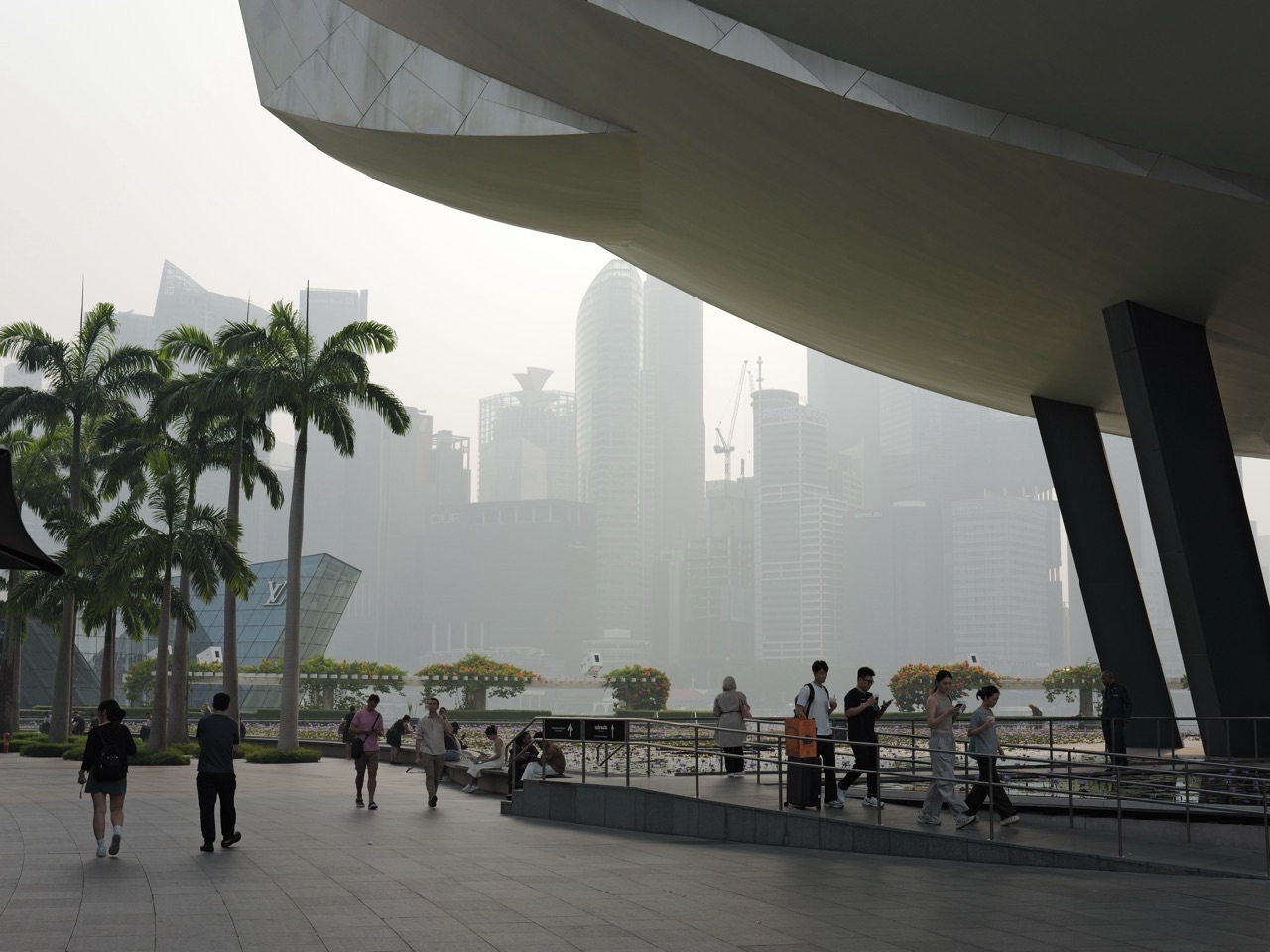
What should you do when haze affects Bedok, Tampines, Pasir Ris and East Coast Park? Check the latest NEA one-hour PM2.5 band and match it to the MOH personal activity guidance before jogging, cycling, swimming or bringing children outdoors. The coast may feel windy, but a sea breeze does not guarantee clean air. If the advisory calls for limiting exposure or strenuous activity, postpone a long East Coast Park ride, shorten a non-essential journey and choose a practical indoor alternative. Keep school, work and medical visits running when safe and necessary, but reduce unnecessary time in outdoor queues, park connectors and open-air dining areas.
This East Singapore haze guide helps families and commuters around Bedok, Tampines, Pasir Ris, Marine Parade, Siglap, Kembangan, Tanah Merah and the East Coast understand lifestyle, health, transport and exercise choices. It connects the Eastern Coastal Loop, East Coast Park, Bedok Reservoir, Heartbeat@Bedok, public libraries, school sport and MRT journeys to clear, evidence-based decisions. Our separate Singapore Haze Lifestyle Guide covers islandwide rules; this article solves the eastern coast’s distinctive problem: very appealing long outdoor routes that are easy to underestimate when haze arrives.
Understand the regional mechanism: The East Singapore guide covers Bedok, Tampines, Pasir Ris and East Coast Park decisions. To understand why smoke from distant peat and vegetation fires reaches Singapore and how PM2.5, PSI and wind forecasts affect decisions, read How Haze Works | SEA 2026, the complete Southeast Asia master guide.
The timing matters. During the October 2026 haze, NEA’s 16 October update forecast Unhealthy to Very Unhealthy PSI for the following day, and SportSG issued dated facility advisories. Individual East Zone facility pages also displayed haze-related notices during the episode, while the central closure page reported planned resumptions for 17 October. These can describe different points in a rapidly changing operation; none is a permanent opening or closure statement. Recheck the latest announcement for the exact facility before setting off.
The east-side first question: how much of your plan is actually outdoors?
The east is particularly good at encouraging people to stay outside. You can begin with a short walk and end up cycling from a neighbourhood park connector to East Coast Park, stopping for photographs and then spending another hour at an open-air eatery. On a clear day, that spontaneity can be wonderful. When haze increases, it may turn a modest plan into several hours of inhaling polluted outdoor air.
The easiest improvement is to divide the day into segments. Write down necessary travel, recreational movement, meal time, outdoor waiting and any enclosed indoor activity. Next, estimate whether each outdoor segment is short, extended or strenuous. A ten-minute school pickup and a two-hour coastal ride have different health implications, even if both are performed by the same person on the same day.
One-hour PM2.5 is the concentration that MOH uses for immediate outdoor-activity guidance. Its bands are Normal (0–55 µg/m³), Elevated (56–150), High (151–250) and Very High (251 or more). At Elevated levels, healthy people are advised to reduce strenuous outdoor activity; vulnerable people should avoid strenuous activity. At High levels, healthy people should avoid strenuous outdoor activity and vulnerable people should avoid all outdoor activity. At Very High levels, minimise outdoor activity and vulnerable people should avoid it. Consult the full MOH table, because a personal medical condition can make individual advice more cautious.
For next-day planning, look at the 24-hour PSI forecast and its categories: Good 0–50, Moderate 51–100, Unhealthy 101–200, Very Unhealthy 201–300 and Hazardous above 300. Do not subtract the PSI from a PM2.5 reading; they are different measures. Do not treat a photograph of the coastline as a substitute for either measure.
East Coast Park: an excellent place to save for a better day
East Coast Park is one of Singapore’s most recognisable places for cycling, running, picnics, family recreation and open-air meals. The park belongs to NParks’ Eastern Coastal Loop and Round Island Route. That makes it both a local destination and part of longer endurance and leisure circuits. It is precisely the sort of place where physical exertion and time outside can accumulate without anyone noticing.
Families sometimes ask whether the beach is better during haze because a breeze moves across the sea. Wind can transport and disperse air pollutants, but a pleasant breeze at your face does not prove that PM2.5 is low. A skyline that looks slightly clearer from the coast does not provide a reliable measure either. Take the government’s current reading and relevant personal guidance seriously rather than relying on the feeling of freshness.
If a healthy person has planned a modest park visit, the official band and their symptoms guide whether the activity remains reasonable. If they have planned a hard training ride, the decision is more sensitive to exertion. A family with a child who has asthma may need to avoid the same outing when the healthy adults would otherwise be comfortable with a shorter visit. One area, three different decisions.
East Coast Park also has routine path and facility works. The NParks park page lists upgrading and maintenance notices for certain areas and footpaths in 2026. A planned detour can increase outdoor walking time, which matters when exposure is already a concern. The official notice, not an old cycling map, should determine whether your precise route is available.
The Eastern Coastal Loop: long routes magnify exposure
The Eastern Coastal Loop connects eastern parks and recreational routes, including Pasir Ris and East Coast Park. It is attractive for cyclists, runners and families because it turns separate neighbourhoods into a connected journey. The very characteristic that makes it enjoyable—a long, continuous route—becomes important during haze.
An extended ride combines exercise intensity and duration. If riders are pedalling hard, ventilation increases; if they stop for repeated outdoor meals or photograph sessions, overall time exposed can grow. A helmet, bicycle lights and well-maintained brakes are essential for road safety, but they do not protect lungs from fine smoke particles. Do not treat outdoor fitness gear as air-quality protection.
Suppose a cyclist from Pasir Ris plans to ride south to East Coast Park and return, with food stops along the way. Before departure, check the immediate one-hour PM2.5 and current official sports advice. If it is inappropriate for strenuous exertion, the whole ride can move to a better-air day. Swapping a two-hour bicycle journey for a two-hour open-air social outing may not achieve the intended exposure reduction.
If conditions later improve, reassess with a fresh reading rather than relying on the morning’s number. The aim is consistent judgment, not a rigid “ride at all costs” timetable. Our Singapore Haze Exercise Guide covers substitution, intensity and indoor training in more detail.
Siglap Park Connector and Bedok Reservoir: the overlooked continuous journey
The Siglap Park Connector provides a connection between East Coast Park and the area around Bedok Reservoir Road, running alongside housing estates and linking to other eastern parks. NParks describes the route as approximately 7.6 kilometres. It is convenient for people who want to connect neighbourhood riding and coastal recreation.
Because park connectors feel familiar and convenient, a family may treat them like a covered route. In reality, they are primarily outdoor paths. The presence of trees, canals or shaded sections changes comfort but does not provide a reliable barrier to PM2.5. When official guidance calls for reduced outdoor exposure, a path running beside water remains an outdoor choice.
Bedok Reservoir Park itself is popular for running, walking and waterside recreation. A person who normally takes a short loop can consider timing and intensity, while a person preparing for hard intervals should pay close attention to the advice for strenuous activity. The water surface does not neutralise regional smoke. When a child has symptoms or a vulnerable relative is involved, the risk assessment changes further.
A practical alternative for a Bedok household may be a short indoor activity in a suitable local venue instead of travelling across the east. The goal is not to identify a magical clean-air park connector; it is to keep movement and leisure appropriate to the conditions.
Pasir Ris Park and family outdoor play
Pasir Ris families have easy access to green areas, playgrounds and seaside recreation. When the haze arrives, the challenge is often emotional: children are excited about an outing, and adults do not want to disappoint them. But postponing a long outdoor visit when the public-health advice recommends avoiding it is an example of responsive parenting, not a failed weekend.
Explain the decision simply: smoke particles in the air can make breathing uncomfortable, so the family is choosing indoor play until the air improves. Offer a concrete replacement, such as library browsing, a cooking project, a puzzle, or age-appropriate movement in a comfortable room. The replacement should not create a three-hour shopping expedition if the original intention was to reduce unnecessary travel.
For a child with asthma, keep the prescribed action plan and reliever medication arrangements in place, and seek medical guidance if symptoms worsen. A child should not be asked to prove they can tolerate a long playground visit. The child who seems energetic may still be subject to more cautious official guidance than a healthy adult.
When you return to the park after haze conditions improve, the experience can be more rewarding. A postponed nature walk is still a nature walk. Children often remember how adults handled the change more strongly than the exact day on which the outing occurred.
Bedok’s Heartbeat community setting: useful, but check each component
Heartbeat@Bedok combines different community facilities, including Bedok Public Library. The library is an attractive place to read, study and choose books with children when an extended outdoor activity is unsuitable. The NLB listing gives current opening and visitor information; check it before travelling.
The integrated nature of a community building can be helpful because a family may combine a necessary errand and reading in one trip. That reduces repeated travel. However, do not equate all areas of a mixed-use complex with the same degree of enclosure or air filtration. A covered entrance, a public walkway and an indoor library floor may have different environmental conditions.
A student can turn a library visit into a mini research task. Find a book about weather, natural hazards or Southeast Asia, then write one question about how smoke crosses borders. A parent can help distinguish what the book actually establishes from what someone guessed after looking at the sky. The lesson builds evidence literacy without asking a child to go outside and sample smoke.
If you are considering other facilities at Heartbeat@Bedok, especially sport facilities, check ActiveSG’s current notices. The fact that the library is operating does not guarantee that a neighbouring pool or court has identical opening hours or haze arrangements.
Tampines: schools, malls, the library and busy family schedules
Tampines is both a major residential town and a transport-and-shopping destination. Many families move between school, public transport, after-school enrichment, sports practice, groceries and dinner. Haze does not require the whole schedule to collapse. It does require distinguishing necessary trips from outdoor exercise and other optional exposure.
A family could decide to keep an essential school pickup, minimise time waiting outdoors, and replace a long playground stop with an appropriately enclosed reading activity. Tampines Regional Library is one possible educational setting, subject to current opening and access. A teenager may prefer a brief purposeful library visit, while a younger child might enjoy selecting picture books.
Travel matters. An air-conditioned train is not the same as an open-air platform or a long walk to the station. Sheltered walkways can make rain less troublesome, but they are not necessarily particle-filtered. Build the route around the actual child’s needs, not an idealised map. If a child has a chronic respiratory condition, follow the prescribed care plan and communicate with the school where appropriate.
Tampines also shows why indoor leisure can be overcomplicated. A family may choose one suitable activity close to its home rather than combining several malls and far-apart attractions. A low-exposure plan should not create unnecessary travel simply to feel productive.
Marine Parade, Katong and the coastal meal decision
The East Coast is famous for neighbourhood food culture, from cafés to traditional hawker centres and family meals. During haze, eating out remains important to social life. But a roof is not a fine-particle filter. Open-sided dining areas can still admit outdoor air, and a long queue near a traffic corridor can create exposure before the meal even begins.
Suppose a family wants dinner after a planned beach walk. If official guidance suggests avoiding that outdoor exertion, it may make sense to keep a shorter meal and drop the walk. If a family member is particularly vulnerable, choose an appropriately enclosed venue or take food home. That is different from claiming that all coastal eateries are unsafe whenever the PSI rises.
The difference between comfort and protection is worth learning. A sea breeze may feel pleasant at an outdoor table, while a comfortable indoor setting might be more useful for someone advised to avoid smoky air. The exact indoor air quality depends on ventilation and filtration; do not promise that every air-conditioned restaurant is a perfect refuge.
Respect workers who cannot simply avoid the outdoor environment. A server, cleaner or delivery rider may face longer exposure than a family having a short dinner. Personal planning should be accompanied by sensible employer and workplace controls where relevant.
Changi connections: long leisure rides and transport changes
The Coastal Park Connector is approximately 15 kilometres and connects Changi Beach Park with East Coast Park. For cyclists, this is a rewarding long-distance route on a good-air day, but its length is exactly why haze guidance matters. It is not an indoor alternative and the airport-area landscape does not magically dilute smoke to a harmless level.
When planning a Changi or Tanah Merah route, remember that what feels like a single trip may include several substantial outdoor segments. Add the ride, stops, food breaks and return journey together. If the official guidance advises avoiding strenuous outdoor activity, the most reasonable choice is often to reschedule the recreational portion entirely.
Travellers going to the airport for an essential flight are in a different category. The journey may need to go ahead, but a companion walk or optional sightseeing can be adjusted. Plan safe transport and avoid unnecessary waiting in exposed spaces. Do not turn a transport commitment into a full outdoor adventure during poor air quality.
Changi-area attractions and facilities have their own operating arrangements. Check the relevant official venue before travelling rather than assuming that an activity in or near the airport is fully indoors.
East Zone sports facilities: avoid a false sense of certainty
SportSG monitors haze and can change facility operations. In the October 2026 episode, selected East Zone facilities displayed haze-related closure notices dated 16 October; the central ActiveSG closure page subsequently carried a 17 October advisory about resumption according to operating hours. Families should not combine these dated notices into one permanent rule.
If your child has swimming practice at Bedok, Tampines or Pasir Ris, check the exact pool or organiser’s latest announcement. Some facilities may have maintenance closures unrelated to haze. A general news headline may be too broad to determine whether a particular session is taking place.
When a coach moves training indoors, ask what kind of environment is being used. A partially open hall may still admit outdoor air. A fully enclosed room may provide a different exposure setting but is not necessarily fitted with a high-performance particle filter. For a child who has asthma, the health plan and individual advice still matter.
An athlete can preserve progress through an adjusted programme when appropriate. Technique work, gentle indoor mobility or rest may be more useful than replacing a cancelled outdoor match with uncontrolled strenuous activity. For specific training decisions, use the Singapore exercise haze guide.
HDB indoor air in Bedok and Tampines
HDB flats in the east vary by layout, ventilation and surroundings. Some households naturally keep windows open in warm weather; others use fans or air conditioning for much of the day. When outdoor particle levels are high, reducing the entry of smoky air may be useful, especially in a room where a vulnerable person spends time.
Close windows and doors when appropriate during periods of poor outdoor air, avoid introducing indoor smoke, and consider a properly selected particle air purifier if available. The practical details matter: filter type, room size, placement, airflow and maintenance. A small device in a very large open room may have limited effect. A scent diffuser is not a fine-particle filter, and a fan is primarily for moving air.
Maintain perspective about ventilation. Homes also contain indoor sources of particles and gases, so a permanent shut-everything rule can create different problems. Reassess ventilation when outdoor air improves and follow HealthHub’s household haze guidance. The aim is a comfortable, workable indoor environment, not turning a flat into an imaginary sealed laboratory.
Families can designate a quiet room for homework, reading or rest without treating the whole day as a compulsory enrichment programme. Preserving sleep, normal meals and connection matters as much as filling time.
Older people, asthma and pregnancy in the east
The key health rule is personal, not geographical. Children, pregnant women and older adults are included among vulnerable groups in Singapore’s haze advisory. People with chronic lung or heart disease also receive more restrictive advice. This remains true whether they live beside Bedok Reservoir, near the coast or in a high-rise HDB estate.
An older person with a clinic appointment may still need to travel. Plan necessary transport and minimise avoidable outdoor waiting. A parent with asthma should keep prescribed medication and care instructions accessible. A pregnant person should consider current personal health guidance and consult a clinician if breathing difficulty or other concerns arise. Do not assume that the coastal breeze makes individual precautions unnecessary.
Mild eye or throat irritation can accompany haze, but significant wheeze, increasing breathlessness or chest symptoms should not be dismissed. Seek appropriate medical advice and urgent help for serious symptoms. In Singapore, 995 is the emergency ambulance number.
The Singapore Haze Health Guide explains masks, symptoms, vulnerable groups and cleaner indoor air more fully. This east-side article emphasises everyday local travel and recreation decisions.
The east-side family plans that really change the day
A primary-school child in Bedok. The family has planned outdoor football, a library visit and dinner. The parent checks current PM2.5 guidance and school or club information. If strenuous outdoor activity should be reduced or avoided, football is adjusted while reading and an appropriate meal can continue. A sports decision does not automatically cancel the whole day.
A cyclist in Siglap. The planned route uses Siglap Park Connector and East Coast Park. The one-hour reading is High. MOH recommends avoiding strenuous outdoor activity for the next hour. The rider postpones, chooses an appropriate indoor session or rest, and saves the enjoyable outdoor route for better conditions. The sea breeze is not used as a counterargument to measurements.
Three generations in Tampines. A family wants to visit relatives, have an open-air meal and walk in a park. The older relative has a chronic heart condition. The family keeps the social visit if the transport and personal medical advice permit, but avoids an unnecessary outdoor stroll and chooses a more suitable meal plan. The important event—time together—is preserved.
A student travelling across Pasir Ris. A teenager needs to attend a lesson and meet a friend. They check current travel conditions and agree on a safe route. The optional outdoor hangout is moved indoors or rescheduled when guidance calls for less exposure. An education journey and a recreational afternoon do not have to be treated as a single indivisible commitment.
These examples are intentionally not based on a made-up current reading for any particular east-side address. Always use the official reading for the actual time and region.
The difference between pollution, rain and sea spray
A hazy coastline, mist over a reservoir and rain clouds can create superficially similar views, but they do not represent identical conditions. Rain droplets, humidity and fine smoke particles have different physical origins. Visibility can change for several reasons. The correct way to know the pollution category is through NEA’s measured air-quality information.
Rain may reduce some local airborne particles, but it does not guarantee the end of a regional haze episode. Wind direction can move smoke, sometimes over long distances. A “fresh” feeling after rain is not enough evidence to restart strenuous outdoor exercise that official guidance still advises against.
This makes a useful science conversation with children. Ask what observation they can make with their eyes and what requires a monitoring instrument. Then explain why the decision also depends on the person’s condition and how hard they will exercise. The MOE environmental monitoring literacy guide turns that distinction into a real learning skill.
Be careful about screenshots circulating online. A photo may be authentic but taken at another time or elsewhere. The labelled date on an official NEA advisory matters. Recheck the live portal rather than sharing an alarming old image as today’s evidence.
Practical table: what to change and what can remain
| East-side plan | Primary check | What may change | Alternative that retains the purpose |
|---|---|---|---|
| East Coast Park cycling | One-hour PM2.5, exertion and duration | Long strenuous ride | Suitable indoor movement or postponement |
| Siglap connector run | MOH immediate guide | Outdoor intensity | Rest or appropriate indoor training |
| Bedok library outing | NLB opening, transport and family health | Outdoor journey and timing | Reading at home |
| Tampines CCA | School or organiser instruction | Outdoor sport | Approved indoor arrangement |
| Pasir Ris playground | Vulnerable-person guide | Prolonged outdoor play | Creative indoor games |
| Heartbeat@Bedok pool | ActiveSG specific facility notice | Entry and sport session | Another suitable booked or home activity |
| Senior’s appointment | Medical necessity and current guidance | Transport and waiting | Ask clinic about appropriate arrangements |
| Marine Parade dinner | Duration, venue enclosure and health status | Open-air dining | Shorter or enclosed meal, takeaway |
Questions East Singapore residents ask
Is East Coast Park safe just because it is beside the sea?
No. Sea breezes do not guarantee low PM2.5. Smoke can be transported over land and water, and conditions change. Consult the current one-hour reading and MOH personal guide. A beautiful open-air venue remains open to outdoor pollution.
Can I cycle from Pasir Ris to East Coast Park during haze?
Your decision depends on current pollution, health and the intensity and duration of the proposed ride. It is a long outdoor route, so postponing strenuous riding when MOH advises reducing or avoiding exertion is often the sensible choice. Recheck on the actual day rather than relying on yesterday’s reading.
Does a covered playground in Bedok count as indoors?
Not if the space is open to outdoor air. A roof helps with sun and rain but is not itself a particle filter. Choose the activity according to outdoor-air guidance and the child’s health status.
Is Bedok Public Library a good haze-day alternative?
It can be a practical reading and learning destination, depending on current opening, travel exposure and the family’s needs. Check its NLB page. The library itself should not be described as guaranteeing zero particles, and reaching it may still involve outdoor travel.
Are the swimming pools in the east open during haze?
There is no permanent yes-or-no answer for every facility. SportSG and operators can modify operations. Check the exact pool’s latest closure notices, the ActiveSG facility page and any event or training organiser announcements. Haze and maintenance closures may overlap.
Can people with asthma use East Coast Park when the air looks clear?
Visible clarity does not replace measured PM2.5. People with asthma should follow personal medical plans and the more cautious relevant public-health advice. Current symptoms matter; if someone is wheezy or uncomfortable, a visually clear horizon is not permission to keep exercising.
Does an N95 mask make a hard outdoor workout appropriate?
No. A well-fitted particulate respirator may reduce exposure in some necessary outdoor situations, but MOH’s advice to avoid or reduce strenuous activity still applies. Respirators increase breathing resistance and can be unsuitable for some vulnerable people. Do not use a mask to justify a prolonged hard ride.
What can families do if the beach outing is cancelled?
A nearby library, appropriate museum, home craft, science activity, shared meal or comfortable indoor movement may offer a meaningful alternative. Choose one principal activity with an easy return plan. Our Singapore Haze Weekend Guide offers more options.
Can haze be worse in a particular eastern neighbourhood?
Air-quality measurements vary with location and time. Do not label an estate permanently cleaner or worse. Use NEA’s current regional readings and consider the individual’s actual outdoor exposure, including time near traffic or other local sources.
Is a higher floor in an HDB flat automatically protected from haze?
No. Air quality indoors is influenced by outdoor levels, infiltration, windows, ventilation and indoor pollutant sources. Height alone does not prove safety. A realistic clean-air room and exposure plan are more useful than assumptions about storeys.
Should a child still attend tuition during haze?
Consider the essential journey, the indoor learning environment, school or organiser arrangements, symptoms and vulnerabilities. Outdoor CCA restrictions do not necessarily mean all classroom lessons stop. Parents should use current guidance and communicate early if an individual adjustment is required.
If the haze disappears after rain, can we resume sport immediately?
Use the latest one-hour PM2.5 and relevant health advice first. The appearance of clearer skies may not reflect the actual concentration. If the child or athlete has symptoms, rest or seek care as needed rather than relying only on an environmental reading.
Continue through eduKate’s Singapore haze network
For broader home, school, work and transport choices, read Singapore Haze Lifestyle. For asthma, vulnerable groups and symptoms, use Singapore Haze Health. For running, cycling and indoor workouts, follow Singapore Haze Exercise. For weekend destinations, the Singapore Haze Family Activities Guide covers the family-planning side.
Compare the other local guides: West Singapore Haze | Jurong and Clementi, North Singapore Haze | Woodlands and Yishun, and Central Singapore Haze | Queenstown and Bishan. For a deeper neighbourhood case study, the Punggol Haze Exercise Guide covers northeastern waterfront routes.
For education and regional systems, explore Why Science? PSI and Environmental Data, Why Mathematics? Air Quality and Particles, How Singapore Connects | Haze Monitoring, Global Connectivity Problems | Singapore Haze and MOE Reference 86.
Sources and editorial status
Official health: NEA Haze Portal, MOH Haze Advisory, updated October 2026, NEA’s 16 October 2026 Haze Situation Update, and HealthHub Haze Precautions. Eastern route evidence: NParks East Coast Park, Eastern Coastal Loop, Siglap Park Connector, Coastal Park Connector and Eastern Corridor. Family venues and sports: NLB Libraries, Bedok Public Library and SportSG’s facility notices.
Prepared as an October 2026 reference article, not a live air-quality display or a standing promise about facility openings. Recheck time-sensitive details, seek individual medical advice when appropriate and make the next east-side outing enjoyable when the air is right.