
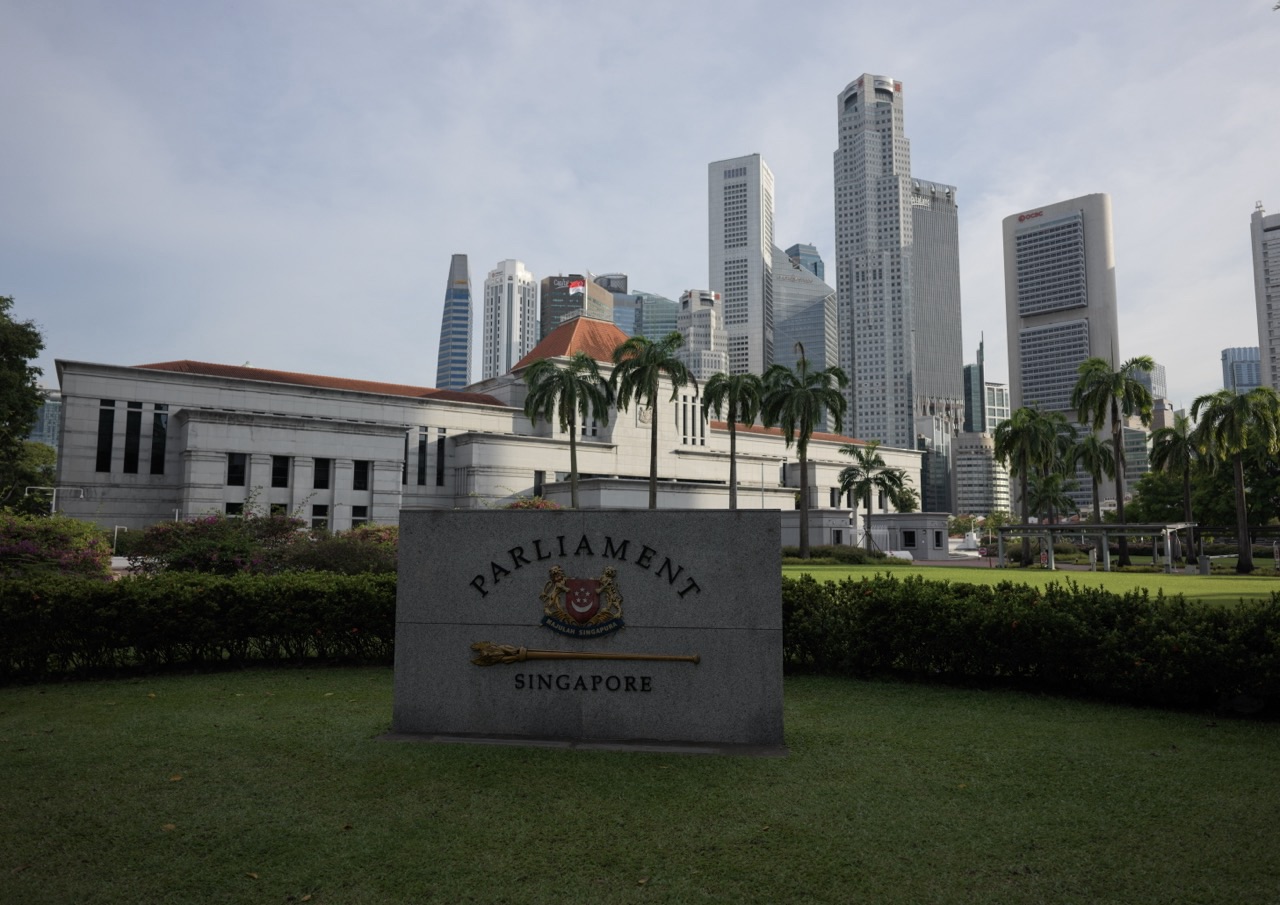
How does Singapore’s legal system work? Parliament makes laws, public agencies carry them out, law enforcement investigates possible offences and independent courts resolve cases according to law. Not every disagreement goes to the police or a full trial. Civil claims, criminal prosecutions, family matters, mediation and specialised tribunals follow different procedures for different kinds of problems.
If you are trying to understand the Singapore court system, how laws are made, what the police and Attorney-General’s Chambers do, how a neighbour dispute differs from a criminal case, or when mediation and eLitigation are used, this guide joins those questions in one practical reading map.
The simplest way to read a legal system is to follow four questions: What rule applies? Who has authority? What evidence is needed? How can an outcome be reviewed, resolved or enforced? These questions explain why the law is much more than a collection of punishments.
Quick answer: the main parts of Singapore’s legal system
- Constitution and legislation: provide rules and define many institutional powers and responsibilities.
- Parliament: debates and passes legislation through prescribed procedures.
- Executive and public agencies: implement public policy and administer and enforce relevant laws.
- Police and investigators: investigate suspected offences according to the powers and rules that apply.
- Attorney-General and public prosecutors: exercise prosecutorial authority in criminal proceedings, with other government legal roles.
- Judiciary: applies and interprets law through the Supreme Court, State Courts and Family Justice Courts.
- Specialised tribunals and dispute resolution: provide appropriate processes for certain lower-value or specialised disputes.
- Legal assistance and accountability: representation, legal aid, procedural fairness and review make the rules usable by real people.
The Singapore Courts’ official court structure overview identifies the Supreme Court, State Courts and Family Justice Courts. Parliament’s System of Government explains the Legislature, Executive and Judiciary. These sources are the basic reference map.
1. Start with a real disagreement rather than a courtroom
Imagine that a customer paid for a service that was not delivered. A worker has an unpaid salary. A family is making arrangements after a death. A resident is facing persistent neighbour disturbance. Another person reports a possible theft.
All five people may say, ‘I have a legal problem.’ But the route forward is not identical. Some matters concern private rights and compensation; others concern criminal law or family responsibilities; some may be covered by specialist employment or community processes.
That is the first skill for understanding Singapore law: classify the problem before choosing the forum. The nature of the issue affects the applicable law, responsible institution, evidence and available remedy.
The wider civic view is What Is Law? The Boundary System of Civilisation. The practical institutional owner is Courts, eLitigation and Access to Justice.
2. Where do Singapore’s laws come from?
Singapore’s legal system includes written law, such as legislation passed through Parliament and subsidiary legislation made under lawful authority, as well as common-law principles developed through court decisions.
The Constitution has a central role in defining the governmental framework. Individual statutes and regulations cover specific matters including employment, road use, property, commercial activity and criminal offences.
A person reading an online summary should distinguish between the actual law, an agency’s public guidance, a court decision and someone’s personal interpretation. They may be connected, but they do not all have the same legal status.
The Singapore Courts explain legislation and common law in Understand Criminal, Civil and Family Law. It is a reliable place to begin before tackling a technical statute.
3. How does a proposed bill become law?
Parliament has a legislative role. A proposed bill is introduced and considered through the relevant stages of parliamentary procedure, including three readings. To become an Act of Parliament, it also requires the President’s assent and the applicable legal steps.
Debate and committee consideration can shape legislation before it becomes law. Once enacted, a statute may commence according to its own commencement arrangements; readers should not assume every provision applies immediately on the date of a news headline.
Think of this as a sequence from proposal to authoritative rule. A consultation paper is not a statute, a bill is not yet an Act, and an Act whose provision has not commenced may require careful treatment.
Parliament’s Functions and Guide to Parliament explain the process.
4. What are the three branches of government?
The Legislature makes laws, the Executive administers them and the Judiciary interprets and applies them through the courts. This is a useful foundational distinction, even though the specific institutional arrangements of Singapore’s parliamentary system are more detailed.
Imagine a traffic regulation. The legal rule has an authorised source. A relevant enforcement agency may act when someone breaches it. If proceedings come before a court, the judiciary decides according to the relevant law and evidence.
These are different functions. It would be a mistake to say a police officer’s allegation is automatically a court finding, or to treat a ministerial policy announcement as an individual criminal conviction.
Read Parliament — System of Government and How Singapore Works | Governance Engine.
5. What is the role of the courts?
The judiciary adjudicates cases and interprets and applies law. A court hears the relevant parties according to the applicable procedure, considers evidence and arguments, and issues a decision or order within its jurisdiction.
Courts do not all have authority over every dispute. The court or tribunal that can hear a matter depends on the type of case, applicable statutes, amounts involved and other jurisdictional conditions.
Judicial independence and procedural fairness are important because the court’s function is not simply to repeat what another government agency says. An allegation, enforcement action and judicial finding must remain distinguishable.
The institutional overview is About the Singapore Courts.
6. How are the Supreme Court, State Courts and Family Justice Courts different?
The Supreme Court includes the Court of Appeal and High Court, with its General and Appellate Divisions and the Singapore International Commercial Court within the relevant structure. Its work includes specified civil and criminal matters and appeals.
The State Courts include District Courts, Magistrates’ Courts, Coroners’ Courts and specialised tribunals such as the Small Claims, Employment Claims and Community Disputes Resolution Tribunals.
The Family Justice Courts address family and youth-related matters within their jurisdiction, including the Family Courts, Youth Courts and Family Division of the High Court. These structures exist so different matters receive appropriate procedures and specialist attention.
Use Singapore Courts’ Structure and Courts, eLitigation and Access to Justice.
7. How is criminal law different from civil law?
Criminal proceedings concern alleged offences against the law and involve prosecution through the authorised criminal justice system. Civil proceedings commonly concern disputes over rights and obligations, such as contracts, property or compensation.
The parties, legal tests, procedures and possible outcomes differ. In broad terms, a criminal conviction requires proof beyond reasonable doubt, while the ordinary civil standard is proof on the balance of probabilities. Specific legal contexts can involve further complexities.
Not every unhappy customer has experienced a crime, and not every harmful act creates only a private dispute. The correct classification depends on the facts and applicable law.
The Singapore Courts’ criminal, civil and family law explainer provides the starting distinctions.
8. What do the police do before a criminal case reaches court?
Police and other law-enforcement agencies have investigative functions within the law. They may receive reports, collect information, interview relevant people and take lawful steps connected to suspected offences.
Investigation is a process for gathering and evaluating evidence. A report does not by itself establish that an accused person is guilty. Similarly, an initial suspicion does not automatically determine whether a particular charge should be pursued.
When a matter proceeds, criminal case decisions involve legal rules and the authority of prosecutors and courts. Individual rights and procedural safeguards continue to matter.
For the community-facing police network, read Neighbourhood Police Centres, Cameras and Community Safety.
9. What does the Attorney-General’s Chambers do?
The Attorney-General has important legal functions, including acting as Public Prosecutor and as legal adviser to the Government. Attorney-General’s Chambers supports this work, including prosecutions, legal advice and drafting.
The Public Prosecutor has constitutional powers in relation to instituting, conducting or discontinuing criminal proceedings. That is different from the judiciary’s role of deciding cases before the courts according to law.
Consider a reported offence. Investigators gather the relevant evidence; prosecutorial decisions are made within the applicable framework; and a court determines the case if charges proceed to adjudication.
AGC explains its roles in Our Roles and the Public Prosecutor Overview.
10. Why evidence matters more than a confident story
A legal claim must be supported by relevant facts and proof. Depending on the case, that might include contracts, receipts, communications, witness evidence, expert material or official records.
An ordinary person may remember the event clearly but still lack documents showing when it happened or what was agreed. A screenshot may capture part of a conversation but omit context. Evidence needs to be handled honestly and interpreted within the applicable rules.
This is why keeping accurate, lawful records can be useful before a dispute arises. A business contract, tenancy agreement or employment record clarifies obligations and helps parties distinguish a disagreement about facts from a disagreement about the law.
Legal outcomes are not determined by which person sounds more certain in a social-media post. They depend on relevant evidence, procedure and the applicable standard of proof.
11. What are Small Claims Tribunals for?
Small Claims Tribunals provide a specialised route for certain eligible disputes, within prescribed categories and monetary or time limits. Their purpose is to make suitable small claims more accessible and efficient than full civil litigation.
But ‘small’ does not mean every dispute involving a modest sum is automatically eligible. The type of claim, legal relationship, deadlines and current tribunal rules matter.
A customer unhappy with a purchase should first identify the product or service issue, preserve relevant records and consider the appropriate complaint and resolution route. If tribunal proceedings are relevant, the official eligibility guidance controls.
The broader court-interface guide is Courts and Access to Justice. For current case categories, use Singapore Courts.
12. How are employment disputes handled?
A disagreement about unpaid salary or employment rights is not necessarily best approached as an ordinary consumer claim. Singapore has specialised employment dispute pathways, including the Tripartite Alliance for Dispute Management and the Employment Claims Tribunals for relevant matters.
Employees and employers need to know which claim category applies, what attempts at resolution may be required and whether a deadline matters. The correct route can differ between salary-related disputes and other workplace grievances.
This is another example of the law operating through a network. Employment legislation defines obligations, institutions provide dispute-resolution functions and a tribunal can decide eligible claims.
Read Employment Claims, TADM and Workplace Disputes.
13. What if neighbours cannot resolve a serious dispute?
Living close together creates ordinary disagreements about noise, shared space and behaviour. Many can be addressed through respectful conversation, municipal help or mediation before more formal legal steps become necessary.
For certain disputes, Singapore has the Community Disputes Resolution Tribunals. But a court process may have eligibility criteria, fees, service requirements and procedural obligations. It is not a general helpline for every uncomfortable neighbour interaction.
Good dispute resolution first asks what happened, what harm is alleged, what practical remedy would help and which organisation has the correct authority.
The specialist Community Disputes, Mediation and the CDRT explains this pathway. The courts’ pre-filing guidance should be checked for current requirements.
14. What is mediation, and is it the same as a court ruling?
Mediation is a process in which a neutral third party helps people explore settlement. The mediator generally facilitates discussion rather than deciding which party wins a contested trial.
People may value mediation because it can help address practical concerns and preserve relationships. But not all disputes are suitable, participation conditions may vary and a settlement has its own legal consequences.
Singapore’s courts also offer or direct different forms of dispute resolution in appropriate cases. eNegotiation and eMediation are available for certain cases filed through the Community Justice and Tribunals System.
Read Singapore Courts — Mediation and eNegotiation and eMediation.
15. What is eLitigation?
eLitigation is a digital platform for the filing and management of court documents in specified proceedings. It supports relevant civil and family case workflows and certain Supreme Court criminal proceedings.
It is not an algorithm that decides who is right. Filing a document digitally still requires the user or lawyer to follow the correct legal procedure. An online submission may need to meet formatting, service, timing and other requirements.
People who are not direct subscribers may need to use designated service bureaus or other official arrangements. The right procedure depends on the case and court.
The authoritative guide is Singapore Courts — eLitigation. For the national system connection, read Courts, eLitigation and Access to Justice.
16. Why a digital filing system does not replace a lawyer
Electronic platforms can simplify document movement and case administration, but the law still involves interpreting rights, obligations, evidence and procedural requirements.
A person may be permitted to represent themselves in certain proceedings, but a complex or high-stakes matter may call for professional legal advice. A court counter or public guide can explain administrative steps without becoming an individual’s legal representative.
Do not treat an AI-generated answer, template or search result as proof that a filing meets the current Rules of Court. The applicable procedure and case circumstances must be checked.
The judiciary’s Legal Help and Support resource points readers toward legal-help options.
17. How do family cases differ?
Family law may concern divorce, maintenance, adoption, care arrangements, probate, protective measures or youth matters. These situations are not simply ordinary business disputes translated into a family setting.
The Family Justice Courts handle family and selected youth-related cases under applicable jurisdiction. Their processes can involve counselling, mediation and approaches that consider family circumstances while applying the law.
A family may need an urgent protective measure, while another needs help resolving longer-term arrangements. The correct path depends on the issue, applicable statute and procedural status.
Read Family Justice Courts — Role and Structure and Lasting Power of Attorney, OPG and Mental Capacity.
18. What happens to legal responsibilities when someone dies?
A death can trigger legal and administrative work involving registration, an estate, debts, surviving family members and potential distribution to beneficiaries. These are related but distinct responsibilities.
A will, grant of probate, administration of an estate and CPF nomination do not all operate through one identical process. Some assets or payments follow different legal arrangements.
For families, the important first step is to identify what has actually happened and which records or decisions are relevant, then seek the appropriate professional or institutional guidance when needed.
The existing specialist owners are Wills, Probate and Estate Administration, CPF Nominations and Estate Distribution and Death Registration and After-Death Administration.
19. Why property law matters to an ordinary HDB household
Buying a home involves more than receiving keys. Ownership, financing, contracts, land records, conveyancing arrangements, eligibility requirements and transfer procedures all have different legal roles.
Likewise, a tenancy agreement does not replace housing regulations. Renovation rules and common-property responsibilities can continue to apply after a family becomes an owner or tenant.
These are everyday examples of how law creates predictable boundaries. People can make long-term financial decisions because rights and obligations are defined through institutions and recorded transactions.
Follow Land Titles, SLA and Property Transactions, HDB Resale and Completion and HDB Rental and Tenancy.
20. How does law help businesses and trade?
A business needs a lawful operating identity, correct licences when required, reliable contracts, regulatory compliance and ways to resolve disputes. A company registration does not automatically authorise every specialised activity.
Trade across borders adds customs, documentation, jurisdiction and commercial risks. Businesses need to know who is responsible for a shipment, when ownership or payment obligations arise and what happens if a contractual promise is broken.
An effective commercial legal system gives people clearer expectations before a disagreement arises and routes to adjudication or settlement if it does.
Explore ACRA, UEN and Business Registration, GoBusiness and Licences and TradeTrust and Digital Trade Documents.
21. Are court judgments and enforcement the same thing?
A court order states a legal outcome. Obtaining a judgment is not always the same as automatically receiving money, possession or compliance. There may be separate enforcement procedures, conditions and practical limits.
Similarly, an appeal is not simply another opportunity to repeat a complaint on social media. Appeal rights, grounds, procedures and deadlines depend on the case, court and governing rules.
People should be cautious about reading one judgment and assuming it applies identically to every new set of facts. Courts reason from law and evidence, and legally significant differences matter.
When a legal outcome affects property, employment or family responsibilities, the next procedural question may be as important as the initial decision. The official Singapore Courts site is the proper starting point for current guidance.
22. How can someone get legal assistance?
Legal problems are stressful partly because the language and procedures may be unfamiliar. Singapore Courts provides public information and links to legal help, including guidance on finding representation and available support services.
The Legal Aid Bureau and Pro Bono SG provide different forms of assistance subject to their eligibility and service conditions. Administrative court staff can help explain processes but do not provide individual legal advice.
Before seeking help, organise the facts: who is involved, what happened, when it happened, which documents exist and what outcome is being sought. That is useful preparation even if the eventual solution is mediation rather than litigation.
Use Singapore Courts — Legal Help and Support to begin with verified routes rather than unqualified internet recommendations.
23. What makes the rule of law meaningful to ordinary people?
Law matters most when people can understand their responsibilities, anticipate the consequences of actions and trust that decisions are made through proper authority and fair processes.
An impressive court building alone does not deliver justice. People also need access to information, competent professional services, responsible enforcement, procedures suited to different disputes and meaningful opportunities to present relevant evidence.
There are limits and trade-offs. Thorough proceedings take time; legal assistance can cost money; and not every dispute has a remedy that satisfies every party. A serious account of the legal system recognises these difficulties without reducing everything to punishment.
The deeper framework is What Is Law? The Boundary System of Civilisation, The Trust and Anti-Corruption Engine and The Whole Machine.
Explore the Singapore law, courts and justice article library
These links point to established specialist owners. The purpose of this guide is to connect them by reader question, not to repeat their detailed explanations or replace official legal material.
The constitution, institutions and courts
- What Is Law? The Boundary System of Civilisation — why rules and boundaries exist
- The Governance Engine — institutions and authority
- Trust and Anti-Corruption Engine — reliability and accountability
- Courts, eLitigation and Access to Justice — the court interface
- How Singapore’s Government Works — the broader public administration system
- Neighbourhood Police Centres and Community Safety — law-enforcement public interface
Disputes, work, property and family
- Community Disputes, Mediation and the CDRT — neighbour disputes
- Employment Claims, TADM and Workplace Disputes — worker and employer issues
- Land Titles, SLA and Property Transactions — land ownership records
- HDB Resale and Completion — home transactions
- HDB Rental and Tenancy — rental responsibilities
- Lasting Power of Attorney and Mental Capacity — decision-making ahead of incapacity
- Wills, Probate and Estate Administration — estate responsibilities
- CPF Nominations and Estate Distribution — CPF after death
Law in daily business and digital life
- ACRA, UEN and Business Registration — business identity
- GoBusiness and Regulatory Approvals — business permissions
- TradeTrust and Electronic Trade Documents — digital legal records
- Cybersecurity and Digital Trust — digital safeguards
- IRAS, Tax Filing and Digital Payments — tax administration
- Singpass, MyInfo and Digital Identity — identity for lawful transactions
Frequently asked questions about Singapore law
Who makes laws in Singapore?
The Legislature, including Parliament and the President’s constitutional role, carries out the legislative process. Bills pass through the relevant parliamentary stages before becoming Acts.
What are the three branches of government?
The Legislature, Executive and Judiciary, which have different lawmaking, administrative and judicial functions.
How many main court groups are there?
The Singapore Judiciary has the Supreme Court, State Courts and Family Justice Courts, with different courts and tribunals within them.
Is a police report the same as a criminal conviction?
No. A report or investigation is not a finding of guilt. Criminal liability is determined through the applicable legal process.
What is the difference between civil and criminal law?
Criminal law addresses offences prosecuted within the criminal justice system. Civil law generally resolves legal disputes over private rights and obligations.
Who decides whether a criminal case is prosecuted?
The Attorney-General, as Public Prosecutor, has constitutional prosecutorial authority; detailed decisions follow applicable laws and procedures.
What is eLitigation?
An electronic court-filing and case-management platform used for specified proceedings. It does not replace legal analysis or court decisions.
Can I file every legal dispute at the Small Claims Tribunals?
No. Eligibility depends on the claim type, value, time and other requirements.
Is mediation the same as winning a court case?
No. Mediation is a facilitated settlement process. A judgment is a judicial determination under the applicable procedure.
Can a neighbour dispute be handled without a full court trial?
Often, suitable matters may be addressed through discussion, municipal help or mediation. Certain disputes may enter the Community Disputes Resolution Tribunals under its rules.
Can I represent myself in court?
Self-representation is possible in many proceedings, but the rules vary. Professional advice may be important for complex or high-stakes matters.
Where can I find reliable legal help?
The Singapore Courts’ Legal Help and Support page describes routes including legal representation and eligibility-based assistance.
Does getting a judgment guarantee immediate payment?
Not necessarily. Compliance or enforcement may be a separate stage with its own procedures and limitations.
Does this article provide legal advice for my case?
No. It explains the system generally. Legal decisions should use current official sources and advice appropriate to the individual facts.
Continue the How Singapore Works guides
- How Does Singapore’s Government Work?
- How Do Digital Payments Work?
- How Does CPF Work in Singapore?
- How Does Singapore’s Port Work?
- How Are HDB Towns Planned?
The How Singapore Works Civilisation Atlas connects law, institutions, finance, families, education and public services as a larger national system. This article provides an accessible path into its law-and-justice layers.
Official legal information
- Parliament — System of Government
- Parliament — Legislative Functions
- Singapore Courts — Structure of the Judiciary
- Singapore Courts — Criminal, Civil and Family Law
- Attorney-General’s Chambers — Our Roles
- Singapore Courts — eLitigation
- Singapore Courts — Mediation
- Singapore Courts — Legal Help and Support
Reader note: This is educational information rather than legal advice. Court jurisdictions, time limits, procedures and fees vary by claim and can change. Do not make or delay a legal filing based only on an overview; consult current Judiciary resources and qualified legal assistance where appropriate. Editorial review: 20 October 2026.