
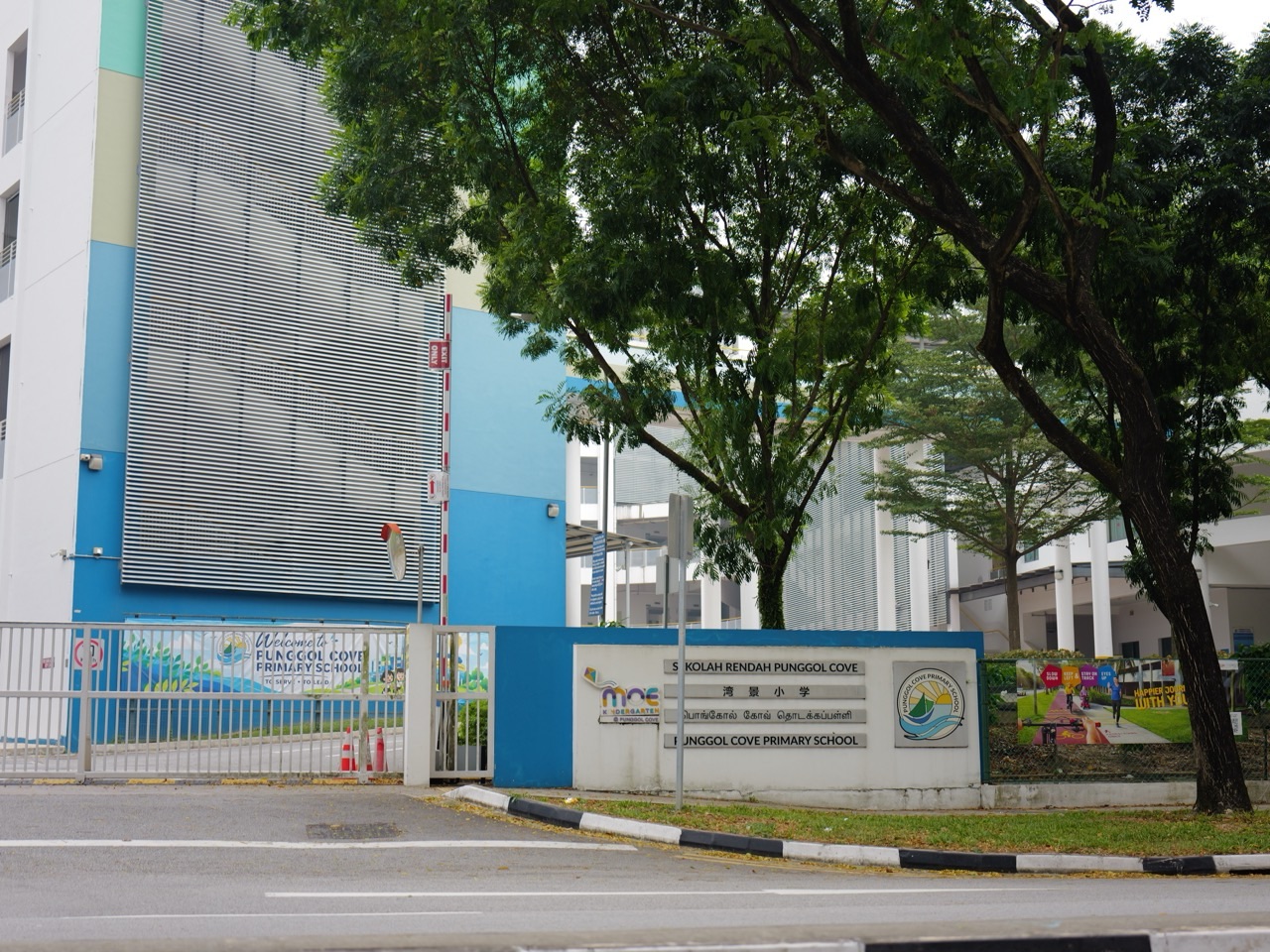
Choosing Punggol Cove Primary School for Primary 1 is not a search for a universally best primary school. It is a decision about whether Punggol Cove Primary School fits your child’s way of learning, the household’s daily routine and the real access conditions behind the school’s programmes.
Did you know? C³ Applied Learning experiences are published level by level for the broad cohort, while CCA begins only from Primary 3 and remains optional, particular activities and roles have capacity or allocation conditions, and the current public LLP page does not yet provide programme details that can responsibly support a fit claim. This is why primary school selection in Singapore works best when parents separate a school-wide experience from an activity that begins later, needs an application or selects a smaller group.
This guide connects current official school information with independent parent guidance on choosing a primary school, Primary 1 registration, school distance, CCA, care, PSLE preparation and the later transition under Full Subject-Based Banding. It does not promise admission, programme selection, results or a future pathway.
Should we shortlist Punggol Cove Primary School?
Shortlist Punggol Cove Primary School when your child likes using language, media and design to help a real audience and would benefit from a school where communication is tested through animal conservation, peer transition, cyber wellness and intergenerational service. The reason should describe the child’s likely participation and the family’s workable week, not merely reputation, proximity or a possible later pathway.
| Decision check | What to verify |
|---|---|
| Campus | 52 Sumang Walk, Singapore 828674; test the route at real school times. |
| Setting | co-educational government primary school; confirm the current entry-cohort arrangements in MOE SchoolFinder. |
| Programme access | C³ Applied Learning experiences are published level by level for the broad cohort, while CCA begins only from Primary 3 and remains optional, particular activities and roles have capacity or allocation conditions, and the current public LLP page does not yet provide programme details that can responsibly support a fit claim. |
| Care and recovery | the current Student Services page, last updated in September 2026, says to stay tuned for school-based Student Care updates; the campus has a Student Care Centre facility, but operator, application, capacity, fees, hours, holiday coverage and after-CCA handoff are not established by the current public page and must be confirmed directly. |
| Official starting points | school website · contact · MOE school profile |
What can every child access, and what may be selected?
C³ Applied Learning experiences are published level by level for the broad cohort, while CCA begins only from Primary 3 and remains optional, particular activities and roles have capacity or allocation conditions, and the current public LLP page does not yet provide programme details that can responsibly support a fit claim. Ask for the current cohort’s progression rather than assuming that a visible activity begins in Primary 1 or reaches every pupil in the same way.
When could another school be the better fit?
Another option may be better when the household needs a confirmed student-care place before school selection, another school offers a shorter journey than Sumang Walk and Nibong LRT, or the child needs a learning rhythm with less public speaking or digital production. A school with fewer headline programmes can still provide the more usable six-year experience.
Check Primary 1 entry separately from fit
Use MOE’s current phases and dates, distance rules and vacancy and balloting information for the actual exercise. MOE has announced changes from the 2027 exercise for children entering P1 in 2028; verify the rule set for the child’s year. Proximity, affiliation or historical demand does not guarantee admission.
Test commute, collection, care, support and recovery
Start from 52 Sumang Walk, Singapore 828674. Rehearse the morning and the latest likely activity return. Care check: the current Student Services page, last updated in September 2026, says to stay tuned for school-based Student Care updates; the campus has a Student Care Centre facility, but operator, application, capacity, fees, hours, holiday coverage and after-CCA handoff are not established by the current public page and must be confirmed directly. If the child has a support need, describe it directly and ask who coordinates the next step.
One next action: Travel to 52 Sumang Walk by the actual Nibong LRT or bus route for a 7:30 a.m. start, repeat the trip after a 4:00 p.m. Tuesday or Thursday CCA, then ask the school to confirm the incoming student-care arrangement and the current LLP before relying on either. Then continue to the school-specific fit, the entry-year check or the final comparison.
Header photograph: representative eduKate Primary-learning imagery. It does not depict this school, its pupils or its campus.
Choose the question that matters first
Test the distinctive learning fit · Understand CCA access · Plan the ordinary week · Check P1 entry · Make the final comparison
Information checked: 7 October 2026. Linked official pages support school and system facts. Fit judgments and illustrative scenarios are independent eduKate guidance. Confirm cohort-specific arrangements directly before acting.
Contents
Chapters 1–6
- 1. C³ treats communication as service to an audience
- 2. Primary 1 begins with animal conservation
- 3. Primary 2 designs for the next Primary 1 cohort
- 4. Podcasts, stories and documentaries arrive progressively
- 5. The current LLP page does not support a programme claim
- 6. Primary 3 modular sport delays premature specialisation
Chapters 7–12
- 7. Support is visible, but a room is not an outcome
- 8. The care uncertainty changes the family calculation
- 9. The ordinary Punggol week is the real test
- 10. Care and support should be checked through real needs
- 11. A CCA list becomes useful only after access is understood
- 12. Primary 1 entry is an eligibility process, not a fit verdict
Chapters 13–17
- 13. A school visit should test evidence, access and routine
- 14. PSLE preparation should grow from six years of learning
- 15. Posting Groups belong to secondary posting, not P1 admission
- 16. Compare schools with one evidence sheet, not changing standards
- 17. The first hundred days should be structured and recoverable
CHAPTER 1 OF 17 · SCHOOL STRENGTHS
1. C³ treats communication as service to an audience
The Applied Learning Programme combines English and New Media or ICT in Confident Communicators and Collaborators. Pupils do not only make media; they identify a recipient, shape a message and use language to address a real need.
This may suit a child who asks who will read, hear or use the work. Ask how teachers support hesitant speakers and how the class distinguishes a helpful message from a technically flashy product.
For decision-making, connect this documented feature to the child you know now. Ask who participates, at which level, under what conditions and how a child who is new, hesitant or still developing can begin. Keep programme description, interpretation and admission as separate claims.
A strong fit does not require the child to be outstanding on day one. It requires an accessible starting point, patient teaching and a family routine that allows practice and recovery. If the opportunity depends on selection, identify the broad experience that remains available.
Illustrative family scenario: The family notices a genuine interest but also a predictable difficulty. They ask how the school supports a beginner, then compare the answer with the child’s willingness and the weekly timetable. This is independent guidance, not a report about a particular pupil or lesson.
A useful question: What does this feature look like for an ordinary pupil in the entry cohort, and what part is optional or selected?
The published Primary 1 pathway connects reading about endangered animals, a zoo learning experience, class writing and electronic posters. That creates a concrete bridge from knowledge to advocacy without claiming that a six-year-old solves conservation.
Ask what research is age-appropriate, how children credit facts and images, and whether every pupil authors, speaks or designs in some form. A child fascinated by animals still needs support to turn excitement into accurate communication.
For decision-making, connect this documented feature to the child you know now. Ask who participates, at which level, under what conditions and how a child who is new, hesitant or still developing can begin. Keep programme description, interpretation and admission as separate claims.
A strong fit does not require the child to be outstanding on day one. It requires an accessible starting point, patient teaching and a family routine that allows practice and recovery. If the opportunity depends on selection, identify the broad experience that remains available.
Illustrative family scenario: The family notices a genuine interest but also a predictable difficulty. They ask how the school supports a beginner, then compare the answer with the child’s willingness and the weekly timetable. This is independent guidance, not a report about a particular pupil or lesson.
A useful question: What does this feature look like for an ordinary pupil in the entry cohort, and what part is optional or selected?
CHAPTER 3 OF 17 · SCHOOL STRENGTHS
3. Primary 2 designs for the next Primary 1 cohort
The next level uses empathy and design thinking to create advice or solutions for incoming pupils. The audience is close enough for children to remember their own uncertainty and specific enough to test whether an idea is genuinely useful.
This can reveal fit for a reflective child. Ask how teachers collect feedback from younger pupils and how a shy designer can contribute through observation, drawing, testing or writing rather than only presentation.
For decision-making, connect this documented feature to the child you know now. Ask who participates, at which level, under what conditions and how a child who is new, hesitant or still developing can begin. Keep programme description, interpretation and admission as separate claims.
A strong fit does not require the child to be outstanding on day one. It requires an accessible starting point, patient teaching and a family routine that allows practice and recovery. If the opportunity depends on selection, identify the broad experience that remains available.
Illustrative family scenario: The family notices a genuine interest but also a predictable difficulty. They ask how the school supports a beginner, then compare the answer with the child’s willingness and the weekly timetable. This is independent guidance, not a report about a particular pupil or lesson.
A useful question: What does this feature look like for an ordinary pupil in the entry cohort, and what part is optional or selected?
CHAPTER 4 OF 17 · ACCESS AND IDENTITY
4. Podcasts, stories and documentaries arrive progressively
The documented sequence includes cyber-wellness podcasting in Primary 3, digital stories for MOE Kindergarten children in Primary 4, and mini-documentary work linked with service for older pupils. The tools change because the audience and purpose change.
A family should ask about device time, privacy, copyright, group roles and access to equipment. Digital confidence is useful only when judgement, listening and language remain visible.
For decision-making, connect this documented feature to the child you know now. Ask who participates, at which level, under what conditions and how a child who is new, hesitant or still developing can begin. Keep programme description, interpretation and admission as separate claims.
A strong fit does not require the child to be outstanding on day one. It requires an accessible starting point, patient teaching and a family routine that allows practice and recovery. If the opportunity depends on selection, identify the broad experience that remains available.
Illustrative family scenario: The family notices a genuine interest but also a predictable difficulty. They ask how the school supports a beginner, then compare the answer with the child’s willingness and the weekly timetable. This is independent guidance, not a report about a particular pupil or lesson.
A useful question: What does this feature look like for an ordinary pupil in the entry cohort, and what part is optional or selected?
CHAPTER 5 OF 17 · ACCESS AND IDENTITY
5. The current LLP page does not support a programme claim
As checked in October 2026, the official LLP page is marked as under construction. That is a genuine information limit: a previous brochure, profile or search snippet is not enough to promise a current six-year pathway.
Treat the missing detail as a visit question, not as a negative verdict. Ask the school for the current LLP name, level progression, universal access, selected extensions and evidence for the incoming cohort before using it in the decision.
For decision-making, connect this documented feature to the child you know now. Ask who participates, at which level, under what conditions and how a child who is new, hesitant or still developing can begin. Keep programme description, interpretation and admission as separate claims.
A strong fit does not require the child to be outstanding on day one. It requires an accessible starting point, patient teaching and a family routine that allows practice and recovery. If the opportunity depends on selection, identify the broad experience that remains available.
Illustrative family scenario: The family notices a genuine interest but also a predictable difficulty. They ask how the school supports a beginner, then compare the answer with the child’s willingness and the weekly timetable. This is independent guidance, not a report about a particular pupil or lesson.
A useful question: What does this feature look like for an ordinary pupil in the entry cohort, and what part is optional or selected?
CHAPTER 6 OF 17 · ACCESS AND IDENTITY
6. Primary 3 modular sport delays premature specialisation
CCA is optional from Primary 3. The school publishes Tuesday or Thursday sessions from 2:00 to 4:00 p.m.; its modular sports route rotates Primary 3 pupils through badminton, basketball, floorball and football before a Primary 4 main choice.
This may fit a child who benefits from trying before choosing. Ask how non-sport CCAs are allocated, whether beginners are welcome, what happens when a choice is full and who collects the child at 4:00 p.m.
For decision-making, connect this documented feature to the child you know now. Ask who participates, at which level, under what conditions and how a child who is new, hesitant or still developing can begin. Keep programme description, interpretation and admission as separate claims.
A strong fit does not require the child to be outstanding on day one. It requires an accessible starting point, patient teaching and a family routine that allows practice and recovery. If the opportunity depends on selection, identify the broad experience that remains available.
Illustrative family scenario: The family notices a genuine interest but also a predictable difficulty. They ask how the school supports a beginner, then compare the answer with the child’s willingness and the weekly timetable. This is independent guidance, not a report about a particular pupil or lesson.
A useful question: What does this feature look like for an ordinary pupil in the entry cohort, and what part is optional or selected?
The campus lists learning-support, learning-and-behavioural-support and pastoral-care spaces. The English department describes the Learning Support Programme and Reading Remediation Programme for pupils who meet the relevant needs.
Ask how a concern is identified, who coordinates with home, what classroom adjustments occur first and how progress is reviewed. Do not assume a named room or programme guarantees placement or a particular result.
For decision-making, connect this documented feature to the child you know now. Ask who participates, at which level, under what conditions and how a child who is new, hesitant or still developing can begin. Keep programme description, interpretation and admission as separate claims.
A strong fit does not require the child to be outstanding on day one. It requires an accessible starting point, patient teaching and a family routine that allows practice and recovery. If the opportunity depends on selection, identify the broad experience that remains available.
Illustrative family scenario: The family notices a genuine interest but also a predictable difficulty. They ask how the school supports a beginner, then compare the answer with the child’s willingness and the weekly timetable. This is independent guidance, not a report about a particular pupil or lesson.
A useful question: What does this feature look like for an ordinary pupil in the entry cohort, and what part is optional or selected?
CHAPTER 8 OF 17 · LEARNING FIT
8. The care uncertainty changes the family calculation
The ordinary school day runs 7:30 a.m. to 1:30 p.m.; published gate windows include a 6:00 to 7:00 p.m. student-care dismissal period. Yet the current Student Services page does not establish who operates primary Student Care or how to obtain a place.
If care is essential, seek written current details before ranking the school above an alternative. Test Nibong LRT, bus or walking at morning, standard dismissal, CCA dismissal and the latest confirmed pickup.
For decision-making, connect this documented feature to the child you know now. Ask who participates, at which level, under what conditions and how a child who is new, hesitant or still developing can begin. Keep programme description, interpretation and admission as separate claims.
A strong fit does not require the child to be outstanding on day one. It requires an accessible starting point, patient teaching and a family routine that allows practice and recovery. If the opportunity depends on selection, identify the broad experience that remains available.
Illustrative family scenario: The family notices a genuine interest but also a predictable difficulty. They ask how the school supports a beginner, then compare the answer with the child’s willingness and the weekly timetable. This is independent guidance, not a report about a particular pupil or lesson.
A useful question: What does this feature look like for an ordinary pupil in the entry cohort, and what part is optional or selected?
A school can look ideal during an open house and still be wrong for the family’s ordinary Tuesday. Start from 52 Sumang Walk, Singapore 828674. Test arrival, dismissal, weather, traffic, the heaviest school bag and the latest likely activity collection.
Measure the return journey as carefully as the morning. A child who reaches home depleted may have less attention for family, play, reading and sleep. A manageable commute is not a lesser educational ambition; it protects the child’s capacity to learn.
Write a primary plan and a backup: who collects, how the child recognises the adult, what happens when work runs late and which route remains safe during rain. Keep this practical travel fit separate from MOE’s official distance category for P1 registration.
Illustrative family scenario: The family completes the morning route comfortably, but a rehearsal at activity dismissal reveals a difficult transfer. They compare a direct bus and an authorised school-bus option before deciding. This is independent guidance, not a report about a particular pupil or lesson.
A useful question: Can we live this journey for six years, including the later day, without making the child’s week brittle?
CHAPTER 10 OF 17 · SUPPORT
10. Care and support should be checked through real needs
the current Student Services page, last updated in September 2026, says to stay tuned for school-based Student Care updates; the campus has a Student Care Centre facility, but operator, application, capacity, fees, hours, holiday coverage and after-CCA handoff are not established by the current public page and must be confirmed directly. A care arrangement is not confirmed merely because a service is listed. Ask about application, capacity, operating days, holiday coverage, meals, communication and late collection.
If the child has learning, language, sensory, social-emotional, behavioural, mobility or medical needs, describe the actual situation rather than asking whether the school is “supportive”. Concrete examples help the school explain processes, limits and the adults involved.
Distinguish universal classroom support, school-based programmes, MOE or allied-professional processes, external clinical care and optional tuition. None should be promised from a webpage. The family needs a coordinated plan and a clear escalation route.
Illustrative family scenario: A child follows whole-class instructions but loses track during noisy transitions. The parent asks who can observe the transition, how reminders are given and how home and school will share patterns. This is independent guidance, not a report about a particular pupil or lesson.
A useful question: Who will notice, coordinate and review the support, and what remains subject to assessment or capacity?
CHAPTER 11 OF 17 · PARTICIPATION
11. A CCA list becomes useful only after access is understood
C³ Applied Learning experiences are published level by level for the broad cohort, while CCA begins only from Primary 3 and remains optional, particular activities and roles have capacity or allocation conditions, and the current public LLP page does not yet provide programme details that can responsibly support a fit claim. Treat curriculum-wide exposure, optional enrichment, recreational CCA, school team, performance role, competition representation and formal leadership as different opportunities.
Ask the current joining level, weekly schedule, selection method, capacity, prerequisites and commitment period for the activity that matters. Then ask what a beginner actually does in the first term. This protects the child from a decision built around an image rather than an accessible experience.
The best CCA fit is not always the most prestigious option. It is an activity the child can attend reliably, learn from, contribute to and recover from while still sleeping, eating and completing schoolwork reasonably.
Illustrative family scenario: The child loves rhythm but does not want an audition. The family compares a curriculum arts route, a recreational option and another school’s broader beginner pathway instead of assuming one named team is the only route. This is independent guidance, not a report about a particular pupil or lesson.
A useful question: What can a beginner join, what is selected, and what happens if the first choice is unavailable?
CHAPTER 12 OF 17 · ADMISSION
12. Primary 1 entry is an eligibility process, not a fit verdict
Use MOE’s current registration phases and dates, the child’s citizenship, the address recognised by MOE and the rules for the actual exercise. A family may find a school highly suitable yet remain uncertain of admission.
Check official school-distance rules and vacancy and balloting information. Past demand is historical context, not a forecast. Living nearby can improve daily routine without guaranteeing a place or even establishing the distance category the family assumes.
MOE has announced changes from the 2027 P1 Registration Exercise for children entering Primary 1 in 2028. Use the framework applying to the child’s cohort, including any named-school arrangements, instead of carrying older advice forward.
Illustrative family scenario: The school is the family’s strongest fit, but the applicable phase may ballot. The parents keep a second school they can genuinely accept and prepare both routes rather than presenting proximity as certainty. This is independent guidance, not a report about a particular pupil or lesson.
A useful question: Which phase and year apply to our child, and what is our truthful alternative if a place is not secured?
CHAPTER 13 OF 17 · EVIDENCE
13. A school visit should test evidence, access and routine
Use a visit, briefing or enquiry to answer what the website cannot: what a Primary 1 morning feels like, how adults help after a mistake, what programme access looks like at the entry level and how the school communicates a concern.
Bring three child-specific observations, not a generic checklist. One might concern language, one participation and one recovery. Ask for examples from the current cohort and note whether the response describes broad practice, an optional route or a selected programme.
Notice ordinary details: noise at the gate, stairs, canteen flow, shaded waiting, toilets, dismissal, bus loading and the distance between an activity venue and pickup point. These shape belonging more often than a slogan.
Illustrative family scenario: A parent asks how teachers respond when a child freezes during oral sharing. The answer reveals more about fit than a display board of confident speakers. This is independent guidance, not a report about a particular pupil or lesson.
A useful question: What did we learn about this child’s likely day, and what remains unverified?
CHAPTER 14 OF 17 · LEARNING
14. PSLE preparation should grow from six years of learning
Primary 1 should not be chosen as a six-year examination prediction. The useful foundation is reading with understanding, mathematical reasoning, scientific curiosity, Mother Tongue use, feedback, sleep and the confidence to ask for help.
The Singapore Examinations and Assessment Board is the source for current PSLE examination information when the child reaches the relevant cohort. Avoid treating today’s school label or one programme as a guarantee of a later Achievement Level.
A school fits when its ordinary teaching helps this child become increasingly independent while the family can sustain the routine. Results matter, but they emerge from teaching, learning, health, practice and circumstances—not from a school name alone.
Illustrative family scenario: A six-year-old loves stories but writes slowly. The family values a setting that protects reading enjoyment while gradually building handwriting and composition stamina rather than chasing upper-primary papers early. This is independent guidance, not a report about a particular pupil or lesson.
A useful question: What habits should be visible by the end of Primary 1, long before PSLE strategy becomes relevant?
CHAPTER 15 OF 17 · PATHWAYS
15. Posting Groups belong to secondary posting, not P1 admission
Posting Groups 1, 2 and 3 are used for secondary-school posting after PSLE. They do not classify a child at Primary 1, and a primary school does not predetermine a future Posting Group.
Under Full Subject-Based Banding, G1, G2 and G3 refer to subject levels in secondary school. They are related to—but not interchangeable with—Posting Groups. Not every secondary school offers every posting-group route, so families should use current MOE information at the later decision point.
Read the MOE Full Subject-Based Banding overview and the eduKate Parents & Pathways Hub when the transition becomes relevant. Keep today’s primary decision open-ended: it should build capability and wellbeing, not force a career story onto a six-year-old.
Illustrative family scenario: A parent hears that one primary school “leads to” a particular secondary route. The family replaces the rumour with current MOE criteria and returns to the present questions of learning, belonging and commute. This is independent guidance, not a report about a particular pupil or lesson.
A useful question: Are we choosing for the child’s next six years, or trying to manufacture certainty about a much later posting exercise?
CHAPTER 16 OF 17 · DECISION
16. Compare schools with one evidence sheet, not changing standards
Use the same columns for every school: verified strengths, broad access, selected opportunities, child fit, support, faith or language setting, commute, care, CCA timing, admission uncertainty and one serious trade-off.
A fair comparison allows another school to win when the household needs a confirmed student-care place before school selection, another school offers a shorter journey than Sumang Walk and Nibong LRT, or the child needs a learning rhythm with less public speaking or digital production. Naming that possibility makes the shortlist more honest and prevents reputation from becoming a substitute for reasoning.
Finish one sentence: “We would choose Punggol Cove Primary School because our child is likely to benefit from ___, can access it through ___, and our family can sustain ___.” If the blanks depend on assumptions, continue checking.
Illustrative family scenario: Two schools both offer attractive programmes. The family chooses the one with a calmer journey and clearer beginner access because those advantages will be felt every week. This is independent guidance, not a report about a particular pupil or lesson.
A useful question: Which school gives this child the strongest combination of usable opportunity, belonging and recoverable routine?
CHAPTER 17 OF 17 · START
17. The first hundred days should be structured and recoverable
Before school begins, practise waking, dressing, breakfast, the route, opening containers, asking for help and packing one simple bag. Do not turn preparation into a miniature Primary 1 syllabus.
During the first weeks, watch sleep, appetite, stories about classmates, willingness to return, physical complaints and the child’s ability to recover after a difficult day. One incident is information; a repeated pattern deserves a calm conversation.
Keep home feedback short and specific. Ask what felt easy, what felt confusing and what the child wants to try tomorrow. This gives independence room to grow while keeping adult support close.
Illustrative family scenario: The pupil forgets a folder and feels ashamed. The family helps the child learn the school process, adds one coloured pocket to the evening check and treats the mistake as a routine to improve. This is independent guidance, not a report about a particular pupil or lesson.
A useful question: Which three routines will create calm without overscheduling or over-monitoring the child?
A compact family comparison
| Consideration | Question to answer |
|---|---|
| Child fit | Which verified experience connects with how our child learns now? |
| Access | What is cohort-wide, level-specific, optional, selected or capacity-limited? |
| Routine | Have we tested morning travel, ordinary dismissal and the latest activity day? |
| Care and support | Who is responsible, what is confirmed and what needs an application or assessment? |
| Entry | Which P1 phase, distance and balloting rules apply in our actual exercise? |
| Trade-off | What would make another school better for this child? |
Questions families often ask
How do we decide whether Punggol Cove Primary School is a good fit?
Connect one verified opportunity to the child’s actual interest or need, then test access, identity, support and the ordinary week. Keep one acceptable alternative so the comparison remains honest.
Does a named programme guarantee participation or results?
No. Some experiences are curriculum-wide, some begin at particular levels, and others depend on choice, selection, prerequisites or capacity. Ask who participates, how a beginner starts and what happens if the child is not selected.
Does living near the school guarantee P1 admission?
No. Test the route for daily life, but use MOE’s official address, distance, phase, vacancy and balloting rules for the actual registration exercise. Historical outcomes are not promises.
Does this primary school determine Posting Group 1, 2 or 3?
No. Posting Groups relate to secondary-school posting after PSLE. G1, G2 and G3 are subject levels in secondary school. A primary school or programme does not assign a six-year-old to a future group, and not every secondary school offers every posting-group route.
What should we do after reading?
Travel to 52 Sumang Walk by the actual Nibong LRT or bus route for a 7:30 a.m. start, repeat the trip after a 4:00 p.m. Tuesday or Thursday CCA, then ask the school to confirm the incoming student-care arrangement and the current LLP before relying on either. Write down the answer, access rule, travel time and uncertainty, then compare the same evidence with at least one acceptable alternative.
Official sources and useful next reading
official school website · campus, transport and contact · current school hours · gate and collection windows · C³ Applied Learning Programme · current LLP publication status · CCA participation and access · 2026 CCA schedule · student services and current care uncertainty · English learning support · learning and behavioural support facilities
MOE P1 registration · MOE SchoolFinder · SEAB PSLE · MOE Full Subject-Based Banding
Why go Punggol Cove Primary School · What is so Awesome About Punggol Cove Primary School · Awesome Schools in Punggol · Parents & Pathways Hub
Singapore schools directory and primary-choice hub · Back to contents