
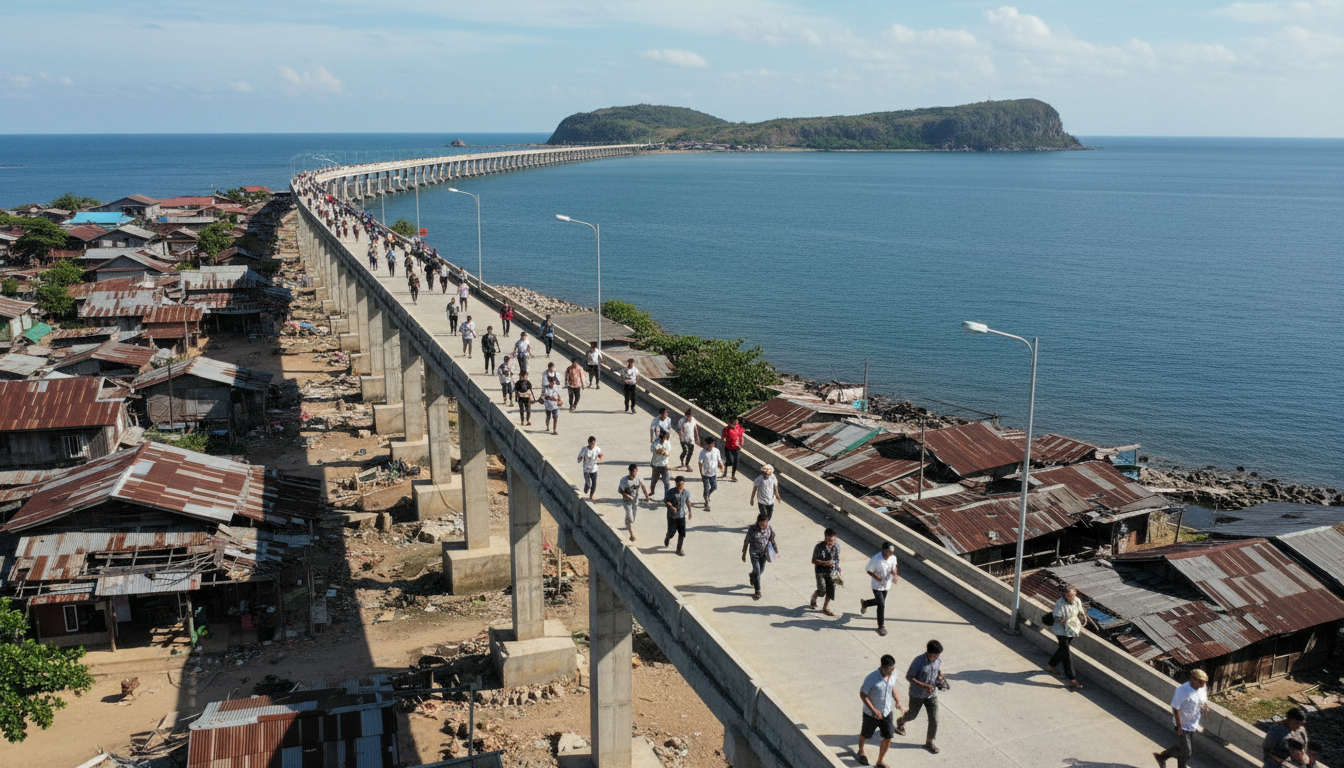
If you are near the sea and feel strong or prolonged earthquake shaking, see seawater rise or retreat in an unusual way, or hear a loud roar from the ocean, leave the low-lying coastline and move immediately to higher ground or safely inland. Do not wait for a siren if these natural signs occur. If your local government issues a tsunami evacuation order, follow its designated route. The first tsunami wave is not necessarily the largest and dangerous currents may continue for hours or days. Do not return until authorities confirm it is safe.
This playbook is designed for coastal residents, travellers, Singapore families visiting overseas beaches, school groups and hotel guests. It explains what to do before, during and after a tsunami, how to respond to natural warning signs, when to walk rather than drive, and how to help children or people with mobility limitations. Local evacuation maps and official instructions always take priority. This is not a forecast that a catastrophic tsunami is expected in Singapore or any particular destination.
- Strong or long earthquake at the coast: protect yourself during shaking, then evacuate from the tsunami hazard zone.
- Sudden sea withdrawal, unusual rapid rise or roaring sound: leave the waterfront immediately.
- Move uphill or away from the ocean using marked safe routes where available; do not head toward the sea to investigate.
- Never wait on a beach, jetty, harbour front, river mouth or low bridge for the first wave to appear.
- Do not stop to rescue belongings, take photographs, recover your car or finish a hotel checkout.
- If you are outside the hazard area, do not create unnecessary traffic by heading toward exposed districts.
- Stay on safe ground until the responsible authority issues an all-clear, even if water has temporarily receded.
- Afterwards, expect damaged infrastructure, contaminated floodwater, debris and unstable buildings.
Quick information: recognise a tsunami before the warning arrives
The US National Weather Service tsunami safety guidance identifies natural warnings as a strong or long earthquake, strange ocean behaviour including rapid sea withdrawal or rising water, or a loud ocean roar. A nearby tsunami may arrive within minutes, leaving no time for a complete official alert. Any one of these signs in a vulnerable coastal area is a reason to act, not to wait for all three.
For an event originating far away, you might feel no shaking. Official tsunami warnings are therefore essential as well. The National Weather Service warning definitions explain that warnings indicate a threat of dangerous inundation and currents; advisories indicate dangerous marine conditions; watches indicate a potential threat that requires attention. Terminology differs by country, so read the local alert in full.
Why a tsunami is different from a large ordinary wave
A tsunami is usually triggered by sudden displacement of a large volume of water, often during a major undersea earthquake. Landslides and volcanic activity can also generate tsunamis. Their extremely long wavelengths allow energy to cross oceans and then create fast flooding and powerful currents near shore. A tsunami need not look like a movie wall of water; it can behave more like a sudden violent flood.
According to the US Tsunami Warning Centers’ FAQ, tsunami waves can arrive as a series and dangerous coastal conditions can persist for hours or days. A temporary fall in water level is not proof the episode is over. The largest wave may arrive later, and currents can remain hazardous even at a harbour where no dramatic crest is visible.
This is why beach familiarity can mislead people. A seawall that stops ordinary surf may not protect against tsunami flooding. A popular tourist pathway may cross a low area vulnerable to fast currents. The relevant information comes from local hazard maps, elevations and authorities, not intuition about how far inland ‘feels safe.’
During an earthquake: protect yourself, then evacuate
If you are indoors when shaking begins, protect your head and neck from falling objects and follow the area’s earthquake safety advice, such as dropping, covering and holding on where appropriate. Keep away from windows, heavy unsecured furniture and glass. If you are outside, avoid damaged façades, poles and falling debris. The immediate priority is surviving the shaking itself.
When the shaking stops and you can move safely, evacuate from the coastal tsunami hazard zone without waiting for a text message. Strong local earthquakes can damage roads, stairs, bridges and power lines. Use an exit that is physically safe, do not rely on a lift whose condition is uncertain, and follow local earthquake and tsunami instructions together.
If no shaking was felt but there is a credible official warning, you should still evacuate when directed. Coastal communities can be affected by distant sources. Families need both natural-warning literacy and an official-alert system; neither works in every situation alone.
First five minutes: the evacuation decision
- Tell companions clearly that you are leaving the tsunami zone. Avoid a long discussion about whether the warning is genuine.
- Put on sturdy shoes if they are immediately available, carry necessary medical essentials, then go.
- Follow local tsunami evacuation signs to higher ground or safer inland terrain.
- Use the safest practical route; do not cross damaged bridges, downed power lines, moving floodwater or debris fields.
- Do not drive automatically. In congested coastal areas walking by a marked route may be faster and safer.
- Assist children and people with mobility limitations using their pre-identified accessible escape routes.
- Once outside the zone, remain there and monitor official instructions.
If your family is standing on a beach and the sea suddenly retreats, the right action is not to investigate the exposed seabed. That withdrawal can be a natural tsunami warning. Turn away from the waterfront, warn those around you if it does not delay your evacuation, and move toward designated high ground.
Choosing safe high ground: route over perfect destination
Use the locally mapped tsunami evacuation area and signage. If those are unavailable, move uphill or as far away from the coast as possible using a safe route. Do not make an elaborate detour toward the largest building you can see if a closer official escape route leads outside the hazard zone. Speed and certainty matter more than comfort.
Vertical evacuation can be possible in certain buildings that authorities have specifically identified or designed for that purpose. But NOAA cautions that most buildings are not designed for tsunami loading. Do not assume that a high-rise apartment, rooftop restaurant or parking structure is automatically a safe refuge. Ask local authorities or hotel staff in advance.
Accessibility matters. An evacuation route that depends on steep stairs may be unusable for a wheelchair user or someone recovering from injury. Before coastal travel, identify the nearest accessible safe route and ask hotels how they assist guests who cannot move quickly. During an actual warning, seek authorised help while leaving the immediate hazard zone as quickly as is safely possible.
Walking versus driving when everyone wants to escape
A car can be useful in some planned evacuations, especially for a person who cannot walk far, but congested narrow roads can trap people closer to the water. Follow local evacuation guidance on whether driving is recommended. If the area uses footpaths to safe ground, a family should not lose crucial minutes retrieving a vehicle and luggage.
If you are driving when a warning arrives, obey road closures and emergency directions. Avoid flooded roads, unstable bridges and waterfront routes. If you need to leave the car, park without blocking rescue access and use the designated pedestrian evacuation route. A car is replaceable; a family trapped in rising coastal water may not have another opportunity.
Hotels and unfamiliar destinations
Before settling into an unfamiliar coastal hotel, find the escape map. Ask whether the building is within the inundation zone, where guests assemble, whether evacuation is horizontal or to a designated vertical refuge, and how mobility-limited guests are assisted. Check which staircase exits operate during an earthquake. Do not assume a hotel receptionist will have time to explain the route once shaking starts.
Keep a small ready bag with necessary medication, a phone, charging cable, paper emergency contacts and sturdy shoes. Avoid packing large suitcases during an evacuation. Hotel keys, passports and other property should be picked up only if immediately accessible without delay. Getting to safety is the priority.
A child in an unfamiliar place may freeze or follow a crowd toward an unsafe attraction. Teach a simple command before the trip: ‘If the coast shakes strongly or the water looks strange, we go up and away from the sea with our adult.’ Practice identifying the hotel assembly point without making the child frightened of ordinary travel.
Separated families and school groups
A child at school or childcare may be safer following the institution’s evacuation protocol than leaving to meet a parent on a low road. Do not enter a hazard zone to collect someone when staff have already moved students to an official safe point. Ask for reunification procedures through the school or local emergency office and follow them when communications allow.
Agree on a brief family message format: ‘Safe, outside coastal hazard zone, at [approved assembly point], next update when possible.’ Avoid repeatedly calling when networks are congested. A missing message does not prove someone is injured. It may mean power, coverage or local infrastructure is disrupted.
The first hour on high ground
Count everyone, check injuries and help those in immediate need. Stay away from damaged edges, unstable slopes, fallen cables and structures affected by the earthquake. Locate the responsible authority’s latest warning and share factual messages. Avoid rumours that say one quiet beach proves another is safe.
Give children water, a quiet place to sit and a clear explanation of what will happen next. Do not promise to return to the beach that afternoon. Families may need to remain outside the area longer than expected because later waves, powerful currents and damaged infrastructure prolong the danger.
Why the second and third waves matter
Tsunamis can produce multiple dangerous waves and currents separated by periods of apparent calm. The first surge is not guaranteed to be the largest. Harbours and narrow channels may have strong currents even after visible inundation has receded. Do not return to retrieve bags, boats or vehicles during a quiet interval.
Official warnings and evacuation restrictions can last for hours or days. Trust authorities with observation data and local risk assessment, not a personal countdown. An evacuation is complete only when the area has been officially cleared and it is safe to return.
Recovery after the water withdraws
Tsunami flooding can leave sewage contamination, debris, damaged road surfaces, electrical hazards and compromised structures. Only return after official permission. Do not touch flooded appliances or wiring; use qualified inspections. Avoid food contacted by floodwater and follow drinking-water advisories. Clean wounds and obtain medical assessment for significant injuries or infections.
Document damage from a safe position for insurance or property management and avoid climbing unstable roofs or entering partially collapsed buildings. The return process should be staged: safety check, utilities, sanitation, food and water, repairs, then normal use.
Trusted references
- US National Weather Service — During a Tsunami.
- US National Weather Service — Before a Tsunami.
- US National Weather Service — Understanding Tsunami Alerts.
- US Tsunami Warning Centers — Frequently Asked Questions.
- UNESCO/IOC Tsunami Programme.
Understanding the geography: a route is better than a guessed distance
An evacuation instruction is not simply ‘move away from the blue water on the map’. A coast can contain harbours, river mouths, low roads, seawalls, cliffs, reclaimed land and valleys that change where dangerous currents might go. The actual inundation zone comes from local modelling, topography and emergency planning. Two hotels only a short distance apart may need completely different escape routes. Find the mapped safe zone and follow the posted signs instead of applying a universal number of metres.
The safest destination should be reachable by your slowest family member without crossing damaged infrastructure. A wheelchair user may not be able to use the steep stairway shown on a tourist map. Ask local staff beforehand whether an accessible evacuation path or designated refuge exists. In an emergency, a theoretically safer hill that cannot be reached in time is not a practical plan.
Avoid improvising a route that follows the shoreline or crosses a river channel merely because the destination is visible. Tsunami currents can extend into harbours and rivers. Follow locally recommended routes inland or uphill, using secure crossings and avoiding low-lying waterfront corridors.
Natural warnings and official alerts can arrive in different orders
A tsunami generated by a distant earthquake may be forecast hours before reaching a particular coastline, giving authorities time to warn and evacuate people. A nearby event may provide no comparable lead time. Strong or long shaking can be the first and only warning. This difference explains why a well-prepared traveller needs both an alert source and the ability to recognise natural warning signs without an app.
Sometimes an initial watch is upgraded, downgraded or cancelled as observations improve. Read the latest local message with its timestamp, geographic area and issuing authority. An ‘information statement’ from one country’s warning centre may not describe the risk at a different country’s harbour. Avoid reducing a complex alert into a one-word rumour.
The National Weather Service tsunami alert guide distinguishes warnings, advisories and watches in the United States. Other countries have their own labels, maps and evacuation policies, which should guide actions locally. General articles cannot replace a named evacuation order for a particular street.
If there is no hill near the hotel
A flat coastal district may offer designated vertical evacuation facilities or longer routes to inland ground. A large building can look reassuring, but NOAA notes that most structures are not designed specifically to withstand tsunami impacts. Never select a random apartment tower as your default refuge without knowing the local plan. Ask hotel management or local emergency authorities about suitable facilities before a trip.
A vertical refuge may be useful when there is no safe route to high terrain in time, but its doors, stairs, structural suitability and capacity matter. A lift may stop operating after an earthquake. Plan for those circumstances with local staff, particularly if someone has reduced mobility. In an actual emergency, follow responders’ instructions rather than internet guesses about the safest floor.
Boats, piers and working waterfronts
A person on a boat in a harbour is not in the same position as a vessel already at sea. Harbours can experience severe water-level changes and currents. NOAA’s tsunami FAQ says mariners in harbours may be directed to leave their vessels and seek high ground on land, while instructions for a vessel already offshore differ. Follow the harbour authority or coast guard. Do not rush to take a small boat into deeper water as an improvised escape plan.
Fishing workers, marina staff and tourists may be tempted to secure equipment, ropes or engines before leaving. Those tasks can consume crucial minutes and place people between moving vessels. Personal safety comes before the value of a boat. If an employer maintains a maritime emergency plan, all staff should understand its evacuation sequence in advance.
The medical and emotional needs of children
A child can understand a brief explanation even when a full geological account is impossible: ‘An earthquake can send dangerous water onto the coast, so we move up the safe path.’ Use that sentence before travel as part of normal safety education. Children do not need images of destroyed buildings or speculative casualty totals in order to learn the right action.
If travelling with an infant, designate an adult to carry the child and another to handle a small bag with feeding supplies, nappies and essential medicine. If a child is separated during an evacuation, follow local reunification procedures rather than searching a damaged beach. Schools and childcare centres may move groups to designated assembly areas, making an unplanned parental return risky.
An elderly or disabled family member may need hearing, vision or mobility assistance. Do not assume someone can hear a siren or read a phone alert. Provide clear verbal instructions, establish physical support and choose a route the person can complete. If medical treatment is urgently required, contact responders when communications permit.
When mobile service fails during an evacuation
Communications may be congested or interrupted after an earthquake. Preserve battery rather than calling every relative repeatedly. A short written message—’Safe at the designated high-ground site; no injuries; following official updates’—is more informative than speculation about the size or origin of the tsunami.
Share your own status, not the private details of missing travellers whose condition you cannot confirm. A photo of a damaged road may be genuine yet still lack location and time. The information most useful to the family is whether people are safe, where they are and when the next verified check-in will occur.
What to do during the long wait on safe ground
Staying outside the hazard zone can be uncomfortable, particularly at night or during rain. The correct response is still to remain there until the area is cleared. Organise drinking water, necessary medicines, safe rest areas and access to toilets as directed by local responders. Keep pathways open and do not crowd the edge of a lookout point to watch incoming waves.
There may be aftershocks, damaged slopes or ongoing infrastructure failures. Choose a secure waiting area rather than a cliff edge or unstable wall. If official instructions direct you to another assembly point, follow the route provided. A temporary quiet sea is not a reason to walk back down.
A person who becomes severely ill or injured needs medical assessment. Notify the responsible emergency service rather than assuming all healthcare must wait until the tsunami warning ends. Protection from a coastal hazard does not eliminate other urgent medical needs.
Worked example: a family holiday near the shoreline
Imagine parents, two children and a grandparent in a coastal town at breakfast. The ground shakes for an unusually long time. The family protects itself from falling objects, then moves away from the low area when the shaking stops. One adult guides the grandparent while the other keeps the children together. They use the hotel evacuation route discussed on arrival rather than returning to pack. A relative at another hotel is told to follow that hotel’s own plan rather than cross town for reunification.
At the safe assembly area they count everyone, send a concise message and follow official updates. The youngest child wants to return for a toy, but the parent explains that the family will collect belongings when it is safe. Later, a video shows a calm beach, yet there is still no local all-clear. The family stays where it is, because later waves and currents can remain dangerous. Once the hazard restrictions end, they also check the hotel building and water supply before returning.
This example contains no extraordinary survival skill. It is a set of ordinary choices made in the correct order: protect during shaking, evacuate, stay together, communicate, wait for the all-clear and then recover safely.
A return-home plan must consider more than the sea
Receding water can leave contaminated food, broken glass, damaged roads, unstable buildings, sewage, sharp debris and exposed electrical hazards. Do not touch flooded outlets or attempt to switch a wet appliance on. Obtain qualified inspection when necessary, and keep children away from cleanup areas. People may be allowed back into a district before every individual building is safe.
Follow local water-supply notices. Do not drink water identified as unsafe, and discard food that has been in contact with contaminated floodwater. Wash cuts and skin exposed to dirty water, and seek medical advice for significant wounds, signs of infection or other concerning symptoms.
Document loss with photographs from a safe location and retain receipts for repairs or accommodation. A family need not clean and reopen everything in one day. Safe restoration starts with building and utility assessment, then sanitation, then belongings. Returning too quickly can transform a survived tsunami into a second preventable injury.
A four-week plan for people who live or travel near coasts
Week 1: learn the evacuation map
Find the government or local emergency map for the area you are staying. Identify the closest safe point and an alternative route. For a hotel, ask the front desk where guests should go. For a school, learn where children will be moved and how parents receive reunification instructions.
Week 2: teach the warning signs
Discuss the three natural warning categories: strong or long shaking, unusual sea movement and loud ocean roaring. A child should remember that any one of them means to leave the exposed coast with a trusted adult. Keep the language practical rather than frightening.
Week 3: prepare the slowest person’s route
Walk or inspect the route on a safe ordinary day. Consider wheelchairs, toddlers, medication and suitable shoes. Pack a small light ready bag, not a suitcase. An evacuation plan is only as good as its accessibility to the person who most needs help.
Week 4: rehearse communication
Write down a safe assembly point and one family contact. Practise a short status message. Decide what to do if a phone has no signal and who will follow school or hotel instructions. Revisit the plan when the destination or family needs change.
Frequently asked questions
How do I recognise a natural tsunami warning?
Strong or long earthquake shaking, abnormal sea withdrawal or rapid rise, and a loud ocean roar can each signal a tsunami. Leave the exposed coast for higher ground or safer inland terrain immediately when these signs occur.
Does every tsunami make the sea recede first?
No. Some begin with a rapid rise or flooding surge, and the sea may not withdraw visibly. Do not wait for a dramatic exposed seabed.
Can a tsunami reach a coast where no earthquake was felt?
Yes. A distant event can create a tsunami far from its origin. That is why official warnings matter even without local natural signs.
Should I collect my car before evacuating?
Not if doing so delays evacuation or puts you on a congested or hazardous road. Follow the local route guidance; many coastal evacuation plans prioritise movement on foot where practical.
Is any high-rise building a safe tsunami refuge?
No. Only some buildings are suitable, and local authorities may identify designated vertical evacuation structures. Ask the relevant emergency office or accommodation provider in advance.
Is the first tsunami wave always the largest?
No. Later waves may be larger or more dangerous. Stay outside the hazard zone until the responsible authority issues an all-clear.
Can I return as soon as the water goes down?
No. Dangerous currents and later surges may persist for hours or days. Wait for the official all-clear and confirm buildings and roads are safe.
If I’m already outside the mapped hazard zone, should I drive to another town?
Usually stay in a safe place unless officials direct otherwise. Unnecessary traffic can obstruct evacuation from exposed areas.
Should I take a boat out to sea during a warning?
Do not improvise. Maritime guidance depends on whether the vessel is in harbour or already at sea. Follow harbour authorities and coast guard instructions.
What should I tell a young child?
Explain that the family is moving away from low coastal places because dangerous water may arrive, and that adults will follow safe routes and official instructions.
What if my child is at school?
Follow the school’s evacuation and reunification protocol. Do not travel into the hazard zone to collect a child when staff have moved pupils to a safe location.
How can I prepare for a beach holiday?
Check the local tsunami hazard and evacuation map, know natural warning signs, keep essential medicine and shoes accessible, and agree how your travel group will stay together.
Common mistakes and how to avoid them
- Going to the beach to photograph unusual ocean movement.
- Waiting for an app alert after a strong coastal earthquake.
- Driving into traffic rather than using a posted pedestrian route.
- Assuming a seawall or familiar hotel roof must provide sufficient protection.
- Letting children go back for bags or toys.
- Walking onto the exposed seabed when the water withdraws.
- Returning to a harbour between two waves.
- Treating a rumoured all-clear as equivalent to an official notice.
- Forgetting wheelchair accessibility, medication or infant needs.
- Re-entering damaged buildings immediately when surface water falls.
Additional reference and connected reading
- NOAA/NWS — During a Tsunami.
- NOAA — Understanding Tsunami Alerts.
- US Tsunami Warning Centers — Tsunami FAQ.
- UNESCO/IOC — Tsunami Programme.
- eduKateSG — Tsunami in New Zealand.
- eduKateSG — Flood Escape and Recovery.
Final reminder: When a coastal earthquake is strong or long, or the ocean behaves abnormally, seek higher ground without waiting to see a wave. Once safe, stay away until official instructions permit return. A clear route and a calm family plan matter more than any collection of emergency gadgets.
The Black Swan survival playbook collection
Different emergencies demand different first decisions. The related eduKateSG guides below explain when to leave, when to shelter and how to protect the ordinary systems a household depends on.