
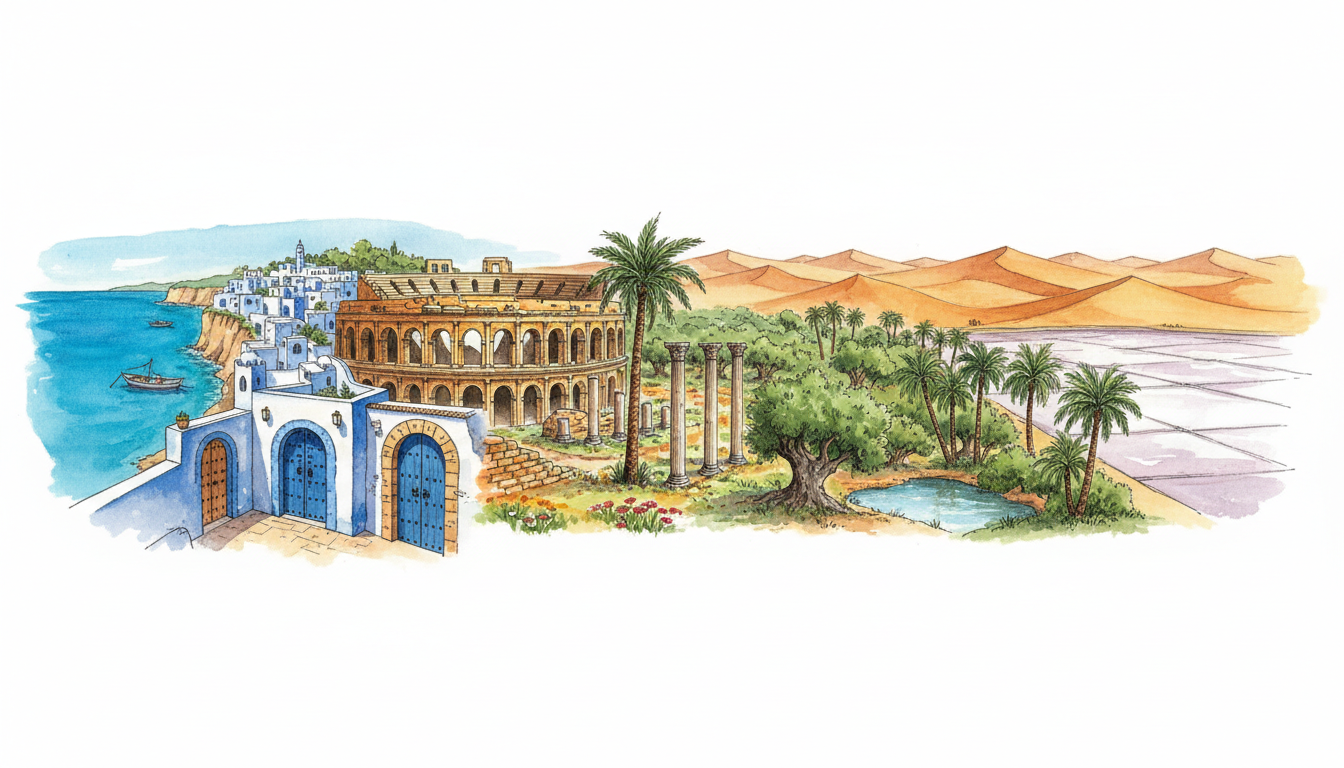
Tunisia is a North African Mediterranean country with Tunis as capital, 24 governorates and an economy involving tourism, manufacturing, agriculture and services.
To understand how the country works, follow an ordinary family through government rules, budgets, transport, water, energy, education, healthcare and jobs. An announcement is only a beginning; delivery and maintenance determine the outcome.
Quick answer
Tunisia is a North African Mediterranean country with Tunis as capital, 24 governorates and an economy involving tourism, manufacturing, agriculture and services.
1. Government in 2026
The 2022 constitution increased presidential authority. Older descriptions based solely on the 2014 constitution are outdated. Civil liberties and accountability require independent assessment.
For a practical test, identify the responsible institution, funding, infrastructure and workers. Then ask what a household actually experiences and whether that outcome can be verified.
2. Twenty-four governorates
Governorates organise territorial administration, while local institutions handle other assigned services. Conditions vary between coastal and inland communities.
For a practical test, identify the responsible institution, funding, infrastructure and workers. Then ask what a household actually experiences and whether that outcome can be verified.
3. 2011 revolution
The uprising ended Ben Ali’s rule and influenced regional political movements. Subsequent constitutional changes show that political systems evolve.
For a practical test, identify the responsible institution, funding, infrastructure and workers. Then ask what a household actually experiences and whether that outcome can be verified.
4. Tourism
Coastal resorts, historic medinas and archaeological sites support hotels, guides, transport and local suppliers.
For a practical test, identify the responsible institution, funding, infrastructure and workers. Then ask what a household actually experiences and whether that outcome can be verified.
5. Manufacturing
Textiles, electrical components and other exports connect Tunisia to European supply chains, requiring skills and dependable logistics.
For a practical test, identify the responsible institution, funding, infrastructure and workers. Then ask what a household actually experiences and whether that outcome can be verified.
6. Olive oil
Olive growing and processing depend on rainfall, irrigation, labour, quality standards and export prices.
For a practical test, identify the responsible institution, funding, infrastructure and workers. Then ask what a household actually experiences and whether that outcome can be verified.
7. Water scarcity
Drought, uneven rainfall and water-system losses make conservation, reservoirs and groundwater management important.
For a practical test, identify the responsible institution, funding, infrastructure and workers. Then ask what a household actually experiences and whether that outcome can be verified.
8. Energy
Natural gas and expanding renewables support power generation. Grid reliability, imports and costs matter.
For a practical test, identify the responsible institution, funding, infrastructure and workers. Then ask what a household actually experiences and whether that outcome can be verified.
9. Currency
The Tunisian dinar and changing inflation affect household purchasing power and business costs.
For a practical test, identify the responsible institution, funding, infrastructure and workers. Then ask what a household actually experiences and whether that outcome can be verified.
10. Education and health
Schools and clinics require trained staff, supplies, buildings and access. Rural and urban outcomes can differ.
For a practical test, identify the responsible institution, funding, infrastructure and workers. Then ask what a household actually experiences and whether that outcome can be verified.
11. Ports and roads
Mediterranean ports and transport corridors connect factories, farms and visitors.
For a practical test, identify the responsible institution, funding, infrastructure and workers. Then ask what a household actually experiences and whether that outcome can be verified.
12. Worked example
An olive-growing family needs water, processing, transport, buyers, schools and healthcare; national trade policy meets everyday life through these links.
For a practical test, identify the responsible institution, funding, infrastructure and workers. Then ask what a household actually experiences and whether that outcome can be verified.
Frequently asked questions
Where should readers start? Begin with Tunisia’s government, geography and everyday services. Why do policies change? Laws, budgets, political decisions and economic conditions evolve. How can claims be checked? Use current primary sources and distinguish a proposed reform from a completed project.
Continue exploring
This article is part of How Countries Work, the international companion to How Singapore Works.
Sources and review
Reviewed 20 October 2026. Refer to the World Bank, United Nations and the country’s competent authorities for current data. Worked examples are illustrative.
Continue with the fuller explanation: Read the complete How Tunisia Works country guide for the institutions, public services and real-world examples behind these quick facts. Browse the How Countries Work A–Z directory for related country studies.