
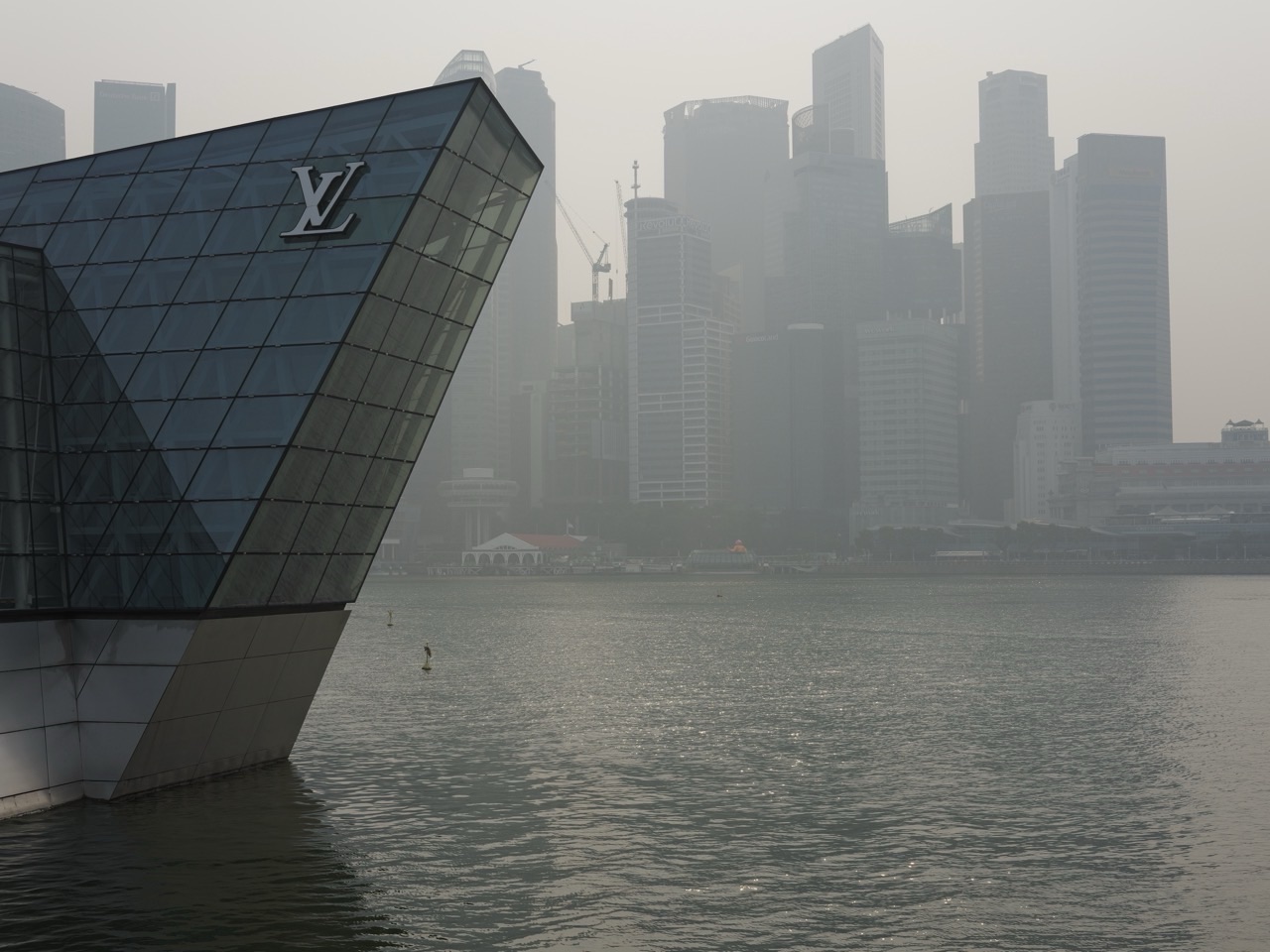
What if Singapore is hazy and very hot at the same time? Check two different hazards before outdoor exercise or long travel: the NEA one-hour PM2.5 reading for smoke exposure, and Singapore’s official heat-stress map for the combined effects of temperature, humidity, wind and sun. Follow MOH’s haze advisory and the heat-stress guidance appropriate to your activity. Do not assume a bright, breezy day is free of haze, or that rain and shade automatically solve both risks. If outdoor exertion is unsuitable because of either smoke or heat, reduce or postpone it rather than treating one good-looking indicator as permission to ignore the other.
This Singapore haze-and-heat guide brings together daily routines that families and workers actually face: running in Punggol, cycling through East Coast Park, football training near Bishan, working outdoors in Jurong, walking to school in Tampines, cooling an HDB bedroom in Queenstown, and helping older relatives when windows must temporarily stay closed. It explains PM2.5 versus the Wet-Bulb Globe Temperature (WBGT), why humidity affects sweat evaporation, when to use air conditioning or ventilation, and the signs of heat exhaustion and heat stroke. The Singapore Haze Exercise Guide focuses on fitness; this page addresses the two-hazard problem.
One important distinction makes all the difference. Haze is a problem of pollutants in the air; heat stress is a problem of the body’s ability to shed heat. Both can matter during a run, outdoor work shift or walk to a bus stop, but they are measured differently. The Meteorological Service Singapore heat-stress portal reports WBGT, averaging observations over fifteen minutes, while NEA’s one-hour PM2.5 reports fine-particle concentration averaged over the previous hour. Neither number cancels out the other.
The quick answer: use two checks, not one
When a person plans prolonged outdoor activity, first check the current one-hour PM2.5 band and related health advice. It tells you about the outdoor fine-particle environment and the appropriate reduction of exertion or exposure. Next check the nearby WBGT heat-stress level on the MSS map, particularly for direct-sun activity. WBGT brings together temperature, humidity, wind and solar radiation. It is not the same as the air temperature displayed on a phone.
Then look at the person and task. A healthy adult walking five minutes to a bus stop is different from a delivery worker cycling for hours, a child with asthma preparing for outdoor sport, or a construction worker lifting heavy materials. The risk is affected by intensity, duration, acclimatisation, health, clothing and opportunities to rest. Individual symptoms can demand immediate action regardless of either reading.
Finally identify which part of the activity is essential. A medical appointment may need to proceed with a safer travel plan; a hard trail run can generally be rescheduled. Children may continue indoor classroom learning while outdoor PE is modified. A worker’s exposure belongs in a job-specific employer risk assessment rather than being treated as an optional hobby.
This is an adaptable decision, not a perfect prediction. Conditions can change by region and hour; recheck when the timing, location or nature of an activity changes.
PM2.5 and PSI: Singapore’s haze side of the equation
Singapore’s one-hour PM2.5 bands are Normal at 0–55 micrograms per cubic metre, Elevated at 56–150, High at 151–250, and Very High at 251 or more. MOH’s personal guide advises healthy people to reduce strenuous outdoor activity at Elevated and avoid strenuous outdoor activity at High. At Very High, people should minimise outdoor activity. Vulnerable people, including children, older adults, pregnant women and people with chronic heart or lung disease, follow more restrictive advice.
The 24-hour Pollutant Standards Index, or PSI, is used with the official forecast and personal advisory for planning the next day. It is an index rather than a concentration in micrograms per cubic metre. Comparing 150 on PSI to 150 on PM2.5 as if they were the same physical quantity is a mistake. The averaging periods and composition differ.
Haze exposure can irritate the eyes and airways and affect people with chronic heart or lung problems more seriously. The seriousness of a decision depends on who is exposed, for how long and with how much exertion. A park can have lovely shade and trees and still be exposed to regional smoke particles.
For a purely haze-based daily routine, use our Singapore Haze Lifestyle Guide. When conditions are simultaneously hot, continue to the WBGT check instead of deciding from PSI alone.
What WBGT adds that temperature cannot tell you
Wet-Bulb Globe Temperature is a composite heat-stress measure. The official MSS explanation states that it accounts for temperature, humidity, wind and solar radiation, and reports Low, Moderate and High heat-stress levels. Because WBGT includes more than ordinary air temperature, the two numbers should not be treated as interchangeable even when both are shown in degrees Celsius.
Humidity is especially relevant in Singapore. Sweat cools the body when it evaporates. When the air is very humid, evaporation becomes less effective. A shaded, humid space may still feel stifling, while direct sunlight can add a considerable radiant-heat burden even if the air temperature is similar. The same activity can therefore have different heat-stress implications depending on location and conditions.
MSS’ Learn About Heat Stress explains heat exhaustion and heat stroke and notes that high humidity can also create heat stress during warm nights. The simple practical lesson is not to substitute “it looks cloudy” for a heat assessment. A smoky sky may reduce visual brightness without eliminating heat and humidity.
If a person is planning strenuous or prolonged outdoor activity in the sun, the official WBGT guidance is useful alongside PM2.5. When either guidance recommends reducing outdoor effort, the plan should reflect that limitation. Neither a lower WBGT nor a lower PM2.5 reading erases the other hazard.
Hot and hazy: why the workout can be harder than expected
During a run, the body must supply oxygen to working muscles and release the heat produced by movement. Harder exercise increases breathing, which may increase inhalation of outdoor pollutants. It also increases heat production. This is why a long-distance run can create two separate concerns when haze and high WBGT occur together.
A runner might feel comfortable at the start because the sky is hazy and the sun seems less harsh. That subjective comfort does not establish that fine particles are low or that the body’s heat load is safe. A ten-minute easy walk and ninety minutes of tempo running create different levels of effort. Training enthusiasm does not alter the environmental conditions.
If official guidance suggests avoiding strenuous outdoor activity, use a suitable indoor alternative or rest. Moving the workout to a covered outdoor track may improve shade but not necessarily reduce haze exposure. Moving it to an enclosed gym may reduce some outdoor exposure, but check the actual room’s ventilation, filtration and temperature instead of assuming all gyms are identical.
SportSG’s indoor exercise and wellness suggestions published 14 October 2026 include gentle yoga, Pilates, stretching and other indoor options, with a reminder to prioritise health and avoid strenuous exercise if indoor air quality is poor. A rest day is also a legitimate part of a long-term fitness plan.
Walking versus cycling versus interval training
The name of an activity is not enough to evaluate exertion. A slow walk to a nearby HDB shop may require little effort. A brisk walk in midday sun with heavy shopping bags can be more demanding. A short gentle cycle might have lower intensity than a fast sustained run, but a long recreational ride can accumulate several hours outdoors. The individual, pace and duration matter.
Consider a family in Bedok walking to a sheltered bus stop. Even if haze and heat are noticeable, the journey may be essential and short. The response could be to time the trip efficiently, avoid an unnecessary detour and keep a comfortable pace. It would be counterproductive to sprint to reduce exposure by one minute while increasing exertion and creating a road-safety risk.
A cyclist commuting across park connectors should assess whether the journey is necessary or can be completed through suitable alternative transport. A long lunchtime ride under high WBGT can add substantial heat stress. If haze guidance advises avoiding strenuous exertion as well, postponement is often simpler than trying to compensate with a special drink or face covering.
Our Singapore Haze MRT and Commuting Guide deals with the door-to-door transport question and why sheltered walkways are not necessarily filtered environments.
Shade helps with sun, not automatically with smoke
Shade is valuable. It can reduce direct solar radiation and improve comfort during hot weather. Trees, covered walkways and pavilions can make a short necessary walk more pleasant. But an open-sided space still shares much of its air with the surrounding outdoors. Shade is not a fine-particle filter.
A parent might move a child from an uncovered football pitch to an open-sided pavilion. That may reduce sun exposure but not necessarily protect against smoke particles or make strenuous play appropriate. A coach should use the current sport and haze guidance for the activity and treat heat stress as an additional question.
Likewise, sitting beside a lake or on the waterfront can feel cooler, but a breeze may transport smoke as well as disperse it. The air above a reservoir has not necessarily been filtered. You still need the current air-quality reading to plan exposure.
This is a useful distinction to teach children: different protections solve different problems. A raincoat keeps you dry, an umbrella blocks some sun, and a respirator designed and fitted appropriately can filter some particles; no single item makes every outdoor hazard disappear.
Cooling an HDB flat when the windows should be closed
Singapore households often keep windows open to stay comfortable. During poor outdoor air quality, however, temporarily closing windows and external doors may reduce entry of haze particles. This creates a practical trade-off: the flat can become warmer or stuffier. The right response is to manage both air quality and thermal comfort rather than follow a permanent “seal everything” rule.
Where available, an air conditioner can cool a room with windows closed. A fan can improve comfort and circulation but does not itself remove PM2.5. A suitable particle air purifier may help reduce fine particles, depending on room size, filtration, maintenance and air leakage. Cooling and filtration are not the same property. An air-conditioned room should not automatically be advertised as particle-free.
Ventilation remains necessary in occupied buildings over time. As outside conditions improve, reassess appropriate air exchange. Avoid obstructing essential vents, exhaust outlets or fire-safety features. NEA’s ventilation guidance specifically discusses changing arrangements when outdoor air quality is poor and restoring ventilation appropriately.
If a family member cannot tolerate a hot sealed room, consider a more comfortable indoor location or seek qualified guidance about the actual ventilation system. A small improvement in outdoor particle entry is not the only consideration if the person becomes severely overheated.
Air purifiers, fans and portable coolers: different jobs
A portable particle air cleaner processes room air through a suitable filter to lower airborne particle concentrations. A fan moves air and can make the occupants feel cooler by improving convective and evaporative heat exchange. A portable air cooler is designed for temperature comfort under particular conditions. These devices should not be described as equivalent.
A purifier may be useful for an asthmatic child’s bedroom during smoky conditions, but it cannot replace a prescribed inhaler or a medical care plan. A fan can support comfort but will not, by itself, trap fine particles. Some evaporative coolers add moisture to air, which may be less helpful in an already humid environment; suitability depends on the design and setting.
The simple rule is to identify the problem before choosing equipment. Is the room too hot? Is outside smoke entering? Is there an indoor source of particles such as incense or cooking? Is ventilation inadequate? One device may help one problem and not another. A person should not be told that purchasing an expensive purifier is the only responsible way to manage a hazy night.
The Singapore Haze at Home Guide explains filter performance, CADR and room-volume sizing. Use it for those technical details rather than making up a rating from an appliance’s marketing slogan.
Heat illness: when the problem is no longer just an uncomfortable workout
Learn About Heat Stress from MSS explains that heat exhaustion may cause symptoms such as dizziness, weakness, nausea and excessive fatigue. Heat stroke is a serious medical emergency and may present with confusion, disorientation, collapse or seizures, with high body temperature often—but not always—present. A person may experience symptoms even when they are fit and accustomed to exercise.
If someone appears affected by heat, stop exertion, move them to a cooler appropriate place and seek medical guidance. Serious altered mental state, collapse or suspected heat stroke requires urgent emergency care and immediate active cooling while waiting for help. In Singapore, call 995 for an emergency. Do not delay because the person was originally exercising for fitness.
Heat illness symptoms and respiratory symptoms may overlap in general discomfort, but they are not the same condition. Coughing and wheezing could reflect airway irritation or other respiratory problems. Dizziness and confusion in hot conditions deserve attention independent of the PSI number. Do not try to diagnose every symptom solely from a phone app.
Water and rest are helpful parts of heat-risk management, but they are not permission to continue strenuous activity through worsening symptoms. Avoid treating an electrolyte drink as a shield against both smoke and heat.
Parents: playgrounds and school sport on hot, hazy days
Children are in the more vulnerable group under Singapore’s haze health guidance. They can also be sensitive to prolonged heat exposure during active play. For a family planning an outdoor playground, check both the current air-quality reading and the heat-stress situation, then consider age, symptoms, timing and how hard the children will play.
A covered playground may reduce sun but may remain open to outdoor smoke. An indoor playground has a different environment but is not automatically perfectly filtered. A suitable home activity, public library visit or calm indoor play can offer an alternative when public-health guidance calls for less outdoor activity.
Schools and CCAs manage their own activity arrangements according to MOE and relevant sports guidance. A PE session may be shortened or moved while academic lessons continue. Parents should check school communications, not invent a closure from a screenshot of WBGT or PSI. A child with asthma or another medical condition may need an individual plan.
Our Singapore Haze School Guide provides specific school and exam arrangements. This page emphasises why a hot, hazy sports afternoon needs two environmental checks.
Older people and chronic conditions: comfort, movement and safety
Older adults may be particularly vulnerable to heat stress, smoke irritation and aggravation of existing heart or lung conditions. A family should not insist that a grandparent complete a long walk because it is part of a healthy daily routine. Equally, it may be important to preserve safe mobility indoors so the person can remain comfortable and independent.
Choose appropriate movement based on the individual’s abilities and care plan. Gentle stretching, short indoor walks or seated activities may be options for some people, but a person with significant symptoms requires medical assessment rather than a generic exercise prescription. A comfortable room with suitable ventilation and cooling can be valuable when outdoor conditions are poor.
If a caregiver closes all windows but the room becomes dangerously warm, that is a reason to reassess the environment. The goal is not to win a contest over how tightly the home is sealed. It is to balance air quality, heat and the person’s actual comfort and health.
Our Singapore Haze and Seniors Guide expands clinic travel, senior activity and household arrangements. Heat and haze together make those choices more important, not less personal.
Outdoor workers: the overlap of MOM heat and haze duties
Construction, logistics, delivery, cleaning, gardening and other outdoor work can expose employees to both smoke particles and heat stress. Workplace risk controls should address each hazard appropriately. An employee may have limited ability to postpone the shift independently, so responsibility cannot rest only on whether the worker happened to drink enough water.
MOM’s heat stress measures for outdoor work describe employer duties, risk assessment, training, heat acclimatisation and appropriate controls at WBGT bands. MOM’s haze guidance addresses outdoor work under smoke-related PSI conditions. A job-specific risk assessment may need to consider both, alongside the nature of the work and susceptible staff.
As of 17 October 2026, enhanced MOM heat-stress requirements announced for 1 December 2026 are still future changes, not rules already in force. Employers should consult the official MOM page for both current duties and forthcoming changes instead of copying a table from the wrong effective date.
A worker should be able to report symptoms and unsafe conditions through appropriate workplace processes. Rest breaks, safe cooling, operational adjustments and respiratory protection where appropriate are part of risk management; a respirator does not prevent heat stroke and can increase breathing resistance.
How N95 masks complicate heat and exertion decisions
A properly fitted N95 or equivalent respirator can reduce particle inhalation in specific circumstances, but it also adds breathing resistance and may be uncomfortable. MOH generally does not recommend N95 for short everyday home-to-school or work commutes or indoors. For necessary prolonged outdoor exposure at higher pollution levels, its use depends on the official advice and personal suitability.
During high heat stress, discomfort from additional face covering may be a meaningful consideration. The answer is not to assume masks are harmful for everyone or useful for every activity. It is to follow MOH’s current guidance, consult a doctor when appropriate for severe heart or lung disease or pregnancy, and reduce the unnecessary strenuous outdoor activity in the first place.
A mask does not filter away heat stress. If outdoor exertion is discouraged because of haze, wearing a respirator does not automatically make it suitable; if WBGT is High, a particulate mask does not lower the body’s heat load. Multiple hazards require multiple controls.
Do not improvise tightly sealed masks on small children or assume any cloth covering meets an N95 test standard. Good family planning begins with location, duration and intensity, not with forcing equipment onto everyone.
Four Singapore examples where two hazards change one decision
East Coast Park cyclist. A healthy adult plans a long midday ride. PM2.5 guidance advises reducing strenuous outdoor exertion and the nearby WBGT shows substantial heat stress. The cyclist postpones the outdoor ride and chooses a suitable indoor workout or rest. A coastal breeze is not used as evidence that either hazard has vanished.
Jurong outdoor worker. A worker is scheduled for a long manual shift under sun and regional smoke. The employer reviews both haze and heat duties, work intensity, current measurements, rest areas and the needs of vulnerable staff. The solution is a workplace safety plan, not an instruction to “just drink more water.”
Punggol family with a toddler. Parents planned an open playground and waterway outing. The current heat and haze situation makes prolonged outdoor play unsuitable. They choose a short appropriate indoor activity, keep the child comfortable and postpone the park visit without treating the day as ruined.
Queenstown older relative. A senior spends much of the day in an HDB living room with windows normally open. The family temporarily reduces smoky-air entry, uses safe cooling and adequate filtration where possible, and monitors comfort. They do not leave the room overheated or permanently block required ventilation.
These examples illustrate a decision method, not fixed readings or declarations about a particular location today.
Two-hazard comparison for a Singapore day
| Situation | Haze consideration | Heat consideration | Sensible next step |
|---|---|---|---|
| Midday park run | One-hour PM2.5, strenuous breathing | WBGT, sun and humidity | Reduce or postpone if either guide advises it |
| Short bus-stop walk | Duration, vulnerable status | Sun, heat and accessibility | Practical safe route without rushing |
| Open-sided playground | Outdoor smoke still enters | Shade reduces sun, not all heat | Choose based on child, both readings |
| HDB room with shut windows | Lower smoke entry possible | Room may overheat or lack ventilation | Safe cooling, filtration and reassessment |
| Outdoor manual shift | Employer PSI risk controls | MOM WBGT and heat protections | Job-specific combined risk assessment |
| Indoor gym | Actual filtration and air quality | Temperature and exertion | Suitable intensity, ventilation or rest |
| Older person’s clinic trip | Chronic condition and time outside | Heat tolerance and transport comfort | Keep necessary care; reduce avoidable exposure |
Frequently asked questions about haze and heat
Are haze and high heat the same hazard?
No. Haze concerns airborne pollutants, including fine smoke particles. Heat stress concerns the body’s ability to release heat under environmental and activity conditions. They can occur together but are measured by different instruments and require different precautions.
What is WBGT and why is it not just the temperature?
Wet-Bulb Globe Temperature combines air temperature, humidity, wind and solar radiation. The official MSS heat-stress portal reports WBGT and the corresponding Low, Moderate or High level. A phone’s ordinary air-temperature number does not capture all of those factors.
Can a hazy sky reduce heat stress because sunlight looks weaker?
Do not assume so. Apparent cloudiness or smoke may change light, but heat stress also depends on humidity, temperature, wind, activity and other conditions. Use actual WBGT information rather than the appearance of the sky.
Is running beside a reservoir safer when it is hazy and hot?
A breeze or nearby water may improve comfort but does not guarantee low PM2.5 or a safe heat-stress level. Check both readings and the actual exertion. Postpone a hard run when the official guidance advises against it.
Does drinking more water protect my lungs from haze?
No. Hydration can support comfort and help with heat management, but it does not filter inhaled smoke particles. Reducing unsuitable outdoor exposure remains important, and water does not replace medical care for respiratory symptoms.
Is a fan enough for an HDB room during hot haze?
A fan can improve comfort and circulation but does not remove fine particles by itself. A suitable particle purifier may help reduce PM2.5, while safe cooling and adequate ventilation still matter. Choose arrangements based on the room rather than assuming one device solves every problem.
Should I permanently close windows during haze season?
No. Temporary closure can reduce smoky-air entry during poor conditions, but ventilation, heat and indoor sources also matter. Reassess when outdoor air improves and do not obstruct essential safety or ventilation features.
Does an air purifier cool the room?
A typical particle air purifier primarily filters and circulates air, not cools it like an air conditioner. Device airflow may change perceived comfort but does not make it an air-conditioning system. Check the actual device specifications.
Can children do outdoor PE when the WBGT is High but PSI is Moderate?
The school and sport organiser must follow the relevant heat-stress and activity guidance in addition to haze advice. A Moderate PSI does not eliminate heat risk. Individual health, direct sunlight, intensity and duration all matter.
Can an N95 mask prevent heat stroke?
No. An N95 can filter certain particles when appropriately fitted but does not remove the body’s heat load. It adds breathing resistance and should not be used to justify strenuous outdoor activity contrary to health advice.
Are older people more affected by hot haze?
Older people are included in MOH’s vulnerable group for haze and may also be more susceptible to heat stress, particularly with chronic illness or reduced ability to regulate temperature. Personal care plans, comfortable indoor conditions and early response to symptoms are important.
What is the difference between heat exhaustion and heat stroke?
Heat exhaustion may involve weakness, dizziness, fatigue or nausea. Heat stroke is a medical emergency that can involve altered consciousness, confusion, collapse or seizures. If severe heat illness is suspected, obtain urgent emergency help and cool the person actively while awaiting assistance.
Do construction workers follow PSI or WBGT?
Outdoor work may require considering both. MOM provides separate haze and heat-stress measures, and employers must perform appropriate risk assessments. The latest official guidance also has effective dates; do not combine two tables into an invented universal number.
Can rain solve both heat and haze?
Rain can change local temperature and particle conditions but does not guarantee that heat stress or regional smoke has ended. Recheck both official measurements before restarting a significant outdoor activity.
Can I keep training indoors during a haze and heat episode?
An appropriate indoor setting may be useful, but ventilation, filtration, temperature and the person’s condition still matter. Reduce intensity or rest if the indoor environment is unsuitable or symptoms develop. An indoor label is not a guarantee of ideal exercise conditions.
Continue through eduKate’s Singapore haze ecosystem
The environmental foundation is How Haze Works | SEA 2026. For exercise adjustments, use Singapore Haze Exercise. For family health see Singapore Haze Health and Singapore Haze and Asthma. For cooling and filtration see Singapore Haze at Home: HDB Windows, HEPA and CADR.
School and work planning are covered in Singapore Haze Schools, PE and CCA and Singapore Haze Outdoor Work. Singapore Haze Commuting explains the outdoor waiting and last-mile challenge. To explore the environmental science, read How Singapore Connects: PSI and Monitoring and MOE Reference 86: Environmental Monitoring Literacy.
Official sources and review
This guide uses NEA’s Haze Portal, MOH Haze Health Advisory, MSS Heat Stress Map, MSS Learn About Heat Stress, MOM Heat Stress Measures for Outdoor Work, MOM Haze Work Measures, NEA Ventilation and Indoor Air Guidance and ActiveSG Indoor Exercise and Wellness Ideas, published 14 October 2026.
Prepared in October 2026 as a practical guide, not a live heat or pollution reading, workplace risk assessment or clinical diagnosis. Check current official measurements and applicable employer requirements before acting. Singapore’s outdoors can remain part of a healthy life; sensible timing, activity intensity and environmental checks help keep it enjoyable.