
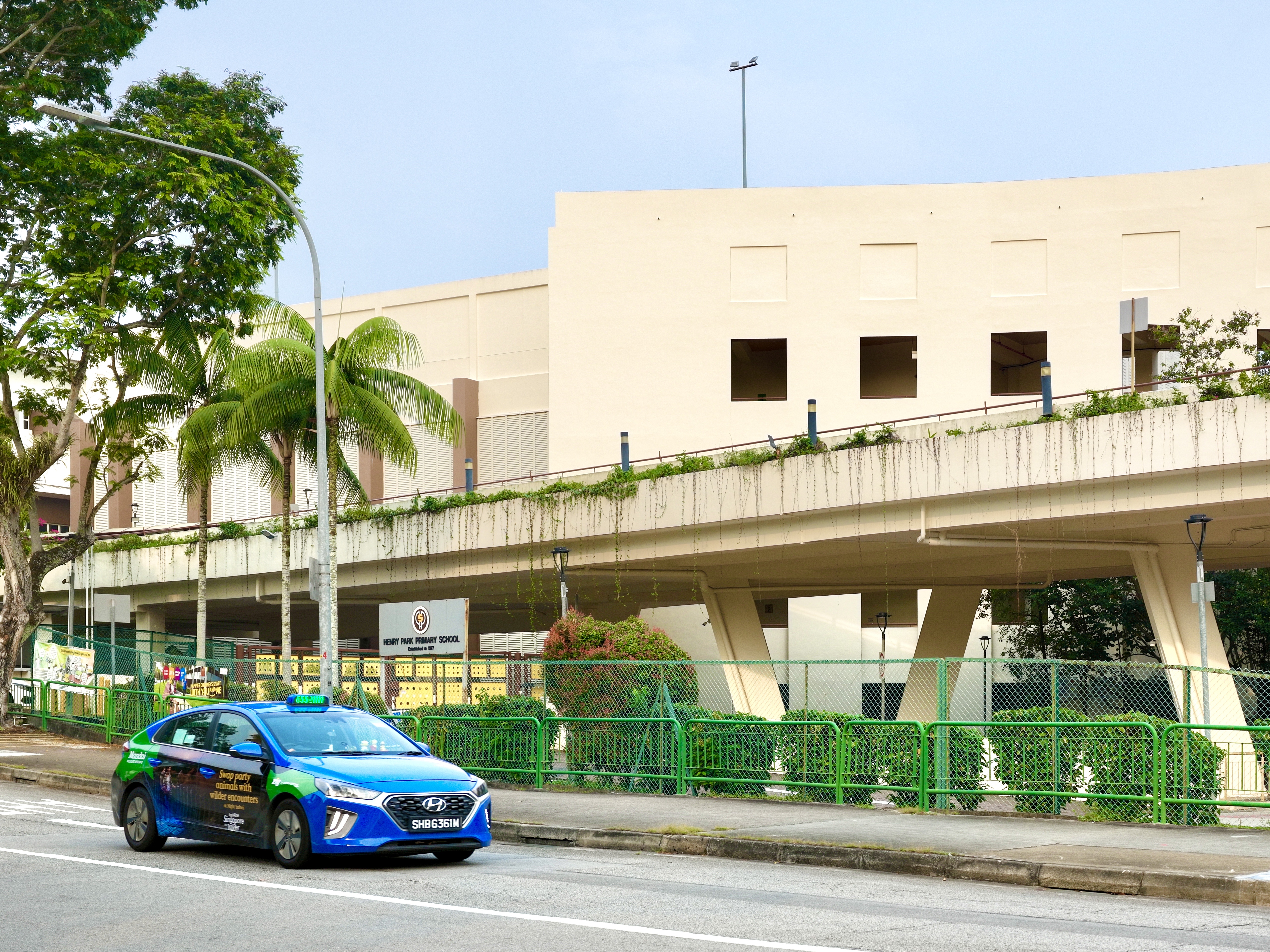
Should a child still take the school bus when Singapore’s haze is Unhealthy, and can parents change the pickup point? Check the latest NEA one-hour PM2.5 reading and MOH’s guidance for children for the outdoor journey, then confirm the child’s actual transport and school arrangements with the bus operator and school. A bus that is operating does not mean every outdoor CCA is proceeding; a school that remains open does not guarantee the route is unchanged. The objective is to preserve necessary schooling while reducing avoidable exposed walking and waiting, following road-safety rules and the child’s individual health plan. A covered pickup point offers rain shelter but is not automatically filtered against fine smoke particles.
This Singapore haze school-bus and preschool transport guide is for parents, children, school-bus drivers, attendants, childcare centres and primary or secondary schools. It explains how to interpret MOE’s safety approach to pickup points, what LTA requires of vehicles and attendants, why cabin air conditioning and outdoor PM2.5 are different, how families can shorten needless waiting, what to do when the bus is late or routes change, how asthma or mobility needs affect arrangements, and why dropping a child at an improvised roadside point is unsafe. It includes a worked door-to-door exposure calculation, weekday checklists, examples from Clementi, Punggol, Bedok and Woodlands, and a practical parent FAQ.
Singapore has an official policy foundation. In a 4 July 2023 parliamentary reply on school-bus pickup and drop-off points, MOE said operators should choose safe, well-selected points that are sheltered and have minimal traffic, and that parents with concerns can discuss pickup locations with their operator. The LTA school-bus safety requirements cover seating, warning signs, hazard lights and bus attendants. These safety requirements continue during haze. They do not imply that a sheltered stop has HEPA filtration or that a parent may unilaterally change the route without agreement.
Four quick checks before the morning bus arrives
Air: Look at the current one-hour PM2.5 for immediate outdoor activity rather than yesterday’s PSI screenshot. MOH has more cautious guidance for children than healthy adults. A prolonged unnecessary wait outside may be avoidable even when the journey to school is necessary.
Child: Is the child feeling well, breathing normally and following any prescribed medical plan? A child with asthma who is wheezing requires appropriate attention, not pressure to remain in line so the bus can depart on schedule.
Route: Confirm the exact pickup time, location, bus operator and any approved change. Do not assume the bus driver can safely stop at an arbitrary road corner simply because it looks closer to the house.
School: Check official school communications for attendance, haze-related PE changes and any specific transport updates. An independently scheduled outdoor excursion and the normal morning bus may be handled differently.
The result is a practical school-day plan. It should not be a blanket instruction that all bus transport must halt at one PSI number.
What the one-hour PM2.5 says about children
NEA measures one-hour PM2.5 in micrograms per cubic metre. MOH’s immediate bands are Normal (0–55), Elevated (56–150), High (151–250) and Very High (251 and above). At Elevated, the vulnerable group that includes children should avoid strenuous outdoor activity; at High and Very High, it should avoid outdoor activity.
For healthy adults, the guidance is less restrictive at some levels. A parent should not apply only the adult recommendation to a child with asthma or other chronic conditions. The immediate guidance also differs from the 24-hour PSI forecast, which is intended for broader planning of the following day.
An essential trip to school is not the same purpose as a long optional jog, but that does not make the outdoor waiting or walk disappear. Parents can minimise unnecessary exposed time while following actual school and transport requirements.
MOH’s personal guide is not a clinical diagnosis, a directive about one specific school-bus operator or proof of air quality inside a vehicle. It is one input to a decision that also requires symptoms, route and actual service information.
PSI forecast versus the morning’s real conditions
The 24-hour Pollutant Standards Index uses Good (0–50), Moderate (51–100), Unhealthy (101–200), Very Unhealthy (201–300) and Hazardous (above 300) categories. A forecast can help the family plan a backup if an outdoor school activity or transport arrangement might change.
However, the next morning’s one-hour PM2.5 can move differently as smoke transport and weather change. NEA’s 17 October 2026 update forecast Unhealthy to Very Unhealthy conditions for 18 October and directed people to one-hour PM2.5 for the immediate next-hour decision. That is a dated example, not a live status statement for a particular bus on any later date.
Do not compare a PM2.5 concentration of 180 with a PSI index of 180 as if they were the same measurement. The values have different units and averaging methods.
A school day can be planned with a forecast and updated when the morning information arrives. Good planning is flexible rather than trying to predict the atmosphere perfectly.
What MOE says about pickup and drop-off points
In its July 2023 answer to Parliament, MOE said student safety was paramount when choosing school-bus pickup and drop-off points. Operators should select points that are safe, sheltered and have minimal traffic, including common pickup locations introduced to streamline routes.
MOE also stated that parents concerned about the location can discuss a point nearer to home with the school-bus operator, and encouraged families to help children learn road safety and arrange chaperones for younger children where necessary.
That is useful during haze: a parent may have a legitimate reason to ask for a shorter exposed walk or wait. But the operator must consider route feasibility, road safety and all children on board. The parent should not demand an unapproved new roadside stop or encourage boarding at a dangerous junction.
A sheltered pickup location reduces exposure to rain and sun, but it can still be open to smoky outside air. Treat “sheltered” and “filtered” as two different claims.
A shelter is not a clean-air room
HDB void decks, covered walkways, bus-stop shelters and school gates often have roofs. They can make pickup more comfortable, but many are naturally ventilated or open-sided. Airborne PM2.5 can move through those openings.
A family may stand beneath a roof for 30 minutes and think the child is indoors because the direct sun does not reach them. From an air-exposure perspective, an open-sided location generally remains connected to outside conditions. The real decision is how long and how necessary that wait is.
If the operator can provide a reliable notification when the bus approaches, the family may reduce unnecessary time outside. But do not rely on an unverified GPS estimate as authority to make the bus wait or change its route. Confirm actual operator policies.
When the child is medically vulnerable, follow the health advice and existing clinical plan, and discuss practical arrangements before the morning rush.
School-bus safety continues during haze
LTA’s official bus requirements describe safety devices for buses carrying school children. They cover appropriately authorised school-bus drivers, seating rules, an illuminated “Children Crossing” sign at the rear, hazard warning lights activated when doors open and bus-attendant requirements for certain services.
These rules address road and child safety. They are not haze-particle filters, and an air-quality episode does not suspend them. A bus driver should not open doors in an unsafe traffic location or overload a seat because a child wants to spend fewer seconds outside.
LTA explains that where seat belts are fitted, the number of children on a seat must not exceed the number of seat belts. That matters independently of whether the vehicle is air-conditioned. Do not replace established seating and safety requirements with improvised haze instructions.
A thoughtful parent response preserves both health precautions and road safety rather than trading one risk for another.
Bus attendants for childcare and kindergarten transport
Under LTA’s published requirements, buses used to ferry children to childcare centres or kindergartens, and buses authorised to carry more than 30 children, must have a bus attendant on board. Bus attendants must hold the appropriate vocational licence. The relevant rules concern the vehicle and service type, not a general rule that every schoolchild on every bus always has an attendant.
The LTA vocational licence guidance describes the Bus Driver’s Vocational Licence and Bus Attendant’s Vocational Licence as separate qualifications. Parents should ask the provider which arrangement applies to their actual service.
During haze, the attendant’s role in boarding, supervision and safe handover remains important. A young child should not be left unattended at an improvised pickup point because a parent thinks the air is clearer one street away.
A centre’s transport arrangement can also have different parent charges or scheduling procedures. Confirm those with the operator rather than assuming that an emergency environmental situation automatically creates a new free route.
Is air conditioning on a school bus equivalent to HEPA?
No. A vehicle cabin may have air conditioning and some filtering, but the actual system varies by bus type, maintenance, air intake and operation. A cool cabin is not evidence that every PM2.5 particle has been removed. Doors open at stops, and students may spend time waiting outdoors.
Parents can ask the operator whether the vehicle is air-conditioned and how it maintains the cabin system, but a general article cannot certify a particular bus’s indoor PM2.5 level. Nor should it direct drivers to override manufacturer settings or disable necessary ventilation without a proper assessment.
Reusing air in a vehicle may reduce some outside-air entry in certain conditions, but permanent recirculation without consideration of ventilation and other passengers is not a universal answer. The vehicle operator should follow the equipment’s instructions and suitable safety procedures.
For the air-filtration principles, read Singapore Haze Air-Con Filters, HEPA and Servicing.
How long is the actual exposed school journey?
A child may leave home, wait at a covered pickup point, ride in an enclosed bus and then walk across an open school compound. The bus ride itself is not the only relevant exposure. The child may also wait for a parent after school at an outdoor gate.
A family can identify which portions are essential and which can be shortened safely. A reliable pickup process may avoid standing outside excessively early. A sensible route can reduce long detours on foot, while still maintaining traffic safety and supervision.
Do not assume that a child is protected for the entire journey because the middle segment is in an air-conditioned vehicle. Nor should a parent automatically drive across a dangerous or congested route to avoid a short planned walk without considering safety.
The distinction also helps explain why one family’s decision differs from another. Door-to-door routes vary by estate, school and operator.
Worked example: the morning outdoor minutes
Imagine a child walks seven minutes to a pickup point, waits 18 minutes outdoors, rides on a school bus for 25 minutes and walks five minutes from the drop-off point to the classroom. The total journey is 7 + 18 + 25 + 5 = 55 minutes. The identified outdoor walking and waiting portions are 7 + 18 + 5 = 30 minutes.
Now suppose the operator’s confirmed timing information allows the parent to reduce the waiting segment from 18 to 6 minutes without risking a missed bus or unsafe rush. The identified outdoor time becomes 7 + 6 + 5 = 18 minutes, twelve fewer minutes of outdoor waiting.
This calculation does not measure the child’s inhaled PM2.5 dose. That would depend on pollution concentration, exertion, actual cabin air and other factors. It simply reveals where avoidable waiting occurs in a routine.
The teaching method matters: identify the actual time segments, calculate with consistent units and interpret the result without inventing a medical guarantee.
Do not move the pickup point without agreement
A parent may notice a different covered driveway closer to home and decide the bus should stop there. But stopping locations must be selected for road and pedestrian safety, actual routes and operator conditions. A convenient curb may obstruct traffic, lack safe crossing space or expose children to vehicle movement.
MOE’s parliamentary reply explicitly supports discussion with the operator when a family has concerns about existing locations. That does not authorise unilateral route changes by passengers. Make the request in advance, describe the child’s circumstances and ask whether a safe and operationally workable alternative exists.
For a child with mobility needs, the relevant provider may need to assess vehicle and access suitability, not merely walking distance. A location with a lift is not helpful if the vehicle cannot stop safely there.
A clear approved stop and handover procedure are valuable even when air conditions change unexpectedly.
The child who misses the bus
Haze can create pressure to rush, especially when a bus approaches and a parent wants to reduce time outside. But running into traffic, boarding from an unapproved location or leaving a young child unattended are not appropriate solutions. Follow the operator’s ordinary missed-bus procedure.
If the child misses the service, contact the school and family as required, then consider a suitable safe transport alternative. The actual transport and attendance arrangements vary; do not assume a uniform taxi refund or complimentary pickup across every provider.
Children can learn a simple response: remain with the authorised caregiver or at the agreed safe location, contact the appropriate adult and avoid attempting a different vehicle or route without permission.
The goal is a controlled transition, not arriving one minute sooner at the cost of safety.
The school gate: short walk or long queue?
Some schools have sheltered pedestrian routes and designated vehicle areas, but parents may still wait outdoors at gates and crossings. A long queue of adults on an uncovered path can create exposure that was not part of the child’s original plan.
If possible, use the school’s actual dismissal and transport information to avoid unnecessary early waiting. Do not crowd the gate or block pedestrian access because the forecast is Unhealthy. Schools need workable safety and supervision procedures, and late pickup arrangements must remain clear.
A parent of a child with chronic lung disease may need an individual discussion with the school about suitable waiting or handover, rather than assuming every child can be collected through an unsupervised side entrance.
If the school changes its outdoor programme, that does not automatically change the school-bus route. Confirm each decision with the responsible party.
School attendance and PE or CCA are separate
The Singapore Government’s September 2026 haze measures describe MOE school attendance and outdoor activity precautions, including adapting prolonged outdoor exertion and providing air purifiers in classrooms. Those measures do not imply that every school bus is cancelled because outdoor PE is modified.
A student may continue ordinary classroom lessons while football CCA is postponed. The morning bus may run even though a field trip is cancelled. Likewise, a particular bus provider could have a service issue independent of the school’s academic opening.
Parents should read the exact school’s and operator’s messages and avoid drawing broad conclusions from a screenshot about an unrelated facility.
Our Singapore Haze Schools, PE, CCA and Exams Guide details institutional decisions.
Preschool pickup and ECDA programmes
Preschool transportation may involve younger children, specific attendant requirements, contracted service providers and centre-specific procedures. ECDA’s preschool haze guidance addresses how centres plan outdoor activities using PSI forecasts and immediate PM2.5, while childcare arrangements and transport have their own supervision needs.
A child in infant care or kindergarten does not necessarily follow an older primary student’s bus schedule. Ask the centre and operator about the actual handover, bus attendant, waiting area and any adjustments needed for a child with medical needs.
ECDA’s fees guidance explains that transport can be an additional preschool service charge disclosed to parents. Haze does not automatically make those contractual arrangements disappear.
The caregiver should preserve normal feeding, safe sleep, supervision and medical care. A change of outdoor programme need not mean the centre closes or that the child should be left outside until the usual departure time.
A child with asthma and prescribed medication
Children with asthma may have an individual action plan covering routine medicine and what to do when symptoms worsen. Keep that plan accessible through the appropriate family and school arrangements. A general school-bus article should not prescribe a new inhaler dose, require the child to wear a mask without assessment or declare them fit to travel despite significant wheezing.
If an older child reports difficulty breathing at a pickup point, the supervising adult should respond to the symptom and seek medical advice or emergency assistance as appropriate. Severe breathing difficulty, chest pain or collapse can require calling 995.
A student who is well and travelling under suitable arrangements may continue school routines without panic. But the family’s risk assessment should include the child’s health, current guidance and actual waiting duration.
Our Singapore Haze Asthma Guide explains medication and CCA decisions more fully.
Children with disability and accessible transport
A child with a mobility impairment may require a wheelchair-accessible vehicle or specialised service. A shorter walking distance alone does not guarantee access if the stop has steps, an unsuitable curb or no safe vehicle boarding area. The family and provider should consider the actual route and equipment.
Disability is not itself a diagnosis of chronic lung disease. Some children may be medically well but require accessible transport, while others may have multiple complex conditions needing individual advice. The transport plan should respect the person’s actual needs and not impose the same restrictions on everyone.
If an existing accessible route becomes unavailable during haze, consult the responsible school, programme or operator rather than attempting unsafe improvised transfers. The aim is continuing necessary education while maintaining physical access and reducing avoidable exposure.
The Singapore Haze Caregiver and Accessible Travel Guide addresses mobility and routine planning beyond school.
Parent driving instead of the school bus
Some families may consider driving when air quality is poor. That could reduce waiting at the pickup point, depending on the actual vehicle and school arrangements, but it can also create traffic congestion and a different exposed walking route. A private car’s air conditioning does not guarantee perfect cabin particle filtration.
Follow the school’s designated drop-off rules and road-safety directions. Do not park illegally, stop across pedestrian crossings or let a child exit on an unsafe side of the road. If the school has a specific transport plan, check it before changing routines.
A child with asthma or another condition may need the family to balance exposure, timing and clinical advice rather than assume every car journey is medically superior to bus travel.
For vehicle recirculation, cabin filters and visibility see Singapore Haze Driving and Car Air-Con.
Buses, vans and different service types
Singapore school transport may include different vehicle sizes and licensing arrangements. LTA distinguishes school buses, excursion buses, private hire buses and other classifications. A small van-looking vehicle should not be assumed subject to precisely the same operational rules as a large school bus without checking its registration and service type.
The LTA bus safety page is the correct reference for vehicle requirements, while the operator should explain the particular service. The MOE school-bus operator directory lists school bus operators serving MOE schools; it is not a real-time GPS map of every morning route.
This matters because a parent may see different transport providers and assume that if one cancels, all must have cancelled. Actual operating changes and route details need direct confirmation.
A service contract may specify pickup windows, change procedures and fees. Haze alone does not establish an automatic cancellation right or complimentary alternative.
The bus driver and attendant are also exposed
A driver or bus attendant may spend hours on a route, board many children and have outdoor time at pickup points. Their occupational exposure differs from a child making one short trip. Employers and service operators should consider the relevant MOM haze workplace guidelines for outdoor tasks, health vulnerability and working conditions.
The driver’s road-safety responsibilities remain essential. Nobody should pressure the driver to exceed safe speeds, skip a safety check or board at a prohibited location because haze has worsened. A faster route cannot justify an unsafe journey.
Attendants may need clear processes for reporting a child who is unwell or for communicating delays. Those arrangements depend on the actual operator and school, and sensitive health information should be handled appropriately.
A practical operator plan separates the environmental decision from vehicle safety, staff support and communication with parents.
Do N95 masks make the bus journey safe?
MOH generally does not recommend N95-equivalent respirators for ordinary short home-to-school commutes or indoor settings. It has additional warnings about the suitability and fit of masks for children, and respirators can increase breathing resistance.
The first practical action is usually to reduce unnecessary exposed waiting and follow the child-specific outdoor guide. A mask should not be treated as permission for long strenuous outdoor exercise or a reason to ignore a child who is struggling to breathe.
Do not place an adult N95 on an infant or improvise an airtight stroller cover. For older children, suitability depends on actual fit, health and current official advice. Parents should discuss special concerns with an appropriate healthcare professional.
Read Singapore Haze N95, KN95 and KF94 Mask Guide for standards and children-specific limitations.
Rain, lightning and haze are separate transport concerns
A school bus route may be affected by heavy rain, flooding, road closures or traffic even when haze is absent. A smoky day may also include poor visibility, but a photograph of the skyline cannot establish that every road or bus service is unsafe. Drivers must follow proper road and vehicle procedures.
A sheltered pickup point helps in rain without filtering particles, and a hot sunny day can pose heat concerns while outdoor PM2.5 is High. The family needs separate evidence for each issue rather than collapsing weather, pollution and transport operation into one number.
If the operator changes the route, parents should receive the correct pickup and handover instructions. Do not assume all school buses have identical delays because one service reported an incident.
A stable communication method is more useful than constant speculation in a parent group chat.
The household’s two-message plan
Parents can prepare two short factual messages for different audiences. To the operator: “Please confirm the pickup point and estimated time today, and whether there are any authorised changes. We are trying to avoid unnecessary outdoor waiting for our child.” To the school: “Please confirm any changes to arrival, outdoor activity or our child’s approved medical arrangements.”
The wording focuses on information that the recipient can actually provide. It avoids demanding that the driver invent a stop or that the school promise a particular indoor PM2.5 reading.
If a message is about a child with a diagnosed condition, use the appropriate private communication channel. Do not post the child’s medical information or NRIC details to a general chat group.
Good coordination is calm, specific and timestamped. The most useful outcome is an unambiguous plan before the child leaves home.
Worked family example: Punggol morning transport
A Punggol Primary 4 student usually walks to a common pickup point near home. The family notices that the one-hour PM2.5 is High. MOH advises children to avoid outdoor activity at High, so the parent contacts the operator about confirmed timing and the actual safest pickup arrangement, without inventing an immediate route change.
If the child is healthy and the school and transport arrangements permit the necessary journey, the parent considers how to minimise unnecessary exposed waiting. If the child has wheezing or another significant symptom, the health response may take priority over the ordinary timetable.
The family does not assume that Punggol waterfront air is cleaner just because a sea breeze is blowing. A roofed pickup point is useful but remains open to outdoor air.
This is an example of decision logic, not a claim that any particular Punggol bus has been delayed or rerouted today.
Worked family example: Clementi and an asthmatic child
A Secondary 1 student from Clementi has a prescribed asthma action plan and normally travels by school bus before an afternoon Mathematics tuition lesson. Haze affects outdoor activity guidance, but the student still has a regular school timetable and a separate private tuition booking.
The parents contact the school-bus operator to confirm transport, the school about any PE changes, and the tutor about the optional later journey if necessary. They do not infer that the tuition centre must close because a school CCA is postponed. If symptoms develop, the child’s medical plan and healthcare come first.
For any missed academic session, the tutor can provide focused catch-up rather than punishing the student with extra worksheets. This follows the Clementi Secondary 1 Mathematics tutorial model of explaining the underlying difficulty and checking understanding.
Three different arrangements—bus, MOE school and private tuition—can change independently under the same environmental episode.
School-bus decision table
| Question or situation | Check first | Practical action | Avoid |
|---|---|---|---|
| Is today’s bus operating? | Actual operator’s latest notice | Confirm pickup time and location | Trust an unrelated parent screenshot |
| Is outdoor waiting suitable? | NEA one-hour PM2.5 and MOH child guide | Reduce unnecessary waiting | Treat a roof as HEPA filtration |
| Can pickup move closer? | MOE safe-location principle and operator | Discuss an authorised safe point | Demand roadside unscheduled stop |
| Is the vehicle correctly equipped? | LTA safety requirements | Use an authorised school transport service | Sacrifice seat belts or road safety |
| Do young children need an attendant? | LTA service-specific requirements | Confirm childcare/kindergarten arrangement | Assume all bus types are identical |
| Does bus aircon clean the air? | Actual cabin ventilation and maintenance | Ask factual operator questions | Cool air certifies zero PM2.5 |
| Child has asthma symptoms | Individual action plan and clinician advice | Seek care and tell authorised adults | Force attendance despite breathing difficulty |
| School cancels PE | Actual school communication | Treat PE and transport separately | Assume all buses are cancelled |
| Bus missed or delayed | Operator’s actual procedure | Use safe agreed handover or alternative | Run into traffic or board unknown bus |
Frequently asked questions about school buses during haze
Must school buses stop running when PSI reaches 101?
There is no supported universal school-bus shutdown rule at that single PSI number. Follow current government health advice, school communications and the actual operator’s service arrangements.
Are school pickup points sheltered?
MOE says operators should select safe pickup and drop-off locations that are sheltered and have minimal traffic. That is a planning principle, not a guarantee that every stop is enclosed or particle-filtered.
Can I ask the bus to stop nearer my HDB block?
You can discuss a location concern with your school-bus operator, as MOE advises. The operator must consider traffic safety, route feasibility and approved arrangements. A parent should not create an unauthorised pickup point.
Does an HDB covered walkway block haze?
Not necessarily. A roof and open sides may allow outdoor particles through. Sun and rain protection are different from fine-particle filtration.
Is an air-conditioned school bus free of PM2.5?
No guarantee follows from cooling alone. Vehicle cabin filtration, airflow, door openings and maintenance vary. Ask the actual operator about its system rather than assuming a certain indoor concentration.
Are all school buses required to have attendants?
LTA has specific requirements, including for buses carrying children to childcare centres or kindergartens and buses authorised for more than 30 children. The actual service type and capacity matter.
Do bus attendants need a licence?
LTA provides a Bus Attendant’s Vocational Licence for school-bus attendants and identifies requirements for services that must have attendants. Refer to the current LTA rules for the relevant service.
Can a child share a seat with another student during haze?
LTA’s seating and seatbelt requirements still apply. Haze does not permit unsafe overcrowding or ignoring the number of installed seat belts. Follow the bus operator’s approved seating arrangements.
What if the child with asthma starts wheezing at pickup?
Follow the child’s prescribed asthma action plan and seek suitable medical advice. Significant breathing difficulty requires urgent help, not pressure to board before the bus leaves.
Is a school bus better than walking?
It depends on the actual route, outdoor waiting, cabin conditions, road safety and child’s needs. A long exposed bus wait and a brief walk are different circumstances. There is no universal answer from transport mode alone.
Can I drive my child when the haze is High?
Families may use appropriate private transport subject to school drop-off rules and safe driving. Vehicle air conditioning does not guarantee perfect particle filtration, and dangerous roadside drop-offs are not acceptable.
Does outdoor CCA cancellation mean the morning bus is cancelled?
No. School activities and transport operations are different services. Confirm the specific bus route and the school’s actual timetable separately.
Can I keep my preschool child home because of haze?
Attendance and health decisions depend on the child, centre, contract and current guidance. ECDA preschools may adjust outdoor programmes while continuing normal indoor care. Communicate with the actual centre.
Are school-bus fees refunded when the air is Unhealthy?
Do not assume a universal automatic refund. Contract terms, provider decisions and circumstances matter. Contact the operator and review the relevant agreement.
Should schoolchildren wear N95 during a short commute?
MOH generally says N95-equivalent masks are unnecessary for ordinary short home-to-school commutes and indoors, and children’s fit has particular limitations. Follow current guidance and individual medical advice.
What if the bus arrives late and the child is waiting outdoors?
Follow the operator’s communication procedures and maintain safe supervision. If possible, ask about accurate timing to avoid unnecessary exposed waiting, but do not move to an unauthorised stop.
Can a school-bus driver change the route during haze without telling parents?
An operator should communicate actual changes through its proper process, particularly where child handover or pickup points change. Parents should follow confirmed arrangements and not rely on rumours.
Is the bus driver also at risk from haze?
A driver or attendant may spend long periods on duty. Employers should assess occupational exposure under relevant MOM guidelines, separate from the child’s personal activity guidance.
Can children stand in a basement carpark to avoid haze?
A carpark is not a general child waiting or play room. Vehicle movement and exhaust create separate hazards. Follow designated safe pickup and handover locations.
How does haze affect tuition pickup after school?
Private tuition transport and school buses may have separate providers and policies. Confirm both, assess the child’s health and avoid creating long unnecessary exposed waits. A tuition provider’s lesson change does not automatically cancel the school’s bus.
Continue through the eduKate haze and education network
Begin with How Haze Works | SEA 2026 and Singapore Haze Family Preparedness. For MOE policy read Singapore Haze Schools, PE, CCA and PSLE and School Excursions and Field Trips.
For journeys and children see Singapore Haze Commuting, Driving and Car Cabin Filters, Babies and Toddlers and Children’s Playgrounds.
The learning continuation is Singapore Haze and Tuition and Clementi Secondary 1 Mathematics: Small-Group Tutorials. For medical and environmental reasoning, consult Singapore Haze Asthma and MOE Reference 86 on Haze Monitoring.
Official references and publication scope
Primary sources: MOE Common School-Bus Pickup and Drop-Off Points, 4 July 2023, LTA Safety Requirements for Buses, LTA Bus Driver and Attendant Licences, MOE School-Bus Operator Directory, MOH Haze Advisory, NEA Haze Portal, ECDA Haze FAQ and MOM Haze Guidelines.
Prepared in October 2026 as a parent and transport education guide, not real-time bus tracking, a route booking service, clinical clearance or a legal ruling on fares. School-bus routes and safety arrangements differ. A reliable plan keeps the child healthy, supervised and safe on the road while avoiding unnecessary outdoor exposure.