
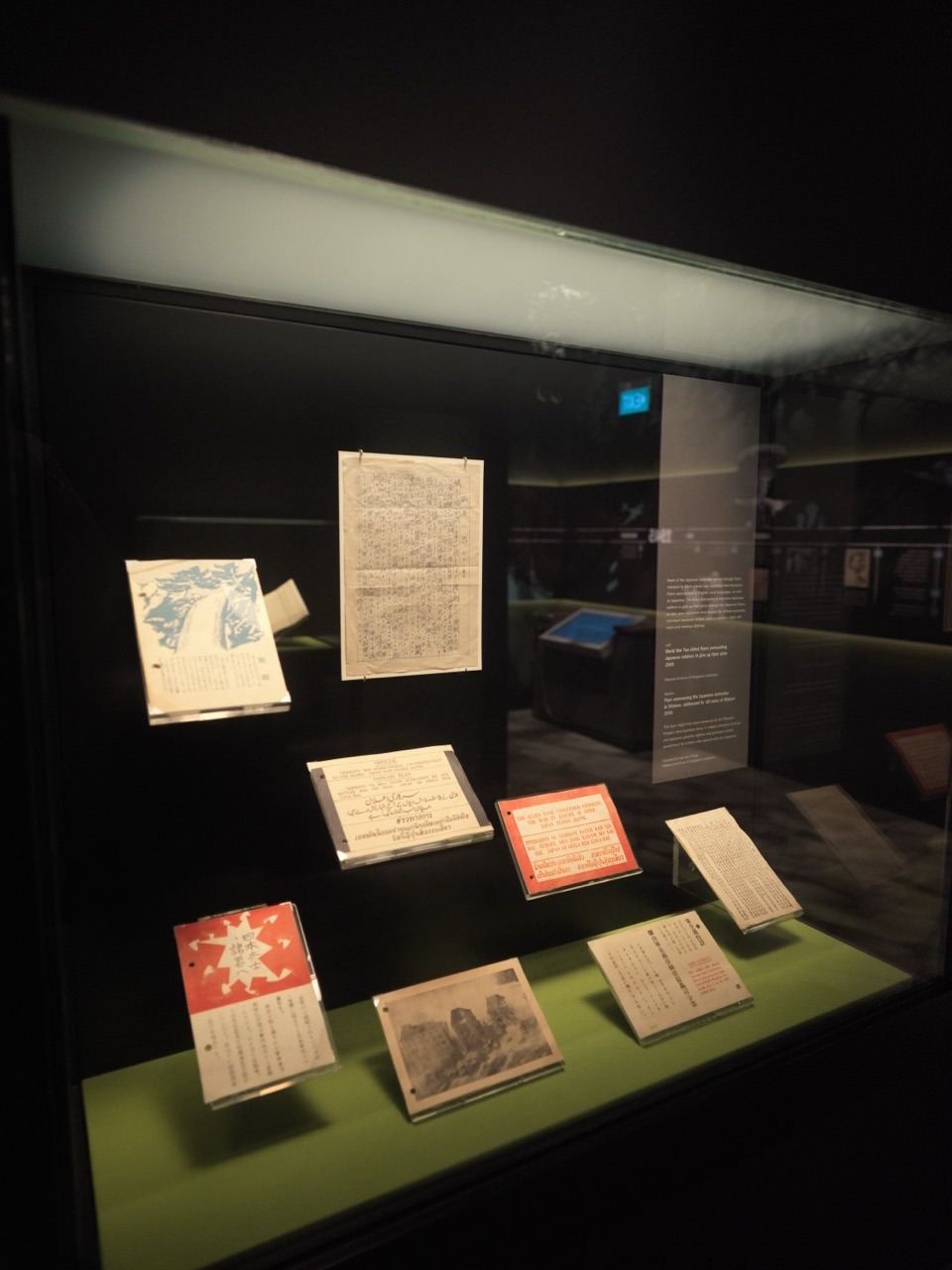
The gold standard of History is an account of the past that can show where its evidence comes from, explain what that evidence supports, and remain open to correction. A good historical explanation connects people, events and conditions across time without turning a surviving source, a memorable story or a present-day assumption into more certainty than it can carry.
This History guide brings the subject together: chronology, sources, causation, change and continuity, historical significance, archives, oral history, archaeology and learning. It serves as a root guide to the connected eduKate articles, helping students, parents and interested adults choose the branch that answers their actual question.
Imagine finding an old photograph of a busy street. It can tell you something about a visible scene. It cannot, by itself, tell you how every resident lived, whether the scene was typical or why the photographer chose that moment. History begins with curiosity, then builds a disciplined route from the surviving material to an explanation.
Find the part you need
Follow the question you need to answer. The chapters stay open, and the final reading map connects the specialist branches without repeating their full discussions.
Full chapter index · Connected articles · Learning that transfers into life
Chapter index
Understand the historical task · Chapters 1–3
Examine evidence · Chapters 4–7
Build an explanation · Chapters 8–11
Follow the specialist branches · Chapters 12–15
Learn and use History well · Chapters 16–18
A topic gives you an area to explore. A historical question gives you a task. ‘Transport in a town’ is a topic; ‘how did access to work change after a new transport connection opened?’ asks about a relationship over time. The question helps you decide which sources are relevant and which comparisons would be meaningful.
Fix the place and period early. A claim about one neighbourhood over ten years is different from a claim about an entire country over a century. You may later expand the enquiry, but a clear starting boundary prevents the evidence from being asked to support too much.
Define the terms that could change the answer. What counts as access: distance, journey time, cost or the ability to travel at a particular hour? What counts as change: a new service, wider use or an improvement experienced by a particular group? Historical questions often become clearer when their ordinary words are examined carefully.
Then ask what evidence might survive. Transport timetables could show a planned service; household accounts might reveal cost; oral testimony might describe lived experience; official reports may record policy aims. None of these alone answers every part of the question. Together, they suggest a research route.
A good enquiry is manageable enough to finish and important enough to explain. Students do not have to begin with a grand judgement about an entire era. A specific question about a school, street, object or decision can develop the same habits of evidence, context and careful explanation.
Chronology establishes sequence. It tells you what happened before, during and after an event or development. Without that sequence, an explanation can quietly reverse cause and consequence or place a person’s words in circumstances they had not yet experienced.
Build a working timeline with dates that matter to the question. Include the creation dates of key sources as well as the events they describe. An interview recorded decades later belongs at its recording date, even when its subject concerns an earlier period. The distinction helps you understand both the remembered experience and the later act of remembering.
Precision should match the evidence. Sometimes a document gives an exact day. Sometimes an object can only be placed within a broad range. Do not turn an approximate date into an exact one because a tidy timeline looks more impressive. Keep uncertainty visible.
Sequence is necessary for many causal claims, but sequence alone does not establish causation. If a policy appears before an economic improvement, further evidence is still needed to explain the relationship. Other developments may have occurred at the same time, or the apparent improvement may vary between groups.
Students can use a two-column timeline: what happened, and what source supports the entry. A third column can record uncertainty or competing dates. That small addition makes the timeline more than a memory aid. It becomes a map of the evidence behind the account.
A primary source is material used as direct evidence for the particular historical question being studied. Letters, photographs, official records, objects and oral accounts can all serve that role. A secondary work interprets evidence and existing scholarship. The distinction depends partly on the research question and the source’s relationship to it.
An old history textbook illustrates the point. For a question about the events it describes, it is normally a secondary account. For a question about how pupils were taught to understand those events in a particular decade, the textbook itself becomes primary evidence. Its date, wording, illustrations and omissions become part of the enquiry.
Primary does not mean automatically accurate, and secondary does not mean unimportant. A contemporary writer can misunderstand an event, conceal information or know only one part of it. A careful later historian may compare many sources and explain their limitations. The quality of the reasoning matters alongside proximity.
Use sources for the questions they can answer. A timetable can show a published schedule without proving every service ran as planned. A photograph records what the camera captured, within its frame and circumstances. A memoir can illuminate experience while requiring care about memory and retrospective interpretation.
The learner’s task is to explain that relationship between material and claim. Naming a source type is a beginning. Showing why it is useful for a specific question, what it cannot establish and how another source might help is the more valuable historical move.
Provenance concerns where a source came from and how it reached you. Who created it? When? For whom? Under what circumstances? Is the version complete, translated, edited or reproduced? These questions help identify what you are actually examining.
A screenshot of a quotation can lose its date, surrounding paragraph and original audience. A photograph may circulate with a later caption that is mistaken. A transcription may contain a spelling error or omit a passage. Before building an argument, try to locate the source record and the closest available version of the original material.
Purpose matters, but it needs interpretation. An official statement intended to persuade the public can still provide useful evidence about policy aims or public messaging. A private letter can be candid in one respect while remaining selective or mistaken in another. A source’s purpose changes the questions you ask; it does not mechanically settle every question about reliability.
Separate the author’s position from your judgement about a claim. A person involved in an event may have valuable knowledge and strong reasons to present it selectively. Explain which parts of the account are supported, which need corroboration and what the source reveals even where its statements are disputed.
The Historians guide develops this professional branch. Its place in the wider subject is straightforward: an account becomes more dependable when readers can follow the route from the material to the interpretation.
Context includes the conditions, institutions, vocabulary and events relevant to a source’s creation. A phrase that sounds ordinary today may have carried a particular political or social meaning at the time. A decision that seems obvious in retrospect may have involved uncertainty that its participants could not resolve.
Begin with the source’s immediate setting. What had happened recently? What did the creator know, and what remained unknown? What role did the audience play? Then connect the source with the wider period only where that connection helps explain the material.
Context should illuminate rather than replace the source. Students sometimes write a long passage of background knowledge and forget to examine the actual words or image. A stronger response selects the contextual fact that changes the interpretation, then explains that connection explicitly.
Avoid assuming that people in the past knew the outcome. A person deciding before an event could not rely on the knowledge available to a later historian. Reconstructing the options visible at the time helps explain action more fairly, even where the historian ultimately criticises the choice.
Context does not require agreement with the source’s values or actions. It makes understanding more accurate. You can explain a person’s circumstances, assess their claims and judge the consequences while keeping those tasks distinct. Historical care improves moral discussion by making the evidence and reasoning clearer.
Corroboration means checking a claim against other relevant evidence. The goal is to understand how strongly the claim is supported and where uncertainty remains. Several sources agreeing can be useful, but agreement needs to be examined rather than counted automatically.
Three later articles may all repeat the same original report. They are not necessarily three independent confirmations. Trace the information backward where possible. If each account depends on one unverified statement, the repetition does not remove the original uncertainty.
Disagreement can arise for several reasons. People may have observed different parts of an event, used different definitions, written at different times or pursued different purposes. Establish what is actually in dispute before deciding which source is more useful.
Consider two accounts of a public meeting. One describes the organisers’ aims; another describes a participant’s experience. They may appear inconsistent because they answer different questions. A fuller account can preserve both perspectives while testing any conflicting factual statements against additional evidence.
Students can use a claim table: the claim, the source that supports it, any independent support, any contradiction and the remaining uncertainty. This slows the rush to a verdict. It also makes an essay easier to write because the evidence has already been organised around what the argument needs to establish.
Use this invented learning exercise. A fictional town’s council report says that a new library opened in 1932. A newspaper notice from the same year advertises its opening hours. An interview recorded in 1985 describes the library as ‘where I learned to read’. These are fictional sources for practising method, not quotations from a real archive.
| Source | What it can support | What needs further evidence |
|---|---|---|
| Council report | A recorded institutional claim about the opening | Whether access and use matched the stated aims |
| Newspaper notice | The hours advertised to readers | Actual opening on every advertised day |
| Later interview | A person’s remembered experience and interpretation | Whether the experience represented all local children |
A modest conclusion is that the report and notice support an account of a library opening and advertising access in 1932. The interview adds evidence of one remembered educational experience. Together, they do not establish that every child could attend or that literacy improved throughout the town.
A stronger investigation might seek enrolment records, borrowing data, school records, other interviews and information about eligibility or costs. The choices depend on the question. Researching the opening date and researching social access require overlapping but different evidence.
Notice that a source can be useful even when it cannot answer the largest question. The interview’s personal meaning matters. The notice’s advertised arrangements matter. Historical explanation becomes richer when each piece is given an appropriate role rather than being stretched into universal proof.
A historical cause helps explain why something happened. A list of events before the outcome is not yet a causal explanation. You need to show how a factor changed the situation, affected choices or made a particular outcome more likely.
Distinguish background conditions, developments over time and immediate triggers where that distinction helps. A trigger may explain why an event began at one moment, while longer-term conditions explain why the situation was vulnerable to that trigger. The categories are tools for reasoning, not boxes that every case must fill.
A student might identify economic pressure, political decisions and public attitudes in an explanation. The next task is to connect them. Did economic pressure influence particular decisions? How were those decisions communicated? Which groups responded, and why? Each relationship requires evidence.
Evaluate importance by stating the comparison. A factor may be essential to one part of the outcome yet insufficient to explain the timing. Another may influence timing while depending on earlier conditions. Saying ‘this was the most important cause’ needs a reason that fits the actual question.
Be careful with inevitability. An outcome that happened is not therefore the only outcome that could have happened. Examine the alternatives visible to participants and the points where decisions mattered. This gives the explanation room for contingency without reducing history to a collection of accidents.
Change concerns what became different; continuity concerns what persisted. They often coexist. A new building can alter the appearance of a street while older social networks continue. A new rule can change formal arrangements while everyday practice adapts slowly or unevenly.
Specify the dimension being examined. Transport technology, journey cost, access, employment and personal experience are different measures of change. If the question concerns access to work, the arrival of a new vehicle is relevant only through its effects on actual travel and opportunity.
Set a baseline and a comparison period. Then ask whether the sources measure comparable things. A later survey with a broader definition can produce an apparent increase even where the underlying situation changed less. A shift in recording practice can itself become an important historical development.
Look for unevenness between groups and places. An innovation may benefit people near a new route while leaving others with long connecting journeys. A policy can apply nationally while its effects differ locally. A careful account identifies who experienced the change and which evidence supports that distinction.
Students can organise a paragraph around a precise judgement: substantial change in one dimension, continued limits in another. That structure is useful because it avoids the false choice between saying everything changed and saying nothing changed. Historical transformation usually has texture.
Historical significance asks why a person, event, development or object deserves attention in relation to a question. Fame is one possible clue, but it is not a sufficient explanation. A less famous change may have affected everyday life more broadly or reveal an important experience missing from familiar accounts.
Choose criteria and explain them. These might include the extent of consequences, the number or range of people affected, duration, influence on later developments or what the case reveals about its period. The appropriate criteria depend on the enquiry.
An event can be significant locally without having equal global importance. An object can be significant because it documents a particular community’s experience rather than because it changed national policy. State the scale of the judgement so the claim remains intelligible.
Significance can also change as new questions emerge. A record once treated as routine may become valuable to researchers examining work, family life or migration. This does not mean the record’s original facts changed. Its relevance to a historical enquiry changed.
The practical lesson is to make the reasoning inspectable. Instead of saying that an event was important because it was important, name the effect, show the evidence and explain why that effect matters for the question. A clear criterion turns an assertion into an argument.
People within the same period did not share a single experience or opinion. Position, occupation, age, language, gender, resources and involvement in events could shape what they knew and how they interpreted it. Historical explanation should preserve those differences where the evidence allows.
Use careful language. A source from one person does not automatically represent an entire community. A statement issued by an organisation may express its official position while leaving internal disagreements invisible. Describe whose perspective the source records and avoid enlarging that claim without support.
Perspective is not a substitute for testing factual statements. A person can sincerely remember something and still be mistaken about its date. An interested party can make a factual statement that is independently supported. Assess the claim and the viewpoint together.
When evidence from a group is scarce, acknowledge the gap. Do not invent a representative voice to make the account feel complete. Look for other records that may illuminate the experience while preserving the difference between direct testimony and an inference made from surrounding evidence.
This also affects classroom discussion. Learners should be able to compare interpretations with respect while asking firm questions about support. The aim is a better account of the past, grounded in evidence and attentive to the people whose lives are being described.
Archives preserve records with information about their creation and organisation. The surrounding context matters. A file within an administrative series can mean more than an isolated page because the series helps explain who produced it, why it was kept and how it related to other work.
Begin with catalogues and collection descriptions. A search result is a route into material, not the whole archival context. Record the institution, collection, reference number and relevant page or item details so you can return to the source and allow someone else to locate it.
Digitised material improves access but does not necessarily represent an entire collection. Some records may remain undigitised, restricted, damaged or difficult to describe. An unsuccessful online search does not establish that no evidence exists.
The National Archives of Singapore oral-history search offers fields including interviewee, project, recording dates and transcript content where available. Its notice also warns that automated voice-to-text search may contain inaccuracies. A search hit therefore needs checking against the relevant material.
The specialist Archives guide addresses the preservation and retrieval branch. For a learner, the immediate habit is simple: keep enough source information to recover the evidence, read its context and distinguish the record from the catalogue description.
Oral history records spoken accounts of experience and memory. It can reveal language, personal meaning and aspects of everyday life that formal records leave thinly documented. Its value does not depend on treating memory as a flawless recording device.
Separate the remembered event from the later interview. A narrator may connect experiences in ways shaped by later knowledge or changing circumstances. That retrospective interpretation is itself meaningful evidence, while specific factual details may still need comparison with other sources.
Questions influence what is said. An open prompt can allow a narrator to identify what mattered to them. A leading question can narrow the answer or suggest an expected account. Note the interviewer’s role and the setting rather than treating the transcript as an unprompted statement.
Consent and agreed use matter. A conversation for a family project is different from permission to publish a recording online. Follow the institution’s procedures and the participant’s agreed conditions. Explain the project in language the participant can understand, and avoid promising anonymity that the actual materials cannot support.
Transcription requires checking, especially for names, dates and unfamiliar words. Retain a route back to the recording where access permits. The Teaching Oral History guide develops this branch, connecting listening, responsible use and corroboration.
CHAPTER 14 OF 18
14. Connect archaeology and scientific methods with historical questions
Archaeology studies material evidence in context. An object’s location, relationship to surrounding deposits and association with other finds can matter as much as its appearance. Removing it from that context can destroy information that cannot be recovered from the object alone.
Scientific analyses can address particular questions about materials, dates, diet, movement or production. Their value depends on the sample, method, assumptions and uncertainty. A technical result does not automatically explain a whole community’s identity, beliefs or history.
Different methods also address different events. A date associated with a material sample may not be the date when a building was constructed or an object was last used. The historical interpretation must explain the relationship between the sampled material and the event being investigated.
The ecosystem’s branches on archaeological isotopes, ancient DNA, plant remains, geoarchaeology and dating methods should therefore be read as specialised enquiries. Each examines a particular kind of evidence. Their findings become historically useful through context and careful comparison.
For students, the transferable habit is to ask four questions: what was sampled; what does the method measure; what assumptions connect the measurement to the question; and what remains uncertain? These questions make technical evidence more understandable without pretending that a classroom summary replaces specialist expertise.
Digital search can reveal records quickly, but searchability is uneven. Optical character recognition may misread old print. Names can have variant spellings. A collection may be indexed differently from the terms a modern researcher expects. Search results reflect the available material and the system’s description of it.
Keep a record of useful search terms and follow references beyond the first result. If a source quotes another work, locate the original where feasible. A repeated quotation may have changed wording or lost its context as it moved between accounts.
AI can help propose research questions, organise notes or explain an unfamiliar term. It can also invent quotations, references and plausible details. Do not present generated language as a historical quotation or use a citation until you have checked the underlying source.
Images need explicit care. A generated reconstruction can be an illustration if it is clearly identified as such. It is not an original photograph or direct evidence of the reconstructed scene. The case study on an AI reconstruction labelled as a historic photograph explores that boundary.
Digital humanities can add methods for analysing large sets of material, but the historical question remains central. Counts, clusters or visualisations need interpretation in relation to the collection, its missing material and the conditions under which the records were created.
Students need factual knowledge to reason historically. They also need practice selecting and using that knowledge. Memorising an account can establish a foundation, but an unfamiliar source or a changed question asks the learner to make a new connection.
Diagnose the difficulty through a small task. Can the learner place events in order? Identify the source’s creator and audience? Explain what a quotation supports? Connect a contextual fact to an inference? Write a causal relationship? Each task reveals a different part of understanding.
The foundation-first approach in the Secondary 1 Mathematics Tutor Clementi guide transfers as a teaching principle: locate the first unstable connection and rebuild it before increasing complexity. In History, that might mean distinguishing an event date from a source date or separating a claim from its supporting evidence.
Use worked examples, guided attempts and independent practice. Show why a particular piece of evidence supports the argument, then ask the learner to try a comparable source. Later, change the source type or question so the learner has to recognise the relevant reasoning independently.
The Teaching History guide develops the classroom branch. Level-specific education and tuition articles address particular stages. This root guide provides the common structure: knowledge, chronology, source judgement and a defensible explanation working together.
A learner’s progress may first appear as greater precision. They stop calling every source biased without explanation. They check a date, distinguish observation from inference or recognise that two apparently independent accounts share one origin. These are concrete improvements in historical judgement.
Keep examples of earlier and later work. Ask the student to explain how the reasoning changed. Did the revised paragraph use evidence more specifically? Did it connect context to interpretation? Did it acknowledge a limitation without abandoning the whole argument? The explanation of the improvement is itself useful evidence of learning.
These habits matter beyond school. A museum label, heritage trail, family history or public commemoration presents an account to an audience. Choices about inclusion, wording and images influence what people understand. Clear sources and visible uncertainty help audiences distinguish documented findings from interpretation.
Public history can be accessible without pretending to know everything. A short label can state an established fact, explain its significance and identify an unresolved question. A longer guide can provide the evidence route for readers who want to investigate further.
History connects with learning that transfers into life when a person can examine an unfamiliar claim with more care. They ask who created the material, what it supports and which additional evidence would change the account. The subject’s usefulness travels with that habit.
Is History mainly memorisation?
Factual knowledge is necessary, but the subject also asks learners to explain relationships and evaluate evidence. A student needs an organised knowledge base and practice using it in response to a particular question.
Can a biased source still be useful?
Yes. Explain its purpose and position, then assess what it can support. A persuasive statement may reveal an organisation’s message or aims even where other factual claims need checking. Usefulness is specific to a question.
Are eyewitnesses always more reliable than later historians?
No. Eyewitnesses may have direct access to part of an event while misunderstanding other parts. Later historians may compare a wider range of material. Assess the particular claim, evidence and reasoning rather than assigning automatic authority to one source category.
What should a student do when sources disagree?
Identify the exact disagreement, check dates and purposes, and examine whether the sources address the same issue. Seek relevant corroboration. A careful account can preserve uncertainty where the evidence does not settle it.
Does uncertainty make an essay weak?
Unexplained vagueness weakens an argument. Specific uncertainty can improve it. State what the evidence establishes, where its limits lie and why the main judgement still follows. Avoid qualifying every sentence so heavily that no answer remains.
How should parents help with History?
Ask for an explanation of one event, one source or one argument. Listen for the relationship between the claim and its evidence. Support a manageable correction, then let the learner try again independently.
Which examination requirements apply?
The learner’s current course, cohort and official syllabus determine the requirements. This general subject guide does not set paper structures, topic lists or assessment rules. Use the school’s guidance and current official documents for those details.
Where should I continue?
Choose teaching and level-specific guides for learning; archives and historians for evidence practice; oral history for recorded memory; archaeology and scientific-method branches for material evidence; and local history for applying these habits to a particular place.
Connected articles across the eduKate ecosystem
Historical reasoning, teaching and learning
Start with the teaching branch for classroom practice and the historians branch for professional source judgement. The education guide connects both with the broader aim of knowledge that remains usable when the task changes.
- Teaching History | Sources, Context and Defensible Explanations
- Historians | Source Criticism, Context and Revisable Accounts
- Education | Learning That Transfers into Life
Archives, oral history and the public record
Follow the evidence from preservation and retrieval to spoken memory and public interpretation. These branches distinguish keeping a record, making it findable, examining its meaning and presenting it responsibly to an audience.
- Archives | Preserving Evidence and Retrievable Memory
- Museums | Objects, Evidence and Meaningful Visits
- Public Records and Archives Services | Preserved Evidence and Meaningful Access
- Teaching Museum Studies | Collections, Public Learning and Trust
- Teaching Oral History | Listening, Consent and Corroboration
- Accessible Exhibition Interpretation Services | Multiple Ways to Experience Collections
Read specialised historical evidence
Handwriting, inscriptions, coins, maps, names and population records ask different technical questions. These guides connect the particular material with its context and the limits of the conclusions that can be drawn from it.
- Teaching Epigraphy | Inscriptions, Context and Responsible Reading
- Teaching Historical Cartography | Maps, Scale and Source Criticism
- Teaching Numismatics | Coins, Circulation and Historical Evidence
- Teaching Paleography | Handwriting, Transcription and Historical Context
- Teaching Onomastics | Names, Identity and Source Evidence
- Teaching Historical Demography | Population Records and Cautious Inference
- Teaching Prosopography | People, Records and Collective Biography
Archaeology, material evidence and scientific analysis
Begin with context and material evidence, then choose a specialist method only when it answers your question. The methods are related branches rather than interchangeable routes to a single certain story.
- Archaeologists | Context, Provenance and Responsible History
- Teaching Archaeology | Context, Stratigraphy and Material Evidence
- Teaching Geoarchaeology | Sediments, Site Formation and Earth History
- Teaching Archaeological Geophysics | Magnetic, Resistivity and Non-Invasive Survey
- Teaching Archaeobotany | Plant Remains, Recovery and Human History
- Teaching Archaeological Stable Isotope Analysis | Diet, Mobility and Evidence Limits
- Teaching Ancient DNA Analysis | Contamination, Authentication and Population History
- Teaching Uranium-Series Dating | Cave Deposits, Open Systems and Age Limits
- Teaching Optically Stimulated Luminescence Dating | Light Exposure, Burial and Age Uncertainty
- Teaching Tephrochronology | Volcanic Ash Fingerprints and Time Markers
Junior college History learning routes
Education, tuition and tutor guides address related but different decisions. Choose the correct year and the actual support question rather than treating every article as the same advice under a new title.
- Junior College 1 History Education
- Junior College 1 History Tuition
- A Junior College 1 History Tutor
- Junior College 2 History Education
- Junior College 2 History Tuition
- A Junior College 2 History Tutor
Digital evidence, museums and further exploration
Use digital methods to ask better historical questions, preserve the distinction between an original source and a reconstruction, and practise with museum material or a focused local study.
- Teaching Digital Humanities | Computational Methods and Historical Context
- Gold Standard Practical Case Study 113 | The Museum Labelled an AI Reconstruction as an Original Historic Photograph
- Smithsonian Learning Lab for Students | Museum Objects, Primary Sources and Research
- Things to Do In Bukit Timah | WWII Heritage Trail, Former Ford Factory & Historic Sites
- Tutor for Bukit Timah | History Tuition for Sec 3–4 Source-Based Questions
Sources and scope
Library of Congress: teacher guides and primary-source analysis tools provides prompts for examining primary sources. The tools support enquiry; they do not remove the need for contextual knowledge and a question-specific judgement.
National Archives of Singapore: oral-history interviews provides searchable interview records and warns that automated voice-to-text search can contain inaccuracies. Check the relevant source material and its access conditions.
The library-opening exercise is entirely fictional and is included to demonstrate source reasoning. No statement in that exercise should be treated as an archival finding. The historical methods and study suggestions elsewhere in this guide are educational explanations.
This is an educational guide. “Gold standard” describes the editorial benchmark explained here; it is not an accreditation or an official certification.
Back to contents · Explore the Gold Standard article directory