
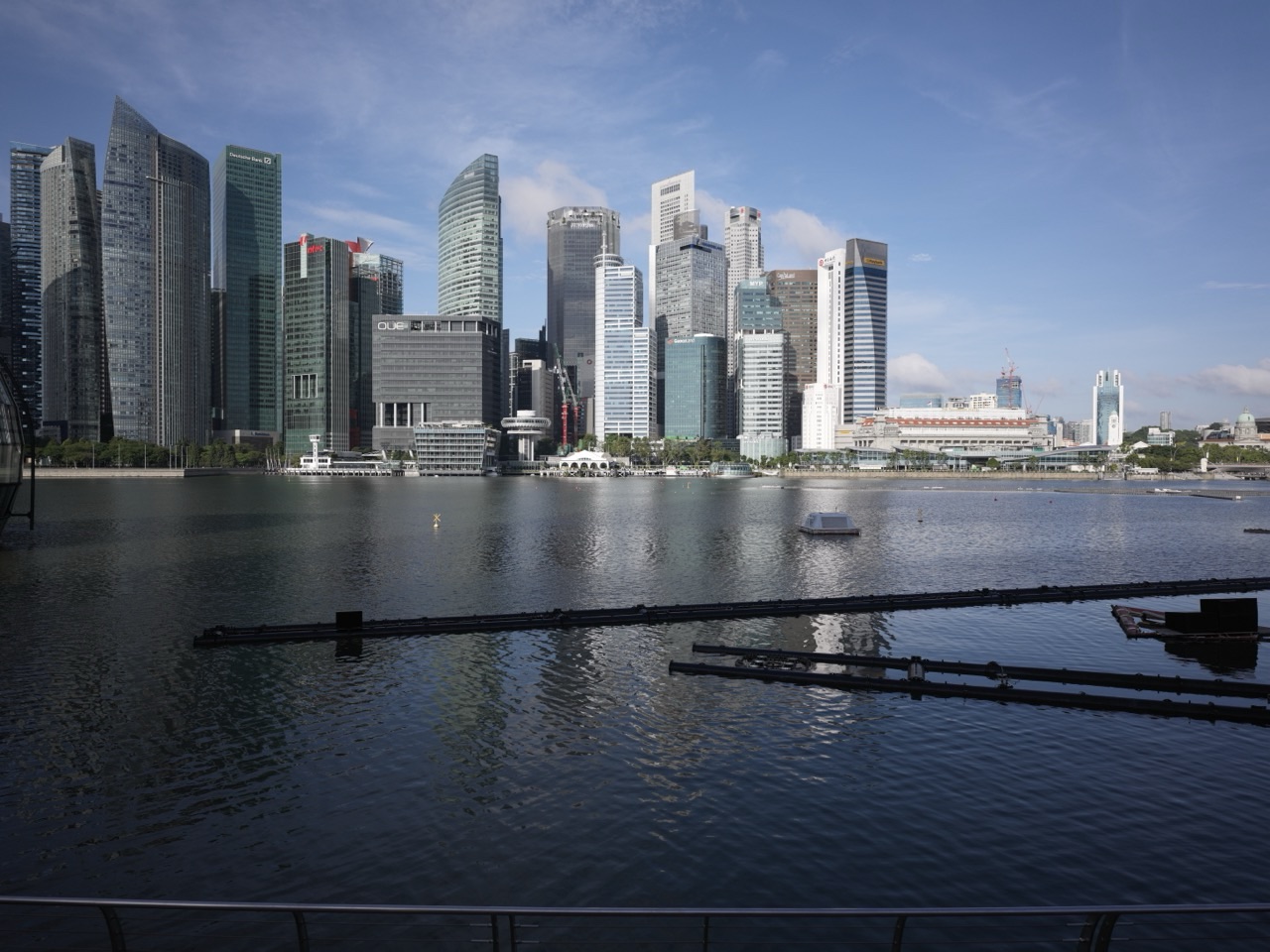
Things to do in Singapore | Church Street. Walk the compact Raffles Place office street between Market Street, Phillip Street and the old commercial core, visit the nearby underground Masjid Moulana Mohamed Ali, trace the curious street-name history that forced another Church Street to become Waterloo Street in 1858, and use this small CBD lane to understand how finance, faith, pedestrian planning and urban naming overlap in the heart of Singapore.
Church Street is short.
Its story reaches surprisingly far.
One version of “Church Street” once existed in today’s Waterloo Street area.
That road was renamed in 1858 because another Church Street already existed near Raffles Place.
The present-day Church Street therefore preserves a naming collision from the nineteenth-century city.
- Walk Church Street through the Raffles Place office district.
- Compare it with adjacent Market Street and Phillip Street.
- Visit nearby Masjid Moulana Mohamed Ali respectfully.
- Learn why Waterloo Street had to give up the same name in 1858.
- Study the newer pedestrian improvements around Market Street.
- Use Raffles Place MRT as the transport anchor.
- Continue to Battery Road, Market Street and the Singapore River.
Read: Things to do in Singapore | Market Street
Read: Things to do in Singapore | Raffles Place
Read: Things to do in Singapore | Battery Road
Start With the Big Idea: Church Street Is a Small Road With a Big Naming Footnote
A different road in the Bras Basah area was originally named Church Street in 1837 after Resident Councillor Thomas Church.
In 1858, that road was renamed Waterloo Street to avoid confusion with the Church Street already located near Raffles Place.
This tells us something simple but important.
As Singapore grew, its street network needed more systematic naming because duplicated names created practical problems.
Current historical reference: SG101 | Waterloo Street and Religious Harmony
Use Street Names as Urban Memory
Street names are navigation tools.
They are also archives.
A duplicate-name problem in 1858 tells us that the town had already become complex enough for administrative clarity to matter.
The fact that the Raffles Place Church Street kept its name while the other changed also preserves the hierarchy of older commercial geography.
Walk the Raffles Place Edge
Church Street sits inside the dense Golden Shoe and Raffles Place business district.
It links directly into the network of Market Street, Phillip Street, Chulia Street, Cross Street and the broader financial core.
This is not a destination street in the same way Pagoda Street is.
It is a connector.
Its value comes from how many high-value nodes are compressed around it.
Use Church Street to Understand the Golden Shoe
The Golden Shoe area became shorthand for the intensely valuable commercial district around Raffles Place, Market Street, Cecil Street, Robinson Road and Shenton Way.
Church Street sits inside that network.
Office towers, banking institutions, food, transport and public space all compete for very small parcels of land.
The district is valuable because connectivity is extraordinarily dense.
Walk Toward Market Street
Market Street provides the strongest historical extension.
The old Telok Ayer Market gave the road its name.
Chettiar financiers later made it a centre of moneylending.
Today CapitaSpring and Market Street Hawker Centre occupy the same commercial geography in a much more vertical form.
Continue nearby: Things to do in Singapore | Market Street
Understand the Market Street Pedestrian Changes
URA, LTA and NParks redesigned parts of the Raffles Place street network to create wider footpaths, cycling links and new public space.
The stretch of Market Street near Church Street was permanently closed to vehicles as part of the redevelopment that produced CapitaSpring and a new urban park.
This changed Church Street’s relationship with its neighbouring road.
A traffic network became more pedestrian-oriented.
Official planning reference: URA/LTA/NParks | Raffles Place Street Enhancements
Use the Change to Teach Street Reallocation
Urban streets have limited width.
Every metre given to one use is unavailable to another.
- vehicle lanes;
- footpaths;
- trees;
- cycling routes;
- loading space;
- public seating.
The Market Street–Church Street changes show how a mature CBD can redistribute existing road space instead of constantly widening streets.
Visit Masjid Moulana Mohamed Ali Nearby
The Singapore River Walk identifies Masjid Moulana Mohamed Ali at UOB Plaza as one of the district’s distinctive religious sites.
The mosque was founded in the 1950s and moved into the basement of UOB Plaza in 1994.
NHB describes it as Singapore’s only underground mosque.
Its presence inside the financial district is especially meaningful.
A place of worship is integrated into the same vertical complex as offices and banking activity.
Official heritage trail: Roots.gov.sg | Singapore River Walk
Use the Underground Mosque to Understand Vertical Mixed Use
Land in Raffles Place is extremely valuable.
An underground mosque demonstrates that mixed use does not have to happen only side by side.
It can happen vertically.
Office workers can access worship space without leaving the commercial core.
Faith becomes part of workplace geography.
The city stacks functions because land is scarce.
Walk Toward Phillip Street
Phillip Street adds Yueh Hai Ching Temple and another layer of religious history inside the financial district.
The short distance between an underground mosque, a historic Chinese temple and global banks demonstrates how old community institutions survive within a highly modern business environment.
Finance did not erase all earlier social functions.
Walk Toward Raffles Place
Raffles Place is only steps away and provides the district’s principal public-space and transit anchor.
The square, MRT interchange and surrounding towers explain why Church Street remains busy despite its small size.
A minor street can carry major footfall if it sits beside a powerful node.
Continue nearby: Things to do in Singapore | Raffles Place
Walk Toward Battery Road and the River
Battery Road leads toward Fullerton and the Singapore River, reconnecting Church Street to the earliest commercial and defence geography of the colonial town.
The office district makes more sense when seen as a network of small streets feeding river, square and waterfront.
Continue nearby: Things to do in Singapore | Battery Road
Use Church Street to Teach Network Centrality
Church Street is not important because it is long.
It is important because it is central.
A network node becomes valuable when many useful connections can be reached with little movement.
- Raffles Place MRT;
- Market Street;
- Chulia Street;
- Phillip Street;
- Battery Road;
- Singapore River;
- office towers;
- food and worship.
Centrality is a network property, not a size property.
A Simple Church Street Half-Day Plan
- Morning: arrive at Raffles Place MRT.
- Walk Church Street and Market Street.
- Planning stop: inspect the pedestrianised public-space changes around CapitaSpring.
- Religious stop: visit Masjid Moulana Mohamed Ali respectfully if appropriate and open to visitors.
- Continue through Phillip Street and Raffles Place.
- Finish toward Battery Road, Boat Quay or the Singapore River.
Church Street Through the eduKate Ecosystem
Things to do in Singapore | Market Street
Things to do in Singapore | Raffles Place
Things to do in Singapore | Battery Road
Things to do in Singapore | Cross Street
Frequently Asked Questions
Is Church Street the old name of Waterloo Street?
There were two Church Streets. Today’s Waterloo Street was originally also called Church Street, but was renamed in 1858 to avoid confusion with the Church Street near Raffles Place.
What is special about Church Street today?
It sits inside the dense Raffles Place financial district and connects directly into Market Street, Phillip Street and nearby commercial and religious nodes.
Is there really an underground mosque nearby?
Yes. Masjid Moulana Mohamed Ali moved into the basement of UOB Plaza in 1994 and is identified by NHB as Singapore’s only underground mosque.
Is Church Street good for children?
Yes for older children studying planning, street networks and the CBD, but it is a busy office district and should be combined with nearby Raffles Place or the Singapore River.
What is the main learning idea?
Centrality. Church Street shows that a very short road can be important because it sits at the intersection of transport, finance, food, worship and public-space networks.
Official References and Current Sources
SG101 | Waterloo Street and Religious Harmony
Roots.gov.sg | Singapore River Walk
URA/LTA/NParks | Raffles Place Street Enhancements
Things to do in Singapore | Church Street
Church Street proves that importance does not require length.
One small road sits beside banking towers, a hawker centre, an underground mosque, an MRT interchange and some of Singapore’s oldest commercial streets.
The street works because everything around it connects.