
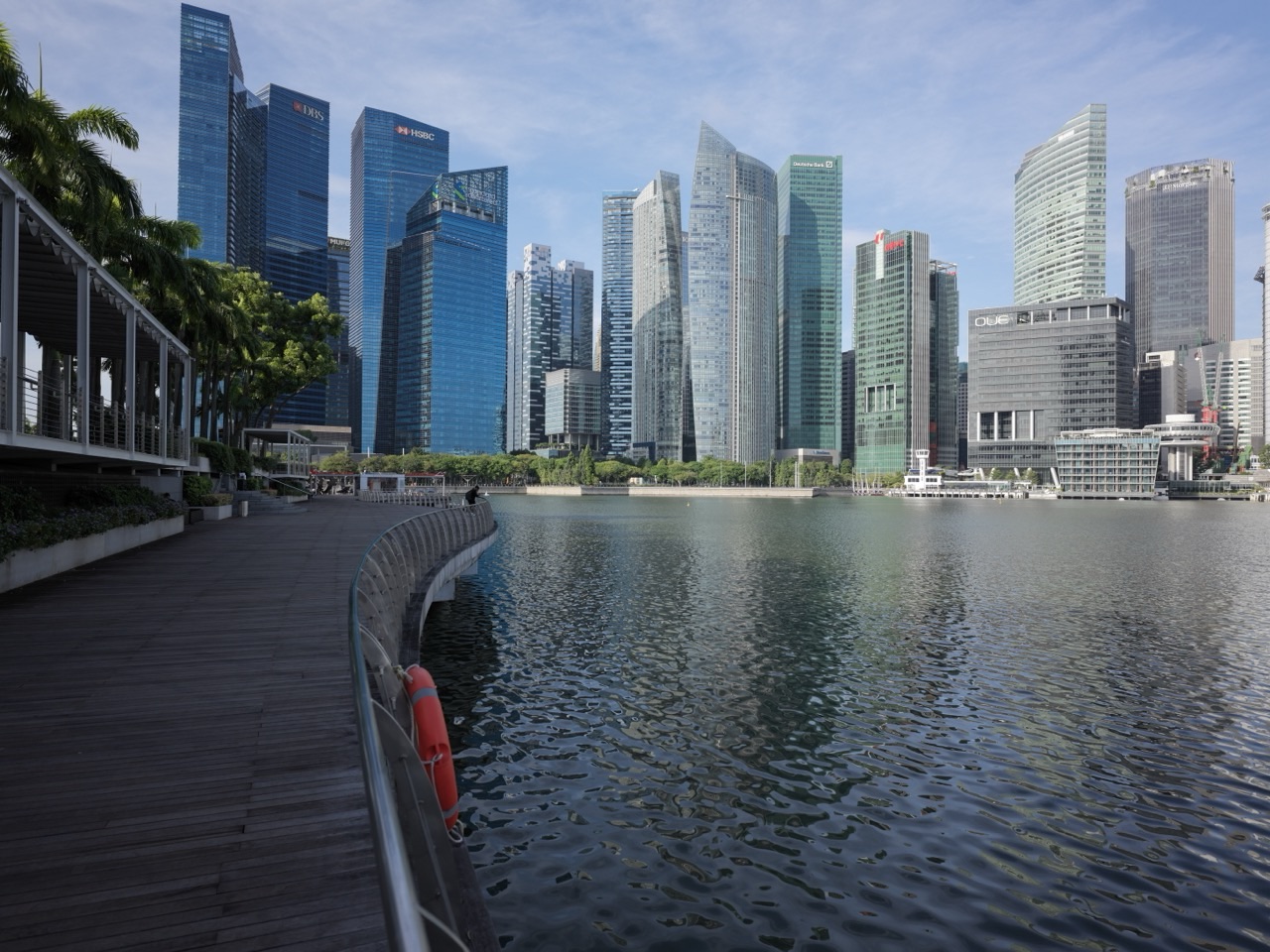
Things to do in Singapore | Phillip Street. Visit Yueh Hai Ching Temple in the middle of the financial district, compare Teochew immigrant heritage with modern office towers, walk toward Church Street and Raffles Place, and use one small CBD street to understand how worship, mutual aid and finance can remain layered together inside Singapore’s most valuable commercial land.
Phillip Street is one of Singapore’s strongest “old inside new” streets.
Glass and steel dominate the skyline.
At street level, one of the country’s oldest Chinese temples survives.
The contrast is so sharp that it teaches the entire lesson before you even enter the building.
- Visit Yueh Hai Ching Temple respectfully.
- Study the temple’s Teochew roof ornamentation.
- Compare the low-rise monument with surrounding towers.
- Walk toward Church Street and Market Street.
- Continue into Raffles Place.
- Use the temple’s migrant-welfare history to understand how community institutions once supported newcomers.
- Look for how modern office circulation wraps around a protected historic site.
Read: Things to do in Singapore | Church Street
Read: Things to do in Singapore | Market Street
Read: Things to do in Singapore | Raffles Place
Start With the Big Idea: Phillip Street Preserves a Teochew Anchor Inside the CBD
Yueh Hai Ching Temple at 30B Phillip Street is one of Singapore’s oldest Chinese temples.
Roots.gov.sg records that Teochew immigrants first established a small wood-and-attap shrine on the site before a more substantial temple was built and later rebuilt in the 1850s.
The temple survives today surrounded by modern skyscrapers.
Official heritage reference: Roots.gov.sg | Yueh Hai Ching Temple
Visit Yueh Hai Ching Temple Respectfully
The temple remains an active place of worship.
Its two principal halls honour Mazu and Xuan Tian Shang Di.
Mazu’s presence reflects the maritime danger faced by migrants arriving from southern China.
The temple’s English name, “Temple of the Calm Sea of the Guangdong People”, preserves that maritime connection.
Use the Temple to Understand Arrival Rituals
Sea journeys were dangerous.
A safe landing created a powerful reason for thanksgiving.
Early migrants often built shrines close to landing and commercial areas because worship, work and community support all had to be accessible.
Phillip Street therefore began as more than a religious address.
It was part of a migrant-support landscape.
Learn the Ngee Ann Kongsi Connection
Roots.gov.sg records that Ngee Ann Kongsi took over management of Yueh Hai Ching Temple in 1845.
The Kongsi helped look after the religious and welfare needs of the Teochew community.
That relationship shows how a temple could become part of a larger mutual-aid system.
Faith and social infrastructure overlapped.
Look at the Roof
The temple is famous for elaborate Teochew roof ornamentation using cut-and-paste ceramic techniques.
Three-dimensional figures depict towns, mythical animals, flowers and symbolic scenes.
Look upward slowly.
In a financial district obsessed with height, some of the richest architectural detail is only a few storeys above the pavement.
Use the Roof to Understand Craft Continuity
Traditional building craft survives when specialists still know how to repair it.
Conservation therefore protects more than a structure.
It also protects knowledge:
- ceramic cutting;
- mosaic assembly;
- timber carving;
- traditional painting;
- roof repair.
A monument can preserve an entire craft ecosystem.
Learn the Imperial Plaque Story
Roots.gov.sg records that Qing Emperor Guangxu presented the temple with an imperial calligraphy scroll in 1899 after the local Teochew community contributed funds for flood relief in Shandong.
The story reveals the transnational nature of migrant communities.
Singapore residents could participate in philanthropy and politics connected to ancestral China while building permanent lives in Southeast Asia.
Compare the Temple With the Skyscrapers
The contrast around Phillip Street is one of Singapore’s strongest urban images.
The temple is low, intricate and inward-looking.
The surrounding office towers are tall, repetitive and corporate.
Both occupy the same economic centre.
The city decided that heritage value justified preserving one very different piece of urban form inside extremely valuable land.
Use Phillip Street to Teach Opportunity Cost
Keeping a low-rise monument in the CBD means not maximising floor area on that parcel.
That is an economic cost.
The cultural value is the return.
Heritage planning is therefore not free.
It is a deliberate choice about what kinds of value a city wants to retain.
Walk Toward Church Street
Church Street adds the modern Raffles Place pedestrian-network and underground-mosque story.
The short walk reveals multiple religious layers inside the financial district.
Continue nearby: Things to do in Singapore | Church Street
Walk Toward Market Street
Market Street adds the Chettiar-finance and old-market story.
Together, Phillip Street and Market Street show two migrant systems that helped early commerce work:
- Teochew community institutions;
- South Asian merchant finance.
Continue nearby: Things to do in Singapore | Market Street
A Simple Phillip Street Half-Day Plan
- Morning: arrive at Raffles Place MRT.
- Temple stop: visit Yueh Hai Ching Temple respectfully.
- Architecture stop: study the roof ornamentation.
- Community stop: read the Ngee Ann Kongsi story.
- Continue into Church Street and Market Street.
- Finish at Raffles Place or the Singapore River.
Phillip Street Through the eduKate Ecosystem
Things to do in Singapore | Church Street
Things to do in Singapore | Market Street
Things to do in Singapore | Raffles Place
Things to do in Singapore | Boat Quay
Frequently Asked Questions
What is Phillip Street known for?
Yueh Hai Ching Temple, one of Singapore’s oldest Chinese temples, sits here in the middle of the modern CBD.
Who built Yueh Hai Ching Temple?
It was established by the early Teochew community and later managed by Ngee Ann Kongsi.
Why is the temple dedicated to Mazu?
Mazu is the goddess of the sea, especially significant to migrants who had survived dangerous sea voyages from southern China.
What is the main learning idea?
Cultural continuity. Phillip Street shows how a migrant religious institution can survive inside a radically transformed commercial landscape and still remain active.
Official References and Heritage Sources
Roots.gov.sg | Yueh Hai Ching Temple
Things to do in Singapore | Phillip Street
Phillip Street is a small street with a large contrast.
A nineteenth-century Teochew temple sits beneath twenty-first-century finance towers.
The buildings disagree in scale.
The city allows both to remain.
That coexistence is the point.