
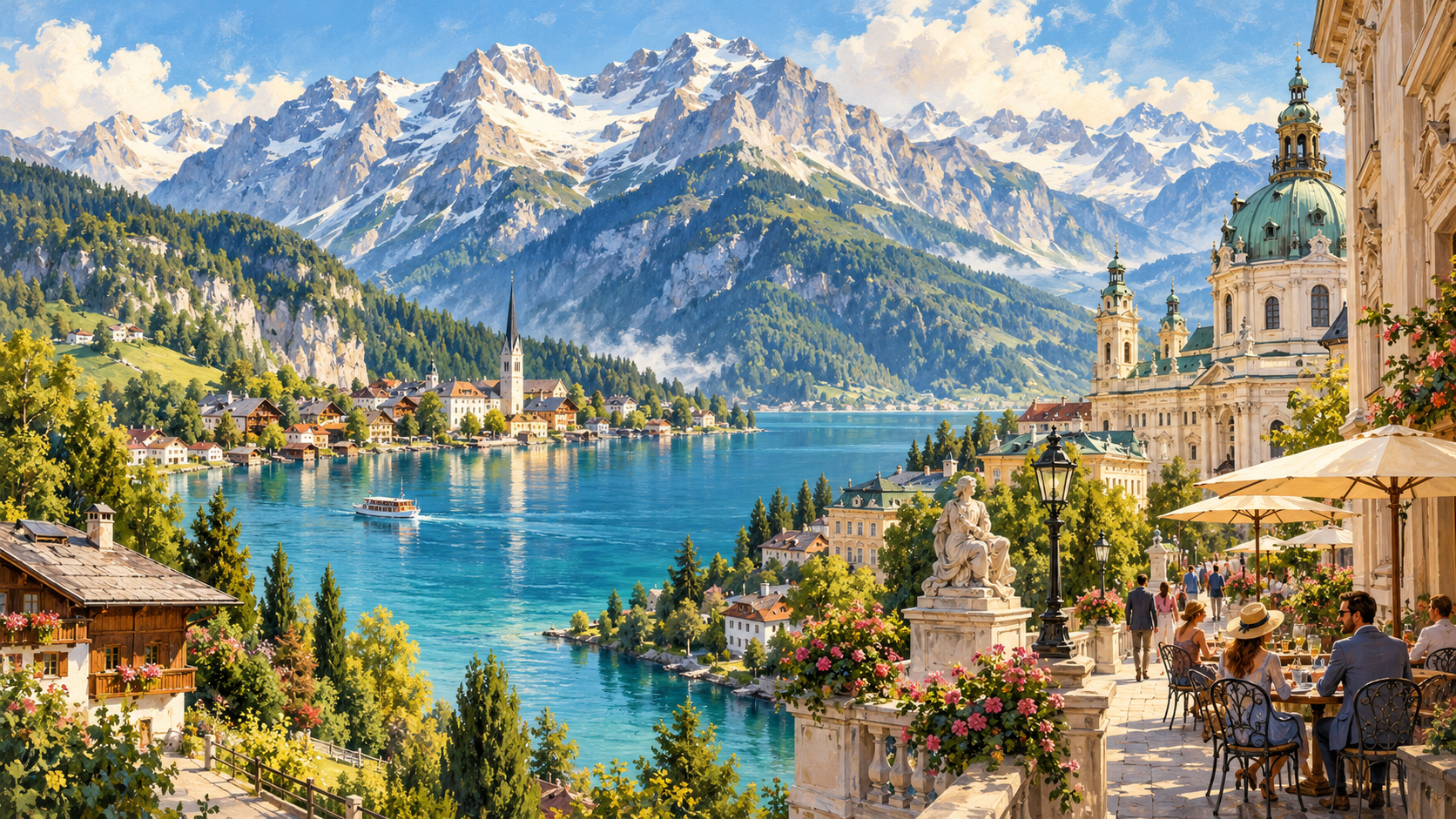
Austria makes it easy to connect a city conversation with a landscape view. The best things to do when visiting and touring Austria include Vienna’s museums and cafés, Salzburg’s musical heritage, Danube villages, lakeside stays and Alpine experiences. A thoughtful Austria travel itinerary gives these different pleasures enough time to belong together.
Whether you are planning a first Austria holiday, a family trip from Singapore or a European journey with a few carefully chosen stops, begin with the kind of day you enjoy. You might want art and coffee, a concert and a gentle walk, or several nights in a mountain town. This guide offers ten experiences and shows how to combine them without turning every day into a transfer.
Austria can look compact beside some of the countries in this series, but compact does not mean effortless. Train connections, mountain weather, luggage, hotel changes and opening days still matter. Choose a small number of bases and let the route do some of the work for you.
eduKateSG · A WORLD WORTH UNDERSTANDING
Find your way through Austria
Choose the part you need now, or follow the whole journey at your own pace.
A city-and-countryside pairing is a useful starting point. Vienna with a Danube excursion, Salzburg with a lake district stay, or Innsbruck with appropriate mountain activities can each form a complete trip chapter. You can combine chapters when you have time, but there is no obligation to visit every region.
| Experience | Choose it for | Planning decision |
|---|---|---|
| Vienna’s museums and cafés | Art, architecture and conversation | Select one main museum each day |
| A live musical performance | A closer connection with the arts | Check the actual programme and seating |
| Salzburg’s old town | Urban history and musical context | Balance landmark visits with walking |
| The Wachau | Danube scenery and village life | Confirm seasonal transport options |
| Salzkammergut lakes | Water, mountain views and slower days | Choose one base and respect residents |
| Innsbruck | A city with an Alpine setting | Separate city and mountain plans |
| A suitable Alpine walk | Landscape learning and movement | Match the route to ability and weather |
| A winter activity | Snow skills or a quieter winter outing | Book appropriate instruction |
| Graz | Architecture, design and food | Explore a compact walking route |
| Regional cooking and producers | Everyday culture | Ask about seasonal and dietary options |
Use the table to narrow the trip before booking accommodation. It is easier to add a worthwhile afternoon later than to recover a day lost to an unnecessary journey.
Vienna is a city where a museum visit and a conversation afterwards can belong to the same experience. Choose the collection that interests you most, then leave time to sit down and discuss it. A café becomes more rewarding when you arrive with something to talk about.
Before entering a large museum, choose a question. How does a portrait suggest power? What makes a room feel ceremonial? Why does one painting hold your attention longer than another? You do not need a complete history of European art to begin noticing carefully.
Give the museum a reasonable limit. One focused visit is often better than a race through several collections. Check the current exhibition, ticket arrangements and access information with the institution. A familiar museum name does not tell you what will be on display during your stay.
For the café part of the day, look at the menu, choose what you want and settle into the rhythm of the room. If travelling with children, use the pause for a drawing or a short description of the morning. Adults might compare two works or simply let the conversation wander.
The Austria Tourism city overview helps you place Vienna alongside the country’s other urban destinations. You can also read eduKateSG’s Crazy Rich Vienna guide for its separate luxury perspective.
A live performance can become the emotional centre of an Austria visit. The most useful booking question is what you would enjoy hearing. A short concert, an opera, a chamber programme and a large staged production ask different things of the listener.
Read the programme and the venue’s official ticket information. Confirm the date, duration, seat location and any relevant admission rules. If the booking page offers an obstructed view or standing place, understand that choice before paying. A lower price is worthwhile only if the arrangement suits you.
For a first classical music experience, prepare lightly. Listen to a short excerpt or read a brief introduction to the composer. Familiarity can help you recognise a phrase without making the evening feel like an examination. You are allowed to respond to the sound before you know all the terminology.
Plan the rest of the day around the performance. Avoid exhausting everyone with sightseeing and then expecting concentrated listening late in the evening. Have an early meal if appropriate, allow time to find the entrance and check transport for the return journey.
With children, confirm that the programme and venue welcome their age group. A suitable family concert may be a better introduction than a long event chosen solely for its prestige. The best memory comes from engagement, not from owning a ticket to the most famous name.
Salzburg offers a satisfying combination of historic streets, architectural detail and musical associations. Begin with a walk that gives you the shape of the old town, then choose one interior visit or musical activity that fits your interests.
Look up as well as ahead. Shop signs, windows, passageways and the relationship between streets and larger buildings can make a city walk more memorable. Rather than taking the same photograph at every turn, choose one detail and ask how it contributes to the character of the place.
If a fortress, museum or concert is central to your day, check its current arrangements before you go. Steep approaches, queues and time spent inside can change the pace of an outing. Ask about alternative access where necessary and give the group a clear meeting point.
There is also value in leaving an hour unassigned. You might follow a riverside route, sit with a view or return to a street that interested you earlier. This makes room for the city to feel inhabited rather than visited only through its scheduled attractions.
Salzburg can pair well with a separate lake district stay, provided you confirm the onward connection. Avoid planning several regional excursions as if every destination were a short extension of the old-town walk. City time and countryside time each deserve a place in the itinerary.
The Wachau is a good choice when you want a change from city scale. A Danube-focused outing can connect a town or village walk with views of the valley and a meal. Melk and Dürnstein are useful names to investigate when choosing the shape of your visit.
Choose the transport arrangement before filling the day with stops. Train, bus, boat and guided-tour options may serve different parts of the route, and boat services need to be checked for your dates. Do not assume a scenic connection operates every day throughout the year.
You might choose one principal visit and one smaller place rather than trying to cover the entire valley. If an abbey interior interests you, allow time for it; if your priority is landscape, give the riverside or a suitable viewpoint more space. A clear priority makes the day easier to organise.
Food and local produce can add another layer. Ask what is seasonal and what is made in the region. Wine-related activities are optional; non-drinkers and families can enjoy the valley through walking, architecture, meals and other local products.
Austria Tourism’s day trips from Vienna overview includes Wachau ideas. Confirm the exact visitor and transport information directly before booking the version that suits your group.
The Salzkammergut invites a slower itinerary. A lakeside base lets you experience the same place at different times of day, with room for a walk, a boat outing where available and a meal that does not have to fit between long transfers.
Hallstatt is a familiar name, but it is one part of a wider region. Lake Wolfgangsee, Lake Traunsee and other regional settings offer different ways to arrange a stay. Choose a base for its transport, accommodation and activities rather than for a photograph alone.
In a small village, tourism shares space with ordinary life. Keep entrances clear, respect signs and private property, and avoid treating homes as a stage set. An early or quieter visit may improve your experience, but it does not remove the need to behave considerately.
For water activities, use the relevant local provider’s current advice. A lake can look calm while conditions are unsuitable for the outing you had in mind. Confirm equipment, supervision and weather policies. If swimming is part of your plan, establish where it is permitted and appropriate.
The official Salzkammergut guide introduces the region’s lakes, towns and activities. Use it to choose a manageable chapter, then leave at least some time free simply to be beside the water.
Innsbruck is appealing because the Alpine setting is present while you are still in a city. You can begin with streets, architecture and a meal, then decide whether conditions and your interests support a mountain excursion.
Keep those two parts distinct when planning. A city walk may remain straightforward on a day when higher terrain is unsuitable. A cable-car journey, where operating, does not make every trail at the top an easy walk. Confirm facilities, routes and the conditions at elevation before setting out.
For a first visit, one mountain viewpoint or a modest guided outing may be enough. You can learn how the city sits within its landscape without committing to a demanding hike. Wear and carry what the operator recommends rather than dressing only for the temperature outside your hotel.
If the group has different preferences, discuss them beforehand. Some people may want a longer outdoor activity; others may be happiest with the city and a view. A shared morning with optional afternoon plans can work well when the logistics are clear.
Austria Tourism’s rail itinerary is useful when considering Innsbruck as part of a broader journey. Check current timetables for the dates and luggage arrangements that matter to you.
A good mountain walk fits the people taking it. Begin with everyone’s experience, fitness and comfort with heights, then choose a route. The most dramatic photograph is not enough information to make that decision.
Ask about distance, ascent, trail surface, exposure and places to turn back. These details are more useful than a single label such as “easy”. A route that feels easy to a regular hiker may be demanding for someone on their first mountain outing.
Read the current forecast and local trail guidance. For unfamiliar terrain or a more involved route, use a qualified local guide and follow their decision about conditions. If the plan changes, the replacement can still be worthwhile: a lower walk, a village visit or a day of rest may suit the circumstances.
While walking, choose one thing to notice carefully. It might be how vegetation changes, where water runs or how a path has been built. The walk becomes a way of understanding landscape rather than a test of how far you can go.
Leave an accurate plan with someone when appropriate, carry the recommended equipment and avoid splitting a group casually. A successful outing ends with everyone comfortable enough to enjoy the evening. There is no obligation to reach a summit to have had an Alpine experience.
Winter in Austria offers more than one way to enjoy snow. Ski instruction, a managed winter walk or another supervised activity can each suit a different traveller. Begin with what you want to learn and how much physical effort you want the day to involve.
Beginners should investigate suitable instruction, equipment fitting and the actual terrain available for learning. Tell the provider about your experience honestly. Progress is more enjoyable when the day is designed around your starting point rather than someone else’s expectations.
Snow conditions and operations vary. Check opening information close to your dates and confirm what happens if the booked activity cannot proceed. Avoid building an entire trip around one weather-dependent afternoon without an alternative.
A non-skiing day can still feel like a winter holiday. A village walk on a suitable maintained route, an indoor cultural stop and a warm meal can provide a gentler rhythm. Use locally approved routes and guidance; winter terrain is not simply a summer walk with different scenery.
For families, include warm-up breaks and discuss how to stop when someone is tired. Equipment, lessons, lift access and clothing can all affect the total budget. Compare the complete arrangement before choosing between providers or resort areas.
The official Austria Tourism website links to current winter activity and destination information. Confirm the specific programme directly with its operator.
Graz offers an appealing change of urban mood. Historic streets and contemporary creativity can sit within the same walk, giving you a chance to compare how a city preserves some forms while introducing others.
Choose a compact route and one main cultural stop. You might focus on a museum, a design-related exhibition or an architectural theme. Check current programming so that the visit is shaped by what is actually available, rather than by a general description of the city.
When comparing buildings, begin with everyday questions. What does the entrance invite you to do? How does a public space encourage people to gather? Which details seem designed for ceremony, commerce or ordinary use? Those observations make architecture approachable without specialised vocabulary.
Include time for food and conversation. A meal can be part of understanding a city when you ask about the menu and notice how the room is used. You do not need to turn every stop into research; one thoughtful question may be enough.
Graz is a worthwhile chapter for travellers who enjoy urban discovery at a measured pace. Add it when the route supports it, and give it enough time to feel distinct. A hurried detour may reveal less than another relaxed day in a city already on your itinerary.
Food offers a welcoming route into regional differences. Choose a bakery, market, cooking activity or restaurant near your existing base and ask what the local speciality means to the people serving it.
Familiar names such as Wiener Schnitzel and Sachertorte can begin the conversation, but they do not need to define every meal. Look for the dish that suits your appetite and curiosity. Ask what is seasonal, how it is prepared and whether a regional ingredient changes the flavour.
Vegetarian, vegan and allergy-related needs should be discussed directly. A menu description alone may not answer a question about ingredients or cross-contact. When booking a cooking class or set meal, confirm that the provider can accommodate the requirement before committing.
A family can turn one meal into a small observation exercise. Describe the texture, identify an ingredient and compare it with something familiar at home. Keep the language concrete. “Crisp outside and soft inside” tells the reader more than “amazing”.
Buy only what you can sensibly carry and check the rules for bringing food home. A recipe, a photograph taken with permission or a note about a conversation can become a lasting souvenir without complicating your luggage.
Four to six days: one strong base
Vienna with a carefully planned Danube excursion is one option. Salzburg with selected nearby experiences is another. Keep your accommodation changes to a minimum and choose one principal activity per day, with smaller stops around it.
Leave an arrival buffer and an unscheduled afternoon. If the trip has a concert, protect the hours before it from overambitious sightseeing. If it has an outdoor excursion, identify an indoor alternative in advance.
Seven to ten days: two chapters
A Vienna–Salzburg combination can bring together different urban settings, with a countryside day or lake district stay if connections work. Another option is Salzburg with an Alpine chapter around Innsbruck. Check actual timetables and consider where luggage will go during transitions.
Use the travel day honestly. A morning train, hotel arrival and neighbourhood orientation may already make a full day. A major evening activity can be added only if the connection and everyone’s energy support it.
A longer visit: choose a theme
For an arts-focused trip, add time for museums and performances. For a landscape-focused journey, stay longer in one lake or mountain region. For food and everyday culture, choose markets and producer visits that fit your existing route.
Before adding another city, ask whether an additional night would let you experience your current destination better. Fewer bases can reduce costs and make the journey easier to remember as a series of places rather than a series of railway platforms.
Check current entry and transport information
Requirements depend on nationality, travel history and the purpose of the visit. Use official Austrian and European information for your circumstances. Check current border procedures and allow enough connection time; a general travel article cannot determine an individual’s eligibility.
For trains, confirm dates, reservations where relevant, disruptions and luggage arrangements. Austria Tourism’s rail planning guide is a starting point. The operating company’s current timetable should settle the actual journey.
Compare the whole cost
Accommodation, transport, meals, admissions, performances and outdoor equipment all belong in the budget. A city pass or regional card is worthwhile only when the included activities match what you will use. Read conditions, validity periods and exclusions before deciding.
For winter and mountain activities, ask which equipment, lessons and transport are included. A package price can be difficult to compare until those details are clear. Keep weather-dependent bookings and their cancellation terms visible in the itinerary.
Plan for different abilities
Ask venues about steps, seating, toilets and the route from the transport stop. For mountain visits, ask about both the journey to the viewpoint and the surfaces around it. Accessibility can vary between parts of the same attraction.
Travellers who tire easily can still enjoy a rich itinerary. Pair a major visit with a seated pause, choose fewer accommodation changes and allow optional outings. Comfort gives people more attention to bring to the place.
Respect public and private space
A photogenic village is still someone’s home. Follow signs, keep doorways clear and ask before photographing people closely. In cultural venues, follow the institution’s guidance about photography, bags and behaviour.
On outdoor days, use current local advice and designated routes. The landscape will still be there on a day with better conditions. Changing the plan is part of competent travel.
| English | 中文 | A useful question |
|---|---|---|
| Concert programme | 音乐会节目单 | What works will be performed? |
| Seat category | 座位类别 | Does this seat have a restricted view? |
| Old town | 老城区 | Where does the walking route begin? |
| Abbey | 修道院 | Is the interior open today? |
| Lakeside | 湖畔 | Is this path suitable for our group? |
| Ascent | 上升高度 | How much ascent does the walk involve? |
| Trail conditions | 步道状况 | Are there any closures? |
| Ski lesson | 滑雪课程 | Is this class suitable for beginners? |
| Regional speciality | 当地特色菜 | Which ingredients are used? |
| Connection | 转乘 | How much time should we allow? |
These English–Chinese prompts support clear travel questions. They are not German translations. Practise the complete question, then check that you understand the practical details in the reply.
Austria gives you useful opportunities to compare. Choose two buildings, two musical passages or two views and explain one similarity and one difference. Support each point with something you actually noticed.
A museum paragraph might begin with a colour, gesture or object. A landscape paragraph might begin with the shape of the valley or the relationship between a village and the water. Then explain what that detail helped you understand. Avoid claiming an interpretation as a historical fact unless a reliable source supports it.
For a family discussion, let each person choose a favourite hour rather than a favourite attraction. The answer may reveal that a quiet lunch or a train-window conversation mattered as much as a famous landmark. That is useful evidence when planning the next trip.
Continue the language work through the World Travel Vocabulary City Directory and explore focused urban experiences through the World City Experiences Directory.
Must I combine Vienna, Salzburg and Innsbruck?
No. They form different chapters, and one or two may be enough for your available time. Begin with your interests, then check whether the connections leave you sufficient time in each place.
Can a non-skier enjoy a winter trip?
Yes, provided the itinerary is built around suitable activities and current conditions. Choose managed winter outings, cultural visits and comfortable accommodation rather than assuming every day must be spent on a ski slope.
Is Hallstatt essential?
It is one option within the Salzkammergut. Choose it if it fits your interests and route, while considering other lake settings too. Respect the village’s residents and current visitor guidance wherever you go.
Where can I read the luxury version?
See Top 10 Things to Do in Austria | Luxury. For a wider economic reading route, eduKateSG also has How Austria Got So Rich.
Official planning sources checked on 8 October 2026 include Austria Tourism, its city overview, Salzkammergut guide, rail planning information, rail itinerary and Vienna day-trip ideas. Recheck schedules, access, weather and official entry information for your dates.
Continue to Azerbaijan, revisit Australia, or return to the World Country Experiences Directory.