
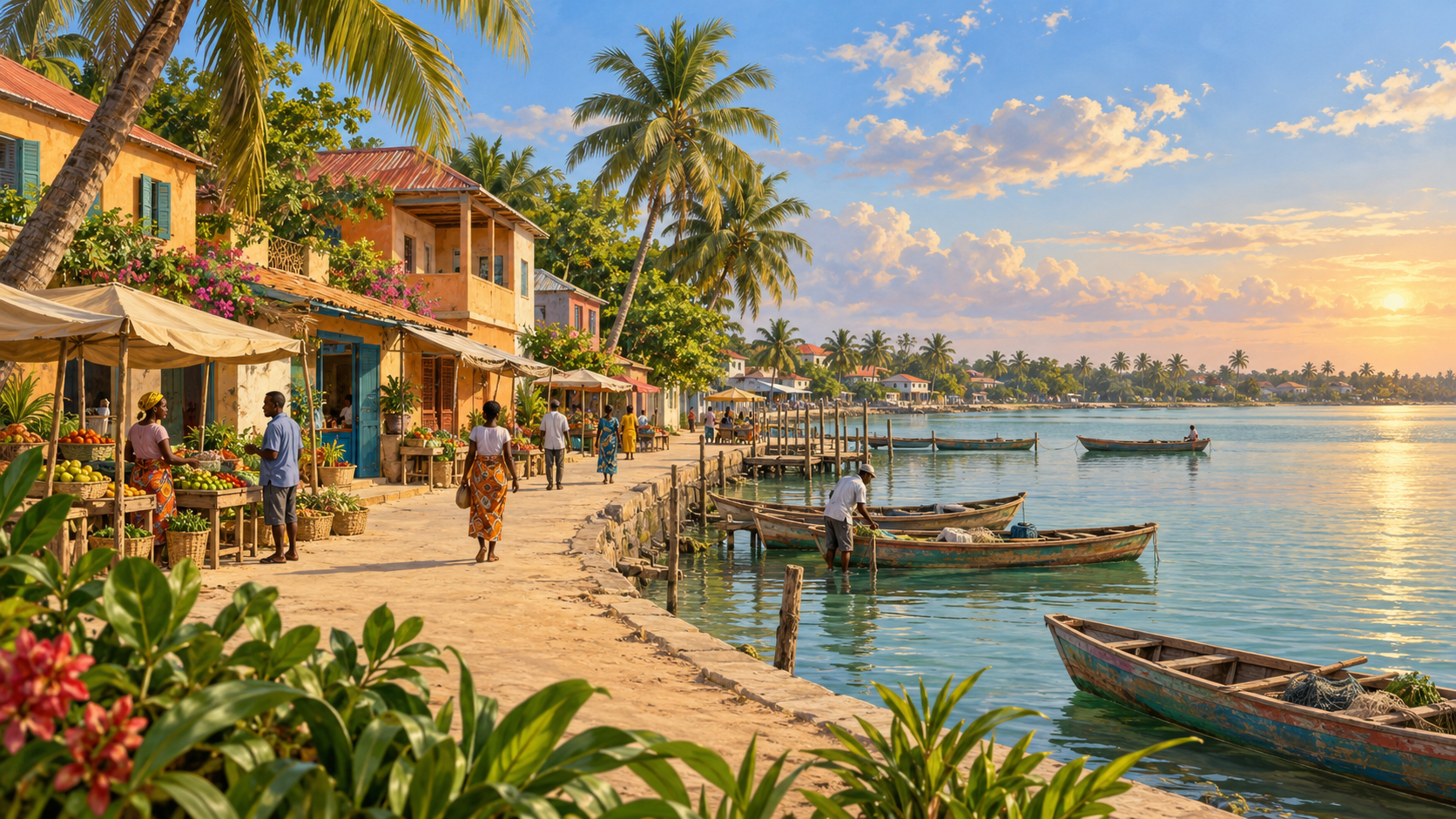
Benin offers a rich southern journey through royal heritage, coastal memory, living religious traditions, lake communities and contemporary art. The best things to do when visiting and touring Benin include Abomey, Ouidah, Ganvié, Porto-Novo, Cotonou, Adjarra, Grand-Popo, craft and local food. A thoughtful Benin travel itinerary connects those experiences through clear interpretation and carefully arranged transport.
For a first Benin cultural holiday, a heritage visit or a family learning journey, start with the kind of encounter you want: a guided palace visit, a host-led conversation, a properly organised boat outing or an afternoon with an artist or maker. This guide focuses on southern Benin and helps you choose ten experiences at a pace that allows questions and reflection.
Check the current regional travel warnings before making any booking. The official advice checked for publication warns against all travel to specified northern areas, including Pendjari and Parc du W, and against all but essential travel to other defined regions. Those parks are excluded from this guide’s physical itinerary. Read the current map and complete regional advice, not just a general description of the country.
eduKateSG · A WORLD WORTH UNDERSTANDING
Find your way through Benin
Choose the part you need now, or follow the whole journey at your own pace.
This is a southern cultural route, not a claim that every place or journey in Benin is suitable. Establish the exact locations and roads with a reputable provider and current official guidance before travelling.
| Experience | Choose it for | Planning decision |
|---|---|---|
| Abomey royal heritage | History and interpretation | Choose a knowledgeable guide |
| Ouidah’s memory landscape | Atlantic slavery and remembrance | Allow time for serious discussion |
| A welcomed Vodun introduction | Living religious traditions | Participate only by invitation |
| Ganvié | Lake settlement and community life | Confirm boat safety and permitted access |
| Porto-Novo | Architecture and civic history | Choose a manageable guided route |
| Cotonou art | Contemporary creative life | Check actual exhibition access |
| Adjarra’s Rivière Noire | A guided waterways experience | Confirm conditions and equipment |
| Grand-Popo | Coast and landscape | Make it a land-based outing |
| Craft with a maker | Materials and skilled work | Ask about provenance and fair purchase |
| Local food | Ingredients and everyday culture | Choose a reputable venue or host |
Use the list to select a few coherent days. Royal heritage, coastal remembrance and a contemporary arts visit require different kinds of attention; they deserve more than a hurried stop between transfers.
Abomey is a strong starting point for learning about the kingdom of Dahomey and its royal heritage. UNESCO’s Royal Palaces of Abomey record provides an introduction; a knowledgeable local guide can help you interpret the place you actually visit.
Ask how symbols, spaces and objects communicated authority. An explanation tied to a visible detail is easier to absorb than a long list of rulers without context. Check which areas and displays are currently open before building the day around a particular interior.
Approach the history with room for complexity. Royal institutions, artistic achievement, conflict and slavery belong within a fuller account. A good visit neither reduces the past to an attractive façade nor avoids difficult questions about power and human consequences.
Stay within authorised visitor areas, follow photography instructions and give the guide time to answer. The most useful souvenir may be a clearly understood relationship between an object, its purpose and the historical setting. Plan the road journey and a rest period so the visit is experienced with attention rather than fatigue.
Ouidah requires a careful, respectful approach to the history of Atlantic slavery. Arrange informed interpretation of the recognised memory route and memorial settings, confirming the current visitor arrangements with a reputable local guide.
Let the guide explain how particular places are remembered and what historical evidence supports the account. A commemorative landscape may combine surviving features, later memorials and inherited narratives. Understanding those distinctions adds depth without diminishing the seriousness of remembrance.
Allow pauses. This is not an outing that benefits from a fast sequence of photographs. With younger travellers, introduce the subject honestly and in language appropriate to their age, then give them space to ask questions rather than treating silence as lack of interest.
Use restrained photography and follow local instructions. Choose a route your group can manage in the conditions, including heat and standing time. If adding another Ouidah experience, make its purpose clear and leave enough room between activities. Reflection belongs within the day’s plan, not merely at the end of a busy schedule.
Vodun is a living religious tradition, not a curiosity arranged for a visitor’s entertainment. Choose a hosted introduction where an appropriate local person has invited questions and explained the boundaries of participation.
Begin with listening. Ask what the host wishes visitors to understand, and allow them to describe their own practices and terms. Avoid importing sensational labels or assuming that every person, place or ceremony represents the same tradition.
Permission matters at every stage. A public-looking setting does not automatically grant access to an activity, and permission to attend does not automatically permit photographs or recording. Ask clearly and respect the answer. Do not request a ritual simply to create a more dramatic travel story.
If no suitable introduction is available, choose a verified museum or other interpretive resource instead. Learning does not require access to someone else’s sacred life. A thoughtful visitor can gain understanding through an explanation while leaving private matters private, and can recognise that the host has authority over what is shared.
Ganvié offers an encounter with a settlement whose relationship with water shapes daily movement and space. Arrange a reputable guided boat visit with clear information about boarding, life jackets, permitted routes and the actual conditions on the day.
Look beyond the first view of buildings over water. Ask how everyday services, transport and work function, and how residents manage the relationship between home and lake. Those questions turn an unusual setting into an understandable community.
Respect homes, working boats and private activity. Take photographs of people only with permission and avoid blocking routes or treating residents as part of a staged scene. A responsible guide should explain where visitors are welcome and where observation needs more restraint.
Make safety part of the booking rather than an afterthought at the landing point. Explain any mobility requirements before arrival, ask how the group boards and disembarks, and confirm the return plan. If the equipment or conditions are unsuitable, choose another activity. The pleasure of seeing a lake community should rest on a well-organised visit.
Porto-Novo, Benin’s capital, offers a southern urban chapter with architecture, civic history and living neighbourhoods. Choose a guided route that connects a few meaningful places rather than simply naming everything visible from a vehicle.
Ask how a building’s form relates to the people who commissioned, used or adapted it. A façade may suggest a connection, but a reliable explanation is needed before turning an impression into a historical claim. Follow the guide’s distinction between documented history and a possible reading of style.
Include ordinary streets as well as major landmarks where the route permits. Notice scale, shade, entrances and public gathering space. An urban visit becomes more interesting when you see how a city functions today alongside its earlier layers.
Confirm opening arrangements for any museum or interior stop and ask about surfaces and walking distance. The route should be realistic in the heat and appropriate to your group. A focused morning followed by a meal can offer more insight than an ambitious day that leaves everyone tired before the guide reaches the most important explanation.
Cotonou provides an opportunity to encounter contemporary creative life. Choose an actual exhibition, gallery visit or art-focused programme through reliable current visitor information, and confirm access before making it the day’s centrepiece.
Give one work a few minutes. Describe the materials and composition, then read the artist’s or venue’s explanation where available. What did you notice first, and what changed after learning more? This simple sequence makes a contemporary art visit approachable even if the work is unfamiliar.
If the programme includes a public-art route or market area, clarify how it is led and where visitors may stop. Busy working spaces need consideration, and security or photography restrictions may apply. Ask before photographing people or activities.
Contemporary art deserves to stand alongside heritage rather than act as a decorative ending to it. Artists may engage with memory, identity or ordinary life in ways that complicate a visitor’s first impression. Leave room for that conversation, and check opening days, current displays and return transport rather than assuming that every cultural venue operates on the same schedule.
Adjarra’s Rivière Noire offers another southern waterways experience. The official tourism introduction identifies a canoe outing here; use a reputable provider to establish the current route, equipment and conditions rather than arriving with only a destination name.
Unlike a settlement-focused visit to Ganvié, let this outing centre on the waterway and surrounding landscape. Ask the guide to identify what can be reliably explained about the route, plants and local use of the river. Avoid guessing at species from a passing glimpse.
Before boarding, confirm flotation equipment, group size, seating, boarding assistance and the plan if weather changes. Ask how much physical participation is expected from visitors. A canoe photograph does not establish whether your particular excursion is suitable for a child, an older traveller or someone with reduced mobility.
Keep the experience quiet and considerate. Follow the permitted route, leave vegetation and wildlife undisturbed and respect any working or private spaces encountered. If conditions are unsuitable, accept a land-based alternative. A successful nature outing depends on judgement as well as an attractive landscape.
Grand-Popo can give a southern journey a slower coastal chapter. Plan a land-based outing with a suitable walk, a shaded pause and a meal, or another clearly authorised activity recommended by a reputable local provider.
Do not turn the sight of the ocean into an assumption about swimming. The official guidance checked for publication warns of very strong currents along Benin’s coast. This guide’s Grand-Popo suggestion is about landscape and rest on land; it does not recommend entering the sea.
Look at the relationship between shore, settlement and work. Ask a guide about what is visible without intruding on private or working activity. A quiet view can be meaningful without requiring a dramatic adventure.
Check the whole journey from your accommodation, including road conditions, daylight return and the location where you will meet your driver. If planning a longer stay, confirm that the accommodation and services fit your needs. The coast works best as space to recover and notice, rather than a stop squeezed into an already crowded cross-country day.
A maker-led craft experience can connect materials, skill and local creative life. Choose a workshop or seller who is willing to explain the work, and establish whether the visit involves observation, participation or simply a purchase.
Ask a specific question about a material, a tool or one stage in the process. Seeing how a decision affects the finished object can be more revealing than hearing that a product is “traditional” without further explanation. Let the maker describe their own practice rather than making them stand for every craftsperson in Benin.
Pay agreed fees fairly and ask before photographing work in progress. If buying, establish who made the item, whether it is newly produced and what information you should retain. Avoid purchases involving protected wildlife materials or objects whose export status is unclear; check the relevant official rules where necessary.
Choose a piece because you understand and enjoy it. A small, well-explained object often carries a clearer memory than an impressive purchase made without context. Leave time for the conversation and do not treat a workshop as an unpaid demonstration inserted between other attractions.
A carefully chosen meal offers another route into everyday Benin. Use a reputable venue or invited host-led programme, and ask about ingredients and preparation rather than assuming that every unfamiliar dish has the same meaning or recipe.
Begin with a manageable selection. Ask what a host recommends for your preferences and dietary needs, and confirm the ingredients before ordering. A useful culinary conversation might centre on a staple, a sauce or a preparation method rather than a long list of foods to finish.
Be considerate about photography and personal questions, especially in a hosted setting. A meal is an encounter with people as well as a taste experience. Let the host decide what they wish to explain and pay the agreed price for their time and work.
Plan the practical details: drinking water, hygiene, return transport and the timing of the meal within the day. A relaxed lunch after a focused heritage visit can improve the whole outing. Food should give the journey warmth and conversation, while remaining suitable for the people actually travelling.
A short cultural introduction
Use a suitable southern base for Cotonou, a focused Porto-Novo visit and one selected waterways experience. Confirm the exact transfer arrangements and current regional guidance before treating the combination as practical.
A heritage-focused journey
Give Abomey and Ouidah dedicated time with knowledgeable guides. Build rest and discussion into the schedule, and avoid attaching a demanding transfer immediately after a remembrance visit. These are editorial route ideas, not statements about guaranteed access or road suitability.
A longer southern stay
Add craft, hosted food, Adjarra or a land-based Grand-Popo chapter according to your interests. More days can support a gentler pace; they do not justify entering areas covered by travel warnings. Pendjari and Parc du W remain outside this guide’s physical plan under the advice checked for publication.
Read the exact regional advice
The FCDO Benin overview identifies areas with different levels of advice, including specified northern border and park zones. Other warnings concern defined parts of Alibori and Atacora and the eastern area between the RNIE2 corridor and Nigeria. Read the current boundaries and full map before choosing roads or accommodation; this summary does not substitute for them.
Arrange transport carefully
Use reputable, prearranged transport and current local advice about roads. The official safety guidance highlights poor road conditions and advises against driving outside towns and cities at night. Arrange realistic daylight journeys and check how rain could affect the route.
Check entry, health and activity requirements
Confirm official entry requirements for your nationality and journey, including relevant health documentation, and arrange appropriate travel insurance. For boats, ask about equipment and supervision; for heritage walks, ask about heat, surfaces, steps and rest points. A precise description of your needs helps a provider assess the actual activity.
Respect invitations and boundaries
Follow local instructions at religious, memorial and community settings. Seek permission for photography, avoid requesting private ceremonies and agree the programme and payment in advance. Cultural understanding grows through respectful listening rather than access to every space.
| English | 中文 | A useful question |
|---|---|---|
| Royal heritage | 王室遗产 | What did this symbol communicate? |
| Commemoration | 纪念 | How is this place remembered today? |
| Interpretation | 解说 | What evidence supports this account? |
| Invitation | 邀请 | What participation has been invited? |
| Lake community | 湖上社区 | How do daily services work here? |
| Life jacket | 救生衣 | Is suitable equipment available for everyone? |
| Current exhibition | 当前展览 | Which exhibition is open now? |
| Provenance | 来源记录 | Who made this object? |
| Coastal current | 海岸水流 | What does current guidance say? |
| Daylight return | 白天回程 | When will we return before dark? |
These prompts support practical English questions. They do not imply that English is the language used by every guide or host; confirm the language of the booked programme.
Choose one object, place or process and explain it without overstating what you know. Separate a visible detail from the guide’s interpretation and from your personal response. This is especially useful at memorial and religious settings where careless shorthand can distort a serious subject.
Compare how a heritage guide and a contemporary artist explain the relationship between past and present. They may use different methods and reach different questions. Record those differences rather than forcing them into one simple national story.
Continue through the World Travel Vocabulary City Directory and World City Experiences Directory for further language and urban reading.
Does this guide recommend northern park travel?
No. Pendjari and Parc du W are excluded from its physical routes under the official warnings checked for publication. Read current regional advice before making any travel decision.
Can I photograph a religious event freely?
Do not assume permission. Attendance, participation and photography are separate matters. Follow the host’s instructions and respect private or sacred boundaries.
Is Grand-Popo a swimming recommendation?
No. The suggested experience is land-based. Official guidance warns of very strong currents along the coast.
Should I visit both Ganvié and Adjarra?
They can offer different perspectives, but neither is compulsory. Choose the suitable experience and confirm equipment, conditions and return arrangements before booking.
Sources checked on 8 October 2026 include the official Benin tourism overview, its Cotonou visitor introduction, Ouidah guide and Adjarra Rivière Noire introduction, UNESCO’s Royal Palaces of Abomey record and FCDO Benin advice. Recheck regional warnings, entry information and individual visitor arrangements before travel.
Continue to Bhutan, revisit Belize, or return to the World Country Experiences Directory.