
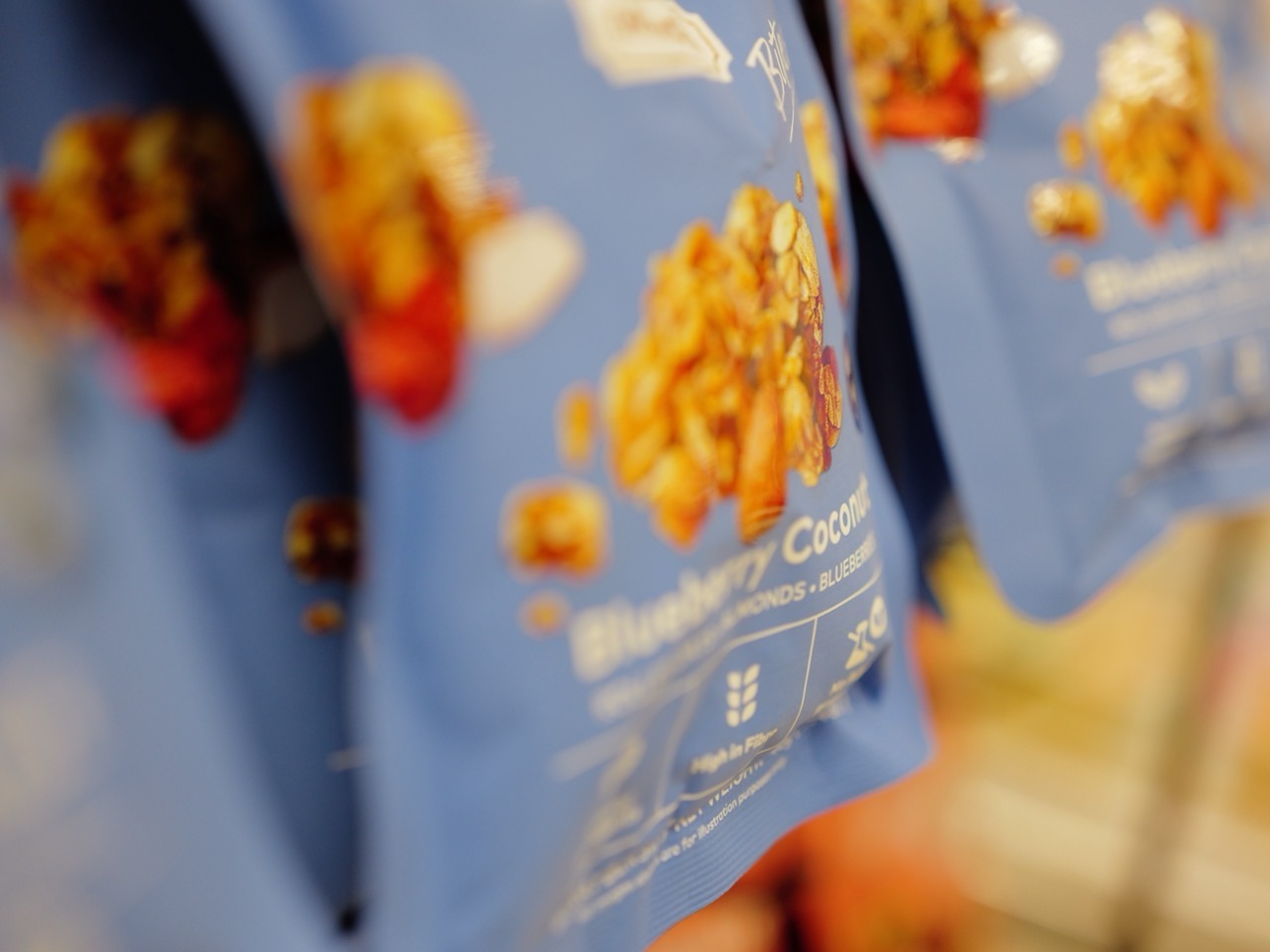
Did you know? A food package can list ingredients correctly for last month’s recipe but be wrong for the product sold today. Reliable food labels depend on truthful information flowing from suppliers to the shop shelf.
Quick answer: Food labelling systems fail when ingredient declarations, allergen information, origin, quantity, lot numbers or marketing claims do not match actual food and current legal requirements. The result can mislead shoppers or make it harder to identify affected products.
This guide explains food-labelling failures in plain language using Singapore’s rules effective from 30 January 2026 and relevant FAO/WHO Codex principles. Fictional examples explain how packaging, production and online listings can diverge.
The chain: verified ingredients → production → approved claims → correct artwork → current package → distribution → informed consumer decision.
Choose your reading route
- 1. What does it mean for food labelling to fail?
- 2. The entire product-to-label chain
- 3. A product name should describe the real food
- 4. What the Singapore Food Regulations changed in 2026
- 5. Prepacked food is not identical to every meal sold
- 6. Why ingredient lists become inaccurate
- 7. An allergen declaration can be a safety-critical handoff
- 8. Why ‘may contain’ needs evidence rather than habit
- 9. Shared equipment creates a different problem from recipe ingredients
- 10. Origin information can mean more than one thing
- 11. Net quantity and package size are not the same
- 12. Why batch identification matters during a recall
- 13. When date marks are misunderstood
- 14. Storage instructions must survive real shopping conditions
- 15. Claims of ‘natural’ and ‘organic’ require precise interpretation
- 16. Gluten-free claims became a specific 2026 update in Singapore
- 17. Nutrition panels and general ingredient lists have different jobs
- 18. Serving sizes can change the impression of a number
- 19. Health claims are not medical advice
- 20. Pictures and colours can communicate an unsupported message
- 21. Imported foods need workable local compliance
- 22. An online product description can become outdated
- 23. Labels must be readable and accessible in practice
- 24. Why copying overseas labelling rules creates errors
- 25. Fictional case: a recipe changes but the packet does not
- 26. Fictional case: the ‘healthy’ badge that confused shoppers
- 27. A useful food-labelling quality scorecard
- 28. Seven repairs that make food labels trustworthy
- 29. Five questions when a label appears wrong
- Frequently asked questions
- Primary sources and further reading
What does it mean for food labelling to fail?
Did you know? A food product can display a beautiful, professionally designed label and still give shoppers an incorrect impression of what is inside. A photograph of fresh fruit, for example, is not a substitute for a truthful description of ingredients.
Quick answer: Food labelling systems fail when ingredient, allergen, quantity, origin, lot or claim information becomes inaccurate, incomplete, inaccessible or disconnected from the product actually sold. This can harm consumer decisions, trigger recalls and undermine trust.
Not every confusing phrase constitutes a proven legal breach. The applicable law, product category, exact wording and evidence all matter. The right question is what the label claims and whether that claim is accurate, supported and useful to the person buying the product.
The entire product-to-label chain
Food information travels through recipe and suppliers → ingredient records → production batch → permitted claims → approved artwork → printing → packaging → distribution → shelf or online listing → consumer decision.
Every handoff can change the truth of the message. A recipe alteration may not reach the artwork team. A new supplier may change an ingredient. An online listing may continue showing an older package after the actual label changes.
Effective control checks the final item offered for sale against current, verified information. A carefully drafted label is no guarantee when the production process has changed underneath it.
A product name should describe the real food
Singapore’s Food Agency says that prepacked products must include an English name or description indicating the true nature of the food. A fashionable title or brand alone may not tell consumers what they are purchasing.
A beverage marketed with images of fruit might have a composition quite different from what a casual viewer expects. Accurate wording and ingredient information help consumers interpret the presentation without guessing.
A brand can be creative while still providing the required identity of its contents. Good compliance distinguishes promotional style from the legally relevant food description.
What the Singapore Food Regulations changed in 2026
Singapore’s Food (Amendment) Regulations 2025 introduced revised labelling requirements for prepacked foods that took effect on 30 January 2026. The Singapore Food Agency’s current guide discusses ingredients, information about hypersensitivity, net quantity and relevant business identification.
The revised guide also covers lot identification, required directions for use or handling where applicable, and conditions around claims such as gluten-free. Requirements and exemptions depend on the precise product and regulatory provision.
An article written before January 2026 may therefore be out of date. Businesses should consult the current SFA guide and the actual legislation rather than simply copying yesterday’s packaging.
Prepacked food is not identical to every meal sold
Prepacked food is generally packed in advance before it is offered for sale. This category is not automatically equivalent to dishes prepared after a restaurant customer places an order.
SFA’s explanatory materials for the 2026 amendments distinguish relevant prepacked products from foods packaged after preparation to fulfil individual orders. Other food-safety and consumer requirements may still apply to the latter.
Before claiming a package is legally non-compliant, identify the product category. General principles of honest communication are broad, but mandatory label details have specific legal scopes.
Why ingredient lists become inaccurate
A business may adjust a recipe in response to shortages, costs or consumer demand. If the changed formulation is not communicated to packaging and regulatory teams, the printed list may no longer match the food.
A robust process tracks every ingredient and additive in the current formula and maps them to the legally required declaration. SFA’s 2026 consumer guide explains that ingredients should be shown in descending order by weight, following applicable requirements.
Quality control should verify the formula used for each batch and the artwork version applied. A correct ingredient list for last month’s production run cannot automatically establish this month’s compliance.
An allergen declaration can be a safety-critical handoff
People with food allergies may rely on accurate ingredient information to avoid particular substances. A missed ingredient, mistaken substitution or outdated label can therefore have more serious consequences than a minor marketing ambiguity.
SFA explains the declaration of specified ingredients known to cause hypersensitivity under Singapore’s rules. The full list and relevant conditions should be checked in the current regulatory guidance.
Manufacturers need clear records from ingredient suppliers through recipes, shared equipment, packaging and retail distribution. An attractive allergen warning cannot compensate for unknown ingredients or uncontrolled production changes.
Why ‘may contain’ needs evidence rather than habit
Precautionary allergen labelling such as ‘may contain’ can communicate the possibility of unintended allergen presence. But warning statements used indiscriminately may restrict choices for consumers with allergies without accurately describing risk.
SFA’s 2026 allergy guidance advises that precautionary allergen labelling should be supported by a thorough assessment of relevant cross-contact and used only where necessary. Its guidance distinguishes this precaution from the declaration of allergens deliberately included in ingredients.
The correct decision is neither to print every allergen on every label nor to ignore uncertain risks. A competent, documented process is needed to determine what the manufacturer can responsibly state.
Shared equipment creates a different problem from recipe ingredients
A product can contain no intentionally added peanuts yet be produced in a facility where peanut-containing products also run. Whether there is a material cross-contact risk depends on processes, controls and evidence.
Allergen-management programmes need appropriate cleaning, segregation, scheduling and verification according to the operation. A slogan about a ‘nut-free recipe’ does not by itself explain what happens elsewhere in the manufacturing line.
Risk assessment should inform the actual statement, and businesses should avoid giving a guarantee that goes beyond their verified production controls.
Origin information can mean more than one thing
The source of a raw ingredient, the country where a finished product is made and the location of the importing business can be different. A shopper may conflate these facts when a label uses a national flag or geographical marketing theme.
Singapore requires relevant business identification and country-of-origin information under its applicable prepacked-food provisions. Codex standards also discuss origin and responsible business information.
Communicate what the origin statement actually describes rather than implying a broader claim about every ingredient or stage of production. A single attractive image of a country is not proof of full product provenance.
Net quantity and package size are not the same
Large packaging can make a product appear more substantial than it is. The legally relevant net quantity generally concerns the food contents, not the weight of the wrapper or container.
SFA’s consumer guidance notes that for certain frozen seafood glazed with ice, the declared net weight excludes the ice glazing. Specific rules vary with product type.
Clear weight and volume information enables fair price comparisons. An accurate measure hidden in unreadably small text can still create a frustrating customer experience.
Why batch identification matters during a recall
If a factory discovers that one production lot has a problem, the ability to identify affected items quickly can help limit the recall to the appropriate products and prevent unsafe stock from continuing to circulate.
The SFA food-labelling guide incorporates lot identification requirements applicable from 30 January 2026, subject to relevant provisions. Records must match the batch actually sold and the information held by the responsible business.
A perfectly printed lot number is useless if the manufacturer cannot connect it to ingredients, production records and distribution destinations. Labelling and traceability must agree.
When date marks are misunderstood
Date marking can communicate safety, quality or other product information depending on the product, specified wording and governing requirements. Different date expressions should not be assumed to mean the same thing in every jurisdiction.
Consumers also need any appropriate storage or handling instructions to understand the conditions under which a stated date applies. A temperature-sensitive food may be affected by improper storage even while its printed date remains in the future.
Manufacturers should make the wording and relevant conditions consistent with applicable law. Readers should not use a generic internet rule to decide the safety of an individual product.
Storage instructions must survive real shopping conditions
Labels may describe refrigeration, preparation or handling conditions where required. That information has little value if it is hidden under another sticker or contradicted by retail handling.
Supply-chain partners need to preserve label visibility while storing and displaying products appropriately. A package designed for the correct storage condition may become misleading when the retail environment is unsuitable.
Assess the label and product handling together. The strongest warning cannot restore the original quality of food after a relevant condition has been breached.
Claims of ‘natural’ and ‘organic’ require precise interpretation
Terms that imply natural origin, cultivation practices or particular production methods may affect how consumers judge a product. Their legal requirements and accepted evidence differ by country and product.
SFA’s current guidance discusses organic claims and relevant labelling conditions. The 2026 amendment briefing also clarifies some permissible ways to declare flavourings, rather than making every desirable-sounding descriptor mandatory.
The right question is not whether a word sounds healthy. It is whether its meaning is clear, legally appropriate and substantiated by the facts about that particular item.
Gluten-free claims became a specific 2026 update in Singapore
Singapore’s revised prepacked-food guidance covers gluten-free and reduced-gluten claims under rules taking effect from 30 January 2026. Such statements have particular significance for people who need to avoid gluten for medical reasons.
A claim is not interchangeable with the declaration of ingredients containing gluten. Product formulation, applicable thresholds and cross-contact management require competent verification.
Consumers should use current official guidance and appropriate healthcare advice for personal dietary needs, while businesses must substantiate relevant statements. This guide does not provide an individual medical assessment.
Nutrition panels and general ingredient lists have different jobs
An ingredient list says what went into the product, while a nutrition panel presents specified nutrient and energy information using an applicable format. A product can have a complete ingredient list yet still require additional nutrition information because of its claims or category.
SFA states that since 2 May 2024, regulatory control of nutrition labelling and nutrition and health claims in Singapore has rested with the Ministry of Health and Health Promotion Board. Responsibilities are therefore not identical for every labelling matter.
Read both types of information in their proper context. A single ‘high-protein’ badge cannot replace the underlying figures where the applicable requirements call for them.
Serving sizes can change the impression of a number
Nutrition information may be presented per specified quantity and sometimes per serving under relevant rules. Shoppers may compare two products using figures with different denominators and reach the wrong conclusion.
A small declared serving can make the displayed amount of a nutrient appear lower even when the package is likely to be eaten in larger portions. The arithmetic is simple but easily missed.
Useful labelling explains the basis of comparison prominently. Food businesses should not rely on a technically correct table to create an unjustified overall impression.
Health claims are not medical advice
A nutrition or health claim may be allowed under specified conditions, but language suggesting prevention or cure of disease can create serious regulatory and consumer concerns.
Singapore’s Food Regulations restrict false or misleading statements and medical-type claims except where the legal framework permits particular categories. The exact rule must be checked rather than guessed from advertising conventions.
Consumers should not interpret an attractive food package as a clinical diagnosis, prescription or guarantee of a health outcome. Claims need relevant evidence and lawful wording.
Pictures and colours can communicate an unsupported message
A large picture of fresh vegetables, a national flag, a medical-looking symbol or a green landscape may influence the overall impression even if a written claim is carefully qualified.
Singapore’s rules on false or misleading food representations cover written, pictorial and other descriptive matter. A statement may be problematic because of what it reasonably suggests, not only because one sentence is literally untrue.
Review complete artwork and typical consumer understanding, not isolated lines of text. Honest packaging communicates the nature of the product without relying on confusion.
Imported foods need workable local compliance
Food products may be designed for a different market and carry information in another language or format. Importers and distributors need to ensure that food offered for sale in Singapore meets applicable local requirements.
SFA permits suitable additional labels under its published conditions, but mandatory information must remain accurate and must not be obscured. A supplementary sticker cannot change what the manufacturer actually put in the pack.
Compliance requires version control for both source packaging and local labels, together with correct information about the business responsible for the product.
An online product description can become outdated
A buyer may view an e-commerce listing that uses yesterday’s ingredient photograph while the supplier has changed the product or its label. Even when the delivered package is correctly printed, the purchase decision may have been made using inaccurate information.
Digital catalogues, marketplace entries and retail photographs should be updated alongside packaging changes. Codex has addressed food information provided through e-commerce and other technologies, recognising that consumers increasingly shop without physically handling the pack.
The digital and physical versions must be reconciled. A screenshot from a seller is not a reliable guarantee of current ingredients if it does not correspond to the item received.
Labels must be readable and accessible in practice
A label can contain all required information but be hard to use when important words are very small, poorly contrasted, hidden under folds or printed on reflective surfaces.
The legal requirements for prominence and legibility depend on the applicable jurisdiction, package and exemption. Better design also considers older consumers and people who may need accessible explanations.
The objective is information people can actually find and understand, not merely a successful compliance checklist completed at the design desk.
Why copying overseas labelling rules creates errors
Codex Alimentarius provides international reference standards, including CXS 1-1985 for prepackaged food labelling. Countries implement their own laws and may have different categories, language rules, dates or conditions.
An ingredient list lawful in one export market may need changes before the product can be sold in Singapore. Conversely, a Singapore-specific requirement should not be presented as universal legal advice.
Begin with the responsible regulator and product category. Use Codex as a reference framework, not a substitute for checking current national legislation.
Fictional case: a recipe changes but the packet does not
Imagine fictional Orchard Pantry replacing an ingredient in a snack formulation after a supplier change. The production team updates its purchase records, but an older label remains in the packaging inventory.
The product reaches shops carrying an ingredient declaration that no longer matches the current recipe. The business identifies affected lots, checks safety obligations with competent staff and authorities and corrects its approval process.
This invented example shows how a single handoff between purchasing, production and label control can create a wider product-information failure.
Fictional case: the ‘healthy’ badge that confused shoppers
In fictional Eastfield Foods, a designer adds a prominent green badge saying ‘healthy choice’ without establishing which standards, evidence or regulatory permissions support the wording. Consumers begin interpreting it as a guarantee about the whole product.
Reviewers examine the claim and its overall impression, revise the label under the applicable rules and train the marketing team to substantiate future statements.
The example is fictional and does not refer to any actual Healthier Choice Symbol programme or product. It illustrates the difference between promotional design and defensible claims.
A useful food-labelling quality scorecard
Measure correspondence between formulation and printed ingredients, correct allergen information, lot traceability, artwork version control, readability, verified claims, handling instructions and the speed of corrections.
Counting completed artwork approvals is not sufficient if the wrong label is later used on the production line. Consumer complaints may reveal missing information, but a low complaint rate does not establish perfect compliance.
Quality checks should sample actual products on shelves or in distribution and compare them with the verified formulation and current regulatory obligations.
Seven repairs that make food labels trustworthy
First, assign ownership of formulation and ingredient records. Second, verify supplier changes. Third, assess allergens and claims. Fourth, check artwork against the current law. Fifth, match printed labels to actual production lots. Sixth, monitor online listings and retail versions. Seventh, investigate and correct mismatches promptly.
Use appropriate training and competent review rather than increasing paperwork without better controls. Significant discrepancies should be addressed under applicable recall, regulatory and consumer-protection procedures.
Good food labelling is an ongoing system of evidence and communication—not simply a graphic design task completed once for an entire brand.
Five questions when a label appears wrong
Which product and production lot are involved? Does the current ingredient list match the actual formulation? Are relevant allergens and claims correctly stated? Is the information readable and current for the country of sale? Has the business or regulator verified the problem?
Consumers with dietary restrictions should rely on accurate current information and seek clarification through official business or regulatory channels where necessary. A serious allergy concern requires appropriate medical guidance, not guesses based on packaging photographs.
Check the current Singapore Food Agency and relevant health-authority guidance for actual compliance questions. A general educational article cannot adjudicate a particular label.
Frequently asked questions
Does a beautiful food label guarantee accurate ingredients?
No. The declared ingredients must match the product actually made and sold.
What changed in Singapore on 30 January 2026?
Revised prepacked-food labelling requirements took effect, including specified lot, handling and claim provisions.
Is ‘may contain’ the same as an intentionally added allergen?
No. Precautionary labelling concerns potential unintended presence and should follow a suitable risk assessment.
Does a ‘gluten-free’ claim require supporting controls?
Yes. Its meaning and requirements depend on applicable regulations and verified product conditions.
Can images on packaging be misleading?
Yes. A label’s overall pictures and wording can create a false impression even without an obviously false standalone sentence.
Are nutrition claims and allergen declarations overseen identically?
No. Singapore’s regulatory responsibilities and detailed requirements differ by type of information.
Where should consumers check Singapore food labelling requirements?
Use the current SFA guidance and relevant MOH/HPB sources for nutrition and health claims.
Primary sources and further reading
Codex guidance provides international references, while Singapore’s Food Regulations and current SFA, MOH and HPB requirements determine local obligations. Claims and exemptions differ by product category. The fictional examples do not allege actual brands have breached the law.
- Singapore Food Agency: Labelling Requirements for Food (2026)
- Singapore Food Agency: A Guide to Food Labelling and Advertisements
- Singapore Food Agency: Understanding Food and Nutrition Labels
- Singapore Food Agency: Food Allergy, Intolerance and Precautionary Labelling
- Singapore Food Agency: Food (Amendment) Regulations 2025
- FAO/WHO Codex Alimentarius: Food Labelling Standards
- FAO/WHO Codex: Committee on Food Labelling
Connected failures across the food system
- Why Food Inspection Systems Fail | Risk, Testing and Enforcement
- Why School Meal Programmes Fail | Nutrition, Supply Chains and Trust
- Why Food Systems Fail | Harvest Shocks, Prices and Waste
- Why Public Records Systems Fail | Errors, Access and Trust
Final thought: A trustworthy label is the last visible link in a long evidence chain. It succeeds only when what shoppers read faithfully matches the food they are about to buy.