
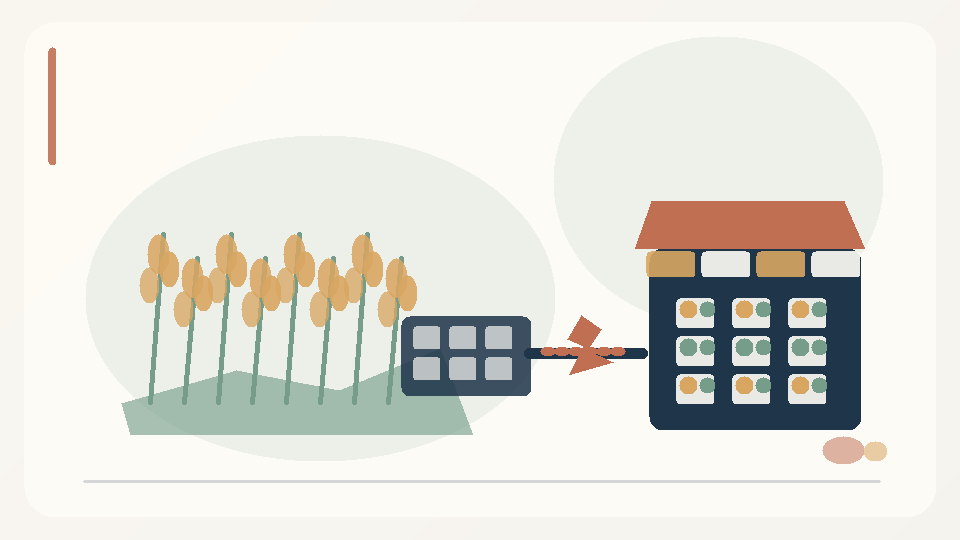
Did you know? An excellent harvest can end in empty shelves, and full shelves can coexist with families who cannot afford enough nutritious food. Food is not just what grows on farms—it is everything that makes a safe meal possible.
Quick answer: Food systems fail when harvest shocks, unsafe handling, broken cold chains, costly transport, price inflation, poverty or avoidable food losses interrupt access to enough safe and nutritious food. Production, affordability and food quality are separate stages that must work together.
This reader-friendly guide explains why food systems fail, how harvest and transport disruptions spread, what FAO’s 2026 food-security research reveals and how loss and waste differ. Real examples and dated international estimates help keep the story grounded.
Follow the chain: water and farm resources → harvest → storage and processing → transport → retail → household income and access → safe, nutritious meals. A strong food system makes each handoff dependable.
Choose your reading route
- What does it mean for a food system to fail?
- The quick answer: failure is usually a chain
- Food availability and food affordability are not the same
- What the 2026 global food-security report tells us
- Why a healthy diet can cost much more than basic calories
- How a harvest shock travels to household prices
- Case study: Pakistan’s 2022 floods and agriculture
- Water and soil determine what a farm can produce
- A food shortage can start at a fertiliser or seed supplier
- Why storage and cold chains can fail after a good harvest
- Food loss and food waste are different stages
- How much food did the world waste in 2022?
- Why wasted food does not automatically become food for someone else
- Transport disruptions make local shortages appear national
- Why food prices can rise even without a physical shortage
- Income shocks turn a market problem into a nutrition problem
- The safety problem: enough food, but unsuitable food
- Why electricity failures can threaten food supply
- Trade dependence can be both a strength and a vulnerability
- Why food reserves help but cannot fix every problem
- Food resilience must also protect farmers’ livelihoods
- How climate and ecosystems influence tomorrow’s food supply
- A fictional island: full boats, expensive vegetables
- A second scenario: high harvests but growing hardship
- How to identify the real bottleneck
- What a credible food-system recovery plan looks like
- A student’s method: follow one banana from farm to lunch
- Frequently asked questions
What does it mean for a food system to fail?
Did you know? A country can produce large quantities of food while some of its families cannot afford a balanced meal. A farm can harvest successfully while fruit spoils before reaching a shop. A supermarket can have full shelves but contain few nutritious options that a low-income household can purchase regularly.
A food system is larger than agriculture. It connects the production, processing, storage, transportation, sale, preparation and consumption of food, along with the finance, environment, workers and public institutions supporting those activities. Different kinds of failure arise at different points.
Food-system failure occurs when the system cannot reliably provide people with access to sufficient, safe and nutritious food in ways that are sustainable over time. Production shortages, unsafe food, price shocks, inaccessible markets and large avoidable losses are related but distinct. An honest diagnosis specifies which function failed, which communities were affected and whether the problem was temporary or structural. The goal is not merely to maximise tonnes harvested; it is to make food genuinely available and usable for people.
The quick answer: failure is usually a chain
Food follows a sequence of decisions and dependencies. Farmers need suitable land, water, labour, inputs and knowledge. Crops must be harvested at the right time, handled and stored safely, processed where necessary, moved to buyers and sold through accessible markets. Consumers need enough income or support to obtain appropriate foods.
A disruption can begin at any point. Drought may cut yields. A transport closure can prevent vegetables reaching a city. Power loss can compromise cold storage. Currency depreciation may raise the cost of imported inputs or food. A household may lose work and become unable to buy food even while the local market remains supplied.
The simple chain is production → post-harvest handling → processing and storage → distribution → affordable access → safe and nutritious consumption. Food security also requires stability over time. A full meal on one day does not guarantee access throughout a month, just as high national harvest volumes do not prove every household is food secure.
Food availability and food affordability are not the same
Imagine a market with baskets of vegetables, rice, fruit and eggs. The suppliers have done their jobs; the goods are physically present. Yet some households cannot afford enough food after paying rent, transport and essential bills. This is an access failure, even if the market has no shortage of stock.
Economists distinguish several dimensions of food security, including availability, access, utilisation and stability. Availability concerns food supply; access concerns the ability to obtain it; utilisation includes appropriate nutritional, safety and health conditions; stability concerns whether these can be maintained over time.
When headlines say a country has food, ask who can purchase or receive it, at what cost, in what form and through which institutions. A larger national harvest may not immediately help a distant household if transport, prices, incomes or social protection are the binding constraint. The most useful intervention targets the actual missing link rather than assuming every problem can be solved by producing another tonne.
What the 2026 global food-security report tells us
The State of Food Security and Nutrition in the World 2026, prepared by five UN agencies, estimated that around 645 million people faced hunger in 2025. The report noted that global hunger had declined for a third consecutive year, but progress remained uneven and inadequate for agreed 2030 goals.
The report also estimated that approximately 2.7 billion people could not afford a healthy diet. Hunger and inability to afford a healthy diet measure related but different problems. A person may obtain enough dietary energy yet be unable to afford adequate variety and essential nutrients. These are modelled global estimates under defined methods and reporting years, not personal diagnoses.
The important point is that food systems cannot be judged solely by whether calories exist somewhere in the world. Economic access, dietary diversity, the local food environment and the resilience of the supply chain all matter. Progress in one global indicator should be recognised without claiming that the problem has disappeared in every region.
Why a healthy diet can cost much more than basic calories
Some staple foods can provide dietary energy relatively cheaply, depending on location and conditions. A healthy diet also requires appropriate diversity, including relevant sources of protein, fruits, vegetables and other nutrient-rich foods. These often involve additional production, storage, quality and distribution requirements.
In its 2026 findings, the UN reported that the average estimated minimum global cost of a healthy diet reached 4.28 purchasing-power-parity dollars per person per day in 2025. This is an analytical measure for comparison, not the exact local price every household must pay. The report emphasised structural costs across food value chains, including processing, logistics and wholesale.
The cost of a basket can therefore rise even when a key staple crop is plentiful. Fresh produce may spoil without suitable handling, and remote locations may face difficult transport. Making diets affordable requires attention to wages, access, market organisation and infrastructure as well as farm yields. The right question is what people can regularly obtain and use, not merely which food is cheapest by calorie.
How a harvest shock travels to household prices
A harvest can fail or shrink because of drought, flooding, plant disease, pests or other damaging conditions. The consequences depend on which crop is affected, how much is normally produced, stored reserves and whether imports or substitutes are available. A local failure does not automatically mean global scarcity.
Suppose a region produces an important share of a country’s vegetables. Flooding damages fields and roads. Farmers harvest less, and some remaining produce cannot reach wholesale markets. Buyers compete for smaller supplies. Restaurants revise menus, retailers raise prices and households substitute other foods. The effect can continue until alternative supply or a new harvest becomes available.
The original event is agricultural, but the household experiences a financial and nutritional problem. Policies may need to support affected farmers, restore transport and help vulnerable consumers at the same time. A recovery plan should distinguish production restored, food reaching retailers and families actually being able to afford it. Those outcomes are connected but do not happen simultaneously.
Case study: Pakistan’s 2022 floods and agriculture
The floods that struck Pakistan in 2022 caused extensive human suffering and damage to livelihoods. In a September 2023 briefing, FAO stated that the agriculture sector had lost more than 4.4 million acres of farmland and approximately 800,000 animals as a result of the flooding.
The figures describe a historical disaster and a specific agricultural impact, not the entire present food situation in Pakistan. The case illustrates how a severe weather event can affect both production assets and rural livelihoods. Losing crops or livestock can reduce current food supply while also depriving households of income and their ability to prepare for the next growing season.
Recovery cannot be assessed only by whether floodwater recedes. Seeds, animal health, safe access to land, irrigation, roads, finance and markets may all need attention. Families also require appropriate assistance while normal livelihoods are interrupted. Food-system resilience includes the ability to restore production and access after disaster, not just delivering emergency supplies once.
Water and soil determine what a farm can produce
Agriculture depends on suitable water, soil, temperatures and ecological conditions. Irrigation can stabilise production in some settings, but it relies on water availability, infrastructure, energy and sensible resource management. In other places, rainfall variability plays a dominant role.
Degraded soil can lose properties important for healthy plant growth and water retention. Salinity, erosion or repeated inappropriate management may reduce productivity. Some crop systems depend on pollination and other ecological relationships. A food-production plan that maximises output this year while undermining the resource base may create lower yields or higher costs later.
The relationship with other systems matters. Read Why Water Systems Fail and Why Ecosystems Collapse for the underlying dependencies. There is no universal agricultural technique suitable for every location; good planning matches crops and farming practices to water, climate, soils and local conditions.
A food shortage can start at a fertiliser or seed supplier
Farmers often require seeds, fertiliser, feed, fuel, equipment, veterinary services and other inputs before a harvest occurs. If one becomes unavailable or prohibitively expensive, the effect can appear months later as lower yield or higher production cost.
This timing is important. A sudden fuel-price shock may increase the cost of operating machinery and transporting goods immediately, while some planting decisions affect supply only after the next growing season. A shortage of suitable seeds can limit which crops farmers are able to grow. These decisions are interdependent and vary by farm and region.
Policy needs to recognise the production calendar. Assistance received after the planting window may not replace the missed crop. Input diversification, sound procurement, local expertise and dependable market information can improve preparation. Yet an intervention must also avoid encouraging harmful overuse of inputs or creating long-term dependence without addressing underlying economic conditions.
Why storage and cold chains can fail after a good harvest
Fresh vegetables, fruit, fish, meat and dairy require handling appropriate to their properties and applicable safety standards. Time, temperature, hygiene, packaging and transport influence how much of the original harvest can reach consumers in a suitable condition.
A farm may produce more than its usual amount, but if nearby cold storage is unavailable, some of the product may spoil before buyers collect it. A refrigerated vehicle helps only if it has reliable power, maintenance, loading procedures and a destination able to handle the goods. A cold chain is continuous: protection lost at one stage may not be restored merely by cooling the goods later.
The repair can involve better harvest scheduling, suitable storage, reliable electricity, logistics and market coordination. These interventions cost money, so they should be matched to the product and local needs. The goal is not to refrigerate every food indiscriminately, but to preserve safety, quality and value for items that depend on controlled conditions.
Food loss and food waste are different stages
A useful distinction separates food loss, generally measured during the post-harvest supply chain before retail, from food waste at retail, food-service and household stages. Definitions and statistical methods are specific to the reporting framework, so comparisons need care.
FAO’s food loss and waste overview discusses an estimated 13.2% of food lost after harvest and before retail in the relevant global data framework. This is a different metric and stage from UNEP’s consumer-level waste estimate; the percentages should not simply be added without accounting for their different denominators and periods.
A crate of tomatoes spoiled because transport failed suggests a different remedy from edible food discarded by a restaurant after preparing far too much. Loss reduction may require storage or improved handling. Waste reduction may require better purchasing, portions, inventory or consumer information. Both matter, but successful policies identify where the food stopped being used.
How much food did the world waste in 2022?
The UN Environment Programme’s Food Waste Index Report 2024 estimated that 1.05 billion tonnes of food waste were generated at household, food-service and retail stages in 2022. The estimate includes inedible parts under its measurement framework.
UNEP reported that households accounted for about 60% of the estimated total, with the remainder generated by food services and retail. These figures describe 2022 estimates published in 2024, not measured waste from the current month. They also do not mean that every discarded kilogram could have been safely redistributed to people facing hunger.
Waste is a serious failure of resources because producing, processing and moving unused food consumes land, water, labour and energy. But preventing waste and ending hunger are not the same intervention. Food access depends on incomes, geography, safety and institutions as well as the quantity available.
Why wasted food does not automatically become food for someone else
It is natural to imagine moving discarded meals directly to people who need them. Appropriate food rescue and redistribution can help, especially when edible surplus is identified safely and promptly. However, not every loss is edible, recoverable or located near people who could use it.
Food can be unsafe, past its suitable use conditions or mixed with inedible parts. Transport, refrigeration, legal responsibilities and timing matter. A donor cannot solve food insecurity simply by assuming that any unsold item can be eaten anywhere without cost or risk.
Effective redistribution programmes need safety standards, logistics, reliable partners and a clear understanding of recipients’ needs. Even a well-run scheme is not a substitute for stable incomes and a dependable food supply. The larger objective is to prevent avoidable surplus where possible, redirect suitable food responsibly and ensure everyone can regularly obtain adequate nutrition.
Transport disruptions make local shortages appear national
Food moves through farms, processing plants, markets, warehouses, roads, ports and retailers. The physical movement can be disrupted even when total production remains adequate. One broken bridge may prevent vegetables from reaching a regional market, causing shortages in one city while farmers elsewhere cannot sell their produce.
This can produce a painful paradox: food is abundant at one end of the system and scarce at the other. Farmers lose income as produce spoils, and households pay more because nearby supplies decline. Restoring the transport link helps both sides, but the delay may already have caused losses.
For a broader infrastructure explanation, read Why Transport Networks Fail and Why Supply Chains Break. Food logistics deserve special care because quality and safety can deteriorate with time. An available truck is not enough if a shipment has already become unsuitable for use.
Why food prices can rise even without a physical shortage
A food price includes many costs beyond the farm gate: processing, transport, packaging, electricity, storage, finance, labour and retail operations. Currency changes and imported-input costs may also influence the final price. A market can therefore experience food inflation while aggregate production remains adequate.
Expectations and market conditions can add volatility. Businesses may raise prices when replenishment becomes more expensive or uncertain. Households may adjust purchases toward cheaper substitutes, affecting demand for other products. The effect is different across staples, perishables and imported foods.
Policymakers need to identify whether a price shock is caused by production, logistics, financing, market structure, currency or household purchasing power. A response targeting only farmers will not necessarily fix a transport bottleneck or severe household income loss. Accurate analysis separates nominal prices, real purchasing power and the affordability of an appropriate diet.
Income shocks turn a market problem into a nutrition problem
Consider a household that regularly purchases a varied diet. An adult loses work or experiences a sharp reduction in hours. Food remains available at nearby shops, but the household’s disposable income falls. Family members may begin reducing portions, variety or the frequency of certain foods.
This is a food-access problem connected to employment and social protection. A farm subsidy or an extra shipment may not help much if the household’s immediate barrier is the inability to pay. Relevant interventions depend on local systems and can include appropriately targeted assistance, employment support or other protections.
The aim is to prevent temporary income stress from becoming sustained nutritional deprivation. Children’s and other vulnerable household members’ needs require particular attention. Avoid assuming food insecurity always presents itself as an empty plate. It can also appear as repeated compromise over variety, quality or the stability of meals over time.
The safety problem: enough food, but unsuitable food
Food-system performance includes safety. Contamination can occur during production, processing, packaging, storage, transport or preparation. A product may look normal while posing a hazard that requires laboratory testing or regulatory action to identify.
Food businesses therefore need appropriate hygiene, traceability, temperature controls where applicable, staff training and response procedures for recalls or contamination alerts. The exact requirements depend on the food and jurisdiction. Bypassing a safety check to prevent a shortage can create a different, potentially more serious failure.
Safety incidents also have economic and trust effects. A recall may interrupt supply, waste usable products if its scope is poorly defined and harm customers when critical information is delayed. The remedy is effective preventive practice, accurate records and clear communication by responsible authorities. Successful delivery means safe, appropriate food reaches the consumer—not merely that a shipment arrived on a shelf.
Why electricity failures can threaten food supply
Electricity supports irrigation in some settings, processing factories, refrigeration, retail storage, payment systems and logistics. A power outage may interrupt operations even if crops, roads and market demand are unaffected.
Some facilities use backup power, but the capability depends on fuel, maintenance, transfer arrangements and the critical loads supported. A freezer operating normally again does not automatically prove that food exposed to inappropriate conditions remains safe. Food businesses must assess such situations using applicable food-safety rules and professional procedures.
This is why food resilience needs coordination with infrastructure resilience. See Why Power Grids Collapse for the upstream failure mechanism. Supply-chain planning should identify the facilities where power loss creates the greatest harm and test the continuity arrangements rather than assuming any generator solves every risk.
Trade dependence can be both a strength and a vulnerability
International trade allows regions to obtain foods that are difficult to produce locally or seasonally, while farmers can reach wider markets. A country dependent only on its own harvest may be vulnerable to local drought or pests. Diversified imports can improve resilience when suppliers face independent risks.
But trade also depends on foreign production, logistics, currency, border rules and political conditions. A restriction, war or shipping disruption may change costs or availability. The appropriate response is to understand the actual concentration and substitution options rather than assume every imported item is necessarily unsafe or fragile.
Food security strategies may combine domestic production where sensible, diversified supply, appropriate reserves, reliable trade relationships and support for household access. Each option has costs and environmental implications. Simply producing all food domestically is not practical or efficient for every country. The best portfolio reflects geography, climate, institutions and the foods people need.
Why food reserves help but cannot fix every problem
Emergency reserves can provide a buffer when supply is disrupted. Their usefulness depends on the type of food, storage conditions, rotation, funding and the ability to distribute it to the intended people. Storing stable grains is different from storing fresh vegetables or medicines.
A reserve can also fail through poor management. Goods may expire, storage conditions may be unsuitable, quantities may be inaccurate or distribution may be too slow during an emergency. A large warehouse inventory is not proof of a working food-security programme if the stock cannot be accessed safely and equitably.
Reserve policy should be linked to clearly defined emergency scenarios and realistic replenishment plans. It also needs transparent information so sudden announcements do not unnecessarily amplify panic. The right question is how much appropriate food can reach affected people, in what time, and under which conditions—not merely how many tonnes are recorded in a storage ledger.
Food resilience must also protect farmers’ livelihoods
Farmers, fishers and food workers are not only producers; they are households whose ability to continue working depends on income, assets, health and a viable market. A climate shock or sudden price collapse can reduce their resources for the next production cycle. Recovery may therefore require more than replacing the crop that was lost.
A small farmer might need access to safe land, tools, planting materials, credit, market information or functioning local transport. The appropriate combination varies. Policies that stabilise consumer prices without examining their effects on producers can produce unintended problems if farmers cannot cover costs and withdraw from production.
Strong food systems create conditions for reliable livelihoods and adequate consumer access. Fair market information, appropriate support, infrastructure and governance can help, but each measure should be evaluated for actual outcomes. The objective is a production network that can maintain capability after shocks rather than repeatedly rebuilding from zero.
How climate and ecosystems influence tomorrow’s food supply
Long-term food production depends on healthy environmental systems: water cycles, soils, suitable climatic conditions, biodiversity and sometimes pollination and other ecological interactions. Damage to those resources can reduce the range of options available to future farmers.
Extreme heat and rainfall changes may affect crop suitability and yields in different ways across regions. Fish populations depend on aquatic ecosystems and fisheries management. Deforestation or soil erosion can create pressures whose consequences appear over years rather than weeks.
Adaptation may involve suitable crop varieties, improved water management, soil protection, diversified production and better information. There is no one technique that eliminates every climatic or ecological risk. A responsible plan evaluates local evidence, protects vital ecosystems and recognises the livelihoods of people who depend on the land and sea. Food security is partly a question of maintaining the natural systems that make future harvests possible.
A fictional island: full boats, expensive vegetables
Imagine a small fictional island that imports much of its fresh produce. Ferries bring crates from a nearby regional port, and most households shop at the same few local markets. The boats have enough capacity, but a refrigerated storage facility at the arrival point breaks down.
Vegetables now lose quality during unloading and storage. Retailers reject some shipments while paying more for urgent deliveries. Markets have fewer saleable items, so prices rise. A casual observer may blame international trade or the farmers, even though the decisive failure is the local handling and cold-chain connection.
The repair is not necessarily another ferry. It may require suitable maintenance, temporary safe storage, alternative distribution arrangements and accurate quality checks. This invented case illustrates why food-system analysis needs to separate transport capacity, delivered quality and customer affordability. A shipment counted as delivered is not a meal available to a household.
A second scenario: high harvests but growing hardship
Imagine another fictional country reporting record cereal production. National supply statistics are strong, and export revenue grows. Meanwhile, high housing costs, unemployment and transport expenses reduce what some families can spend on food. A lack of affordable nutritious alternatives makes their diets less diverse.
The harvest success is real, but it does not settle the household-access question. Increasing output of the same staple could be useful, yet may not fix the affordability of fruits, vegetables or protein sources in underserved communities. Policy should examine price formation, wages, retail access and available assistance.
This is a core lesson from food-security measurement: tonnes, calories and diets are different outcomes. A country’s production can improve while nutritional access remains deeply unequal. Recognising both truths prevents the discussion from turning into a false choice between celebrating agricultural progress and acknowledging unmet human needs.
How to identify the real bottleneck
Start with the affected food, location, population and period. If shelves are empty, determine whether the cause lies in farming, processing, storage, transport, trade or retail allocation. If shelves are full but households go hungry, examine incomes, prices, accessibility and other barriers.
Next identify whether the problem is quantity, quality, safety, affordability or stability. Check which information is reliable and whether local patterns differ from national averages. A single dramatic photograph of a queue does not describe every region or the full supply chain.
Finally ask which action is feasible and how it would be evaluated. A transport repair should improve delivered goods and travel reliability. Income assistance should improve households’ ability to obtain appropriate food. Post-harvest investment should reduce verifiable losses. Matching interventions to mechanisms is more valuable than declaring that one policy will solve all food insecurity.
What a credible food-system recovery plan looks like
In an emergency, the first priority is protecting people with safe, appropriate food and access to essential services through the relevant humanitarian and public institutions. At the same time, planners should avoid measures that undermine future production or create preventable safety risks.
Longer-term recovery may require restoring irrigation and roads, supporting farmers, repairing storage, diversifying critical supply, improving price transparency and helping households regain purchasing power. The right sequence depends on what failed first and which bottlenecks remain. Monitoring should distinguish goods dispatched, safe goods received and people obtaining adequate diets.
The final test is resilience: can the system withstand the next plausible harvest shock, transport interruption or income crisis better than it did before? Resilience is not the promise of perfectly stable prices or zero losses. It is the capability to detect trouble, protect essential needs and repair the weakest links while keeping future food production viable.
A student’s method: follow one banana from farm to lunch
Choose a familiar food such as a banana, loaf of bread or carton of milk. Draw its path from farming through harvest, grading, storage, processing where relevant, transport, wholesale, retail and home. Include the resources and information needed at each step.
Now remove one link. What happens if a road floods? If the refrigerator stops? If the family has less money? If a shipment fails a safety check? Each scenario produces a different type of failure, and the correct response changes with it.
The exercise trains systems thinking. A product may exist and still be unavailable, unaffordable or unsafe for the intended person. Good food systems ensure that agricultural work is translated into reliable meals. Ask what failed, who felt the consequence and what evidence would show that a repair genuinely reached the table.
Frequently asked questions
Why do people go hungry when food exists in markets?
Hunger can reflect inability to afford or access sufficient food rather than a total absence of supply. Income shocks, high prices, transport barriers and other conditions can prevent families obtaining food even when shops have stock.
What is the difference between food security and food safety?
Food security concerns reliable physical, social and economic access to sufficient, safe and nutritious food. Food safety concerns whether food is suitable to consume without unacceptable hazards. The two are related but not interchangeable.
How many people faced hunger in the latest UN report?
The 2026 State of Food Security and Nutrition in the World estimated that around 645 million people faced hunger in 2025. It reported uneven improvement, and the figure is a global estimate for that year.
How many people cannot afford a healthy diet?
The same 2026 UN report estimated approximately 2.7 billion people could not afford a healthy diet, using its defined method and 2025 data. This differs from the estimated number experiencing hunger.
What is the difference between food loss and waste?
Food loss is generally measured after harvest and before retail, while food waste concerns retail, food-service and household stages under the relevant UN measurement frameworks. Different stages need different interventions.
How much food was wasted globally in 2022?
UNEP’s Food Waste Index Report 2024 estimated 1.05 billion tonnes of waste in 2022 at retail, food-service and household stages, including inedible parts. It is a dated estimate, not a real-time tally.
Will reducing waste automatically end hunger?
No. Preventing loss and responsibly redistributing edible food can help, but hunger also involves income, access, nutrition, timing and safety. Not all discarded material can be safely recovered or moved to someone in need.
Why does cold storage matter for food systems?
Many perishable products require suitable temperature control and handling to preserve safety and quality. A broken cold-chain link can create losses even when farms produce plenty and trucks arrive on time.
Can food prices rise without a poor harvest?
Yes. Transport, energy, financing, labour, currency, packaging and other costs can raise retail prices. Household purchasing power can also fall, making the same food less affordable without a physical production shortage.
Why are farms vulnerable to flooding?
Flooding may damage crops, livestock, soil, stored inputs, roads and production equipment. Recovery can take beyond the end of the flood because farmers need resources for subsequent production cycles.
Is national self-sufficiency always the safest food strategy?
Not necessarily. Domestic production may be vulnerable to local weather and land constraints; diversified imports can provide alternatives. Reliable access usually requires a context-specific balance of sources, logistics, reserves and demand management.
What is the most useful question to ask after a food shortage?
Ask whether the binding constraint is production, safe handling, distribution, price or household access. Then measure whether a repair actually results in adequate, safe food reaching the people affected.
Primary sources and further reading
For the most recent global food-security synthesis, read The State of Food Security and Nutrition in the World 2026 and the UNICEF-hosted 2026 key findings. For food loss and waste, consult FAO’s food-loss overview and UNEP’s Food Waste Index Report 2024 release. The FAO’s September 2023 Pakistan floods briefing documents a particular historic agricultural shock. These reports refer to different years, concepts and populations.
Explore connected systems: Why Water Systems Fail | Leaks, Drought and Unsafe Supply; Why Supply Chains Break | Bottlenecks, Dependencies and Delays; Why Transport Networks Fail | Congestion, Maintenance and Disruption; Why Ecosystems Collapse | Biodiversity Loss, Tipping Points and Recovery.
Final thought: A food system is not successful only because farms grow more or shops sell more. It succeeds when safe, nutritious food reaches people at a cost they can sustain—and when tomorrow’s harvest remains possible after today’s shock.