
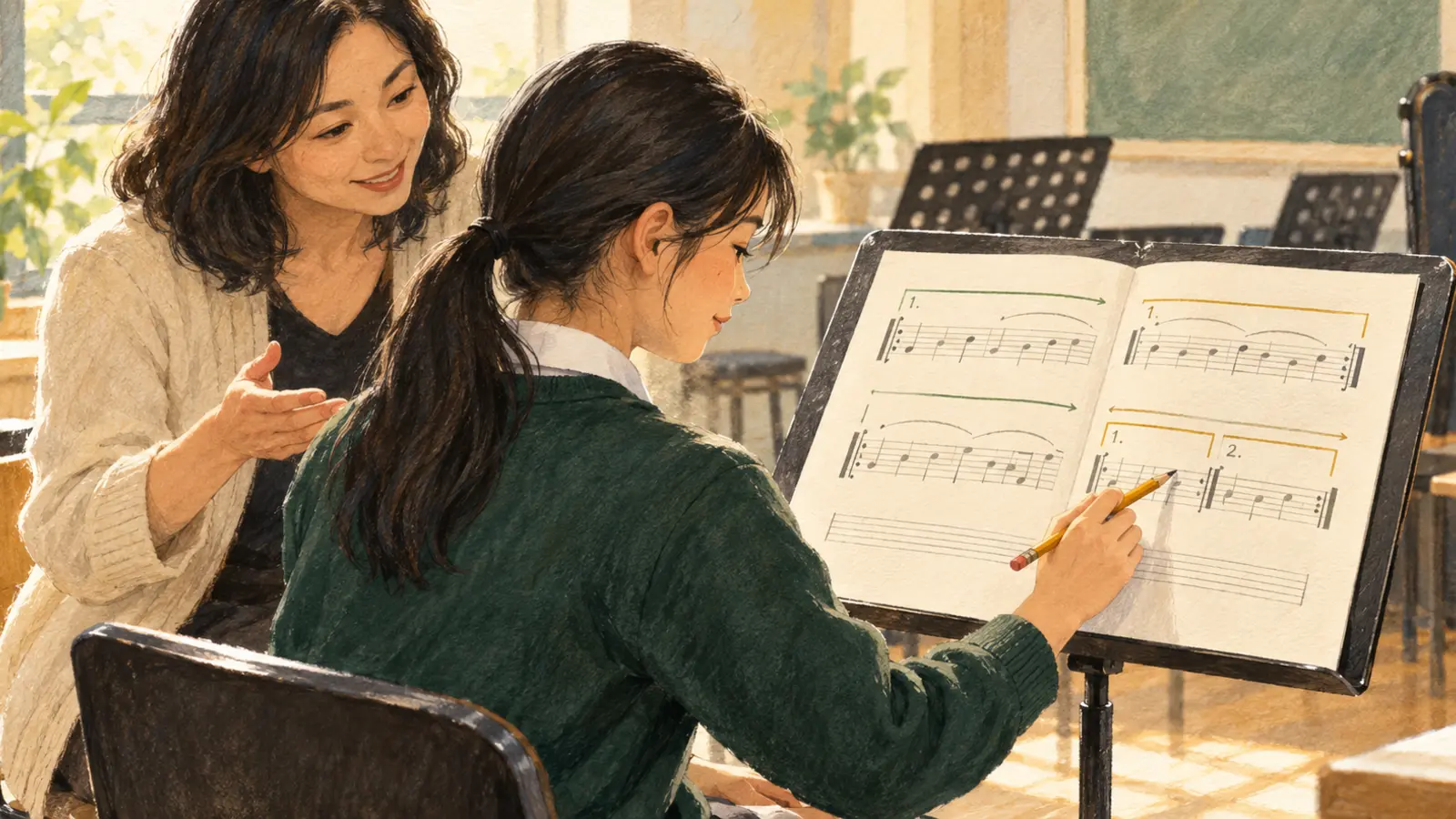
Did you know? A piece of orchestral music can suggest a character or event without using any words at all. A new timbre, rising melodic motif, soft strings or sudden rhythmic accent can change what listeners imagine. In 2027 G1 Music, students learn to identify these musical decisions and justify interpretations through what is actually heard.
Western Classical Music: Programme Music is Area of Study 2 (AoS2) in Singapore’s 2027 Secondary Education Certificate G1 Music syllabus K128. The official indicative repertoire includes Peter and the Wolf, Op. 67 (1936), by Sergei Prokofiev. The syllabus also allows other Western classical works with comparable programmatic qualities; it does not require every listening answer to be about one memorised story.
This guide explains the formal syllabus, programme music’s relationship to narrative, the instruments and techniques students need to recognise, score-informed musical vocabulary and a practical parent-led listening routine. It is about developing accurate, independent understanding—not playing a copyrighted recording within this page or claiming every instrumental passage has one compulsory meaning.
The quick answer: what is programme music?
Programme music is instrumental music associated with an extra-musical idea, story, scene or experience. A composer can organise musical features to suggest elements of that programme.
An effective listener identifies the audible feature before suggesting what it communicates. Calling an excerpt ‘mysterious’ is an interpretation; mentioning its quiet low register and sparse texture begins to explain why.
Where AoS2 fits in the 2027 SEC
The official K128 G1 Music course includes Paper 1 Listening (40%) and Paper 2 Creating and Performing coursework (60%). AoS2 is one of the four Areas of Study used in listening and music-making.
There is no separately guaranteed national percentage for AoS2 alone. A pupil must still study post-2000 Popular Music, Film/TV Music and Music from Local Cultures.
The registered subject code is K128
G1 Music is a 2027 SEC Local Subject coded K128. It requires direct supervision by a G1 Music teacher in the student’s own school for its assessed coursework.
Families should not infer examinable subject availability from a general interest in music. The current school timetable and exact code remain the authority for candidate arrangements.
Prokofiev is the official indicative reference
SEAB names Peter and the Wolf, Op. 67 (1936), as indicative repertoire for Programme Music. Students can study how instrumental themes and timbres help communicate a story.
The repertoire serves as an example for understanding concepts, not a guarantee that an entire named recording appears in the national paper. Teachers may use other works with relevant programmatic qualities.
The syllabus allows comparable music
SEAB explicitly says AoS2 repertoire is not limited to programme music and may include Western classical works with similar programmatic qualities.
Therefore a guide should not insist that every potential excerpt is an adaptation of the exact same narrative. Musical evidence and the actual question remain central.
The difference between story and sound
A fictional character or scene belongs to the proposed story; a clarinet, repeated melody or sudden increase in dynamics belongs to the audible composition.
Students should explain how the second may suggest the first. Simply retelling a story is not equivalent to describing the musical decisions that represent it.
What a leitmotif or identifying theme can do
A recognisable theme can help a listener associate recurring music with an idea or character within a programmatic context. It may return in different orchestration or at another point of the work.
The student should hear what remains similar and which part changes. Not every recurring phrase has the same dramatic meaning, so interpretation must be grounded.
The distinction between theme and motif
A theme is a larger recognisable musical idea; a motif can be a smaller figure that forms part of a theme or is developed independently.
Ask the child to identify the specific figure and its recurrence in an authorised listening example. The aim is learning how musical structure creates recognition.
Melodic contour suggests movement
A line may ascend, descend, repeat a pitch, move by step or leap across registers. These features can create different kinds of musical gesture.
Describe the exact contour before calling it exciting, uneasy or gentle. A melody rising is an observation; its emotional effect is a reasoned response to context.
G1 melodic intervals to know
The specified G1 intervals include unison, major and minor third, perfect fifth and perfect octave. They can be heard and represented in short original teaching examples.
A learner should not only name the interval from a chart. Try changing one note in a simple teacher-created phrase and ask what became different.
Why instrumentation matters
Programme music can use instrumental characteristics to distinguish ideas or shape an orchestral texture. The selected instrument affects articulation, register and timbre.
Ask which instrument leads and what musical action it performs. An instrument name alone does not explain how the sound supports an interpretation.
The four orchestral families
G1 students need a working recognition of strings, woodwinds, brass and percussion, with named examples and relevant instrumental roles.
Classification is useful but is not the end point. A student should connect a particular tone with a musical function instead of presenting a list of instrument names.
String instruments to recognise
The syllabus names violin, cello and double bass among strings, and asks students to understand higher and lower string sounds and relevant techniques.
Rather than claim that high strings always mean happiness, ask which register and rhythmic relationship actually creates the effect in the excerpt.
| AoS2 musical element | Official 2027 G1 examples |
|---|---|
| Strings | Violin, cello, double bass; arco and pizzicato |
| Woodwinds | Flute, clarinet, oboe, English horn, bassoon |
| Brass | Trumpet, trombone, French horn, tuba |
| Percussion | Timpani, bass drum, snare drum, cymbals |
| Musical concepts | Motif/theme, contour, 2/4–4/4 metre, harmony, texture, tempo, dynamics, legato/staccato |
Arco: using the bow
Arco refers to playing strings with the bow in relevant contexts. It can support sustained or articulated sound depending on performance technique.
Ask how the note begins and continues. The audible character can change with the kind of bowing, dynamics and phrase.
Pizzicato: plucked strings
Pizzicato refers to plucking a string that might otherwise be bowed. It creates a contrasting attack and decay in many orchestral situations.
A candidate should distinguish plucking from a new instrument entering when there is enough evidence. The musical context explains what the contrast contributes.
Woodwind instruments in K128
The syllabus names flute, clarinet, oboe, English horn and bassoon. These instruments can contribute characteristic timbres in high or low registers.
Use teacher-approved audio to practise how they differ and what a particular excerpt actually demonstrates. Do not assume that every mellow sound must be clarinet.
The flute’s musical role
The flute may carry an agile melody, decorate another line or contribute a contrasting orchestral colour depending on the composition.
A student should describe what it does in this specific passage rather than assign one permanent mood or character to every flute entry.
The clarinet in narrative music
The clarinet can produce different registers and articulations; its sound may shape how a phrase is perceived within programme music.
The student’s explanation should combine instrumentation with rhythmic and melodic detail. Recognition from a famous example is helpful only when the concept transfers.
Oboe versus English horn
Oboe and English horn belong to the related double-reed family but offer different sounding ranges and timbral characteristics.
Practise a cautious comparison using clear source recordings. A short heavily orchestrated excerpt may not establish the exact player beyond doubt.
The bassoon and lower woodwind sound
The bassoon can produce a characteristic lower woodwind timbre, and the syllabus expects students to recognise it as part of the orchestral palette.
Ask how its register or phrasing functions within the music. Lower pitch alone does not prove that the instrument is a bassoon.
Brass instruments to know
The K128 brass list includes trumpet, trombone, French horn and tuba. Brass instruments can create distinctive timbre, melodic statement or harmonic support.
Identify when a brass sound enters and whether it doubles, contrasts with or replaces another line. The word ‘brass’ is not yet a musical explanation.
Trumpet as a foreground voice
A trumpet can lead a strong melodic phrase, provide accents or join a larger ensemble texture, depending on dynamics and orchestration.
The same instrument can be used quietly and delicately. Avoid equating its identity with one fixed emotion.
French horn and blending
A horn may blend with strings or woodwinds, contribute harmonic colour or carry an identifiable motif within an orchestral setting.
Listening should identify its actual function. A warm sound by itself is not proof of a specific narrative event.
Trombone and tuba
These named lower brass instruments can create different weight, articulation and harmonic relationships from smaller high-register instruments.
Describe the passage’s register and role before proposing its narrative purpose. A dark timbre may support several interpretations.
Percussion in programme music
The official G1 list names timpani, bass drum, snare drum and cymbals. Each can mark rhythm, emphasis, change or an expressive event.
Do not assume a cymbal crash literally proves thunder in every composition. The relationship to the surrounding musical action matters.
Timpani versus bass drum
Timpani are tuned percussion with definite pitch relationships, while a bass drum typically provides a lower unpitched accent in orchestral use.
Teach the distinction through proper audio and source context rather than by calling every low percussion sound a drum.
Dynamic changes carry information
Loud, soft, gradually louder and gradually softer are specified musical concepts. A crescendo can suggest intensification but does not automatically mean the tempo accelerates.
Ask whether the music changed in volume or speed and which interpretation is reasonable given the story or scene.
Tempo and tempo change
The K128 Programme Music content includes slow, moderate, fast and changes to speed. Students should distinguish them from subdivisions or changes of texture.
A rapid figure within a constant pulse is not necessarily an accelerating passage. This is an important source of avoidable listening mistakes.
Metre and time signatures
G1 includes 2/4, 3/4 and 4/4 in this area. These indicate particular beat groupings used to organise musical rhythm.
Practise with short original examples. The student should not claim every accent creates a different time signature.
Repetition can establish a character
Repetition of a motif can give a listener a recognisable point of reference; a variation can change its meaning or effect.
A learner should distinguish identical repetition, a sequence and a change of orchestration instead of using ‘repeated’ for every familiar event.
Sequence as development
Sequence can involve repeating a musical pattern at different pitch levels or in related musical relationships. It can suggest continuation or build-up.
Ask what moves and what remains recognisable. An example can be constructed from a short original melody rather than copied from a published recording.
Articulation: legato
Legato describes smooth, connected performance. Its effect depends on the instrument, phrase and the context of the piece.
A smooth passage is not necessarily soft or slow. The learner should separate the movement of notes from the dynamic and tempo.
Articulation: staccato
Staccato indicates short, detached articulation, which can create a distinctive rhythmic or textural effect.
Compare a simple original phrase played legato and staccato. The student should notice the changed connection, not merely call the second version more energetic.
Accents and musical emphasis
An accent highlights a note or event in a musical context. It can support metre, punctuate a moment or change the phrase’s character.
A student should identify the accented point relative to the surrounding rhythm. Not every louder note proves a new instrument entered.
Texture: thick, thin and unison
K128 names thick and thin textures, solo, melody with accompaniment and unison among useful orchestration concepts.
These terms describe musical relationships. Three instruments sharing one tune do not necessarily create three independent melodic lines.
Solo texture and its narrative effect
A solo can focus attention on one line or timbre, while the entry of additional parts may change the soundscape.
Ask why the composer chose that contrast. A solo is not automatically a character with a single permanent personality.
Melody with accompaniment
A leading melody may be supported by sustained chords, rhythmic accompaniment or other parts. The supporting texture affects how the tune is perceived.
Identify which sound carries the theme and which provides its musical setting. Calling every instrument ‘the melody’ obscures the relationship.
Unison is not harmony in parts
When several voices or instruments perform the same pitch line in unison, the texture may grow in timbral weight without adding separate harmonic lines.
A student who counts instruments but ignores the shared pitch identity may misdescribe the passage. Use listening evidence to explain.
Harmony and tonality
The G1 syllabus includes major and minor keys and chords, with open and closed chord voicings. Harmony can help organise the broader expressive shape.
Avoid claiming all minor harmony is sad or all major harmony is happy. Actual meaning depends on rhythm, register, orchestration, context and listener.
Open and closed chord voicings
The same pitch classes can be spaced differently, producing distinct textures while retaining a related harmony.
A simple teacher-created keyboard example can demonstrate the difference. The student should explain the spacing rather than use vague descriptions alone.
Programme music and film music are related but distinct
Both can connect music to scenes or narrative ideas, but AoS2 Programme Music and AoS3 Music for Film and Television are separately described in K128.
Students can transfer skills in timbre and expressive timing without falsely claiming the two examination Areas of Study have identical repertoire and tasks.
A theme can be borrowed into a creative context
AoS2 learning outcomes include creating a short melodic theme or motif applying the musical concepts in a given Film/TV context.
For practice, invent an original four-note motif and try a contrasting timbre. The assessed Task 2 still requires school supervision and an original cue aligned with the issued video.
A fictional programme-music scenario
Imagine a student writing an original instrumental story about a small boat approaching a busy harbour. The motif could start sparsely, gain orchestral weight and return in a new register.
This is general teaching material, not an actual SEAB examination prompt. Ask how the audible decisions support the imagined action rather than simply write a long story to explain the notes.
A character motif can change
An original motif associated with a character may return at a different dynamic or with another instrument when the fictional situation changes.
The student should describe which features are recognisable and how the new context affects its interpretation. Changing one instrument does not guarantee the listener knows a precise emotion.
An original orchestration exercise
Create a short original melody with an appropriate teacher-approved instrument voice. Play it with one supporting layer, then another and describe the difference.
This teaches how orchestration changes texture. It is more useful than memorising a long list of instrument names without hearing how they interact.
How to listen to unfamiliar programme music
First identify pulse and instrumental roles. Next follow the recurring motif and changes of texture. Then interpret how those musical decisions might connect to the stated narrative or question.
Students should distinguish what is definitely heard from an inferred story. A measured interpretation can be more accurate than an elaborate but unsupported plot.
How the Paper 1 audio works
G1 Music Listening is a one-hour, 40-mark paper with twenty MCQs and twelve to sixteen short-answer questions based on brief recorded extracts.
SEAB provides MP3s through individual laptops and headphones, with internet disabled and replays unrestricted within the time limit. Purposeful replay is more effective than repeatedly hearing the same extract without a clear question.
A short-answer example
A question might ask which instrumental family carries the theme, or how a change in articulation makes two ideas contrast.
A useful response names the audible feature and, where requested, explains its effect. A sentence about the composer’s biography cannot replace a musical observation.
A four-week revision cycle
Week one: instrumental families and timbre. Week two: tempo, metre and articulations. Week three: melody, harmony, motifs and texture. Week four: unfamiliar listening and short explanations of programmatic effect.
This is an optional learning routine, not the school’s prescribed timetable. Use legally accessed, school-approved excerpts and accurate teacher feedback.
A diagnosis-led error log
Record whether an incorrect answer arose from misidentifying an instrument, mistaking loudness for tempo, confusing a motif with a complete theme, or imagining unsupported narrative content.
Then test the corrected idea with a new excerpt. Improvement on unfamiliar music is stronger evidence of understanding than recognition of the same recording.
Parents can ask three useful questions
Try Which instrument or group carries the idea? What changed? Which part of the music supports your interpretation?
The parent need not know every instrument or score. A qualified teacher can help clarify uncertain technical labels while the child learns to explain their own answer.
What appropriate tuition would diagnose
Good Music teaching distinguishes weak listening, unfamiliar timbres, incomplete notation, poor understanding of texture and vague explanations of expressive intent.
Tutors should develop general capability with new examples, not create a child’s officially assessed composition or claim that every excerpt has one guaranteed story interpretation.
Frequently asked questions: is the entire G1 exam about Peter and the Wolf?
No. It is the indicated AoS2 reference, but SEAB expressly allows other Western classical works with similar programmatic qualities, and K128 has three other Areas of Study.
Students need transferable listening skills and not only a memorised summary of the indicative example.
Frequently asked questions: what instruments are required?
G1 identifies violin, cello, double bass; flute, clarinet, oboe, English horn, bassoon; trumpet, trombone, French horn, tuba; timpani, bass drum, snare drum and cymbals in the programme-music content.
The examination requires understanding of sound and musical roles, not just listing every instrument.
The lasting reason to study Programme Music
This subject can help a teenager notice how a composer uses the properties of sound to create recognisable ideas, narrative associations and changes of musical character.
Read the official 2027 K128 G1 Music syllabus, especially AoS2. Related eduKateSG guides include G1 Music Listening, Film and Television Cues and Popular Music from 2000. The unchanged Clementi Mathematics tutorial reference illustrates feedback-led learning in a separate subject.