
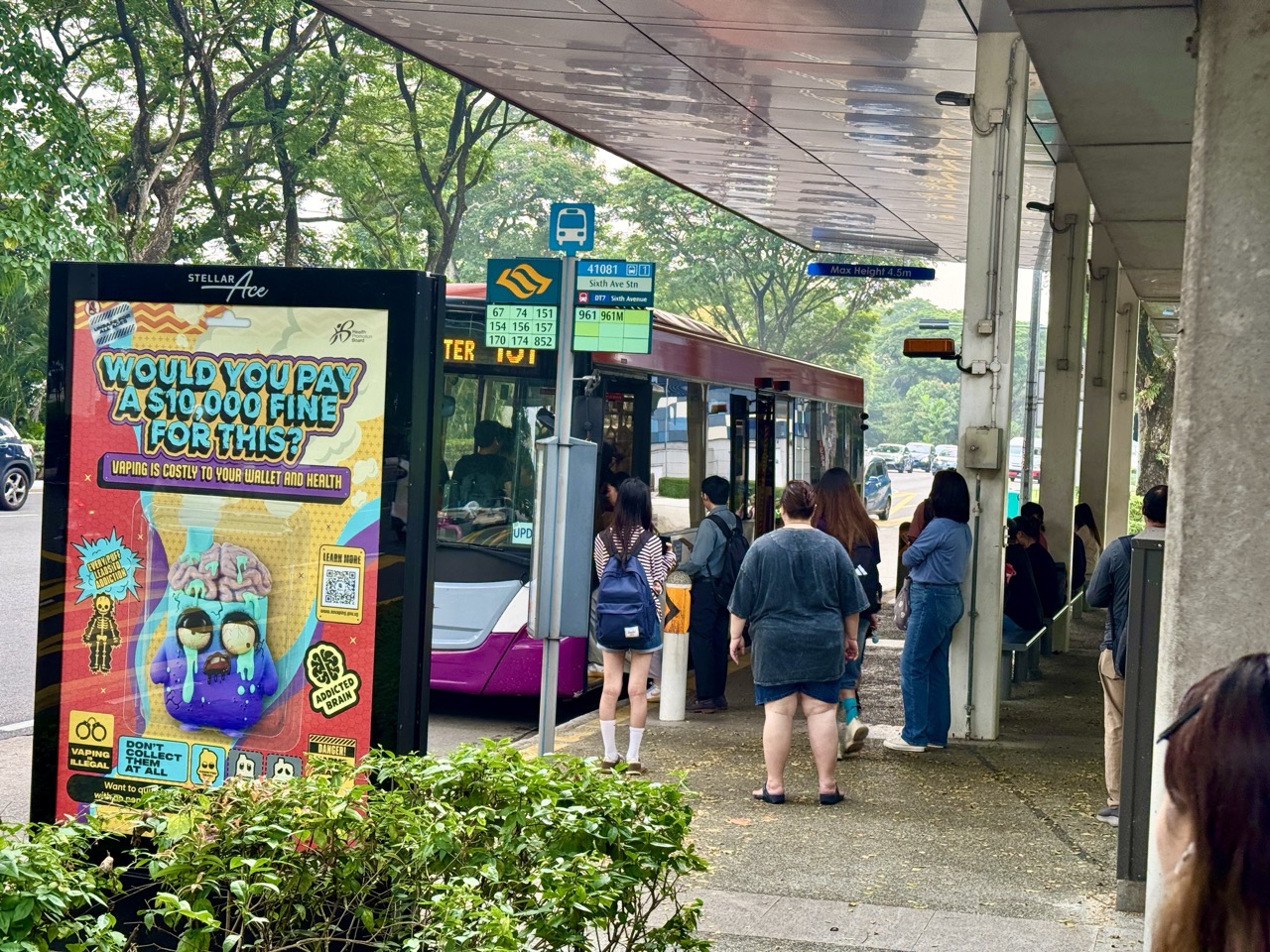
Why study History when a public bus is such an ordinary part of the journey to school? Because getting from one neighbourhood to another depends on decisions about roads, fares, routes, technology, jobs and public responsibility. The bus stop outside a housing estate may look unremarkable, yet the services that use it evolved through generations of private operators, government intervention, workers and commuters.
Singapore’s bus history offers a clear chronology. Small motor vehicles known as mosquito buses appeared early in the twentieth century, while electric trolleybuses operated from the 1920s into the 1960s. The bus system once involved numerous companies. Three main operators merged to create Singapore Bus Service in 1973; bus-lane priority developed in 1974; Trans-Island Bus Services entered the industry during the early 1980s; and a unified approach to land-transport planning grew as the MRT developed. Since September 2016, the Bus Contracting Model has provided a different way of dividing responsibilities between government and bus operators.
These changes do not mean that every commuter found travel easy or that every route improved in precisely the same way. History teaches students to separate the creation of a service from the experiences of its users, a vehicle’s advertised capability from an actual journey, and a transport map from the life of the neighbourhood around it.
In this article
- A bus journey is evidence of an organised system
- The first motor buses were called mosquito buses
- The three-company merger formed SBS in 1973
- The 1982 TIBS licence added another operator
- September 2016 introduced the Bus Contracting Model
- A four-week study plan using bus History
- FAQ: when was Singapore Bus Service formed?
- Official sources and connected eduKateSG learning
A bus journey is evidence of an organised system
A bus needs more than an engine. Drivers, depots, roads, schedules, stopping points, fares, maintenance and information must fit together before a passenger can reach a destination.
History asks when these components developed, which institutions provided them and why one system was altered or replaced. A photograph of a vehicle can show physical design; it cannot show how reliable the route was throughout the year.
Students learn to identify the actual question and choose suitable records. This is a useful research habit well beyond transport.
Modern convenience can obscure earlier choices
Today a commuter may check a route on a phone and pay without handling a paper ticket. That experience is the outcome of several separate innovations.
Earlier travellers used printed guides, fare boards, conductors and fixed stopping arrangements whose details changed over time. We should not assume one generation was universally happier or unhappier because its equipment differed.
History helps explain precisely what changed in the journey and what remains uncertain about individual experience. It replaces nostalgia with evidence.
The first motor buses were called mosquito buses
The Land Transport Authority’s history describes early small motor buses as mosquito buses because of their compact size and tendency to weave through traffic seeking passengers.
The nickname is evidence of how the vehicles were remembered and described, not proof that every vehicle followed identical routes or practices.
Students should distinguish an early vehicle category from the later standardised public bus fleet. The development of bus travel involved overlapping forms rather than one universally adopted design.
Rickshaws and buses coexisted
Rickshaws, bicycles, walking and later private cars were part of the same changing transport environment. Early motor buses competed with or complemented other ways of travelling.
A student should not claim that the first bus immediately made rickshaws disappear. A historical photograph showing both vehicles is useful for one moment, but broader trends require appropriate statistics and records.
This teaches continuity as well as change: newer transport options may enter a city while familiar older services continue serving particular journeys.
The Singapore Traction Company belongs to the early corporate history
The Singapore Traction Company operated bus and trolleybus services and became a significant part of the island’s pre-independence transport landscape.
Its business history was shaped by franchise arrangements, labour relations, fares and competition from other operators. A company map or logo cannot tell us how every passenger experienced its services.
A sound historical paragraph identifies which period and operating rights it is describing rather than assuming the same corporate arrangements lasted forever.
Electric trolleybuses are part of the story
LTA records electric trolleybuses running on Singapore’s streets from the 1920s into the 1960s, drawing electrical power from overhead wires.
They were not the same as today’s battery-electric buses. Their operation depended on fixed electrical equipment above the roadway, which affected where vehicles could run.
Students should distinguish the shared source of propulsion from the different infrastructure each technology requires. The word electric is not enough to make two generations of buses identical.
A trolleybus is not a tram
Both a tram and a trolleybus may draw electricity from external equipment, but their movement systems differ. Trams run on rails; trolleybuses use road tyres.
The distinction matters when reading historic transport photographs and maps. Students should not assume a vehicle beneath trolley wires also required railway tracks.
Understanding the correct category improves chronological and technical explanations without needing advanced engineering. It also prevents false claims about the routes that old vehicles could use.
The trolley wires reveal invisible infrastructure
A photograph of a trolleybus may show overhead wires, poles and buildings. The electrical network, substations and maintenance operations may be less visible.
A student who wants to explain why a route existed should investigate the supporting infrastructure rather than analyse the vehicle alone.
History makes technology legible as a connected system, not simply a collection of individual inventions. The same approach is valuable when studying trains, street lighting and telephones.
Vehicle capacity is not the number of actual passengers
An old bus description may state a seating capacity of seven, twenty or more people. That is a design or operating measure, not the number who travelled on every trip.
A vehicle could leave half-empty, fill up or face other conditions depending on the service and rules in effect.
Students should preserve the difference between a capacity figure, a ticket count and a survey of passengers. This is numerical source criticism in an everyday setting.
A timetable is a promise, not a record of every arrival
A historic timetable gives scheduled departure or arrival times and a route. It cannot establish that every vehicle followed the plan under all traffic and weather conditions.
To research reliability, students need operating data, contemporary reports or properly contextualised testimony. One recollection of a long wait does not yield a national average.
History teaches the difference between intended service and observed performance, a principle that also applies to institutions outside transport.
A bus stop has its own history
A stop may be created, moved or removed as roads and housing estates develop. Its location affects possible access for nearby residents.
A current bus-stop photograph does not prove that the same service was available on the street decades earlier.
Students can compare dated maps and official route changes, asking when a particular neighbourhood gained new connections. They must avoid assuming a road’s existence automatically meant a bus used it.
A bus conductor did more than sell a ticket
Conductors historically handled fares, ticketing and aspects of passenger movement. LTA’s account describes punched paper tickets and other fare-collection systems.
A photograph of a conductor’s ticket punch can demonstrate equipment, but not the full working day or wages of every employee.
Students can explore the change from a conductor-operated bus to other fare methods using documented dates, while recognising that work and training evolved as equipment changed.
Ticket prices need their original context
An old bus ticket may show a fare in cents. It is evidence of a price or payment category, not of the purchasing power of every household.
A fair comparison across generations needs appropriate wage information, distance or fare-zone definitions and the specific period.
Students should not compare nominal cents with today’s prices and declare one era universally more affordable. Arithmetic becomes meaningful only after the historical categories are checked.
The 1955–56 bus strike belongs to labour history
The National Library history of the Singapore Traction Company strike records a long dispute from September 1955 to February 1956.
The strike affected bus operations and commuting, but the precise demands and institutional responses require separate records from the dates alone.
Students should avoid claiming that every bus company was involved or that every passenger suffered identical effects. This example connects transport to workers’ rights and the institutions that regulate employment.
A labour dispute does not tell the whole transport story
Industrial relations influenced some service interruptions, but technical maintenance, ownership, roads and population changes also mattered.
Students should not attribute all historical travel difficulty to strikes or all improvement to management decisions. Stronger explanations consider several factors supported by distinct sources.
History benefits from examining the positions of workers, employers, government and passengers without assuming they all shared a single objective. A complex service rarely has only one cause for change.
Many companies once operated the bus network
In the period before consolidation, multiple private bus companies served different sections of Singapore.
LTA describes a fragmented landscape with varied routes, vehicles and arrangements. A traveller’s access depended on which companies served the relevant area.
Students should distinguish the number of companies from the number of routes and vehicles; those quantities are not interchangeable.
This makes the organisation of transport part of the city’s social history rather than treating every bus as an anonymous public asset.
The 1970 restructuring reduced the number of operators
LTA’s institutional history describes a White Paper recommendation leading to the consolidation of ten Chinese bus companies into three in 1970.
The Singapore Traction Company had a different operating history and ultimately ceased services.
Students should not describe the 1970 exercise as the exact moment Singapore Bus Service was created. That further merger followed in 1973. Correct chronological sequencing makes the reform intelligible.
The three-company merger formed SBS in 1973
SBS Transit’s published milestones identify the formation of Singapore Bus Service in 1973 through the merger of Amalgamated Bus Company, Associated Bus Services and United Bus Company.
This was a major corporate and organisational change, not the first appearance of any bus on Singapore roads.
Students should distinguish the older fragmented network from the new company without claiming that every route and operating problem instantly changed on the merger date.
An institutional merger does not automatically change every commute
Bringing companies together may simplify administration, route planning or fare systems, but implementation requires time, vehicles, depots and staff.
A merger record is strong evidence of the new organisation. To assess changes in waiting time, we need suitable operating data.
Students can compare an official plan with a later review and separate intended benefits from what can be documented. The method is useful for studying public institutions more generally.
Government involvement increased in 1974
LTA describes government intervention in bus services during 1974, involving management improvement, fleet repair, route streamlining and better professional standards.
SBS Transit’s chronology also records technical officers being seconded to the company.
Students should not describe the intervention as proof that every difficulty was solved within the same year. The historical importance lies in changing how public authorities tried to improve a service that had developed under more fragmented arrangements.
Bus priority lanes are a separate transport measure
The LTA history dates the introduction of a peak-hour Bus Lane Scheme to 1974.
The policy sought to give buses some priority in road space during busy periods. A reserved lane does not guarantee every journey is fast under all conditions.
Students should distinguish the date of a traffic rule from later changes in service quality. This is an accessible example of public policy acting on infrastructure rather than solely replacing vehicles.
An old bus lane photo is not a congestion statistic
A photograph may show painted lane markings, vehicles and a roadside sign. It cannot establish the average travel-time saving caused by the rule.
Students should seek contemporary traffic studies if the essay makes a quantitative performance claim.
A historical account can still explain the purpose of the measure without pretending that a single photograph proves all its results. Careful evidence can be modest and useful.
The City Shuttle Service began in 1975
LTA identifies 1975 as the start of the City Shuttle Service serving commuters travelling to the Central Business District.
Its function and geographical reach differed from many ordinary suburban routes. It should not be described as the creation of all public buses.
Students can use it to examine how travel patterns in a business district shaped particular services. A service created for one purpose may not suit every other part of the island.
One-Man Operation changed ticketing work
SBS Transit’s milestones record the introduction of One-Man Operation on selected bus services in 1975.
Without a separate conductor, fare collection and passenger procedures changed. The initial system included flat fares and no paper tickets on those services.
Students should not infer that every Singapore bus removed conductors in 1975 or that all route types immediately adopted one fare structure. The word selected matters in the source.
Automating a task can change occupations
When ticketing technology or operating arrangements change, drivers and conductors may face new responsibilities, training or employment conditions.
A technical milestone cannot tell us exactly how every worker’s career changed. Employment records and oral histories are needed for individual or broader labour claims.
History encourages students to distinguish the planned operating change from outcomes for the people involved. This is relevant to modern debates about automation as well.
Bus interchanges developed with new towns
Housing estates expanded across Singapore during the 1970s and 1980s, creating demand for routes linking residents to schools, jobs and other transport.
SBS Transit’s milestones record reorganisation of terminals and the development of interchanges within new towns.
A bus interchange is a physical and operational facility, not proof that all surrounding residents used it in the same way.
Students can connect transport planning to housing development while keeping actual commuting patterns as a separate research question.
Terminals and interchanges do not mean the same thing in every decade
An early terminal might be a small roadside turning location. A later interchange can bring together multiple routes, passenger facilities and operational space.
Students should use period-specific descriptions rather than impose the layout of a modern integrated interchange on one from the 1970s.
The wider historical lesson is that familiar institutional labels can describe facilities whose scale and form have changed over generations.
Jurong Road’s interchange was a 1978 milestone
SBS Transit records the opening of its first bus interchange at Jurong Road in 1978.
This was part of a growing network of planned facilities rather than the first place buses ever gathered at a terminal.
Students can locate the historic interchange within Singapore’s industrial and housing development without assuming every commuter to Jurong used the facility.
The date shows how public-transport infrastructure advanced in stages across changing districts.
Double-deck buses began on trial routes in 1977
SBS Transit’s history notes twenty double-deck buses on trial in 1977, including deployment of the first vehicle on Service 86.
The trial evaluated the suitability of a larger vehicle type for Singapore’s roads and operational needs.
Students should not describe the entire fleet as double-decked from that year or assume all routes had the same capacity.
The difference between trial and general adoption is an important historical distinction.
A taller bus needs more than a new engine
Double-deck buses require suitable clearances, road infrastructure and boarding arrangements as well as the vehicles themselves.
A trial can investigate practical conditions before broader deployment. A larger seating capacity does not automatically mean faster travel or equal convenience on every route.
Students can connect engineering and historical decision-making while avoiding invented claims about route performance. Technology works within a system, not in isolation.
The 1982 TIBS licence added another operator
The LTA institutional account records a second operating licence issued to Trans-Island Bus Services in 1982.
The development introduced greater diversity in the industry after the SBS consolidation, with services expanding during the 1980s.
Students should distinguish licence award from every later route actually operated by the company. Government policy and commercial operation can involve separate dates.
Why competition is not simply the number of companies
Several operators may exist while still serving different packages, territories or types of service. The presence of two company names alone does not prove the same route was being contested on identical terms.
Students must read the relevant institutional rules and time period before describing a market as competitive.
Historical transport policy is best explained through specific operating rights and service arrangements, not slogans about public and private companies.
The MRT later changed the bus network’s role
Singapore’s first MRT passenger section opened in 1987. Trains and buses then developed as complementary components of the public-transport system.
Some bus routes help commuters reach stations, while others link districts outside a particular rail corridor.
Students should not say the MRT eliminated the need for buses. A modern network map shows the continuing importance of multiple modes.
This connects the history of one technology to larger city-planning decisions.
Rail integration takes more than building a station
Passengers need useful routes, transfers, fare arrangements and clear information to make a combined bus-and-train journey practical.
Students should distinguish a railway opening date from later bus adjustments and integrated ticketing initiatives.
A station on a map does not by itself establish how an individual family travelled or how much time was saved.
History reveals the gradual work of creating a connected transport network rather than treating a new railway line as a complete solution.
TransitLink began in 1987
LTA’s history identifies TransitLink as a joint initiative developed by SBS, SMRT and TIBS in 1987 to support a common fare platform.
This was not the first ticketing system ever used by public buses. It represented a stage in coordinating payment and transfers across transport services.
Students should distinguish corporate formation, fare technology and the date particular products were used.
The value lies in how administrative integration affects practical possibilities for commuters.
Fare technology changed gradually
LTA’s bus history describes ticket punches, coin collection boxes, magnetic farecards and later contactless payment methods.
These systems appeared at different periods and did not necessarily disappear in an instant when newer equipment arrived.
A fare validator photographed in the 1990s cannot establish the exact fare paid by a person in the 1970s.
Students should label equipment and period clearly before comparing the services offered.
A card is a payment tool, not evidence of a journey
A stored-value card can show design or issuing institution, while transaction logs—where properly available—would describe actual use.
A card preserved in a collection may never have been used for a particular trip.
Students should not invent a passenger’s route or feelings from the existence of the object.
This is source criticism applied to everyday material culture, useful for studying tickets, stamps and other forms of public payment.
A public bus network has a labour history
Drivers, mechanics, dispatchers, cleaners and customer-service workers all contribute to reliable operations.
An operator’s opening date cannot reveal every worker’s duties or experience. The industry developed through training, technology and changing employment systems.
Students should combine company accounts with suitable labour records when making those claims.
This broadens History beyond the vehicles that appear in photographs to the people whose work enables public movement.
Road conditions and traffic shaped service reliability
A well-maintained vehicle can still be delayed by congestion, accidents or weather. Travel times depend on the wider road network.
Students should not assume an old bus was always slow merely because it looks small, or that a modern vehicle always runs on time.
Reliable comparisons require appropriate measures and actual operating conditions.
This makes the history of buses part of the history of roads, land use and urban planning.
1973 cannot be treated as the origin of all modern service improvements
The formation of SBS is an important turning point, but the industry continued changing through later policies and technologies.
Bus lanes, vehicle trials, interchanges and integrated ticketing each have separate chronologies.
A strong essay identifies which development a source actually documents and avoids compressing decades of work into one company merger.
History is the study of change through processes as well as headline events.
LTA was formed in 1995
LTA’s official history records formation on 1 September 1995 through the merger of four public organisations involved in roads and transport.
This was a change in transport governance, not the beginning of bus service or construction of every road.
Students should keep earlier operator history separate from the later public authority responsible for integrated planning.
An institutional timeline can make the complicated relationship between policy, infrastructure and commercial operations easier to understand.
Centralised bus planning began in 2009
The LTA bus history identifies 2009 as the year it became the centralised bus planner.
The change helped coordinate routes within the wider transport network. It did not mean every existing route was changed on one day.
Students should distinguish a new planning responsibility from the actual operation of vehicles by different companies.
This is a clear example of governance evolving as a city’s technical systems become more interconnected.
Accessibility has a distinct history
LTA’s chronology identifies the introduction of wheelchair-accessible buses in 2006, beginning with a small fleet.
A bus designed for wheelchair access represents a practical change in potential use for some passengers. But the arrival of several vehicles does not prove every route became accessible instantly.
Students should check the period, route and equipment before making broad claims.
History becomes more inclusive when it asks who could use a service in each stage of its development.
A ramp is not a complete accessibility outcome
Boarding equipment can improve access, but actual journeys also depend on bus stops, pathways, operator procedures and the passenger’s needs.
A photograph showing a wheelchair ramp does not measure accessibility across the entire transport system.
Students can use policy and operations evidence to investigate change while preserving the limitations of a single image.
This is an important lesson about the gap between providing a facility and demonstrating its full effectiveness.
Bus Service Enhancement began in 2012
LTA’s institutional history records the Bus Service Enhancement Programme introduced in 2012 to expand capacity and improve connectivity.
A programme announcement describes a public goal and planned resources, while later reports are needed to evaluate outcomes.
Students should avoid claiming that every passenger’s waiting time improved immediately in 2012.
The broader historical skill is distinguishing public intention, implementation and measured consequence.
September 2016 introduced the Bus Contracting Model
The LTA Bus Contracting Model explanation dates the arrangement’s introduction to September 2016.
Under the model, public authorities own major bus assets and plan services, while operators are contracted to run routes under service requirements.
This is a governance milestone, not the creation of the buses themselves. Students should distinguish ownership, planning and operation as separate responsibilities.
Contracts and the actual bus ride answer different questions
A bus operating contract may specify performance standards, payment arrangements and defined routes. The existence of the contract does not show what happened during every individual journey.
Students should read the service obligations separately from the performance data used to assess them.
This is an effective way to understand public policy: a rule establishes expectations, while empirical records are needed to evaluate compliance and experience.
The green bus livery is a later public decision
LTA’s institutional account records the selection of the Lush Green livery through a nationwide vote during transition to the contracting model.
The colour unifies the appearance of government-owned buses under different operating companies.
It does not imply earlier bus colours never existed or that all vehicles were repainted simultaneously.
History helps explain symbolic and practical changes without confusing a visible design choice with the complete operating system.
Electric buses today are not the original trolleybuses
Modern battery-electric buses differ from earlier electric trolleybuses that drew power from continuous overhead wires.
Both use electricity, but they require different charging, supply and vehicle arrangements.
Students should explain similarities at the level of propulsion and differences in supporting infrastructure.
This comparison is a powerful illustration of technological continuity and change without assuming a modern device has the same historical operating method as an older one.
An electric-fleet target is not a completed fact
LTA’s 2023 history discusses targets for a greater share of cleaner-energy and electric buses over coming decades.
A target is evidence of a stated ambition, not proof that the fleet already met it in the year the policy was announced.
Students should consult dated fleet statistics before claiming which proportion has been achieved.
History teaches the distinction between planning and actual outcomes even when discussing developments close to the present.
A new bus may solve one problem without solving every problem
A larger or cleaner vehicle may address capacity or emissions, but commuting experience also depends on service frequency, routing and traffic.
Students should not infer that one technological upgrade automatically improves every aspect of public transport.
A good explanation names the problem the new vehicle was intended to address and which evidence would measure the effect.
This kind of precision helps students make informed civic judgements without treating progress as all-or-nothing.
Public transport history is also the history of new towns
As neighbourhoods developed in places such as Ang Mo Kio, Jurong and later towns, bus routes and interchanges connected residents to schools, healthcare and workplaces.
A route opening expands potential access but does not establish the exact choices of every household.
Students can investigate one documented estate and compare housing and bus milestones, avoiding the assumption that all facilities opened in the same year.
This is Geography and History working together through a familiar local experience.
A route map cannot prove a family’s commute
An old network diagram shows available or intended bus services. It may omit minor stopping details, timetable changes and the passenger’s journey before reaching the stop.
A family history would require suitable testimony, tickets or other records to establish the actual trip.
Students can explain what journeys were possible while openly stating what remains unknown about individual use.
This is a central research distinction between infrastructure and lived experience.
A timetable’s printed route number is not timeless
Route numbers and alignments may change when operators reorganise networks. A familiar modern number should not automatically be assigned to the same journey in 1975.
Students should use the exact dated timetable or route guide when interpreting an old trip.
The broader lesson is that names and numbering systems can appear continuous even when the services they describe have changed substantially.
Photographs of buses require identification and dates
A photograph may show a bus’s colour, bodywork and visible passengers at one moment. It cannot establish its average speed or the income of everyone onboard.
A vehicle in a museum may have been restored or painted for display.
Students should check the original caption and distinguish archival images from modern editorial illustrations.
Visual-source discipline helps avoid false nostalgic statements based solely on a convincing-looking bus.
Travel memories can add personal meaning
A relative may remember waiting at a stop, hearing a conductor call for fares or using a particular interchange after school.
These memories can illuminate one person’s experience, but may be approximate about dates and route numbers.
Students should record the interview date and corroborate factual details through period timetables where possible.
Respecting an individual’s account does not mean treating it as a national survey.
The busiest route is a claim requiring a denominator
A route might be called busy based on passengers per day, average load, peak capacity or anecdotal crowding. These are different measurements.
Students should never turn one crowded photograph into a verified national ranking without appropriate operating data.
Learning to identify the unit and period behind comparative language improves both Historical and Mathematical reasoning.
Fare changes require specific comparisons
A new payment card, unified fare structure or concession arrangement can alter what a commuter pays.
A fair comparison should consider distance, transfer rules, passenger category and price levels of the relevant period.
Students should avoid assuming every single trip became cheaper or dearer because one ticketing technology was introduced.
History explains changes in rules, while economic and operational records establish measured effects.
Why the operator’s name is not the whole network
Different companies may run routes under rules made by public authorities. At some historical moments, operators also had more direct control over planning or assets.
Students must identify the institutional arrangement in force rather than use today’s company structure for every earlier period.
The distinction among owner, regulator, planner and operator is particularly important from 2016 onward.
History develops careful vocabulary for complex public services, reducing confusion in modern civic discussions.
A bus stop changes the neighbourhood’s practical geography
A new stop can reduce the distance residents must travel to reach a service, but the value depends on actual routes, schedule and physical accessibility.
A nearby stop does not guarantee a convenient trip to every destination.
Students can compare old and current route guides and state a limited change in available connections.
This shows how a small piece of infrastructure can create real possibilities without determining every resident’s outcome.
Public transport is a continuing form of work
Drivers learn routes, manage interactions and operate vehicles in conditions that change through traffic, equipment and policy.
Mechanics, planners, dispatchers and customer-service staff support the system.
A bus’s opening-day photograph rarely shows all these workers. Appropriate sources are needed to understand their training and duties.
History teaches that technical systems remain dependent on people long after a vehicle or institution is introduced.
A four-week study plan using bus History
Week one constructs a chronology: mosquito and trolleybuses, 1973 SBS, 1974 bus lanes, early 1980s changes, 1995 LTA and 2016 contracting.
Week two examines sources such as ticketing artefacts, timetables, company histories and dated photographs, identifying what each can establish.
Week three asks causal questions about housing estates, fares and route planning, keeping plans separate from measured outcomes.
Week four transfers the method to an unfamiliar transport case. Students produce a short sourced explanation with one meaningful limitation.
Progress is the ability to reason from new evidence rather than merely list bus models.
Common mistakes in transport History
First, students describe 1973 as the first year buses existed in Singapore. Second, they confuse old trolleybuses with today’s battery-electric fleet.
Third, they interpret a fare ticket as proof of universal affordability. Fourth, they assume a bus lane guaranteed faster travel for every trip.
Fifth, they treat the 2016 contracting model as a merger of all buses into one operating company. Sixth, they use present route numbers for earlier decades without checking.
Each repair depends on correct chronology, definition and source scope.
Parents can investigate a familiar bus journey
Choose one existing bus route and ask the child when its neighbourhood first gained regular services, using authoritative transport histories rather than guesswork.
Compare an old photograph or route map with today’s arrangements. Record the date and the kind of evidence used.
A family memory can add context but should remain one person’s story. There is no need to collect private fare records or identifying travel patterns.
This modest exercise can teach accurate evidence-based History through a familiar public service.
FAQ: when was Singapore Bus Service formed?
Singapore Bus Service was established in 1973 through the merger of Amalgamated Bus Company, Associated Bus Services and United Bus Company.
Buses had operated in Singapore for many earlier decades. The date marks an institutional consolidation rather than the invention of motor bus transport.
FAQ: were electric buses present before modern battery buses?
Yes. Trolleybuses drew electricity from overhead wires in Singapore from the 1920s into the 1960s.
They differed technically from modern battery-electric buses. Students should describe the energy supply method rather than assume every electric vehicle had the same operating system.
FAQ: what changed under the 2016 Bus Contracting Model?
LTA took ownership and planning responsibilities for key public bus assets and contracted operators to run defined packages of services under standards.
The model introduced in September 2016 is a governance change, not evidence that every bus changed colour or every route improved on its first day.
FAQ: why study buses when Singapore has an MRT network?
Buses and rail are complementary transport systems with distinct histories. Buses serve local connections, transfer journeys and places beyond individual rail routes.
Their history provides examples of public planning, work, technology, housing and institutional change that remain relevant to everyday life.
Official sources and connected eduKateSG learning
Start with the LTA Story, LTA bus evolution guide, SBS Transit milestones and the Bus Contracting Model explanation. For labour context consult the National Library’s 1955–56 bus strike history.
Within eduKateSG, continue through the development of the MRT, Bukit Timah railway heritage, workers and industrial relations, why societies change and checking historical evidence. The SEC History guide connects this kind of source work to school expectations.
The reason to study bus History is to recognise that a journey which now feels routine is the outcome of changing technologies, institutions, work and neighbourhood design. The stronger our evidence, the more accurately we can explain those changes without treating the past as a simple story of either inconvenience or progress.