
History of Singapore | 2012 is a close-up history of a year when Gardens by the Bay opened, the Government launched a major programme to add buses and improve public transport, Prime Minister Lee Hsien Loong called for a national conversation about Singapore’s future, and an illegal strike by SMRT bus drivers exposed labour tensions inside a highly managed transport system.
2012 is a useful year because it contains both beauty and friction.
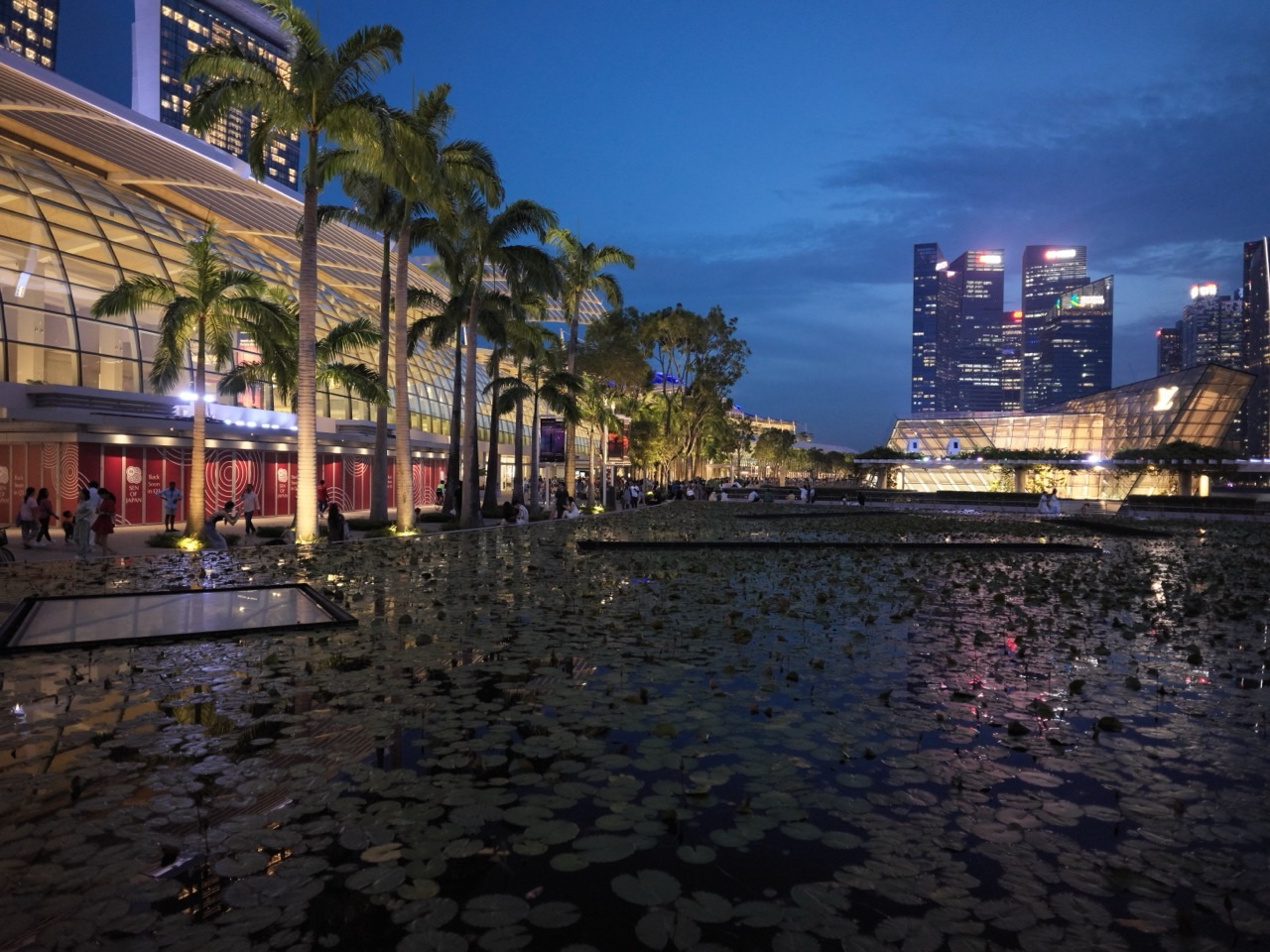
Gardens by the Bay opened beside Marina Bay and quickly became one of the most recognisable landscapes in the city.
At the same time, commuters were frustrated enough with crowding and service levels that the state committed major public money to putting more buses on the road.
The Government launched Our Singapore Conversation because economic growth and material success were no longer enough to answer every social question.
And in November, a group of Chinese SMRT bus drivers refused to work, producing an illegal strike in a country where strikes had become exceptionally rare.
These events belong together more naturally than they first appear.
They all ask what makes a city liveable.
Beautiful public space matters.
Reliable transport matters.
Listening to citizens matters.
Fair and workable labour arrangements matter.
A city can have world-class buildings and still fail people if the everyday systems underneath them feel crowded, unfair or difficult to use.
For the larger chronology, use History of Singapore | 700 Years of Fully Connected History and the Singapore Atlas. For the mechanism view, continue through How Singapore Works. The Singapore Knowledge Hub connects the timeline to places, learning and infrastructure.
This page owns 2012. It is the annual zoom inside the larger system.
Why 2012 Matters in Singapore History
By 2012, Singapore’s development problem was no longer simply “build more”.
The country had to ask “build what, for whom, and how should it feel to live here?”
Gardens by the Bay answered part of that question physically.
It turned reclaimed land beside Marina Bay into a large public garden with cooled conservatories, Supertrees, lakes and free outdoor spaces.
The Bus Service Enhancement Programme answered another part operationally.
It recognised that existing public-transport capacity was not improving quickly enough for commuter demand.
Our Singapore Conversation answered another part politically and socially.
It asked Singaporeans what kind of country they wanted over the coming decades.
The bus-driver strike answered nothing neatly.
Instead, it exposed a labour-management problem in a sector that citizens depended on every day.
2012 is therefore a year of liveability.
Not as a slogan.
As a collection of systems people actually had to use.
2012: The Bus Service Enhancement Programme Begins
The Land Transport Authority launched the Bus Service Enhancement Programme in 2012.
LTA’s own institutional history records the programme as a major intervention to improve connectivity and service levels.
Budget documents from the period described a government commitment of about $1.1 billion to improve bus service capacity, with hundreds of additional buses to be added progressively.
The problem was easy for commuters to understand.
Buses were crowded.
Some waiting times were too long.
New estates and changing travel patterns needed more routes.
The solution is more interesting than “buy more buses”.
A bus fleet only works when several things increase together.
- Buses themselves.
- Drivers.
- Depot space.
- Routes.
- Schedules.
- Bus stops and interchanges.
- Road capacity and bus-priority measures.
Adding one component without the others creates a bottleneck somewhere else.
This is why transport is a systems problem.
The BSEP also marked a larger shift in the relationship between Government and public transport operations.
Government money was being used more directly to accelerate service improvements rather than relying only on operators to expand capacity at the pace their commercial models supported.
Later reforms would go further through the Bus Contracting Model.
2012 was an important step in that direction.
Why Buses Matter Even in an MRT City
Singapore is often described through its MRT network.
That can make buses look secondary.
They are not.
Buses connect homes to stations.
They reach roads with no rail line.
They provide direct journeys between neighbourhoods that would otherwise require several transfers.
They can be rerouted more easily than rail when the city changes.
This flexibility is especially important in new towns.
A housing precinct can open before a future MRT station is ready.
The bus becomes the first transport bridge.
That is why transport planning needs both fixed and flexible networks.
Rail provides high capacity.
Buses provide reach.
A dense city needs both.
28–29 June 2012: Gardens by the Bay Opens
On 28 June 2012, Prime Minister Lee Hsien Loong opened the Bay South Garden at Gardens by the Bay.
The garden opened to the public the following day, 29 June.
The Gardens by the Bay archive describes the 54-hectare Bay South Garden, including the Flower Dome, Cloud Forest, Supertrees, Heritage Gardens, World of Plants and Dragonfly Lake.
The project had taken more than five years of planning and construction.
Its visual impact was immediate.
The Supertrees became part of Singapore’s skyline almost overnight.
But the deeper history is about land.
The gardens stand on reclaimed land.
Marina Bay itself is the result of decades of coastal engineering, drainage work and urban planning.
Singapore had effectively created new ground, then used part of that ground not only for offices and roads but for a major public landscape.
This matters because land scarcity does not automatically produce a city made only of buildings.
Planning decides what scarce land is for.
Gardens by the Bay was a decision that a global business district should sit beside a large garden.
That was urban design as national image.
From Garden City to City in a Garden
Singapore had promoted greening for decades before Gardens by the Bay.
Roadside planting, parks and urban cleanliness were important parts of the earlier “Garden City” vision.
Gardens by the Bay belonged to a later stage.
The ambition was not simply to place trees beside roads.
It was to integrate landscape more deeply into the identity of a dense global city.
The cooled conservatories added another layer.
They allowed plants from climates very different from Singapore’s to be displayed inside large engineered environments.
That makes the Gardens a useful Science lesson as well as a Geography and History lesson.
Temperature.
Humidity.
Energy.
Plant adaptation.
Water management.
All of those concepts are visible inside a place that families visit for recreation.
This is exactly how World Knowledge becomes memorable.
The subject is attached to a real place.
26 August 2012: Our Singapore Conversation Is Announced
At the 2012 National Day Rally, Prime Minister Lee Hsien Loong announced that Education Minister Heng Swee Keat would lead a national conversation about Singapore’s future.
The National Day Rally transcript framed the question simply: what should the next chapter of the Singapore story be, and what kind of country should Singapore become over the next twenty years?
The process became known as Our Singapore Conversation.
The initiative matters because it came after several years of visible public concern about housing, transport, immigration, inequality and the pace of change.
A national conversation is not the same as an election or referendum.
It is a consultation process.
Its historical value lies partly in what it reveals about the Government’s diagnosis of the moment.
Singapore had reached a stage where future policy could not be framed only as “more growth”.
Questions of belonging, opportunity, ageing, work, family, immigration and liveability had become more important.
By the following year, nearly 50,000 people would have participated in different parts of the conversation, according to the 2013 National Day Rally.
2012 owns the launch.
2013 owns the policy debates that followed.
Keeping those jobs separate gives the yearly series a cleaner chronology.
What Does a National Conversation Actually Do?
Consultation does not remove political disagreement.
It does something more limited.
It gives institutions another way to collect preferences, concerns and ideas before making or adjusting policy.
That can be useful because statistics do not tell officials everything.
Average commuting time does not fully describe how a crowded journey feels.
Median income does not explain every household’s insecurity.
Housing supply numbers do not explain whether a young couple feels ready to start a family.
Qualitative experience matters.
But consultation also has limits.
People can want contradictory things.
Lower taxes and more public spending.
More growth and less crowding.
More housing and more protected land.
Government still has to make trade-offs.
The value of consultation is not that it makes trade-offs disappear.
It can make them easier to see.
26–27 November 2012: The SMRT Bus Drivers’ Strike
In late November 2012, a group of SMRT bus drivers from China refused to report for work in a dispute involving pay and employment conditions.
The Ministry of Manpower’s later historical account records that the action disrupted about 10% of SMRT’s bus services on the first day and 5% on the second day.
The strike was illegal under Singapore law because the required notice procedures had not been followed.
Five workers were later charged with instigating the illegal strike.
The event was significant because strikes had become exceptionally rare in Singapore.
Singapore’s labour-relations model is usually described through tripartism: Government, employers and unions work through institutional channels to manage wages, conditions and disputes.
An illegal strike sits outside that normal structure.
That is why the event attracted so much attention.
The useful historical question is not to reduce the drivers to lawbreakers or to reduce the transport operator to a villain.
It is to understand what failed before the refusal to work occurred.
Workers had grievances.
Management had procedures.
Singapore had labour laws.
The dispute escalated anyway.
That makes the strike a systems failure as well as a legal event.
Transport Depends on Workers, Not Only Vehicles
The BSEP and bus-driver strike sit on the same page for an important reason.
Singapore wanted more buses.
More buses require more drivers.
Drivers are not interchangeable machine parts.
They have wages, housing, schedules, expectations and relationships with supervisors.
A transport system can therefore fail even when the vehicles are mechanically sound.
Labour is infrastructure.
This is a powerful lesson because cities often photograph machines and ignore people.
Trains need drivers or automated-control staff.
Buses need captains.
Airports need ground crews.
Hospitals need nurses.
Schools need teachers.
No system is only hardware.
2012 made that especially visible in public transport.
Marina Bay: A Garden on Engineered Land
Gardens by the Bay is one of the best places to teach Singapore history because so much of the surrounding landscape was deliberately made.
The shoreline changed through reclamation.
The Marina Barrage changed water management.
Business towers changed the skyline.
The integrated resort added tourism and entertainment.
The Gardens added a large public green space.
Later MRT lines added more underground connections.
Nothing about modern Marina Bay is one project.
It is a stack.
That is why How Singapore Works | The Whole Machine belongs naturally beside the annual history series.
The visible garden depends on land, water, energy, transport, maintenance and horticultural expertise underneath it.
Beauty has infrastructure.
Education in 2012: What Kind of Future Are We Preparing For?
The National Day Rally’s call for Our Singapore Conversation makes 2012 a useful education year.
The question “What should Singapore be in twenty years?” is impossible to answer with memorisation alone.
It requires evidence.
Values.
Trade-offs.
Imagination.
That is exactly the kind of thinking schools should cultivate.
English helps students articulate an argument.
Mathematics helps test whether numbers make sense.
Science helps evaluate physical constraints.
History shows what earlier decisions produced.
Geography shows what land and location allow.
The future is interdisciplinary even when school timetables are not.
2012 is a reminder that education ultimately prepares people to make choices in a world that does not arrive divided into subjects.
Places Where 2012 Became Visible
Marina Bay
Gardens by the Bay opened on reclaimed land and added a new green and tourism layer to the national waterfront.
Bus Stops Across the Island
The Bus Service Enhancement Programme was experienced not as a single landmark but as more vehicles, new routes and shorter waits across ordinary neighbourhoods.
The National University of Singapore
The 2012 National Day Rally at the University Cultural Centre launched the idea of a national conversation about Singapore’s future.
SMRT Bus Operations
The November strike made labour relations inside the bus system a national issue.
Punggol, Sengkang and Newer Estates
Rapidly growing towns demonstrated why bus capacity and route flexibility mattered while rail and other infrastructure continued catching up with population growth.
What Changed in 2012 — and What Continued
- Changed: the Bus Service Enhancement Programme began.
- Changed: Gardens by the Bay opened to the public on 29 June.
- Changed: Our Singapore Conversation was announced at the National Day Rally.
- Changed: an illegal strike by SMRT bus drivers disrupted services in November.
- Continued: public transport capacity remained a major liveability issue.
- Continued: Singapore used reclaimed land to create new national functions around Marina Bay.
- Continued: labour remained essential infrastructure inside transport and other service systems.
- Continued: the country increasingly asked how growth should translate into quality of life.
The year is therefore best remembered not as one big national event.
It is the year several everyday systems became harder to take for granted.
How 2012 Fits Into the Longer Singapore Story
Urban greening: Gardens by the Bay pushed the older Garden City strategy into a more ambitious “City in a Garden” landscape.
Transport: BSEP showed the Government intervening more directly to increase bus-service capacity.
Politics and consultation: Our Singapore Conversation created a large engagement process around the country’s future direction.
Labour: the SMRT drivers’ strike revealed tensions within a transport workforce that included substantial numbers of foreign employees.
Liveability: all four stories were ultimately about the experience of living in a dense and rapidly changing city.
The systems were different.
The receiver was the same.
The human being living inside the city.
A Student’s Way to Read 2012
Use one word:
liveability.
Then test every event against it.
Gardens by the Bay created recreation and green space.
BSEP tried to make commuting less crowded and more reliable.
Our Singapore Conversation asked what people wanted from the next phase of national development.
The bus-driver strike showed what happens when a workforce inside a critical public service experiences unresolved grievances.
Now ask the harder question.
Can one person’s liveability come at another person’s cost?
Cheaper transport can pressure operators.
More transport capacity requires more workers.
More green space uses land that could serve another purpose.
Policy is full of these trade-offs.
Understanding them is more useful than memorising slogans.
Frequently Asked Questions
When did Gardens by the Bay open?
Bay South Garden was officially opened on 28 June 2012 and opened to the public on 29 June 2012.
What was the Bus Service Enhancement Programme?
It was a programme launched in 2012 to add bus capacity, introduce new services and improve service levels through a major government-supported expansion of the public bus system.
What was Our Singapore Conversation?
It was a national engagement process announced at the 2012 National Day Rally to discuss what kind of Singapore people wanted over the coming decades.
What happened in the 2012 SMRT bus drivers’ strike?
A group of SMRT bus drivers from China refused to report for work on 26 and 27 November over employment grievances. The action was illegal under Singapore law because statutory strike procedures were not followed.
Why was the strike historically unusual?
Large strikes had become exceptionally rare under Singapore’s tripartite labour-relations system, so the disruption drew national attention to worker grievances and management processes inside public transport.
Why is Gardens by the Bay important to Singapore history?
It represents several long Singapore themes at once: land reclamation, urban greening, tourism, engineering, public recreation and the deliberate creation of a national landscape beside Marina Bay.
Helpful Reading
- Singapore Knowledge Hub | How Singapore Works, History, Systems & Atlas
- History of Singapore | 700 Years of Fully Connected History
- How Singapore Works | The Whole Machine
- Gardens by the Bay | 2012 archive
- PMO | National Day Rally 2012
- LTA | The LTA Story
- MOM | Labour history and the 2012 SMRT bus-driver strike
2012 Came After the MRT Reliability Shock of 2011
The transport story of 2012 makes more sense when read immediately after the December 2011 MRT disruptions.
Those breakdowns had damaged public confidence in rail reliability.
2012 therefore began with transport already under scrutiny.
The Bus Service Enhancement Programme was not a direct fix for a faulty MRT power rail, but it belonged to the same larger problem: commuters felt that public transport capacity and reliability had not kept pace with a growing city.
More buses could provide relief while rail capacity was expanded and renewed.
The lesson is important.
Transport networks do not improve one mode at a time.
Rail, buses, roads, walking routes and interchanges affect one another.
If one network is overloaded, pressure moves somewhere else.
2012 was therefore part of a larger transport correction that would continue through new lines, more buses and later changes in the bus operating model.
Gardens by the Bay Is Also an Engineering System
Visitors experience Gardens by the Bay as colour, shade, flowers, water and spectacle.
Engineers see a different place.
The cooled conservatories need environmental control.
The Supertrees combine structure, planting and services.
Water features need circulation and maintenance.
Tropical weather affects materials, plants and visitor comfort.
A public garden at this scale also needs horticulturists, cleaners, security, event management and transport access.
This is why “green” does not mean “unengineered”.
In a dense city, nature and engineering are often partners.
The Gardens is a designed ecosystem placed inside a designed waterfront on designed land.
That makes it a perfect Singapore object.
Tripartism and What Happens When the Channel Fails
Singapore’s labour-relations model is built around institutional channels.
Unions, employers and Government are expected to negotiate many labour issues before they become open industrial conflict.
The 2012 bus-driver strike is historically significant precisely because it fell outside that normal pattern.
A large group of workers believed their grievances were not being resolved through ordinary management channels.
They then used a form of collective action that violated Singapore’s strike procedures.
Both facts can be true at the same time.
Workers can have genuine grievances.
The action used to express them can still be unlawful.
This is why neutral history is useful.
It does not need to choose between understanding a grievance and describing a legal breach accurately.
Our Singapore Conversation as a Bridge to 2013
The national conversation launched in 2012 becomes easier to understand when read forward into 2013.
Many of the subjects raised in public consultation — immigration, ageing, housing, transport, healthcare, opportunity and social cohesion — reappeared in major policy debates the following year.
The Population White Paper made demographic questions explicit.
MediShield Life moved healthcare financing into a new phase.
Transport expansion continued through DTL1.
This is why annual pages need forward and backward links.
History does not reset on 1 January.
One year prepares the problems of the next.
2012 in One Simple Timeline
- 2012: Bus Service Enhancement Programme begins.
- 28–29 June: Bay South Garden at Gardens by the Bay is opened and then opened to the public.
- 26 August: Our Singapore Conversation is announced at the National Day Rally.
- 26–27 November: SMRT bus drivers stage an illegal strike.
The timeline is short.
The systems underneath it are large.
The Marina Bay Story Before the Gardens
Gardens by the Bay did not appear on untouched coastline.
The larger Marina Bay landscape had been shaped through reclamation and long-term planning over decades.
Land was created first.
Then roads, utilities and waterfront planning made new uses possible.
The Marina Barrage transformed part of the bay into a freshwater reservoir and flood-control system.
Commercial districts, hotels and cultural facilities grew around the water.
The Gardens then added a landscape and recreation function.
This sequence is important because it shows Singapore planning in layers.
The government did not reclaim land for one building.
It created a platform on which many later systems could be built.
The same logic appears in new towns, industrial estates and transport corridors.
Build the platform first.
Let future functions accumulate.
The Human Side of Transport Capacity
Transport planners often speak in vehicles per hour, passenger capacity and waiting times.
Commuters experience something more human.
Will I reach school on time?
Can I get home before my child sleeps?
Will an elderly parent find a seat?
Can a worker start a shift reliably?
This gap between engineering metrics and human experience is one reason public transport became such a visible issue in the early 2010s.
A network can carry millions of trips successfully and still feel inadequate at the exact hour a particular commuter needs it most.
BSEP tried to close that gap by adding capacity where demand was most obvious.
The bus-driver strike later in the year added another human layer: the people providing the service also had to experience the system as workable.
A sustainable transport system has at least two users.
The passenger.
And the worker who makes the passenger’s journey possible.
What 2012 Teaches About Public Space
Gardens by the Bay also asks a simple city question.
What is public space for?
It can provide recreation.
It can support tourism.
It can cool and soften a dense built environment.
It can give families somewhere to spend time without needing a private membership.
It can become a national image.
These functions are economic, social and cultural at the same time.
That is why parks are not simply leftover land after “important” infrastructure has been built.
In a dense city, good public space is part of infrastructure too.
2012 and the Shift From Quantity to Quality
Much of Singapore’s early development measured success through quantity: more housing, more jobs, more schools, more infrastructure and more capacity.
By 2012, quality had become harder to ignore.
A bus system was not good merely because buses existed; waiting time and crowding mattered.
A successful city was not good merely because land was valuable; public space and family life mattered.
Economic growth was not the whole national story; belonging and social expectations mattered too.
2012 therefore helps mark Singapore’s shift from building enough toward asking whether the lived experience of what had been built was good enough.
History of Singapore | 2012
Singapore in 2012 asked what makes a good city after the basic city already works.
The answer was not one building.
It was not one policy.
It was a collection of human experiences.
A garden worth spending time in.
A bus that arrives with enough room.
A government willing to ask what people want from the next chapter.
A labour system capable of handling grievances before public services are disrupted.
Liveability is not one thing.
2012 made that clear.
Continue forward: History of Singapore | 2013
Continue backwards: History of Singapore | 2011