
Change Your View | Singapore in 2011
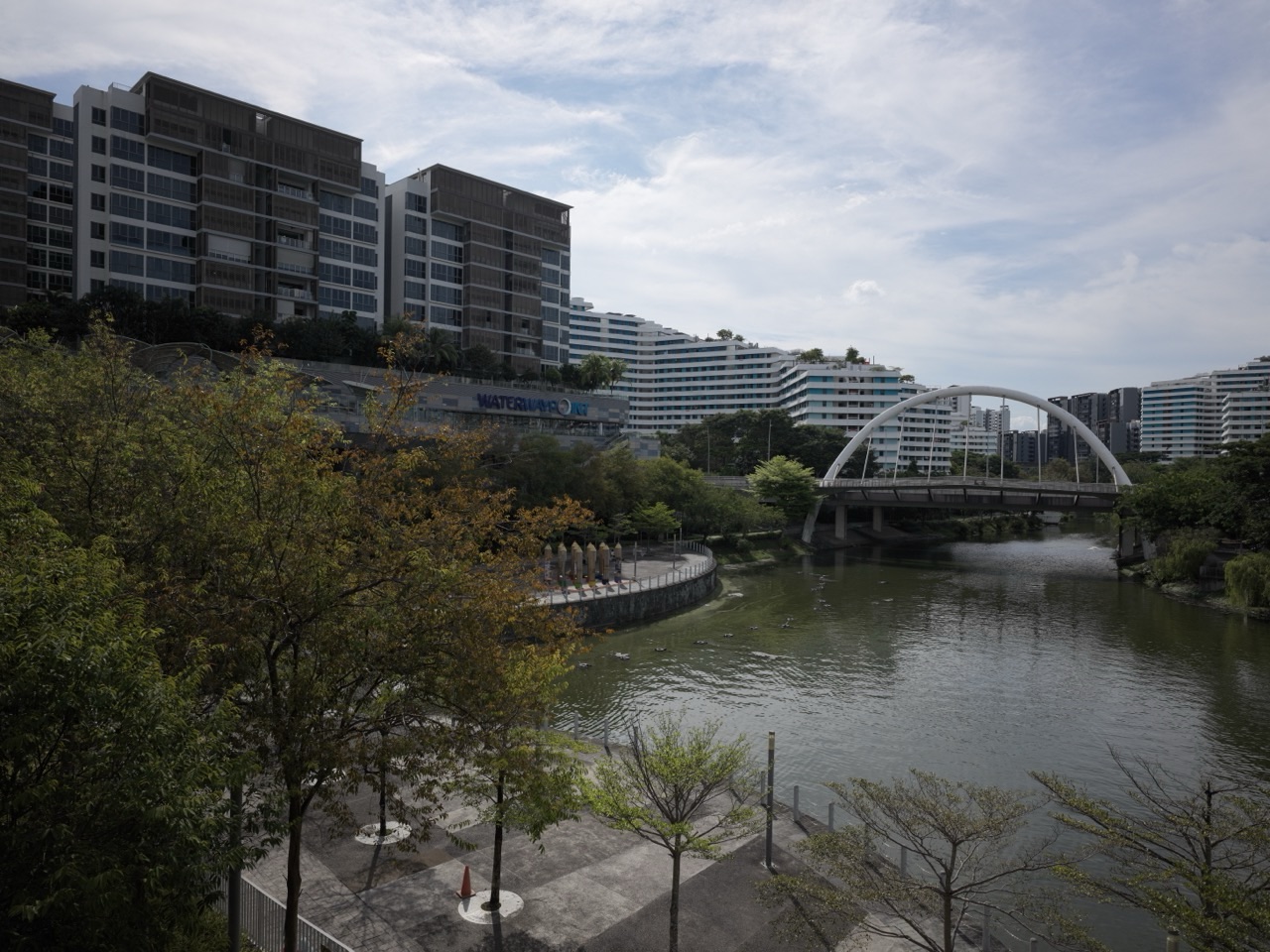
You are reading by time: one year, across Singapore. Another event in this year was the opening of Punggol Waterway on 23 October 2011. Follow Punggol through time to see the local history around that opening.
Follow this connection: Punggol → water and housing → the opening record and its limits. The opening is a completed event; later facilities anticipated in the 2011 speech were not necessarily complete then.
Nearby years: 2010 · 2012. Zoom out: Singapore Atlas. Connection checked on 3 October 2026; this is not a new fact-check of the entire annual account below.
History of Singapore | 2011 is a close-up history of a year when Singapore held both a General Election and a contested Presidential Election, ended Keretapi Tanah Melayu train operations at Tanjong Pagar Railway Station, opened the final twelve stations of the main Circle Line arc from Marymount toward HarbourFront, and then suffered two major North-South Line breakdowns in December that triggered a national inquiry into rail reliability.
2011 is one of the richest recent years for understanding Singapore as a changing system.
The political map changed.
The railway map changed.
The ownership and future of a historic rail corridor changed.
Public confidence in MRT reliability changed.
All of these changes happened in a country whose identity had become closely tied to competent institutions and dependable infrastructure.
That makes 2011 a particularly useful year for studying trust.
Voters must trust political rules enough to participate in elections.
Two governments must trust agreements enough to resolve long-running railway-land issues.
Commuters must trust trains enough to organise work, school and family routines around them.
When those forms of trust change, national history becomes visible quickly.
For the longer chronology, use History of Singapore | 700 Years of Fully Connected History and the Singapore Atlas. For the mechanism view, continue through How Singapore Works. The Singapore Knowledge Hub connects the year to transport, neighbourhoods, education and the larger city.
This page owns 2011. It slows one year down without replacing the master history.
Why 2011 Matters in Singapore History
2011 combines political change with physical change.
The General Election on 7 May produced the first opposition victory in a Group Representation Constituency when the Workers’ Party won Aljunied GRC.
The Presidential Election on 27 August was the first contested presidential poll since 1993 and produced an extremely close result between Tony Tan and Tan Cheng Bock.
Between those two elections, another old national relationship changed physically.
Keretapi Tanah Melayu operations ended at Tanjong Pagar Railway Station at the end of June, and the station moved to Woodlands Train Checkpoint from 1 July under the implementation of the Malaysia-Singapore Points of Agreement on railway land.
That change released a long strip of former railway land through Singapore.
In October, twelve Circle Line stations opened from Caldecott toward HarbourFront, creating new orbital connections across the city.
Then December delivered the opposite transport story.
Major North-South Line disruptions on 15 and 17 December affected large numbers of commuters and led to a Committee of Inquiry.
2011 therefore contains the full infrastructure cycle:
- old infrastructure closes;
- new infrastructure opens;
- existing infrastructure fails;
- institutions investigate and learn.
Few years demonstrate the whole cycle so clearly.
7 May 2011: Singapore Holds a General Election
Singapore held a General Election on 7 May 2011.
The official Elections Department results record contests across almost the entire country.
One result was historically distinctive.
In Aljunied GRC, the Workers’ Party team received 72,289 votes, or 54.72% of valid votes, while the People’s Action Party team received 59,829 votes, or 45.28%.
This was the first time an opposition party won a Group Representation Constituency.
The factual importance is institutional.
The GRC system had existed since 1988.
Until 2011, no opposition team had won one.
After Aljunied, that statement could no longer be true.
This did not end one-party predominance in Parliament.
It changed the parliamentary landscape by bringing a full opposition GRC team into Parliament.
A neutral history does not need to turn this into a recommendation about parties or voting.
It can simply record that GE2011 produced an institutional first and that public debate around housing, transport, immigration, inequality and political representation was especially visible during the campaign.
Election results answer one question well: how votes were distributed.
They do not by themselves explain every voter’s reasons.
That requires different evidence.
Aljunied as a Political Landscape
Aljunied is useful for showing how political geography and everyday geography overlap.
A constituency boundary is an administrative line.
The people inside it live in housing estates, take buses, send children to schools, shop, work and use parks.
Election maps therefore sit on top of town maps.
When boundaries change, the physical neighbourhood may not.
This is another reason students should distinguish political units from local identity.
“Aljunied GRC” is not exactly the same thing as the historical locality called Aljunied.
One is an electoral division.
The other is a place with roads, communities and history.
Good geographic literacy keeps those layers separate.
30 June–1 July 2011: Tanjong Pagar Railway Station Changes Role
At the end of June 2011, Keretapi Tanah Melayu train operations at Tanjong Pagar Railway Station came to an end.
From 1 July, the KTM station was relocated to Woodlands Train Checkpoint.
The Ministry of Foreign Affairs statement described this as the full implementation of the Points of Agreement on Malayan Railway land in Singapore.
Singapore resumed ownership over Malayan Railway land south of Woodlands Train Checkpoint, while separate land parcels were placed into a Malaysia-Singapore joint venture framework for development.
The change ended a transport pattern that had lasted generations.
Trains from Malaysia had travelled deep into Singapore to Tanjong Pagar through a rail corridor crossing places such as Bukit Timah and Queenstown.
The railway was more than transport.
It was a physical legacy of the historical relationship between Singapore and Malaya.
The line made sense when Singapore was part of a wider Malayan railway geography.
After independence and decades of separate development, the arrangement became more complicated.
The 1990 Points of Agreement had tried to settle the future of the railway land.
It took more than twenty years for the central issue to be fully implemented.
2011 is therefore the year when a diplomatic agreement finally became a changed physical landscape.
The Rail Corridor: Infrastructure Becomes Memory
Once the trains stopped, the railway line did not disappear immediately.
The tracks, bridges, station buildings, cuttings and long green corridor remained.
This created an unusual planning opportunity.
A transport corridor could become a recreational, ecological and heritage corridor.
The Rail Corridor later developed into one of Singapore’s most distinctive linear public spaces.
For Bukit Timah, this is especially important.
The old railway passes through a landscape of schools, homes, nature and later MRT connections.
Continue through History of Singapore | Bukit Timah and the Bukit Timah Tuition Hub to see how the national railway story becomes a local family and learning landscape.
2011 is the pivot.
Before 2011, the corridor was railway infrastructure.
After 2011, it increasingly became heritage, ecology and public space.
The ground stayed.
The function changed.
27 August 2011: A Closely Contested Presidential Election
Singapore held a contested Presidential Election on 27 August 2011.
The official Elections Department results record four candidates.
Tony Tan Keng Yam received 745,693 votes, or 35.20% of valid votes.
Tan Cheng Bock received 738,311 votes, or 34.85%.
Tan Jee Say received 25.04%, and Tan Kin Lian received 4.91%.
The difference between the two leading candidates was 7,382 votes.
Tony Tan was elected President.
The election mattered because the presidency was still a relatively young directly elected institution.
The first contested Elected Presidential election had taken place in 1993.
The 2011 contest was therefore only the second contested poll for the office.
The close result also made the mechanics of counting, overseas votes and electoral procedure unusually visible.
Again, a neutral historical account can report the result and institutional significance without ranking candidates or deciding which choice voters should have made.
8 October 2011: Twelve Circle Line Stations Open
On 8 October 2011, the final twelve stations of Circle Line Stages 4 and 5 opened between the Marymount side of the line and HarbourFront.
The Land Transport Authority’s Circle Line history records the last two stages opening on 8 October 2011, completing the main line as it then existed.
The new section included Caldecott, Botanic Gardens, Farrer Road, Holland Village, Buona Vista, one-north, Kent Ridge, Haw Par Villa, Pasir Panjang, Labrador Park, Telok Blangah and HarbourFront.
The importance of the Circle Line is not only that it added stations.
It changed the shape of the network.
Older MRT development had strong radial logic.
Many journeys moved toward central interchanges.
The Circle Line created more orbital movement.
Passengers could transfer between major lines without always passing through City Hall or Raffles Place.
This makes the line a lesson in network design.
A network becomes more useful when there are more ways to travel between the same broad regions.
Alternative routes reduce pressure on a few central nodes.
They also make the system more resilient when one part is disrupted.
That second point would feel especially relevant by December.
Botanic Gardens, Holland Village and one-north Enter a New Rail Relationship
The 2011 Circle Line opening connected several places with very different histories.
Botanic Gardens carried nineteenth-century scientific and horticultural history.
Holland Village had grown as a distinctive residential and commercial district.
one-north represented a newer research, technology and biomedical-development strategy.
Kent Ridge connected universities, research and healthcare institutions.
Pasir Panjang carried older port and coastal associations.
HarbourFront connected the line to Sentosa and the North East Line.
One railway joined these different Singapores into a repeated daily route.
This is how infrastructure creates coherence.
It does not make places identical.
It makes them easier to reach from one another.
15 and 17 December 2011: Major MRT Disruptions
In December 2011, Singapore’s confidence in rail reliability was shaken by two major disruptions on the North-South Line.
The incidents occurred on 15 and 17 December.
The later Committee of Inquiry report recorded that the 15 December disruption affected about 127,000 commuters and lasted around five hours.
The 17 December disruption affected about 94,000 commuters over around seven hours.
Trains lost traction power because of problems involving the third-rail power-supply system.
Passengers on some trains had to detrain and walk through tunnels.
Bus bridging and passenger information were tested under severe pressure.
A Committee of Inquiry was established, and its report was released in 2012.
Parliament’s records show the Government formally responding to the inquiry’s report in July 2012.
The incidents matter because the MRT had become one of Singapore’s most trusted daily systems.
A major failure does more than delay a journey.
It changes what commuters assume they can rely on.
Reliability is therefore a social contract between infrastructure and user.
The system says: organise your life around me.
The user expects: then you must work most of the time.
A Breakdown Reveals the Hidden Railway
When trains run normally, passengers see stations, doors and arrival times.
When trains fail, the hidden railway appears.
Power rails.
Fasteners.
Maintenance schedules.
Inspection procedures.
Emergency plans.
Bus bridging.
Passenger communications.
Staff training.
Regulatory oversight.
All of these were part of the railway before the breakdown.
The breakdown simply made them visible.
This is the same principle explored in How Singapore Works | The Invisible Web.
The visible service is supported by a much larger maintenance and governance system.
2011 made that lesson impossible to ignore.
One Year, Two Very Different Railway Stories
October and December 2011 belong on the same page because they show opposite sides of transport history.
October was expansion.
December was failure.
Expansion tells us what a system can add.
Failure tells us what a system must maintain.
Both require engineering.
But maintenance has a psychological disadvantage.
A new station is visible and celebratory.
A replaced fastener is invisible.
Yet the invisible fastener may matter more to tomorrow morning’s commute.
This is one of the deepest lessons in mature infrastructure.
Building receives attention.
Maintenance earns trust.
Education in 2011: Learn to Separate Event From System
2011 is excellent for teaching this distinction.
An election is an event.
The electoral system continues before and after it.
A railway station closure is an event.
The Singapore-Malaysia relationship and land agreements continue around it.
A Circle Line opening is an event.
The transport network keeps operating afterwards.
A train breakdown is an event.
The maintenance culture and regulatory system determine whether similar events repeat.
Students often memorise events because events have dates.
Understanding begins when they identify the system behind the date.
That is the method this annual history series is designed to teach.
Places Where 2011 Became Visible
Aljunied
GE2011 made Aljunied GRC the site of the first opposition victory in a Group Representation Constituency.
Tanjong Pagar Railway Station
The end of KTM operations closed a chapter in a railway history linking Singapore physically to the Malay Peninsula.
Bukit Timah and the Rail Corridor
The railway land transition turned a working transport route into a future heritage, recreation and ecological corridor.
Botanic Gardens to HarbourFront
The Circle Line’s October opening connected educational, research, residential, port and leisure districts through an orbital rail route.
North-South Line
The December failures turned a trusted daily system into a national maintenance and governance question.
What Changed in 2011 — and What Continued
- Changed: the Workers’ Party won Aljunied GRC in the General Election.
- Changed: KTM operations moved from Tanjong Pagar to Woodlands from 1 July.
- Changed: the former railway corridor entered a new planning and heritage phase.
- Changed: Tony Tan won a closely contested Presidential Election.
- Changed: twelve Circle Line stations opened on 8 October.
- Changed: two major North-South Line disruptions in December triggered a Committee of Inquiry.
- Continued: Singapore’s political institutions operated through scheduled electoral processes.
- Continued: Malaysia-Singapore relations remained embedded in land and transport questions.
- Continued: MRT expansion remained central to urban mobility.
- Continued: reliability depended on maintenance as much as construction.
2011 therefore changed both routes and expectations.
That makes it one of the strongest years in the annual series.
How 2011 Fits Into the Longer Singapore Story
Political development: GE2011 and PE2011 changed the parliamentary and presidential record through contested elections.
Malaysia-Singapore relations: the railway-land agreement resolved an issue dating back to the 1990 Points of Agreement and transformed the physical rail corridor.
Transport expansion: Circle Line Stages 4 and 5 made Singapore’s rail network more orbital and connected.
Transport reliability: the December disruptions exposed maintenance and incident-response weaknesses that would influence later rail-renewal policy.
Local history: Tanjong Pagar, Bukit Timah, Holland Village, one-north, Kent Ridge and HarbourFront all gained new historical meaning through railway change.
The deepest theme is trust.
Trust that rules work.
Trust that agreements can be implemented.
Trust that infrastructure will operate.
2011 tested all three.
A Student’s Way to Read 2011
Use the idea of a network.
Political representation is a network between citizens, constituencies, parties and Parliament.
The former KTM railway was a network linking Singapore physically to Malaysia.
The Circle Line is a transport network linking other rail lines.
The MRT maintenance system is a network of people, inspections, parts and procedures keeping the physical railway usable.
Then ask the same question four times:
What happens when one connection changes?
A constituency changes representative.
A cross-border railway changes terminus.
A new interchange changes travel options.
A failed component changes thousands of journeys.
That is how a network becomes history.
Frequently Asked Questions
When was Singapore’s 2011 General Election?
Polling Day was 7 May 2011.
What was historically important about Aljunied GRC in GE2011?
The Workers’ Party won Aljunied GRC with 54.72% of valid votes, the first opposition victory in a Group Representation Constituency.
When did KTM stop operating from Tanjong Pagar Railway Station?
KTM operations at Tanjong Pagar ended at the close of June 2011, and the station was relocated to Woodlands Train Checkpoint from 1 July.
Who won the 2011 Presidential Election?
Tony Tan Keng Yam won with 35.20% of valid votes, narrowly ahead of Tan Cheng Bock on 34.85%.
When did the twelve Circle Line stations from Caldecott toward HarbourFront open?
Circle Line Stages 4 and 5 opened on 8 October 2011.
What happened to the MRT in December 2011?
Two major North-South Line disruptions on 15 and 17 December affected large numbers of commuters and led to a Committee of Inquiry into their causes, maintenance and incident response.
Why is the Rail Corridor connected to 2011?
The relocation of KTM operations to Woodlands changed the former railway land south of Woodlands from active railway infrastructure into a corridor available for new planning, heritage and recreational uses.
Helpful Reading
- Singapore Knowledge Hub | How Singapore Works, History, Systems & Atlas
- History of Singapore | 700 Years of Fully Connected History
- History of Singapore | Bukit Timah
- Bukit Timah Tuition Hub
- Elections Department | GE2011 results
- Elections Department | PE2011 results
- MFA | Implementation of the Malayan Railway land agreement
- LTA | The Circle Line
- Parliament | Government response to the 2011 MRT disruption inquiry
The Railway Story Began Long Before 2011
The Tanjong Pagar railway transition only makes sense inside the longer history of Singapore and Malaya.
Railways were built to move people and goods across the Malay Peninsula and into Singapore during the colonial period.
After Singapore became a separate sovereign state, the railway continued crossing Singapore territory to reach Tanjong Pagar.
That created an unusual physical arrangement: Malaysian railway land and operations extended deep into another sovereign country.
The 1990 Points of Agreement tried to resolve the land arrangement.
The issue remained unresolved for years because land value, relocation, customs arrangements and development rights were complicated.
By 2011, the two governments had reached an implementation path.
The final train was therefore not simply a nostalgic transport moment.
It was the physical conclusion of a long diplomatic and land-use negotiation.
Why the Rail Corridor Became So Valuable After the Trains Left
A railway needs a continuous strip of land.
That continuity is difficult to create in a dense city once land has been divided among roads, housing and buildings.
When KTM operations ended, Singapore suddenly possessed something rare: a long connected corridor running through many neighbourhoods.
The land could have been broken into separate development parcels.
Instead, public discussion increasingly recognised the value of continuity for recreation, nature and heritage.
This is a powerful planning lesson.
Infrastructure can create value even after its original function ends.
The old rail alignment later became a green movement corridor for people and wildlife.
A transport line became landscape infrastructure.
Two Elections, Two Different Offices
2011 is unusual because Singaporeans voted in a General Election in May and a Presidential Election in August.
The two elections were not choosing the same kind of office.
A General Election chooses Members of Parliament and shapes which party or coalition can form the Government.
The Presidential Election chooses the President, a head of state with specific constitutional functions including custodial powers.
Confusing the two produces poor political literacy.
2011 therefore offers a simple civics lesson.
Different democratic procedures exist because different offices perform different functions.
The General Election changed parliamentary representation.
The Presidential Election selected a national office-holder under a separate constitutional framework.
Both belong to the year.
They should not be collapsed into one political event.
Circle Line Expansion and the Value of Redundancy
The October Circle Line opening made the rail network more useful partly because it created alternative routes.
A commuter travelling between the west and north could use interchanges that did not require entering the deepest part of the city.
Buona Vista connected the Circle and East West lines.
HarbourFront connected the Circle and North East lines.
Caldecott would later become another major interchange.
Redundancy sounds inefficient if every route is working perfectly.
Its value appears when one route fails.
The December disruptions made that principle painfully clear.
A resilient transport network needs not only reliable components but enough alternative paths to absorb disruption.
The December Breakdowns Changed the Maintenance Conversation
The 2011 disruptions were not the first train delays in Singapore.
Their scale and repetition changed the public conversation.
Questions moved from “when will service resume?” to “is there a deeper maintenance problem?”
That shift matters historically.
One failure can be treated as an incident.
Repeated failures can turn into a governance question.
Who inspected the equipment?
Were warning signs missed?
Were maintenance resources adequate?
Was incident communication good enough?
What should the regulator require?
The Committee of Inquiry process in 2012 would examine these questions formally.
2011 owns the shock.
2012 owns much of the formal institutional response.
2011 in One Simple Timeline
- 7 May: General Election.
- 30 June–1 July: KTM operations leave Tanjong Pagar and relocate to Woodlands.
- 27 August: contested Presidential Election.
- 8 October: twelve Circle Line stations open.
- 15 and 17 December: major North-South Line disruptions.
Politics, diplomacy, heritage, expansion and failure all fit inside twelve months.
2011 as a Year of Institutional Feedback
Each major 2011 event produced feedback into a larger system.
Election results changed who sat in Parliament and shaped later political strategies.
The Presidential Election tested a constitutional office through a close contest.
The railway-land agreement changed what planners could do with a long strip of former transport land.
The Circle Line opening changed commuter routes and interchange patterns.
The December breakdowns generated a Committee of Inquiry and later changes to maintenance, regulation and rail renewal.
This is how functioning institutions learn.
An event produces information.
The information is interpreted.
The system changes or chooses not to change.
History is full of these feedback loops.
Bukit Timah as a Meeting Point of 2011 History
Bukit Timah is one of the best localities for seeing several 2011 stories intersect.
The former KTM railway passed through the area and stopped operating as an active cross-island railway corridor.
The new Circle Line opened Botanic Gardens station nearby, creating another modern rail connection.
The old and new transport systems therefore overlapped in the same broad landscape during the same year.
One line was becoming heritage.
Another was becoming routine infrastructure.
Later, the Downtown Line would add yet another layer through Sixth Avenue, King Albert Park and nearby stations.
This is why the eduKateSG Bukit Timah knowledge block matters.
A student living or studying in the area can stand inside several generations of Singapore transport history without leaving the neighbourhood.
Why Reliability Became a National Issue
By 2011, the MRT was no longer a new experiment.
It was basic urban infrastructure.
That changed the standard by which failures were judged.
A breakdown in a new system can be dismissed as teething trouble.
A breakdown in a mature system raises questions about maintenance and governance.
The December incidents therefore mattered beyond the number of delayed commuters.
They challenged an expectation that Singapore’s core infrastructure should be predictably reliable.
That expectation would shape transport policy for years afterwards.
History of Singapore | 2011
Singapore in 2011 changed how it voted, where an old railway ended, how a new railway connected the city and how much confidence commuters placed in the system beneath their feet.
GE2011 changed parliamentary history.
PE2011 produced a closely contested presidential result.
Tanjong Pagar Railway Station stopped serving KTM trains.
The Circle Line expanded dramatically.
Then the North-South Line failed badly enough to trigger a national inquiry.
The year is a reminder that mature systems are never finished.
They can be expanded.
They can be renegotiated.
They can fail.
And they can be repaired.
Continue forward: History of Singapore | 2012
Continue backwards: History of Singapore | 2010