
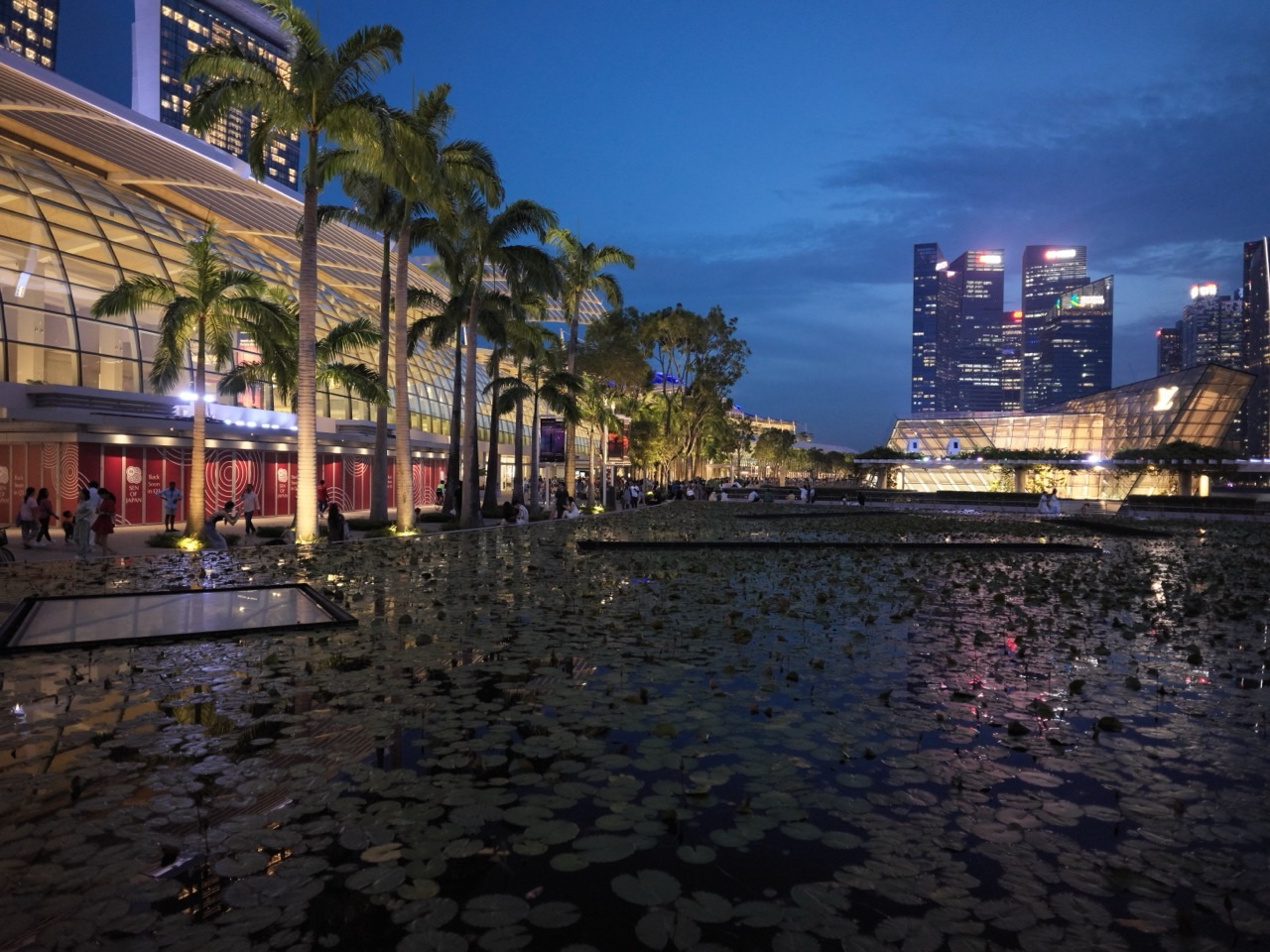
History of Singapore | 2010 is a close-up history of a year when Singapore rebounded strongly from the global financial crisis, opened both Integrated Resorts, expanded the Circle Line, hosted the first Youth Olympic Games, mourned the death of Dr Goh Keng Swee, and commissioned Marina Reservoir as a freshwater reservoir in the heart of the city.
2010 is one of those years that makes Singapore look larger than its physical size.
A global sporting event arrived.
Two enormous tourism projects began operating.
A major MRT extension opened.
An urban reservoir reached a new stage.
And the economy rebounded sharply after the recession of 2009.
But 2010 also contained memory.
Dr Goh Keng Swee, one of the central figures in Singapore’s early economic, defence and education history, died in May.
That makes the year useful because future-building and historical remembrance happened side by side.
For the larger chronology, use History of Singapore | 700 Years of Fully Connected History and the Singapore Atlas. For the system view, continue through How Singapore Works. The Singapore Knowledge Hub connects time, place, transport, education and infrastructure.
This page owns 2010. It is the annual zoom.
Why 2010 Matters in Singapore History
2010 is a year of rebound and arrival.
The economy had contracted in 2009 during the global financial crisis.
In 2010, Singapore rebounded strongly.
The timing mattered because several large projects planned years earlier also became operational.
Resorts World Sentosa began operating in January.
Marina Bay Sands began operations in April.
Circle Line Stages 1 and 2 opened on 17 April.
The inaugural Youth Olympic Games ran from 14 to 26 August.
Marina Reservoir was commissioned as a freshwater reservoir in November.
The common thread is long lead time.
None of these systems was invented in 2010.
They arrived in 2010 because earlier decisions, construction, financing and planning matured at roughly the same time.
This is how infrastructure history works.
A year of openings is usually built from a decade of earlier work.
2010: The Economy Rebounds After the Global Financial Crisis
Singapore entered 2010 after a difficult recession year.
The Ministry of Trade and Industry recorded that the economy had contracted by 2.0% in 2009.
By early 2010, the outlook had changed enough for MTI to revise its growth expectations upward.
This rebound is important because Singapore’s economy is unusually exposed to global cycles.
A large share of activity depends on trade, manufacturing, finance, transport and services connected to external demand.
When the global economy contracts, Singapore can feel the shock quickly.
When global demand recovers, Singapore can also rebound quickly.
This volatility is not simply instability.
It is partly the consequence of being intensely connected to international markets.
The lesson is familiar across Singapore history.
Connection creates opportunity.
Connection also transmits shocks.
2010 belongs to the recovery side of that cycle.
January and April 2010: The Integrated Resorts Begin Operating
Resorts World Sentosa began operating in January 2010.
Marina Bay Sands began operations in April 2010.
The Ministry of Trade and Industry later described both as Integrated Resorts that added hotels, attractions, meeting space, restaurants, entertainment and gaming facilities to Singapore’s tourism landscape.
These projects had been politically and socially debated years earlier because casinos were part of the model.
Supporters emphasised tourism, jobs, investment and Singapore’s competitiveness as a destination.
Critics and concerned citizens raised questions about gambling harm and social consequences.
The Government’s eventual model combined large tourism developments with casino regulation and social safeguards.
A neutral history does not need to settle that policy debate retrospectively.
It should record that 2010 was the year the long-debated idea became physical.
Sentosa gained a huge new resort complex and Universal Studios Singapore.
Marina Bay gained a three-tower hotel, convention facilities, retail, entertainment and the SkyPark.
The tourism map changed.
So did the skyline.
Marina Bay Sands Sits on a Much Older Story
Marina Bay Sands looks like a building story.
It is really a land-and-water story first.
The project stands on land created through reclamation.
The bay beside it was reshaped by long-term drainage and waterfront planning.
Marina Barrage had opened in 2008.
Marina Reservoir was still moving through the desalting process before commissioning as freshwater in 2010.
New roads, rail, utilities and public spaces had to support the district.
The visible resort therefore sits on invisible state-built foundations.
This is why A Student’s Life | Marina Bay and Things to do for Kids | Learning Marina Bay belong naturally beside the annual history.
A student can stand in Marina Bay today and study reclamation, water security, tourism, architecture, finance, transport and national image inside one walkable district.
The place is a textbook made of concrete, water and glass.
17 April 2010: Circle Line Stages 1 and 2 Open
On 17 April 2010, eleven more Circle Line stations opened.
The Land Transport Authority records the stations as Tai Seng, MacPherson, Paya Lebar, Dakota, Mountbatten, Stadium, Nicoll Highway, Promenade, Esplanade, Bras Basah and Dhoby Ghaut.
This extension connected the earlier 2009 Circle Line Stage 3 section to the city.
It also passed directly through the memory of a construction disaster.
Nicoll Highway had collapsed during Circle Line construction in 2004.
The station alignment was changed and construction continued under redesigned plans.
By 2010, passengers were travelling through the completed station.
That makes the line a powerful engineering history lesson.
Infrastructure failure does not automatically end a project.
It can produce redesign, inquiry, stronger procedures and a different final system.
The finished railway contains the memory of the failure even when most commuters no longer think about it.
The Circle Line Changes the Shape of the MRT Network
The Circle Line matters because it is not simply another radial route into downtown.
It creates orbital movement.
Paya Lebar can connect to the East West Line.
Dhoby Ghaut connects to the North South and North East lines.
Promenade connects the Marina Bay district.
Later sections would reach Botanic Gardens, Buona Vista and HarbourFront.
Every new interchange changes the value of the lines around it.
This is network mathematics.
A station has local value because people can board there.
An interchange has system value because routes meet there.
That same principle appears in knowledge.
A fact becomes more useful when it connects to several other ideas.
That is why this annual series links history to the wider eduKateSG knowledge ecosystem instead of leaving each year isolated.
14 May 2010: Dr Goh Keng Swee Dies
Dr Goh Keng Swee died on 14 May 2010.
The Prime Minister’s Office announcement described him as a former Deputy Prime Minister and Finance Minister and one of the central architects of modern Singapore.
His body lay in state at Parliament House and a State Funeral was held on 23 May.
Dr Goh’s historical importance crosses several systems.
He was deeply involved in early economic planning.
He played a major role in industrialisation.
He served as Defence Minister and helped shape the early defence system.
He later served as Education Minister and was associated with major education reforms.
This makes his career useful for understanding how the first generation of Singapore’s post-war leadership often moved across portfolios.
The country was small.
The problems were interconnected.
Economic policy, defence, education and institution-building could not remain in neat boxes.
A factual history can acknowledge the scale of his institutional role without turning that acknowledgement into a political endorsement.
2010 marked the death of another major figure from Singapore’s early nation-building period.
14–26 August 2010: Singapore Hosts the First Youth Olympic Games
From 14 to 26 August 2010, Singapore hosted the first-ever Youth Olympic Games.
The Prime Minister’s Office records 3,530 athletes from 205 National Olympic Committees taking part.
Singapore’s own team included 130 young athletes across the sports programme.
The event was deliberately larger than competition alone.
A Culture and Education Programme was built into the Games.
Schools were involved.
Volunteers were mobilised.
The Youth Olympic Flame travelled around housing estates before the opening ceremony at Marina Bay.
The historical importance lies partly in Singapore’s role as host of a new global sporting institution.
The International Olympic Committee had never held a Youth Olympic Games before.
Singapore therefore was not merely hosting another edition of an established event.
It was hosting the first edition.
That gave the city-state another chance to demonstrate event logistics, security, transport, accommodation and volunteer coordination on a global stage.
For the larger sports-learning link, continue through What is Sports | How Civilisations Thrive on Sports.
A Global Event Is Also a Local Operations Test
The Youth Olympic Games turned ordinary Singapore infrastructure into event infrastructure.
Road lanes were designated for official vehicles.
The Youth Olympic Village operated at NTU and NIE.
Competition venues had to meet sport-specific requirements.
Transport schedules had to work.
Volunteers needed training.
Security had to protect participants without making the whole city unusable.
Schools had to understand why the event mattered.
Visitors needed food, directions and accommodation.
That is why hosting is a system test.
The ceremony lasts hours.
The operating capability takes years to build.
20 November 2010: Marina Reservoir Is Commissioned
Marina Barrage had officially opened in October 2008.
Desalting of the enclosed water body began in April 2009 through natural replacement by rainwater.
On 20 November 2010, Marina Reservoir was commissioned as a freshwater reservoir.
PUB describes Marina Reservoir as Singapore’s first reservoir in the heart of the city and part of a system that increased the country’s water-catchment area substantially.
The achievement is remarkable because the catchment is intensely urban.
Rain falls on roofs, roads, parks and drains.
That water moves through an engineered drainage network toward the reservoir.
The city itself becomes part of the water-collection system.
This is why Singapore’s water history is closely connected to its urban history.
Read How Rain Becomes Reservoir Water: Singapore’s Urban Catchment System from Drain to Treatment Plant for the mechanism underneath the history.
2010 owns the commissioning moment.
The wider water story reaches back decades.
What 2010 Teaches About Long Lead Times
2010 looks like a year of spectacular openings.
The deeper lesson is patience.
The Circle Line took years to design and build.
The Integrated Resorts followed years of debate, tendering and construction.
The Youth Olympic Games required years of bidding and preparation.
Marina Reservoir depended on decades of water planning, river clean-up, drainage engineering and reclamation.
A year of visible delivery is often a year of invisible earlier work finally becoming visible.
This applies to students too.
A strong examination result appears on one day.
The knowledge behind it was built over months or years.
Visible performance has a long runway.
Places Where 2010 Became Visible
Marina Bay
Marina Bay Sands, Youth Olympic ceremonies and the freshwater commissioning of Marina Reservoir made this reclaimed waterfront one of the year’s clearest historical landscapes.
Sentosa
Resorts World Sentosa transformed another strategic island landscape through tourism and entertainment investment.
Paya Lebar and MacPherson
Circle Line expansion gave these mature districts new interchange and orbital connections.
Nanyang Technological University
The NTU/NIE campus became the Youth Olympic Village and temporarily housed athletes from around the world.
Parliament House
Dr Goh Keng Swee lay in state here before his State Funeral, connecting 2010 to the independence generation’s institutional history.
What Changed in 2010 — and What Continued
- Changed: Resorts World Sentosa and Marina Bay Sands began operating.
- Changed: Circle Line Stages 1 and 2 opened on 17 April.
- Changed: Dr Goh Keng Swee died on 14 May.
- Changed: Singapore hosted the first Youth Olympic Games in August.
- Changed: Marina Reservoir was commissioned as freshwater on 20 November.
- Continued: Singapore relied on tourism, trade and international events to remain globally connected.
- Continued: transport expansion aimed to make a denser city easier to move through.
- Continued: water security remained a strategic national engineering problem.
- Continued: public memory remained closely tied to the first generation of post-war state-builders.
2010 is therefore a year when several earlier bets paid off at once.
How 2010 Fits Into the Longer Singapore Story
Tourism: the Integrated Resorts marked a major diversification of Singapore’s visitor economy.
Transport: the Circle Line continued the move from a simple radial rail network toward a denser web of interchanges.
Sport: the Youth Olympic Games placed Singapore in the history of a new global Olympic event.
Water: Marina Reservoir turned an urban bay into another freshwater source inside the Four National Taps strategy.
Memory: Dr Goh Keng Swee’s death brought early industrialisation, defence and education history into public remembrance.
Economy: the strong rebound from 2009 reinforced how quickly a highly open economy can move with global conditions.
The country was changing quickly.
The underlying logic remained familiar.
Plan early.
Connect globally.
Build capacity.
Use land intensely.
Turn constraints into systems.
A Student’s Way to Read 2010
Use one question:
What had to happen first?
Before Marina Bay Sands, land had to exist and infrastructure had to be built.
Before the Youth Olympic Games, Singapore had to bid, plan, recruit volunteers and prepare venues.
Before Circle Line trains carried commuters, engineers had to design, tunnel, recover from the Nicoll Highway collapse and test the system.
Before Marina Reservoir could supply freshwater, the water body had to be separated from the sea and desalted naturally through rainwater replacement.
This question turns every visible event into a chain of causes.
That is one of the simplest ways to become better at history.
Frequently Asked Questions
What major tourism developments opened in Singapore in 2010?
Resorts World Sentosa began operating in January 2010, while Marina Bay Sands began operations in April 2010.
When did Circle Line Stages 1 and 2 open?
Eleven stations opened on 17 April 2010, extending the Circle Line from the earlier Stage 3 section toward Dhoby Ghaut and the city.
Who was Dr Goh Keng Swee?
Dr Goh Keng Swee was a senior member of Singapore’s first generation of post-war political leadership and held major portfolios including Finance, Defence and Education. He died on 14 May 2010.
When were the first Youth Olympic Games held?
The inaugural Youth Olympic Games were held in Singapore from 14 to 26 August 2010.
How many athletes took part in the 2010 Youth Olympic Games?
The Prime Minister’s Office records 3,530 athletes from 205 National Olympic Committees.
When did Marina Reservoir become a freshwater reservoir?
Marina Reservoir was commissioned as a freshwater reservoir on 20 November 2010, after desalting that began in April 2009.
Why is 2010 a useful year for studying infrastructure?
Because several major projects became operational in the same year, making it easy to see how long planning cycles eventually become visible in daily life.
Helpful Reading
- Singapore Knowledge Hub | How Singapore Works, History, Systems & Atlas
- History of Singapore | 700 Years of Fully Connected History
- A Student’s Life | Marina Bay
- How Rain Becomes Reservoir Water
- What is Sports | How Civilisations Thrive on Sports
- MTI | Opening of the Integrated Resorts
- LTA | Circle Line milestones
- PMO | Singapore 2010 Youth Olympic Games
- PUB | Marina Barrage and Marina Reservoir
- PMO | Passing of Dr Goh Keng Swee
The Integrated Resorts Were a Bet on a Different Visitor Economy
Before 2010, Singapore already had hotels, shopping, conventions, Sentosa attractions and a strong aviation hub.
The Integrated Resorts represented a larger bet.
Instead of treating tourism as a collection of separate attractions, the projects bundled hotels, entertainment, retail, restaurants, meeting space and large destination experiences into single complexes.
This model aimed to keep visitors in Singapore longer and give business travellers, families and leisure tourists more reasons to spend time in the city.
It also connected tourism to the meetings, incentives, conventions and exhibitions sector.
A convention delegate could attend an event in the same complex as a hotel, restaurants, shops and entertainment.
That reduces friction.
Reduced friction is a recurring Singapore strategy.
The port reduces friction in trade.
Changi reduces friction in aviation.
MRT interchanges reduce friction in commuting.
The Integrated Resorts tried to reduce friction inside the visitor economy.
The Casino Question Did Not Disappear When the Resorts Opened
The opening of the Integrated Resorts did not end the earlier social-policy debate over casino gambling.
It changed the debate from “should Singapore permit casinos?” to “how should gambling harm be managed once casinos exist?”
This is an important historical transition.
Before implementation, policy debate focuses on whether an institution should exist.
After implementation, attention shifts toward regulation, social safeguards, enforcement and measurable consequences.
The Integrated Resorts therefore belong simultaneously to tourism history and social-policy history.
The economic attraction and the social risk were part of the same decision.
Good history keeps both visible.
The Youth Olympic Games and Education
The inaugural Youth Olympic Games was deliberately designed to include more than competitive sport.
The Culture and Education Programme linked athletic competition with learning about Olympic values, cultures, wellbeing and social responsibility.
Schools in Singapore were drawn into the event through education programmes and country-twinning activities.
This matters because major events can become temporary classrooms.
A student can learn Geography through participating nations.
Mathematics through timing, scoring and performance data.
Science through physiology and sports technology.
English through reporting and communication.
History through the Olympic movement itself.
Singapore’s hosting therefore connected sport to a wider educational ecosystem rather than treating the Games only as spectacle.
Marina Bay in 2010 Was Several Systems Meeting at Once
Marina Bay is perhaps the single best place to understand 2010.
Marina Bay Sands represented tourism, investment and architecture.
The Youth Olympic ceremonies represented international sport and event operations.
Marina Reservoir represented water security and flood control.
Promenade and Esplanade stations connected the district to the expanding Circle Line.
Nearby offices represented finance and business.
The public promenade represented civic space.
The same reclaimed landscape therefore carried economic, environmental, transport and cultural functions at the same time.
This is why the history series should connect to locality articles instead of duplicating them.
The annual page explains why 2010 matters.
The Marina Bay locality pages explain how the place works at human scale.
The Water System Shows Singapore’s Habit of Reusing Space
Marina Reservoir also demonstrates a national habit of asking one piece of land or infrastructure to do several jobs.
The barrage controls tidal influence.
The reservoir stores water.
The pumps and gates help manage floods.
The roof and waterfront support recreation.
The surrounding district supports finance, tourism and housing.
Singapore cannot easily afford single-purpose land.
2010 shows how multi-function design became part of modern city-building.
2010 in One Simple Timeline
- January: Resorts World Sentosa begins operating.
- 17 April: eleven Circle Line stations open across Stages 1 and 2.
- April: Marina Bay Sands begins operations.
- 14 May: Dr Goh Keng Swee dies.
- 14–26 August: Singapore hosts the first Youth Olympic Games.
- 20 November: Marina Reservoir is commissioned as freshwater.
The year begins with a tourism project and ends with a water-security milestone.
Between them are transport, sport, economic recovery and national memory.
2010 and the Difference Between Opening and Maturity
Opening a project is not the same as proving it works over time.
The Integrated Resorts still had to demonstrate whether they could attract sustained visitor demand and whether social safeguards could manage gambling-related harms.
The Circle Line still had to prove reliability as passenger loads increased.
The Youth Olympic Games had to operate successfully after years of preparation.
Marina Reservoir still had to become part of the everyday water-supply system after commissioning.
This is a useful historical distinction.
An opening ceremony records readiness to begin.
Maturity is measured by what happens after the cameras leave.
Singapore history contains many celebrated openings.
The more difficult achievement is keeping the system useful years later.
How 2010 Connects Backward and Forward
2009 explains the conditions from which 2010 emerged.
The economy was in recession.
Circle Line Stage 3 had only just opened.
Marina Reservoir was still desalting.
Move forward into 2011 and the story changes again.
The Circle Line expands much farther.
Rail reliability becomes a major national issue after December disruptions.
The old KTM corridor changes function.
The annual sequence therefore shows Singapore not as a collection of isolated milestones but as one continuous machine moving through different states.
What the 2010 Openings Changed for Ordinary People
Large projects become history only when they enter ordinary routines.
The Circle Line changed where commuters transferred and how quickly they reached work or school.
Marina Bay Sands and Resorts World created new workplaces as well as attractions.
The Youth Olympic Games gave students, volunteers and families direct contact with an international event rather than only watching one from overseas.
Marina Reservoir changed water security quietly; most households experienced the benefit through the continued reliability of the national water system rather than through one dramatic moment.
This is why history should keep both scales visible.
The national scale records the opening.
The human scale records the changed routine.
A Final 2010 Connection: Changi, Marina Bay and the Port
The Integrated Resorts and Youth Olympic Games depended on something the skyline does not show clearly: gateways.
Visitors needed Changi Airport. Event equipment and the wider economy depended on logistics and port systems. The city centre depended on transport networks that could distribute people after they arrived.
This is why How Singapore Works | Changi Airport and the wider port-and-transport articles belong beside 2010.
A global event is only as international as the gateways that connect it to the world.
One final lesson sits underneath the whole year: Singapore’s visible successes in 2010 depended on invisible coordination among planners, engineers, teachers, volunteers, operators, security staff, health systems and public agencies. The skyline changed because systems worked together.
The year also shows why a mature city is never truly finished. New attractions, rail links, water infrastructure and international events all required later maintenance, renewal and adaptation. Opening was only the beginning of the next operating cycle.
History of Singapore | 2010
Singapore in 2010 looked like a country arriving at several destinations at once.
The Integrated Resorts opened.
The Circle Line expanded.
The first Youth Olympic Games came to Singapore.
Marina Reservoir became freshwater.
The economy rebounded.
And the death of Dr Goh Keng Swee pulled attention back toward the generation that had built many of the institutions making those later achievements possible.
The year therefore works beautifully as a history lesson.
Every arrival has a runway.
2010 made the runways visible.
Continue forward: History of Singapore | 2011
Continue backwards: History of Singapore | 2009