
Did you know that a station already operating in Bukit Timah is being prepared to connect with what is planned to become Singapore’s deepest MRT station? The existing King Albert Park Downtown Line station is only one part of a much larger transport story.
The Land Transport Authority (LTA) is constructing the second phase of the Cross Island Line (CRL). A future interchange at King Albert Park will connect that new line with the Downtown Line, changing the way people travel between western, central and eastern Singapore.
The quick answer as of October 2026: King Albert Park’s planned Cross Island Line interchange will extend about 50 metres underground across five basement levels. LTA targets completion of Cross Island Line Phase 2 in 2032. Today’s Downtown Line station is already open, but the deep CRL interchange is not yet operating.
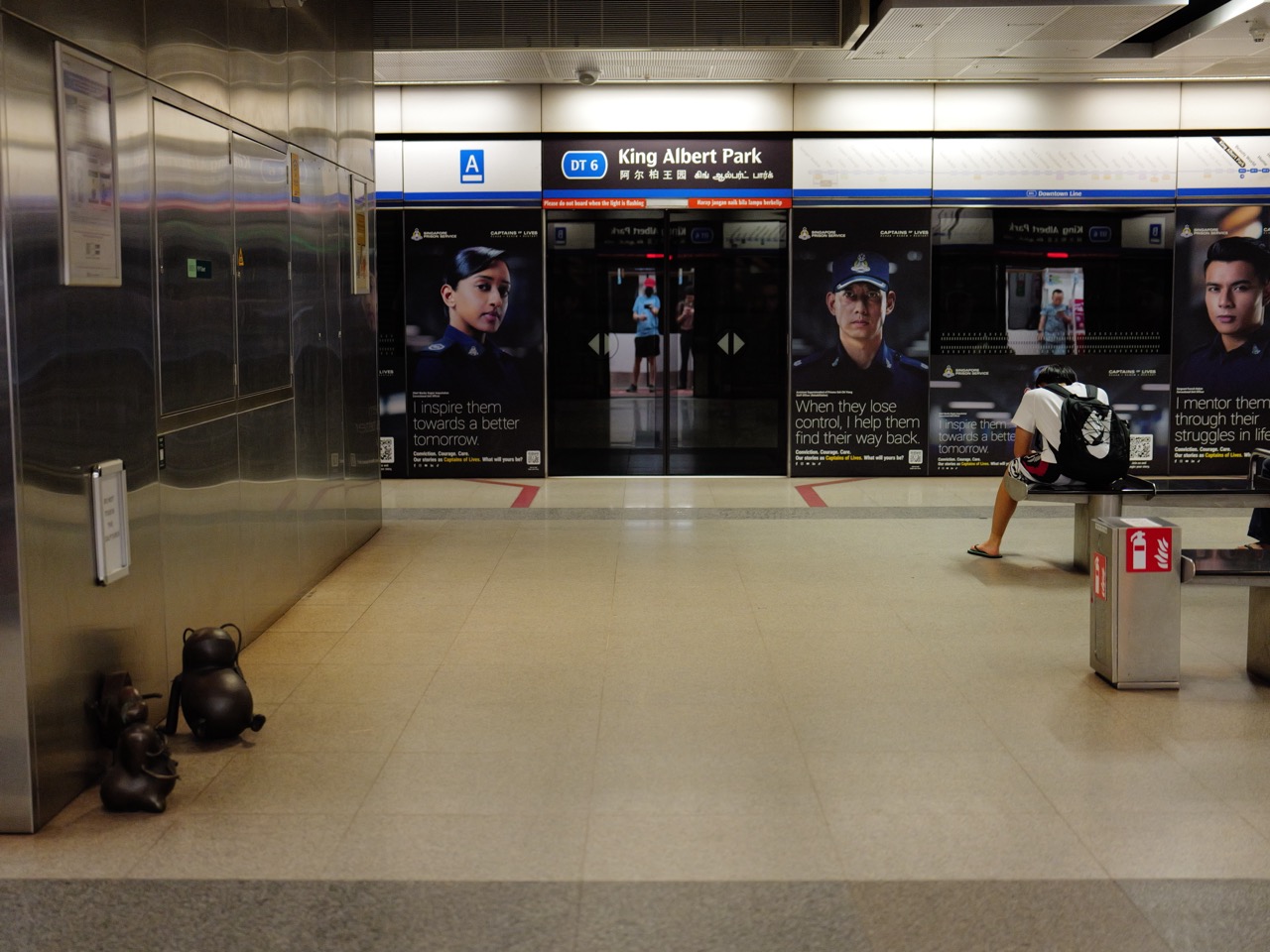
Featured photograph shows passengers inside the existing King Albert Park Downtown Line station; it does not depict the future underground Cross Island Line platforms.
Jump to: Why does an MRT interchange matter more than an ordinary stop? · How deep is 50 metres? · What exactly is Cross Island Line Phase 2? · How can engineers modify a station without stopping the trains? · Does construction affect local nature? · How could this change journeys across Bukit Timah? · How can commuters follow the project without confusion?
1. Why does an MRT interchange matter more than an ordinary stop?
An ordinary railway station connects people to a single line. An interchange lets them transfer from one rail corridor to another, making many more possible journeys available through a network.
King Albert Park currently serves the Downtown Line, which opened through the area in 2015. Its planned new connection will be to the Cross Island Line, which LTA describes as a major orbital railway linking hubs across different parts of Singapore.
Think of a transport network like a map of connected paths. If you add one useful intersection between two long routes, you make it possible to travel between many pairs of destinations with fewer transfers. The value of an interchange is therefore broader than the number of people who live directly outside the station.
2. How deep is 50 metres?
In its 7 July 2025 announcement, LTA said the new King Albert Park CRL interchange would extend to five basement levels and reach a depth of approximately 50 metres, comparable with a 16-storey building.
That depth is significant because the station must be integrated with the existing operating Downtown Line while accommodating the alignment of a separate railway. Underground structures, utilities and local ground conditions all influence engineering choices.
LTA compared the future design with the Downtown Line’s Bencoolen station, currently about 43 metres deep, and the future Cross Island Line Pasir Ris station, expected to be about 47 metres deep. The 50-metre King Albert Park depth is therefore a planned final condition, not the depth of a passenger platform already in use.
How long will an escalator ride actually take? That depends on the installed equipment and transfer route, which should be checked when the interchange opens rather than guessed now.
3. What exactly is Cross Island Line Phase 2?
CRL Phase 2 extends the line roughly 15 kilometres westward beyond its earlier phase and comprises six underground stations. The plan includes two interchanges: King Albert Park with the Downtown Line and Clementi with the East-West Line.
According to LTA, civil construction began in July 2025 and the stations are targeted to open by 2032. A construction start is not the same as a service opening. Projects at this scale require excavation, structure building, track and systems installation, testing and safety checks.
The future CRL will add a route that can connect people across the network without routing every journey through a small number of central stations. This is one way orbital rail lines can relieve the load on existing radial lines.
4. How can engineers modify a station without stopping the trains?
LTA says addition and alteration works will be carried out at the existing Downtown Line King Albert Park station to create connections to the new CRL interchange. These works are planned in phases, with close monitoring to minimise disruption to train services.
That process sounds straightforward until you consider what must be protected: passengers entering and leaving, operating railway systems, nearby utilities, ground stability and surrounding roads and buildings.
Construction teams cannot simply dig into an active station as if it were an empty site. They need controlled worksites, sequencing, temporary arrangements, monitoring and coordination with the operating railway. The engineering is as much about keeping existing services functioning as it is about building new infrastructure.
5. Does construction affect local nature?
The Cross Island Line passes through parts of Singapore with important habitats. LTA says environmental impact assessments and an Environmental Monitoring and Management Plan form part of the construction process.
Near King Albert Park, LTA reported the creation of a new freshwater marsh to provide habitat for flora and fauna associated with an existing marsh affected by the works.
This is important, but it should not be oversold. Creating a replacement habitat is a mitigation measure, not proof that construction has no ecological impact. Sensitive habitats require monitoring and care even after new structures are built.
Students can learn a useful distinction: avoid an impact where possible, minimise it where it cannot be avoided, and mitigate or restore when changes are unavoidable.
6. How could this change journeys across Bukit Timah?
A future King Albert Park interchange could let someone arriving on the Downtown Line transfer onto the CRL to reach other parts of Singapore. People from Clementi or future Turf City may also connect through the new line.
But avoid inventing exact 2032 journey times for specific schools, offices or neighbourhoods. Actual travel time depends on service patterns, walking distances, interchange design and future network operation.
For families, the practical measure is door-to-door travel: how far is home from the station? Which exits are useful? Are lifts and passages appropriate? Is the additional transfer worth taking?
A railway project succeeds not only when the train tunnels are complete, but when people can navigate the transfer easily.
7. How can commuters follow the project without confusion?
Start by separating today from 2032. Today King Albert Park is a Downtown Line station, and its entrances and trains serve existing passengers. The Cross Island Line interchange is under construction and is planned to open later.
Check LTA’s Cross Island Line project updates for milestones. Be cautious with renderings that depict a completed interchange as though it already exists, and do not assume a target year guarantees a particular month or day.
Also remember that the future interchange is a separate development from the proposed Beauty World bus interchange. They are near one another in the broader Bukit Timah corridor but serve different transport functions.
Did you know that one deep station could change the usefulness of an entire rail network? The mechanism is connection: making more journeys possible through a well-placed transfer.
Frequently asked questions
Is King Albert Park already an interchange in 2026?
No. Its operating station serves the Downtown Line. The future Cross Island Line connection is under construction.
How deep will the new King Albert Park interchange be?
LTA plans approximately 50 metres of depth across five basement levels, which would make it Singapore’s deepest MRT station when completed.
When will the Cross Island Line reach King Albert Park?
LTA currently targets 2032 for Cross Island Line Phase 2, including the King Albert Park interchange.
Will the existing Downtown Line still operate during construction?
LTA says the connection works will be phased and monitored to minimise disruption. Passengers should consult current service advisories for actual changes.
Sources and further reading
These references are primarily government heritage, conservation and transport sources. For construction timelines and visitor access, always check the relevant agency’s latest guidance.
- LTA: Construction Begins on Cross Island Line Phase 2 (7 July 2025)
- LTA: Cross Island Line project and construction updates
- LTA: Downtown Line operating network
Explore related Bukit Timah guides
- How Turf City is becoming a housing estate
- How Hume MRT connects homes and history
- How the Beauty World integrated transport hub is planned
- How Bukit Timah Works | Why Tin Hill May Really Mean Temak Tree
- How Bukit Timah Works | How the Botanic Gardens Seed Bank Protects Future Forests
- How Bukit Timah Works | Why Railway Truss Bridges Use Steel Triangles
For a separate education resource near Sixth Avenue, see Secondary 1 Mathematics Tutor Clementi | Small Groups Tutorials. That original tuition page remains unchanged.