
Did you know that commuters were travelling past Hume for years before the station finally opened to them? Hume MRT is a wonderful example of how transport infrastructure can be built in stages, anticipating the changing needs of a neighbourhood.
On 28 February 2025, Hume station (DT4) opened on the Downtown Line between Hillview and Beauty World. That did not mean the entire station was created from scratch in 2025. Its underground station box had already been completed with the Downtown Line’s second stage, and the later work was to fit it out for passengers.
The quick answer: Hume works by adding a new, well-connected access point to an existing rail line. The station serves homes along Hume Avenue, makes the Former Ford Factory and central Rail Corridor easier to reach, and connects passengers to sheltered bus stops and walking routes. As of 24 October 2026, a further bus link, 873/873M, is scheduled to begin service the following day.
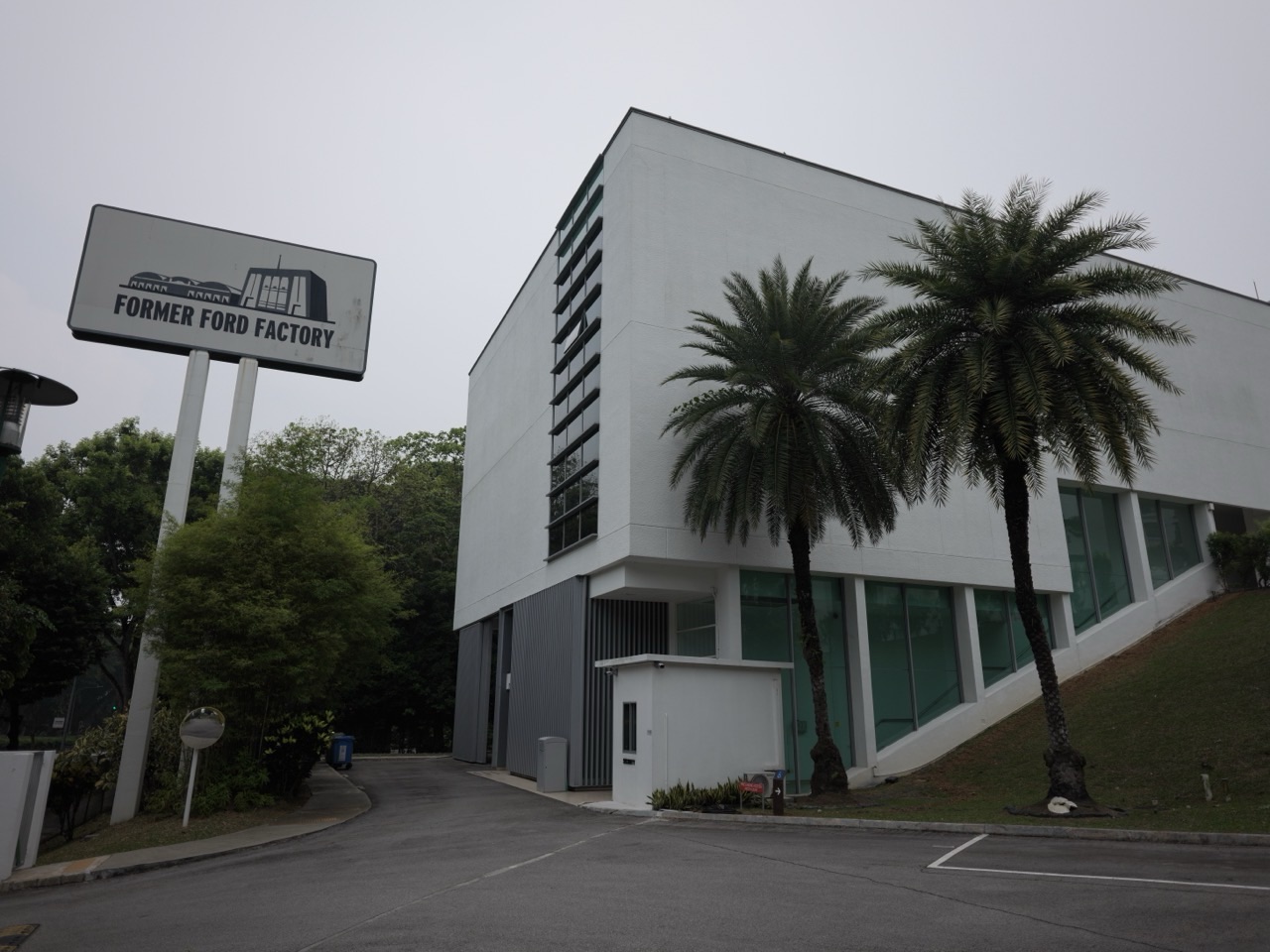
Featured photograph: the Former Ford Factory near Hume MRT station, not a photograph of the station itself.
Quick navigation: Why would a train line have a station people could not use? · How did a new stop improve local journeys? · What does ‘last-mile connectivity’ actually mean? · Why does Hume connect transport with heritage? · What’s changing from 25 October 2026? · How energy efficiency becomes part of station design · How can a family test whether Hume is the best station?
1. Why would a train line have a station people could not use?
Large rail projects are often planned for future demand, not just the exact number of riders expected on the day a line first opens. During Downtown Line Stage 2 construction, engineers built Hume’s underground station box in advance. Trains later ran between Hillview and Beauty World while Hume itself remained unopened.
That early civil structure meant much of the hard-to-replicate space was reserved before the operational station was needed. It is easier to create an underground box during a major line-building project than to interrupt an active railway later to construct an entire station from nothing.
LTA says fitting-out works began in January 2021. These works turned the reserved space into a passenger-ready station with the necessary finishes, systems, access points and testing. This distinction between a station shell and an operational station is the key to Hume’s delayed opening story.
2. How did a new stop improve local journeys?
Before Hume opened, nearby residents had to consider buses, walking or other transport to reach a train station. Adding DT4 reduced the distance between homes and rapid transit and introduced another starting point for city journeys.
LTA estimated a Hume-to-Downtown journey at around 30 minutes, representing savings of up to 15 minutes for some travellers compared with previous options. This is a planning illustration, not a promise that every door-to-door trip takes exactly half an hour. Walking, waiting, transfers and service conditions still matter.
One useful transport idea is generalised journey cost: people consider more than distance. They also experience waiting time, steps, road crossings, crowding and predictability. A convenient station near home can make a familiar journey feel simpler even when the railway alignment itself has not moved.
3. What does ‘last-mile connectivity’ actually mean?
The last mile is the small but essential section between a transport node and the place a person actually wants to reach. In practice it may be a five-minute walk, a sheltered transfer, a safe crossing or a short cycle.
Hume station has two entrances: one facing Upper Bukit Timah Road and one facing Hume Avenue. LTA installed covered linkways to nearby bus stops and pick-up/drop-off points, plus 60 bicycle parking spaces near the entrances.
These details sound modest compared with a new railway. Yet they determine whether a station is truly useful to families, commuters and people with different mobility needs. A train arriving every few minutes is less helpful if the final approach is confusing or difficult.
4. Why does Hume connect transport with heritage?
LTA explicitly identifies the Former Ford Factory and Rail Corridor (Central) among the places made more accessible by Hume station. Both have different stories: one is connected to Singapore’s wartime history, the other to a former railway alignment being reused for recreation and heritage.
This does not turn Hume MRT into the railway heritage station itself. It means the modern Downtown Line lets visitors approach heritage sites without using a car for the whole journey.
Inside the station, the Art in Transit work Continuity by André Wee depicts the Former Ford Factory through a stylised cross-sectional view. That is a thoughtful connection: a present-day transport stop helps travellers encounter a place associated with events from 1942.
5. What’s changing from 25 October 2026?
Here is a current detail worth checking: on 25 October 2026, LTA is scheduled to introduce bus service 873/873M, linking Tengah to Bukit Gombak, Hillview and Hume MRT station. The official public-transport announcement was updated on 22 October 2026.
As this article is dated 24 October 2026, the bus service is still an announced upcoming service, not one we should claim is already running. Once introduced, it is expected to expand the range of journeys that can reach the rail line without a car.
Routes, stop numbers and operating periods need to be checked on LTA or the operator’s latest notices before travel. The broader mechanism is clear: buses distribute riders to more local streets, while MRT moves larger numbers between stations.
6. How energy efficiency becomes part of station design
Hume MRT has achieved BCA Green Mark Gold certification, with features described by LTA including roof-mounted solar panels, energy-efficient lighting and a hybrid cooling system.
Transport sustainability has several layers. Rail can offer an alternative to some private-vehicle journeys. Yet stations themselves consume energy for lighting, ventilation, escalators and other systems. Efficient design helps reduce the resources needed to operate the network.
The important distinction is that a Gold rating is an established building-certification outcome, not proof that every passenger trip has zero emissions. Good transport analysis looks at the system as a whole.
7. How can a family test whether Hume is the best station?
This is an excellent student exercise. Compare a route that uses Hume MRT with one that uses another nearby station. Sketch the walking route and count the transfers. Which choice suits someone carrying a heavy school bag? Which is easier in heavy rain?
Hume illustrates a simple rule of transport planning: a station works best when it fits into the everyday movement of people around it.
- Identify the destination: is the trip to the Former Ford Factory, Rail Corridor, home, school or a regular appointment?
- Choose the correct station entrance: Upper Bukit Timah Road and Hume Avenue lead to different immediate walking routes.
- Check any bus connection: routes may change, including the newly announced 873/873M.
- Consider all legs: count walking, waiting and transfers instead of comparing train time alone.
- Verify access: use LTA and station information for current lift, entrance and service status.
Frequently asked questions
When did Hume MRT open?
Hume MRT station (DT4) began passenger service at 3pm on 28 February 2025.
Why was Hume MRT completed later than other Downtown Line Stage 2 stations?
The underground station box was prepared during earlier construction, but passenger fit-out and operational work began in 2021 and the station opened in 2025.
What heritage places are near Hume MRT?
LTA identifies the Former Ford Factory and the Rail Corridor (Central) as nearby places made more accessible by the station.
Is bus service 873 already running on 24 October 2026?
Not yet according to the dated LTA announcement. Service 873/873M is scheduled to begin on 25 October 2026; check official notices for updates.
Official references and further reading
Use the original sources for current opening arrangements, policy decisions and planned transport milestones. Future targets can change.
- LTA: Hume Station to Open on 28 February 2025
- LTA: Art in Transit — Hume ‘Continuity’
- LTA: September 2026 bus connectivity announcements
- LTA: Public Transport Service Announcements (22 October 2026)
- LTA: Downtown Line network
More guides in the How Bukit Timah Works series
- How Bukit Timah Works | Why Granite, Quarries and Hills Shaped the Area
- How Bukit Timah Works | How the Rainforest Survives Inside Singapore
- How Bukit Timah Works | How the Rail Corridor Connects History and Nature
- How Bukit Timah Works | Why Schools and MRT Stations Follow the Main Road
- How Bukit Timah Works | Why Floods Happen and How the 2026 Canal Upgrade Helps
- How Bukit Timah Works | How Beauty World Grew from a Market into a Town Centre
- How Bukit Timah Works | How Kampongs, Temples and Fuyong Estate Shaped the Neighbourhood
- How Bukit Timah Works | Why Bukit Timah Was Crucial in World War II
- How Bukit Timah Works | How Dairy Farm Became a Nature Park
- How Bukit Timah Works | Why Hawkers Moved to an Interim Market
- How Bukit Timah Works | How the Former Fire Station Became a Community Hub
- How Bukit Timah Works | Why Singapore Botanic Gardens Is UNESCO Heritage
- How Bukit Timah Works | How Hume MRT Connects Homes, History and the Rail Corridor (this guide)
- How Bukit Timah Works | How Rifle Range Nature Park Restores a Quarry and Protects Wildlife
- How Bukit Timah Works | How Turf City Is Becoming a New Housing Estate
- How Bukit Timah Works | Why Bukit Timah Plaza Still Serves the Neighbourhood
For a separate local education resource, see Secondary 1 Mathematics Tutor Clementi | Small Groups Tutorials. The original tutorial page has not been edited.