
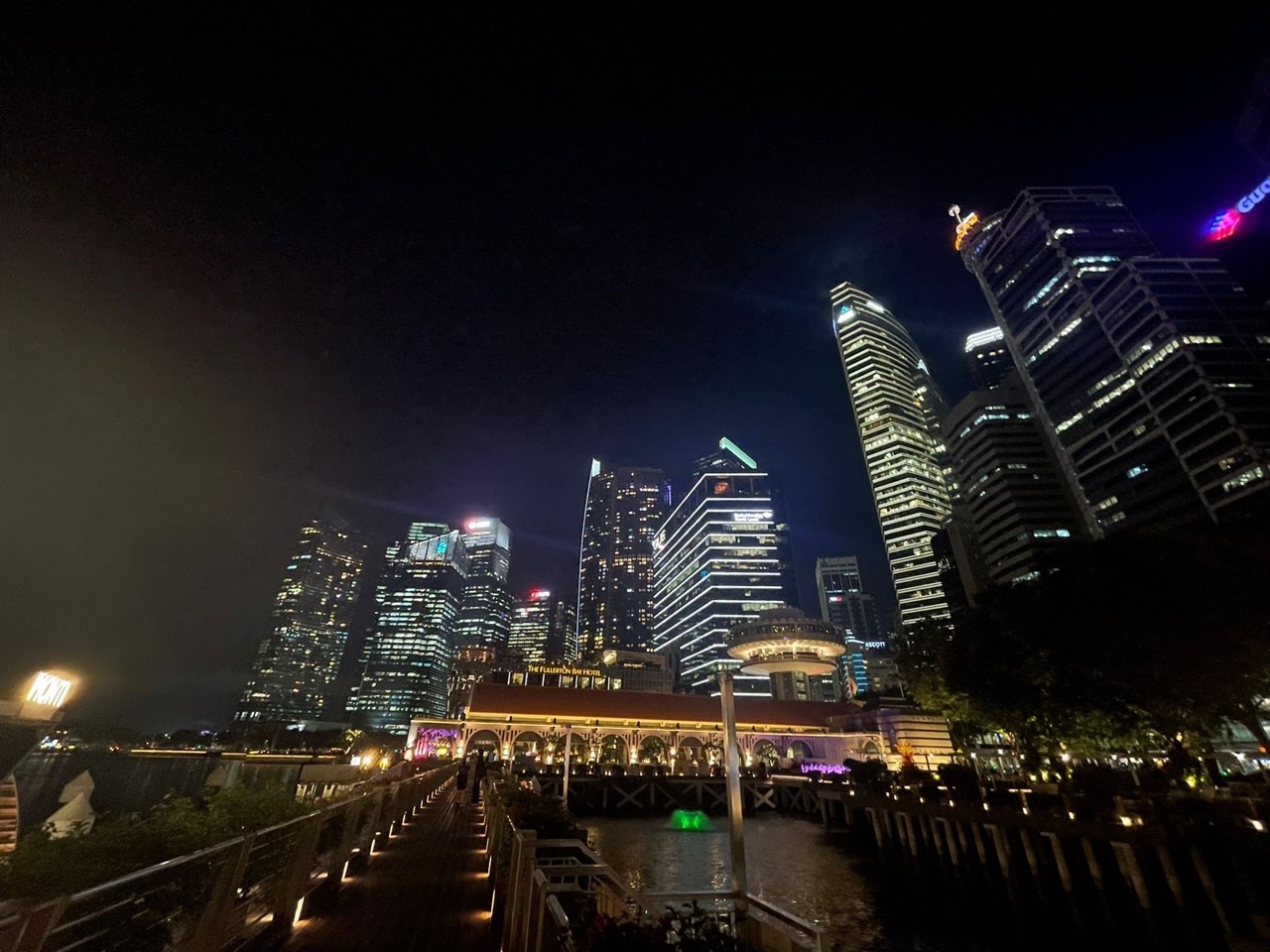
How does Singapore monitor air quality? The National Environment Agency (NEA) measures pollution, publishes the Pollutant Standards Index (PSI) and PM2.5 information, and regulates key pollution sources such as motor vehicles and industry. Singapore also monitors regional fires and transboundary haze because polluted air can cross national borders. The numbers help residents choose suitable actions, but a hazy-looking photograph is not a substitute for an official measurement.
This guide explains PSI, one-hour PM2.5, industrial emissions, vehicle standards, regional smoke haze, indoor air filtration, school and workplace decisions, and public health advisories. It connects eduKateSG’s existing How Singapore Connects air-monitoring articles with the wider stories of transport, housing, electricity, health and resilience.
The useful questions are what pollutant was measured, where, over what period, who may be exposed, and which action actually reduces the risk? If we keep those questions together, air quality becomes a clear systems topic instead of a stream of alarming screenshots and conflicting personal opinions.
Quick answer: seven parts of Singapore’s air-quality system
- Monitoring: NEA measures air pollutants and publishes relevant official readings.
- PSI: the 24-hour Pollutant Standards Index summarises air quality and supports health advisories.
- PM2.5: fine-particle concentrations, including separately reported one-hour observations.
- Local controls: vehicle emission standards, industrial controls and air-quality enforcement.
- Regional monitoring: forest fires, wind, weather and transboundary smoke haze.
- Health decisions: exposure-duration and activity advice, with particular care for vulnerable groups.
- Resilience: suitable indoor environments, public communications, clean technology and cooperation.
NEA’s Air Quality overview explains that motor vehicles and industry are major local sources. Its Managing Haze guide says PSI 101 and above is Unhealthy and identifies fine particles as an important concern during smoke haze.
1. Air quality is shared infrastructure
A student walking to school, a person waiting for a bus and a factory worker all breathe the surrounding air. They may use different services, but their exposure belongs to the same environment. This makes air protection both a public health and an urban-design responsibility.
Unlike water delivered through a tap, outdoor air cannot be switched off or assigned to a single paying customer. Pollution from one source can move into another neighbourhood and accumulate under certain atmospheric conditions.
A good city therefore needs prevention, observation, health information and enforcement working together. Read PSI, Haze and Air Quality Monitoring and The Infrastructure for the hidden systems.
2. What does Singapore’s PSI measure?
The Pollutant Standards Index communicates air-quality conditions using a unitless index calculated from monitored pollutants under a specified method. It is not simply the mass concentration of smoke at one street corner.
Singapore commonly reports a 24-hour PSI with health-related ranges, including Good, Moderate, Unhealthy, Very Unhealthy and Hazardous. Values of 101 or above fall into the Unhealthy category, with higher values indicating more concerning conditions.
The categories support communication, not an assertion that a person instantly experiences a precisely predictable health effect upon crossing one integer threshold. Exposure and personal factors still matter. Read NEA’s official PSI health advisory.
3. What is PM2.5?
PM2.5 refers to airborne particulate matter with an aerodynamic diameter of about 2.5 micrometres or smaller. Such fine particles can travel into the respiratory system, making their concentration relevant for health.
Particles differ in their chemical makeup and origin. Combustion emissions, secondary formation and regional smoke may all contribute to measurements. It is not scientifically sound to interpret all particles as an identical substance just because they share a size category.
PM2.5 concentrations are generally reported in micrograms per cubic metre. The number is not interchangeable with the unitless PSI. NEA’s air-quality resources distinguish indicators.
4. Why are there one-hour and 24-hour readings?
Air pollution can change rapidly when winds shift or a plume passes, while health implications also depend on exposure lasting over hours or longer. Different averaging periods help explain these different aspects.
Singapore’s one-hour PM2.5 readings can highlight recent fine-particle variation. The 24-hour PSI summarises broader air quality over its own averaging period. One can react to a rapid change differently from the other without either being a mistake.
Always compare like with like: the correct unit, time period, region and official source. A value taken from a one-hour PM2.5 chart cannot be labelled as that day’s PSI. The detailed PSI guide follows the definitions.
5. Why a city’s air is not identical everywhere
Local conditions matter. A busy roadway, an industrial zone, a residential park and the interior of an air-conditioned building can have different concentrations and pollutant mixtures at the same moment.
Official regional measurements summarise relevant areas under defined methods. They are valuable for common decisions but should not be mistaken for a personal sensor permanently measuring every location inside each home.
A useful question about a reading is: where was it measured, and does that location reflect my likely exposure? The answer shapes whether a broad advisory or a more specific assessment is needed.
6. What are Singapore’s main everyday pollution sources?
NEA identifies motor vehicles and industrial emissions as significant local contributors. Different fuels, engines, industrial processes and atmospheric reactions can produce particulate matter, nitrogen oxides, sulphur dioxide or other regulated pollutants.
Some emissions are directly released, while certain pollutants form through reactions after precursor substances enter the atmosphere. Weather conditions influence dispersion and the speed with which pollutants move away.
That means a single ban or technological upgrade cannot address every pollutant. The response combines source-specific rules and land-use planning. The wider relationship is URA and Land-Use Planning.
7. How are vehicle emissions regulated?
Road vehicles may release nitrogen oxides, carbon monoxide, hydrocarbons, particulate matter and greenhouse gases, depending on the fuel and technology. Standards for new and in-use vehicles aim to control relevant emissions.
NEA establishes prescribed exhaust and fuel standards, while inspection, registration and enforcement arrangements connect to other authorities. The specific standards differ between vehicle types and can be revised over time.
Before treating a vehicle as compliant or non-compliant, check the correct class and date. The authoritative reference is NEA — Air Pollution Regulations and Vehicle Inspections and Roadworthiness.
8. What does the Vehicular Emissions Scheme do?
The Vehicular Emissions Scheme classifies relevant vehicles by specified emissions performance and applies rebates or surcharges under current rules. It is designed to encourage the adoption of cleaner vehicle options.
NEA’s published scheme considers several pollutants rather than assuming fuel consumption alone captures environmental impact. It also shows revised emissions bands and incentives effective in 2026 and scheduled for 2027.
The scheme is not a blanket statement that every electric or hybrid vehicle has identical environmental performance. Buyers must check the actual model and current official classification. Use NEA’s VES schedule.
9. How do electric vehicles affect air quality?
Battery-electric vehicles do not produce conventional tailpipe exhaust while operating electrically. That can reduce local tailpipe pollution compared with petrol or diesel vehicles, particularly in streets where people walk or cycle nearby.
However, electricity generation, vehicle manufacturing, tyre wear, road dust and other factors remain part of the environmental picture. A quiet vehicle is not automatically free of all environmental costs.
Singapore’s electric-vehicle transition therefore links transport policy to energy systems and charging infrastructure. Read EV Charging and Road Energy and Electricity Generation.
10. Why public transport belongs to the air-quality discussion
A city with efficient rail and buses can offer alternatives to many individual car trips. Depending on vehicle and energy technologies, sharing capacity can help reduce certain emissions and congestion pressures.
The effect cannot be measured simply by saying every bus is clean or every train trip eliminates an equal amount of pollution. Ridership patterns, electricity sources, road conditions and vehicle types all matter.
The practical advantage is that residents can reach jobs, schools and services without always relying on a private car. Read How Singapore’s Transport System Works and Electric Buses.
11. What rules apply to industrial emissions?
Factories, industrial plants and power stations can have different pollution profiles. Appropriate legal controls may address stack emissions, process equipment, fuel quality and compliance monitoring.
Singapore uses pollution-control laws and enforcement alongside planning decisions intended to manage incompatible land uses and exposure. An industrial operation’s economic importance does not eliminate responsibility for environmental safeguards.
Some facilities need specialised treatment and monitoring equipment. The correct requirements depend on the actual plant, not the generic label ‘factory’. The wider system connects Jurong Island with NEA’s environmental framework.
12. Why can haze arrive from another country?
Smoke from forest and land fires can be carried across borders by regional winds. A plume may cross sea and national boundaries without following a road, shipping route or political line.
The severity experienced in Singapore depends on the fire location, scale, weather patterns, rainfall and atmospheric conditions. It is incorrect to assume that every visibility change must come from one specific fire region.
NEA says transboundary haze can affect Singapore, particularly during relevant Southwest monsoon conditions. Monitoring is therefore regional as well as domestic. Read Managing Haze.
13. What does the ASEAN Specialised Meteorological Centre do?
ASMC monitors and assesses regional weather, fire and transboundary smoke-haze conditions for ASEAN. Satellite observations, hotspot information and meteorological analysis help explain potential regional plume movement.
A satellite hotspot is not a direct measurement of what a particular schoolchild inhales. The ground-level concentration still depends on weather, distance and other circumstances.
Regional assessment complements Singapore’s local NEA measurements. Use ASMC to understand regional conditions and official NEA readings for local activity decisions.
14. Why old haze photographs can mislead
A photograph from a genuine 2013 or 2015 smoke event remains valid historical evidence. But it does not describe Singapore’s current air on a different date. Sharing it without the year can create unnecessary anxiety or false certainty.
Grey skies also occur during heavy rain or ordinary weather. Camera settings and humidity can affect how far away buildings appear in an image. Visibility alone cannot identify the pollutant mix or health impact.
Use official time-stamped measurements and corroborated reports. An impressive picture should prompt a check, not replace the check. The site Weather Forecasts and Daily Decisions explains the information route.
15. How does prolonged haze affect health?
Exposure to fine-particle pollution can aggravate respiratory and cardiovascular conditions and cause other symptoms, with risk affected by severity, duration, activity and personal medical circumstances.
Children, older residents and people with some pre-existing conditions may need additional precautions. Long periods of strenuous outdoor exercise can create greater exposure than brief low-intensity trips.
Health advisories help people adapt activities, but numbers cannot diagnose a particular person’s condition. Serious symptoms require appropriate medical care. Read NEA’s haze health guidance and Singapore’s Healthcare System.
16. What should schools consider during poor air quality?
A school may need to adjust physical education, recess arrangements, sports events or outdoor learning according to official advisories and the circumstances of its students. The decision may differ for strenuous activity and a brief walk between buildings.
Parents should check communication from the school and the relevant agencies rather than assume that every Unhealthy report automatically closes all schools. A clear plan also includes students with particular health needs.
Environmental data becomes useful only when translated into safe routines. This connects Schools with Parents Gateway and School Communication.
17. Why outdoor workers face different exposure
People working outdoors can accumulate exposure over a much longer period than someone stepping from a taxi into an office. The intensity of physical work can also increase breathing rate and the amount of polluted air inhaled.
Employers should use current official guidance and workplace risk assessments to consider suitable scheduling, indoor alternatives, rest, health precautions and appropriate protective equipment where relevant.
Workers with existing health concerns may need individual advice. The aim is not simply to publish one general rule but to make tasks workable and safe. Read Employment System and Labour Engine.
18. Is indoor air always safe during haze?
No. Fine particles can infiltrate through outside-air intakes, open windows and building gaps. Internal activities also contribute their own sources of airborne particles or gases.
Air-conditioning should not be assumed to filter all air contaminants effectively. The type of filter, air exchange, maintenance and size of the space matter. At the same time, simply sealing every opening without considering ventilation can introduce other concerns.
NEA’s haze advice explains particle entry into buildings. The built-environment connection is Building Management Systems.
19. What can a HEPA filter do?
A high-efficiency particulate air filter is designed to capture fine airborne particles under appropriate testing and use conditions. An air cleaner containing suitable filtration may help manage particle levels in a room.
Performance depends on air-cleaning capacity, proper filter installation, room size, doors and windows, and how the equipment is operated. A low-quality device’s marketing claim is not proof that every contaminant is removed.
Filters aimed at particles are not universal solutions for all gases or sources. Buyers should check independent specifications and choose a product suited to the actual issue rather than assume any purifier automatically makes a home safe.
20. How is ventilation different from filtration?
Ventilation brings outdoor air into a space and removes indoor air through designed pathways. Filtration captures certain materials from air passing through a suitable filter. They solve overlapping but different problems.
During a haze episode, high outdoor particle concentrations create a reason to examine how fresh-air intake and filtration are managed. Yet ventilation remains important for indoor air quality and building safety.
Professional advice may be necessary for complex ventilation systems, especially in schools, healthcare facilities and workplaces. Read Sensors and Smart Buildings for the operational layer.
21. Why low-cost personal sensors may disagree with NEA
A household sensor may be placed beside a cooking stove, road or air purifier. Its reading reflects that immediate setting and its technology. Humidity, calibration and the type of sensor can also affect measured values.
NEA’s official network reports air quality under defined procedures and measurement systems. One consumer device cannot be treated as the island’s authorised national index.
Ask whether the readings use the same units, location and averaging period before declaring one wrong. Comparing data intelligently is also a useful science lesson for students. Read PSI and Monitoring.
22. Why air-quality policy includes invisible gases
Pollution is not always a visible cloud. Ozone at ground level can form through atmospheric reactions between precursor compounds under sunlight. Nitrogen dioxide and sulphur dioxide may also require monitoring and emissions management.
Different pollutant types can have different time patterns, health implications and source controls. A dust mask designed to capture particles is not automatically the right defence against every gas.
NEA’s air-quality targets and abatement measures discuss these pollutants. This is why air quality should never be reduced to a single colour of sky.
23. What does rain do to haze?
Rain can change particle concentrations through atmospheric processes, but the relationship depends on the weather and the continuing sources of pollution. One afternoon shower does not guarantee that all smoke has disappeared.
Similarly, a fresh breeze may temporarily disperse pollution while a later wind shift brings new air from another direction. A national picture requires actual measurements and weather context.
Check the reading after significant changes instead of treating rain as an automatic safety announcement. The weather interface is Weather Forecasts and Rain Radar.
24. What if the air smells smoky but the PSI is moderate?
Odour, visibility, fine particles and the composite PSI are different kinds of information. A person can notice a smell without it being possible to determine the exact pollutant concentration or health risk from that sensation alone.
If there is a nearby suspected fire, a hazardous release or an immediate safety concern, the appropriate response is to follow emergency advice and contact the responsible authorities. Do not rely on a regional PSI to dismiss a specific acute hazard next to your building.
For ordinary haze decisions, use the official time-stamped air-quality information and relevant advisories. The distinction between local emergencies and longer-term ambient measurements is essential.
25. Why buildings and neighbourhood planning matter
A densely developed city can manage exposure partly through land-use controls, appropriate industrial locations, ventilation design and access to transport choices. Urban planning does not remove atmospheric pollution, but it affects where people live, work and spend time.
A good housing estate also gives families routes to essential services that do not require unnecessary vehicle journeys. Public space, shelter and accessibility can make daily life easier during difficult weather.
Read URA Land-Use Planning and How HDB Towns Are Planned.
26. Why air quality connects to electricity policy
Power generation and fuel use can contribute emissions, depending on technology and controls. Singapore’s reliance on natural gas for much of its electricity is part of the national energy and air-quality discussion.
Changing the energy mix can affect emissions, while reliable electricity supports hospitals, water treatment and indoor environments that may be important during severe weather.
Environmental decisions therefore need to examine both benefits and dependencies. Read Singapore’s Electricity System and Essential Supplies.
27. Why regional cooperation is indispensable
Singapore can regulate local roads and industries, but it cannot directly control every fire or land-use decision beyond its borders. Transboundary haze requires regional monitoring, diplomacy, cooperation and attention to the causes of burning.
That effort is distinct from making immediate school or household decisions using current readings. Long-term prevention and short-term exposure management are different jobs that support each other.
The country needs both a clear domestic system and an understanding of atmospheric connections to the wider region. This reflects The Invisible Web beyond the physical map.
28. A worked case: a student, cleaner and older neighbour
Imagine a day with worsening haze. A student has a scheduled outdoor sports lesson, a cleaner has several hours of outdoor work and an older neighbour has an essential clinic appointment. They share the same environment but not the same exposure or needs.
The school reviews official guidance and the planned activity. The worker and employer assess working conditions. The older resident considers appropriate transport and personal health advice without unnecessarily abandoning care.
The result should be three proportionate decisions grounded in current information, not three identical responses copied from a headline. It is the difference between knowing a number and knowing what to do with it.
29. What does a successful national air-quality system look like?
Success includes monitoring accuracy, clear public communication, enforcement, progress on local emissions and effective responses to regional smoke episodes. One clean-looking morning is not a complete environmental report.
An honest assessment recognises that local conditions can improve while external shocks remain possible. It considers health, transport, industry, energy and people’s actual ability to respond to advisories.
Air quality becomes a strong example of The Whole Machine and Lowering Friction when people can turn reliable data into practical action.
Explore Singapore’s air quality and health articles
Air monitoring, environment and health
- PSI, Haze and Air Quality Monitoring
- Weather Forecasts and Daily Decisions
- How Singapore’s Healthcare System Works
- Diagnostic Tests and Disease Surveillance
- Resilience and Future Upgrade
Vehicles, industry and buildings
- Vehicle Inspection and Emission Controls
- Electric Buses and Charging Depots
- Electric Vehicle Charging
- Building Management Systems
- Singapore’s Electricity System
- Land-Use Planning
Frequently asked questions about Singapore air quality
What does PSI mean?
Pollutant Standards Index, a unitless indicator used to describe air-quality conditions and related advisories.
When is Singapore’s PSI unhealthy?
NEA categorises PSI at 101 or above as Unhealthy.
What is PM2.5?
Fine airborne particulate matter measuring about 2.5 micrometres or smaller.
Is one-hour PM2.5 the same as 24-hour PSI?
No. They have different units, averaging periods and purposes.
Can a clear sky still contain pollution?
Yes. Some pollutants are invisible; visual clarity is not a complete measure.
Why does Singapore get haze?
Smoke from regional land and forest fires can reach the island under suitable winds and weather conditions.
Can rain clear smoke haze?
It can change concentrations, but one shower is not proof that all unhealthy conditions have passed.
Is indoor air automatically safe?
No. Particles can enter buildings, and activities inside can add their own pollutants.
Does a HEPA filter remove everything?
No. Its performance depends on the particles, equipment, airflow and use conditions; gas removal is a separate issue.
Do children need different precautions?
The relevant advisory and individual circumstances can justify greater care for vulnerable groups, including some children.
Are industrial emissions regulated?
Yes. Applicable industrial pollution standards and other controls form part of NEA’s regulatory framework.
Are electric cars completely free of pollution?
No. They have no conventional tailpipe emissions when running electrically but retain wider lifecycle and infrastructure impacts.
Where can I see the current air reading?
Use NEA’s official time-stamped PSI and PM2.5 information and check the region and update time.
Why might my personal sensor disagree with NEA?
Location, averaging period, units and sensor accuracy can differ.
What if someone develops serious symptoms?
Seek appropriate medical attention instead of attempting diagnosis from an air-quality reading.
Official reference desk
- NEA — Air Quality
- NEA — Managing Haze
- NEA — Air Pollution Regulations
- ASEAN Specialised Meteorological Centre
- NEA — Main Service Portal
A five-step check before changing outdoor activities
First, find an official reading and its timestamp. Second, check whether the number is a 24-hour PSI or a one-hour PM2.5 measurement. Third, identify the region. Fourth, examine activity intensity, expected duration and any relevant vulnerability. Fifth, follow the latest official or appropriate professional advice. That creates a decision based on evidence instead of a reaction to an undated photograph.
A parent planning a park walk and a school organising a long sports session may reasonably make different choices from the same official information. The school has duties to its students and should follow the applicable institutional guidance. The family can consider the nature of its own activity and circumstances.
Air quality is a measurement-and-response system
Monitoring shows what is happening, the agency interprets and communicates relevant conditions, and residents or organisations adjust their behaviour. Another layer reduces emissions through regulation, technology and international cooperation. These functions complement each other but are not interchangeable.
Students can draw the complete process: pollutant source, pathway through air, measurement station, advisory and action. Such a diagram joins science, geography, health and citizenship and demonstrates why understanding a number matters more than memorising an abbreviation.
The next Singapore systems questions
This is an educational systems guide, not a live haze warning or medical assessment. Check current NEA measurements before making activity decisions. The How Singapore Works Civilisation Atlas connects air quality with health, infrastructure and regional relations.