
A Singapore staycation for the public holidays in 2027 can be a hotel break, a few carefully chosen day trips, or a holiday spent mostly at home. Start by choosing what your household needs: uninterrupted time together, a change of surroundings, outdoor play, or fewer responsibilities for a day. Then choose one area and one main activity. The most useful plan leaves enough time to enjoy the place you have chosen.
For adults who normally have Saturdays and Sundays off, New Year’s Day, Good Friday, Hari Raya Haji and National Day offer convenient three-day windows in 2027. Vesak Day and Deepavali fall on Thursdays, so an approved Friday of leave can create a four-day break. Children’s school attendance and each adult’s work roster still need separate checks. The dates come from the Ministry of Manpower’s official 2027 holiday announcement.
- Choose the purpose first: rest, play, conversation, culture or time outside.
- Choose the base second: home, one hotel night or two hotel nights.
- Keep each day geographically small: one main place, a nearby meal and a simple route home.
- Check the exact facility: a park’s grounds, playground, swimming pool and café can have different hours.
- Prepare an indoor alternative: confirm that it opens on the actual public holiday.
- Count the full household cost: accommodation, meals, transport, admissions and a reserve.
- Protect the final evening: leave time for bags, ordinary routines and a calm return to school or work.
Planning information checked on 8 November 2026. The schedules and budgets below are original examples, not venue packages or price quotations. Recheck operators’ notices before your chosen 2027 date.
EDUKATE · PUBLIC HOLIDAYS 2027
Choose a local break that suits your household
Start with the decision in front of you, or read the chapters in order.
Choose the kind of break
Decide what you need, where to sleep and when to go. ROUTE 2 · CHAPTERS 4–6
Plan the time and cost
Keep each day manageable and compare the whole budget. ROUTE 3 · CHAPTERS 7–9
Choose a place
Explore Punggol, the Civic District or Jurong Lake Gardens. ROUTE 4 · CHAPTERS 10–14
Make the day comfortable
Check weather, access and practical examples. ROUTE 5 · CHAPTERS 15–20
Finish the plan
Share the work, prepare and find answers.
CHAPTER 1 OF 20 · Choose the kind of break
1. Decide what this break should give your family
Before opening a hotel app, finish this sentence together: “At the end of the holiday, we would be happy if we had…”
One household might want a long conversation without checking the time. Another might want children to have a morning of outdoor play. A parent who has been preparing every meal might want one day without cooking. A teenager might want to choose an outing instead of following an adult’s programme.
These are different needs. They lead to different plans.
If the purpose is more time together, a crowded itinerary with separate bookings may work against it. If the purpose is a change of surroundings, one well-chosen overnight stay may be enough. If the purpose is rest, a familiar neighbourhood, a prepared meal and a protected afternoon can be useful choices.
Ask each person for one request. Keep the requests concrete: “a late breakfast”, “an hour to draw”, “a short walk with somewhere to sit”, or “no rushing between places”. A request such as “make it exciting” needs a little more explanation before someone can plan around it.
Then agree on the most important shared outcome. You can include other wishes when they fit, but the holiday should not depend on fulfilling every request.
For example, a family may decide that their main goal is an unhurried day with grandparents. That decision immediately changes the transport, walking distance, restaurant choice and return time. It also gives everyone a fair reason to leave a second attraction for another weekend.
CHAPTER 2 OF 20 · Choose the kind of break
2. Choose between a home base, day trips and a hotel
A hotel is one way to create a holiday boundary. A household can also create that boundary by changing its routine and agreeing which ordinary jobs can wait.
| Your situation | A useful starting choice | What to arrange deliberately |
|---|---|---|
| You want a change of scene with limited spending | Sleep at home and take one substantial day trip | Protect the day from errands and routine appointments |
| Young children need familiar sleeping arrangements | Use home as the base | Put the main outing before the usual rest period |
| You want a shared evening away from household tasks | Consider one hotel night | Check room occupancy, meals and the actual time available |
| Packing and moving feel tiring | Consider two nights in one place | Keep the middle day free from check-in and check-out demands |
| Different relatives can join for different hours | Meet for a local outing | Use one precise meeting point and allow an easy departure |
| Someone needs a very specific sleeping or access arrangement | Choose the base only after confirming it | Ask about the exact room and route, not just the hotel category |
Make staying home feel intentional
If you stay home, decide which tasks will be done before the break and who will do them. Prepare a simple meal plan, clear the necessary space and put routine work out of sight where possible. Agree on a limited time for unavoidable responsibilities.
This matters especially when one person normally carries most of the planning. Sleeping at home can save accommodation costs while leaving that person with the same workload. Share the shopping, transport research, meal decisions and clean-up.
Give the home-based holiday a real start. Have breakfast together, leave for an outing at an agreed time, or begin a family activity. A deliberate beginning helps prevent the morning disappearing into unrelated jobs.
CHAPTER 3 OF 20 · Choose the kind of break
3. Pick a 2027 holiday window that your household can actually use
The following are examples for an adult with a Monday-to-Friday work pattern and an ordinary Saturday–Sunday weekend. They are calendar combinations, not an employer’s leave approval or a school absence permission.
| Possible break | Public-holiday anchor | Additional weekday leave for that adult |
|---|---|---|
| Friday 1–Sunday 3 January | New Year’s Day, Friday 1 January | None |
| Friday 26–Sunday 28 March | Good Friday, Friday 26 March | None |
| Saturday 15–Monday 17 May | Hari Raya Haji, Monday 17 May | None |
| Thursday 20–Sunday 23 May | Vesak Day, Thursday 20 May | Friday 21 May |
| Saturday 7–Monday 9 August | National Day, Monday 9 August | None |
| Thursday 28–Sunday 31 October | Deepavali, Thursday 28 October | Friday 29 October |
Source for the public-holiday dates: MOM, Public Holidays for 2027. The date ranges above are calculated planning examples.
Choose dates by working backwards from the person with the least flexibility. That may be a parent on a roster, a child with a school commitment, or a relative who can only join for a meal.
Public-holiday time can also include religious observance, visiting and hosting. Put those commitments into the plan before adding leisure bookings. Leaving a meal early to rush to another reservation can make both experiences less enjoyable.
For the full calendar and the distinction between national holidays and school closures, use the eduKateSG Public Holidays 2027 guide. If you are choosing by the length of the break, continue with the three-day getaway guide or four-day getaway guide.
An activity deserves to be the centre of the day when people would still be pleased if it were the only substantial outing they completed.
A morning at a playground can be that activity. So can one exhibition, a meal with relatives, a waterfront walk or time enjoying a hotel room. It does not need to take the whole day to give the day a clear purpose.
Build around it in this order:
- Choose the main activity and a reasonable arrival time.
- Find the entrance, station or drop-off that actually serves it.
- Choose a nearby meal with a practical alternative.
- Allow time to sit, change plans or finish early.
- Decide how everyone will get home or return to the hotel.
Treat any extra stop as optional. Tell children and other adults which part is confirmed and which part depends on the weather, available time and energy. That distinction prevents an attractive idea from turning into an accidental promise.
Here is an example. A family chooses a gallery visit as its main activity. Lunch follows nearby. A short outdoor walk is possible if the weather is suitable. If the gallery visit becomes absorbing, they can stay longer and omit the walk. The day still fulfils its purpose.
This also makes decisions easier when someone becomes tired. You can shorten the optional part without feeling that the whole holiday has failed.
A useful budget shows the whole household’s expected spending. Write down transport, meals, accommodation, paid activities and a reserve before deciding whether a package is affordable.
The following figures are deliberately invented to demonstrate the calculation. They do not represent current Singapore prices or recommended spending levels.
| Illustrative household cost | Home-based outing | One-night hotel break |
|---|---|---|
| Accommodation | S$0 | S$300, assumed final room total |
| Transport | S$40 | S$50 |
| Meals and snacks | S$120 | S$180 |
| Paid activity | S$40 | S$40 |
| Reserve | S$30 | S$50 |
| Total | S$230 | S$620 |
Under these assumptions, the hotel version costs S$390 more. The question is whether the overnight experience adds enough value for this household. It might remove a long return journey, create a special shared evening or give everyone a different setting. Those are reasons you can weigh against the cost.
Some households would rather use part of that difference for a comfortable meal and save the rest. Others would prefer the overnight stay and simplify the activities around it.
Keep the reserve available. If a sudden downpour changes the route, there may be a transport cost. If a child is hungry earlier than expected, the meal plan may change. A budget with a small amount of room is easier to use than one that depends on every estimate being exact.
Finally, give the person watching the spending the same holiday as everyone else. Agree on the limits before leaving so they do not have to negotiate every purchase during the outing.
CHAPTER 6 OF 20 · Plan the time and cost
6. Choose one part of Singapore for each outing
Look at the route as a whole. A list of individually appealing places can still produce an awkward day if the transfers keep crossing the island.
For a local break, group the main activity, food and return route. You can explore a different area the next day.
| Outing idea | Keep the day centred on | A useful question before adding more |
|---|---|---|
| Art and architecture | National Gallery Singapore and its immediate Civic District surroundings | Will another museum leave enough time to enjoy the first one? |
| A waterway outing | A chosen section of Punggol Waterway Park | Can everyone comfortably return from the turning point? |
| Nature and play in the west | One part of Jurong Lake Gardens | Which entrance serves the actual feature you want? |
| A hotel-focused break | The hotel and its nearby streets | Are you paying for facilities you will have time to use? |
Avoid measuring a route only by the number of MRT stations. Include the walk to the station, transfers, lift access, the final walk and the journey back. A route that looks short on a map can feel much longer while carrying a tired child.
Choose the meeting point precisely when relatives join you. “At Punggol” or “near the Gallery” creates unnecessary uncertainty. Name an entrance or another confirmed landmark and share the same map pin with everyone.
If your family enjoys spontaneity, leave a choice within the area. You can choose between two nearby meals after the main activity while keeping the travel plan simple.
Punggol Waterway Park can provide a substantial change of surroundings without requiring a full expedition. NParks identifies four themed areas and lists the park as wheelchair accessible. Its official visitor information also names Punggol MRT and Damai LRT among nearby stations. Use the NParks park page to choose an appropriate starting point and check current notices.
Choose a short section before leaving home. Decide where you will turn back and where you can sit or eat afterwards. The turning point is especially useful when different people have different walking speeds: it gives the group a shared expectation.
A possible morning might consist of breakfast, a waterway walk and one long pause to look around. Children could choose a bridge or a view they want to photograph. An older relative might prefer a bench and a conversation while others make a short additional loop.
Keep those choices within a clear supervision plan. When the group separates, agree which adult is with each child and where everyone will meet. Avoid leaving the return arrangement to a quick message that someone may miss.
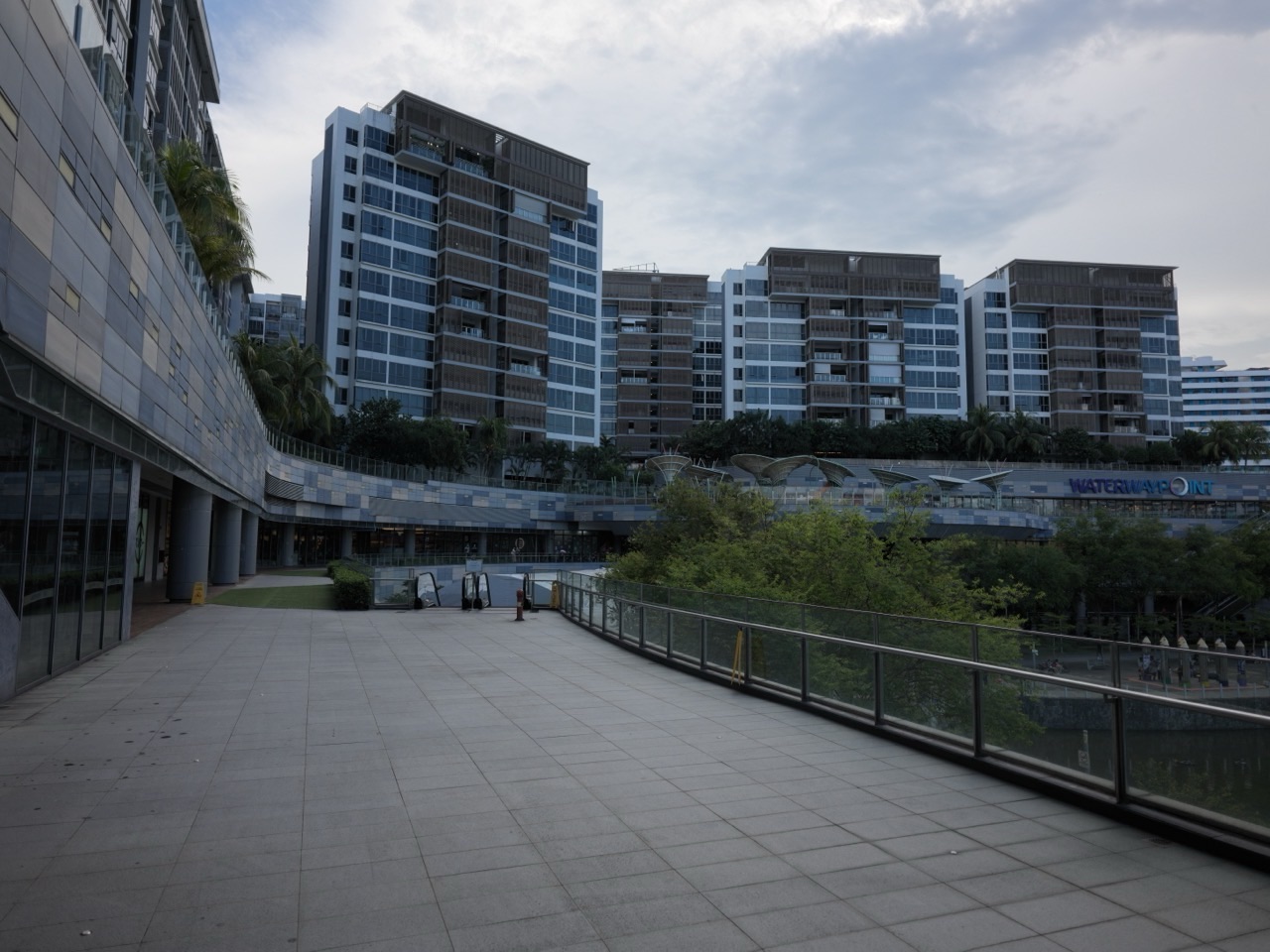
For more detailed local planning, use eduKateSG’s Punggol Waterway Park family walk guide. The eduKatePunggol photo guide to rest stops near Waterway Point can help you think about a shorter outing; photographs describe the recorded visit, so check current access before relying on a particular spot.
Let the waterway be enough
You do not need to add cycling, water play, a cinema booking and a distant dinner to justify the trip. Choose whichever activity the household actually wants. A walk can end after lunch and still feel complete.
If rain changes the morning, move to a previously checked indoor option or return home. A nearby library requires its own holiday-hours check; it should not be treated as an automatically available shelter and family activity.
CHAPTER 8 OF 20 · Choose a place
8. A Civic District art day that leaves time to look
National Gallery Singapore is a useful example of why a staycation should begin with the operator’s current information. Its visitor page lists daily opening and distinguishes general admission from other ticket types. At the time of checking, it also says the UOB Southeast Asia Gallery is temporarily closed, with reopening expected in late 2027. Other collections and exhibitions remain available elsewhere in the building. Check the current visitor information before choosing a particular exhibition as the reason for your trip.
For this outing, let each person choose one thing to look for: a colour, a landscape, a familiar street scene or a detail in the building. Give everyone time to find it. You can discuss the choices over lunch without needing to understand every artwork.
A child who enjoys one painting for ten minutes has had a useful encounter. A teenager may prefer to move independently within an agreed area before meeting again. An adult may want a slower visit. Decide how those preferences can coexist instead of requiring everyone to look at the same things at the same speed.
The Gallery’s accessibility guide describes an accessible route from City Hall MRT using the Art Connector to the Coleman Street entrance. Read the route carefully when travelling with a wheelchair or stroller, and check for any current changes.
For admission questions, the eduKateSG guide Is National Gallery Singapore Free? explains the distinction between general admission, special exhibitions and spaces without tickets. Recheck the Gallery’s own ticket page for your visit date and each visitor’s eligibility.
Afterwards, choose a nearby meal. If everyone still wants time outdoors and conditions are suitable, take a short walk in the surrounding district. Keep that part flexible.
CHAPTER 9 OF 20 · Choose a place
9. A Jurong Lake Gardens day built around the right facility
At a large garden, “open” can mean several different things. The grounds may be accessible while a particular playground or activity follows a separate schedule.
The current Jurong Lake Gardens operating-hours page lists Forest Ramble and Clusia Cove with public-holiday opening arrangements. Under the published schedule, they close on ordinary Mondays for maintenance and on Tuesdays when the preceding Monday is a public holiday. A Tuesday added to a long weekend therefore needs its own check.
This is a practical detail for 2027 planning. A parent might take an extra day off expecting a quieter playground visit. Before making that the centre of the day, check whether that particular Tuesday is the facility’s maintenance day.
Choose one main aim: play, a garden walk, photography or sitting together outdoors. Then select the entrance and route that serve that aim. The broad name “Jurong Lake Gardens” is not enough to decide where the family should arrive.
For a playground visit, work backwards from the child’s needs: suitable equipment, the expected amount of play, a meal, dry clothing if relevant and the return journey. Let another garden section remain optional.
For a gentler visit, choose a shorter route and identify a place to rest. Ask the person who will do the least walking what distance feels comfortable. Their answer is more useful than another family’s estimate of how quickly a route can be completed.
The eduKateSG Lakeside MRT family guide helps connect the station, play areas and garden choices. Use it alongside current operator notices. Temporary maintenance and facility closures can change before a 2027 holiday, so an older photograph of open equipment is not a promise of access.
CHAPTER 10 OF 20 · Make the day comfortable
10. Build a rain plan before the weather changes
Singapore’s climate makes weather flexibility useful in every part of the year. The Meteorological Service Singapore describes high humidity, substantial rainfall and afternoon or evening thunderstorms among the country’s weather features. These are climate patterns, not a forecast for a particular 2027 holiday. See the official climate explanation.
A practical rain plan answers four questions:
- Where will we be if the weather changes?
- Which confirmed indoor place can we reach without a difficult transfer?
- Does it open on this date, and does it need a ticket or booking?
- At what point will we choose to go home instead?
Check the MSS two-hour nowcast near departure and again when needed. Keep the actual conditions in view. A plan made months earlier should not determine whether the family continues an outdoor activity during a thunderstorm.
SCDF’s Emergency Handbook advises seeking shelter in a building or vehicle during lightning. Arrange your route so that a sensible early exit is possible.
Confirm the library, not just the building around it
A library is not an automatic public-holiday fallback. For example, NLB’s current Lee Kong Chian Reference Library contact page explicitly lists public-holiday closure. Other branches, study zones and library services need their own checks through the NLB locations directory.
For a family outing, confirm the specific space you intend to use. Access to a study zone does not establish that children’s facilities or programme rooms are available. Make the indoor alternative part of the plan, with the same care you give the outdoor activity.
CHAPTER 11 OF 20 · Make the day comfortable
11. Make access and comfort part of choosing the route
Ask about practical needs before choosing a place. Someone may need a step-free route, a nearby toilet, regular sitting breaks or a shorter journey. A child may find a noisy arrival difficult. A grandparent may prefer to leave before dinner.
These preferences do not need to become a complicated assessment. A few direct questions often reveal what matters:
- How long would you like to be out?
- What amount of walking feels comfortable?
- Would you prefer a quieter meal or a lively place?
- Is there anything about the journey or venue that we should confirm first?
- Would you like an easy option to leave earlier?
Plan for the whole journey. A venue may have accessible facilities while the family’s chosen approach includes a staircase or a long exposed walk. Check the entrance, lift route, crossing and last stretch from the station or drop-off.
If a hotel advertises an accessible room, contact it about the features the guest actually needs. Request confirmation of the room arrangement and relevant facilities before relying on them. Availability of a category does not tell you whether a particular date has a suitable room.
Allow an early finish without making anyone feel responsible for spoiling the day. Agree at the start that the group can leave when the main activity is complete. Adults can divide into smaller groups if everyone has a clear and comfortable return arrangement.
That flexibility can make it easier for someone to join the outing at all.
CHAPTER 12 OF 20 · Make the day comfortable
12. If you book a hotel, count the usable time
The number of nights tells you how many times you sleep there. It does not tell you how much relaxed time you will spend using the hotel.
Consider a purely hypothetical arrangement with check-in at 3pm and check-out at noon. One night provides a 21-hour interval between those times. Part of it will be used for sleeping, meals and getting settled. The actual hotel may have different rules; confirm them directly.
For a one-night break, choose a simple first day. Arrive without trying to complete a separate full-day itinerary first. If spending time in the room or using a particular facility is the reason for booking, protect time for it.
Two nights provide a middle day without a change of accommodation. That can be useful when packing, checking in and checking out are the parts your household finds tiring. It also costs more, so judge whether you will value that additional day in the same place.
Before paying, confirm the room’s permitted occupancy, bed arrangement, meal inclusions, facility access and the applicable cancellation terms. A room name or a family photograph does not answer those questions.
Choose one special element rather than expecting every hour to feel exceptional. It might be breakfast together, a quiet afternoon or a shared evening. Leave enough space for that experience to happen without constantly checking the next booking.
CHAPTER 13 OF 20 · Make the day comfortable
13. A three-day home-based staycation example
This example is a planning pattern for a household with three shared days. Move the activities to match actual opening hours, obligations and weather.
Day one: start close to home
Have breakfast without an early rush. Choose a manageable outdoor activity nearby or use the Punggol waterway idea if the journey suits the household. Keep lunch simple and return with enough of the afternoon remaining to relax.
Do not use the free afternoon to automatically add a second outing. Some people may want to read, draw, play a game or rest. Agree on dinner early so the evening does not become another round of decisions.
Day two: make one outing feel special
Choose the activity that needs the most planning, such as a gallery visit or a garden play session. Check the operator notice before departure. Carry only what is useful for that outing, and confirm the meeting arrangements if relatives are joining.
Let the main activity determine the pace. Enjoy lunch afterwards and leave the next step flexible. If a family member particularly wants to stop somewhere else, check the remaining time and energy before agreeing.
Day three: make room for everyone’s next day
Choose a lighter programme: a nearby meal, a short walk, a home activity or time with relatives. Put any essential preparation into a defined period so it does not expand across the whole day.
For children returning to school, check bags and the next day’s requirements while there is still time to find a missing item. Adults can do the same with work essentials. Finish the holiday with a meal or another small shared activity.
The pattern is deliberate: begin gently, give the middle day a clear highlight and leave enough space at the end. A family can adapt it without booking accommodation or purchasing a package.
CHAPTER 14 OF 20 · Make the day comfortable
14. A one-night hotel example for a family with different preferences
Imagine two adults, a child who wants active play and a teenager who wants time to take photographs. They have one hotel night and part of the following day.
Before booking, they choose a hotel in an area where both interests can fit within a small radius. They confirm the room arrangement and one meal. Each young person chooses a short activity; the adults check that the choices work with access, opening and the time available.
On the arrival day, the family has a simple lunch and checks in according to the confirmed policy. They leave a period to settle in. The child’s activity comes next if the facility is available and conditions are suitable. The teenager can photograph the area during an agreed short walk, without turning the rest of the family into an audience for a lengthy photo session.
Dinner is nearby. Afterwards, they enjoy the part of the stay they booked the room for: conversation, a film, reading or an early night.
On the second day, breakfast and packing have enough space around them. A final activity is optional and depends on the confirmed check-out arrangement. They return home with time to unpack.
The plan makes each person visible without giving each person a separate full itinerary. That is a useful principle for couples, friends and larger family groups as well.
CHAPTER 15 OF 20 · Finish the plan
15. Let children help without turning the holiday into homework
A staycation offers real decisions that children can understand: choosing a route, comparing two meal options, keeping within a small agreed amount or deciding what to carry.
Give a younger child a bounded choice: “Would you like the walk or the art activity?” Show an older child the available time and ask which sequence makes sense. A teenager can help check a route or an opening notice, with an adult verifying any booking or payment.
During the outing, invite observation without requiring a written record. Ask which detail they noticed first, which part surprised them or what they would show a friend. Accept a short answer and let the conversation move on.
If they want to keep a record, three photographs and a few sentences are enough. They can describe a bridge, a painting, a plant or an amusing moment. The purpose is to remember the day in their own words.
Children can also see how adults adjust plans. Explain a change plainly: the playground is closed, the weather is unsuitable, or the group would prefer to finish earlier. Choosing another activity is part of making a plan work.
Avoid promising that a holiday outing will produce particular academic results. A pleasant shared experience is valuable on its own, and curiosity can remain an invitation.
One person should not have to be researcher, navigator, booking manager, photographer and meal organiser throughout the break.
Divide the work before the holiday. One adult can confirm the route and operator notices; another can arrange food or pack the necessary items. Older children can take responsibility for their own small bag and help choose the optional activity.
Give each person a clear job with an end point. “Please check the exact entrance and share the route by tonight” is easier to act on than “help with the plan”. Once the task is done, the person should be able to enjoy the break too.
Keep one short shared note with the main activity, address, opening check, meeting point and return plan. Avoid spreading essential details across many chat messages. Where possible, save the information needed to find the entrance without depending on a perfect connection at the destination.
If the family is staying home, include domestic work in the same discussion. Decide who handles each meal and which chores can wait. A clear arrangement gives the holiday boundary substance.
- Confirm that every participant is available on the chosen date.
- Recheck the exact venue or facility, including maintenance notices.
- Check the weather outlook and identify the indoor alternative.
- Review any ticket, admission, occupancy or reservation conditions.
- Confirm the entrance, meeting point and accessible route where needed.
- Set the meal plan and a reasonable spending limit.
- Pack the items relevant to this outing, including dry clothing if needed.
- Agree on the latest comfortable return time.
- Check that the final evening leaves room for the next day.
The checklist should reduce decisions during the outing. If it becomes longer than the experience itself, simplify the plan. A staycation can be one enjoyable activity and a meal with people you care about.
Does a Singapore staycation need a hotel?
No. You can use home as the base and organise a deliberate break through local outings, shared meals and time away from ordinary tasks. A hotel makes sense when the overnight setting or facilities add something your household wants and can comfortably afford.
Is one hotel night enough?
It can be enough for a shared evening and a change of surroundings. Check the actual arrival and departure arrangements and keep the surrounding schedule light. Two nights give you a middle day without moving, but the extra cost should fit the purpose of the break.
Can we use Friday leave to extend a Thursday public holiday?
For a Monday-to-Friday worker, an approved Friday off can connect the Thursday holiday with the weekend. Use the dates table above, then check each person’s roster and school commitments. An adult’s approved leave does not create a school holiday.
Should we book an activity on every day?
Choose enough structure to give the break a purpose. One main activity per day is a useful starting point, and some days can remain quieter. Book when the activity requires it or when a reservation materially helps; leave optional activities flexible.
Are parks a reliable option on public holidays?
They can be useful, but check the specific park, route and facility. Grounds, play equipment, water features and other services may have different operating arrangements. Weather and temporary maintenance also matter. Use the operator page for the place you actually intend to use.
Can the library be our rainy-day backup?
Only after checking the exact branch or space for the date. Some library facilities close on public holidays, and a separately available study zone does not necessarily provide access to children’s areas. Keep a confirmed alternative or a comfortable plan to return home.
How can we include grandparents without overloading the day?
Ask what they would enjoy, choose a manageable route and confirm places to sit, eat and use the toilet. Offer an easy departure option. A shorter shared outing may suit the group better than asking everyone to complete a long route at the same pace.
What should we do if the weather changes after we have paid?
Follow operator instructions and make the decision that fits the actual conditions. Check the booking terms for changes or refunds; do not assume weather automatically creates an entitlement. Use the indoor alternative or finish earlier when that is the practical choice.
How do we stop the last day becoming a rush?
Leave the final major booking early enough to allow a comfortable journey home. Set aside a defined period for school and work preparation. Keep the final meal simple and avoid adding an outing merely because there are a few hours left.
Choose the next guide according to the decision you still need to make:
- Public Holidays 2027 Singapore: dates, long weekends and school off-in-lieu days.
- Planning a three-day getaway or planning a four-day getaway.
- Punggol Waterway Park: family walks, sand play and cycling.
- Rest stops near Waterway Point in eduKatePunggol’s photo guide.
- National Gallery Singapore: general admission, special exhibitions and free spaces.
- Lakeside MRT: Forest Ramble, Clusia Cove and Jurong Lake Gardens.
The factual checks for this guide use the following primary sources. Opening arrangements and venue notices may change before your trip.
- MOM: Public Holidays for 2027.
- NParks: Punggol Waterway Park.
- National Gallery Singapore: visitor information and accessibility.
- Jurong Lake Gardens: operating hours and services.
- Meteorological Service Singapore: climate and two-hour nowcast.
- SCDF: Emergency Handbook.
- NLB: Lee Kong Chian Reference Library contact and operating information and library locations.
Begin with one date your household can share, one place you would like to spend time and one clear reason for choosing it. Once those are settled, the remaining arrangements become much easier to make.