
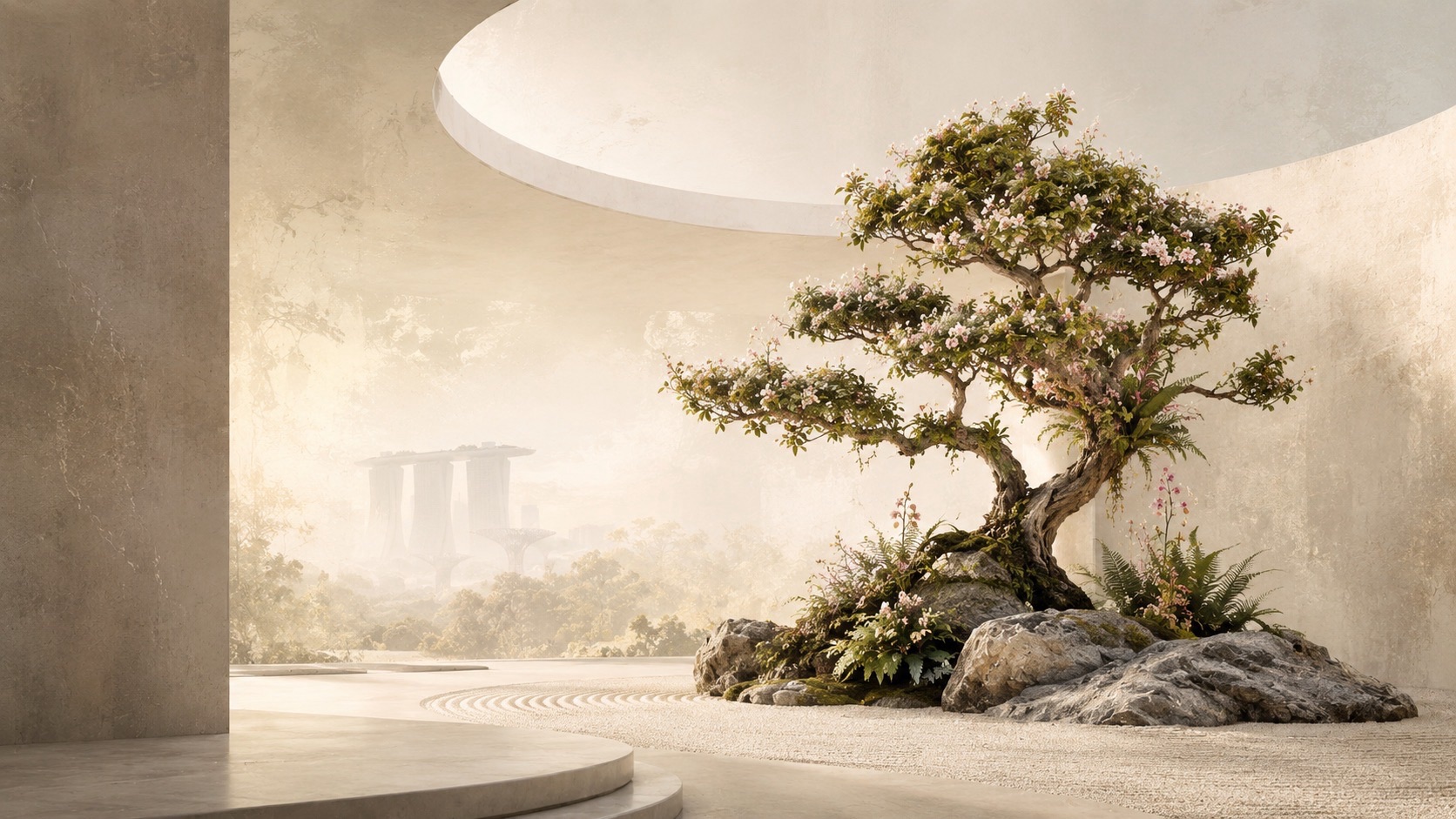
Luxury legacy is what remains after ownership, fashion and even individual lifetimes move on. People searching for legacy in luxury, inheritance and wealth, family legacy, heirloom luxury, generational wealth and succession planning are often asking the same deeper question: what should survive us, and what must be transmitted for value to survive intact?
Did you know? Wealth can be inherited without wisdom, objects can be inherited without stories, buildings can be inherited without maintenance knowledge, and collections can be inherited without taste. Legacy is not simply what one generation leaves behind. It is what the next generation can actually understand, use, protect and improve. Luxury becomes legacy when material wealth, knowledge, values, craft, memory and responsibility travel together.
This is the legacy chapter of The Art of Luxury | What Is Luxury?, following The Art of Luxury | Stewardship.
Patronage helps something begin.
Stewardship helps it endure.
Legacy asks whether it can outlive you.
Did You Know? Inheritance and Legacy Are Not the Same Thing
Inheritance is transfer.
Legacy is continuity.
An inheritance may include money, property, jewellery, businesses, collections or land.
A legacy includes the knowledge required to make sense of those things.
Why was the property kept?
Which objects matter historically?
Which traditions should continue?
Which assets should be sold?
What obligations come with ownership?
Legacy turns transfer into understanding.
The Legacy Equation
A useful way to think about luxury legacy is:
Legacy = Assets + Knowledge + Values + Records + Capability + Succession
Assets provide resources.
Knowledge explains how they work.
Values guide how they should be used.
Records preserve continuity.
Capability allows the next generation to manage them.
Succession ensures responsibility actually moves to someone prepared to carry it.
Money Is the Easiest Part of Legacy to Count
Money has numbers.
Stories do not.
Values do not.
Reputation does not.
Craft knowledge does not.
Institutional trust does not.
This is why a family can inherit financial wealth while losing cultural wealth.
The measurable part transfers automatically.
The meaningful part often requires deliberate transmission.
A Family Heirloom Is a Small Legacy System
An heirloom may contain several layers at once.
- material value;
- craft value;
- historical value;
- sentimental value;
- provenance;
- family memory.
Lose the story and part of the object disappears even if the material remains unchanged.
That is why The Art of Luxury | Memory and Meaning and legacy belong together.
Provenance Is Legacy Written Down
Memory is fragile.
Records are more durable.
Invoices.
Letters.
Photographs.
Commission records.
Service histories.
Restoration reports.
Family notes.
These documents convert private memory into transferable knowledge.
Read The Art of Luxury | Provenance.
Legacy Requires Someone to Care Enough to Learn
Passing on an object is easy.
Passing on expertise is harder.
How is the stone maintained?
Which specialist services the mechanism?
Why should this surface not be polished?
Where are the insurance records?
Why was the garden planted this way?
What does the family archive contain?
Legacy fails when the next person receives responsibility without capability.
Succession Is a Design Problem
Good succession does not begin at the moment of transfer.
It begins earlier.
Who needs to learn?
Which responsibilities should be shared?
Which records must be organised?
Which experts should be introduced?
What should happen if nobody in the family wants the role?
Succession is the architecture of continuity.
It converts an uncertain future into a planned handover.
A Legacy Can Be Skill Rather Than Property
A master craftsperson may own little land.
Yet their knowledge can be extraordinary.
How to judge grain.
How to tension thread.
How to read stone.
How to mix glaze.
How to hear whether a mechanism is healthy.
If that knowledge reaches an apprentice, legacy has occurred.
Luxury legacy therefore includes intangible assets.
Read The Art of Luxury | Craftsmanship.
Craft Traditions Survive Through Chains of People
No craft tradition is stored entirely in objects.
Objects show results.
People carry process.
The difference matters.
A museum can preserve a finished textile.
Only a practitioner can still know how to make one.
Legacy requires living transmission.
That is why apprenticeships and patronage matter so much.
Continue with The Art of Luxury | Patronage.
Family Businesses Carry Legacy Through Institutions
A family business is more than ownership shares.
It contains relationships.
Supplier knowledge.
Customer trust.
Operating routines.
Reputation.
Specialist staff.
Decision habits.
Succession that transfers only financial control may lose the institution’s actual intelligence.
Legacy requires organisational memory as well as legal transfer.
Family Wealth Can Become Fragile When Nobody Understands the Assets
A family may inherit valuable property, collections, businesses or financial assets.
But if nobody understands why they were acquired, how they work or what risks they carry, apparent wealth can become administrative burden.
Legacy education matters.
The next generation does not need to reproduce the previous generation exactly.
But they should understand what they are changing before changing it.
Legacy Is Not an Excuse to Freeze the Past
Tradition can become brittle if every change is treated as betrayal.
A house must sometimes adapt.
A business must innovate.
A craft must respond to new tools and markets.
A collection may need new interpretation.
Legacy is not preservation of every detail.
It is preservation of what remains worth carrying forward.
This requires judgement.
The Best Legacy Distinguishes Principle from Habit
“We have always done it this way” is not a reason.
Sometimes a tradition contains a deep principle.
Sometimes it is merely an old habit.
The next generation needs to know the difference.
Preserve the principle.
Question the habit.
That is how legacy remains alive rather than ceremonial.
Legacy Objects Need Stories, Not Just Storage
A labelled box is useful.
A story is better.
Why was this acquired?
Who used it?
Why does the family keep it?
What should never be altered?
Which parts were repaired?
An object without narrative may eventually look like clutter to someone who does not know it.
Memory protects legacy from accidental disposal.
Legacy Can Be Architectural
A house can become more than shelter.
It can become a family landmark.
A place where generations gather.
A garden planted by grandparents.
A room designed around recurring rituals.
A view associated with childhood.
Architecture can carry memory because it gives family life physical coordinates.
That is why property can become emotionally irreplaceable even when its market value is easy to calculate.
Legacy Gardens Grow Across Lifetimes
Trees make legacy visible.
Someone plants them.
Someone else sees them mature.
Another generation may sit beneath their shade.
A garden therefore teaches a kind of optimism.
The person who begins the work may never experience its fullest form.
Legacy means caring about outcomes beyond your own time horizon.
Libraries Are Civilisation’s Legacy Machines
A library allows one generation to speak to another without meeting.
Books.
Archives.
Maps.
Photographs.
Research.
Recorded language.
Preserved memory.
Legacy at civilisational scale is knowledge that remains accessible after its creators are gone.
This is why cultural institutions are forms of shared wealth.
Patronage Can Create Legacy Without Creating a Dynasty
A person does not need heirs to create legacy.
A scholarship can continue.
A museum can preserve a collection.
A research fund can support future discovery.
A public garden can mature.
A restored building can remain useful.
Legacy can move through institutions rather than bloodlines.
Read The Art of Luxury | Patronage.
Legacy Is Stronger When It Creates Capability
Giving resources can solve one problem.
Building capability can solve many future problems.
Train a conservator.
Fund an apprenticeship.
Teach financial literacy.
Build a research institution.
Create governance that can survive personalities.
The most durable legacy often consists of people who know how to continue without the founder.
Legacy Requires Letting Go of Control
This is one of its hardest truths.
If a legacy can survive only while the founder controls every decision, it is not yet a legacy.
The next generation will interpret differently.
Institutions will evolve.
Markets will change.
Technology will change.
The challenge is to transmit enough principle for continuity without demanding permanent obedience.
Legacy needs structure and freedom together.
A Name on a Building Is Not Automatically Legacy
Visibility can disappear.
Names can be forgotten.
Buildings can be renamed.
A stronger legacy is embedded in function.
Did the institution educate people?
Did the workshop continue?
Did the scholarship change lives?
Did the conservation work preserve something irreplaceable?
Legacy is what continues to work when recognition fades.
The Luxury of Legacy Is Not Immortality
No object lasts forever.
No fortune lasts automatically.
No institution is permanent without renewal.
No memory survives without transmission.
Legacy is not defeating time.
It is cooperating with time intelligently.
That makes legacy a natural extension of The Art of Luxury | Longevity.
Monaco: Legacy in a Place Where Wealth, Heritage and Visibility Intersect
Monaco is a useful lens for legacy because family wealth, collecting, philanthropy, cultural institutions, maritime heritage and dynastic symbolism all operate within an unusually small territory.
In a compact place, long-term choices are visible.
A restored building changes the city.
A cultural institution changes the calendar.
A collection can become public memory.
A philanthropic initiative can become part of national identity.
Legacy becomes spatially concentrated.
Explore Crazy Rich Monaco | Prince’s Palace, Monaco-Ville and the Royal Heritage Economy.
Singapore: Legacy in a Young, Fast-Moving Nation
Singapore makes legacy interesting because so much national development is recent enough to remain within living memory.
Founding businesses.
Schools.
Housing estates.
Conserved shophouses.
Family food traditions.
Institutions built within a few generations.
Legacy here is not ancient by default.
It is actively being decided.
What deserves preservation?
What should be renewed?
What knowledge should move forward?
Explore Crazy Rich Singapore | Conservation Shophouses and the Heritage Property Economy.
China: Legacy, 传承 and 家风
For bilingual English–Chinese readers, legacy contains several related ideas.
传承 means inheritance or transmission across generations.
遗产 means inheritance or legacy, including cultural heritage.
家风 refers to family values, customs and behavioural traditions transmitted across generations.
继承 means to inherit or succeed.
延续 means continuation.
These distinctions reveal that legacy is not only property.
It can also mean conduct, culture, reputation and ways of thinking.
English–Chinese Legacy Vocabulary | 传承与遗产词汇
- legacy — 传承 / 遗产
- inheritance — 继承物 / 遗产
- succession — 继承 / 接班
- heir — 继承人
- heirloom — 传家之物
- family tradition — 家庭传统
- family values — 家庭价值观
- family ethos — 家风 / 家庭精神
- continuity — 延续 / 连续性
- transmission — 传递 / 传承
- stewardship — 守护责任 / 管理责任
- archive — 档案
- institution — 机构
- endowment — 捐赠基金
- cultural heritage — 文化遗产
Visit and Touring Vocabulary | Heritage, Family History and Legacy · 遗产、家族历史与传承
1. How old is this tradition? · 这个传统有多久的历史?
Useful at cultural sites and workshops. 中文:这个传统有多久的历史?
2. How is this passed to the next generation? · 这个是怎样传给下一代的?
A direct legacy question. 中文:这个是怎样传给下一代的?
3. Does the family still own this? · 这个现在还是家族所有吗?
Useful at historic houses and estates. 中文:这个现在还是家族所有吗?
4. Is there a family archive? · 有家族档案吗?
Useful when learning about documented history. 中文:有家族档案吗?
5. Who will continue this craft? · 谁会继续传承这门手艺?
A powerful question in living workshops. 中文:谁会继续传承这门手艺?
6. Is this an heirloom? · 这是传家之物吗?
Useful when discussing meaningful objects. 中文:这是传家之物吗?
7. What has changed over the generations? · 几代以来有什么变化?
Useful for businesses, craft and architecture. 中文:几代以来有什么变化?
8. What has stayed the same? · 什么一直没有改变?
The companion question to change. 中文:什么一直没有改变?
9. Why is this important to the family? · 为什么这对这个家族很重要?
Useful when property and memory overlap. 中文:为什么这对这个家族很重要?
10. How is the collection being preserved? · 这个收藏是怎样被保存的?
Useful in private and public collections. 中文:这个收藏是怎样被保存的?
11. What will happen to this in the future? · 这个未来会怎样传承?
The essential succession question. 中文:这个未来会怎样传承?
12. What do you hope the next generation keeps? · 你希望下一代保留什么?
A beautiful question for families, craftspeople and institutions. 中文:你希望下一代保留什么?
Continue with the Top 100 Vocabulary for Visiting and Touring | World City Directory.
How to Build Legacy Without Great Wealth
- Write down family stories before they disappear.
- Label inherited photographs with names and dates.
- Teach a skill you do well.
- Maintain one meaningful object instead of replacing it casually.
- Create a family tradition worth repeating.
- Support an institution that can outlast you.
- Pass on the reason behind a rule, not only the rule.
- Leave systems that allow others to succeed without needing you present.
Legacy begins whenever useful knowledge survives its original holder.
What Students Can Learn from Luxury Legacy
History
Legacy explains why some objects, institutions and ideas survive while others disappear.
Economics
Wealth transfer is only one part of continuity; capability, governance and institutional knowledge also affect whether assets remain productive.
Culture
Traditions survive when stories, rituals, language and practices are actively transmitted.
Leadership
A strong institution can continue after its founder because responsibility, knowledge and decision-making are distributed.
Design
Long-lived buildings, products and organisations need adaptability so they can change without losing their core identity.
Character
Legacy teaches that the highest form of success may be creating something valuable that no longer depends on you.
Frequently Asked Questions
What is luxury legacy?
Luxury legacy is the transfer of valuable assets, knowledge, culture, stories, institutions and responsibilities in forms that allow them to remain meaningful across generations.
What is the difference between inheritance and legacy?
Inheritance is what is transferred. Legacy is what continues to matter, function or influence after the transfer.
Why is succession important?
Succession prepares future people to take responsibility, reducing the risk that assets, knowledge or institutions collapse when leadership changes.
Can a skill be a legacy?
Yes. Craftsmanship, professional judgement, recipes, techniques, language and institutional knowledge can all be transmitted across generations.
Why are records important to legacy?
Records preserve context, provenance, maintenance history and decisions that personal memory may eventually lose.
Does legacy mean keeping everything unchanged?
No. Strong legacy preserves important principles while allowing practices, institutions and assets to adapt to new conditions.
Can philanthropy create legacy?
Yes. Scholarships, museums, research funds, conservation projects and public institutions can continue creating value long after the original donor is gone.
Why do heirlooms matter?
They connect material continuity with family memory, making the object a bridge between people who may never have met.
Can legacy exist without children?
Absolutely. Legacy can travel through students, apprentices, institutions, public works, scholarship, archives, ideas and communities.
What is the simplest legacy question?
Ask: “What do I hope still works, matters or helps someone after I am gone?”
Helpful Reading Across the eduKate Knowledge Graph
- The Art of Luxury | What Is Luxury?
- The Art of Luxury | Stewardship
- The Art of Luxury | Patronage
- The Art of Luxury | Provenance
- The Art of Luxury | Memory and Meaning
- The Art of Luxury | Longevity
- Crazy Rich Singapore | Conservation Shophouses and the Heritage Property Economy
- Crazy Rich Monaco | Prince’s Palace, Monaco-Ville and the Royal Heritage Economy
- Top 100 Vocabulary for Visiting and Touring | World City Directory
The Art of Luxury Is Building Something That Can Continue Without You
An object with its story intact.
A craft with another practitioner.
A building still useful.
A garden still growing.
An institution still capable.
A family that understands not only what it inherited, but why.
Did you know? The most ambitious luxury is not permanence. It is continuity — creating enough knowledge, care and capability that something worthwhile can keep becoming valuable in hands that are not your own.
Return to The Art of Luxury | What Is Luxury?
Series navigation: The Art of Luxury | Complete Series Directory · Luxury | World Directory · Crazy Rich World