
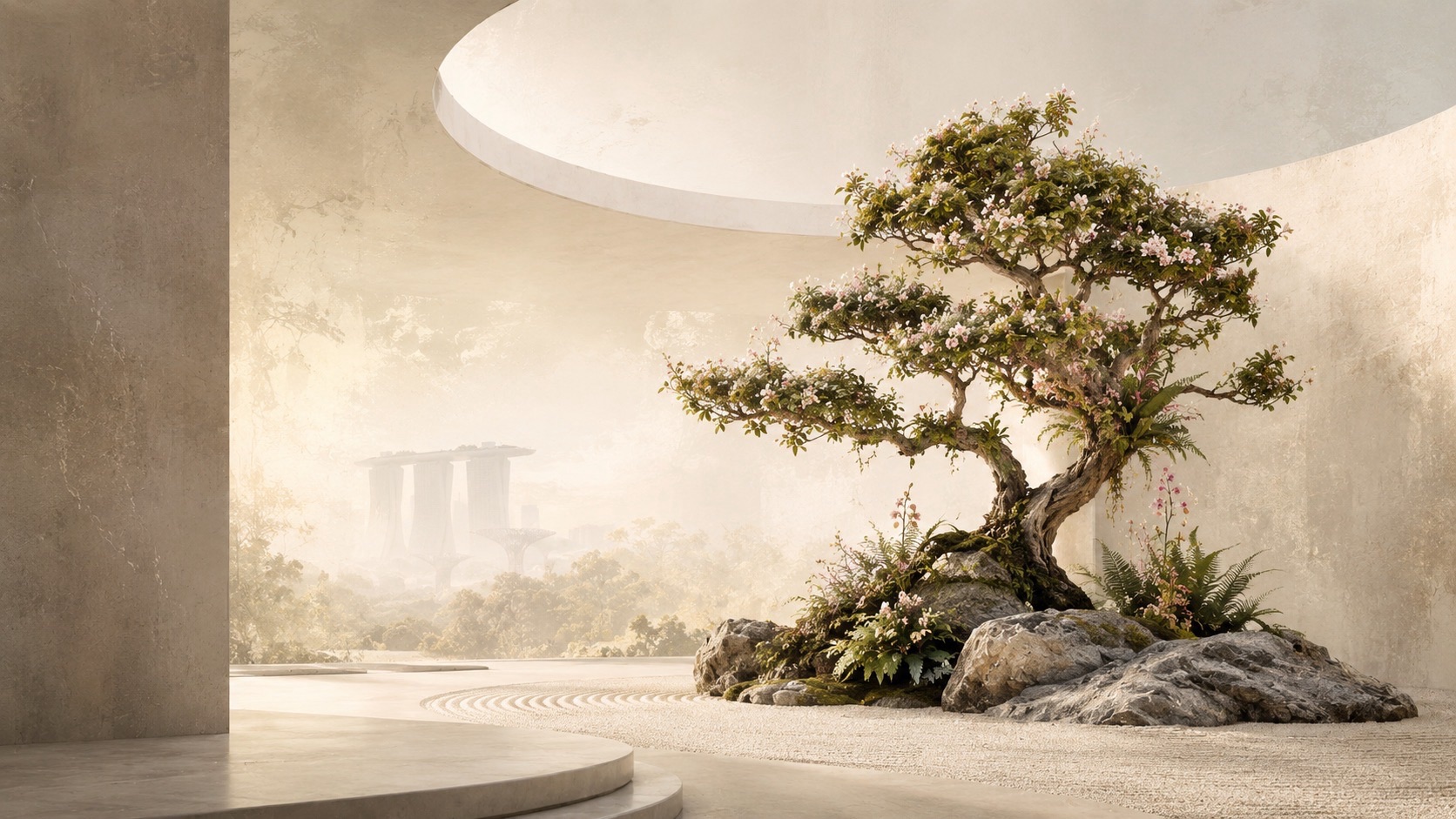
Luxury memory is what happens when an object, place or experience becomes valuable because of the life attached to it. People searching for meaningful luxury, emotional luxury, heirloom luxury, luxury experiences and sentimental value are often describing the same deeper phenomenon: the most powerful luxuries are not always the ones that cost the most, but the ones that become difficult to replace because they carry memory.
Did you know? A hotel suite can be luxurious because of space, service and view, but years later the memory may centre on one conversation by the window. A ring can be technically ordinary yet become priceless because it travelled through a family. A handmade bowl can gain meaning because it was bought on a particular journey. Luxury becomes deeper when possession turns into association. At that point, the value no longer sits entirely in the object. It sits in the relationship between object, person, place and time.
This is the memory chapter of The Art of Luxury | What Is Luxury?.
Provenance remembers where an object came from.
Longevity lets it remain.
Memory explains why somebody still cares.
Did You Know? Memory Can Make an Ordinary Object Luxurious
A child’s drawing may have almost no market value.
A letter may be made from inexpensive paper.
A simple watch may not be rare.
Yet if the object carries a life event, a loved one or a difficult journey, its value changes completely.
This teaches us something important about luxury.
Market price measures what strangers may pay.
Emotional value measures what the owner cannot easily replace.
The Meaning Equation
A useful way to think about meaningful luxury is:
Meaningful Luxury = Experience + Memory + Association + Continuity + Personal Significance
An experience happens once.
Memory allows it to continue.
Association ties it to a person, place or moment.
Continuity keeps that meaning alive.
Personal significance determines whether any of it matters.
Experiences Become Luxury Through Recall
An experience ends physically.
The dinner finishes.
The journey ends.
The concert stops.
The hotel room is returned.
Yet a powerful experience continues as memory.
This is why The Art of Luxury | Experiential Luxury matters.
An object occupies space.
A memory occupies identity.
Time Makes Memory Possible
Rushed experiences often become thin memories.
You remember the checklist.
The photograph.
The transport.
Slower experiences create more sensory detail.
The smell of rain.
The texture of a stone wall.
A joke at lunch.
The light before sunset.
Memory needs time to collect detail.
Read The Art of Luxury | Time Is the Ultimate Luxury.
Attention Decides What Becomes Memorable
Two people can visit the same place and remember completely different things.
One notices architecture.
Another notices food.
Another remembers the person beside them.
Attention selects what enters memory.
This is why luxury that protects attention can become more memorable than luxury that overwhelms the senses.
Continue with The Art of Luxury | Attention Is the Rarest Luxury.
Silence Helps Memory Form
Noise competes with memory because it competes with attention.
A quiet garden.
A private library.
A silent room after dinner.
These places create mental room for experiences to settle.
Luxury silence is not only restful.
It can be mnemonic.
Read The Art of Luxury | Silence Is Luxury.
Ritual Makes Memory Repeatable
Humans remember through repetition.
Birthday dinners.
Anniversary trips.
Family tea.
Holiday breakfasts.
Annual reunions.
Ritual turns one experience into a pattern.
Luxury becomes meaningful when the ritual is anticipated, recognised and remembered across years.
A Table Can Become a Family Archive
A dining table begins as furniture.
Then meals happen around it.
Children grow.
Guests visit.
Celebrations repeat.
Small marks accumulate.
After enough years, replacing the table may feel like losing part of the household’s memory.
This is why longevity can create emotional value.
Read The Art of Luxury | Longevity.
Patina Is Memory You Can Touch
A polished-new surface contains little evidence of use.
Patina changes that.
The leather softens where it was held.
The timber darkens where hands touched it.
The metal changes where skin met surface.
Wear becomes a record of contact.
Patina is not only ageing.
It is evidence that life happened here.
Provenance Is Collective Memory
Personal memory dies with people unless it is recorded.
Provenance protects memory across generations.
Who made it?
Who owned it?
Where did it travel?
Who repaired it?
Why was it important?
Documentation turns private memory into transferable history.
Continue with The Art of Luxury | Provenance.
Heirlooms Are Luxury Across Generations
An heirloom creates a strange kind of ownership.
You possess it.
But you also feel responsible to someone before you and someone after you.
This changes the object from possession into stewardship.
The luxury is not simply inheritance.
It is continuity.
The object becomes a physical bridge between generations that never met.
Commissioned Objects Begin with a Memory Before They Exist
A commissioned object often starts with a reason.
A wedding.
A new home.
A birth.
A retirement.
A journey.
A family story.
Personalisation gives the object a narrative at the moment of creation.
Read The Art of Luxury | Personalisation.
Travel Souvenirs Can Be Tiny Luxury Archives
A souvenir does not need to be expensive.
It needs to carry place.
A local ceramic.
A small print.
A handmade textile.
A menu saved from a memorable dinner.
A stone collected where permitted.
The object becomes a trigger that reopens the journey later.
Luxury travel becomes portable through memory.
Photographs Can Preserve Memory — and Interrupt It
Photography is one of travel’s great memory technologies.
But it can also become a distraction.
If every moment is experienced through a screen, the photograph may become clearer than the lived memory.
Luxury attention asks a useful question:
Do I want to record this moment, or inhabit it?
The best answer may be both — but not always at the same second.
Smell Is One of Memory’s Fastest Doors
A hotel lobby may be remembered by scent.
A childhood home by timber and rain.
A city by coffee, sea air or incense.
Scent can reconnect a person with place before conscious thought catches up.
This is why hospitality and interiors sometimes use scent carefully.
The best use is subtle.
Memory is powerful enough without being shouted at.
Taste Creates Cultural Memory
Food connects memory to place especially strongly.
A dish can carry geography, season, family, migration and celebration at once.
This is why returning to a city often means returning to a flavour.
Luxury dining is most meaningful when the meal becomes more than technical display.
It becomes part of the story of being there.
Architecture Holds Memory at the Scale of Civilisation
Buildings can outlive every person who designed, built and first used them.
That makes architecture a memory technology.
A staircase remembers movement.
A courtyard remembers gathering.
A temple remembers ritual.
A conserved house remembers a way of life.
Heritage luxury is powerful when buildings continue to carry memory without becoming lifeless stage sets.
Hotels Can Become Personal Landmarks
A hotel is temporary by design.
Yet people sometimes return to the same property for decades.
The same city view.
The same breakfast room.
The same annual celebration.
Service teams may remember returning guests.
Temporary accommodation becomes recurring biography.
That is one of hospitality’s deepest luxuries.
Luxury Service Can Create Memory Through Recognition
A returning guest is greeted correctly.
A child’s name is remembered.
An anniversary is noted without fuss.
A preference returns naturally.
Recognition tells people that their previous presence mattered.
Service turns continuity into feeling.
Continue with The Art of Luxury | Service Is the Invisible Luxury.
Memory Makes Personalisation Better — If Privacy Survives
A service system can remember previous preferences.
That can feel wonderfully personal.
But memory requires boundaries.
What should be remembered?
For how long?
Who should see it?
What should be forgotten?
Luxury memory without privacy becomes surveillance.
Read The Art of Luxury | Privacy Is the New Luxury.
The Most Valuable Memory Is Often Shared
Luxury is frequently imagined as private consumption.
But some of its strongest memories are relational.
The family trip.
The celebratory meal.
The concert attended together.
The house where generations gathered.
Shared memory multiplies meaning because several people can reopen the same experience later.
Luxury becomes a social archive.
Scarcity Makes Memories Feel More Precious
The last trip with a grandparent.
A once-in-a-lifetime performance.
A landscape before it changes.
A craft demonstration by an elderly master.
Some experiences become valuable because they cannot be repeated in exactly the same form.
Scarcity can belong to time, not only objects.
Read The Art of Luxury | Rarity and Scarcity.
Restraint Helps Memory Find a Focal Point
Overloaded experiences can become blurry.
Ten attractions in a day.
Twenty courses in a meal.
Too many decorative moments in one room.
When everything demands attention, memory struggles to choose a centre.
Restraint creates emphasis.
One beautiful view may be remembered better than ten impressive rooms.
Continue with The Art of Luxury | Restraint.
Monaco: Memory in a Place Built on Recurring Rituals
Monaco is an interesting place to study luxury memory because recurring events, maritime culture, collecting, hospitality and multigenerational wealth create strong cycles of return.
People come back to the same harbour.
The same race weekend.
The same hotel.
The same family residence.
The same collector circles.
Luxury becomes powerful when a place is not simply visited, but revisited.
Explore Crazy Rich Monaco | Monaco Classic Week, Vintage Yachts and the Maritime Heritage Economy.
Singapore: Memory in a City That Changes Quickly
Singapore makes memory particularly interesting because the city develops quickly.
Buildings change.
Neighbourhoods evolve.
Transport networks expand.
Old places are adapted or conserved.
This makes preserved shophouses, family food traditions, school memories, public housing stories and long-used civic spaces culturally important.
Luxury memory is not always expensive.
Sometimes the luxury is that something familiar survived.
Explore Crazy Rich Singapore | Conservation Shophouses and the Heritage Property Economy.
China: Memory, 记忆 and 传承
For bilingual English–Chinese readers, memory and inheritance carry several useful distinctions.
记忆 means memory.
回忆 often suggests recollection or remembered experience.
纪念 relates to commemoration.
传承 means inheritance or transmission across generations.
意义 means meaning or significance.
Luxury memory sits where these ideas overlap: something remembered, carried forward and made meaningful by continuity.
English–Chinese Memory and Meaning Vocabulary | 记忆与意义词汇
- memory — 记忆
- recollection — 回忆
- meaning — 意义
- significance — 重要性 / 意义
- sentimental value — 情感价值 / 纪念价值
- heirloom — 传家之物
- legacy — 传承 / 遗产
- commemorate — 纪念
- ritual — 仪式 / 惯例
- tradition — 传统
- association — 联想 / 关联
- souvenir — 纪念品
- keepsake — 纪念物
- provenance — 来源 / 出处记录
- continuity — 延续 / 连续性
Visit and Touring Vocabulary | Creating Memorable Travel · 创造难忘旅行体验
1. Is there a local tradition we can experience? · 有当地传统可以体验吗?
Useful when you want more than sightseeing. 中文:有当地传统可以体验吗?
2. Is this made locally? · 这是本地制作的吗?
Useful when choosing a meaningful souvenir. 中文:这是本地制作的吗?
3. Who made this? · 这是谁制作的?
Connects an object with its maker. 中文:这是谁制作的?
4. What is the story behind this? · 这背后有什么故事?
One of the best questions in museums, workshops and markets. 中文:这背后有什么故事?
5. Is this a traditional design? · 这是传统设计吗?
Useful when discussing craft. 中文:这是传统设计吗?
6. Can we return here next year? · 我们明年可以再来这里吗?
Sometimes luxury begins when a place becomes a tradition. 中文:我们明年可以再来这里吗?
7. Could you write the date on this? · 可以在这个上面写日期吗?
A small act that can turn an object into a memory marker. 中文:可以在这个上面写日期吗?
8. Is there a commemorative version? · 有纪念版吗?
Useful for events, exhibitions and cultural visits. 中文:有纪念版吗?
9. May we take one photograph here? · 我们可以在这里拍一张照片吗?
Ask before photographing in private or cultural spaces. 中文:我们可以在这里拍一张照片吗?
10. We would like something meaningful, not just expensive. · 我们想要有意义的,不只是昂贵的。
A very useful luxury-shopping sentence. 中文:我们想要有意义的,不只是昂贵的。
11. Can you tell us about the history? · 可以给我们讲讲它的历史吗?
Useful for buildings, craft and objects. 中文:可以给我们讲讲它的历史吗?
12. We want to remember this place. · 我们想记住这个地方。
A simple sentence that captures the whole chapter. 中文:我们想记住这个地方。
Continue with the Top 100 Vocabulary for Visiting and Touring | World City Directory.
How to Make Luxury More Memorable Without Spending More
- Repeat one meaningful ritual.
- Spend longer in fewer places.
- Ask who made the object before buying it.
- Choose souvenirs connected to place rather than generic status.
- Write dates and stories down.
- Take fewer photographs and look longer.
- Protect some experiences from phones.
- Maintain objects whose stories you want to keep.
Memory grows when attention, repetition and meaning work together.
What Students Can Learn from Luxury Memory
Psychology
Attention, emotion, repetition and association all influence what people remember.
History
Objects and buildings preserve evidence that personal memory alone cannot carry indefinitely.
Culture
Rituals, traditions and heirlooms help groups preserve identity across generations.
Design
Memorable experiences often use sensory detail, pacing, contrast and meaningful focal points.
Economics
Sentimental value can differ dramatically from market value, reminding us that not all value is priced by strangers.
Language
Memory, provenance, legacy, ritual, heirloom and sentimental value help describe different forms of continuity.
Frequently Asked Questions
What is meaningful luxury?
Meaningful luxury is an object, experience or place whose value comes partly from personal significance, memory, association or continuity rather than price alone.
Why do memories make objects more valuable?
Because the object becomes difficult to replace even if an identical physical object can be purchased. The memory relationship is unique.
What is sentimental value?
Sentimental value is emotional importance created by personal association, memory or relationship rather than market price.
Why are heirlooms luxurious?
They combine material survival with family continuity, provenance and emotional significance across generations.
Do expensive experiences create stronger memories?
Not automatically. Attention, emotion, novelty, relationships and personal meaning can matter more than price.
Why are rituals memorable?
Rituals repeat experiences in recognisable forms, connecting different moments in time and strengthening continuity.
How does provenance relate to memory?
Provenance converts remembered stories into documented history that can survive beyond the people who originally knew them.
Can a souvenir be luxurious?
Yes. A modest locally made object can carry far more personal meaning than an expensive generic purchase.
Why does slow travel create richer memories?
More time allows travellers to notice sensory detail, develop routines and form deeper associations with a place.
What is the simplest form of luxury memory?
A moment you would willingly relive even if nobody else ever knew it happened.
Helpful Reading Across the eduKate Knowledge Graph
- The Art of Luxury | What Is Luxury?
- The Art of Luxury | Provenance
- The Art of Luxury | Longevity
- The Art of Luxury | Personalisation
- The Art of Luxury | Attention Is the Rarest Luxury
- The Art of Luxury | Time Is the Ultimate Luxury
- The Art of Luxury | Experiential Luxury
- Crazy Rich Singapore | Conservation Shophouses and the Heritage Property Economy
- Crazy Rich Monaco | Monaco Classic Week, Vintage Yachts and the Maritime Heritage Economy
- Top 100 Vocabulary for Visiting and Touring | World City Directory
The Art of Luxury Is Remembering Why It Mattered
The view fades.
The dinner ends.
The journey finishes.
The object ages.
The people change.
And still, something remains.
Did you know? Perhaps the deepest luxury is not possessing something forever. It is experiencing something so fully that memory keeps returning it to you.
Return to The Art of Luxury | What Is Luxury?
Series navigation: The Art of Luxury | Complete Series Directory · Luxury | World Directory · Crazy Rich World