
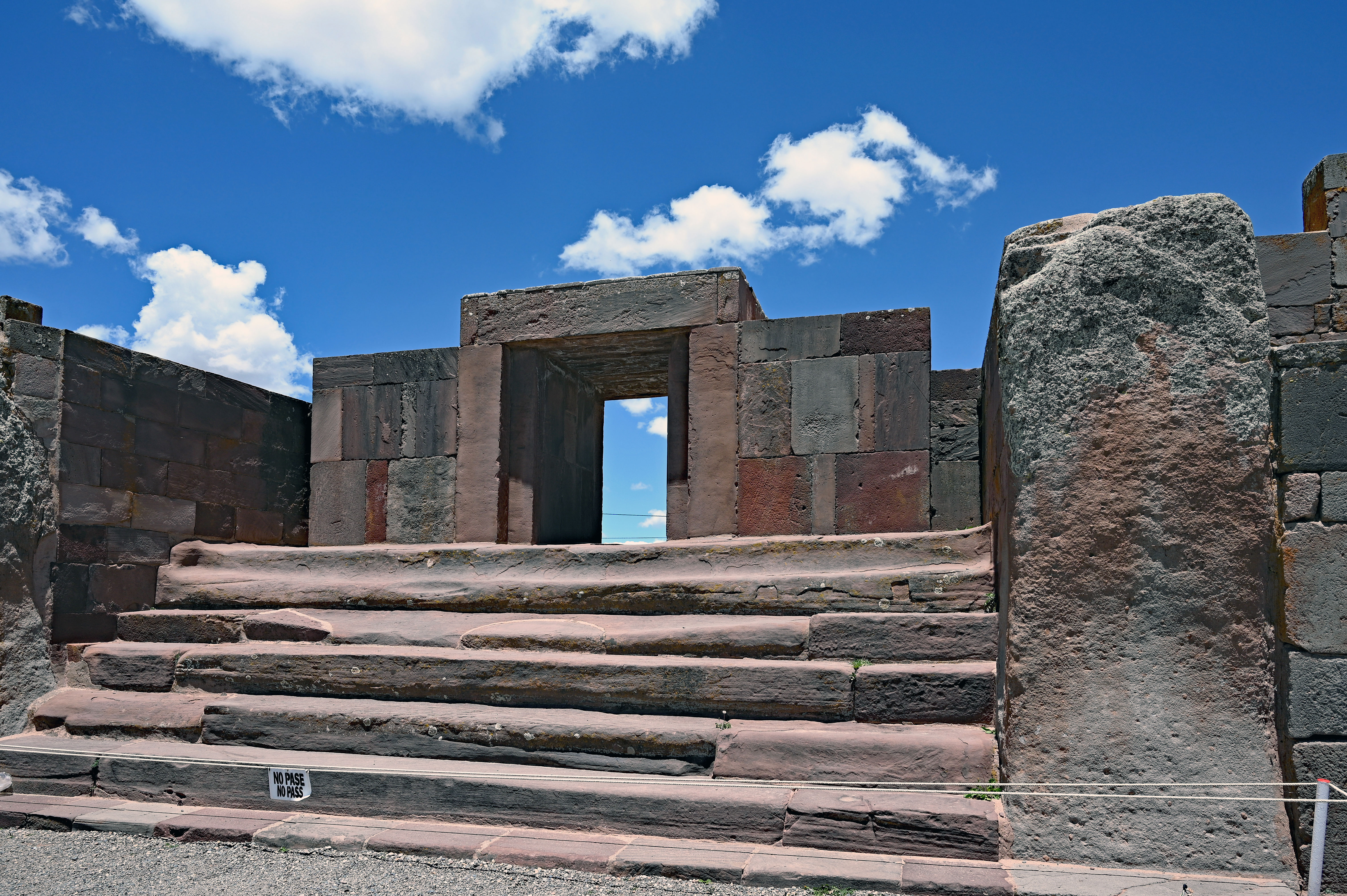
What will happen to civilisation when an impressive farming system and the social networks around a great city begin changing? Tiwanaku, near Lake Titicaca in present-day Bolivia, offers a powerful example. Its people built monumental stone architecture and participated in extensive Andean connections. For centuries, agricultural technologies helped communities produce food in a cold, high-altitude environment. Yet the ancient city eventually ceased functioning as it once had.
Did you know? Two important studies reach different conclusions about the role of drought. A 2020 lake-sediment reconstruction found evidence of prolonged dry conditions near the time of Tiwanaku’s transformation. A later Bayesian analysis of archaeological dates argues that the city’s social networks had already broken down before the major drought in its chronology. The honest historical lesson is not ‘drought destroyed Tiwanaku’. It is that the order of events matters.
This guide explains Tiwanaku’s raised-field farming, Andean climate, political and social change, competing archaeological explanations and future resilience scenarios. The historical evidence is separated from hypothetical futures; neither ancient fields nor modern cities have a predetermined destiny.
Tiwanaku civilisation: one-minute answers
| Question | Quick answer |
|---|---|
| Where was Tiwanaku? | On the Bolivian Altiplano near the southern shore of Lake Titicaca, about 3,850 metres above sea level. |
| When did it flourish? | The large centre was especially prominent between roughly 500 and 900 CE. |
| What was unusual about its farming? | Raised fields and channels helped people manage cold conditions, water and difficult agricultural soils. |
| Did drought cause its collapse? | Researchers disagree about timing and causal importance; recent studies challenge a simple drought-first explanation. |
| What happened to the people? | Communities and traditions continued in changed regional forms; a city’s decline does not mean all Andean people disappeared. |
| What is the future lesson? | Compare the timelines of environment, institutions and household decisions before predicting a collapse. |
A major city on the roof of the Andes
Tiwanaku stood in a high-altitude landscape that can appear austere to visitors: broad plains, cold nights and the enormous Lake Titicaca nearby. Yet it became a major ceremonial and political centre with carefully worked stone monuments, decorated ceramics and wide networks of influence.
The UNESCO World Heritage Centre describes structures including Kalasasaya, the Semi-Subterranean Temple, the Akapana platform and Pumapunku. Tiwanaku’s influence extended into Andean valleys and other regions, though the extent and nature of its political control are topics for research.
The monumental buildings are impressive. But they are only part of the civilisation. Farms, herders, potters, stonemasons, traders, ceremonial practitioners and ordinary families kept the social world operating. A temple could stand for centuries only because people continued producing food, coordinating labour and passing skills between generations.
The buildings also warn us against equating civilisation with one capital. Archaeological monuments survive more readily than conversations, institutions and daily household work, so they can distort the story if we focus on them alone.
Did you know? Raised fields were a remarkable solution to cold farming conditions
Near Lake Titicaca, ancient agricultural landscapes include raised planting platforms separated by canals, sometimes called suka kollus. These systems could help manage water and create microenvironments useful for growing crops at high elevations.
Water in surrounding channels can influence field temperature and moisture, potentially moderating some frost risks. Sediments and soils could also be managed through maintenance. The results depend on actual design and local conditions; not every field performed identically.
A 2024 study of field systems in the southern Peruvian Andes discusses how larger political arrangements and local organisations could support agricultural construction. It cautions that the presence of state-level authority does not prove every raised field was built by a central government.
That is a subtle lesson for modern engineering. A technological achievement is also a social achievement: someone must build, coordinate, use and maintain it. If an institution changes, the fate of its infrastructure depends on whether other organisations can continue that work.
The famous theory: prolonged drought damaged the system
One influential explanation links Tiwanaku’s decline to rainfall and water changes. Farming in the Altiplano is sensitive to precipitation, groundwater and temperature. Multi-year droughts may reduce agricultural productivity and increase the labour required to maintain useful fields.
A 2020 Quaternary Science Reviews study examined sediments at Lake Orurillo in Peru. It identified evidence of low lake levels between approximately 915 and 1025 CE and a wider arid interval extending into later centuries. The authors interpreted the record as supporting a contribution from prolonged drought to Tiwanaku’s regional transformation.
Another long-standing agroecological model argues that prolonged dryness could have damaged different agricultural systems in sequence. Lower-altitude irrigation and highland groundwater-dependent raised fields would not necessarily fail in the same year.
That explanation is scientifically interesting, but no lake core records what one ruler decided or why a particular family moved. A climate reconstruction identifies environmental conditions; human cause and effect still need independent archaeological evidence.
The newer challenge: did the city change before the drought?
A 2023 Science Advances study, The center cannot hold, used Bayesian statistical modelling to reassess radiocarbon dates from the Tiwanaku site. It reconstructed the ending of certain monumental, burial and residential activities.
The researchers estimated that major changes to permanent residence occurred around 1010 CE, with an uncertainty interval extending from approximately 970 to 1050 CE. Their results suggest a relatively rapid breakdown of some community practices and networks, accompanied by evidence of violence and changing ritual activity.
Importantly, this research interpreted the timing as preceding a major drying phase in the climate sequence the authors used. It therefore argued against drought as the initial direct explanation for the city’s collapse. The authors also stressed that the Tiwanaku site cannot represent every community associated with its cultural sphere.
Notice the central question: if a proposed cause comes after a proposed effect, can it really be the initiating cause? Archaeologists debate the dating of both drought and settlement change, so the disagreement is not entirely settled by one graph.
The useful takeaway is that the timeline must be tested before the story is told. A climate crisis can worsen a society’s condition without necessarily starting its political transformation.
What happens when social networks begin to fragment?
Imagine a large centre supported by families across neighbourhoods and regions. People coordinate ceremonies, exchange foods and goods, maintain common places and recognise particular sources of authority. Some relationships are local; others span great distances.
If those relationships lose their value or legitimacy, households may stop concentrating activity at the same centre. Some may move closer to alternative kinship networks or productive land. Ritual practice may shift. Skilled work might be reorganised. A great building can remain standing as the system around it becomes different.
This is one possible mechanism for thinking about Tiwanaku, not a proven account of every individual’s motives. Evidence of violence, reduced residential activity and later visits gives archaeologists clues, but no single find can reveal the complete political process.
A useful modern comparison is a transport hub or administrative centre. It can have perfectly usable buildings yet decline if organisations, businesses and people move elsewhere. Physical infrastructure is necessary for many activities, but it is not sufficient on its own.
Cause and effect: two competing sequences
Sequence A: environmental stress first
- Rainfall or water availability becomes less dependable for farms.
- Some growing areas produce less, or require more maintenance and labour.
- Fewer agricultural resources reach households and urban specialists.
- Conflicts, movement or institutional disputes become harder to resolve.
- Settlements and networks reorganise in response to compounding pressures.
This sequence is plausible under certain conditions. Its claim to describe Tiwanaku depends on matching its steps with independently dated evidence.
Sequence B: social change first
- Urban institutions, rituals and relationships lose influence or change for reasons not yet fully understood.
- Permanent occupation and organised monumental activity contract.
- Regional communities increasingly rely on other settlements or networks.
- A later dry interval creates additional pressure on already changed agricultural arrangements.
- Some useful traditions survive even when the former capital no longer has its old function.
Neither sequence is a universal law. They show how different causal orderings can produce similar-looking ruins. This is why archaeological dating and environmental chronology matter as much as dramatic theories.
Did Tiwanaku’s people simply vanish?
No. The ancient centre changed, but the histories of Andean peoples did not stop. Communities throughout the highlands continued farming, trading, creating art and maintaining traditions through later political periods.
It is especially important not to describe present-day Aymara communities as vanished or frozen representatives of a lost world. Contemporary Indigenous peoples have living cultures, histories and rights. Relationships between ancient material traditions and today’s communities require careful, locally informed research.
UNESCO’s account and Bolivia’s official Tiwanaku heritage administration document the archaeological site’s significance today. Conservation is part of the site’s ongoing story, not simply an effort to preserve evidence of disappearance.
What could happen to future civilisation? Four conditional scenarios
Scenario 1: farmers adapt before repeated water stress
Hypothetical. A highland region records drier growing seasons but uses local experience, soil measurements and well-designed irrigation to adjust cropping. Communities share maintenance tasks and create affordable reserves. Food security remains challenged, yet core services continue.
Scenario 2: institutions change while infrastructure remains
Hypothetical. A regional capital loses its administrative role. Buildings remain usable, but employment and investment move elsewhere. Some neighbourhoods adapt through new industries, education and regional transport. Others struggle unless investment follows residents’ needs.
Scenario 3: climatic stress and institutional conflict reinforce one another
Hypothetical. Drought arrives after years of disagreements over water allocation. Repairs are postponed, and some households cannot access alternatives. Environmental stress becomes more damaging because the agreements necessary for cooperation were already weak.
Scenario 4: communities reorganise beyond the old centre
Hypothetical. A large urban hub loses population while smaller towns gain activity. Skills, families and services spread across several places. Society changes its geography rather than universally ending; the transition may still involve painful inequality and lost opportunities.
These are causal exercises, not forecasts. They cannot tell us when modern civilisation will decline, and they do not imply that a particular country’s future resembles the ancient Andes.
How to read a claim that drought destroyed a civilisation
- Ask which archaeological site and geographic region the claim concerns.
- Check whether the climate evidence is local, regional or inferred from a remote proxy.
- Compare the date of the supposed pressure with the best estimate of residential and institutional change.
- Look for alternatives: political tensions, exchange, violence, migration and changes in ritual life.
- Ask which traditions and people continued after the most famous buildings lost their earlier function.
- Separate historical observations from computer-model assumptions.
- Prefer explanations that openly discuss uncertainty over claims that one event explains everything.
Frequently asked questions
What caused the Tiwanaku civilisation to collapse?
There is no universally agreed single cause. Climate stress is important in some regional models, while newer archaeological dating suggests that the main city’s social breakdown may have begun independently of—or before—a major drought.
When did Tiwanaku’s major urban centre decline?
A 2023 Bayesian radiocarbon study places significant loss of permanent residence around 1010 CE with a wider uncertainty range. Other studies use different archaeological and environmental indicators.
Were raised fields invented only by the Tiwanaku state?
Raised-field agriculture has varied histories across the Lake Titicaca region. The technology should not automatically be attributed to a single central ruler or a single period.
Did Andean cultures disappear afterward?
No. People, skills and cultural traditions continued and changed in later societies across the region.
What is the biggest lesson for the future?
Test the timing of causes, protect farmers and vital services, and plan for institutional as well as environmental change. A collapsed capital is not the whole history of a culture.
Continue exploring civilisation
- When Monsoons Shift: Indus Valley Cities — another debate about rainfall and urban transformation.
- When Water Systems Fail: Lessons from Angkor — climate, networks and maintenance.
- When Cities Empty: Cahokia and Urban Change.
- Everything About Bolivia — geography, history and living communities.
- Civilisation | The Beginner’s Guide.
Sources and further reading
- UNESCO World Heritage Centre — Tiwanaku: Spiritual and Political Centre of the Tiwanaku Culture, site geography and monuments.
- The center cannot hold: A Bayesian chronology for the collapse of Tiwanaku, Science Advances (2023), chronology and social-network interpretation.
- Drought and the collapse of the Tiwanaku Civilization: New evidence from Lake Orurillo, Quaternary Science Reviews (2020), lake proxies.
- Collapse Studies in Archaeology from 2012 to 2023, Journal of Archaeological Research (2024), comparative historiography and competing explanations.
- Locating field systems in the southern Peruvian Andes (2024), raised-field archaeology and labour organisation.
- Tiwanaku Kalasasaya doorway photograph by P. Hughes, 2025, CC BY 4.0.

Reviewed 24 October 2026. The featured photograph shows the surviving Kalasasaya temple entrance, not the city’s appearance around 1000 CE. Photo: P. Hughes (Indies1), CC BY 4.0, unaltered. The competing drought and archaeology interpretations are intentionally distinguished from hypothetical modern scenarios.