
Small Group Tutorials
Here to help students catch up, keep up, and move ahead. Book a consultation here.
Project Type: Primary Mathematics Tuition
-
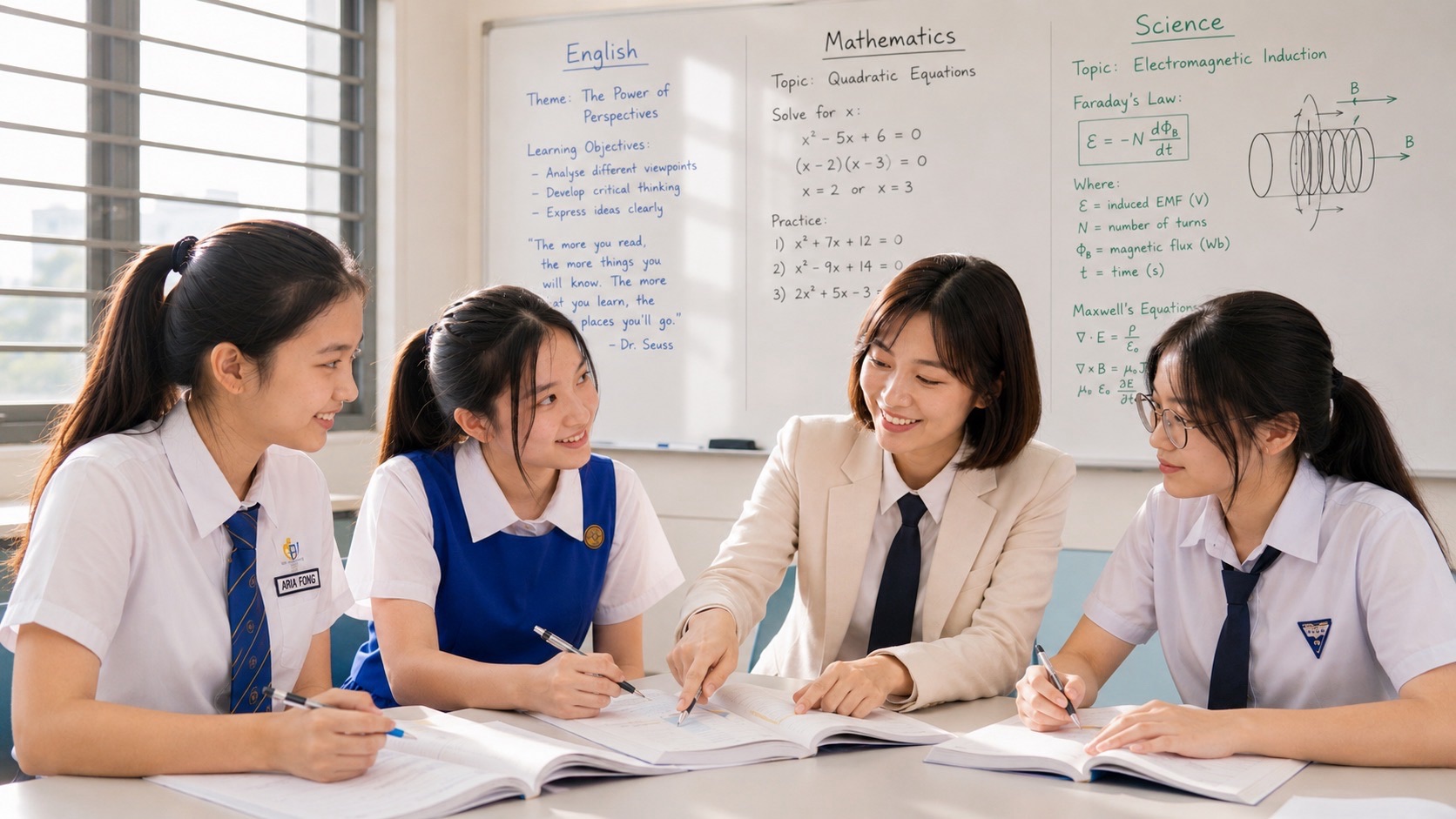
When to Start Mathematics Tuition for Your Child in Clementi
Parents in Clementi may consider Mathematics tuition for their child when they repeatedly struggle with concepts, require excessive help, or are facing significant transitions. It’s crucial to evaluate whether difficulties are temporary or persistent and to assess the student’s independence in addressing mistakes. Tuition should facilitate understanding without fostering dependency.
-
How Mathematics Tuition for Clementi Improves School Performance | eduKateSG
Mathematics tuition in Clementi enhances students’ academic performance by addressing foundational gaps, promoting clear understanding, improving homework quality, and preparing for assessments. By utilizing focused teaching methods and small class sizes, students become more independent, confident, and capable of tackling various mathematical challenges, ultimately leading to better examination results.
-

Fastest Way to Improve Mathematics Scores in Clementi | eduKateSG
To improve Mathematics scores in Clementi, identify the specific areas where students lose marks, repair foundational weaknesses, and facilitate independent practice. The focus should be on understanding and connecting mathematical concepts rather than increasing volume of work. Tailored interventions based on diagnosis are essential for effective learning and long-term retention.
-
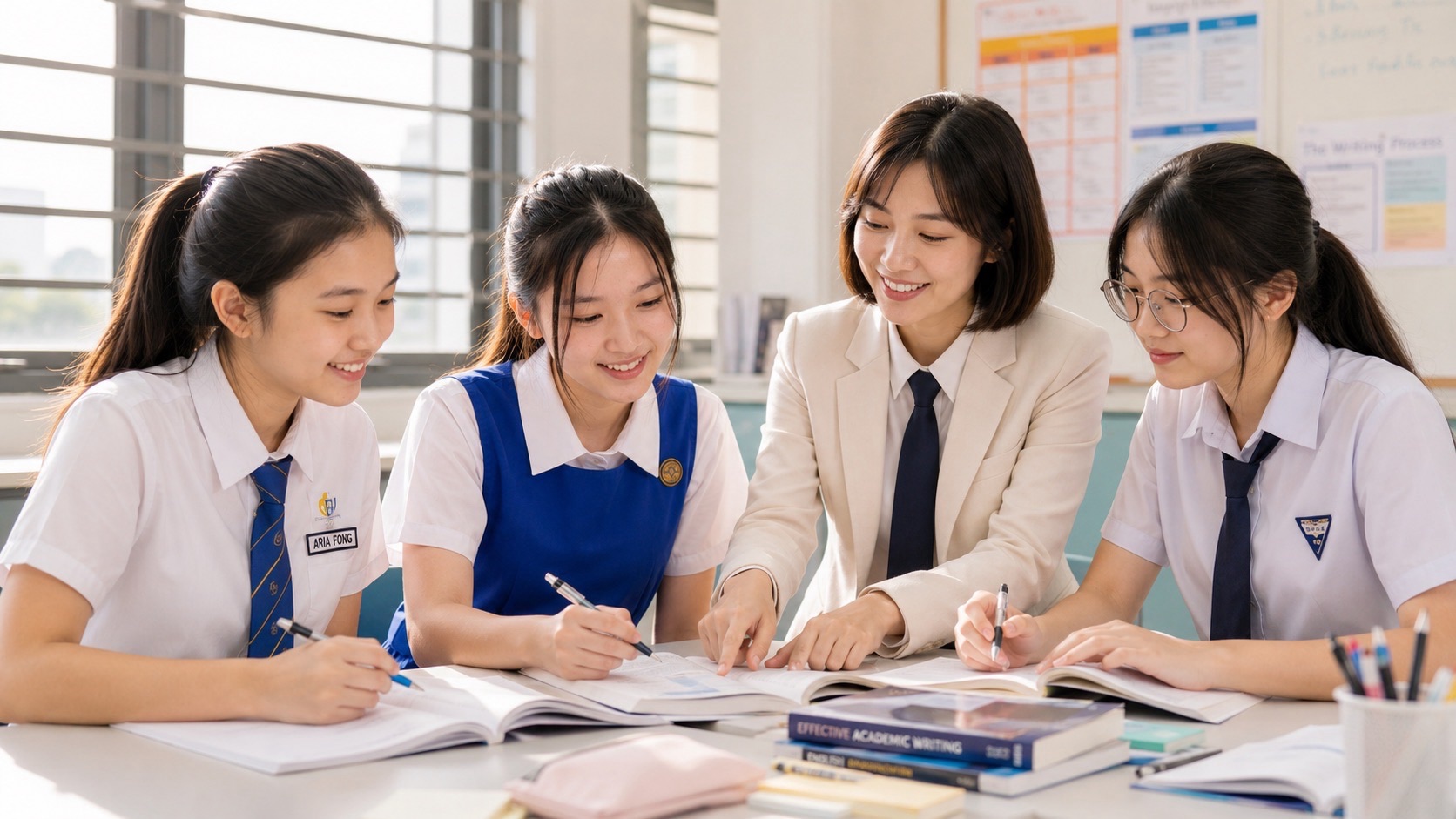
Why Small-Group Mathematics Tuition in Clementi Works | eduKateSG
Focused 3-pax Mathematics tuition benefits Clementi students by enabling precise correction, strong explanations, and enhanced independent practice. This small group setting allows tutors to closely monitor each student’s unique learning processes, ensuring effective diagnosis of misunderstandings. Ultimately, it fosters independent thinking while maintaining necessary support for mathematical skill development.
-
Mathematics Tuition Bukit Batok | Primary & Secondary Math
eduKateSG offers tailored Mathematics tuition for Bukit Batok students, focusing on small 3-pax classes that address foundational weaknesses and facilitate understanding across various levels, including PSLE preparation. The approach emphasizes individual needs, ensuring students gain confidence and master concepts through structured, interactive learning, ultimately improving academic performance.
-

Mathematics Tuition Choa Chu Kang | Primary & Secondary Math | eduKateSG
eduKateSG offers specialized mathematics tuition for Choa Chu Kang students in small 3-pax classes, focusing on diagnosing individual learning needs and reinforcing mathematical foundations. The program prepares students for PSLE and secondary examinations through tailored instruction that emphasizes understanding concepts, developing methods, and improving independent problem-solving skills.
-
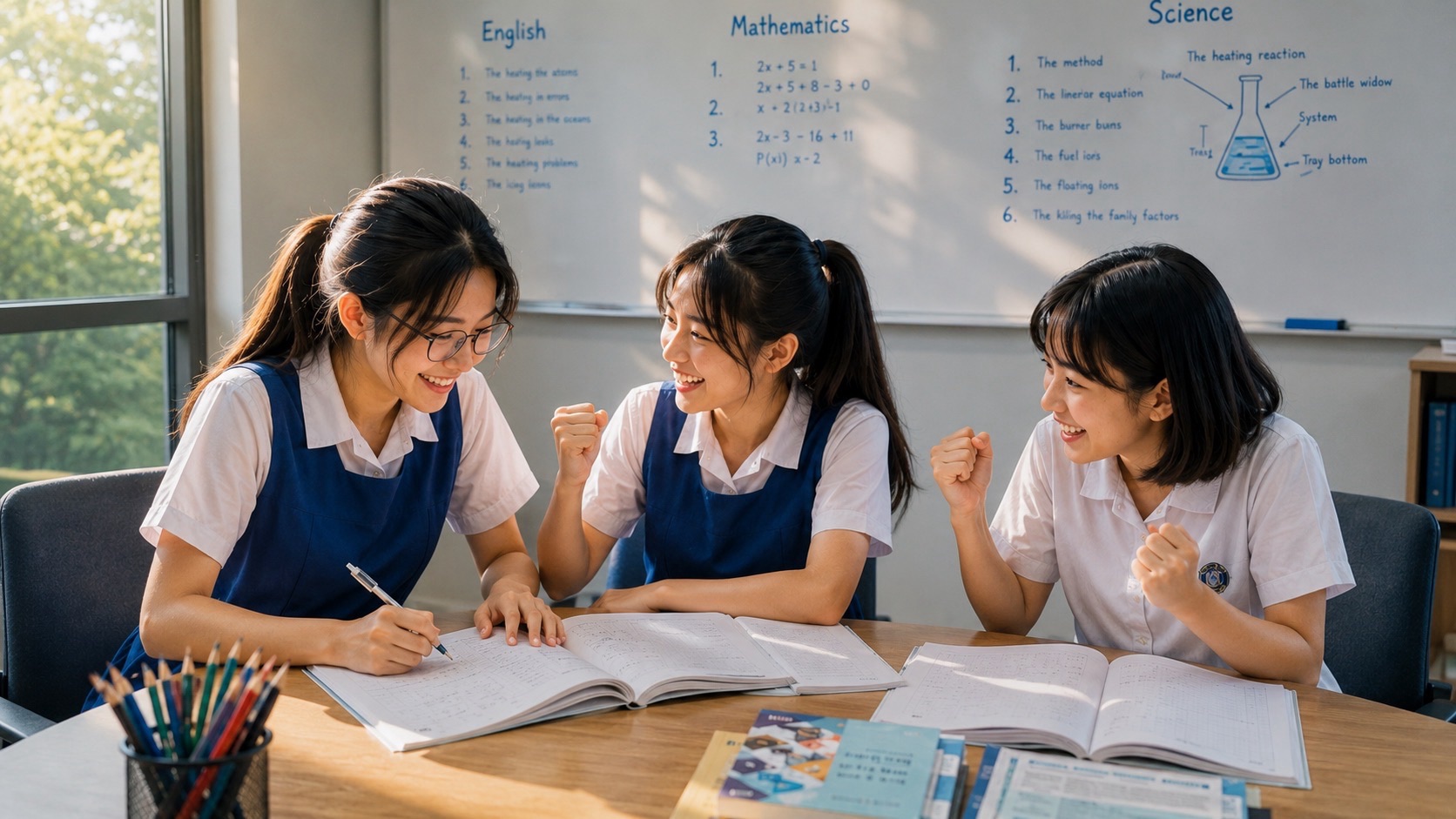
Mathematics Tutor Clementi | Primary, Secondary, E-Math & A-Math
EduKateSG offers specialized Mathematics tutoring for Clementi students, focusing on diagnosing learning gaps and building foundational knowledge for PSLE, G1-G3, E-Math, and A-Math in small, three-student classes. The approach emphasizes understanding concepts, correcting errors, and developing independent problem-solving skills, rather than merely providing answers.
-
Mathematics Tuition Clementi | Primary & Secondary Math | eduKateSG
eduKateSG offers focused 3-pax mathematics tuition for students in Clementi, addressing individual weaknesses to build confidence and performance in mathematics. The program helps identify issues with knowledge, understanding, and execution, aiming for independent thought and problem-solving. It serves primary and secondary learners, including PSLE and E-Math/A-Math preparation.
-

The Subgroups of Mathematics
Mathematics encompasses various subgroups including number, arithmetic, algebra, geometry, statistics, and calculus, each addressing different aspects like quantity, calculation, and patterns. Understanding these subgroups is essential for effective problem-solving and applying mathematical concepts to real-world situations. Mathematics operates as a versatile system that adapts to different contexts.
-

Primary 6 Mathematics Tuition | From PSLE to Secondary 1 Mathematics
Primary 6 Mathematics tuition is essential for preparing students for both the PSLE and the challenges of Secondary 1. It focuses not only on performance in primary assessments but also on building a strong foundation in algebra, geometry, and reasoning, ensuring students are ready for more abstract mathematical concepts in secondary school.
-

Primary 6 Mathematics | Paper 2 Is the Thinking Paper
The article outlines the complexities of Primary 6 Mathematics Paper 2 in the PSLE, focusing on the need for deep comprehension, structured problem-solving, and emotional control. It emphasizes the importance of careful reading, identifying question structures, and clear working methods to enhance student performance in multi-step problems.
-

Primary 6 Mathematics Tuition | The PSLE Year and the Final Primary Floor
Primary 6 Mathematics is a crucial consolidation year leading to the PSLE, where students integrate various math concepts under exam pressure. Effective tuition focuses on diagnosing weaknesses, emphasizing high-impact topics, and preparing students for both the PSLE and Secondary 1, while nurturing problem-solving skills and confidence.
Primary Mathematics Tuition by eduKateSG is a Singapore tuition branch that explains Primary Mathematics as a system of numbers, operations, patterns, relationships, models, units, geometry, measurement, data, reasoning, problem-solving, accuracy, examination control and confidence.
This project studies Primary Mathematics not only as sums, worksheets, formulas, model drawing or PSLE preparation, but as the full thinking system a child uses to understand quantity, compare values, organise information, follow logic, solve problems and make sense of the world through numbers.
In Singapore, Primary Mathematics is not just about calculation.
It is about understanding.
It is about knowing what the question is really asking.
It is about knowing which information matters.
It is about choosing the correct method.
It is about showing working clearly.
It is about checking whether the answer makes sense.
Across the Primary Mathematics Tuition articles, eduKateSG explores how children build Mathematics from Primary 1 to Primary 6, how early number sense develops, how arithmetic becomes fluency, how fractions and decimals become relationship thinking, how word problems become structured reasoning, and how PSLE Mathematics prepares students for the more abstract demands of Secondary Mathematics.
Primary Mathematics is rarely just one topic problem.
It is a layered process involving number sense, place value, addition, subtraction, multiplication, division, fractions, decimals, percentage, ratio, rate, measurement, geometry, angles, area, volume, data interpretation, algebraic thinking, model drawing, heuristics, working accuracy, time management and emotional control under examination pressure.
A child may appear to struggle with word problems, but the real gap may be weak multiplication.
A child may appear to struggle with fractions, but the real gap may be poor part-whole understanding.
A child may appear to struggle with ratio, but the real gap may be weak comparison thinking.
A child may appear to make careless mistakes, but the real gap may be poor working discipline.
A child may appear to be slow, but the real gap may be weak number fluency.
This means Primary Mathematics tuition must begin with diagnosis.
Not every Mathematics mistake is the same mistake. Some children do not understand the concept. Some understand the concept but cannot identify the question type. Some know the method but copy numbers wrongly. Some can solve direct questions but cannot manage multi-step problems. Some rush. Some freeze. Some skip working. Some do not know how to check.
Good Primary Mathematics tuition helps parents see the difference.
It should not simply add more sums.
It should make the mathematical path clearer.
At eduKateSG, we help students catch up, keep up and move ahead by identifying where the real Mathematics gap is before more practice becomes more repetition. A child improves when weak foundations are rebuilt, when mistakes are corrected properly, when methods are explained clearly, and when good working habits are practised until they become stable.
This project also studies the long Primary Mathematics corridor.
Primary 1 and Primary 2 are not merely easy years. They are the years where number sense, place value, basic operations, money, time, shapes, measurement and simple data begin to form. These early ideas become the floor on which later Mathematics stands.
Primary 3 and Primary 4 are where Mathematics starts to become heavier. Multiplication and division deepen. Fractions become more serious. Decimals appear. Measurement becomes more precise. Geometry becomes more structured. Word problems begin to require careful reading, diagram use and multi-step thinking.
Primary 5 and Primary 6 are where Mathematics becomes a relationship engine. Fractions, ratio, percentage, rate, geometry, algebraic thinking and problem-solving strategies begin to connect. The child is no longer doing isolated topics. The child must learn how topics talk to one another.
This is where many marks leak.
Not because the child knows nothing.
But because the child cannot connect enough things quickly and accurately under pressure.
Primary Mathematics Tuition by eduKateSG also studies the PSLE problem.
PSLE Mathematics does not only test whether a child can calculate. It tests whether the child can understand, interpret, reason, choose strategies, organise working, avoid traps, manage time and stay calm when a question looks unfamiliar.
Paper 1 rewards fluency, accuracy and clean fundamentals.
Paper 2 exposes deeper thinking.
Paper 2 is where children must read carefully, identify hidden relationships, build a plan, show method, manage multi-step logic and hold their nerve when the answer is not obvious at first glance.
This is why Primary Mathematics tuition must train both skill and control.
The child needs to know the topic.
But the child also needs to know what to do next.
Primary Mathematics Tuition by eduKateSG studies the parent’s problem too.
Parents often see marks, careless mistakes, blank spaces and unfinished papers first. But they may not see the hidden machinery underneath. A child may be losing marks because of weak foundations, poor times-table fluency, confused fractions, careless unit conversion, weak model drawing, poor question reading, slow working, poor checking habits or panic under time pressure.
These problems may look similar from the outside.
They are not similar on the inside.
This is why eduKateSG treats Primary Mathematics as a diagnosis problem before it becomes a practice problem.
More practice helps only when the correction is clear.
Doing ten more worksheets may not solve the problem if the child is repeating the same broken method ten more times.
Good Mathematics tuition repairs the method.
It repairs the thinking.
It repairs the working habit.
It repairs the confidence to begin.
Primary Mathematics is also a language.
Numbers speak through place value.
Fractions speak through parts and wholes.
Ratio speaks through comparison.
Percentage speaks through proportion.
Geometry speaks through space and structure.
Data speaks through patterns.
Algebra speaks through the unknown.
Word problems speak through relationships hidden inside language.
A child who learns to read this language properly begins to see Mathematics differently. Questions become less random. Methods become less mysterious. Working becomes more organised. Mistakes become easier to spot. Confidence becomes more realistic.
This project connects Primary Mathematics to Singapore’s education environment, where students are expected to move from concrete number work into increasingly abstract reasoning, from lower-primary fluency into upper-primary problem-solving, and from PSLE preparation into Secondary Mathematics readiness.
A strong Primary Mathematics foundation matters because Secondary Mathematics does not wait patiently for weak foundations to recover.
If number sense is weak, algebra becomes harder.
If fractions are weak, ratio becomes harder.
If ratio is weak, percentage becomes harder.
If geometry is weak, mensuration becomes harder.
If working habits are weak, examination performance becomes unstable.
Mathematics compounds.
Small gaps do not stay small.
They travel.
Primary Mathematics Tuition by eduKateSG connects Mathematics learning to our wider EducationOS, MathOS, TuitionOS, ParentOS and CivilisationOS framework. Mathematics is not only an examination subject. It is one of the ways civilisation teaches children to reason, measure, compare, build, plan, predict, optimise and solve problems under constraint.
When a child gains control of Mathematics, the child gains more than marks.
The child gains a clearer way to think.
This does not mean every child will love Mathematics immediately.
Many children fear it first.
They fear long questions.
They fear fractions.
They fear model drawing.
They fear Paper 2.
They fear getting stuck.
They fear not knowing where to begin.
The solution is not panic.
The solution is structure.
We rebuild number sense carefully.
We strengthen arithmetic fluency.
We teach students how concepts connect.
We show them how to read word problems properly.
We train them to identify relationships.
We help them draw models with purpose.
We teach them to show working clearly.
We correct careless habits before they become permanent.
We help students understand that difficult questions can be broken down.
Primary Mathematics tuition should repair confusion.
It should repair weak foundations.
It should repair repeated careless mistakes.
It should repair poor question reading.
It should repair poor working habits.
It should repair fear of word problems.
It should repair the belief that Mathematics improvement is random.
Mathematics can be taught clearly. Number sense can be strengthened. Fractions can be understood. Ratio can be organised. Geometry can be visualised. Problem-solving can be trained. Working habits can be improved. Examination confidence can be built.
Primary Mathematics Tuition by eduKateSG is a long-form Singapore tuition knowledge branch for parents who want to understand how Primary Mathematics works, why children struggle, where marks leak, how foundations are rebuilt, how PSLE preparation develops across the primary years, and why clear mathematical thinking matters before pressure takes over.
This branch is for families who want Mathematics tuition that sees the child properly.
Not just the marks.
Not just the careless mistake.
Not just the next worksheet.
But the real mathematical system underneath.
Primary Mathematics Tuition by eduKateSG explains Mathematics as a system of number sense, arithmetic, fractions, ratio, percentage, geometry, measurement, data, models, heuristics, working accuracy, PSLE preparation, parent clarity, student confidence and long-term learning repair.