
How does Singapore prepare for emergencies? SCDF, Police, public-warning sirens, civil defence shelters, trained community responders and building-safety rules form different parts of one response network. The goal is to warn people, protect them, deliver professional help and keep essential services working when an ordinary day is disrupted. A reliable emergency system begins before the incident, with correct information and practical preparation.
This guide explains when to call 995 or 999, what Singapore’s Public Warning System means, how SG Alert is being introduced in 2026, what household shelters are for, why Ready Bags and AEDs matter, and how families and institutions should prepare for floods, fires and other emergencies. It connects existing eduKateSG How Singapore Connects specialist articles so readers can follow the complete chain without learning every government organisation chart.
The key question is what should a person do, who owns the next step, and which official instruction is valid for this particular hazard? A serious fire, a suspicious public-security event and a routine broken footpath require different responses. Being prepared means recognising those differences early.
Quick emergency reference: what does each part do?
- 995: SCDF emergency fire, rescue and medical response
- 999: Police emergency assistance; SMS 70999 when unsafe to speak
- Public Warning System: siren signals directing people to seek protection or listen for official information
- SG Alert: developing cell-broadcast alert system with phased mobile-operator rollout
- Civil defence shelters: designated protective spaces governed by technical requirements
- Ready Bag and household planning: practical preparations for relevant emergencies
- Community responders: appropriately trained people supporting time-critical response within safe limits
- Continuity planning: safe procedures for hospitals, utilities, transport and communication infrastructure
SCDF’s Roles and Functions page explains its warning, protection, rescue and command systems. Its SG Alert page describes current 2026 deployment rather than an already universal service on every mobile operator.
1. Begin with a fire alarm in an apartment block
A resident hears an alarm and smells smoke in a common area. The immediate concern is not which ministry owns the building. It is getting people away from danger, notifying the correct emergency service and avoiding unsafe movement through smoke.
An emergency response involves the caller, an operations centre, trained responders, the building layout, fire-safety equipment and other people nearby. Each component provides information or action that the next component needs.
The chain of responsibilities is explained in Emergency Calls, Dispatch and First Response. Singapore’s system becomes understandable when the event is traced from the first warning to safe recovery.
2. What does SCDF do?
The Singapore Civil Defence Force is the national authority for civil emergencies, responsible for firefighting, rescue, emergency medical services and relevant fire-safety and shelter matters. Its operational work also includes preparation for different kinds of civil emergencies.
SCDF describes four supporting systems: warning, protection, rescue, and command, control and communications. These are not four competing organisations; they are functions that must work together when people need help.
See SCDF — Roles and Functions. Police and other authorities have separate responsibilities that may overlap during serious incidents.
3. When should someone call 995?
995 is SCDF’s emergency number for fires, rescue incidents and emergency medical assistance. The caller should describe the location precisely and the nature of the emergency, then follow instructions from the operator.
A complete location may include the road, HDB block, unit, building or nearby landmark. Knowing that someone is injured is important; knowing where emergency responders can reach them is just as important.
Use SCDF — Emergency Medical Services for official guidance. Do not delay an emergency call because an online booking form or ordinary municipal reporting app looks convenient.
4. When should someone call 999?
999 reaches the Singapore Police for urgent police assistance. Immediate threats to personal safety, serious crimes or dangerous public-security incidents may call for Police response, while medical and fire emergencies are handled through SCDF’s 995 service.
Some incidents need both organisations. For example, a road collision could involve police management and SCDF rescue or medical assistance. The agencies coordinate according to their procedures rather than requiring the public to solve operational command themselves.
The official Police contact page also lists SMS 70999 when immediate police assistance is needed but calling is unsafe.
5. What if someone cannot speak during a police emergency?
Police SMS 70999 is intended for emergencies where it is unsafe to make a voice call or the person cannot speak. It is not a general substitute for ordinary police enquiries.
A useful message gives the location and briefly describes the emergency so operators can assess and ask relevant follow-up questions. For normal emergencies where speaking is possible, Police advise calling 999 for more direct communication.
See SPF — SMS 70999. Users should not send urgent details to unverified social-media accounts.
6. How do emergency calls reach dispatch teams?
An emergency call reaches an operations centre, where the operator needs to identify what happened, where it happened and what response may be appropriate. Dispatch systems, communications and field responders then coordinate the resources sent to the location.
An accurate caller description can save time, but people are not expected to perform a professional diagnosis. Give observable facts and answer the operator’s questions as clearly as possible.
The detailed operational explanation is Emergency Calls, Dispatch and First Response.
7. How do responders find the exact location?
Singapore’s addresses and postal codes help narrow a location, but the last step may require knowing the correct entrance, staircase, lift lobby or roadside access. A large building can have several points that are not equally usable by emergency vehicles.
Where necessary, operators may request landmarks or more detail. A person should not assume a generic map pin always identifies the correct emergency entrance.
Read OneMap, Addresses and Location Intelligence and Roads, Expressways and Junctions for the physical network.
8. What is the Emergency Video System?
SPF and SCDF can request a live video stream from certain emergency callers when operators assess that footage would help. The system is not a requirement for every call and does not mean the public should start filming at the expense of personal safety.
The operator obtains consent and provides instructions. The official system specifies that callers are not asked to enter passwords or other credentials into the streaming link.
Read Emergency Video Systems. An unsolicited message containing a similar-looking link should not be trusted outside the verified emergency call.
9. What is Singapore’s Public Warning System?
SCDF’s Public Warning System uses sirens to alert the public to major threats, including certain military, natural and man-made emergencies. The sound is a prompt to take appropriate action, not an invitation to visit the nearest landmark for a better view.
The system includes distinguishable signals for Alarm, All Clear and Important Message. Understanding the differences before an incident gives residents a better chance to respond promptly and accurately.
The authoritative explanation, including audio samples and meanings, is SCDF — Public Warning System.
10. What do the three Public Warning signals mean?
The Alarm signal warns that a military attack such as air raid or shelling is imminent and indicates moving to appropriate shelter immediately. The All Clear signal indicates the threat has ended and people may leave shelter when safe.
The Important Message signal asks the public to listen to official radio or television broadcasts for instructions. It is not the same as automatically ordering everyone to enter a shelter.
SCDF explains each signal in its Public Warning System guide. Follow the official meaning rather than rely on a neighbour’s recollection of the siren.
11. Why are sirens sounded in February and September?
SCDF conducts scheduled Public Warning System exercises to keep residents familiar with the Important Message signal. Its standing guidance identifies 15 February and 15 September at 6:20pm for islandwide soundings.
The soundings are intended for awareness and do not themselves indicate an actual emergency. Residents should still learn how the sound differs from the other warning signals.
Families can use the published examples to discuss how they would receive a verified message. The exercise teaches preparedness before a crisis rather than leaving first-time recognition until lives are at stake.
12. What is SG Alert?
SG Alert is a developing cell-broadcast emergency notification system intended to send urgent messages to suitable mobile phones in an affected geographic area. It complements sirens, broadcast media, the SGSecure app and other official communications.
SCDF’s implementation information describes a phased rollout: testing began with Singtel in May 2026, with other operators scheduled to follow. A plan for future network coverage should not be reported as universal live capability at every point today.
Read SCDF — SG Alert for the actual rollout and supported devices.
13. Why cell broadcast is different from a normal SMS
A cell-broadcast emergency alert can be sent to suitable mobile phones in a defined area without using each resident’s personal phone number in the same way an ordinary targeted text does. The system is designed for fast emergency outreach.
That does not mean every phone always receives every test or message. Operator deployment, device support, location and other conditions can affect receipt while rollout is ongoing.
SCDF’s SG Alert explanation distinguishes the technology and its relationship with existing public-warning channels.
14. What is a household or storey shelter?
Civil Defence shelters are designed according to specified technical requirements for use during certain threats. Some homes contain household shelters while some buildings provide storey or other approved shelter arrangements.
A household shelter is not simply a room the owner can remodel freely. Permitted and prohibited works matter because changes could affect its protective performance.
SCDF publishes shelter rules and technical guidance. For a real incident, follow official instructions on whether and where to shelter.
15. Is every HDB void deck an emergency shelter?
No. An open void deck may be useful for community activity or as part of a building’s normal circulation, but that does not automatically give it the protective function of an approved civil defence shelter.
The correct shelter depends on the threat, the building and SCDF’s directions. Residents should know relevant locations and avoid assuming that any enclosed room provides equivalent protection.
This distinction is especially important when ordinary neighbourhood architecture is being discussed casually as ‘safe’. Purpose-built protection, evacuation and normal community space are different systems.
16. What is a Ready Bag?
A Ready Bag contains practical essentials selected for a household’s emergency needs so people can respond more quickly if they are instructed to move or evacuate. The exact contents should fit the individuals involved, including relevant personal documents and essential supplies.
A bag should not encourage residents to enter a dangerous area to collect possessions during a fire. Personal safety and instructions from emergency responders come first.
SCDF provides official preparedness material in Fire Safety and Emergency Advisories. Families can review and maintain preparedness items instead of treating the bag as a one-time purchase.
17. How should people evacuate a building during a fire?
SCDF’s fire-safety guidance emphasises alerting others, activating the alarm when appropriate, contacting 995 and using designated safe routes such as staircases rather than lifts in a fire evacuation.
The right action depends on immediate conditions and official building procedures. Residents should not enter smoke, attempt unsafe rescues or assume that a corridor is passable without assessing obvious danger.
Use SCDF’s fire advisories for authoritative instructions. The important lesson is that the route to safety matters as much as the alarm itself.
18. Why do buildings have fire-safety equipment?
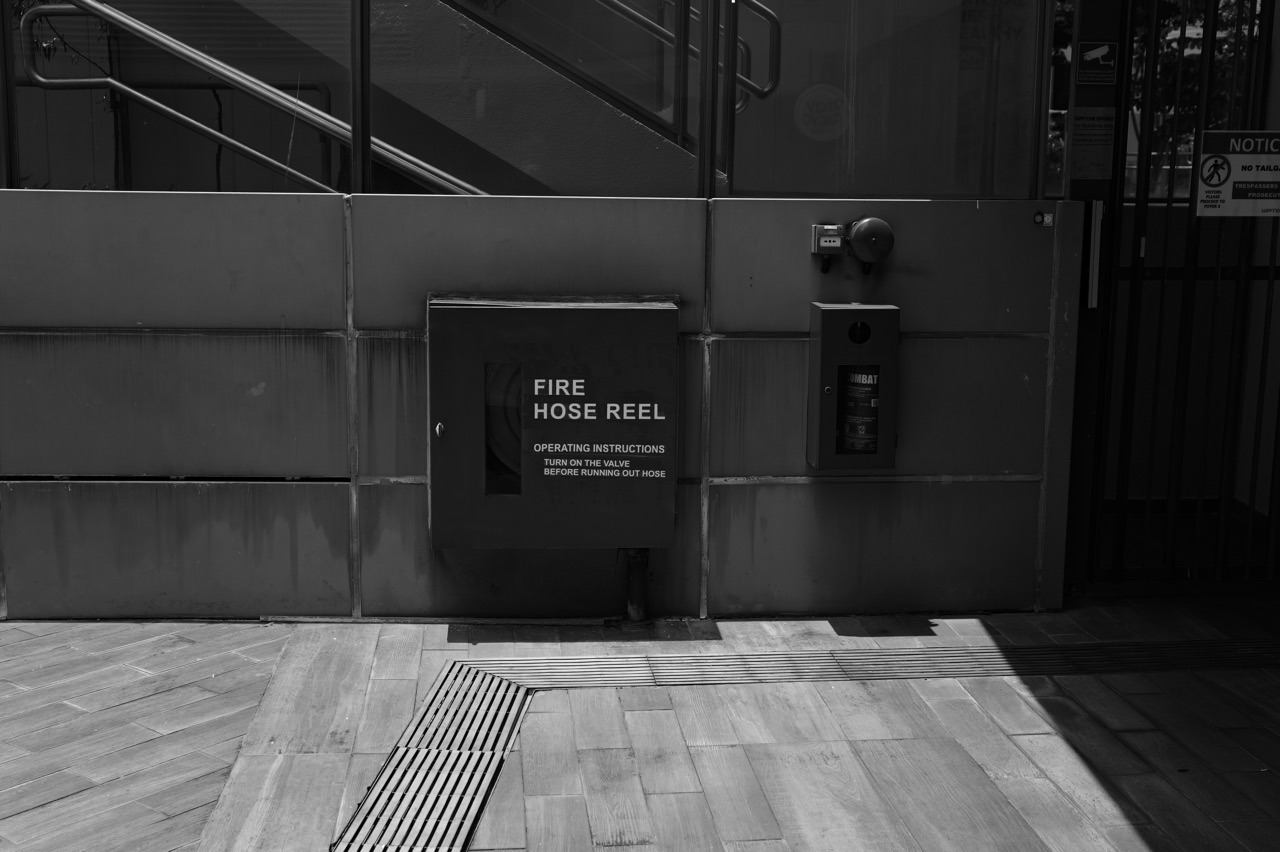
Smoke detectors, alarms, fire doors, extinguishers, hose reels and other systems can support warning, containment and response when properly installed and maintained under applicable requirements.
These devices have different purposes. An alarm does not extinguish a fire; a fire door does not substitute for a safe exit; an extinguisher should not tempt untrained occupants to fight a dangerous blaze.
Building owners and managers have responsibilities for relevant inspections and maintenance. Read Structural Inspections and Building Safety for another part of maintaining safe occupied buildings.
19. What is myResponder?
SCDF’s myResponder application helps trained community first responders receive eligible notifications and may assist with nearby emergencies such as cardiac arrests or minor fires within the programme’s scope.
Training and personal safety matter. Volunteers should not assume that receiving a notification authorises them to take on tasks beyond their competence or place themselves in danger.
SCDF’s myResponder guide explains available functions, AED location assistance and how professional responders take over when they arrive.
20. Can ordinary residents learn life-saving skills?
SCDF’s Responders Plus Programme offers emergency preparedness education including first aid, CPR-AED and firefighting fundamentals. The programme includes online and practical components to develop relevant skills.
Knowing basic techniques may help a community during the critical period before professional assistance reaches a scene, but training does not make an ordinary resident a substitute for a paramedic or firefighter.
Read SCDF — Responders Plus Programme for current enrolment and training arrangements.
21. How do AEDs fit into emergency response?
An automated external defibrillator, or AED, can be part of responding to certain cardiac emergencies. Community responders and trained members of the public may help by locating and applying a suitable device while following instructions and emergency-services guidance.
An AED is not a treatment for every medical emergency. The incident must be assessed, emergency help requested and appropriate actions taken as directed or trained.
SCDF’s myResponder information explains AED-location and response support. This connects to How Singapore’s Healthcare System Works.
22. How should Singapore prepare for floods?
Intense rain can cause local flooding despite an extensive drainage network. A practical response includes official warnings, knowing safe alternative routes and avoiding floodwater or barricaded roads.
PUB’s drainage operations, weather information, transport authorities and emergency services have different responsibilities. A weather forecast is not the same as a live flood warning.
Use Floods and Rising Seas and Flood Sensors and Operations to understand the hazard-specific system.
23. What about hazardous-material incidents?
An industrial or transport-related chemical incident can create risks that differ from a building fire or normal bad weather. The correct response may involve avoiding an area, sheltering in place or following a controlled evacuation, depending on professional assessment.
Residents should not approach a spill to identify a substance by smell, film it for social media or make assumptions about safe exposure. Public agencies issue instructions suited to the actual materials and conditions.
SCDF publishes hazardous-material and other man-made emergency resources within its advisories.
24. Why essential services need backup plans
Emergency preparedness also concerns services that keep working when a component fails: electricity, water, communications, transport and healthcare. These systems have different technical risks and continuity arrangements.
A hospital may need backup power and protected equipment, while public transport needs safe shutdown and alternative passenger instructions. A household may need simple arrangements for food, medicine and communications.
Read Electricity Supply, Water, Electricity and Food and Digital Infrastructure.
25. How does Total Defence relate to civil emergencies?
Singapore’s Total Defence concept addresses broader resilience through six pillars, including military, civil, economic, social, digital and psychological defence. It emphasises that a national crisis affects more than one professional agency.
Total Defence is not synonymous with every police, ambulance or firefighting call. It is a wider framework for preparation, continuity and community responsibility during serious threats or disruptions.
The dedicated national overview is How Singapore Defends Itself: SAF and Total Defence.
26. What can a family do before an emergency?
Agree on simple communication and meeting arrangements suited to the household. Know emergency contacts, understand the home’s evacuation routes, keep essential information available and pay attention to health, mobility or caregiver needs.
Prepare without assuming that one plan covers every hazard. The correct response to a household fire may be evacuation, while another incident may require following official instructions to stay sheltered.
A short plan rehearsed occasionally is more useful than a complex document no one knows how to use. SCDF’s emergency handbook and advisories give the official starting material.
27. Why old emergency videos and messages can mislead
A video may show a genuine incident but from another country or year. Sharing it as a current Singapore event can create panic and divert attention from relevant official instructions.
Verify the source, location and date before forwarding. In an actual emergency, first protect yourself and communicate with the appropriate responders; creating viral footage is not a substitute for help.
The digital-safety relationship is Cybersecurity, Scam Alerts and Digital Trust.
28. What is the difference between an emergency and a municipal complaint?
A damaged walkway may need maintenance but may not require a 999 or 995 emergency response if no one is in immediate danger. Conversely, a fire, serious medical incident or immediate violent threat should not be submitted only through a routine feedback application.
OneService is intended for ordinary municipal concerns, while professional emergency numbers serve urgent safety needs. Confusing the two can delay an appropriate response.
See OneService and Municipal Repairs and OneService App FAQs.
29. A worked case: one incident, many responders
Imagine a traffic collision near a crowded interchange. A witness reports the location and what has happened. Appropriate responders may manage rescue, emergency medical needs, road safety and investigation, depending on the actual incident.
Nearby commuters need safe information and alternative routes. The same event may affect deliveries and public transport while requiring professional teams to secure the scene.
Once the immediate danger passes, road management, repairs and formal review can continue. This is why emergency response is a chain rather than one phone number magically solving every downstream problem.
30. How do we judge emergency preparedness?
Preparedness is not measured only by the number of emergency vehicles or sirens. It includes accurate reporting, appropriate response, safe buildings, trained people, resilient communications, public understanding and recovery.
One dramatic rescue may attract attention, but the invisible work of preventing incidents, maintaining equipment and preparing residents matters every day.
The broad concepts appear in The Resilience and Future-Upgrade Engine and The Whole Machine.
Emergency preparedness: linked Singapore systems
Emergency response and physical protection
- Emergency Calls, Dispatch and First Response
- National Service, SAF and Total Defence
- Police, Civil Defence and Community Safety
- Neighbourhood Police and Community Safety
- Building Safety and Inspections
- Hospitals and Emergency Healthcare
Infrastructure, weather and neighbourhood continuity
- Flood Prevention and Coastal Protection
- Flood Sensors and Operations
- Transport System
- Electricity Infrastructure
- Internet and Communications
- Community Clubs and Volunteers
- Municipal Repairs
Frequently asked questions
What is 995 used for?
Emergency firefighting, rescue and medical assistance through SCDF.
What is 999 used for?
Emergency police assistance in Singapore.
What is 70999?
An emergency police SMS service when it is unsafe or impossible to speak by calling 999.
What are the Public Warning System signals?
Alarm, All Clear and Important Message; each has a distinct meaning published by SCDF.
When does Singapore test the sirens?
SCDF’s published islandwide Important Message sounding exercises are on 15 February and 15 September at 6:20pm.
What is SG Alert?
A cell-broadcast emergency alert system being rolled out across mobile networks in phases.
Is SG Alert available to all networks in October 2026?
Not necessarily. SCDF’s announced implementation is phased, and current network coverage must be verified.
Are all rooms suitable civil defence shelters?
No. Approved household, storey and other shelter types have specific requirements.
Should I use the lift during a building fire?
Follow SCDF fire-safety guidance and building instructions; fire evacuation normally uses designated stairs rather than lifts.
What is a Ready Bag?
A collection of suitable essentials prepared in advance for relevant emergency needs.
Can volunteers replace professional emergency responders?
No. Appropriate trained volunteers can assist within safe and authorised roles while professionals lead response.
Can I report an immediate emergency through OneService?
Use the proper emergency number when someone is in immediate danger; OneService is intended for municipal feedback.
What does Total Defence mean?
A broader national resilience approach involving military, civil, economic, social, digital and psychological defence.
Where should I check current emergency instructions?
SCDF and SPF official services, and verified warnings from the relevant authorities.
Official source desk
- SCDF — Roles and Functions
- SCDF — Public Warning System
- SCDF — SG Alert
- SCDF — Civil Defence Shelter Requirements
- SCDF — myResponder
- SCDF — Responders Plus Programme
- SPF — Emergency Contact Numbers
- SPF — SMS 70999
Emergency safety note: This is a general systems guide, not a live safety instruction. For an actual emergency contact the relevant service and follow professional directions. Do not enter a dangerous area to investigate a problem or collect possessions. The How Singapore Works Civilisation Atlas connects preparedness with the wider national infrastructure.