
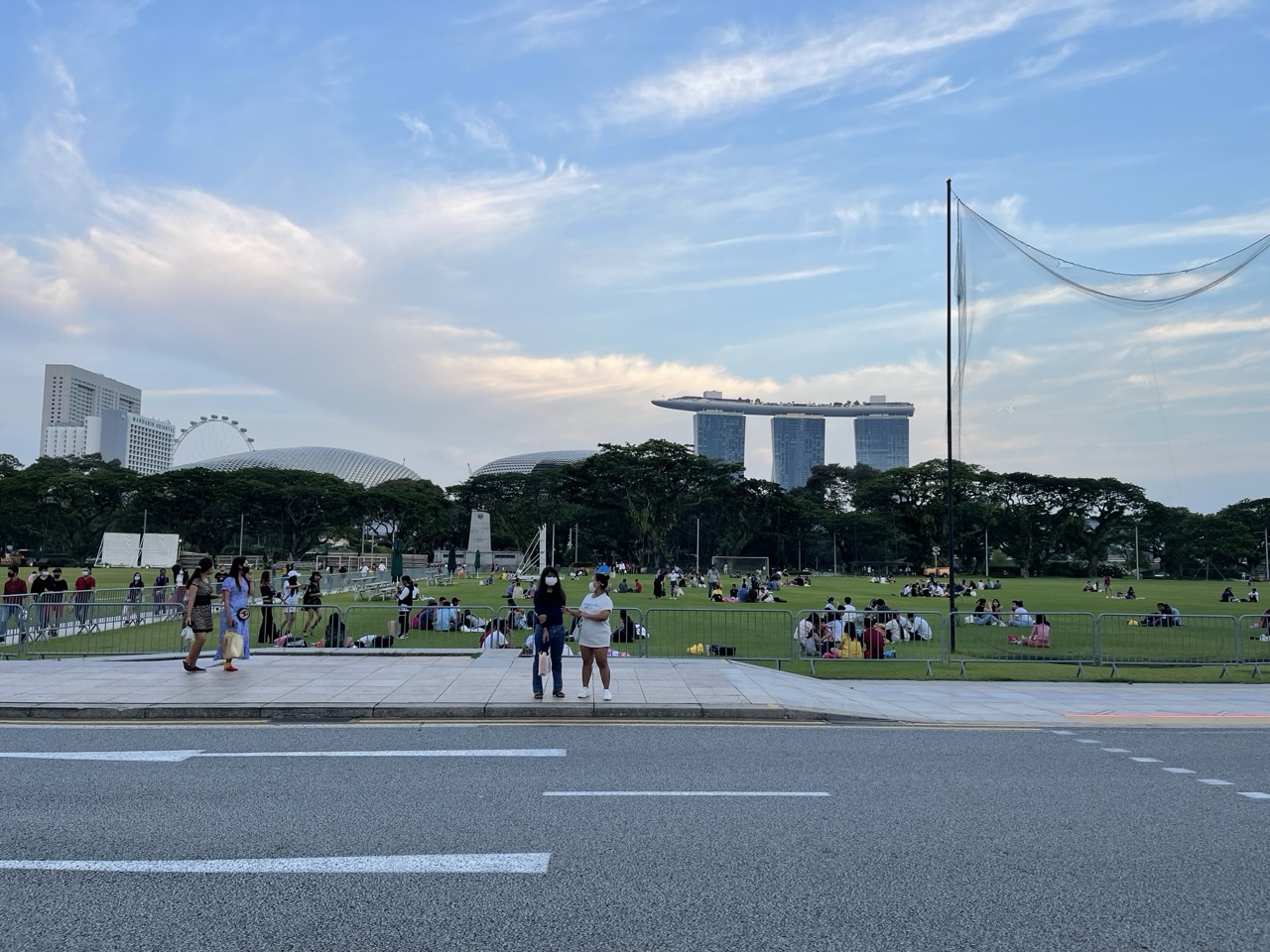
Why is Singapore considered safe? It is not because nothing bad ever happens. The country combines law enforcement, emergency response, well-managed infrastructure, public-health systems, crime prevention and shared social rules. Police, SCDF, courts, town managers, transport operators and residents all do different jobs. Everyday safety depends on those jobs connecting before, during and after a problem.
This guide explains what Singapore Police Force officers do, when to call 999 or 995, why neighbourhood police centres exist, how scams and fire safety fit into the picture, and why safe streets need more than strict laws. It links to the existing How Singapore Works and How Singapore Connects articles so you can explore the deeper mechanisms without getting lost.
A useful distinction makes the whole subject easier: prevention, response, accountability and recovery. Prevention lowers the chance of harm. Response protects people when something goes wrong. Accountability tests responsibility under the law. Recovery helps ordinary life become usable again. Strong public safety needs all four.
Quick answer: eight layers of Singapore public safety
- Policing: police prevent, deter, detect and investigate crimes and help maintain public order.
- Emergency calls: 999 connects to police assistance; 995 connects to SCDF fire, rescue and emergency medical services.
- Legal process: courts, prosecutors and the police have different roles in the justice system.
- Infrastructure: building inspections, road design and maintenance prevent avoidable physical danger.
- Public health: disease surveillance, food safety, water treatment and sanitation manage health risks.
- Digital protection: ScamShield, fraud prevention and cybersecurity address harm that occurs through phones and networks.
- Community systems: residents, schools, local police and civic organisations contribute to safer public spaces.
- Resilience: plans, backups and coordinated action reduce the damage from floods, power failures and emergencies.
For immediate police help, Singapore Police Force lists 999. For emergency medical, firefighting or rescue assistance, SCDF lists 995. For checking a suspected scam, the 24-hour ScamShield helpline is 1799. These are different services; use the number that fits the problem. See SPF contacts, SCDF emergency medical services and ScamShield 1799.
1. Begin with a walk home from school
Imagine a child travelling home through an HDB estate. The route includes a pedestrian crossing, a bus stop, a block entrance, an elevator and a corridor. The child might not see a police officer at any point, yet several systems are working to make the journey manageable.
Streetlighting, road markings, vehicle rules, building inspections, emergency access, good maintenance and predictable behaviour all matter. A clean corridor is helpful, but it is not enough if a lift is dangerously maintained. A visible camera may help, but it cannot replace a safe crossing.
This is why it is misleading to describe Singapore’s safety as a single achievement of criminal law. The physical city and human institutions together shape how safe a person can be.
Read The Infrastructure and School Buses, Drop-Off Points and Student Transport for the child-level view.
2. What does the Singapore Police Force actually do?
The Singapore Police Force is responsible for preventing, deterring and detecting crime, upholding the law and maintaining public order. Officers may respond to emergencies, conduct investigations, engage communities and perform specialist operations.
An arrest or investigation is not the same as a conviction. A police report records information that may need to be examined; courts and the relevant prosecutorial authorities have their own legal roles. It matters to public confidence that these responsibilities are not collapsed together.
Police cannot personally stand at every crossing or inspect every shop. Good public safety therefore includes community information, appropriate technology and cooperation with other institutions that manage specific environments.
For the local mechanism, use Neighbourhood Police Centres, Cameras and Community Safety.
3. Why neighbourhood policing matters
A large national force needs to understand local life. Different neighbourhoods have different patterns of pedestrian movement, commercial activity, residential density and potential safety concerns. A busy transport interchange is not operationally identical to a quiet residential street.
Neighbourhood Police Centres provide points of local police contact and operations, alongside community engagement and prevention efforts. Their value is partly knowing who and what uses local public space and responding through the proper systems when real problems arise.
But the presence of a nearby police facility does not mean someone in immediate danger should walk there instead of seeking urgent assistance. Emergency channels exist because response and dispatch must be coordinated quickly.
SPF’s contact guide identifies its 24-hour services. The connected neighbourhood policing article follows this specific institution.
4. What is 999 for in Singapore?
999 is the police emergency hotline for situations requiring immediate police assistance. When a person faces a serious threat, witnesses an urgent incident or needs a police emergency response, time spent guessing the correct department can make matters worse.
The caller should give the location and essential facts. What is happening? Where? Is someone in immediate danger? Is there a weapon or other hazard? Accurate descriptions are more useful than assumptions about motive or legal guilt.
SPF also provides other services, including a hotline for crime-related information and online reporting channels for appropriate non-emergency matters. Those are not interchangeable with the emergency line.
Keep the official SPF numbers and service channels available rather than trusting an outdated infographic with an unclear source.
5. What is 995, and who responds?
995 is Singapore’s SCDF emergency number for emergency ambulance, firefighting and rescue. The Singapore Civil Defence Force manages operations that are different from police investigations, although serious incidents may require both services.
Consider a person suffering a life-threatening medical event. The first priority is emergency medical assistance, not a routine clinic booking. When SCDF receives a call, it assesses the reported situation and determines an appropriate response.
Calling a wrong or non-emergency service can delay action. Operators also need enough relevant information about location, symptoms and hazards to make a useful decision.
See SCDF Emergency Medical Services and Emergency Calls, Dispatch and First Response.
6. Why emergencies are triaged
Not every request for an ambulance involves the same level of danger. SCDF uses an emergency medical response framework that assesses urgency so resources can be directed according to medical need.
Imagine two calls arriving close together: one involving a suspected cardiac arrest and another involving a non-urgent request for transport. Assigning the same urgency to both would be a poor use of limited emergency capacity.
The goal is not to dismiss people who need help. It is to ensure that the most serious and time-sensitive situations receive appropriate priority while directing non-emergency cases towards other suitable services.
SCDF’s EMS explanation gives the current details. Non-emergency transport arrangements and contact channels can change, so check the current instructions rather than memorising an old secondary number.
7. What happens between an emergency call and a responding vehicle?
The caller experiences one conversation, but the operation behind it may involve call-taking, location identification, dispatch, vehicle availability, coordination and communication with a hospital or other response team.
A team that arrives at the wrong entrance of a large building can lose valuable time. That is why accurate location information matters: postcode, block, unit, floor, obvious landmark and directions to the person in need.
Some incidents involve several agencies, each handling a different component. The dispatcher helps translate what a member of the public reports into an operational route for the people who can help.
Read Emergency Calls, Dispatch and First Response. It explains why emergency response is both communication infrastructure and real-world movement.
8. Why fire safety begins before the fire engine arrives
High-rise buildings require more than a good firefighting service. Designated exits, fire doors, alarm systems, emergency equipment, safe electrical installations and resident awareness all help prevent small incidents from becoming disasters.
A blocked escape route can be dangerous even if nothing has burned there before. An alarm that has not been maintained may provide less useful warning when it is truly needed. Fire prevention is therefore an everyday maintenance responsibility.
People should know the building’s posted safety arrangements and follow current SCDF guidance. Improvised actions, such as interfering with fire doors or entering smoke-filled areas to retrieve possessions, can add risk.
The broader inspection perspective is Structural Inspections and Building Safety.
9. How building inspections protect a dense city
A tall building is shared infrastructure. It supports dozens or hundreds of people whose safety depends on structural performance, properly maintained façades, vertical transport and other systems.
Singapore has formal inspection and regulatory arrangements for different types of building assets. Appropriate inspection frequency and obligations depend on the asset, its age, use and the relevant legal requirements.
A building that looks new or attractive does not automatically prove every hidden component is safe. Conversely, an older building may operate well with sound maintenance and timely renewal. Appearance is not a substitute for engineering.
Read Building Safety and Façade Checks and Building Management Systems and Sensors.
10. Road design prevents dangers before enforcement is needed
Traffic laws matter, but road geometry also shapes risk. Pedestrian crossings, signal timing, speed limits, bus lanes, intersections, visibility and vehicle access all influence how people share space.
A fast-moving road that works well for cars may still need safe facilities for students, older people and wheelchair users. The trip is only safe if the most exposed road users can make the necessary crossings.
Traffic enforcement and camera systems can discourage some dangerous behaviour or support incident handling. They are most effective as parts of a wider system that considers design, education and maintenance.
Follow Roads, Expressways and Junctions, Traffic Cameras and Road Sensors and Accessible Public Transport.
11. Why maintaining public space is part of preventing harm
A broken walkway light, obstructed passage, damaged stair or neglected drain can create danger without any criminal intent. The appropriate fix may involve a Town Council, municipal team, public agency or asset owner rather than a police patrol.
The most useful report identifies the actual place and the condition. A photo can help when safely obtained, but residents should not risk themselves to document an unsafe location.
Maintenance is a form of prevention. Fixing a small physical defect can be much more effective than waiting until someone falls and then debating responsibility.
Use OneService, Town Councils and Municipal Repairs and HDB Estate Cleaning and Conservancy.
12. When does a neighbourhood dispute become a police matter?
A disagreement about noise, shared property or an ordinary neighbourly conflict is not automatically a criminal emergency. Some issues may be addressed through dialogue, community channels, mediation, civil procedures or municipal enforcement.
However, threats, violence or situations involving immediate danger require a different response. The nature of the conduct matters more than the fact that the people involved live close to one another.
Using the right channel can resolve matters faster and protect the limited capacity of emergency services. A resident should not be pushed into an ineffective complaints loop when the proper institutional route is available.
Read Community Disputes, Mediation and the CDRT and How Singapore’s Legal System Works.
13. Safety needs due process after an allegation
Police investigations, prosecutorial decisions and court proceedings have separate purposes. These distinctions matter because a report is an allegation requiring appropriate assessment, not an automatic legal verdict.
A person harmed by an offence needs protection and an appropriate process. A person accused of wrongdoing also has legal rights. A trustworthy system should treat evidence and accountability seriously rather than substituting public emotion for lawful decisions.
Fair process can be slower than a social-media accusation, but the additional steps exist for reasons. Investigations need to test facts, and courts must apply the relevant standards and law.
For the legal mechanism, read Courts, eLitigation and Access to Justice and The Singapore Legal System.
14. Why the presence of cameras does not eliminate crime
Cameras may help police and other authorities monitor specific places or review information after an incident. They do not guarantee that no offence will occur, nor can every camera see every event or capture every relevant fact.
Images need context and lawful handling. A clip without a timestamp, full sequence or surrounding information may encourage viewers to draw the wrong conclusion about what happened.
Cameras also raise questions about proportionality, privacy and proper access. Trust depends on how the technology is governed and used, not simply how much recording equipment is installed.
The specialist Neighbourhood Police Centres, Cameras and Community Safety follows the roles and boundaries.
15. How scams affect a country with secure streets
A resident may feel physically safe walking home yet face serious risks on a phone or computer. Criminals can send fraudulent messages, impersonate officials, pressure victims to reveal information or persuade people to authorise transfers.
An online scam may not involve breaking through the technical protection of a bank. It can involve deceiving a person who then performs the action themselves under false assumptions.
This means digital safety includes both secure systems and informed people. The ability to pause, verify and ask for help is a practical part of public security.
The official ScamShield 1799 helpline is available around the clock for scam-related enquiries, and Cybersecurity, Scam Alerts and Digital Trust is the specialist owner.
16. Why a government impersonation scam can look convincing
Scammers may know some genuine personal information, display familiar logos or use threatening language to create urgency. None of those details proves that a caller or message is actually from an authority.
The safer principle is independent verification. Do not give passwords, one-time codes or authorise a bank transfer merely because someone on a call claims to be investigating a crime or holding your account.
Anyone who believes money has been transferred to a scammer should follow official urgent bank and reporting guidance rather than continuing the conversation with the suspected impostor.
ScamShield maintains a guide to government officials impersonation scams.
17. Cybersecurity and physical safety depend on each other
Digital networks support healthcare, public transport, banking, utilities and emergency operations. A cyber incident affecting a critical system can therefore have consequences beyond lost data or inconvenience.
Protecting those systems involves technical safeguards, trained staff, sound access control, recovery plans and relevant regulatory requirements. Different sectors face different risks and cannot all use one identical protection plan.
The internet can help warn people and coordinate assistance. It can also spread misinformation if inaccurate messages move faster than verified information. Resilience needs both secure infrastructure and trustworthy communication.
See How Singapore’s Internet Works, Cybersecurity and Digital Trust and The Digital Engine.
18. Public health is also about stopping harm before it starts
A clean water supply, safer food handling, disease surveillance and mosquito control are important safety achievements, even though residents may never see the teams operating them.
When these systems work, problems can be prevented or detected before they spread widely. When they fail, everyday activities such as cooking, drinking, travelling and attending school can become harder or riskier.
Public health therefore connects household behaviour with organised monitoring, laboratory work, environmental management and clinical services.
Read Mosquito Surveillance and Dengue Control, Laboratories and Disease Surveillance and The Healthcare System.
19. What makes food and water safety different from crime prevention?
Food and water can cause harm when standards and handling fail, even without deliberate criminal action. Health-related risks may require inspections, treatment processes, recalls and coordination with the relevant operator or public agency.
A restaurant needs safe food handling, an HDB block needs reliable water distribution and a hospital needs appropriate infection control. Those are different technical tasks from investigating theft or fraud.
The underlying connection is prevention supported by verifiable standards. Someone must test, document, inspect or correct conditions before ordinary life can proceed with reasonable confidence.
See Water, High-Rise Water Tanks and Building Supply and How Singapore Secures Food.
20. Why floods and extreme weather are public safety questions
A flash flood may turn a passable road into a hazardous route very quickly. It can interfere with walking, public transport, deliveries and emergency access while affecting different neighbourhoods differently.
Drainage systems, rainfall monitoring, flood alerts, maintenance and responsible public action combine to reduce risk. No one drain or forecast can guarantee that every location will remain dry under all circumstances.
The safe response depends on the local condition and current official advice. An impressive video clip from last month’s storm is not reliable evidence of whether today’s route is open.
Read How Singapore Prevents Floods and Rising Seas and Weather Forecasts, Rain Radar and Daily Decisions.
21. Safety for a child looks different from safety for an adult
A confident adult commuting through a station might not notice an escalator that is difficult for someone with limited mobility. A young child may need additional guidance at crossings, while older residents may need accessible routes and clear signs.
The city should not measure safety only for the fastest, strongest or most experienced users. A system that works brilliantly for one group may leave another exposed.
Parents can teach children how to identify trusted adults, cross roads safely, use correct emergency contact channels and respond to suspicious messages without spreading unnecessary fear.
Read Barrier-Free Public Transport and How HDB Towns Are Planned.
22. Why education is part of community safety
A person who understands instructions, can recognise a misleading message and knows how to report a concern can take useful action before a small problem becomes larger.
Schools have roles in teaching responsible behaviour, digital awareness, cooperation and practical problem-solving. Those lessons do not replace enforcement, medical treatment or engineering, but they help people use the systems around them.
The educational principle is the same as in mathematics: teach a child to recognise the type of problem before choosing the method. An emergency, a municipal complaint and an online fraud attempt do not need the same procedure.
Connect Schools and Education and Workforce Regeneration.
23. Why national defence is related but not identical
The Singapore Armed Forces and National Service support external defence and wider resilience objectives. Daily policing and SCDF emergency work have different primary responsibilities.
Total Defence recognises that military threats are not the only risk to a society. Civil, social, economic, digital and psychological preparedness also contribute to resilience when ordinary systems are under pressure.
But it remains important to identify the correct operating institution. A suspected online scam, structural defect and military security concern should not be treated as one generic issue for the same command chain.
The companion How Singapore Defends Itself explains the wider shield, and National Service owns the specific NS chapter.
24. A worked family exercise: four problems, four correct routes
Imagine a family facing four separate issues in one week. A person sees urgent violent behaviour. Another family member witnesses a medical emergency. The resident also notices an obstructed estate walkway, and a suspicious caller demands a transfer to release a parcel.
The immediate police threat belongs to the 999 emergency route. The medical crisis requires SCDF emergency medical assistance through 995. The walkway usually needs the appropriate municipal or estate-maintenance channel if no immediate danger exists. The fraudulent demand should be independently verified and can be checked through ScamShield 1799.
These examples are intentionally simple. Real situations can overlap and emergency operators may coordinate services as needed. The principle is to describe the hazard accurately and choose the authorised help route.
Try asking a Secondary 1 student to draw a four-column table: problem, first safe action, responsible service and evidence of a resolved outcome. It is a practical lesson in civic systems.
25. Why reporting and accurate information matter
An agency can respond only to problems it knows about, can locate and has authority to handle. Reports from residents, businesses and other teams can make hidden problems visible.
But information must be accurate enough to use. A rumour may cause unnecessary anxiety or direct resources to the wrong location. A report with an exact address, observed behaviour and relevant details is usually more actionable than speculation.
Official communication also needs to be understandable. During a disruption, people should know what happened, what is safe to do and where updated information will appear.
This is the connection between Trust and Anti-Corruption and The Control Tower and Runtime.
26. The hidden cost of a system that only looks safe
An attractive city might have spotless stations and bright shopping malls, yet a resident could still face an inaccessible route, a scam, a workplace hazard or an unresolved threat. Safety is not the same as a good-looking photograph.
Proper assessment asks whether people are protected, whether the system acts fairly, whether vulnerable people can access help and whether the response actually reaches the person who needs it.
That requires maintenance budgets, training, professional judgment, public communication and regular review. A visible patrol is only one part of the safety system; invisible administrative and engineering work often carries much of the load.
Read The Iceberg. The key lesson is to look below the surface of the service people see.
27. What makes Singapore sustainably safe?
No responsible government can promise zero crime, zero accidents or zero danger. A useful safety system lowers avoidable risks, responds appropriately, maintains legitimate accountability and supports recovery.
Different people may encounter the same city differently. Someone who uses a wheelchair, faces domestic abuse, is targeted by online scams or works in a hazardous environment may have risks that a general tourism ranking does not capture.
The most useful national question is therefore not only ‘How safe is Singapore on average?’ It is ‘Can the person facing the real problem find and receive appropriate help, and what changes after we discover a gap?’
The wider Whole Machine and Resilience and Future-Upgrade Engine provide the long-term system perspective.
Browse Singapore’s safety, policing and emergency-response library
The following published articles own the deeper mechanisms. Use this page as the cross-system reading map rather than a substitute for their specialist details.
Police, courts and community order
- Neighbourhood Police Centres, Cameras and Community Safety — community policing
- Emergency Calls, Dispatch and First Response — emergency communications
- Community Disputes, Mediation and CDRT — non-emergency civil resolution
- Courts, eLitigation and Access to Justice — courts and legal access
- How Singapore’s Legal System Works — law enforcement versus adjudication
- Cybersecurity, Scam Alerts and Digital Trust — online harm and protection
Roads, homes, weather and public health
- Structural Inspections and Façade Checks — safe buildings
- Vehicle Inspections and Roadworthiness — safe vehicles
- Roads, Expressways and Junctions — road design and conflict
- Expressway Incident Management — disruption response
- Flood Sensors and Real-Time Operations — rain and flood warnings
- Mosquito Surveillance and Dengue Control — environmental disease prevention
- HDB Estate Cleaning and Conservancy — shared-space maintenance
- Public Transport Accessibility — safer access for more people
- Singapore’s Healthcare System — care after injury and illness
- Defence and Total Defence — wider national resilience
Frequently asked questions about safety in Singapore
Why is Singapore considered safe?
Policing, laws, emergency response, maintained infrastructure, public-health controls and community behaviour all contribute. Safety varies by person and situation and is never absolute.
Is Singapore completely free of crime?
No. Criminal offences, scams and accidents still occur, so verified precautions and reporting channels remain important.
When should I call 999 in Singapore?
Call 999 when immediate police assistance is needed. The Singapore Police Force lists separate routes for non-emergency matters.
What is the difference between 999 and 995?
999 is for police emergencies; 995 is for SCDF fire, rescue and emergency medical services.
What should I tell an emergency operator?
Explain where you are, what you observed, whether anyone is in immediate danger and any location details that help responders reach the scene. Follow their instructions.
What is ScamShield 1799?
A 24-hour helpline for checking suspicious messages, calls and other scam-related concerns. It is not a replacement for an emergency police call.
Can the police helpline handle municipal repairs?
Routine estate maintenance is usually handled by Town Councils or relevant municipal agencies rather than police emergencies.
Do cameras prevent every offence?
No. Cameras may support monitoring or investigations but do not eliminate crime or replace lawful judgment.
What happens after someone files a police report?
Authorities may assess and investigate relevant information. A report is not automatically an arrest, charge or conviction.
What is the role of SCDF?
SCDF provides emergency firefighting, rescue and medical response and supports preparedness and civil-defence functions.
Does a safe city require public trust?
Yes. People need to understand who is accountable and believe that reporting, intervention and review channels can work fairly.
Why do schools and lifts matter to safety?
A person’s daily route can be affected by accessibility, infrastructure condition and road design even when no crime has occurred.
Is Total Defence the same as policing?
No. National defence and public order have related but distinct responsibilities. Total Defence addresses a wider set of society-level resilience needs.
How should I verify today’s safety and emergency contacts?
Use current Singapore Police Force, SCDF and ScamShield official sources, because specific service arrangements can change.
Continue the Singapore systems series
- How Does Singapore’s Legal System Work?
- How Does Singapore Defend Itself?
- How Does Singapore’s Healthcare System Work?
- How Does Singapore Prevent Floods and Rising Seas?
- How Does Singapore’s Government Work?
- How Does Singapore’s Internet Work?
The How Singapore Works Civilisation Atlas is the wider systems home, tying together governance, infrastructure, trust, education and resilience. This guide is a question-led bridge across its more specialised articles.
Official reference desk
- Singapore Police Force — Contact Us
- SCDF — Emergency Medical Services
- SCDF — Public Fire Safety and Preparedness
- ScamShield — 1799 Helpline
- ScamShield — Government Impersonation Scams
- Singapore Police Force — Official Information
Safety note: This is educational systems information, not a substitute for immediate emergency services or professional legal or medical advice. Call the appropriate emergency number in immediate danger. Numbers, operational arrangements and official advice should be checked against the current agency websites. Editorial review: 20 October 2026.